
Sopot Hippodrome: what to see at the seaside racecourse

Sopot Hippodrome is worth an hour or two if a race meeting or equestrian competition falls on your dates, and not otherwise. The site is a working racecourse and training centre, so an ordinary day gives you historic grandstands, a track that has kept its shape since the nineteenth century, and the Bay of Gdańsk in view from the stands — but no programme of events.
This guide covers where the hippodrome sits in Sopot, how it fits between the railway and the beach, what survives on site, how the event calendar works, and what to pair with it nearby.
What the Sopot Hippodrome is and where it sits between the railway and the beach
Hipodrom Sopot occupies a flat piece of ground in the north of Sopot, bounded by the stream that forms the border with Gdańsk on one side, Polna street on the other, and the railway on the north. Beyond that railway line rise wooded moraine hills, while a stretch of sea beach begins less than 400 metres from the site.
That geography is the hippodrome's selling point: the Bay of Gdańsk can be seen from the level of the stands, and Hipodrom Sopot itself describes the course as the only horse racecourse in the world overlooking the sea. Treat the claim as the operator's own, but the view is the reason to come rather than the architecture alone.

A short history: hunting runs, races from 1898 and the Free City era
From the 1870s the meadow was used by soldiers of the Black Hussars regiment from Wrzeszcz for hunting runs. Regular flat and steeplechase racing began in 1898, and that is when the spectators' stands, the parimutuel building and the racetrack were built.
Between the two World Wars, with Sopot inside the Free City of Gdańsk, the course became known across Europe for classic flat races, steeplechases and international equestrian events. Racing stopped during the Second World War; in 1945 and 1946 the complex was used as a base for horses brought in under the UNRRA programme. Racing restarted in 1947 under the State Horse Racecourses in Warsaw, with around twelve racing days a season.

What survives on site: the stands, the parimutuel building and the unchanged track
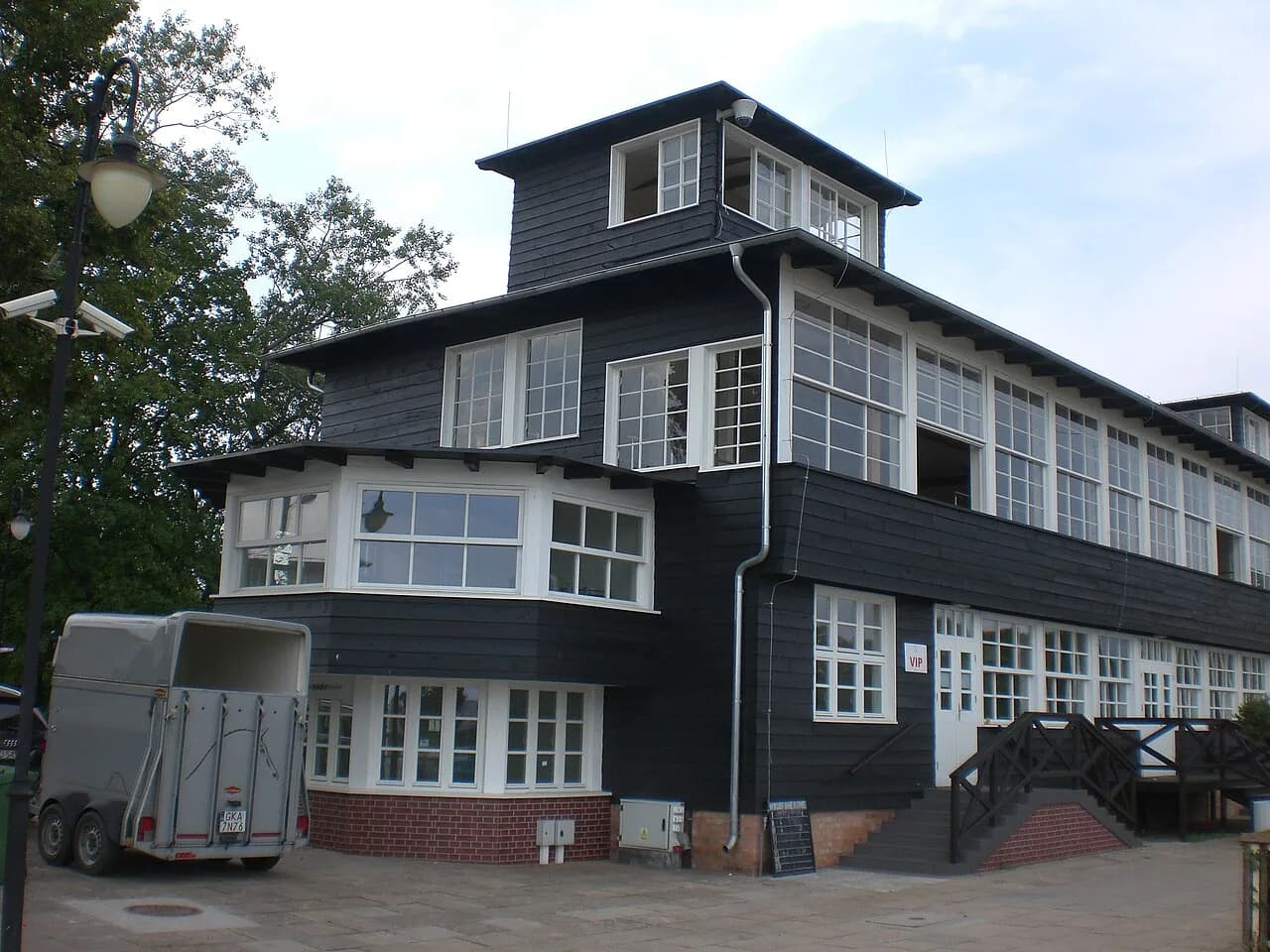
Three things from the 1898 layout are still in use: the spectators' stands, the parimutuel building where bets were taken, and the racetrack itself, whose shape has not changed. Look for the relationship between the stands and the track rather than for a museum display, because the hippodrome is an active site rather than a heritage attraction with exhibits and labels.
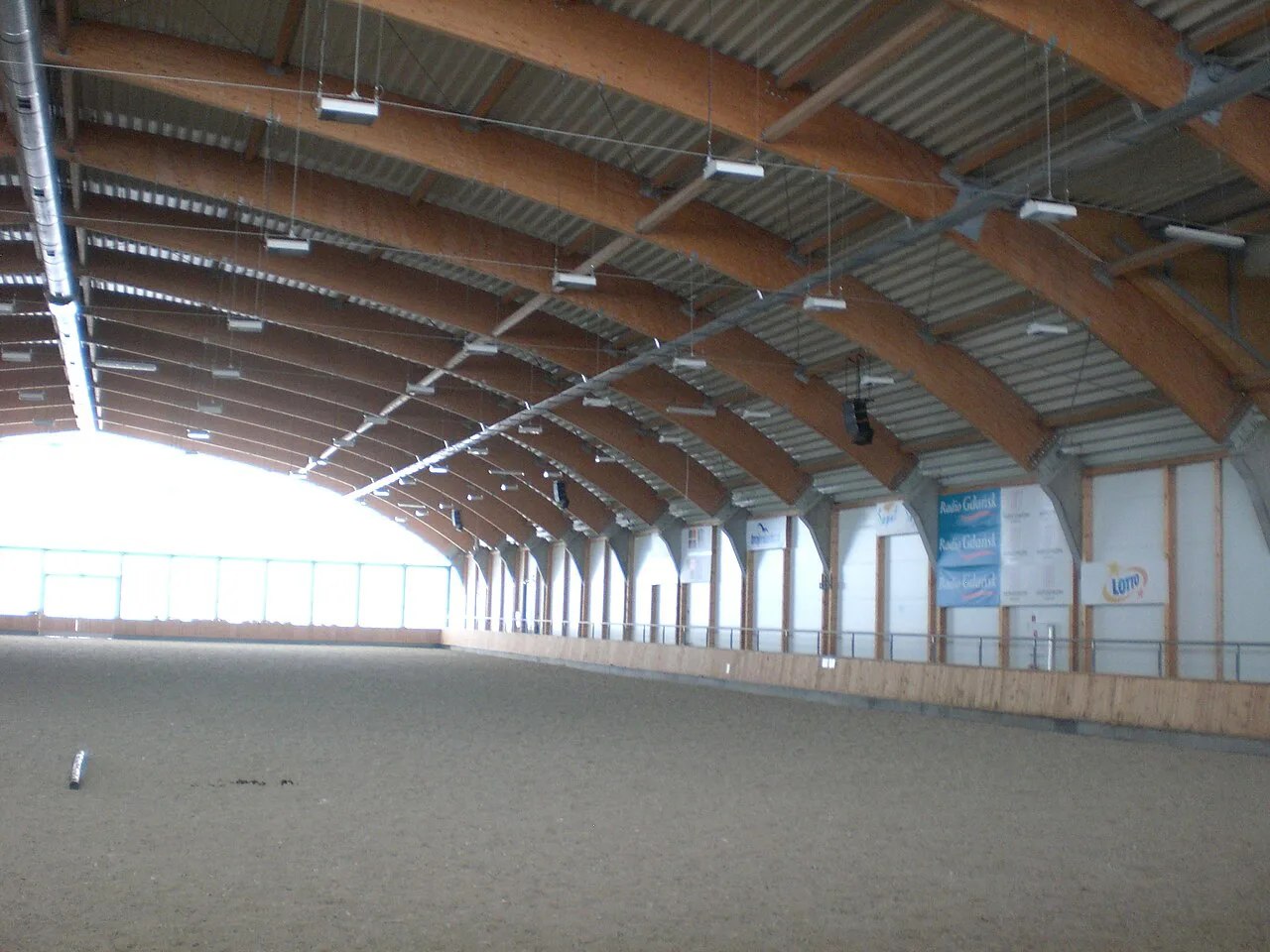
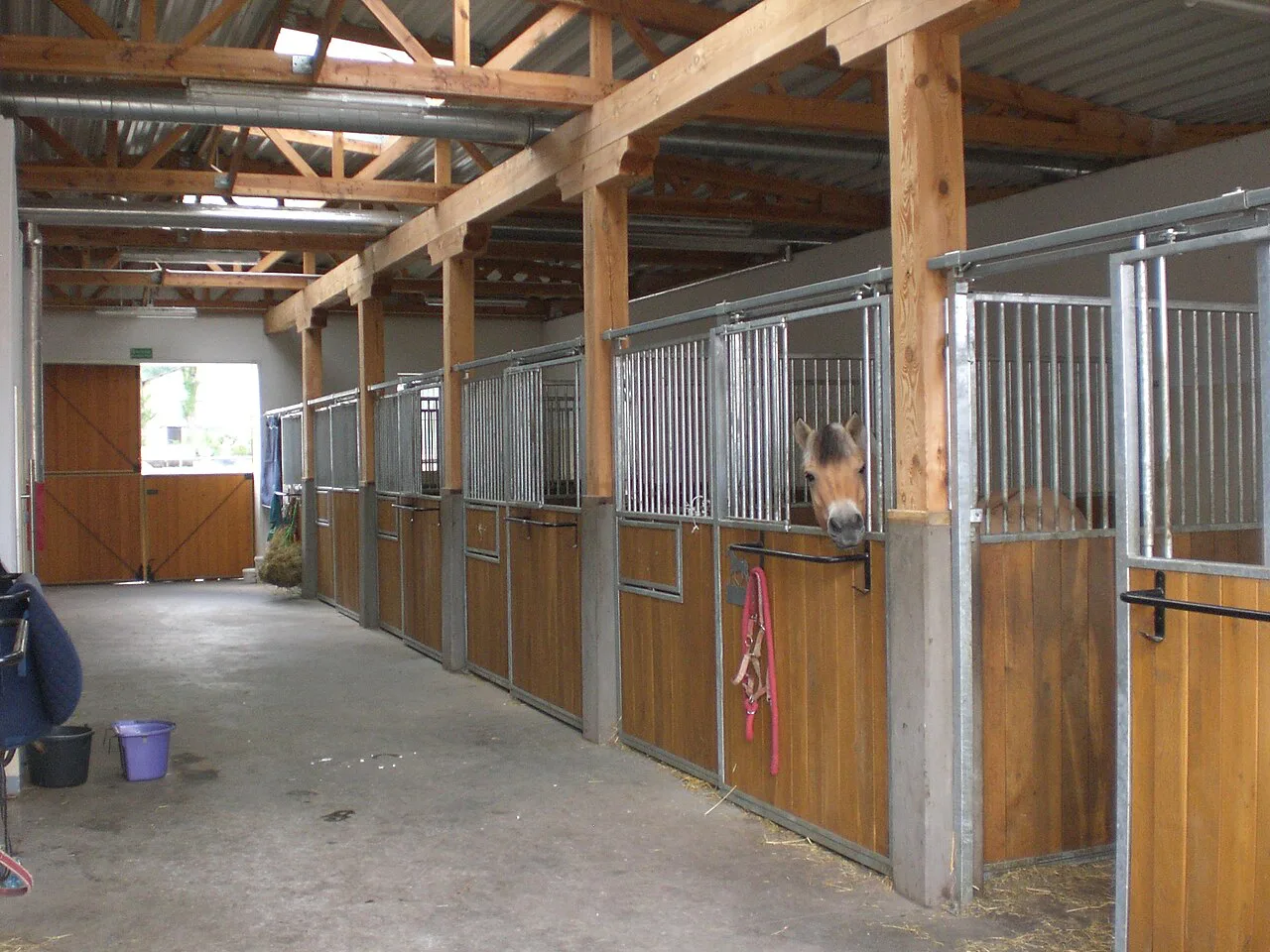
The twentieth century changed how the site was used. From the early 1970s Polish horse-breeding authorities shifted it towards half-bred horses from the Mazury lake district and discontinued English thoroughbred racing, keeping steeplechases for stallions trained at Kwidzyn and Biały Bór, and from 1980 at Sopot. The last race of that kind ran in 1983, after which the course was gradually converted into a training centre.
In November 1994 the State Treasury created Hipodrom Sopot as a company and transferred the whole racecourse into it; in 1999 the City of Sopot bought all the shares. Racing returned to the course, and in 2009 the hippodrome was authorised to stage the international official CSIO*** jumping competition.
How to get there and how it fits into a Sopot break
The hippodrome sits at the northern edge of Sopot, beside the railway line that forms its boundary, roughly 400 metres from the beach at its nearest point. It pairs naturally with a walk back south into the centre via the Crooked House Sopot (Krzywy Domek) and Monte Cassino, the town's main promenade.
Sopot itself compresses neatly into a day or two, so the hippodrome is an addition to a beach-and-pier itinerary rather than a reason to extend a stay. Count on an hour or two at most here, and keep the rest for the Sopot pier and the wooded hills.
Racing days and equestrian events: how the calendar works
Hipodrom Sopot currently holds a few days of horse racing each season, alongside the return of international jumping; the international CSI-A competition is back and the CSIO jumping fixture is now part of the programme. Plan around the calendar rather than assuming a weekly meet, because racing here is an event, not a standing attraction.
The published calendar for 2026 puts the Sopot race days on 11–12 July and 18–19 July 2026, with CSIO4* jumping scheduled for 11–14 June 2026 and international and national dressage and para-dressage on 18–21 June 2026. Events run through the year: outdoor jumping, eventing and dressage from spring to autumn, and indoor JumpOFF Hipodrom jumping competitions through the winter.
The CSIO4* Sopot meeting has run as a four-day international fixture; the 2024 edition, for example, was held over 13–16 June and took place at Hipodrom Sopot. That date is history rather than a pattern, so use the current-year calendar before booking anything around it.
What to see when nothing is on, and how much time to allow
Outside event days there is no listed visitor programme to follow: no guided tour, no exhibition and no advertised admission is described. What you can do is look at the course from the public side and take in the layout and the bay from the stands. Treat the site as a short stop, worth perhaps half an hour to an hour on foot, and confirm access before setting out.
On a race or competition day, allow longer: an afternoon rather than an hour, since a jumping class or a card of races stretches across the day. The trade-off is straightforward. A race day gives you atmosphere and sport but ties you to the timetable; an ordinary day gives you the layout and the view with nothing happening.
Tickets, opening hours and parking
Ticket prices for the stands appear in no current source, so check the organiser's site before travelling rather than budgeting from old figures; the same applies to opening hours on non-event days, which are not set out. The calendar page is the reliable place to see what is scheduled and whether an event is free or ticketed.
Parking is not described in the site's own material, so if you are driving, look for street parking around Polna and the northern edge of Sopot and walk in; arriving by train avoids the problem altogether, since the railway is the site's northern boundary.
Nearby: the beach, the wooded hills and the rest of Sopot
The beach is the obvious pairing: a stretch of sand begins within roughly 400 metres of the racecourse, on the other side of the railway. North of the line, wooded moraine hills give a contrasting walk, while the town centre with Monte Cassino, the Crooked House and the pier lies a pleasant walk south along the coast.
For a longer day, the Forest Opera (Opera Leśna) sits in the wooded grounds south of the centre, and its open-air setting makes a natural counterpoint to the hippodrome's flat, open track.
Is the hippodrome worth your time?
Go if a race meeting or jumping competition falls inside your dates; skip it on an ordinary day unless you happen to be walking the northern seafront and want a look at the stands and the bay. The site's history — races from 1898, the Free City heyday, the training-centre decades after 1983 — is the draw, and it is read in the fabric of the place rather than in displays.
Explore more Sopot guides
Frequently Asked Questions
Can you visit Sopot Hippodrome on a day without a race meeting?
There is no advertised visitor programme for ordinary days, so plan around an event if you want to see the course in use. Otherwise the stands, the parimutuel building and the bay view are the reason to walk past.
When are the Sopot race days in 2026?
The published calendar lists race days on 11–12 July and 18–19 July 2026, with CSIO4* jumping on 11–14 June and dressage and para-dressage on 18–21 June. Check the calendar before booking travel.
How do you reach Sopot Hippodrome?
It sits at the northern edge of Sopot beside the railway line that forms its boundary, roughly 400 metres from the beach at its nearest point and easy to reach by train or on foot.