Things to Do in Wrocław: Squares, Islands and Dwarfs
Plan a Wrocław city break with the Market Square, Ostrów Tumski, the dwarf hunt and the Racławice Panorama, plus how many days the city needs.
On this page
Two days is enough for Wrocław's headline sights, and three lets you slow down. The city compresses neatly: the Market Square, Świdnicka Street and the Oder islands sit within a walkable core, with the Centennial Hall park district a short ride east. This guide covers the squares and churches, the museums worth your time, the dwarf hunt, green stops and where to eat, and it sets out honest trade-offs for a short break.
How many days Wrocław needs
One day covers the Market Square, a dwarf-hunting loop along Świdnicka Street and the Old Town lanes, and one big museum or the Racławice Panorama. Two days adds Ostrów Tumski across the Oder and a morning or afternoon at Centennial Hall with the pergola and fountain. Three days lets you add the Botanical Garden, the Japanese Garden and a slower sweep of the National Museum without rushing.
Wrocław is Poland's third-largest city and a large student centre, yet the historic core remains compact and easy to navigate on foot, with frequent trams and buses for longer hops. That compactness is why a weekend works here where a bigger capital would not. If your dates are flexible, the best time to visit shapes how much of the day you spend outdoors.
How the city is laid out
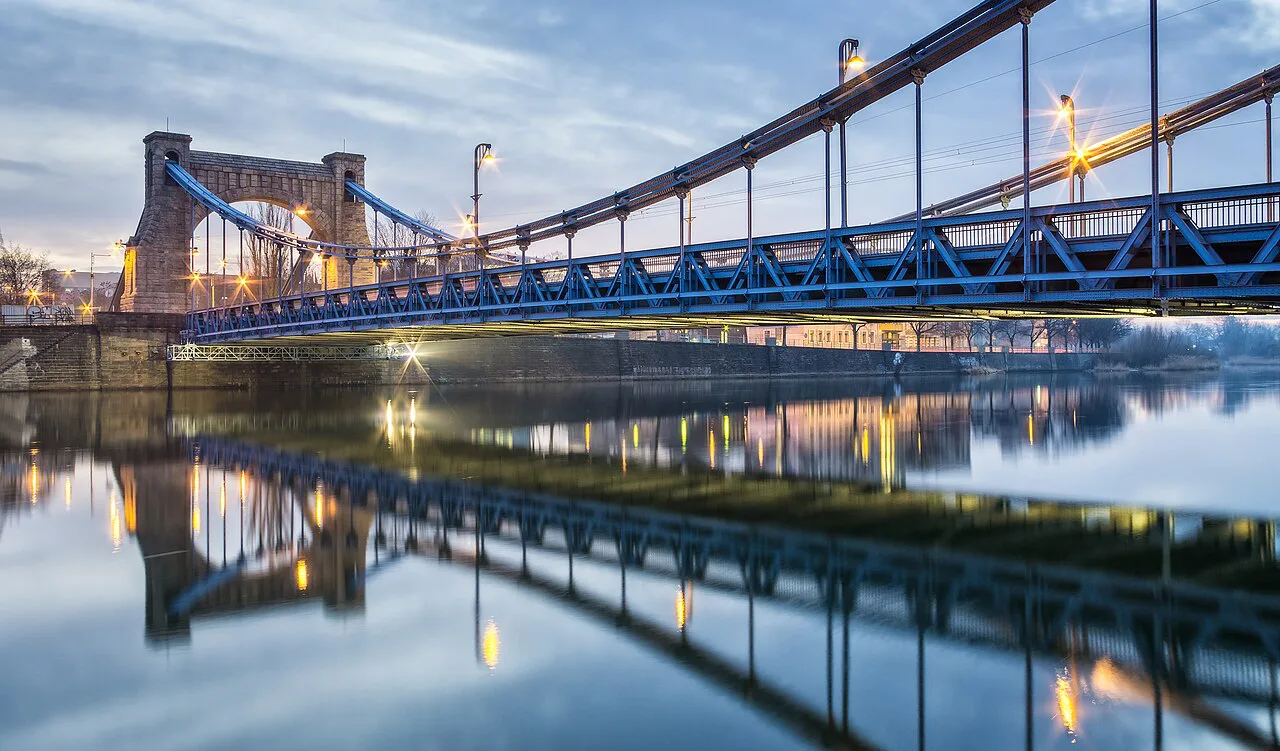
The Wrocław market square sits at the centre of the old town, with Świdnicka Street running south from it towards the main railway station, roughly 1.6 km away. North of the square, the streets lead towards the Oder, which splits into channels around islands before reaching Ostrów Tumski, the city's oldest district and once an island itself.
Think of the city in three bands: the Market Square and its lanes; the river and Cathedral Island; and the eastern park district around Centennial Hall, which is a UNESCO World Heritage Site. The first two connect on foot in around twenty minutes; the third is worth a tram or a longer walk. The attractions guide breaks down what each neighbourhood offers beyond the obvious sights, and the Wrocław Walking Tour ties the central sights into one route.
The Market Square and Old Town Hall
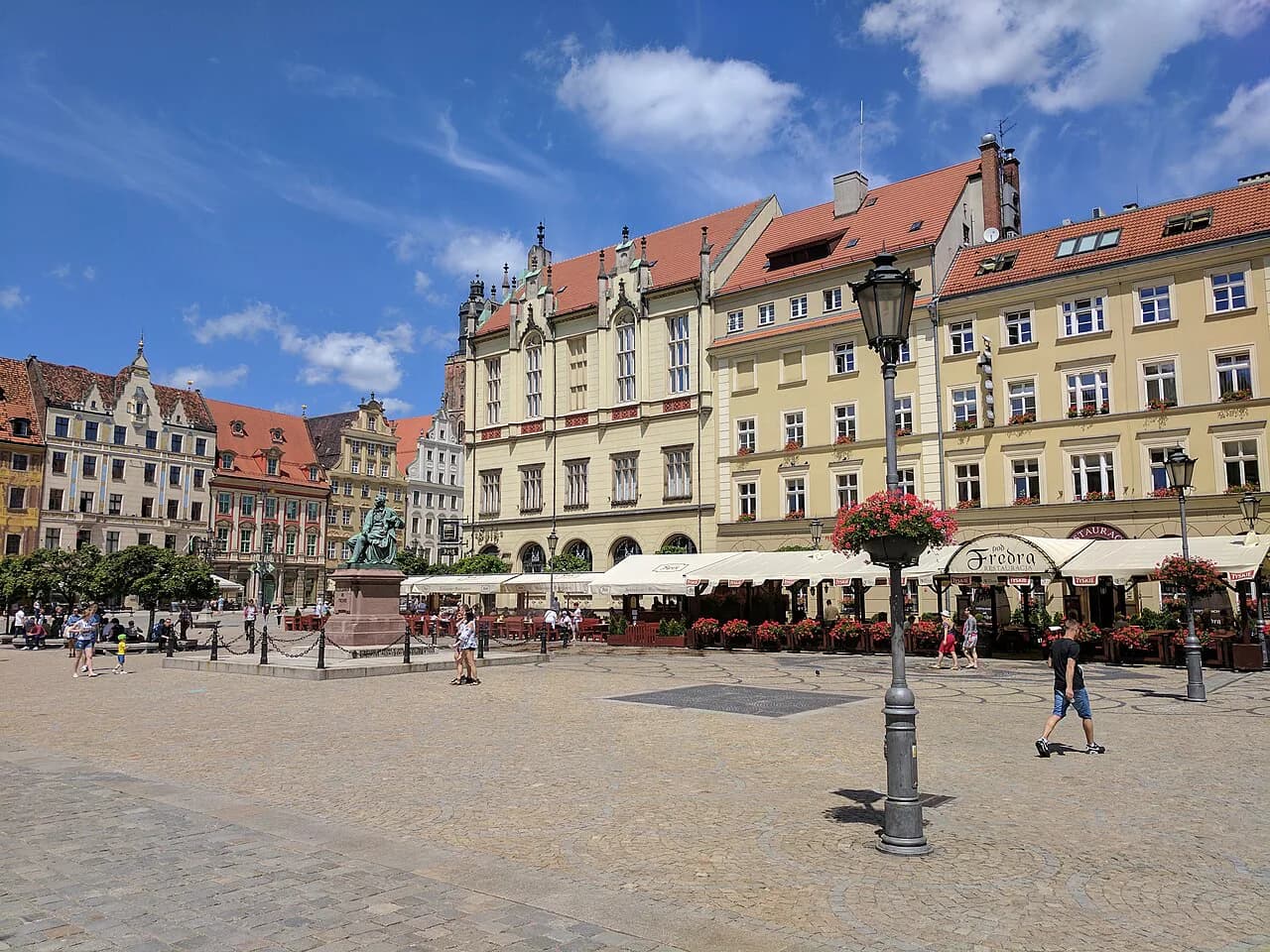
Wrocław's Market Square is one of the largest in Europe and among the most colourful in Poland, ringed by facades that were largely reconstructed after the destruction of 1945. The 13th-century Town Hall survived the wartime damage and remains the square's focal building, with traditional house names and symbols still visible on several fronts. Allow an hour to walk the perimeter and look up.
A guided walking tour is the quickest way to make sense of the square's layers, taking in the Town Hall and the surrounding lanes in one loop. Independently, look for the tiny twin tenements known as Jaś i Małgosia between the square and St Elizabeth's Church, a reliable photo stop. The war history here is told plainly and factually in the museums rather than on the facades.
The dwarf hunt: where the bronze figures are
Wrocław's bronze dwarfs began as a commemoration of the 1980s protest movement, when demonstrators dressed as fairytale characters, including gnomes, to rally against the communist regime. After the Revolution of Dwarfs a large dwarf statue was placed on Świdnicka Street where the protesters gathered, and hundreds of smaller figures have since appeared across the city, with new ones still added. Scan doorways, pavements and the edges of the square rather than looking up.
You can pick up a paper map or use an app to track them, but wandering works too, and the hunt is a good way to pull children through a sightseeing day. Pair it with the free sights in the old town so the walking earns its keep. A dedicated dwarf guide lists the reliable clusters and the stories behind the oddest figures.
Ostrów Tumski: the cathedral and the evening lamps
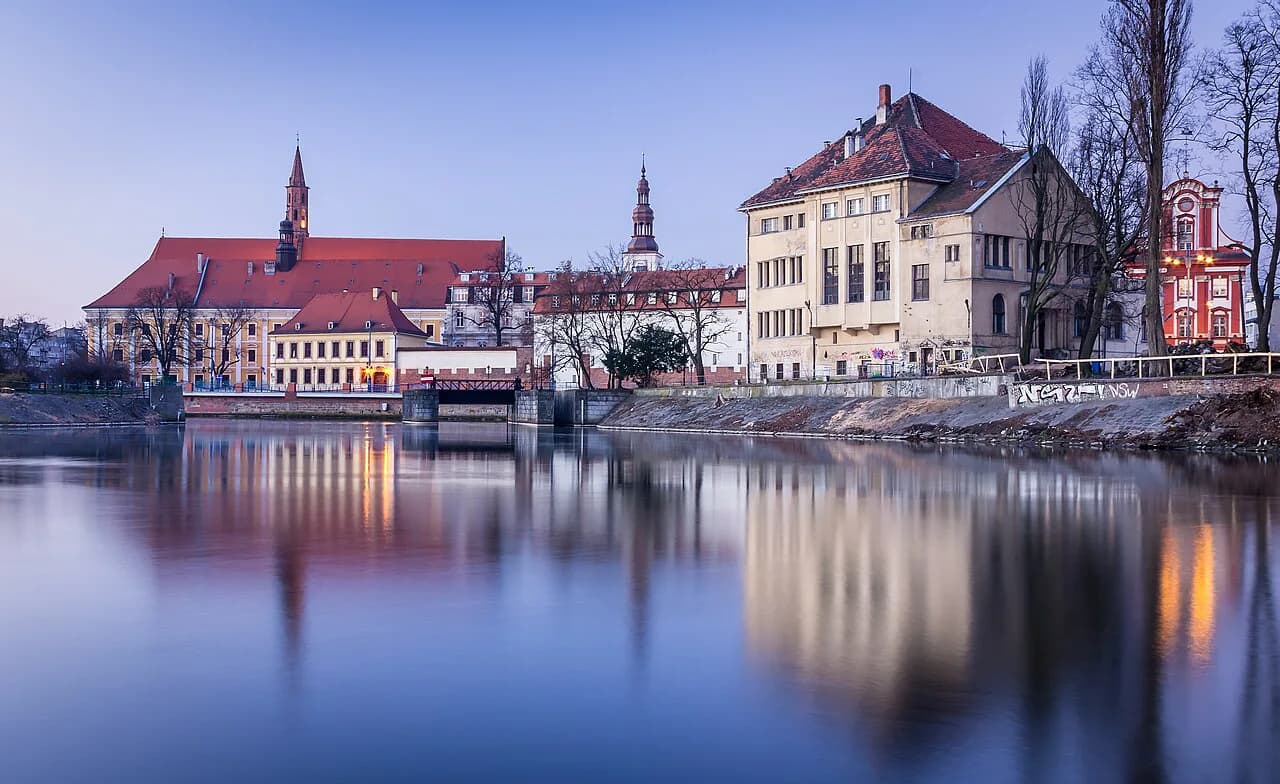
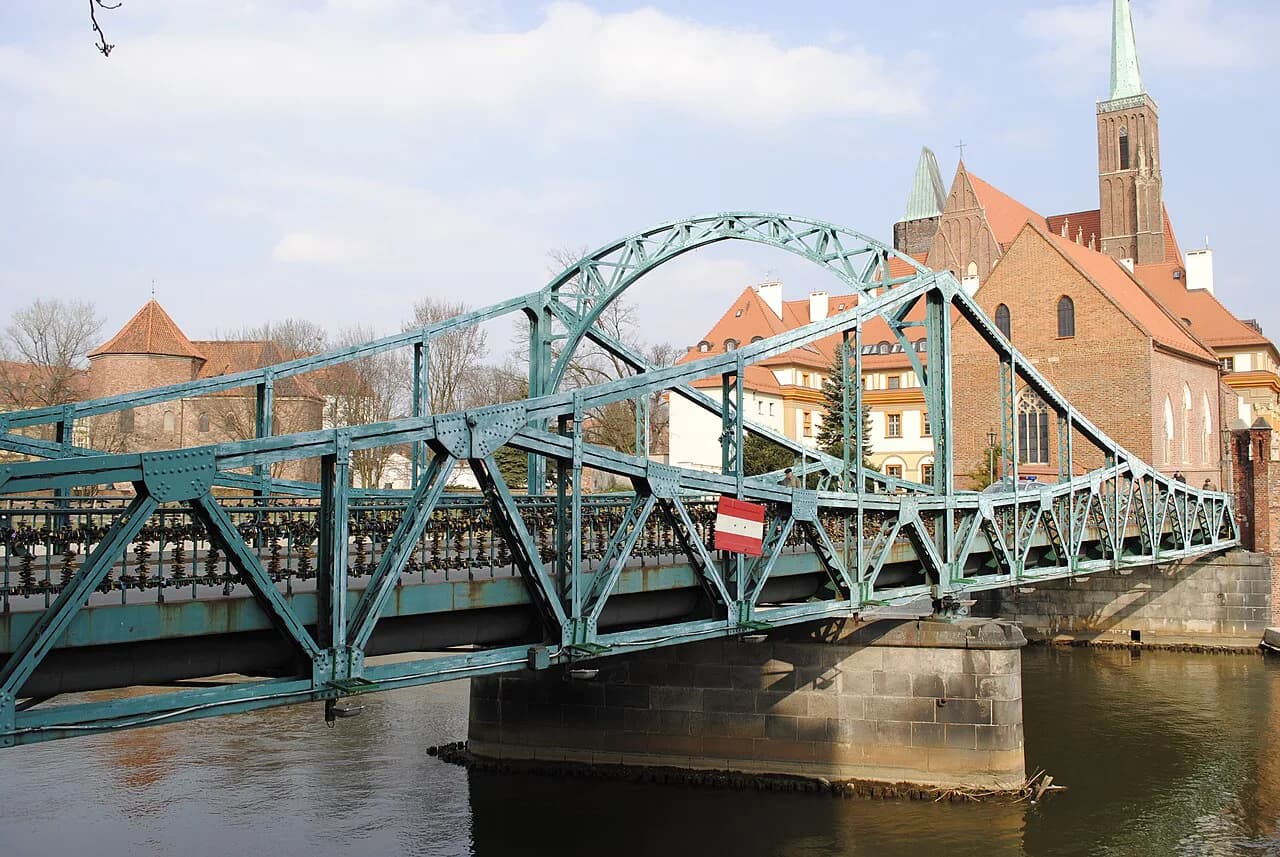
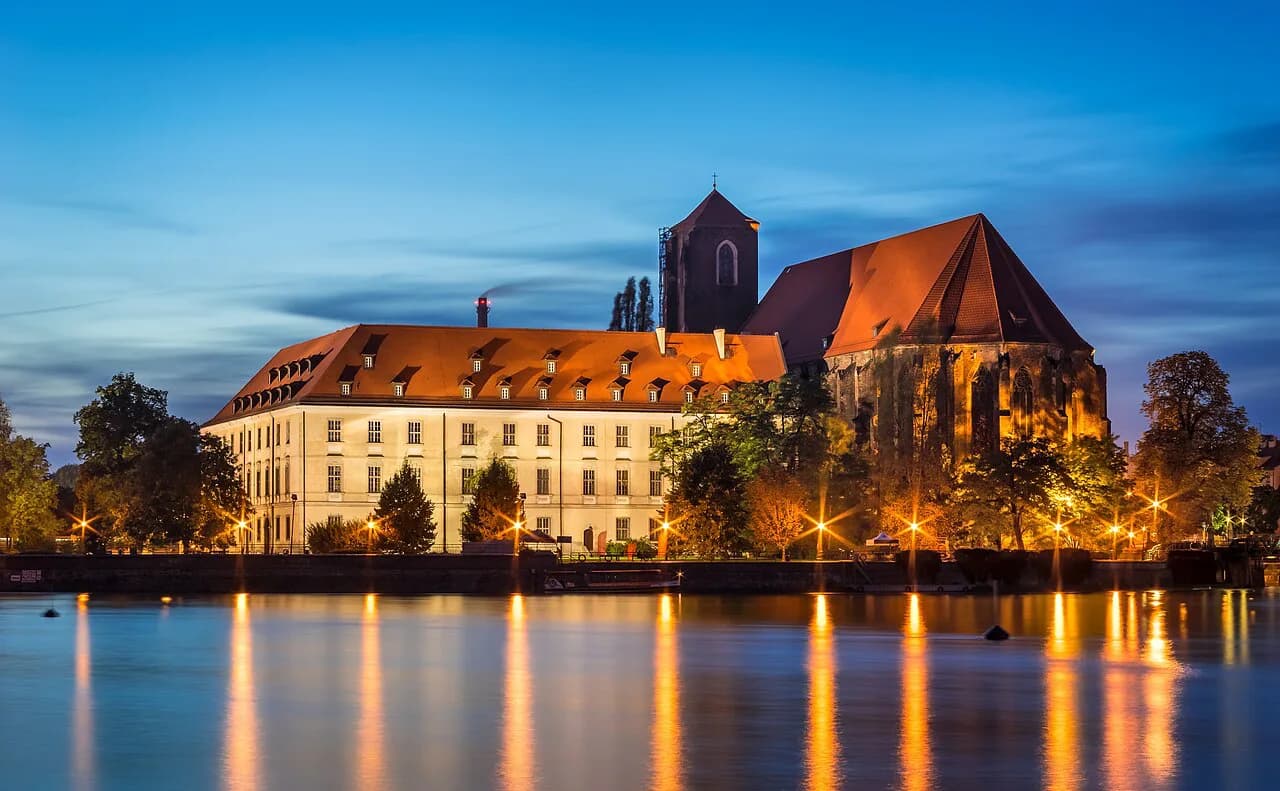
Ostrów Tumski is Wrocław's oldest district, a cluster of churches and cobbled lanes on the far side of the Oder from the Market Square. The Cathedral of St John the Baptist is the centrepiece, and the walk over the river from the old town is short enough to do on foot in the late afternoon. The district becomes one of the city's most atmospheric corners as the light fades, and it is a calm place to end the day.
Allow an hour to walk the lanes and the cathedral close, and longer if you want to sit by the river. It is also the natural starting point for a boat trip on the Oder, which gives a different view of the islands and bridges. Eating here rather than on the Market Square makes for a calmer end to a full day of sightseeing.
The Penitent Bridge at St Mary Magdalene Church
The Penitent Bridge, also called the Bridge of Witches, links the two towers of St Mary Magdalene Church some 45 metres above the street. The legend of a vain woman condemned to sweep the bridge is a story, but the view over the old town roofs is the reason to climb. Go on a clear day for the best panorama.
The Penitent Bridge pairs easily with the Market Square, since St Mary Magdalene Church sits just off it. Combine it with the dwarf hunt along Świdnicka Street for a compact morning. If you only have one day, treat this as your one climb rather than adding a tower further out.
Panorama of the Battle of Racławice
The Panorama of the Battle of Racławice is a huge circular painting of the 1794 battle, viewed from a central platform as the scene shifts around you. It tells the story of a Polish victory in the Kościuszko Uprising and is one of the city's most distinctive experiences. Allow around an hour for the visit.
The Panorama is a natural stop on the walk east towards Ostrów Tumski and the river. Pair it with the Cathedral Island for a half-day loop. Check the venue's own page for current visiting arrangements and hours before you go.
Museums worth the time
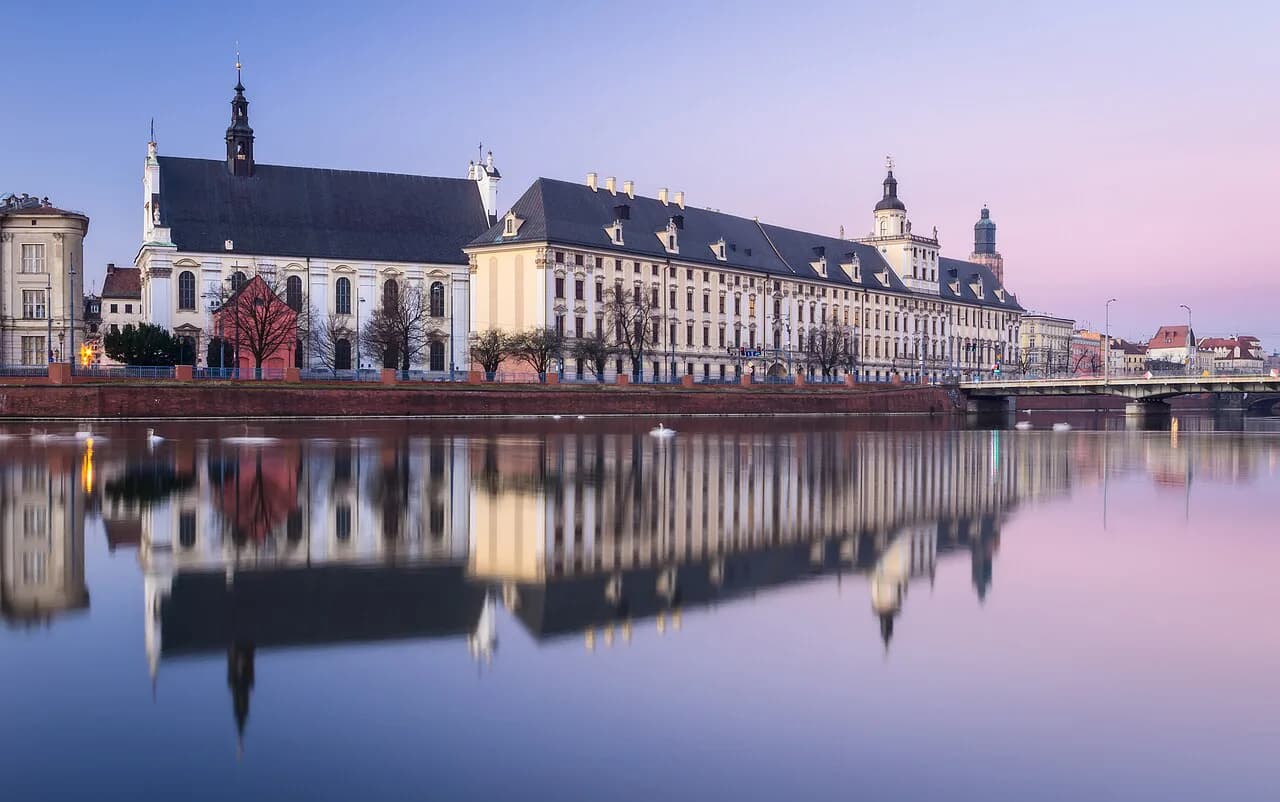
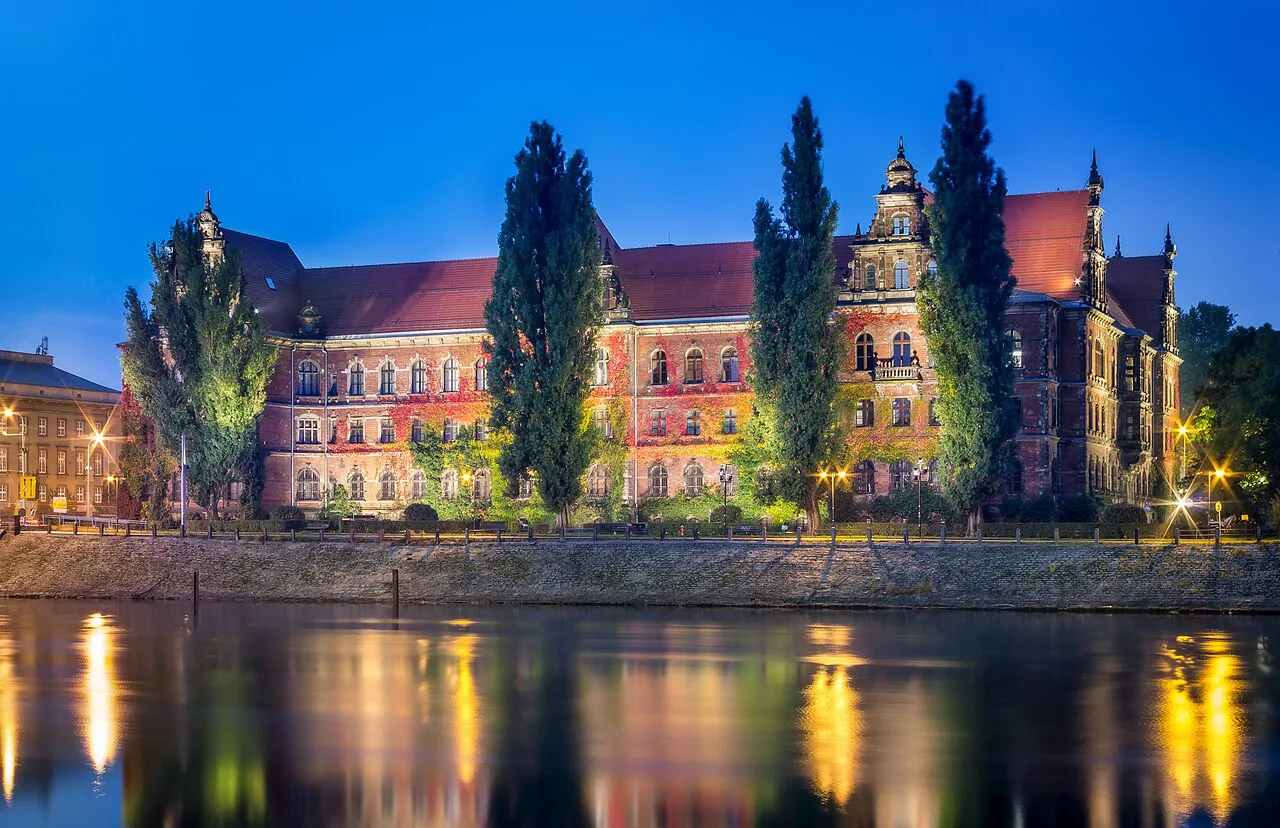
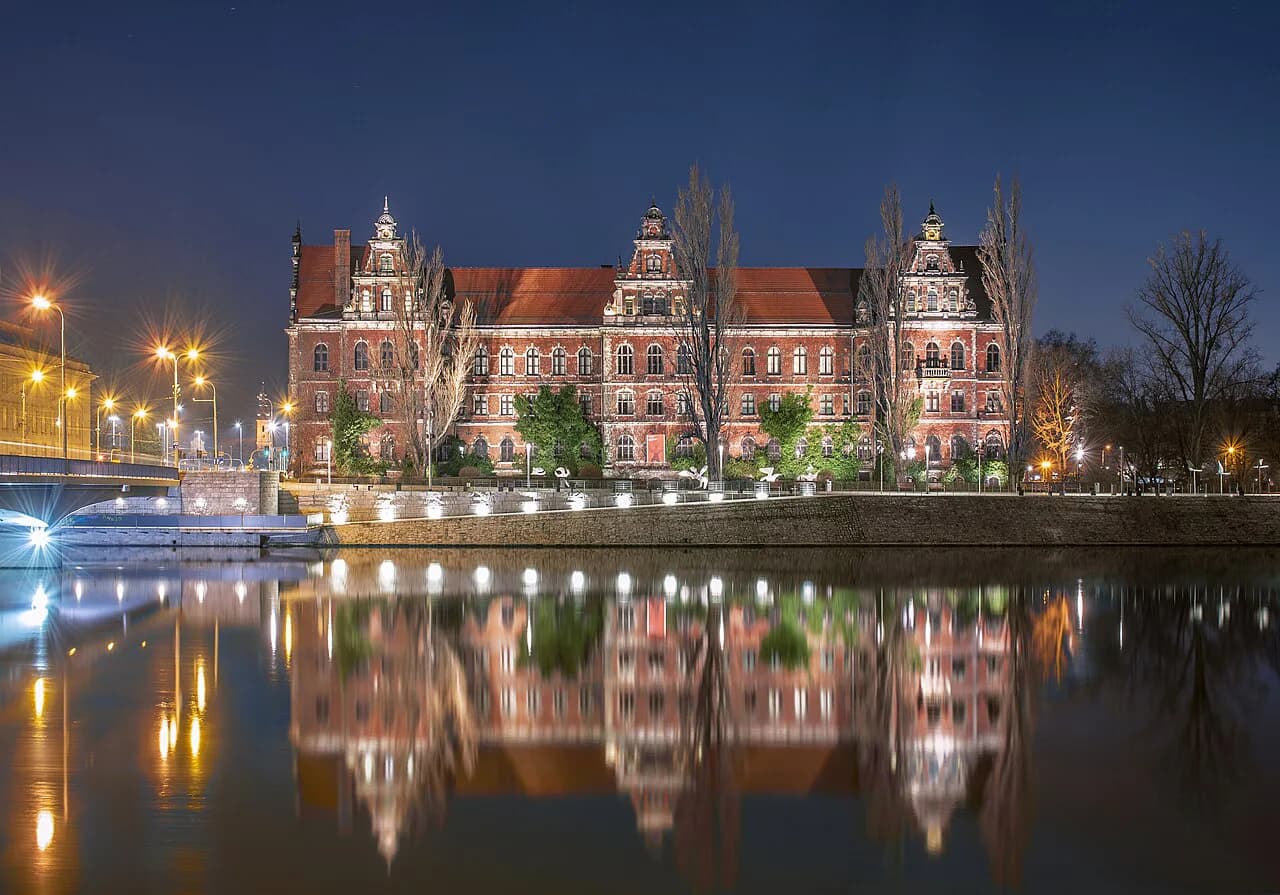
The National Museum holds a broad art collection, from medieval sculpture to modern Polish painting, and suits a rainy half-day. The university's Aula Leopoldinum and Mathematical Tower are a separate visit worth pairing with a slower pace than the outdoor sights, so slot them into a second day.
Polish museums often close one day a week, and many hold a free-entry day, so check the individual venue's page before you build a day around it. Days vary by museum and season, and the Panorama's arrangements are worth confirming in advance.
Centennial Hall, the pergola and the fountain
Centennial Hall is a large multipurpose hall that now hosts exhibitions, concerts and sports events, and its surrounding pergola is draped in ivy. Walk the semicircular colonnade and you reach the Multimedia Fountain, one of the largest in Europe, with 300 water jets and 800 lights. From May to September it stages free hourly shows, with projections onto water screens on special occasions.
The hall and fountain sit in a park district east of the centre, so treat them as a half-day outing rather than a detour. The Japanese Garden is nearby if you want to extend the afternoon. This is the part of Wrocław that surprises people who expected only cobbles and churches.
Green stops in the centre
The University of Wrocław Botanical Garden is a green oasis in the middle of the city, good for a slow hour between sights. The Japanese Garden, on the edge of the eastern park district, is a separate visit and works well alongside Centennial Hall. Both are best in the warmer months, so plan them for that part of the year.
The Market Hall and where to eat
Wrocław Market Hall is the place to combine a browse with a snack, and Wrocław's food scene runs from milk bars to modern Polish cooking. The Market Square and its lanes are lined with restaurants for an easy lunch. Use the food guide to pick a stop that fits your route rather than backtracking.
The market itself is a good introduction to Polish produce, and the guides to Wrocław Markets and shopping in Wrocław cover what to buy and where. For a quick lunch, a market stall beats a sit-down restaurant if you want to keep walking. Note that Sunday trading is restricted in Poland, so check the market's own page for its hours that day.
Rainy-day and family options
Hydropolis is a knowledge centre about water, and Kolejkowo is a miniature model of the region, both indoor and both family-friendly. Wrocław Zoo with its Africarium is described as Poland's most visited paid tourist attraction, with a focus on African water wildlife. These fill a wet afternoon without wasting a day.
For children, the dwarf hunt is the best free activity in the city, and it works in light rain. Pair it with a short museum visit rather than a long one, and keep the outdoor sights for the brighter part of the day.
What to skip or save for a return visit
On a one-day trip, skip the Centennial Hall district and the Japanese Garden; both need half a day and are better in warm weather. On a two-day trip, choose between the National Museum and the Aula Leopoldinum rather than doing both. Wrocław rewards a second visit, so leaving something for next time is not a loss.
If you are weighing Wrocław against a longer Polish itinerary, note that direct trains connect it to Warsaw, Kraków and Poznań, making it easy to slot in. Getting around on foot covers most of the core, with trams for the eastern parks.
Where to go in the evening without a bar crawl
Ostrów Tumski at dusk is the best free evening in the city. A walk back across the Oder bridges gives you the illuminated skyline without a bar crawl. Alternatively, take a late-afternoon boat trip and eat near the river.
Two days or three?
Two days gives you the Market Square, the dwarf hunt, the Panorama and Ostrów Tumski without rushing, with a morning left for either the museums or the Centennial Hall district. Three days lets you add both green spaces and the National Museum. Check the Panorama's current visiting arrangements and museum closing days before you lock in a plan.
Explore more Wrocław guides
Frequently Asked Questions
What should not be missed in Wrocław?
The Market Square and Old Town Hall, the dwarf hunt along Świdnicka Street, the Panorama of the Battle of Racławice and the walk over the Oder to Ostrów Tumski. If you have a second day, add the Centennial Hall district with its pergola and fountain.
Is Wrocław close to Auschwitz?
No. Auschwitz-Birkenau is near Oświęcim in southern Poland, close to Kraków and a long way from Wrocław in the southwest. Treat it as part of a Kraków trip rather than a day out from Wrocław.
Would you call Wrocław more Polish or German?
Wrocław was part of Germany until 1945 and became Polish after the war, when the city was rebuilt and resettled. The Market Square's reconstructed facades reflect that layered history rather than a single national style.
How many days do you need in Wrocław?
Two days covers the main sights comfortably; three lets you add the Botanical Garden, the Japanese Garden and a museum without rushing. One day is possible but means choosing between the Old Town and the eastern parks.
Sources
Notes for your next Polish city break
Optional updates to our Poland guides.
You might also like
Continue reading
More guides you'll find useful