Things to Do in Szczecin: Museums, Waterfront and the Old Town
Plan things to do in Szczecin by area: the Pomeranian Dukes' Castle, Chrobry Embankment, Dialogue Centre Upheavals and the city's published free museum days.
On this page
Two days is enough for the core of Szczecin: the Pomeranian Dukes' Castle, the Chrobry Embankment above the Oder and one or two of the museums clustered around Solidarity Square. Add a third day if you want the Museum of Technology and Transport as well, because the sights are spread across a wide waterfront rather than packed into one grid. This guide groups them by area, flags the free-entry days the city tourist office publishes and is honest about what needs a tram.
Szczecin sits in the far north-west of Poland, roughly 40 miles from the Baltic, and has been a port since the 800s. It was a German city until the end of the Second World War, then returned to Poland, and the rebuilt centre still carries both layers. Arriving by train, you see the red-brick cathedral and the pale castle with green turrets almost immediately.
Why Szczecin is worth the trip
Szczecin is not a city of one showpiece. Its appeal is the mix: a Renaissance castle, a Gothic cathedral, one of the grandest 20th-century riverside terraces in Poland, an underground history exhibition and a striking modern concert hall, all within a couple of kilometres of each other. The trade-off is that the centre was heavily destroyed in the war and rebuilt in patches, so you get socialist blocks beside restored traders' houses rather than a seamless old town.
If you are weighing Szczecin against Gdańsk or another Polish city, the honest case is that Szczecin is quieter, cheaper-feeling and closer to Berlin, but it has less of the postcard charm. It suits travellers who like museums, riverside walks and 20th-century history more than those hunting a perfectly preserved market square.
How Szczecin is laid out
The city has no single defined centre. The Old Town Centre, with the castle and the Old City Hall, and the district known as Centrum sit almost two kilometres apart, so plan by area rather than zig-zagging. Buses and trams connect them, and most of the individual sights are walkable from each other once you are in the right quarter.
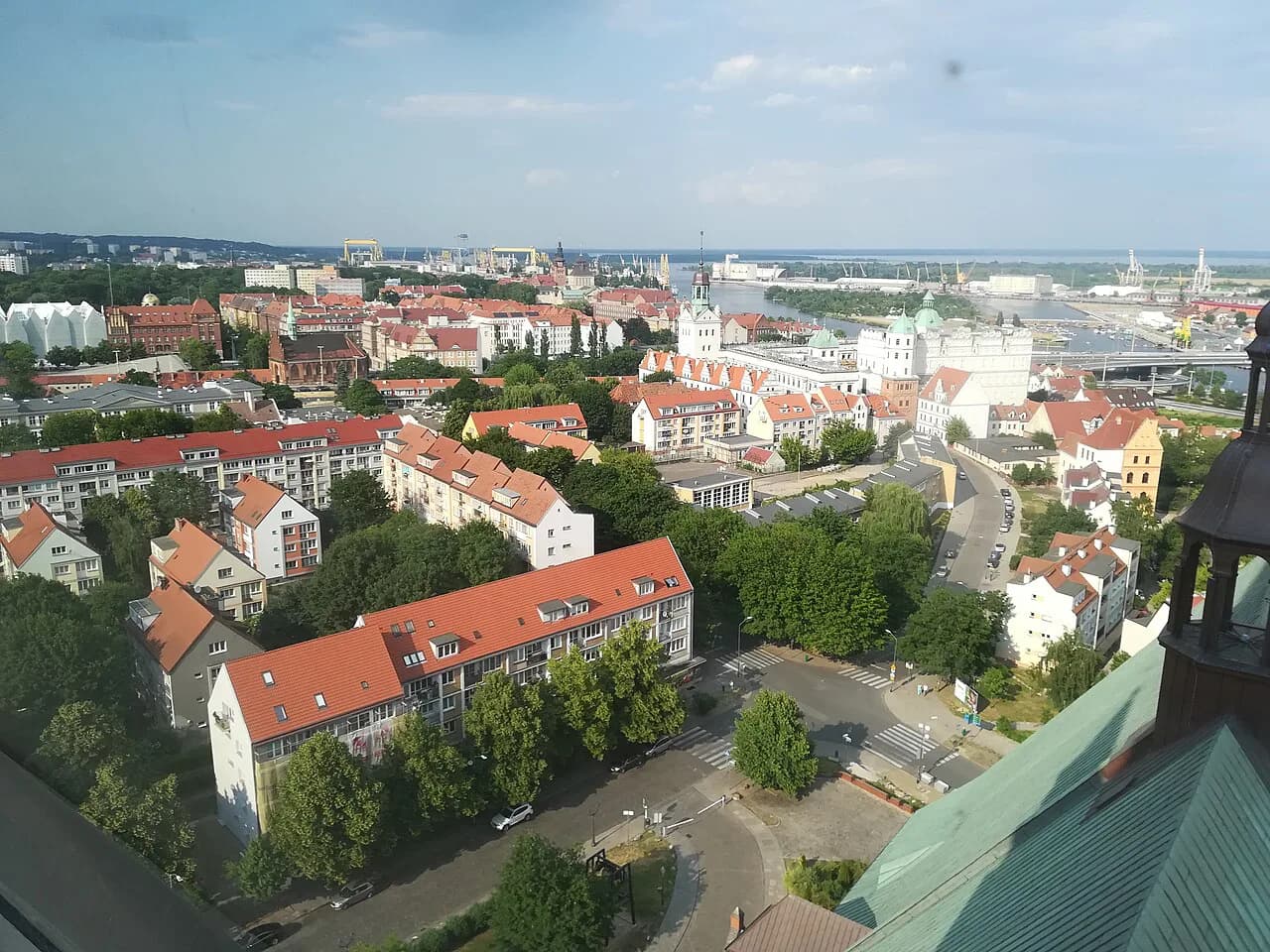
The Oder does the orienting. The Chrobry Embankment looks across the river to Lasztownia island and its historic port cranes, nicknamed the Cranosauruses, which light up at night. Use the embankment as your spine: the castle sits behind it, Solidarity Square and the philharmonic are a short walk inland, and the waterfront path links the two banks.
The Pomeranian Dukes' Castle
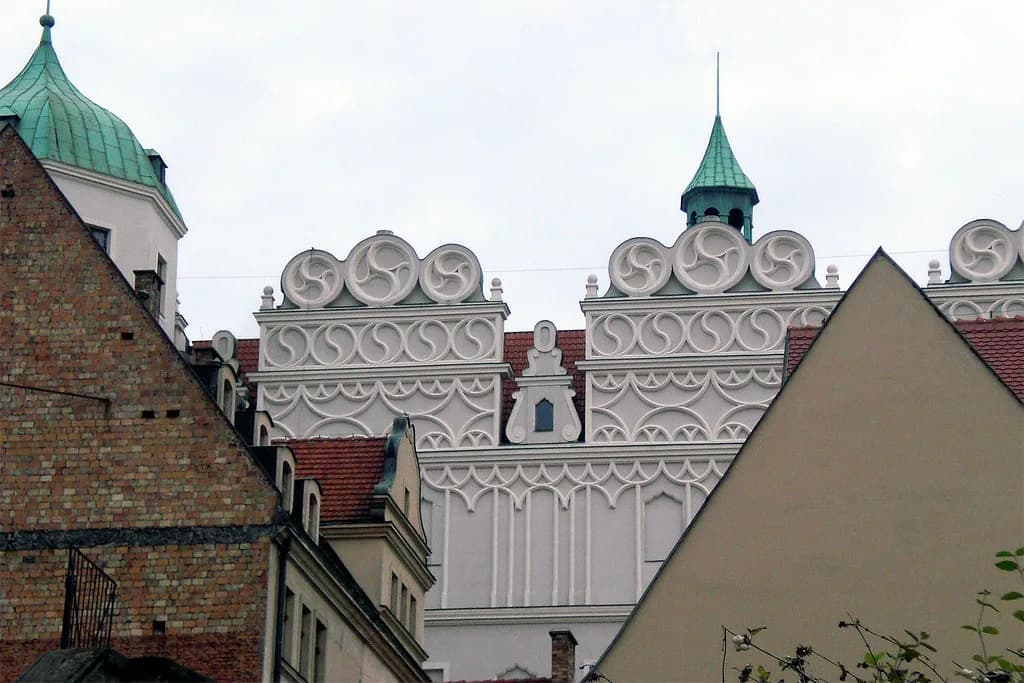
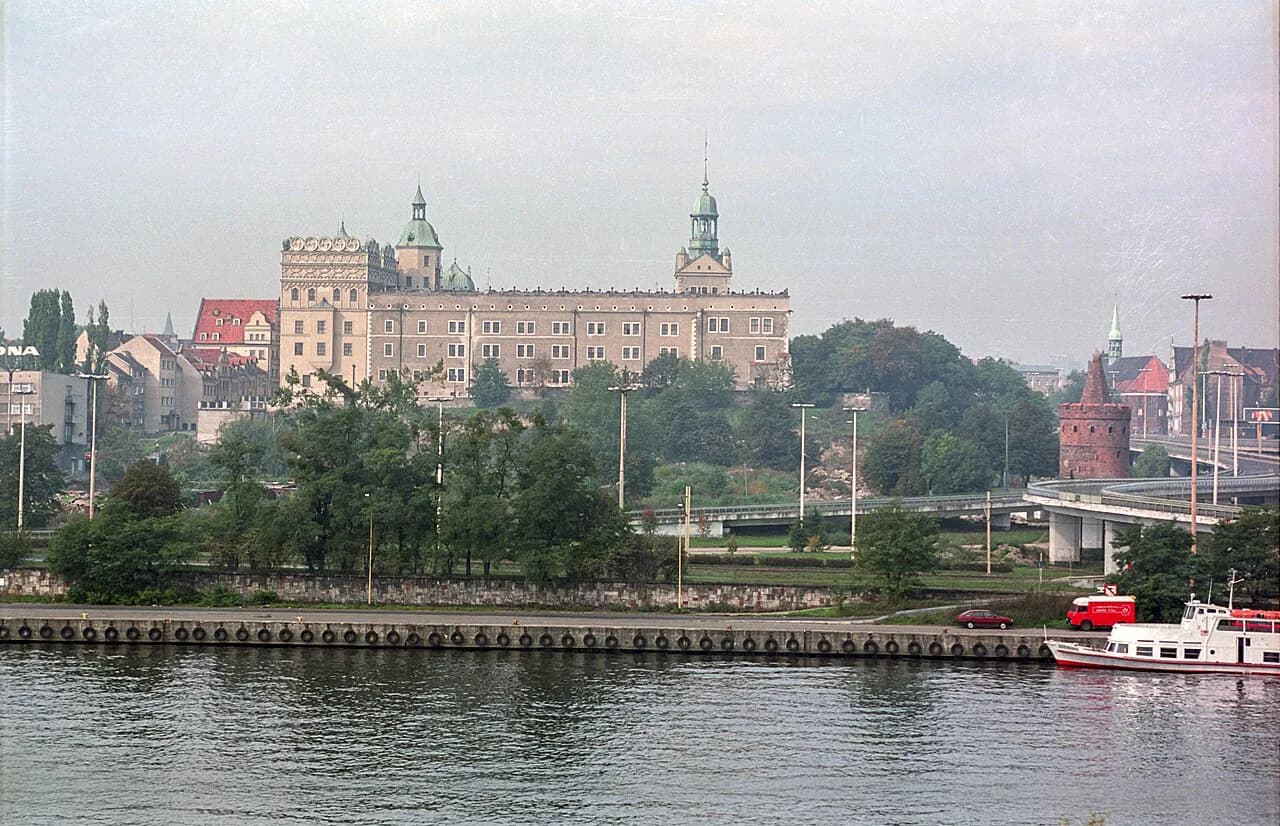
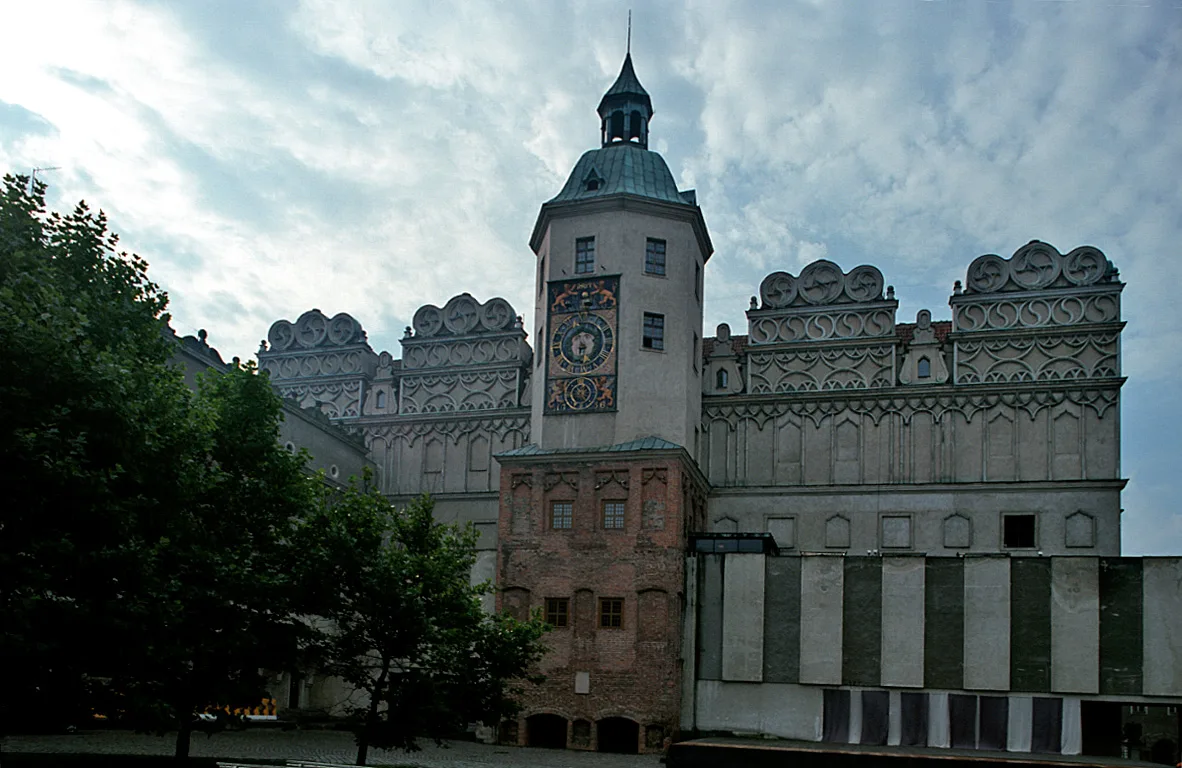
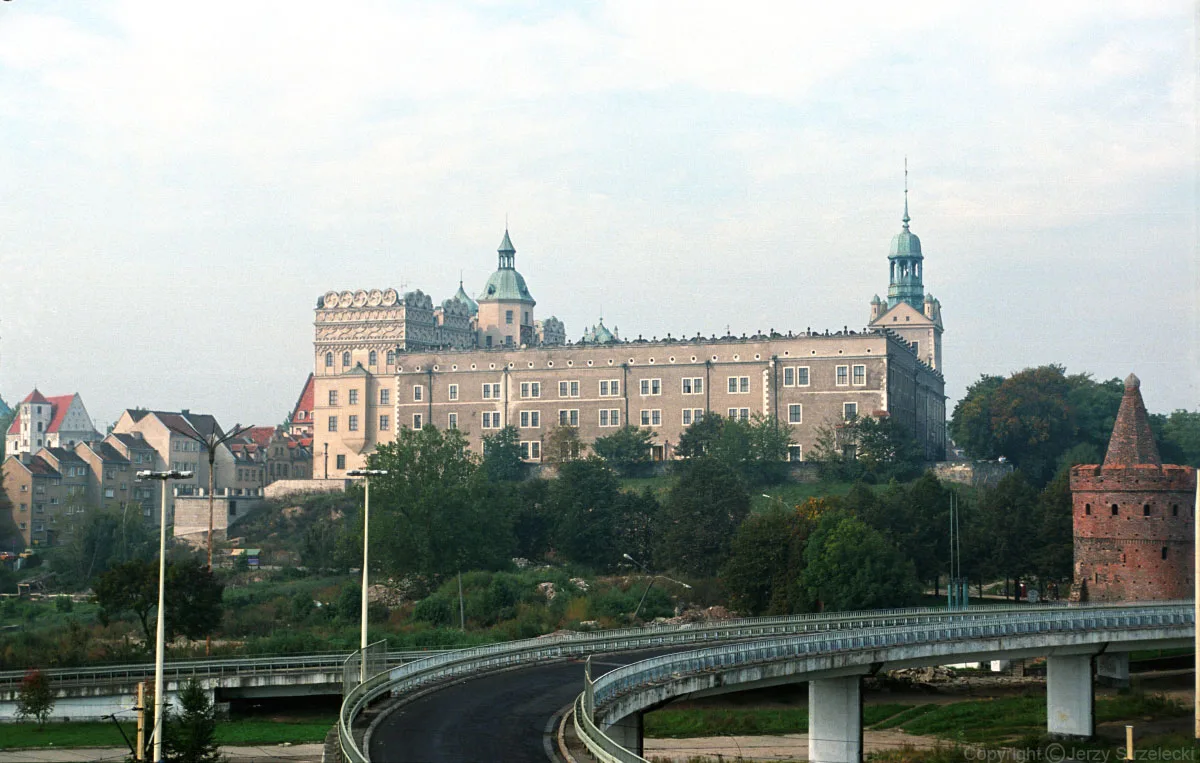
The castle was the seat of the Griffins dynasty, the dukes who ruled Pomerania from the 14th to the 17th century, and its sculpted facade and green turrets make it the obvious first stop. You can walk into the two large courtyards for nothing and climb to the terrace of the northern wing for a panorama over the rooftops and the Oder.
The castle is a working complex, not a single museum, and its courtyards were reported to be under renovation when one recent account was published, with the basement exhibition in the northern wing and the bell tower still open. Treat any closure as a live question and check the castle's own notices before you build a morning around it. The castle museum holds medieval artefacts and maps, and costumed guides have led group tours in summer.
Chrobry Embankment and the riverfront walk
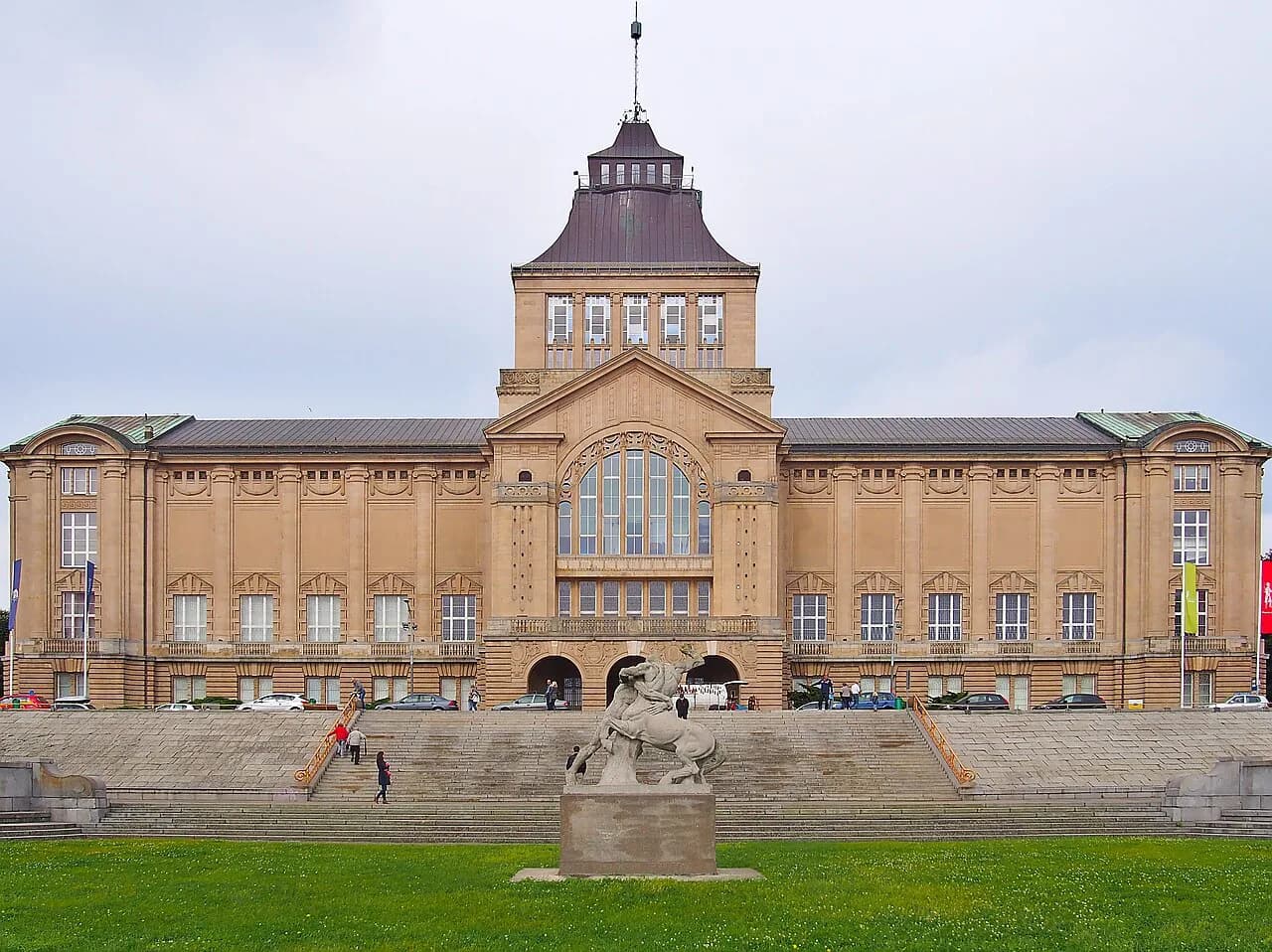
The Chrobry Embankment, known in Polish as Wały Chrobrego, is the city's grandest surviving early 20th-century set piece: an ornate terrace above the Oder with steps down to the water and a statue of Hercules fighting a centaur on the way. Come late in the day, when the light hits Lasztownia across the river and the cranes switch on. This is the best free hour in Szczecin.
The National Museum in Szczecin sits on the embankment and is the largest cultural institution in West Pomerania, with art and exhibitions covering the Baltic and Pomeranian history. Its galleries give the riverside walk a purpose on a wet afternoon. Entry is free on Saturdays, as the city tourist office lists.
Lasztownia island and the water-level view back
Lasztownia, on an island between two branches of the Oder, has turned old docks into the city's entertainment quarter, with a ferris wheel billed as Poland's tallest and boat and kayak trips from the waterfront. The best reason to cross is the view back at the embankment across the river, which reads differently from the low bank than from the terrace itself.
The Dialogue Centre Upheavals
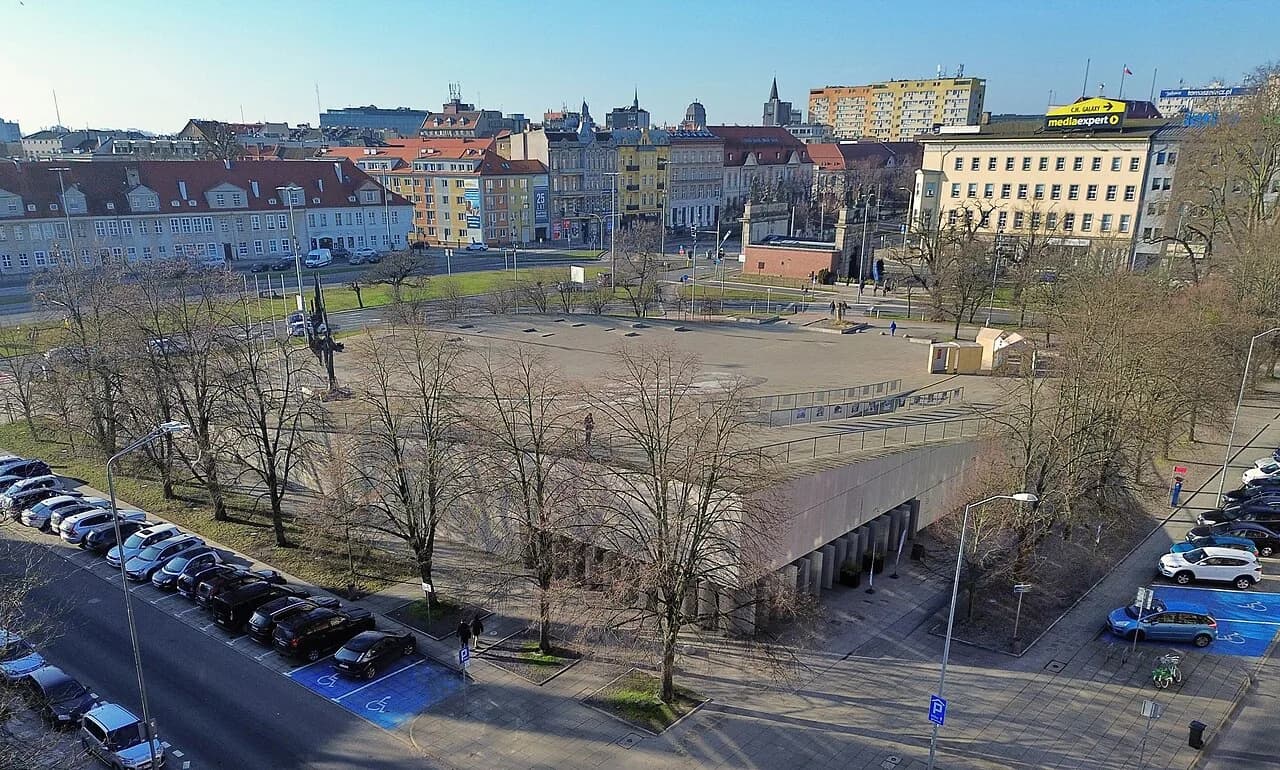
Under Solidarity Square, in front of the philharmonic, the Dialogue Centre Upheavals is a branch of the National Museum devoted to the region's newest history, with the emphasis on protest and revolution up to 1989. It is an underground, multimedia exhibition, and you do not need to have seen the National Museum's galleries to follow it.
Saturday is the day to aim for if you are counting złoty: the tourist office lists the Dialogue Centre among the museums with free admission every Saturday. That list is specific, so do not assume it stretches to every museum in the city on the same day.
Old City Hall and the Museum of Szczecin History
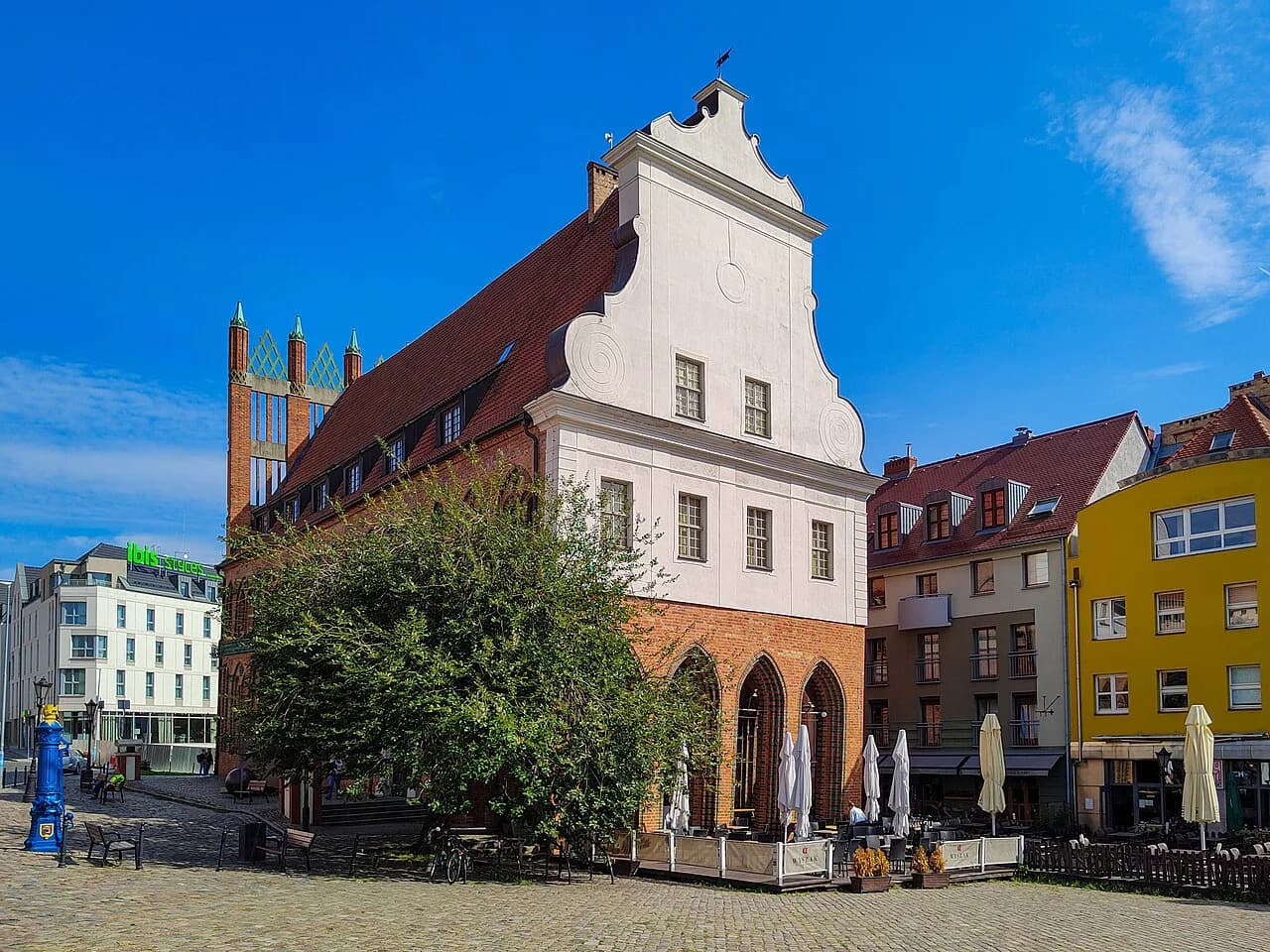
The Gothic Old City Hall, a 15th-century building, houses the Museum of Szczecin History, which starts with the Viking settlement and works through the centuries of Griffin rule; the city's coat of arms still carries the griffin's head. It is the place to piece together why the city looks the way it does, especially the wartime destruction and socialist rebuild. Entry is free on Saturdays according to the city's list.
Museum of Technology and Transport
Housed in a former tram depot, the Museum of Technology and Transport is the one museum visitors tend to recommend unprompted, with close to a hundred vehicles and exhibits in the old shed. It sits away from the riverside cluster, so give it its own slot rather than squeezing it between the castle and the embankment.
Its free day is Tuesday, which the city tourist office publishes separately from the Saturday group. If your break includes a Tuesday, this is the museum to move.
Modern Szczecin: the philharmonic and TRAFO
The Mieczysław Karłowicz Philharmonic, with jagged glass panels that light up at night, is the counterweight to the rebuilt old town and the reason the city feels contemporary rather than merely restored. TRAFO Center for Contemporary Art, the region's first centre for contemporary art, adds a second modern stop. The city's free-entry list includes the Gallery of Contemporary Art, so a Saturday plan can lean on the museums and still leave the evening for the waterfront.
Wojska Polskiego Avenue and everyday Szczecin
Aleja Wojska Polskiego, the tree-lined avenue through Śródmieście, is where the city lives its ordinary life: Kino Pionier, the Bogusława pedestrian stretch, Jagiellońska street and plac Zgody all sit along or just off it. It is not a sight in the ticketed sense, but an hour here shows you the Szczecin that exists outside the museum circuit, and it links naturally to the old town on foot.
Free things to do beyond the museums
Beyond the Saturday and Tuesday museum slots, the tourist office lists summer chamber concerts in the Rose Garden and summer concerts at the Pomeranian Dukes' Castle, plus a Saturday open-air cinema on the roof of the Kaskada shopping centre. Tourist information offices give out maps free, and guided city walks run on International Guide Day.
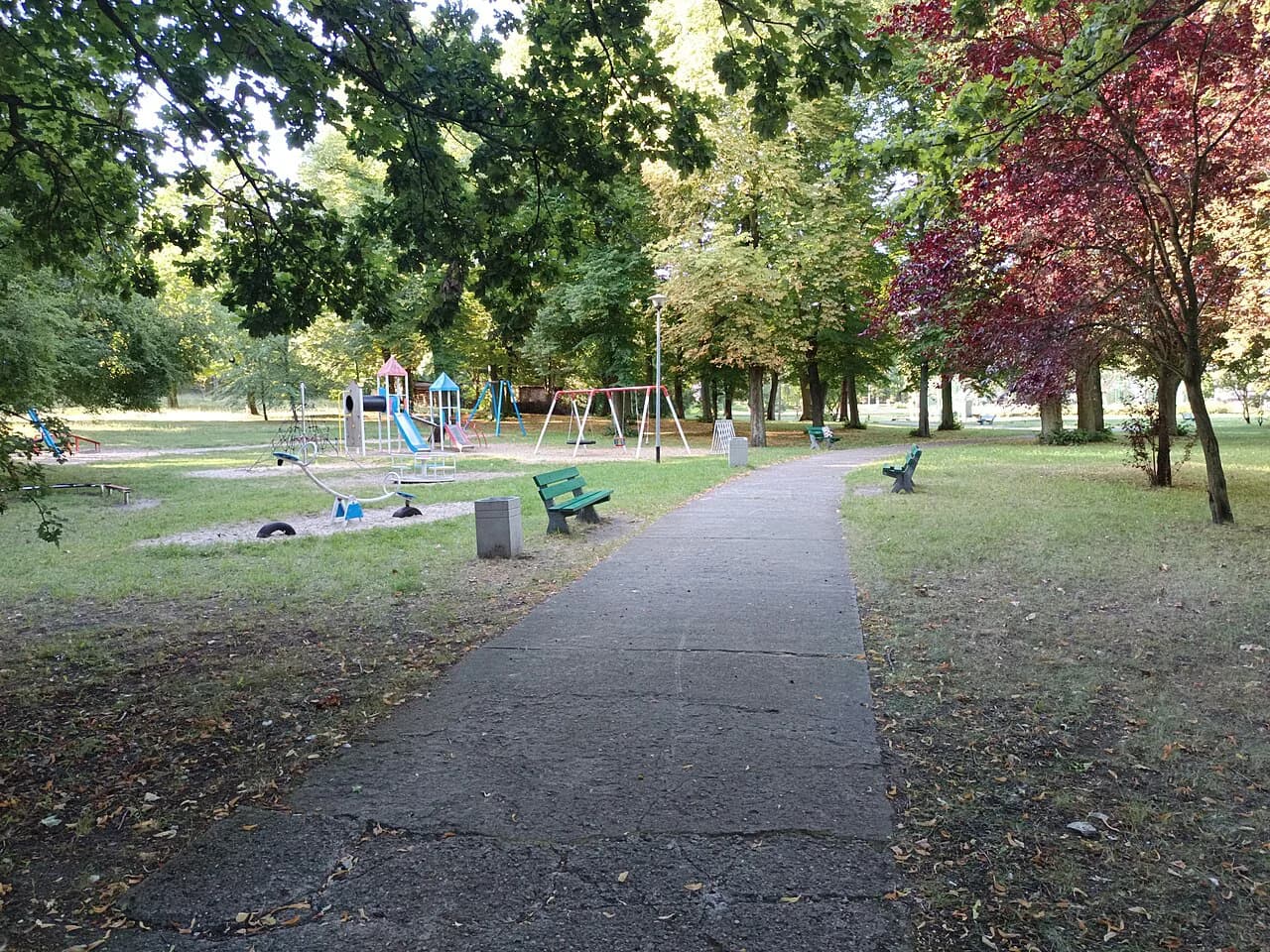
Public transport has also been free on European Car Free Day, 22 September, though that is a single date rather than a reason to plan a trip. The reliable free options are the embankment, the castle courtyards, the waterfront walk and the parks; the Rose Garden doubles as an open-air stage in summer.
How many days in Szczecin
One day covers the castle courtyards, the cathedral, the Chrobry Embankment and either the Dialogue Centre or the Old City Hall museum. Two days add the second museum and Lasztownia, and three days let you fit in the Museum of Technology and Transport without rushing. Because the Old Town and Centrum are apart, a one-day plan should pick one quarter and walk it properly.
When to go
Summer brings the most visitors and, in August, tall sailing ships in the harbour for an annual race. If you want the museums without the crowds, early June or September is the better bet: the weather is usually kind and the streets are quieter.
What things cost and the tourist card
Museum prices vary by site and change with each season, so check each museum's own site for current złoty tickets before you go. What is clearer is the free-entry pattern: the Museum of Szczecin History, the Museum of Regional Traditions, the Dialogue Centre Upheavals, the Gallery of Contemporary Art and the National Museum are free every Saturday, and the Museum of Technology and Transport every Tuesday. A Szczecin tourist card also exists if you plan to pay for several sites.
Getting around between the sights
Walking works within each quarter but not between all of them, so expect to use the trams and buses that criss-cross the centre. The main attractions are spread out, and a guide or tour on your first morning is a quick way to get your bearings before you set off alone.
Which Szczecin day suits you?
If you have one day, give it to the castle, the cathedral and the embankment, with the Dialogue Centre Upheavals as your wet-weather fallback. With two, add the National Museum on a Saturday or the Museum of Technology and Transport on a Tuesday, and cross to Lasztownia for the view back.
Szczecin rewards a relaxed pace rather than a checklist. Pick two museums, walk the river at dusk and leave the tram rides for the gaps between them.
Explore more Szczecin guides
Sources
Notes for your next Polish city break
Optional updates to our Poland guides.
You might also like
Continue reading
More guides you'll find useful