Things to Do in Gdańsk: What to See in One to Three Days
Plan a Gdańsk city break with the Royal Way and Długi Targ, Motława waterfront, wartime and Solidarity museums, and a one, two or three day plan.
On this page
Gdańsk needs two full days for most visitors: one for the Main Town's Royal Way and Motława waterfront, one for the wartime and Solidarity museums. The city is compact enough to cross on foot, but its big museums are time-heavy, so the plan matters more than the pace. This guide covers what to see, how the districts fit together and how to choose between one, two or three days.
The historic core is the Main Town, known in Polish as Główne Miasto, and it is not the same as the Old Town to its north. The former shipyard grounds sit a short walk north-west, and Westerplatte lies further out along the coast. Knowing which quarter you are heading for stops you zig-zagging between sights.
What to see in Gdańsk and how the city is laid out
Gdańsk grew as a Hanseatic port, and the old centre keeps that trading-town layout: broad market streets, tall gabled merchants' houses and a working river arm. The Main Town holds nearly everything a short-break visitor wants within about twenty minutes' walk, from the Upland Gate down to the Motława.
Three areas do most of the work. The Main Town covers the Royal Way and the waterfront; the Old Town, quieter and more residential, sits around St Catherine's Church; and the shipyard grounds hold the Solidarity story in post-industrial surroundings. Plan one area per half-day rather than treating Gdańsk as a single sight.
The Main Town and the Royal Way: Upland Gate to Green Gate
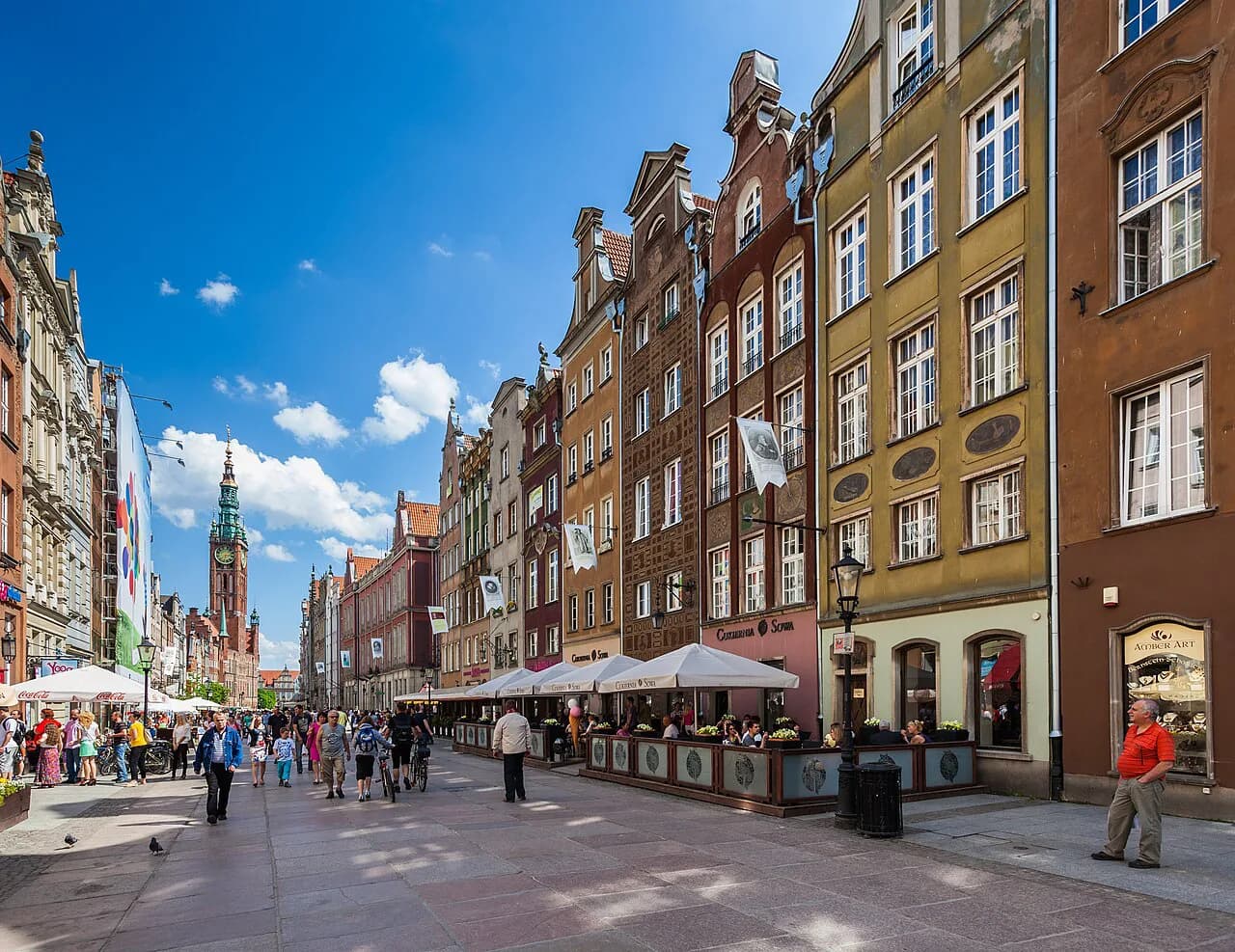
The Royal Way runs from Brama Wyżynna, the Upland Gate, through the Golden Gate and along Długa to Zielona Brama, the Green Gate, on the river. Walking it end to end takes under half an hour without stops. Do it first thing, before the tour groups arrive.
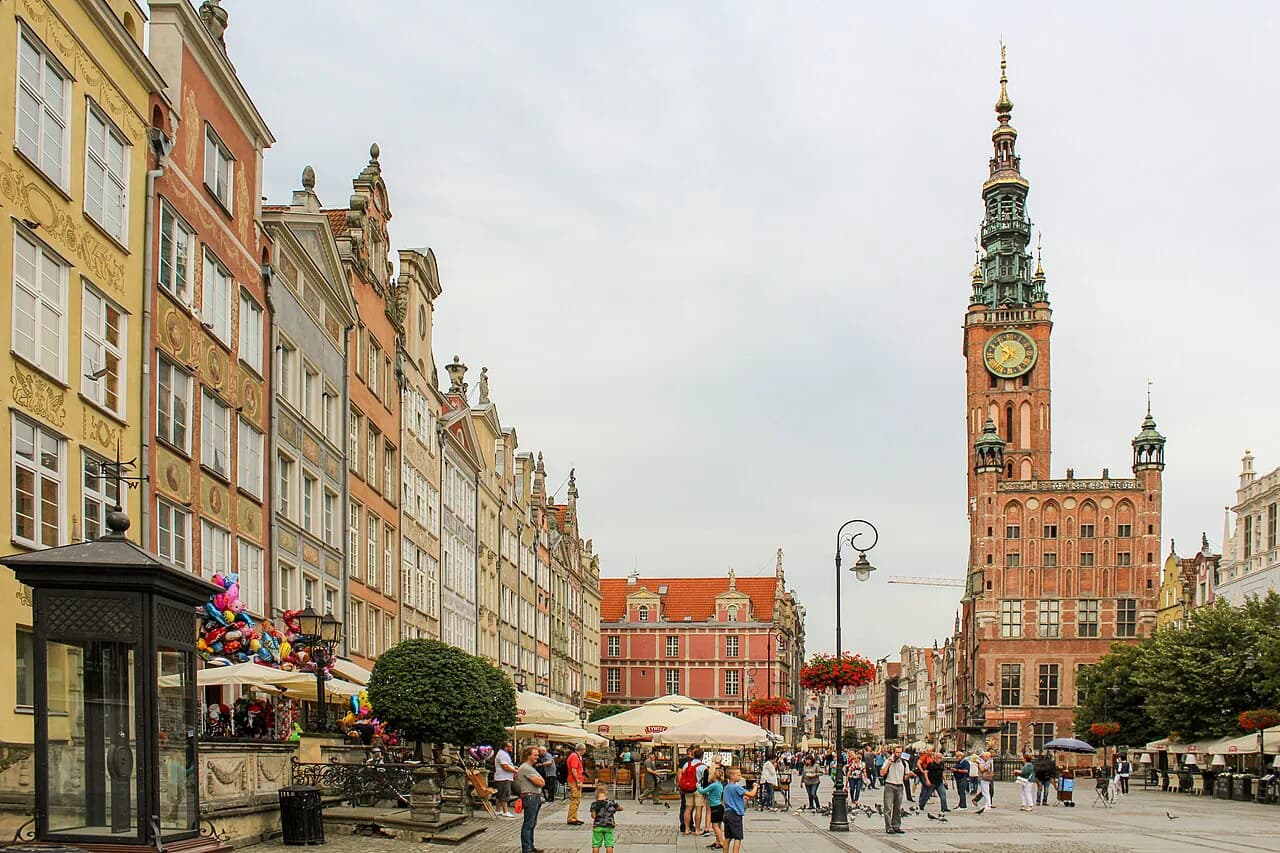
Długa, Long Street, spills into Długi Targ, the Long Market, which is the widest and most photographed stretch of the route. The main tourist office sits here, useful for maps and passes. Expect crowds and café terraces in equal measure; the side streets running off it are far calmer.
Długi Targ and Długa: Main Town Hall, Neptune Fountain, Artus Court
Długi Targ packs the Main Town's set pieces into one square: the Main Town Hall, the Neptune Fountain in front of it and Artus Court next door. The town hall contains a museum that showcases historically significant exhibits tracing the city's history, including photographs of the near-total destruction of the Second World War and the rebuild that followed.
Artus Court sits next to the town hall and is one of the sights to head inside on Długi Targ. The Neptune Fountain in front of the hall is the city's symbol. Both are close together on the square, so they take minutes rather than hours.
Mariacka Lane and St Mary's Basilica
Mariacka Lane runs from Długi Targ towards St Mary's Basilica, its stone stoops lined with amber workshops and antique dealers. It is the most photogenic street in the Main Town and the natural place to browse for amber jewellery.
St Mary's Basilica is among the largest Gothic churches built in brick in Europe, and its tower gives the classic view over the Main Town's roofs. The climb is the trade-off: a long staircase up a working church tower, repaid by the best rooftop panorama in the centre.
The Motława embankment and the Żuraw
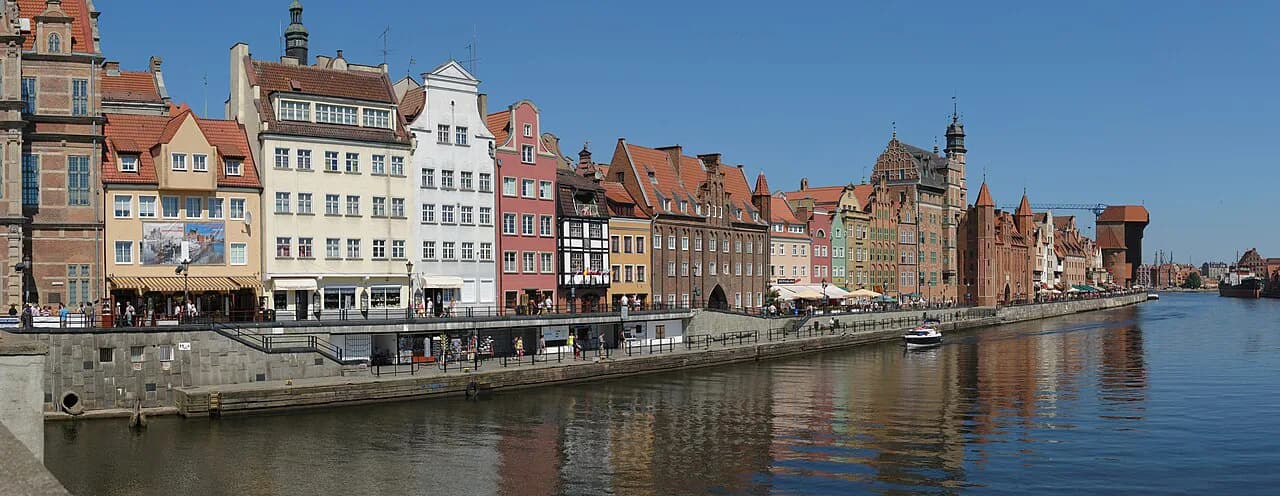
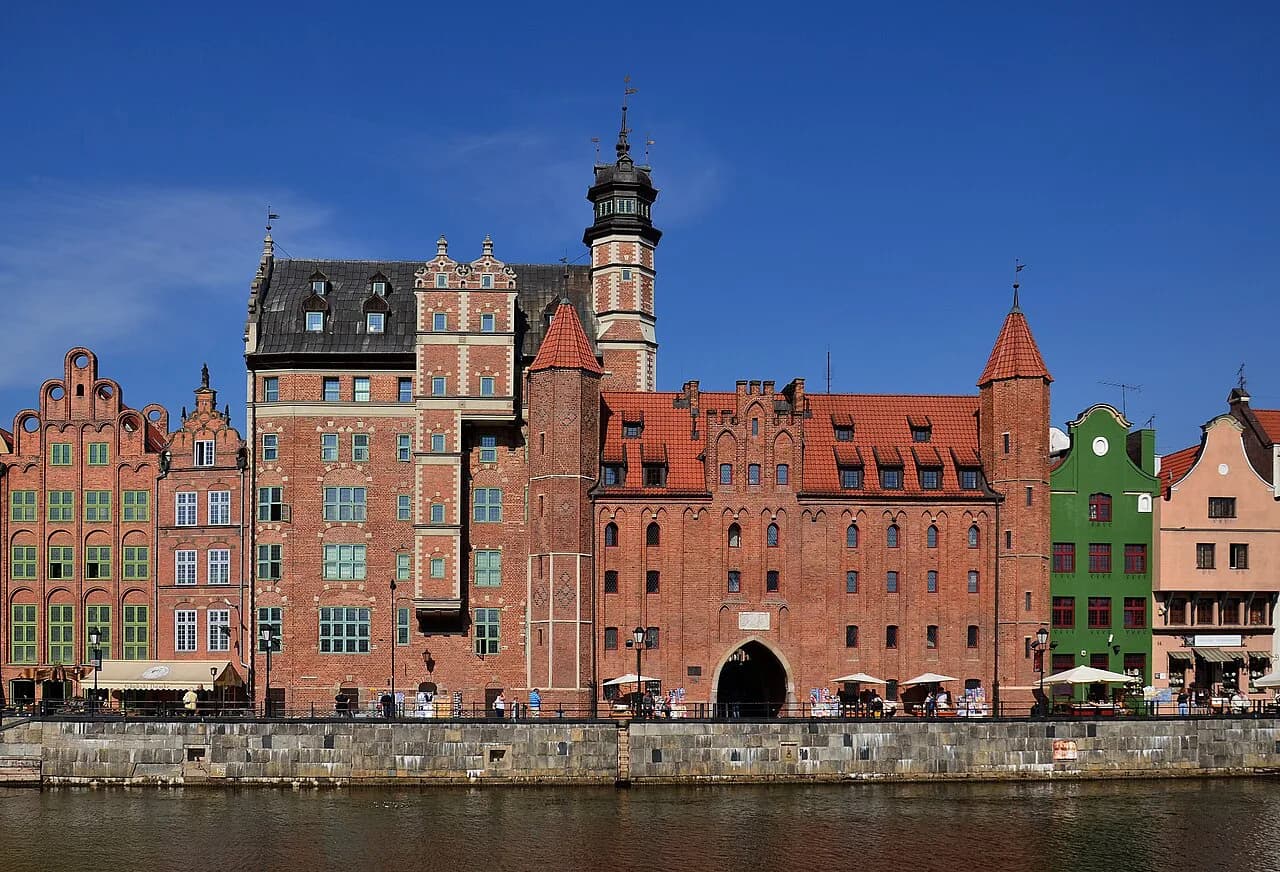
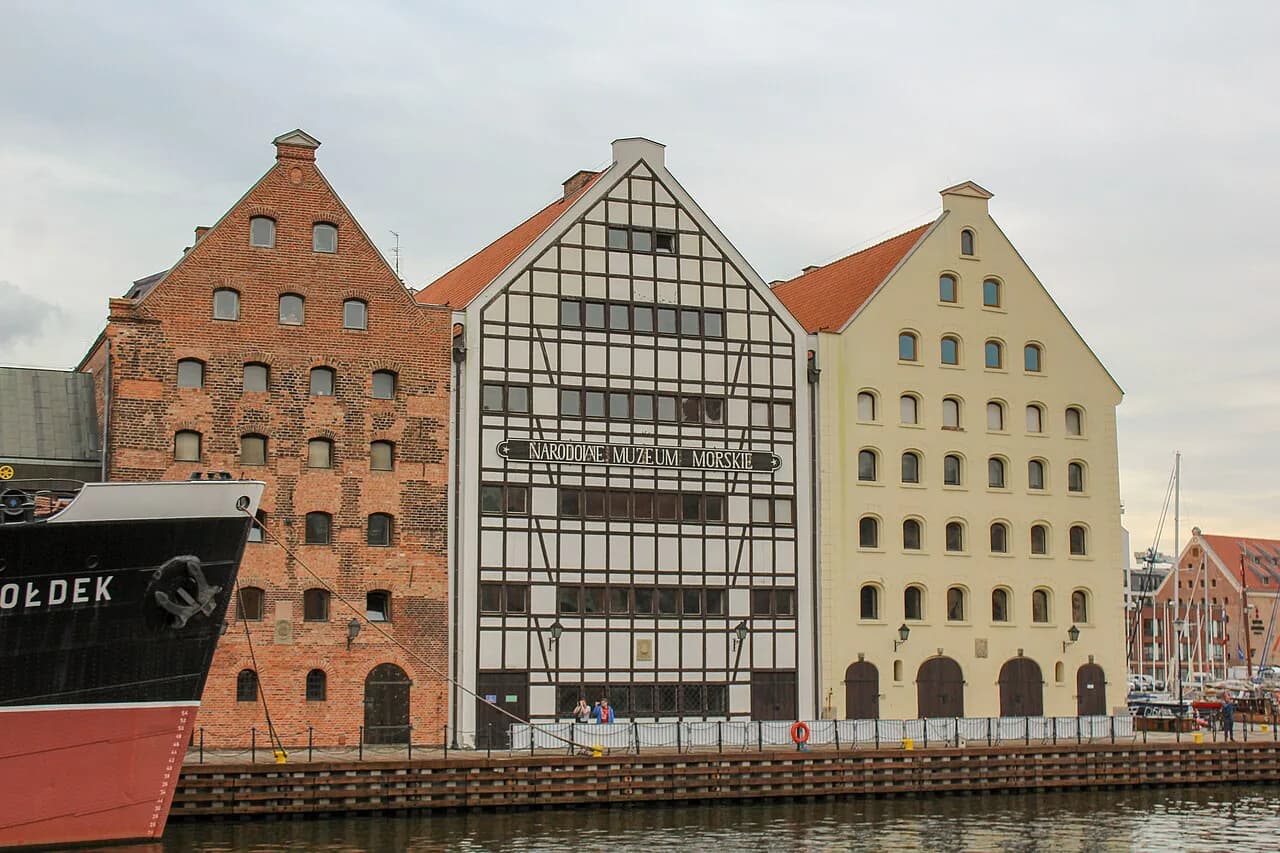
The Motława embankment is Gdańsk at its most photogenic: gabled facades reflected in the water, the medieval Żuraw crane straddling the quay and river boats tied along the bank. The Crane is the surviving landmark of the port's working past.
This is the place to pause rather than tick off. On the opposite bank, the waterfront continues towards the shipyard cranes. If the weather turns, the riverside restaurants and the nearby museums keep you close to shelter.
The Museum of the Second World War
The Museum of the Second World War, just south of the Main Town near the Motława, is the single biggest time commitment in the city. Its main exhibition traces the war from its origins through occupation and resistance, and it is housed in a striking modern building that leans over the street. Allow half a day and decide in advance whether you want the full exhibition or a shorter pass.
It is not a light stop between other sights: the material is dense and the subject demands attention. Visit it on a fresh morning rather than at the end of a walking day. Grouping it with the Post Office museum nearby makes a coherent wartime half-day.
The European Solidarity Centre and the former shipyard
The European Solidarity Centre stands in the former shipyard where the Solidarity movement was born, a short walk north-west of the Main Town. Its permanent exhibition covers the strikes, the union and the fall of communism in Central Europe, with the shipyard halls and cranes still framing the building outside.
This is the museum that explains modern Poland better than any other in the city, and the surrounding post-industrial streets are worth an hour on their own. The plazas and memorials around the shipyard gates can be seen without a ticket.
The Polish Post Office Museum and Westerplatte
The Polish Post Office Museum marks the building defended by postal workers against German Nazi forces at the outbreak of the war in September 1939. It sits close to the Main Town, which makes it easy to combine with the wartime museum. Westerplatte, the peninsula associated with the opening of the war, lies further out and takes a half-day on its own.
Both are sombre sites rather than attractions, and visitors should treat them as such. If your time is short, choose one: the Post Office for convenience, Westerplatte for scale and setting. Transport to Westerplatte is a separate planning task, so check connections before committing a morning.
Gradowa Hill for a city view
Gradowa Hill, west of the centre, gives a wide view over the Main Town, the shipyard cranes and the plain beyond. It is a short climb from the station side and far less crowded than the basilica tower. Sunset is the obvious slot, bringing warm light on the brick rooftops.
The hill is an outdoor stop, so pair it with one of the nearby sights rather than making a special trip. Take the climb at a gentle pace; the paths are straightforward but not flat.
Where the Shipyards district and Old Town fit in
The Shipyards district is where Gdańsk's industrial heritage is being reworked into food halls, workshops and cultural venues. The old warehouses and halls give it a raw, unfinished character quite unlike the polished Main Town. It is worth a morning, especially if you are visiting the Solidarity Centre.
The Old Town, north of the Main Town, centres on St Catherine's Church and is quieter and more residential. It repays a stroll if you have a spare hour, and it links naturally towards the shipyard area. Its red-brick streets are the counterweight to the Royal Way's crowds.
How many days Gdańsk needs: one, two or three
With one day, stay in the Main Town: walk the Royal Way from the Upland Gate, climb the basilica tower, follow Mariacka Lane and finish on the Motława embankment. That covers the city's essential character without a museum. It is a fast, satisfying introduction and enough for many weekenders.
Two days add one heavy museum: the Museum of the Second World War or the European Solidarity Centre, not both. Two days is the realistic minimum for understanding Gdańsk. Three days let you include both museums plus Westerplatte or Gradowa Hill without rushing.
Museums, opening days and free entry
Gdańsk's museums are not all open every day, and the pattern varies by venue, so check the museum's own listing for the day you plan to visit. Confirm current opening days and any free-entry days on the official sites rather than relying on a planning guide.
If museums are the priority, build your days around their open days rather than the other way round. The Gdańsk tourist card bundles museum entry and public transport between Gdańsk, Sopot and Gdynia, which suits heavy sightseeing days. Compare the pass against the individual tickets you actually plan to use before buying.
When to go
Late spring and early autumn give you the historic streets without peak-season crowds. Autumn is a particularly good time to see the city's post-industrial quarters and waterfront, when the summer visitors thin out.
Rain is always possible on the Baltic coast, so keep at least one indoor museum in reserve for a wet day. The Main Town's compact scale means a sudden shower rarely strands you far from shelter or a café.
Getting around the Main Town on foot
The Main Town is a pedestrian zone best handled on foot, and most of the Royal Way, Mariacka and the waterfront sit within a twenty-minute loop. Comfortable shoes matter more than any transport pass here, because the streets are cobbled throughout.
Use public transport only to reach the shipyard, Westerplatte or the hills; within the centre it will rarely beat walking. A guided walking tour can make sense on day one if you want the history pieced together before you explore alone.
Where to eat and local food
Gdańsk's food scene runs from milk bars to modern Polish restaurants, with the waterfront and ulica Szeroka as the densest clusters in the centre. Pierogi and Baltic fish are the obvious local choices.
For self-catering or picnic supplies, the city's food markets give a better sense of daily eating than the tourist-strip restaurants. Browse before committing to a table; the main streets charge for the view.
Common planning mistakes
The most common mistake is treating the Main Town and the Old Town as one place and doubling back. The second is assuming the museums are open every day and discovering too late that a planned centrepiece is shut.
The third is trying to fit both major wartime museums and Westerplatte into two days. That schedule leaves no room for the riverside wander that makes Gdańsk enjoyable. Choose your heavy sights deliberately.
Gdańsk with Sopot and Gdynia in a short break
Sopot, the seaside resort next door, makes an easy half-day if the museums have worn you out, and its pier is the usual focus. The wider Trójmiasto rail links put Gdańsk, Sopot and Gdynia within easy reach, though the city centre itself rewards more time than the suburbs do.
Keep any extension short and treat it as a change of scenery rather than a second destination; Gdańsk's own museums and waterfront deserve the bulk of a short break. For a different industrial city with a comparable feel, the things to do in Katowice make a useful comparison.
Which sights should you cut?
If time is tight, cut Westerplatte first, then one of the two major museums. The Main Town, the basilica tower and the Motława embankment carry the essential Gdańsk experience in a single day.
With two days, add the Museum of the Second World War or the European Solidarity Centre depending on whether you want the war or the modern struggle for freedom. Three days let you see both, climb Gradowa Hill and still have an evening by the water.
Explore more Gdańsk guides
Frequently Asked Questions
Is two days enough for Gdańsk?
Two days are enough for the Main Town and one major museum, which is the standard shape of a city break here. Add a third day if you want both the Museum of the Second World War and the European Solidarity Centre, or a visit to Westerplatte.
What can you do in Gdańsk on a rainy day?
Head for one of the big indoor museums: the Museum of the Second World War or the European Solidarity Centre will absorb an afternoon. The Main Town is compact, so you can also move between the basilica, Artus Court and riverside cafés without long walks in the rain.
Is Sopot worth visiting on a Gdańsk city break?
Sopot makes an easy half-day by rail if you want a change from the city streets, and its pier and beach are the main draw. Keep it short and treat it as a break from Gdańsk rather than a second destination.
Why is Gdańsk so popular with city-break travellers?
Gdańsk combines a rebuilt Hanseatic centre with major wartime and Solidarity museums, all within walking distance. The mixture of architecture, modern history and a compact old centre makes it easy for a one to three day visit.
Sources
Notes for your next Polish city break
Optional updates to our Poland guides.
You might also like
Continue reading
More guides you'll find useful