
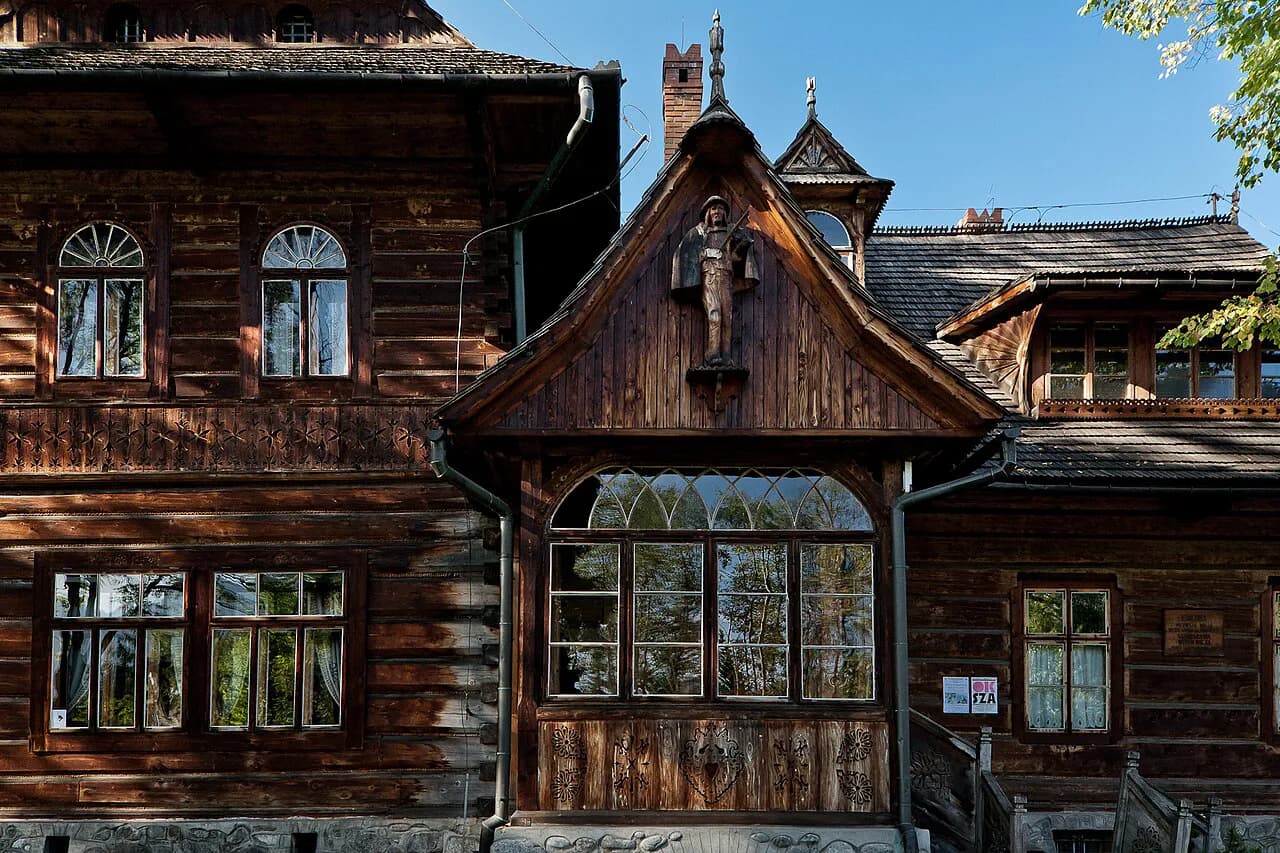
Villa Koliba: the Zakopane Style House on Kościeliska

Villa Koliba is worth an hour of your Zakopane time because it is the building where the Zakopane style began: a wooden house raised in 1892–1893 to Stanisław Witkiewicz's design, the first of its kind. It sits at ulica Kościeliska 18 and has held the Museum of the Zakopane Style (Muzeum Stylu Zakopiańskiego) since 1993. This page covers where the villa stands, what the style means in its rooms, which details to read on the outside, and how to pair it with the church and cemetery a few minutes up the street.
What Villa Koliba is
Villa Koliba is a timber villa built between 1892 and 1893 to a design by Stanisław Witkiewicz, and it holds the claim to being the first house built in the Zakopane style. The style takes its vocabulary from local highland building and from the Tatra landscape rather than from the historicist fashions of the day, which is why the house reads as a mountain dwelling rather than a town villa. Keep the two dates separate in your head: the 1890s belong to the building, while the museum dates from 1993.
The building was entered in the monument register in 1983, so what you walk around is a protected historic house and not a reconstruction. That listing shapes the visit: the fabric of the villa is the exhibit as much as the displays are, and the exterior repay attention before you go in.

Where it stands and how to reach it
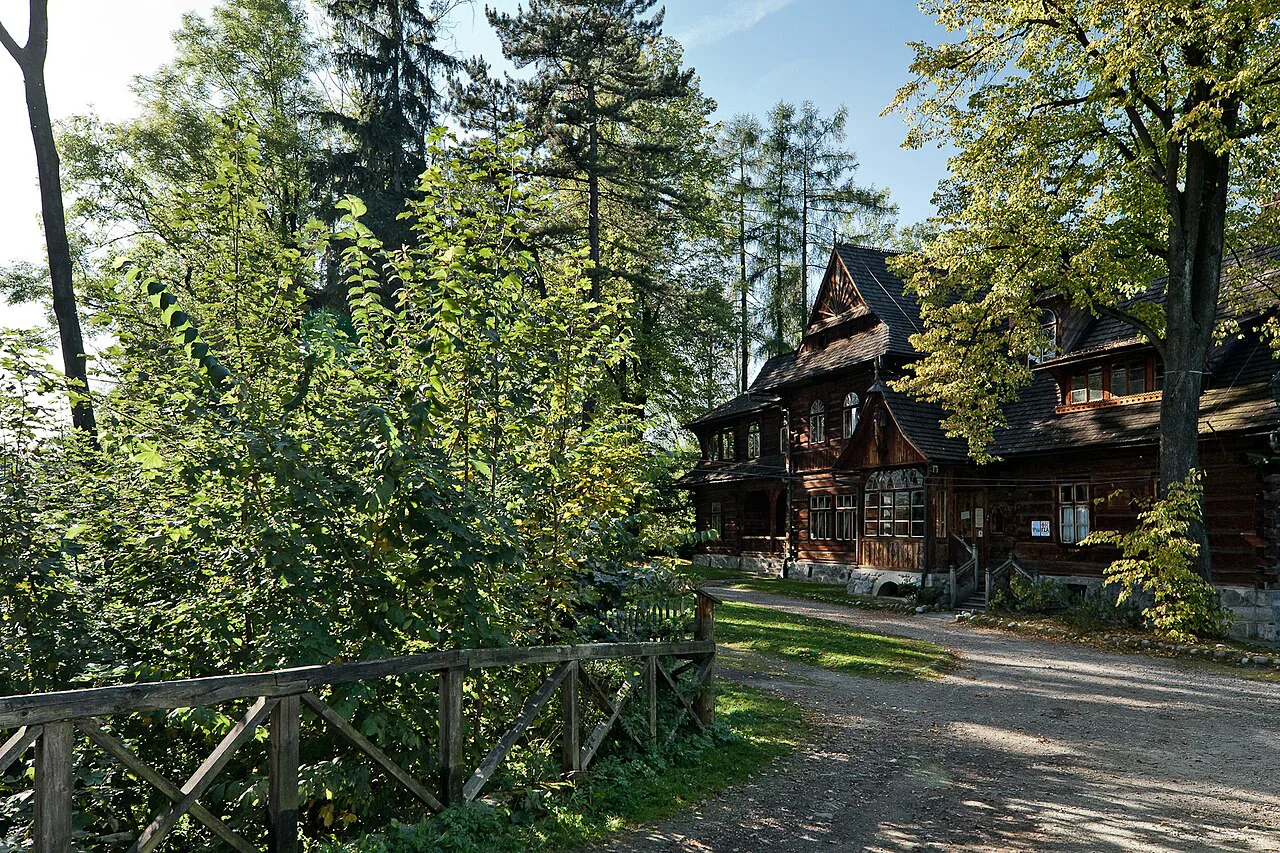
The address is ulica Kościeliska 18, on the street that runs south-west from the centre towards the Kiry end of Zakopane. It is a straightforward walk from the middle of town rather than a trip needing a bus, and it slots naturally into a morning heading that way.
Kościeliska is also the road out towards the Tatra National Park, so the villa works as a first stop on a day that ends among the trails. If the mountains are the main event, plan the museum before rather than after the walking, when your legs are fresh and you can give the rooms proper attention.
For orientation, the villa is well away from the bustle of Krupówki, which is part of its appeal: you arrive at a quiet stretch of wooden houses rather than a commercial strip.
What is inside: the Museum of the Zakopane Style
Since 1993 the villa has housed the Museum of the Zakopane Style, and the point of the visit is understanding what Witkiewicz was arguing for. The Zakopane style was a deliberate attempt to create a regional architecture and interior design rooted in highland craft, and the villa was its manifesto.
Read the rooms as a set of choices rather than a decorative jumble: timber structure left visible, carving used as ornament, and forms drawn from the mountains. That framing turns a small museum into a lesson you can then apply to every other wooden building on the street.
If the style hooks you, the Tatra Museum in town is the natural follow-on, with wider collections on the region and its people. Do the villa first for the concentrated argument, then the larger museum for context.
What to look at on the outside
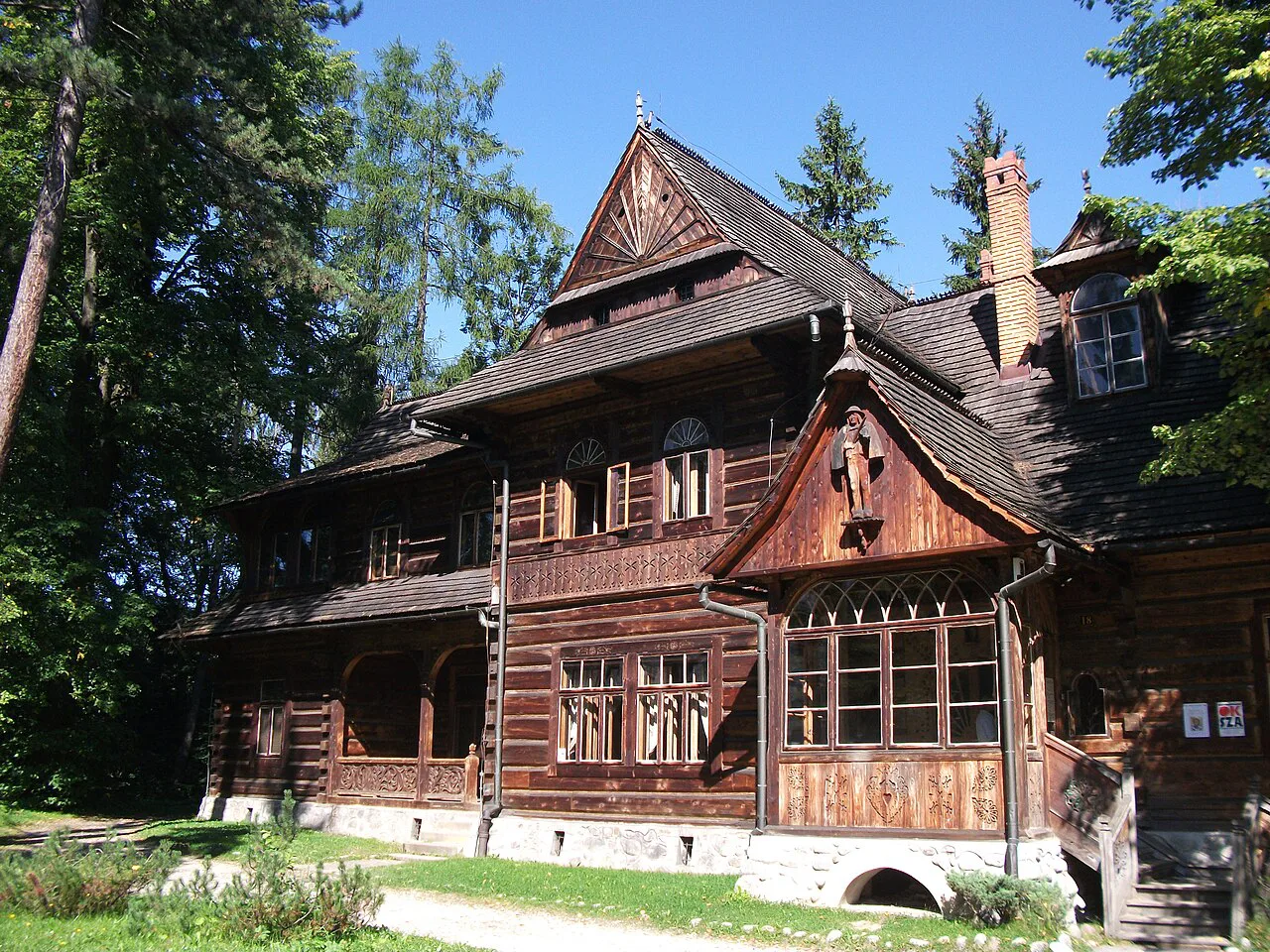
Before you go in, walk the length of the facade and look at how the house is put together: the wooden construction is the point, and Witkiewicz let the material show rather than hiding it behind plaster.
Then look up. The roof and the carved detailing are where the Zakopane style announces itself most clearly, taking motifs from the Tatras and from highland craft and stitching them into a town house.
Allow a few minutes to step back across the street for the whole silhouette, because the proportions read better at a distance than at the door. The house was conceived as a complete composition, roof included, and the closer you stand the more that gets lost.
How long to allow
Budget around an hour for the villa and its displays, and add fifteen minutes if you want to study the exterior properly. That keeps the museum as one strong stop rather than an afternoon in itself.
The natural half-day here combines the villa with the church of St Clement at Pęksowy Brzyzek and its cemetery roughly 300 metres away, which gives you architecture, craft and local memory in one short walk. If you would rather keep the day open, treat the villa as a flexible hour and let the rest of Kościeliska fill in around it.
If you are working from a broader shortlist, the other Zakopane Attractions are easy to slot before or after this stretch of Kościeliska.
Nearby on Kościeliska and around
Within a couple of minutes of the villa you have Karczma Wnuka at about 212 metres, Willa Maliniakówka at about 272 metres, and Willa Szałas at about 315 metres, all close enough to fold into the same walk.
The church of St Clement at Pęksowy Brzyzek is about 311 metres away, with the church cemetery beside it at about 321 metres. The wooden church and the graves of writers and artists make a quiet counterweight to the villa's design story, and the walk between them takes only a few minutes.
Further out, Gubałówka gives you the panoramic view back over the town and the Tatras, which puts the wooden architecture of Kościeliska in its landscape. Save it for a clear afternoon rather than squeezing it in before the museum.
Tickets and opening days
The Museum of the Zakopane Style is run as part of the Tatra Museum (Muzeum Tatrzańskie), and the museum's own pages are the place to confirm opening days and any closure before you walk down Kościeliska.
The villa is a museum in a protected historic building, which in practice means visitor numbers inside are limited by the house itself. If your Zakopane days are fixed, check the museum's own site the week you travel.
Where the villa fits in a Zakopane break
Villa Koliba suits the first or second morning of a short break, pairing with the Pęksowy Brzyzek church for a two-hour block before lunch.
It also works as a rainy-hour substitute when the higher trails are out: the museum is indoors, small and dense with things to look at. Kasprowy Wierch rewards clear weather, so keep it for a brighter day and give the villa the grey one.
If you want one more architectural stop in town, Wielka Krokiew is a short trip from the centre and rounds out a day of built sights.

Is Villa Koliba worth the walk down Kościeliska?
Yes, if you care how a place looks: this is where the Zakopane style started, and an hour in the rooms plus a few minutes on the pavement gives you the vocabulary for every wooden building you will see afterwards. Skip it only if museums indoors are not your thing, in which case the church and cemetery up the street still justify the walk.
Pair it with St Clement's at Pęksowy Brzyzek and one of the nearby villas for a compact half-day, and confirm tickets and opening days with the museum before setting out.
Explore more Zakopane guides
Frequently Asked Questions
Who designed Villa Koliba and when was it built?
Stanisław Witkiewicz designed it, and the villa was built between 1892 and 1893. It is regarded as the first house raised in the Zakopane style, and it was entered in the monument register in 1983.
When did the museum open in the villa?
The Museum of the Zakopane Style opened in the building in 1993, a century after the house was finished. The displays focus on the regional style Witkiewicz developed and on the craft traditions it drew from.
How far is Villa Koliba from the centre of Zakopane?
It stands at ulica Kościeliska 18, south-west of the centre along the road towards the Tatra National Park. It is a walk from the middle of town rather than a bus ride, and the church of St Clement at Pęksowy Brzyzek is roughly 300 metres away.
What else is near Villa Koliba?
Karczma Wnuka is about 212 metres away, Willa Maliniakówka about 272 metres, Willa Szałas about 315 metres, and the church of St Clement with its cemetery around 311 to 321 metres. All sit within a short walk on or just off Kościeliska.