
Central Museum of Textiles, Łódź: a visitor guide to the White Factory

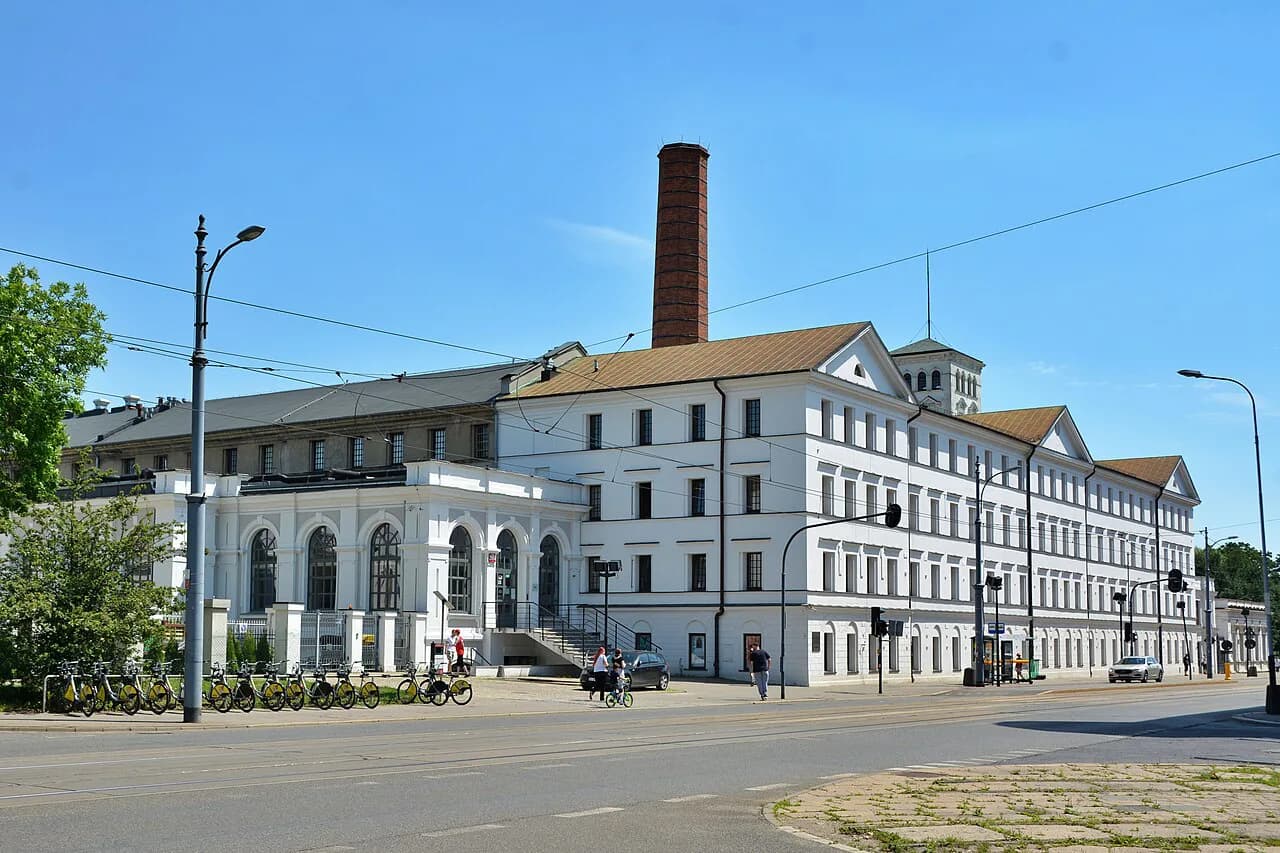
The Central Museum of Textiles is worth half a day, and it is the one Łódź museum that explains why the city looks the way it does. It occupies the White Factory, a monumental classicist mill on Piotrkowska Street, and pairs a multimedia account of the textile industry with an open-air park of 19th-century workers' housing behind it. This guide covers where the museum sits on the street, the machines and collections inside, the park, and how to divide your time between the two.
What the Central Museum of Textiles is, and where it sits on Piotrkowska Street
The museum is at Piotrkowska 282, at the far southern end of the street rather than in the central stretch most visitors walk first. That matters for planning: you can walk the length of Piotrkowska from the centre and finish here, or treat the museum as a separate stop and approach it directly. Either way, build it into a southward leg of the day rather than squeezing it into a loop around the main square.
Its collection is one of the largest of modern artistic fabrics in the world, and the building is the popular White Factory, the former Geyer mill. The museum also runs the Łódź City Culture Park immediately behind it, so a single visit can cover both the industrial interior and the open-air architecture.

Getting there: what Piotrkowska 282 means for your walk south
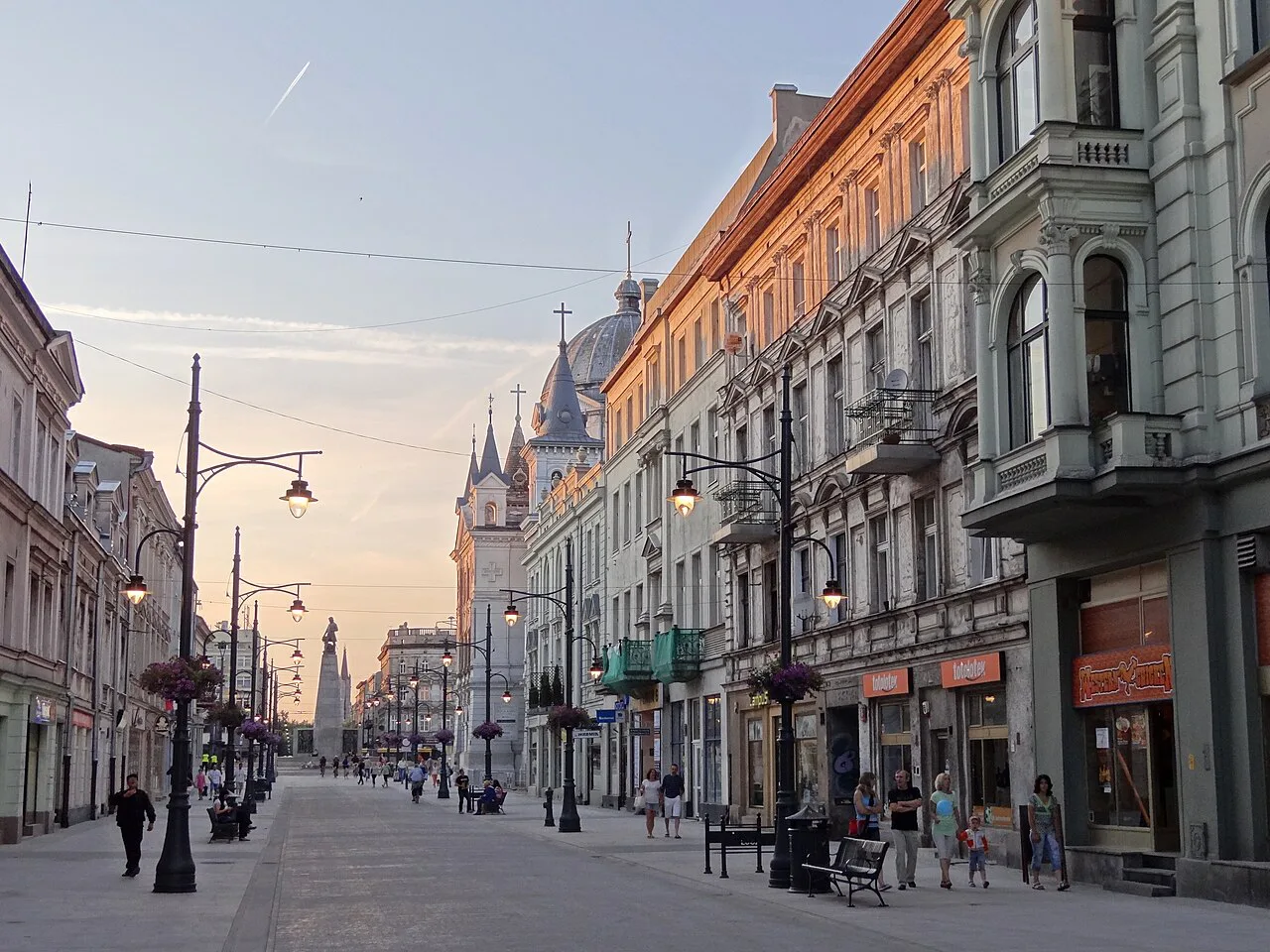
The address is the practical anchor for navigation: Piotrkowska 282, 93-034 Łódź, at the Łódka factory settlement where the Geyer enterprise grew up. If you are coming from the city centre, the walk down Piotrkowska is long but straightforward, and it gives you the street's mix of facades before you reach the factory gates. Allow for that walk when you set your start time, because the return leg adds up over a full day.
For a shorter approach, use public transport to the southern end of Piotrkowska and walk the last stretch. If you are arriving by rail, you can pair the museum with the post-industrial quarter around EC1 Łódź in the city centre on a separate leg of the trip. Check current tram and bus routes with the city transport operator on the day, since the museum's pages do not publish a travel plan.
The White Factory building and the Geyer family story
Ludwik Ferdynand Geyer, an industrialist from Saxony, arrived in the first half of the 19th century and settled in the southern part of Piotrkowska Street at the Łódka settlement. His enterprise erected the first factory chimney in Łódź and ran its looms on a steam engine, and the family kept expanding and modernising the plant while helping fund public buildings in the city. The museum tells that story alongside the machinery, which is why the building reads as a working mill rather than a stage set.
The White Factory stands opposite the Red Factory and came with an office building, factory owners' mansions and palaces, and a garden of unusual plant species. After the Second World War the works were nationalised and carried on as the Eskimo cotton plant until the 1990s, so the site's industrial life runs right up to the recent past. Seeing that continuity is the strongest argument for visiting the building itself rather than reading about Łódź textiles elsewhere.

What to see inside: the machine hall, jacquards and steam engine
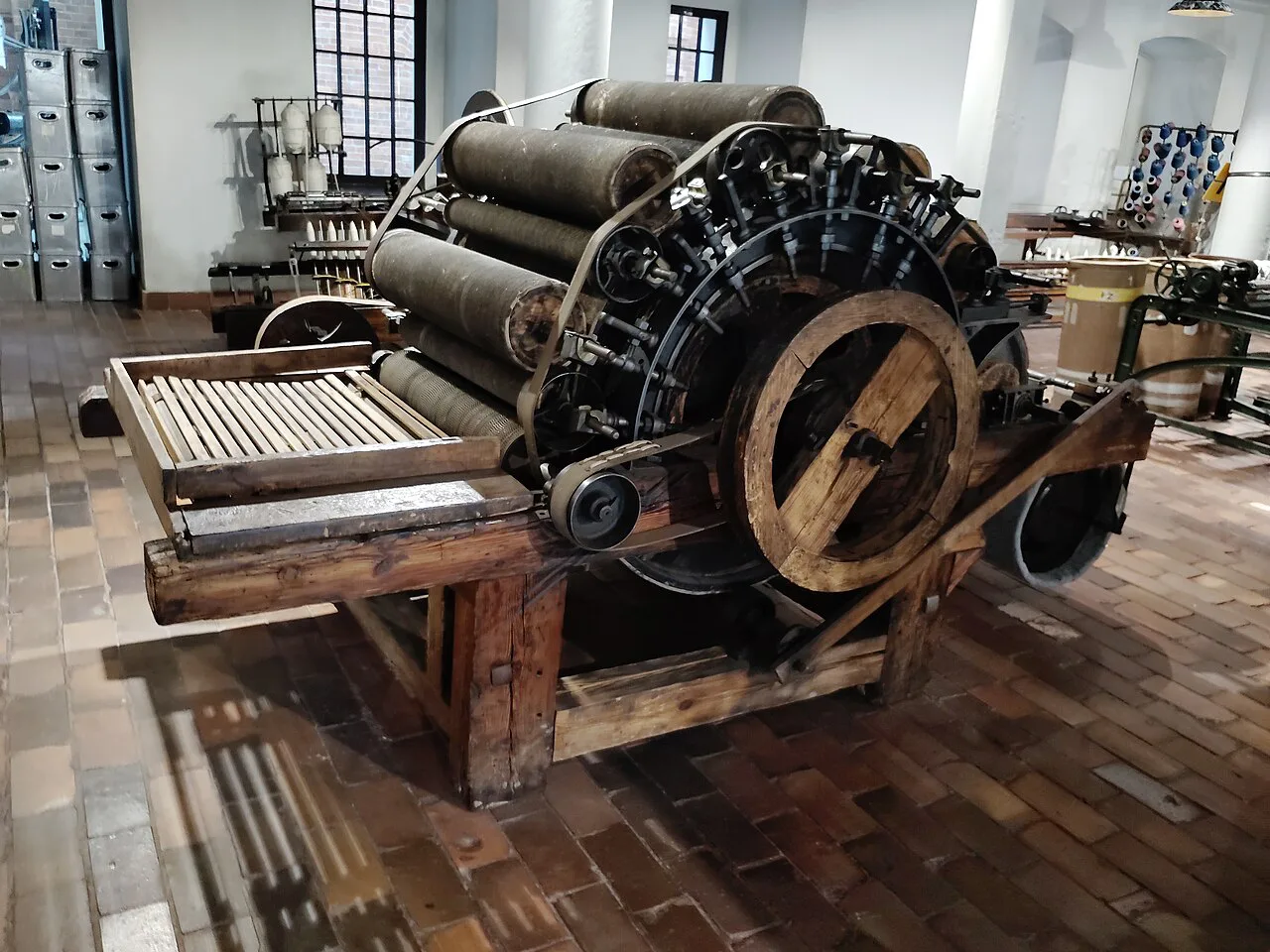
Inside, the multimedia displays let you experience selected exhibits virtually and follow the history of the textile industry as you move through the rooms. A steam engine, jacquards and a mule are brought to life with modern technology, and you can compare different types of fabric and weave as well as 19th- and 20th-century outfits. If machinery is your reason for coming, head for the machine hall first and work outwards from there.
The displays also document the White Factory and the Geyer family, so the technical content sits within a social and business history rather than standing alone. Some visitors will move through the machines quickly and linger over the fabrics; decide which side interests you and give it the front of your visit while you are fresh.
The textile collection and the International Triennial of Tapestry
The museum has held the International Triennial of Tapestry regularly since 1972, the biggest and oldest event of its kind, and that programme is what lifts it above a generic industrial museum. The permanent strength is modern artistic fabric, so expect large-scale woven works as well as historical dress and industry. If contemporary textile art is the draw, plan your visit around the galleries that hold it and leave the factory history for afterwards.
Temporary exhibitions change through the year and are listed with their own dates on the museum's site, so the programme you see will not match a guide written months earlier. Check the exhibitions page before you travel and note which displays are ticketed separately from the permanent route.
Łódź City Culture Park: weavers' houses, the wooden church and the summer villa
Behind the museum, the Łódź City Culture Park gathers typical 19th-century construction: weavers' houses, a wooden church moved from the Nowosolna settlement and a suburban summer villa. The former Geyer garden now functions as the Władysław Reymont city park alongside it, so the outdoor half of the visit is a genuine collection of buildings rather than a lawn. Give the park its own slot instead of treating it as an afterthought on the way out.
The museum's own listing names the park as part of its offer, but it does not spell out how admission works across the two, so ask at the ticket desk whether your ticket covers the outdoor area before you set off round the houses. The wooden church and the weavers' houses are the elements to prioritise if time is short.
How much time to allow, and how to split museum and park
Plan on roughly half a day here: a focused two hours covers the machine hall and the main textile displays, and the park adds a further hour at an easy pace. If you read every panel and take the multimedia elements in sequence, the interior alone can absorb the best part of a morning. The honest trade-off is that a rushed visit reduces the museum to a hall of old machines, which misses the point.
A workable order is interior first, while your concentration holds, then the open-air park as a decompression before the walk back up Piotrkowska. In poor weather, reverse it and use the park as the short element, keeping the covered galleries for the wet part of the day. Either way, leave a margin before your next stop rather than booking something tight afterwards.
Tickets, opening hours and booking: where to confirm before you go
The museum publishes its opening hours and tickets on its own site, with an online ticket option, and those pages are the ones to trust for current times, prices and any reduced admission. Polish museums commonly close one day a week, so confirm the day you plan to visit rather than assuming a seven-day opening.
The museum runs guided tours, workshops and walks alongside its exhibitions, listed with dates in its events section; treat those as a separate booking decision from general admission. If a curator tour or workshop would make the trip, book it before you arrange the rest of the day around the museum.
What is nearby when you come out
The former Geyer garden next door is now the Władysław Reymont park, an easy add-on if you still have daylight after the museum. Back in the city centre, Manufaktura Łódź is the other big post-industrial complex, and it works as a contrast on a different day rather than an immediate next stop after a long walk south.
South of the centre, the Jewish Cemetery in Łódź and the Poznański Palace in Łódź round out the city's industrial-era story, and both suit a separate half-day. Pick one of them rather than stacking three heavy sights into a single afternoon.
Is the Central Museum of Textiles worth the walk south?
Yes, if you want to understand Łódź rather than just photograph it: the White Factory, the Geyer story, the working machines and the tapestry collection together explain the city's industrial identity, and the open-air park gives the visit a second dimension. Skip it only if your trip is short and entirely centred on Piotrkowska's cafés and Manufaktura.
Check the museum's own opening hours and ticket page the week you travel, then build the walk down Piotrkowska around a half-day slot with the park included. That way the distance south becomes part of the day rather than a detour you regret.
Explore more Łódź guides
Frequently Asked Questions
Do I need to book Central Museum of Textiles tickets in advance?
The museum sells tickets online as well as at the entrance, so advance booking is optional for general admission. Book ahead if you want a specific curator tour or workshop, since those run on fixed dates listed in the museum's events section.
Can I visit the Łódź City Culture Park without entering the museum?
The park sits behind the White Factory and is run by the museum as part of its offer. Ask at the ticket desk how admission works across the interior and the outdoor area, because the arrangement is not set out on the museum's public pages.
Is the Central Museum of Textiles suitable for children?
The multimedia displays, working machinery and open-air houses give children plenty to look at, and the park lets them move around after the galleries. The museum does not publish age-specific family information, so check its education pages if you want a structured activity.