
Jewish Cemetery in Łódź: what to see and how to visit

The Jewish Cemetery in Łódź is the city's great Jewish burial ground on Bracka street, and it needs two to three hours rather than a quick look. It is a working cemetery, not a heritage attraction with facilities, and that shapes how you visit: quietly, on foot, and with a plan for the route. This guide covers where it stands, how to approach it, what the seasonal opening pattern means, and which corners reward your time.
The scale surprises people. The cemetery runs nearly a kilometre along its Sporna-Zagajnikowa edge, so walking from the main gate to the far side is a proper excursion; the trees inside grew up over decades and in places sit directly over older graves.
What the cemetery is and where it stands on Bracka street
The cemetery sits on Bracka street in Łódź, and visitors enter through the main gate. It is administered by the Jewish Community of Łódź, which is based at 18 Pomorska Street and manages access. That office, rather than any tourist information desk, is the right place to direct questions about the burial ground.
Think of it as a historic burial ground rather than a sight on a city-break checklist. The pre-burial hall stands outside the main gate, and the axial road runs down the middle of the burial plots. If you are planning a wider Łódź trip, treat this as a half-day that anchors a morning.

How to get there: Strykowska and the Wojska Polskiego side
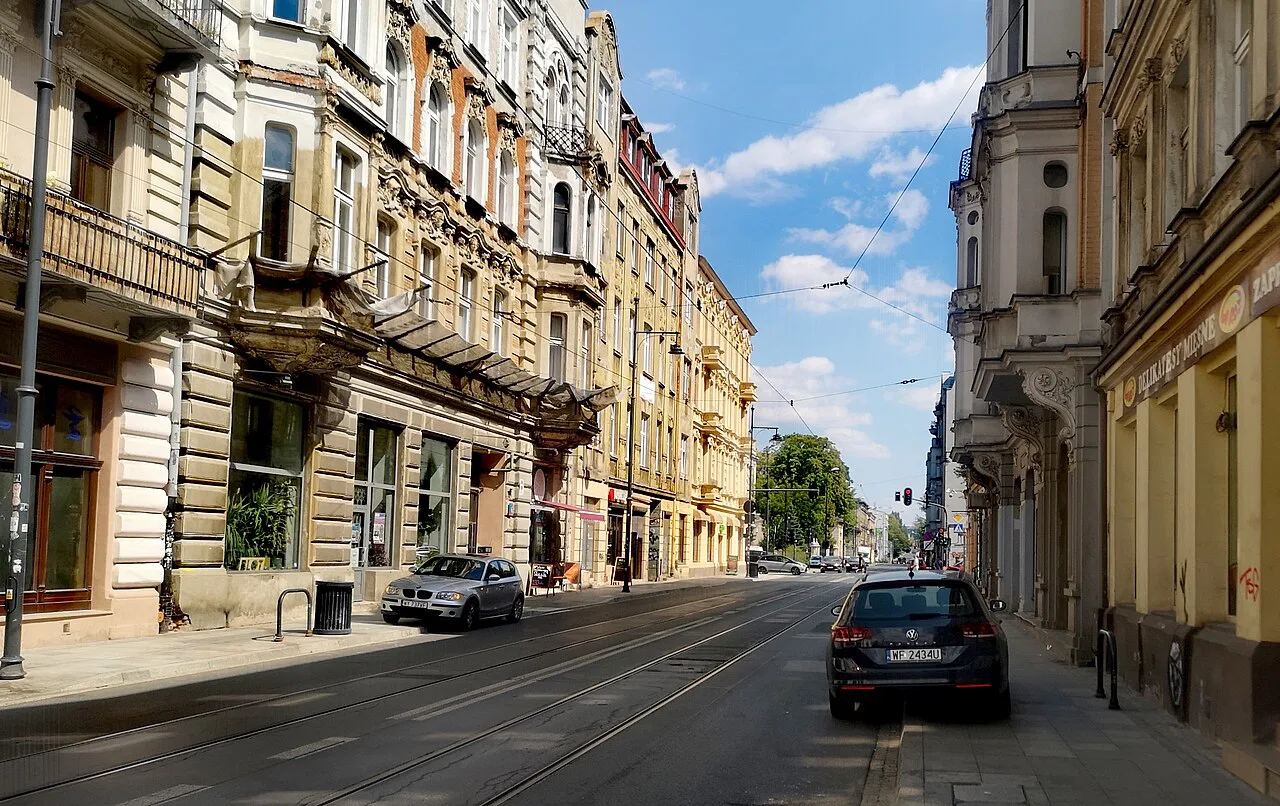
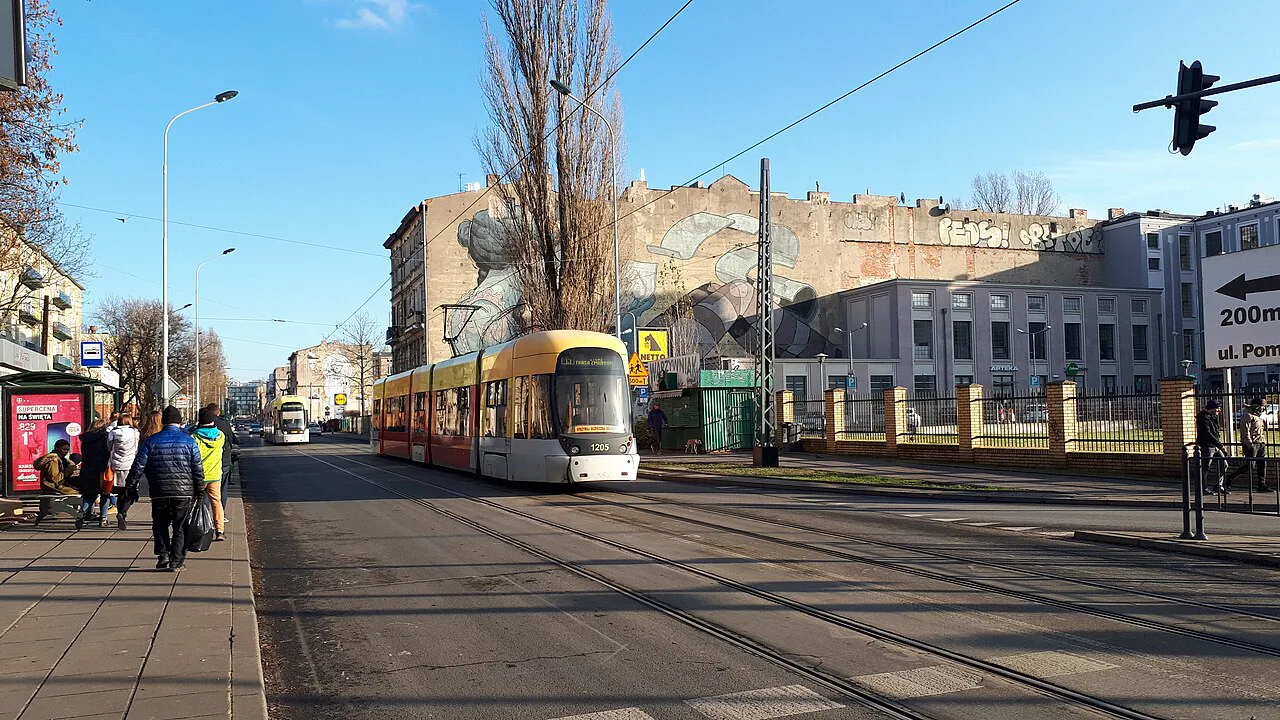
The chapter that describes the two approaches is a first-hand account from around 1990, so treat its transport detail as a period description rather than a current timetable. It names trams 1, 15 and 19 to the Strykowska terminus for the main gate, bus 51 in the direction of Wilanów, and bus 57 past the Catholic cemetery and the Graphic Arts Institute, turning down Wojska Polskiego with a stop at ulica Sporna. Check current routes on the day rather than relying on these numbers.
Entering from Bracka is the straightforward choice for a first visit. The Sporna approach described in the same account is steeper and less obvious, and the informal paths it mentions through the fence belong to that period, so do not assume they are open today. Navigation apps and the community office are better guides on the day.

Opening days and times, by season
The cemetery opens Sunday to Friday, excluding Jewish holidays, from 1 April to 1 November, 9am to 5pm. From 2 November to 31 March a different winter schedule applies, so confirm the clock times on the cemetery's own opening page before you travel.
The pattern to remember is simple: it is a working Jewish cemetery, so the religious calendar takes priority over tourist convenience. Check the date you intend to travel against the published opening page rather than assuming the gate will be open.
What you see inside: gate, pre-burial hall and central avenue
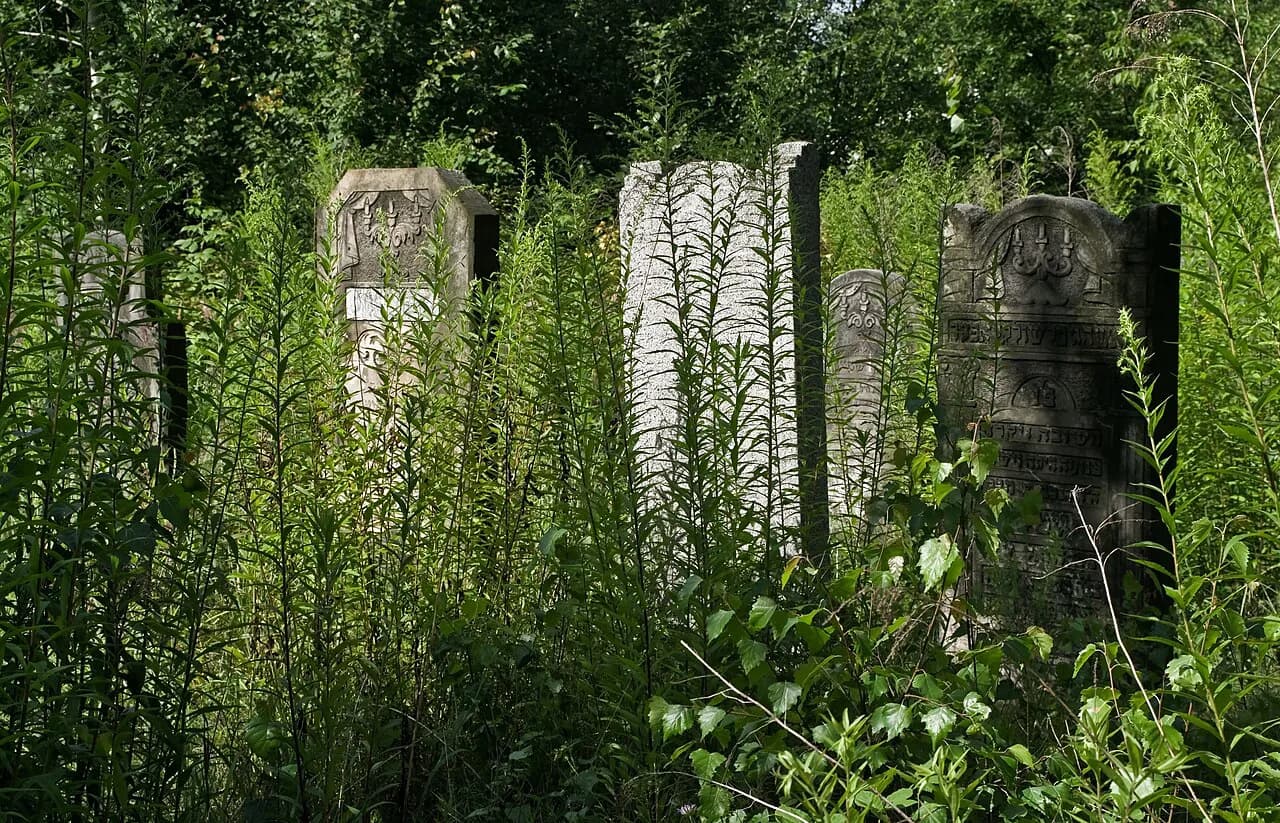
Inside, the layout is legible. Rows of graves, each roughly three by six feet, stand flush against one another, separated by a grid of roads and lanes that reaches most, but not all, plots. Most headstones face the pre-burial hall outside the main gate, so the stones align with the entrance as you walk in.
The axial road is the spine of the site and the easiest way to keep your bearings. Walk it first to gauge distances, then branch into the lanes; some graves had stone or cement entablatures, low brick vaults and iron railings, and the fragments of these are part of what you read on the ground.
The old graves near the main gate
Near the main gate stands the oldest and grandest stonework, the graves of some of the wealthiest families in turn-of-the-century Łódź. Polish and Swedish marble, Czech and Hungarian granite, red sandstone, basalt and slate appear in mausoleums and columns, with names including Poznański, Jarociński and Silberstein.
Much of this stone now leans, topples or has been shifted by roots and weather, so look at the carving rather than expecting neat rows of upright headstones. The Poznański name recurs across Łódź, and the Poznański Palace that carries it is worth pairing with this visit if you want the industrial fortune's full arc.
The southwest corner along Sporna-Zagajnikowa
The southwest corner is the hardest part of the site to read and the part that stays with visitors longest. Here, the account says, German Nazi occupiers destroyed graves systematically, breaking vaults and removing markers, and the ground can look like open meadow with half-buried fragments of brick, cement and marble underfoot. Some stones were heaped together, and trees later grew up through them.
Walk this section slowly and stay on the paths; the shift from recognisable rows to broken ground is the point, and it needs no embellishment. The account describing it was written around 1990 and its detail about paths, fences and undergrowth belongs to that period, so treat the description as history rather than a map for today.
How much time to allow and how to pace the walk
Allow two to three hours for a full circuit, and be realistic about mobility: the site is large, the ground uneven, and a kilometre along one edge alone takes time at a contemplative pace. Start at the main gate, take the axial road, see the grand mausoleums early, then work towards the southwest corner and leave yourself the energy for it.
Two hours suits a focused visit to the gate area and central plots. If you intend to look at inscriptions, photograph stonework or spend time in the ruined corner, three hours is closer to the mark. Bring water and wear shoes that cope with uneven ground, and do not count on finding anywhere inside to buy anything.
Practical etiquette for a working cemetery
This is an active Jewish burial ground, so behave as you would in any cemetery in use: keep voices low, keep to paths where the ground is fragile, and do not move stones or fragments. If you photograph, keep people, including other mourners, out of the frame.
At Jewish cemeteries men traditionally cover their heads, and a plain hat or cap is enough if you have one; the community office can answer specific questions about religious practice. Arriving on a weekday morning is the calmest option and leaves the rest of the day free for the city's museums and streets.
What is nearby when you leave
Plan the rest of the day around a return towards the centre. Manufaktura, Łódź, the former factory complex turned into a shopping and museum quarter, is the most useful anchor for lunch and an afternoon, and it pairs well with the industrial fortunes whose mausoleums you have just seen.
In the centre, EC1 Łódź near Łódź Fabryczna station holds science and film exhibitions in a converted power station, and makes a good wet-weather counterweight to a morning outdoors. The Alexander Nevsky Cathedral is another central stop on the same loop, and the textile museum tells the story of the mill owners whose names you will have read on the stones.
Should the Jewish Cemetery be on your Łódź plan?
Yes, if you want to understand Łódź rather than just look at it. The cemetery connects the city's industrial fortunes, its Jewish community and the destruction of the occupation in one walkable place, and it rewards the half-day you give it. Build the visit around a weekday morning, take the Bracka gate, and give the southwest corner the time it deserves.
If you have only one day, choose between this and a museum quarter rather than trying to do both badly. For a longer break, give the cemetery a morning and use the afternoon for Manufaktura and the centre, which keeps travel simple and the pace humane.
Explore more Łódź guides
Frequently Asked Questions
Are there toilets or a café at the Jewish Cemetery in Łódź?
The sources describe a working burial ground with no visitor facilities mentioned, so use the amenities at your transport stop or in the centre before you arrive. Bring water if you plan to stay for two or three hours.
Can I visit the Jewish Cemetery in Łódź on a Saturday?
The published opening pattern runs Sunday to Friday, outside Jewish holidays, with seasonal clock times. Check the date you intend to travel against the cemetery's own opening page before you set out.
How long does it take to walk through the cemetery?
Two hours covers the main gate, the central plots and the oldest mausoleums. Three hours lets you reach the southwest corner along Sporna-Zagajnikowa and still walk back at an unhurried pace.