
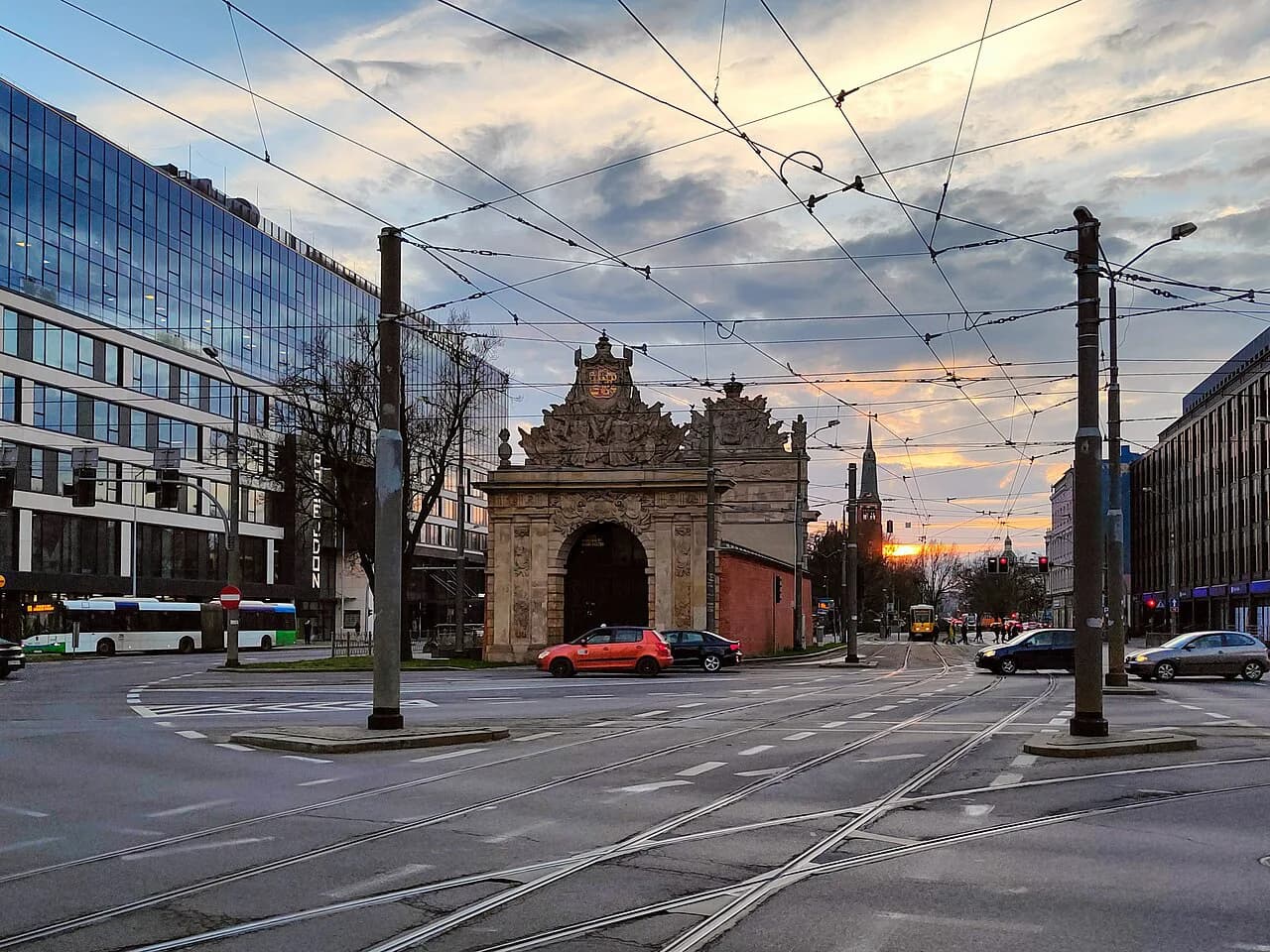
Brama Portowa, Szczecin: visiting the baroque port gate

Brama Portowa deserves 20 to 30 minutes of your time in Szczecin: it is a richly sculpted baroque gate, not a museum, and you experience it mostly from the pavement. Built in the 1720s as the Brandenburg or Berlin Gate, it is now the seat of a small theatre, so treat an interior visit as a performance rather than a sightseeing stop. This guide covers where the gate stands, how to read its facade, what happened to it over three centuries and what sits within a short walk.
It pairs naturally with the rest of the old fortification line and the riverside streets, which makes it an easy addition to a half-day in the city rather than a destination in its own right.
What Brama Portowa is and where it stands
Brama Portowa is the most imposing baroque fortress gate in Western Pomerania and one of the more interesting buildings of its kind in Europe, built on an elongated rectangular plan around a vaulted passage. The city's tourism office records its address as Brama Portowa 2, where the fortifications once ran. You will spot it as you approach from the surrounding streets, and the two carefully designed facades reward a slow look from both sides.
For orientation, the gate sits on the route towards the Odra embankment and the long riverside terrace at Wały Chrobrego, which is one of the city's great set pieces. If you are building a short break around the city's sights, the Szczecin Attractions: 5 Visitor Guides hub maps out how the gate fits alongside the museum quarter.

The gate's origins: Frederick William I and the 1720s build
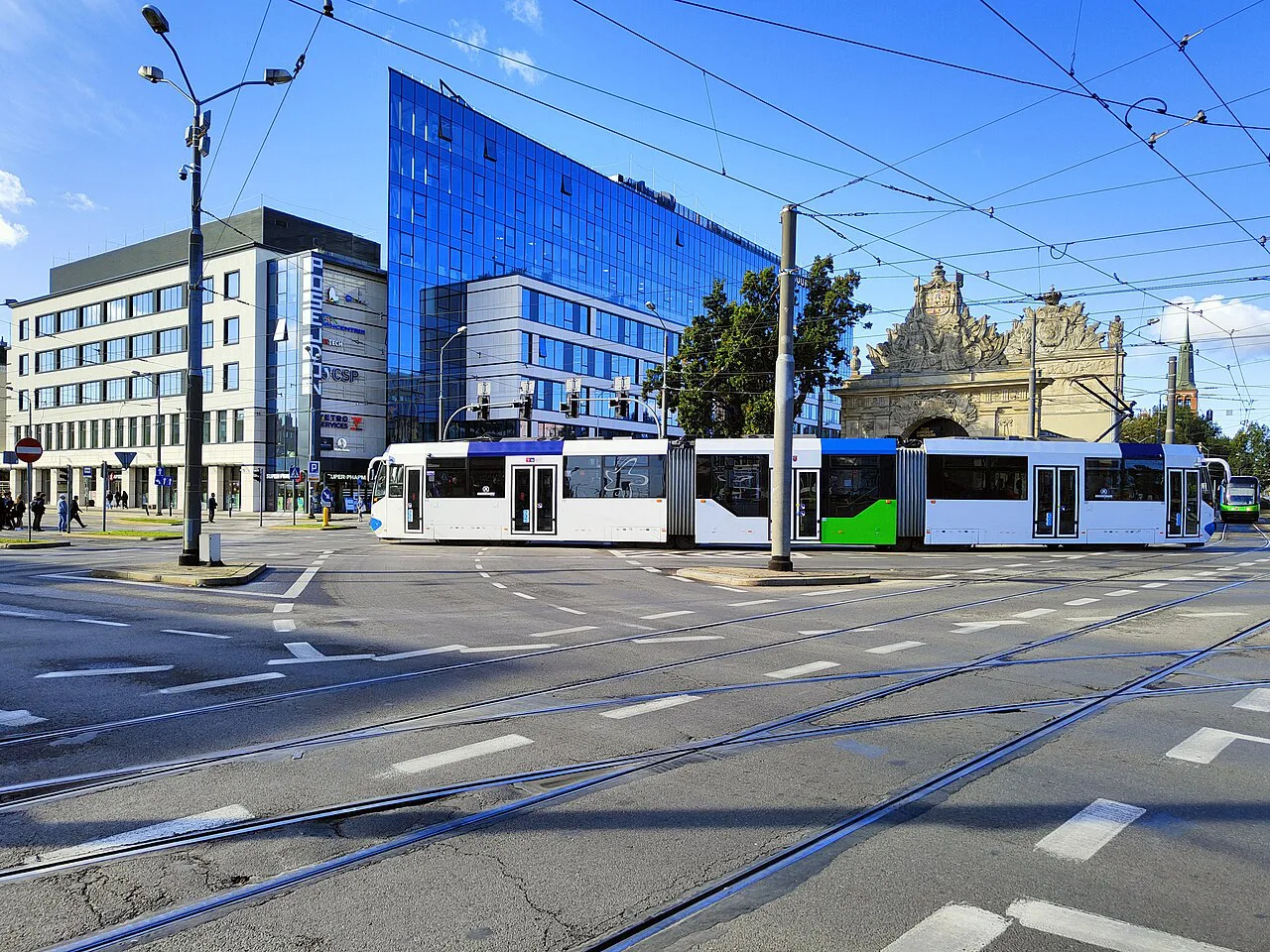
Construction began in 1724 on the order of the Prussian king Frederick William I, to a design by the architect and fortification engineer Gerhard Cornelius von Walrave with the master mason Hans Jürgen Reinecke of Magdeburg. Contemporary reference works date the build to 1725–1727, so treat the 1720s as the safe frame rather than a single year. The gate was originally called the Brandenburg Gate and later the Berlin Gate, a reminder that it faced the road out towards Prussia's capital.
The fabric is unusually choice for a city gate: the walls and vaults are of brick fired by masters from Liège, while the elevations and gables, with their sculpture, use sandstone brought from Pirna in Saxony. That mix explains why the carving has survived in such detail. Look at the two facades separately, because the inner one facing the town is the more elaborate of the pair.
Reading the facade: Viadrus, the monogram and the Latin inscription
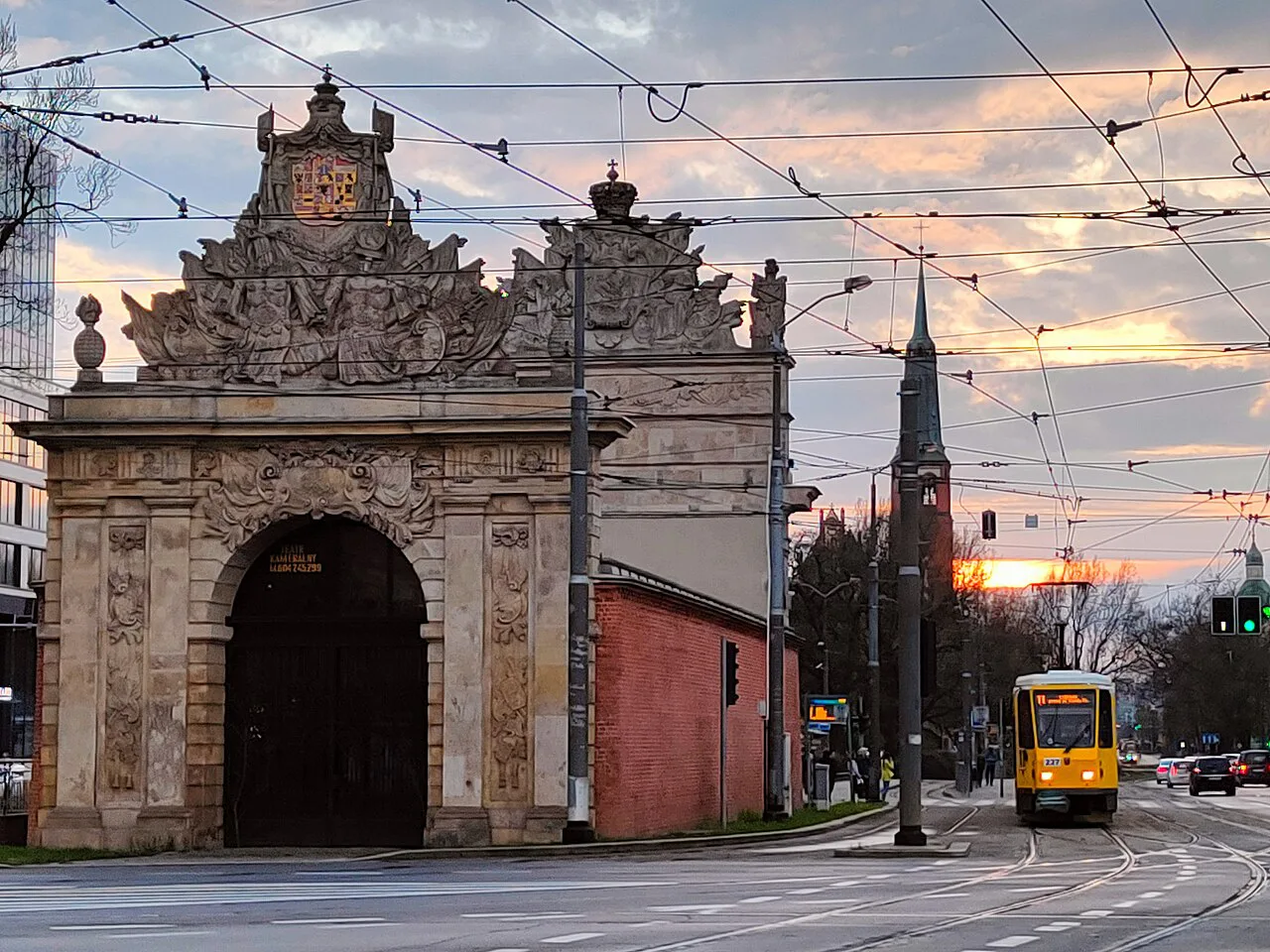
The sculpture is political as much as ornamental. On the western elevation an oval medallion carries the monogram of Frederick William I, flanked by winged figures blowing trumpets, and the Latin inscription beneath sets out Prussia's legal claim to Szczecin, noting that the king acquired the Duchy of Szczecin through treaties and a payment. Above the cornice stands Viadrus, the god of the River Odra, gazing at a relief panorama of the city.
The eastern facade carries a cartouche with the same royal monogram and an eagle gripping a sword and sceptre, crowned at the top by the Prussian coat of arms with carved trophies. Walk round both sides rather than photographing the first face you meet, since the two elevations were designed to be read from different directions. The gate's heritage listing describes it as one of the richest structures of its type in Europe, which is fair warning that the detail rewards a slow look.
The fountain of Amphitrite and its 1932 removal
In 1902–1903 a fountain by the sculptor Reinhold Felderhoff was placed on the eastern side, crowned by a figure of Amphitrite, wife of Poseidon. Her nude form offended puritanical opinion in the city, and the fountain was dismantled in 1932. You will not see it today, so do not go looking for water and bronze; the story is worth knowing because it shows how the gate's setting has changed around it.
Survival: demolition plans, the 1875 handover and the wartime pinnacles
The gate very nearly disappeared. When the decision to abolish the fortifications was taken in 1873, conservationists campaigned to save it from demolition, and in 1875 the military authorities handed both surviving gates to the city. That intervention is the reason there is anything to visit at all.
During the Second World War the gable tops were taken down to protect them from Allied bombing and hidden in Lasek Arkoński, the woodland park in the north-west of the city. They were put back in place after 1957. Brama Portowa and Brama Królewska are the two structures left from Szczecin's 18th-century fortifications.

Inside today: Teatr Kameralny and its auditorium
The building now houses Teatr Kameralny, run by the Szczecin Society of Friends of Art. As part of the conversion a stage and dressing room were built in, and the auditorium seats around 80 people. That intimacy is the point: this is a working small theatre, not a heritage display with a ticket desk and interpretation boards.
The theatre run by the Szczecin Society of Friends of Art is the building's current use, and the city's tourism pages give no performance times, ticket prices or booking rules for it, and there is no sourced route to the upper levels or a viewing platform. Plan on seeing the gate from outside unless the theatre's own programme gives you a reason to book.
How long to allow and what to see just outside
Budget 20 to 30 minutes for the gate itself: a circuit of both facades, a close look at the Viadrus relief and the Latin panel, and a few photographs. Add time if you are combining it with the riverside walk, because the stretch towards Wały Chrobrego, Szczecin's grand terraced promenade above the Odra, easily absorbs an hour.
The gate works best as the opening move of a walking day rather than a standalone outing. From here you can head into the centre for the museum quarter or out towards the parks, and the wider list of things to do in Szczecin helps you sequence the rest of the day around it.
Nearby: Brama Królewska and the rest of the fortification line
Brama Królewska, the Royal Gate, is the other remnant of the 18th-century defences, and pairing the two gives you a sense of how the city was once enclosed. Neither takes long, and together they make a compact walk through the old approaches to the centre rather than a full afternoon's sightseeing.
For a longer half-day, the National Museum in Szczecin and the museum of technology and transport both sit within reach of the centre and suit different moods, one for art and history and one for machinery and trams. Build the gate into a loop that ends at the Odra, where the city's waterfront architecture gives the walk its payoff.
Is Brama Portowa worth the stop?
Yes, if you treat it as a 20-minute encounter with a piece of political sculpture rather than a museum visit. The gate rewards anyone who reads the facade, follows the story of its near-demolition and its wartime hiding, and then walks on towards the river. Skip it only if your time in the city is down to a couple of hours and the waterfront is the priority.
Explore more Szczecin guides
Frequently Asked Questions
Can you go inside Brama Portowa?
The gate is occupied by Teatr Kameralny, a small theatre with an auditorium of around 80 seats, so going inside means attending a performance. There is no sourced public sightseeing route through the building or up to the upper levels. Check the theatre's current programme if you want to see it from within.
Is there an entrance fee to Brama Portowa?
Nothing is charged for viewing the gate from the street, which is how most visitors experience it. The city's tourism pages list no admission price for the building, and any theatre ticket is a separate matter handled by the company that performs there. Confirm with the theatre before planning around a performance.
How do you get to Brama Portowa in Szczecin?
The gate stands at Brama Portowa 2, on the western side of the old town where the fortifications once ran, and it is a straightforward walk from the central streets. It also sits naturally on the route towards the Odra embankment and Wały Chrobrego. Use a current map for the final approach, since the surrounding streets are busy.
How old is Brama Portowa?
Construction began in 1724 by order of Frederick William I, and reference works date the build to 1725–1727, so the gate is roughly three centuries old. What you see is partly restored: the gable tops were removed for safekeeping during the Second World War and returned after 1957.