
Koszutka, Katowice: What to See in This Compact Northern District

Give Koszutka two hours on foot and you will have seen what it offers a short-break visitor. It is the smallest of Katowice's districts and lies immediately north of the centre, so it works as an unhurried extension of a morning in the city rather than a separate outing. This guide covers its character, its architecture in date order, its parks and squares, and whether it earns a place in a three-day trip.
Koszutka rewards a certain kind of traveller: someone interested in how a central European city was built in layers, and happy to look at housing rather than tick off museums. Its draws are streets, blocks, squares and courtyards, not ticketed attractions. If you want a compact circuit of sights, the wider Katowice Attractions: 9 Visitor Guides will serve you better, and Koszutka becomes a quiet hour at the end of a day.
What Koszutka is and where it sits in Katowice
Koszutka is a residential district in the north of Katowice, bordering the centre, which is why it feels like an extension of the middle of town rather than a suburb. Its history reaches back to the seventeenth century, but it was attached to Katowice in 1924, and much of what you see today was built across the following four decades.
Its position is the practical advantage. Tram and bus lines run through and around the district, and the DTŚ expressway passes close by, giving drivers a fast exit towards other towns in the region. For a visitor on foot the point is simpler: you can walk in from the centre and walk back out without planning transport at all.

Why Koszutka is the smallest district in the city
Koszutka is described as the smallest of Katowice's districts, and its compactness is exactly why it suits a short visit. The whole area is small enough to cross on foot in an afternoon, with the centre's market square and Mariacka street within easy reach for anyone staying centrally. Small means a handful of streets and squares, not a full day of sightseeing.
The small footprint comes with a mixed population rather than a single identity. Students value the proximity to the universities and the strict centre, families value the green squares and schools, and older residents value the quiet and the small single-trade shops woven into the housing. For a visitor, that mixture is the reason to come: you are walking through a working neighbourhood, not a restored quarter.

The architecture you come for: functionalist villas, socialist-realist blocks and the Galeriowiec
Read Koszutka in date order and the district explains itself. The first layer is a set of functionalist villas in gardens, built in the 1930s, mainly in the southern part of the district. Come in from the centre and you meet this layer first, low houses set back behind planting, which sets a modest scale that the later housing does not erase.
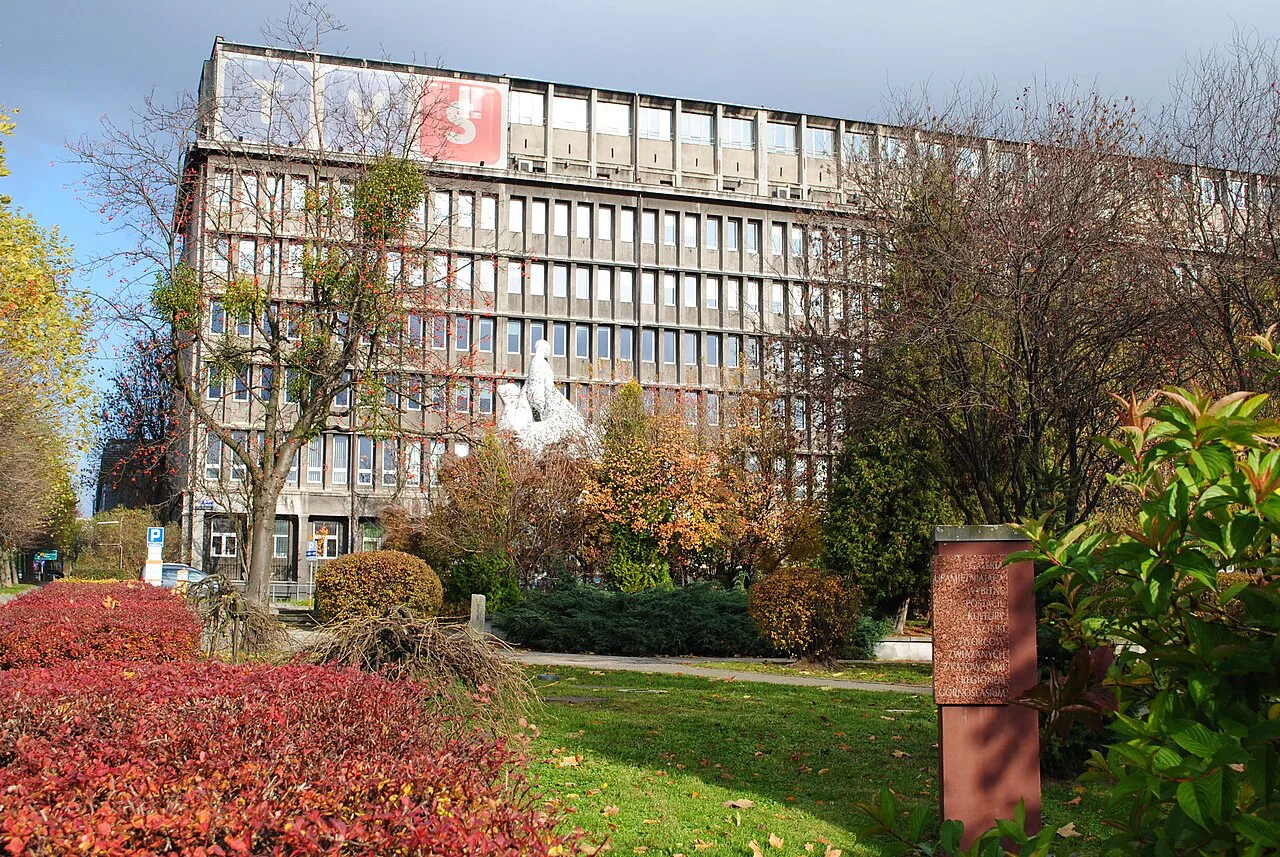
At the turn of the 1950s and 1960s came a workers' estate in the socialist-realist manner, and at the end of the 1960s the Galeriowiec and the so-called Niebieskie Bloki were put up. These are private homes, so admire them from the street and keep to the pavements.
The authors of this mixture include Polish architects such as Karol Schayer, Tadeusz Michejda, and the pairing of Franta and Buszko, which is why the district rewards a slow look rather than a quick pass. The buildings are mostly low, and the spaces between them are filled with greenery that has not been trimmed into neatness.
Plac Grunwaldzki and Park Alojzego Budnioka: the district's open spaces
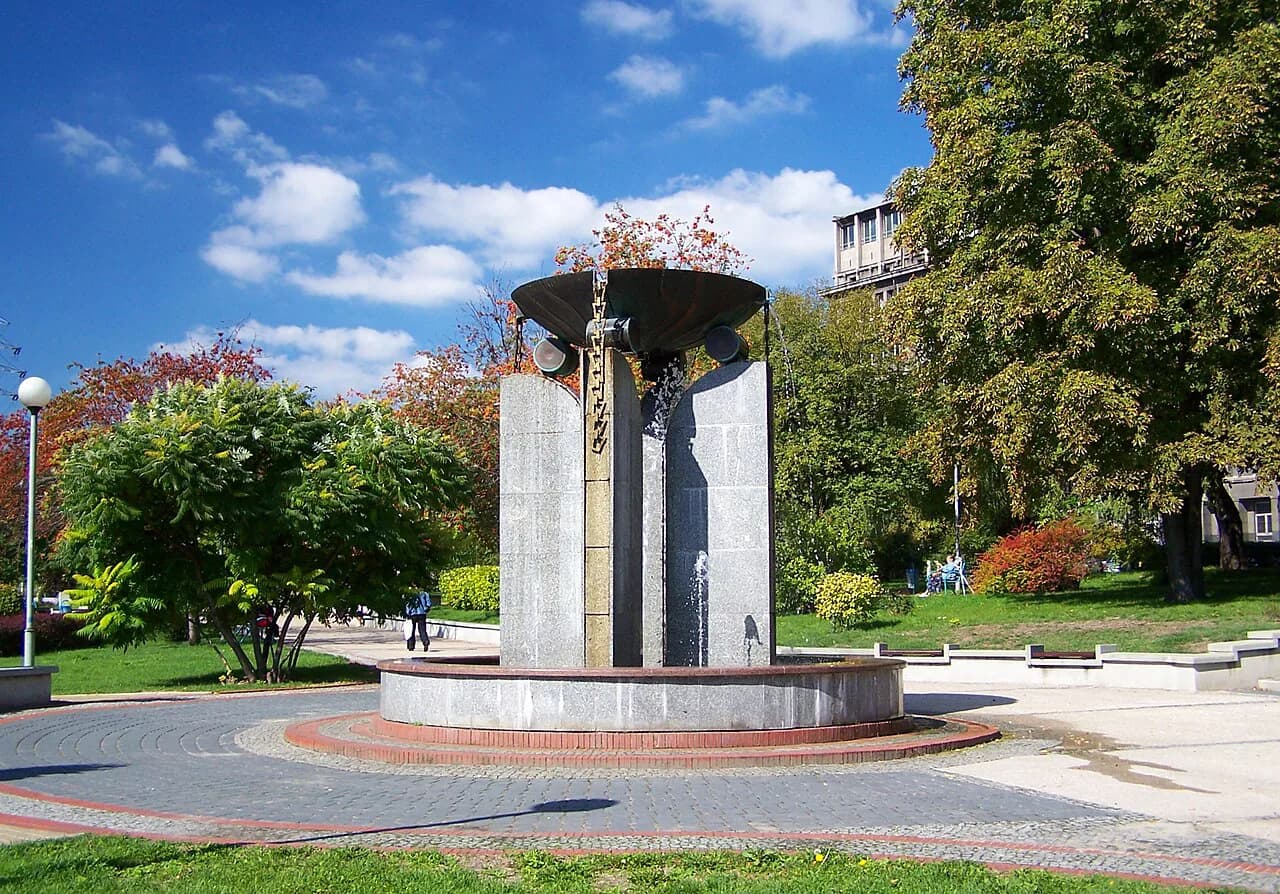
Two open spaces anchor the district: Plac Grunwaldzki and Park Alojzego Budnioka, both named in accounts of Koszutka's planned greenery. Use the square as a landmark to orient yourself rather than as a fixture in a schedule.
Between the park and the square you have the two fixed points you need to plan a route: start from the centre, take in the southern villas, cross to the square, and finish in the park before walking back. That fits comfortably into the couple of hours the district rewards.
Courtyards, lime trees and the green details between the blocks
The best of Koszutka is not on a list of monuments: it is in the gaps between the buildings. Beyond the planned park and square, the district is full of characterful courtyards with old lime and willow trees, and the greenery is deliberately not always clipped and formal. Slow down here, because this is the part of the visit you will remember.
Some of that greenery is the work of residents and shopkeepers rather than planners. A local landscape enthusiast planted a garden on common ground at the corner of Grażyńskiego and Sokolska streets with the city's consent, and the owners of one district shop sowed a strip of planting outside their door that has since grown into a small green patch on the street.
Who Koszutka suits on a short break, and who it does not
Koszutka suits travellers who like architecture, twentieth-century housing and ordinary city life, and who are happy to walk without a ticket booth in sight. It works especially well for anyone already staying in central Katowice, because the walk in and out costs you no time on transport.
It does not suit a first-time visitor with only one day and a list of must-sees, or anyone hoping for a district built around ticketed sights. Compared with greener, more residential areas such as Ligota, Katowice, or Brynów, Katowice, the appeal here is architectural rather than scenic.
Everyday shops, local venues and where to eat
Koszutka is a residential district first, so build it into a day that has its meals planned elsewhere rather than expect a restaurant strip. Shops and small single-trade businesses are woven into the housing, which is part of why the streets stay busy through the day, and these serve everyday needs rather than visitors.
For culture, the district has Lokal na Kulturę Odeon on ulica Iłłakowiczówny and MDK Koszutka, both of which have hosted local events listed on the residents' portal, including a theatre evening in December 2018 and an art salon on 25 February 2019. These are local halls with changing programmes, not permanent attractions, so check what is on before you go.
How to get to Koszutka and how much of it you can cover on foot
Walk. Koszutka borders the centre, so there is no transfer to arrange for the visit itself, and the walk between the southern villas, Plac Grunwaldzki and the park is short because the individual pieces sit close together.
Allow a half-day at most, and less if you move briskly. A sensible route runs from the centre into the southern villa streets, on to Plac Grunwaldzki, then to the park, with detours into courtyards as you go. If you want a second residential district for contrast, Zawodzie, Katowice is a separate outing rather than an add-on to this walk.
Wear shoes you can walk in, since the pleasure of the district is in the streets and courtyards rather than in any single building. Keep to public ground: the villas, the Galeriowiec and the Niebieskie Bloki are people's homes.
Practical notes: a free walk with no tickets
The walk itself is outdoors and free: the streets, the squares, the park and the courtyards are open public ground, so there are no tickets and no opening hours to work around for that. That makes Koszutka a good filler for a spare morning or the gap before an evening out, and a low-risk choice if the weather turns and you want to cut the walk short.
What you should skip is any attempt to treat the district as a sightseeing hub heavy on ticketed attractions. There is no marked museum circuit here, and the cultural venues are local halls with changing programmes rather than permanent attractions. If you have a shortlist of things to do in Katowice, spend the bulk of your time there and give Koszutka the leftover hours.
Is Koszutka worth an afternoon of your trip?
Yes, if you have a spare half-day and an interest in how Katowice grew, and no, if this is your only day and you want sights with tickets attached. The district gives you 1930s villas in gardens, a socialist-realist estate, the Galeriowiec and Niebieskie Bloki, and a park and square to rest in, all within a short walk of the centre.
Plan it as a loop from the centre on a dry day, finish in Park Alojzego Budnioka, and check what is on at Odeon and MDK Koszutka before you set out if you want an evening event to close the day.
Explore more Katowice guides
Frequently Asked Questions
Do I need a ticket to visit Koszutka?
No ticket is needed to walk the district. The streets, Plac Grunwaldzki, Park Alojzego Budnioka and the courtyards between the blocks are outdoor space you can wander freely, and the visit is a walk rather than an attraction with an entrance. The villas, the Galeriowiec and the Niebieskie Bloki are people's homes, so admire them from public ground.
How long does it take to see Koszutka?
A half-day is enough, and many visitors will want less. The district is the smallest in Katowice and sits immediately north of the centre, so a route covering the southern villa streets, Plac Grunwaldzki and Park Alojzego Budnioka fits comfortably into a morning or an afternoon without transport between stops.