
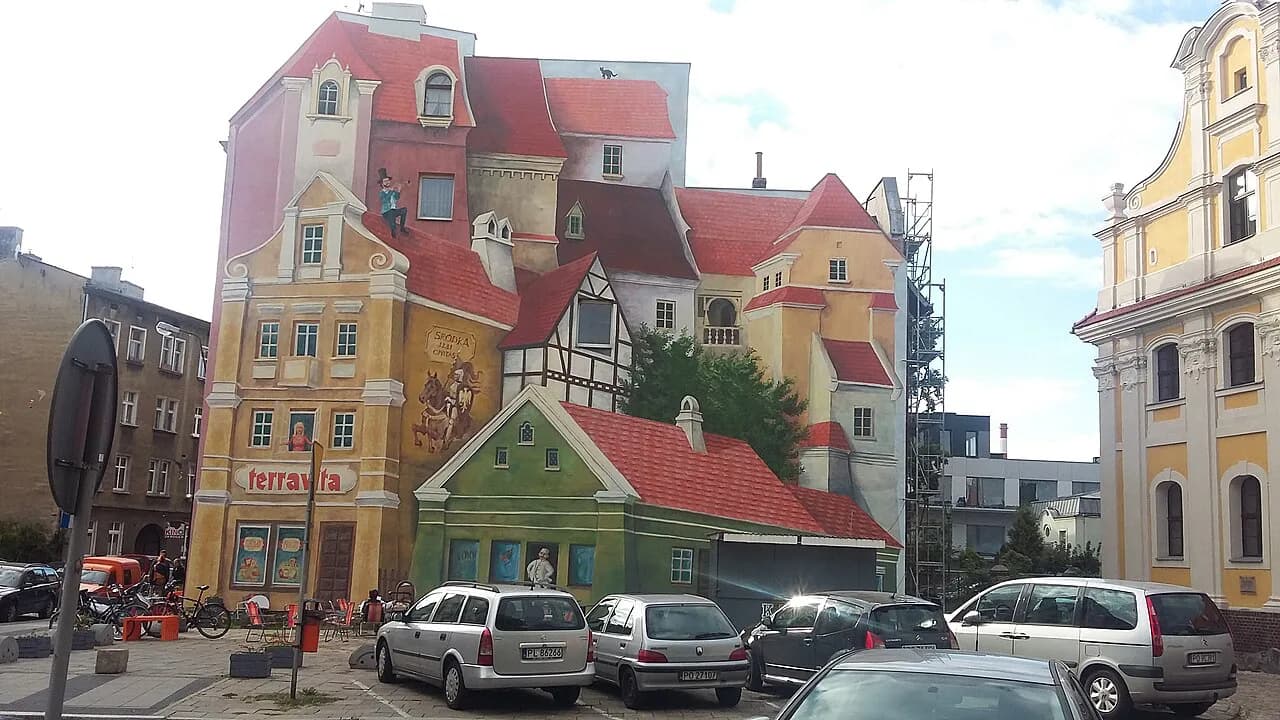
Śródka in Poznań: What to See in the Old Market District

Give Śródka half a day at most, and only as the second half of a walk that starts on Ostrów Tumski. The district was a separate town until 1800, which is why its scale and street pattern feel different from the city centre, and why its centre is still a small market square rather than a grand boulevard.
This guide covers what Śródka is, where it sits, who it suits, what to see around Rynek Śródecki, and how to fold it into a one-to-four-day break. It stays inside the district; for the wider picture, the Poznań Neighborhoods: 5 Area Guides page sets Śródka beside the city's other quarters.
What Śródka is and where it sits
Śródka is a historic part of Poznań on the right bank of the Cybina, the small river that runs past Ostrów Tumski. It lies east of the cathedral island and opposite the older settlement, which is why the two are so often walked together.
Until 1800 Śródka was a separate town in its own right, and that history explains the layout you see today: a compact market square, Rynek Śródecki, with streets radiating out from it. The Wikipedia entry for Śródka records the same story of a town absorbed into Poznań at the turn of the nineteenth century.
For a short break, treat Śródka as one piece of a longer east-bank walk rather than a destination in itself. It sits close enough to Ostrów Tumski that the two fit into a single morning or afternoon without transport. Travellers comparing districts can weigh it against Wilda, Poznań, south of the centre, or Jeżyce, Poznań, west of the centre, both of which have a livelier everyday feel.

The character of the neighbourhood today
Rynek Śródecki is the heart of it: a small square with the old street pattern still legible around it, and a cluster of cafés and eateries facing the open space. The Tripadvisor listing for Śródka describes a historic neighbourhood centred on Rynek Śródecki, the old market square, which matches the shape of the place on the ground.
The mood is quiet and residential rather than busy, and the streets off the square are short enough to wander without a plan. If you want a big museum, a long shopping street or a dense evening scene in the same few blocks, Śródka will feel thin; if you want a slower half-day with a meal, it works well.
Set against the rest of Poznań, Śródka is the smallest-scale stop in the neighbourhood set. Grunwald, Poznań is spread out and residential in a different way, while Łazarz, Poznań has the market hall and a busier street life; Śródka's appeal is that it is compact and walkable in under an hour of wandering.

What to see around Rynek Śródecki
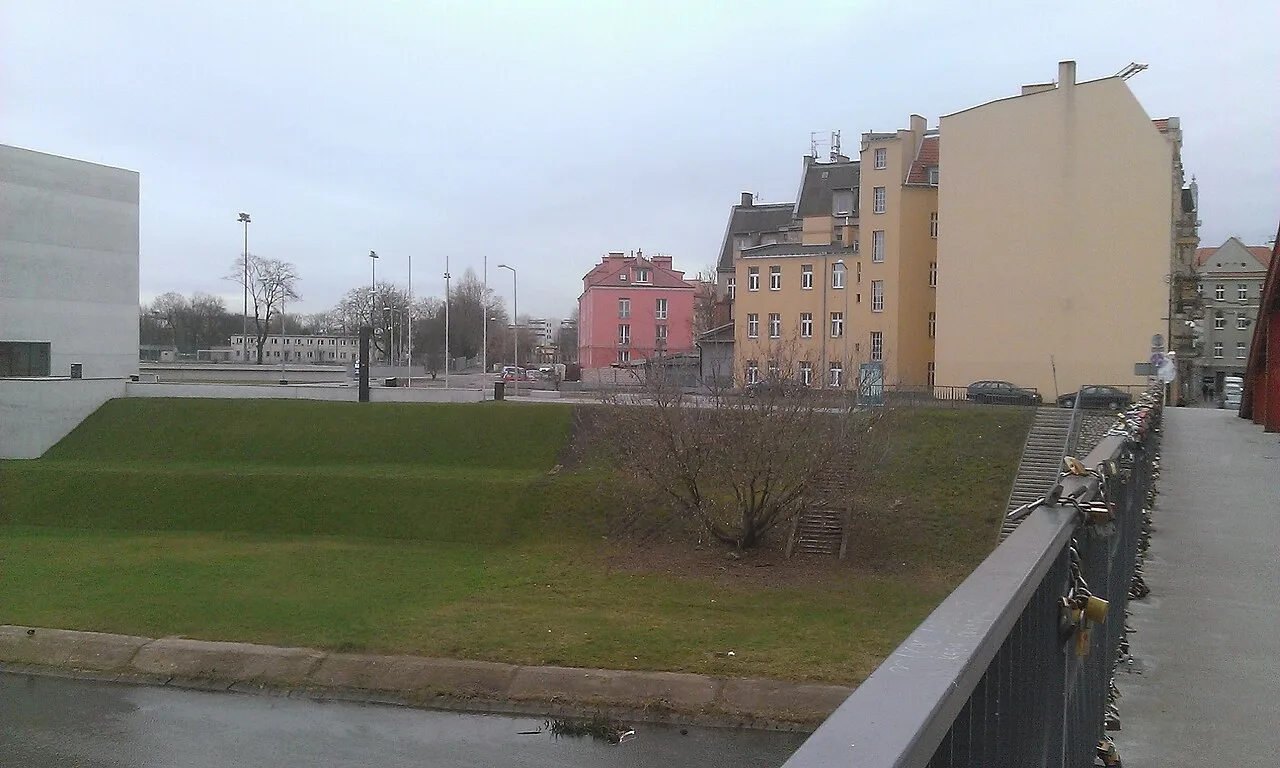
Start on the square itself, then walk the short streets that radiate from it — the point is the old town plan as much as any single sight. The compact grid around Rynek Śródecki is the thing to read slowly, rather than a checklist of individual buildings.
For an indoor stop, the Archaeological Museum in Poznań holds a permanent exhibition, Rock Art of North Africa, devoted to Saharan engravings and paintings gathered through the museum's own fieldwork in Algeria, Egypt and the Sudan; it includes multimedia displays and a hands-on corner where children can copy animal engravings. Note that the museum's Egyptian gallery closed in June 2024, with a new exhibition scheduled for 2026, so the Saharan galleries are the reliable reason to go inside on a Śródka day.
The real reward of this corner of Poznań is the pairing with Ostrów Tumski, where the cathedral island gives the walk its historical weight. Do Śródka second, when you have already seen the island, so the smaller scale reads as a change of pace rather than a disappointment. The Poznań Attractions: 9 Visitor Guides page covers the island and the rest of the city's sights.
Who Śródka suits and who it does not
Śródka suits travellers who like old street layouts, small squares and a sit-down meal in a quiet corner, and who are happy to combine it with Ostrów Tumski. It also works for a slow morning when you have already done the centre's main sights.
It does not suit anyone who wants a museum-heavy half-day, because the district's draw is its shape and atmosphere rather than its collections. If a big collection is the priority, the National Museum of Poznań, with its Polish, Flemish, Dutch, Italian and Spanish paintings, is the city-centre stop to build a day around.
The Archaeological Museum in Poznań is the other obvious collection for a wet afternoon, sitting across the river and within easy reach of the district. Its Saharan rock-art exhibition is permanent, while the Egyptian gallery closed in June 2024 with a new exhibition scheduled for 2026, so check what is open before you build a day around it.
Food and drink in Śródka
The eating is concentrated around Rynek Śródecki, where cafés and small restaurants face the square, and the offer is modest rather than destination dining. Plan on a casual lunch or an afternoon coffee here, then head back across the river for a bigger evening meal.
Prices and menus change, so check the board outside before you commit a meal to the district. For a wider choice of places to eat, the centre and the streets around Jeżyce, Poznań give you more options within a short walk of each other.
Where to stay in Śródka
Śródka is a quiet base rather than a convenient one, and the honest answer for a one-to-four-day break is that the city centre beats it for a short stay. Staying here means committing to a walk or a short ride for most meals, museums and evening plans.
Choose it if you want calm and don't mind the crossing to the centre, and look at Wilda, Poznań or Łazarz, Poznań if you would rather be closer to busier streets and transport. Check the location of any place against the river before booking, because the walk across to Ostrów Tumski shapes how the day feels.
Getting there and how long to allow
Walk to Śródka from Ostrów Tumski across the Cybina, which is the simplest approach and the one that gives the district its context. From the city centre, allow a longer walk or a short ride; the streets here are small, so you will cover the core on foot once you arrive.
Budget one to two hours in Śródka itself, plus the time you give Ostrów Tumski, which will be the larger part of the outing. If you are squeezing the city into a day or two, this is a half-day loop rather than a separate trip.
Come in the morning or early afternoon, when the square is at its calmest and the cafés are open for lunch. There is no festival, market or event to plan around in the sources for this district, so treat it as an everyday neighbourhood visit rather than a scheduled attraction.
Should Śródka make your Poznań shortlist?
Yes, if you are already walking Ostrów Tumski and want a quiet hour on the other side of the Cybina with a meal attached. It is a natural addition to that walk, not a substitute for the centre's museums or a reason to rearrange a short break.
If your time in Poznań is tight, give the district a pass and put the hours into the centre and one museum instead. Either way, the neighbourhood is best judged by what you want from the day: atmosphere and a slow lunch, or collections and a busier street.
Frequently Asked Questions
Is Śródka part of the centre of Poznań?
No. Śródka lies on the right bank of the Cybina, east of Ostrów Tumski, and is a district in its own right rather than part of the main centre. You reach it on foot from the cathedral island, which is the simplest approach.
How long do you need in Śródka?
One to two hours covers the square and the surrounding streets at an easy pace. Most travellers pair it with Ostrów Tumski and treat the two as a single half-day outing rather than separate visits.
Where did Śródka's separate identity come from?
Śródka was a town in its own right until 1800, when it was absorbed into Poznań. That history explains why it still keeps its own small market square, Rynek Śródecki, and a street pattern that feels different from the city centre.