
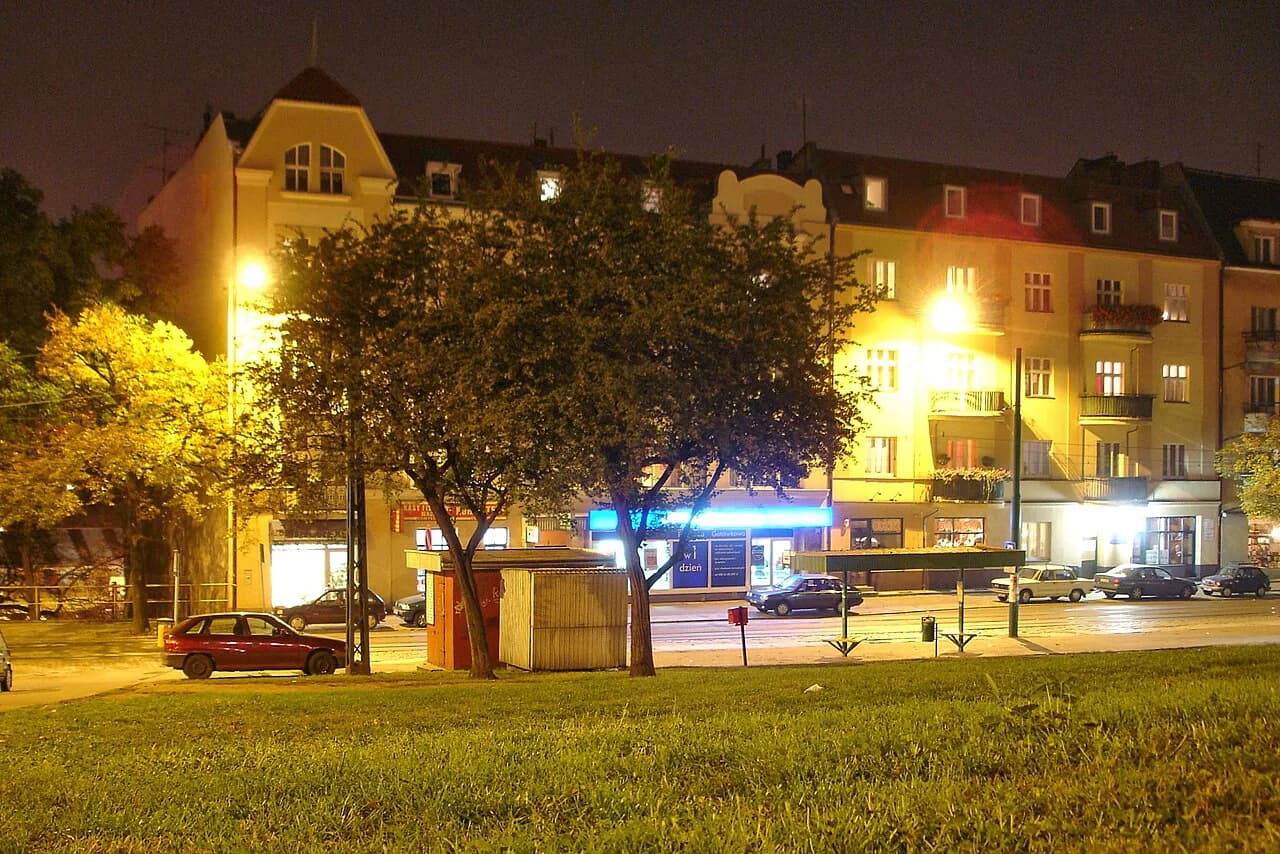
Wilda, Poznań: what this district is like and whether to base yourself here

Wilda suits a short Poznań break if you want a quiet, residential base a short walk south of the centre rather than a room in the Old Town. It needs an hour or two of wandering, not a full day, and it works best as where you sleep and eat rather than as a sightseeing target. This guide covers the district's layout, its street character, what there is to see, and how it compares with the alternatives.
The district sits immediately south of the city centre, with its main axis running from ulica Królowej Jadwigi down through Górna Wilda into ulica 28 Czerwca 1956 roku. That geography is the whole argument for staying here: you are close enough to walk in, but you come back to ordinary streets rather than tourist ones.
What Wilda is and where it sits in Poznań
Wilda is one of Poznań's older districts, a residential quarter that grew up around industry and workshops rather than around a market square. A local developer's history of the area describes it as a village of the Poznań bishopric in the medieval period, absorbed into the city in 1900, after which tenement building and population growth took off. The street pattern that growth produced is what you see today.
For orientation, the Old Town and Poznań Główny station both sit north of the district, so Wilda is the first residential belt you reach walking south out of the centre. It is not a separate town with its own sightseeing core; it is the part of Poznań where people live within sight of the centre.

How Wilda is laid out: Górna Wilda, Dolna Wilda and ulica 28 Czerwca 1956 roku
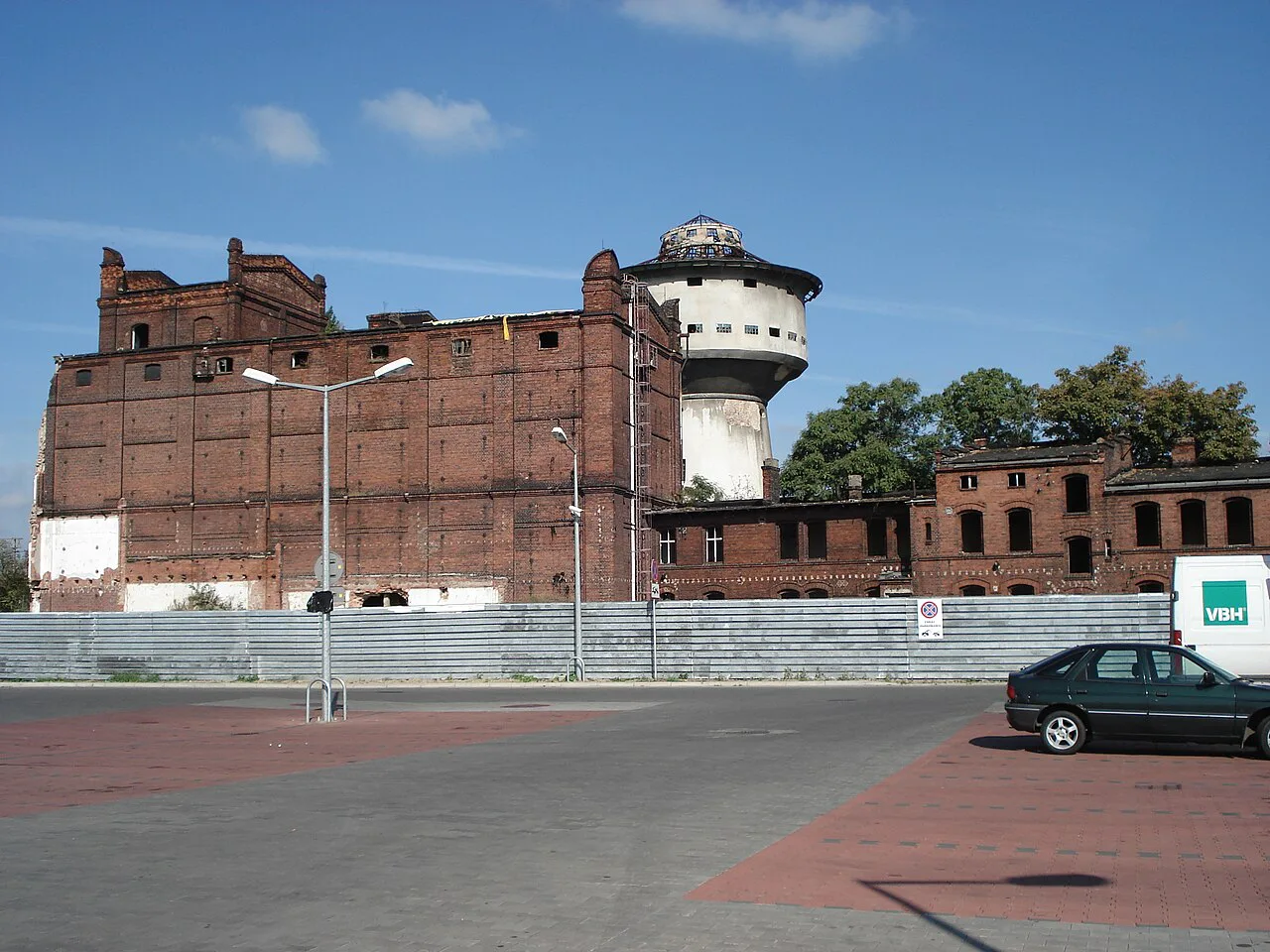
The district's spine is easy to grasp. Górna Wilda links ulica Królowej Jadwigi with Wierzbięcice, and its continuation southwards becomes ulica 28 Czerwca 1956 roku, so a single straight line carries you from the edge of the centre deep into the neighbourhood.
Dolna Wilda runs roughly parallel to the east, and the rebuilt walking and cycle path along it now gives that side of the district a continuous, even surface between ulica Czechosłowacka and ulica 28 Czerwca 1956 roku.
Górna and Dolna mean upper and lower, and locals use them as separate reference points, so an address on Górna Wilda is not interchangeable with one on Dolna Wilda when you are working out a walk. Read the street name, not just the district.

What the district is like to walk around
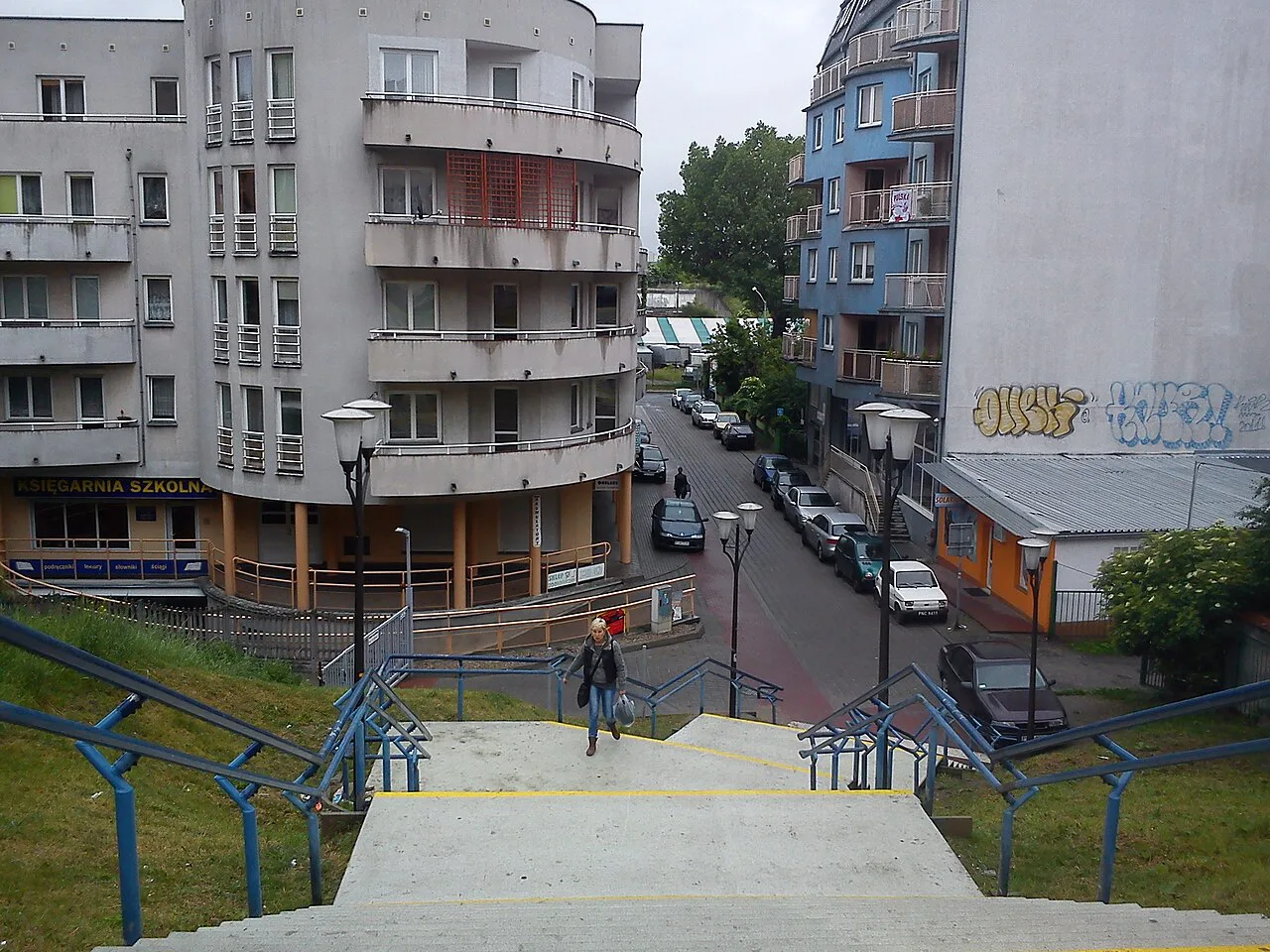
Walking Wilda is about the housing stock rather than monuments: ornate early twentieth-century tenements with worn stucco and courtyard gates, workshops and small industrial premises folded in between, and newer apartment blocks filling gaps and former yards. The result is a patchwork that changes character within a couple of streets.
A developer's account of the district stresses the coexistence of old tenements and modern housing, and describes an area undergoing steady redevelopment rather than wholesale clearance, which is a fair description of what the streets read like on foot. Come expecting lived-in, slightly scruffy, sometimes handsome, and never polished for visitors.
Pavement and junction works have been a running theme, with local reporting covering rebuilt pavements on Górna Wilda and changed traffic layouts around Fabryczna and Madalińskiego. Those schemes change month to month, so plan your walk by street name and accept that a stretch may be fenced off when you arrive.
Who Wilda suits on a short city break, and who should look elsewhere
Wilda suits travellers who want a quieter, more residential base within walking distance of central Poznań, and who are happy to eat on ordinary neighbourhood streets rather than in a tourist quarter. It also suits repeat visitors who have already done the Old Town and want to see how the city actually lives.
It suits less well if your priority is stepping out of your hotel into the main square, if you want a short break built entirely around museums and monuments, or if you have only one evening and want everything within five minutes of the door. In those cases a base nearer the centre saves you the daily walk.
If you are weighing up districts, Jeżyce, Poznań has a livelier, more mixed street character a little further out, and the two are worth reading side by side before you commit to a booking.
Neighbouring Grunwald covers the area immediately to the west and south-west and again has a different, more mixed character, which makes it a useful third comparison.
What there is to see in Wilda itself
Wilda has few formal sights: its appeal is the streets themselves and Park Jana Pawła II, the green space the district's own promotional material points to as its park. Use it as a place to sit, read or let children run rather than as a destination in its own right.
Beyond that, give the district a slow loop: down Górna Wilda, across to Dolna Wilda and back up along the cycle path, pausing for the tenement detail and the workshop frontages. That is roughly an hour of walking at an unhurried pace, and it does not need to be scheduled into a day.
Getting into the centre from Wilda on foot or by tram
Walking is the simplest way in: from the northern end of Górna Wilda at ulica Królowej Jadwigi you are on the edge of the centre, and the whole district is oriented towards that junction. Allow a comfortable stroll rather than a march, and you will pass through streets that are themselves part of the visit.
Trams run through this corridor and the streets are laid out for them, so a tram is the obvious alternative when you are carrying bags or the weather turns. Check current routes and stops with Poznań's city transport operator on the day, since lines and diversions change with roadworks.
Eating and staying in Wilda rather than the Old Town
Everyday eating places and shops serve the people who live here, which is the practical advantage of basing yourself in the district: you buy breakfast and lunch where locals do, on neighbourhood rather than Old Town streets. Wander Górna Wilda and the streets off it and see what is open rather than relying on a fixed list.
Accommodation runs from converted tenement flats to newer apartment buildings, so self-catering is a realistic option here in a way it is not in a hotel-dominated quarter. Book through the usual platforms, and read the exact street address carefully, because Górna and Dolna Wilda put you in quite different parts of the district.
Łazarz, immediately to the west, has a similar residential feel with its own food and market life, so it is worth comparing the two if you are choosing a base outside the centre.
How much time Wilda needs alongside the rest of Poznań
Budget an hour or two for Wilda itself: a walk down Górna Wilda, a stretch of the Dolna Wilda path and a pause in Park Jana Pawła II covers it. The district earns its place as a base and an evening wander, not as a half-day itinerary of its own.
That leaves your days free for the centre, which is where the museum and monument time goes. Read the Poznań Neighborhoods guide before you choose a base, and treat the Old Town as the default sightseeing zone with Wilda as the calm place to return to.
If you want a second residential district to compare, Śródka, Poznań sits on the right bank and offers a different, older street pattern within reach of the centre.
Should you base yourself in Wilda?
Yes, if you want a residential, self-catering base within walking distance of central Poznań and are content to eat on ordinary neighbourhood streets. No, if your short break is built around stepping out into the Old Town or squeezing museums into every hour.
Book by street address so you know whether you are on Górna or Dolna Wilda, plan your walk by street name in case of pavement works, and confirm current tram routes with the city operator before you rely on them.
Explore more Poznań guides
Frequently Asked Questions
Is Wilda a good place to stay in Poznań?
It is a good base if you want a quiet residential district within walking distance of the centre, with self-catering flats and everyday shops. It is less good if you want to step straight out into the Old Town.
How long does Wilda take to see?
An hour or two of walking covers Górna Wilda, a stretch of the Dolna Wilda path and a pause in Park Jana Pawła II. Most visitors treat the district as a base rather than a sightseeing day.