
Artus Court (Dwór Artusa) in Gdańsk: what's inside and how to visit

Artus Court is a 30-to-45-minute stop, not a half-day museum: one vast hall, a richly carved facade and a merchant story that fits neatly between a walk down Długa and the Motława waterfront. It stands on Długi Targ, the eastern half of the Royal Route through Główne Miasto, at number 44. This guide covers what fills the Great Hall, what to look for on the outside, and where the building slots into a Gdańsk city break.
It is a branch of Muzeum Gdańska, the city history museum, and the interior you see today is presented as a partial reconstruction: original pieces returned after the war, with missing sculpture and painting replaced by copies and large-format prints. That mix is the point of interest, because the room explains how Gdańsk's merchants met, traded and celebrated.
What Artus Court is and where it sits on Długi Targ
The building takes its name from the legend of King Arthur, the medieval model of knightly virtue whose round table stood for equality among his companions. Courts named after him spread through northern Europe, and Gdańsk's is recorded as the royal court of Artus from the fourteenth century, built by the Brotherhood of St George for well-born German families. It later became the city's merchant house, where ordinances were announced and business information changed hands.
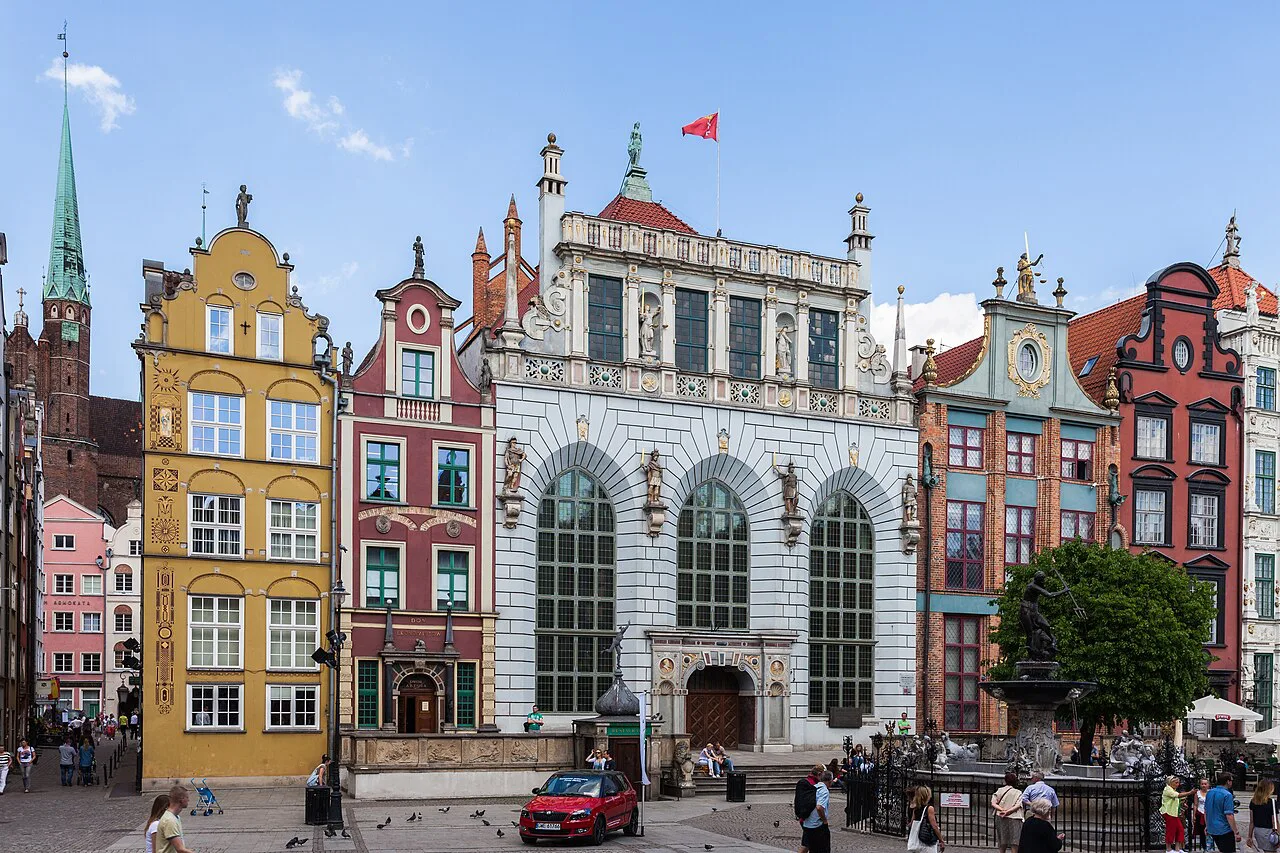
Today it sits at Długi Targ 44, on the stretch where the Royal Route opens out towards the Green Gate and the river. The address matters because the entrance fronts the square rather than a side street, and the long facade faces the same arcaded terraces as its neighbours.
Think of it as one room to see rather than a gallery circuit. The building took its present shape from fourteenth-century origins, was rebuilt after a fire in the 1470s, and gained its showpiece front in the early seventeenth century; the art inside gathered over centuries from the fraternities that shared the hall.

How to reach it and what it is near in Główne Miasto
Artus Court stands in the middle of the pedestrian heart of Główne Miasto, so you reach it on foot. Come down Długa from the Golden Gate, keep going past the Town Hall, and the street widens into Długi Targ with the court on your left. From the Motława embankment it is a two-minute walk inland.
That position makes it easy to pair with the rest of the old town. The Gdańsk Attractions: 5 Visitor Guides page covers the major sights in and around Główne Miasto, so it is worth reading before you fix a route.
The square sits in the middle of the pedestrian old town. Because the whole Royal Route is level and paved, the approach is straightforward with a buggy or a suitcase, though the cobbles in the surrounding streets can be uneven. Come down Długa from the Golden Gate, or inland from the Motława embankment, and you arrive on foot.

The Great Hall: the one-room interior and how to read it
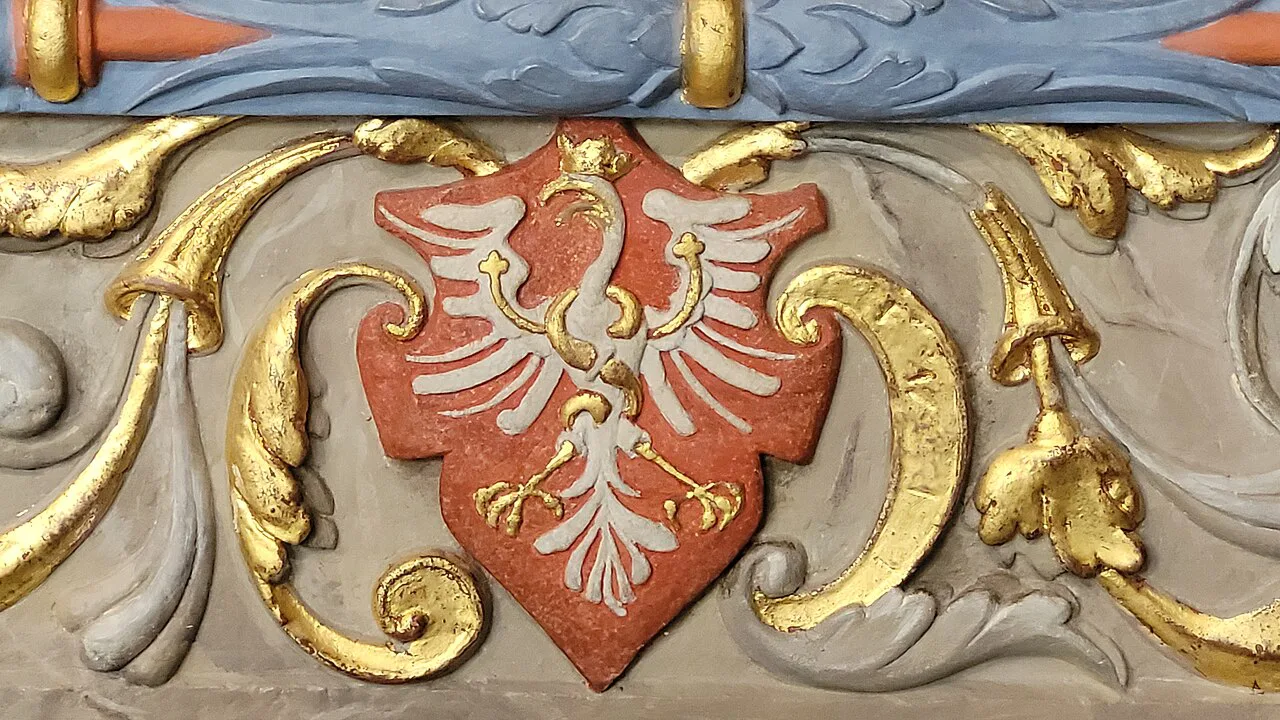
The interior is a single tall Gothic hall, and you will see it all from the doorway. The walls carry carved panelling and friezes with mythological and historical scenes, added from the sixteenth century as the room was dressed for its merchant users. Look up as well as around, because the scale of the space is the point.
Several large paintings anchor the display, including the Siege of Marienburg and The Ship of the Church from the late fifteenth century, Hans Vredeman de Vries's Orpheus among the Animals and Anton Möller's Last Judgment, which used Gdańsk scenery for its setting. Reading the labels takes a few minutes each; the works are worth more than a glance.
Set expectations for authenticity. The museum presents the room as a partial reconstruction of both architecture and furnishings: surviving original pieces are back in place, while missing carved elements and paintings are represented by modern copies and printed panels. Knowing that makes the visit more interesting, not less.
The hall doubled as a public room, and since the sixteenth century it hosted open court sessions because its size suited the purpose. That background helps explain why the space feels civic rather than domestic, and why the furnishings are communal benches rather than private furniture.
The Dutch Mannerist facade and what to look for outside
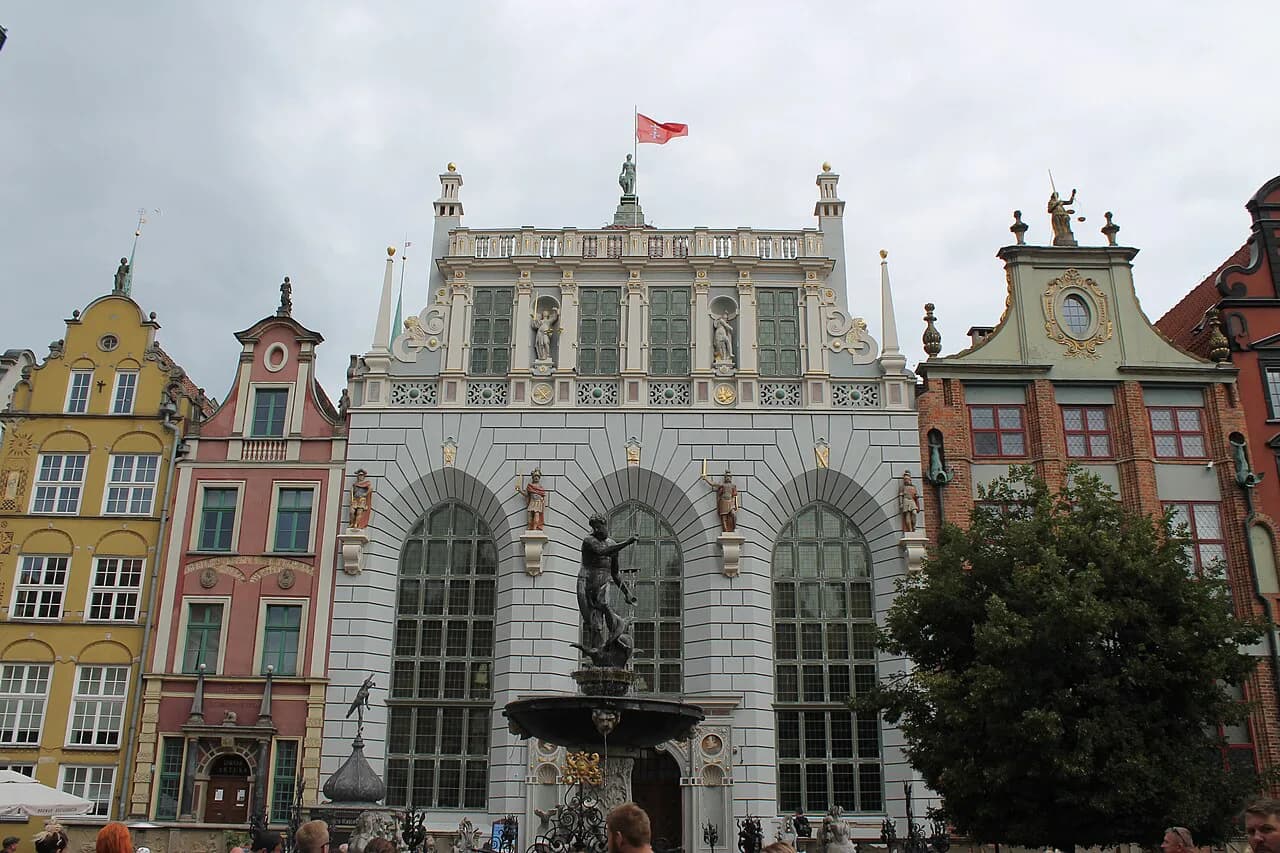
Stand back on Długi Targ before you go in. The front was remade in the Dutch Mannerist style in the early seventeenth century, and it is busy with figures: statues of ancient heroes including Scipio Africanus, Themistocles and Judas Maccabeus, allegories of strength and justice above them, and Fortuna crowning the gable.
Flanking the portal are medallions with the busts of King Sigismund III Vasa and his son Władysław IV, a reminder that Gdańsk's merchant elite dealt directly with the Polish crown. The gilded detail and dark stone read best in morning light, when the square is less crowded.
The building is part of a composite ensemble rather than a free-standing house: the ground floor of two joined townhouses called the Stary Dom Ławy (Old Bench House), the court itself, and the Nowy Dom Ławy (New Bench House). That explains the width of the frontage and why the entrance sits where it does.
How much time to allow and when it fits into a city break
Allow 30 to 45 minutes for the hall, the paintings and the facade. That is enough for a careful look without turning a city-break morning into a museum marathon, and it leaves the rest of Długi Targ for the Neptune Fountain, the Town Hall tower and the waterfront.
Slot it into a loop rather than a dedicated trip: start at the Golden Gate, walk Długa, pause at Artus Court, then continue to the Green Gate and along the Motława. If your interests lean towards the twentieth century, the Museum of the Second World War in Gdańsk takes the opposite end of the day and needs several hours.
Rainy afternoons are when a short indoor stop earns its place, and the hall is compact enough to duck into between showers. If you want a longer indoor option nearby, the European Solidarity Centre, Gdańsk, fills an afternoon on its own.
Tickets, opening days and closures: check the museum page before you go
Artus Court is run by Muzeum Gdańska as one of its branches, and the branch page is the place to confirm current admission prices in złoty, opening days, reduced tickets and any temporary closures before you travel. Polish museums commonly close one day a week, so check the day you plan rather than assuming the door will be open.
The museum also flags limits on visiting in its own notices, so read them if you have access needs or are bringing a group. The same page carries contact details and information in accessible formats, which is useful if you want to ask a specific question in advance.
Because the hall is furnished with historic panelling and paintings, treat it as a museum room rather than a thoroughfare: keep voices low, keep bags off the displays, and follow any barriers. Photography rules are set by the museum, so check on arrival rather than setting up a tripod.
Nearby sights on the Royal Route to pair with a visit
The Royal Route is the natural frame for the day. Długa and Długi Targ string together the Golden Gate, the Uphagen House, the Town Hall and the court, all within a few minutes of each other, so most of the old town is covered on foot without planning transport.
St Mary's Church, Gdańsk, stands a street behind the square and is the obvious next stop for its scale and its climbable tower; the Amber Museum Gdańsk (Muzeum Bursztynu) sits in the old prison tower on the same stretch, making a strong pair of indoor visits either side of the court.
Finish on the Motława, where the Żuraw (the Crane) and the waterfront terraces close the loop and the evening light falls on the square. From there it is a short walk back to the station side of town.
Is Artus Court worth stopping for?
Yes, for a focused half hour. Artus Court gives you the interior counterpart to the pretty square outside, and the story of guilds, benches and trade explains the city better than another church or tower. Go in knowing that the room is partly reconstructed and you will enjoy the mix of originals and replacements.
Build it into a Royal Route walk, check the branch page for the day's opening before you set out, and pair it with St Mary's or the Amber Museum if you want a full morning indoors.
Frequently Asked Questions
Is Artus Court the same as the Town Hall in Gdańsk?
No. Artus Court is a separate building at Długi Targ 44, run as a branch of Muzeum Gdańska and focused on the merchant hall. The Town Hall is a different building on Długa.
Can I see Artus Court quickly between other sights?
Yes. The main interior is one hall, so 30 to 45 minutes covers the paintings, the panelling and the carved facade. It sits mid-way along Długa and Długi Targ, which makes it easy to slot between the Golden Gate and the Motława waterfront.
Is everything inside original?
No. The museum describes the interior as a partial reconstruction: surviving original works are displayed, while missing sculpture and paintings are represented by copies and large-format prints.