
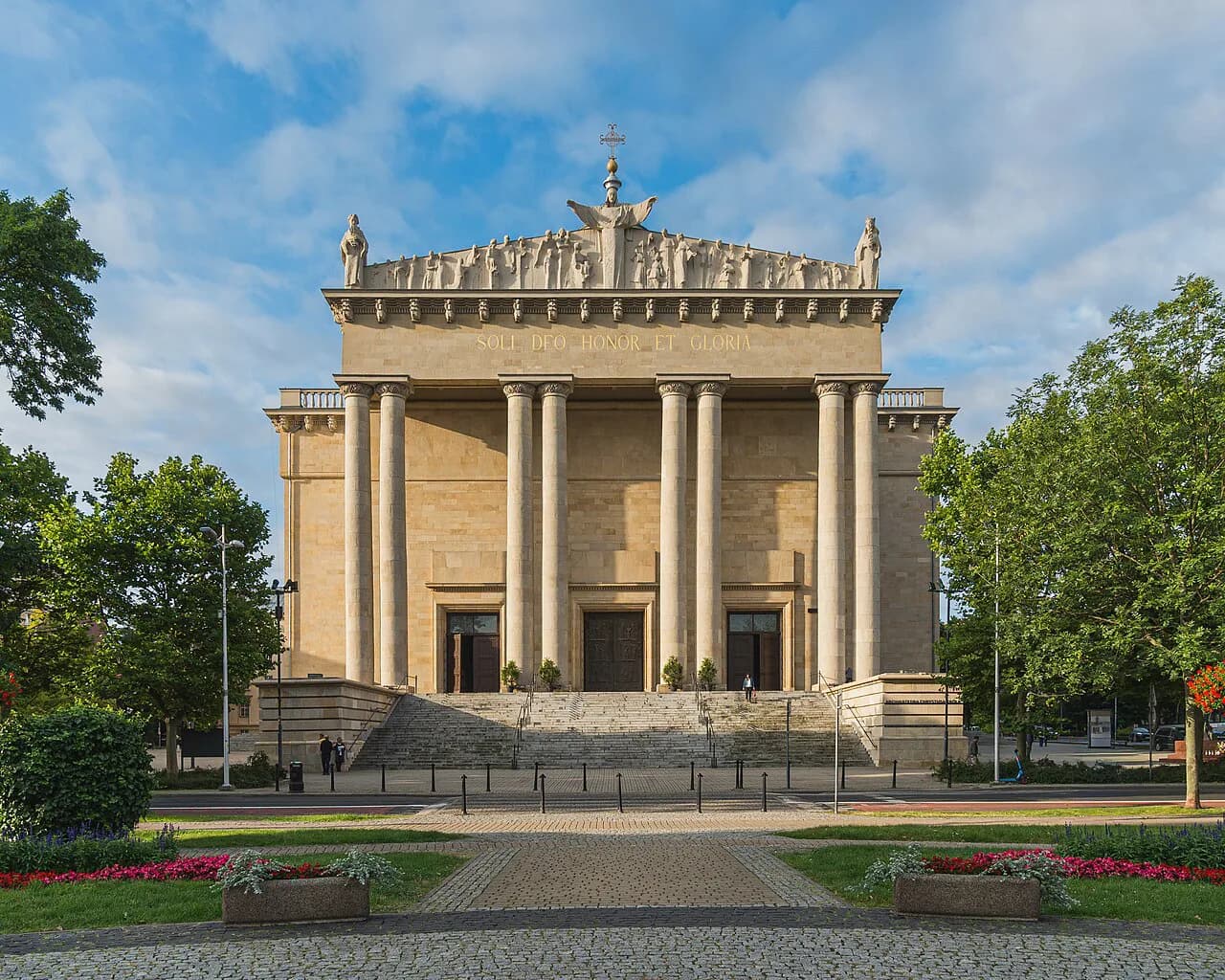
Cathedral of Christ the King, Katowice: What to See and How Long to Allow

The Cathedral of Christ the King is worth 30 to 45 minutes of a Katowice city break: an enormous 20th-century church that reads as monumental from the street and even larger once you step inside. It sits on Plebiscytowa Street within easy walking distance of the centre, so it slots naturally into a morning or afternoon of sightseeing. This guide covers where it stands, what to look at outside and in, how much time to give it and what else is close by.
What the Cathedral of Christ the King is and why it is worth a stop
The Archikatedra Chrystusa Króla, or Cathedral of Christ the King, is a vast classical-style church of the 20th century rather than a medieval survivor, and that is precisely what makes it interesting in a city better known for industrial heritage. Visitors consistently note that the building looks huge from outside but feels even bigger once you are standing under the interior vaults. It is the seat of the Archdiocese of Katowice, so it functions as a working parish and cathedral rather than a museum piece.
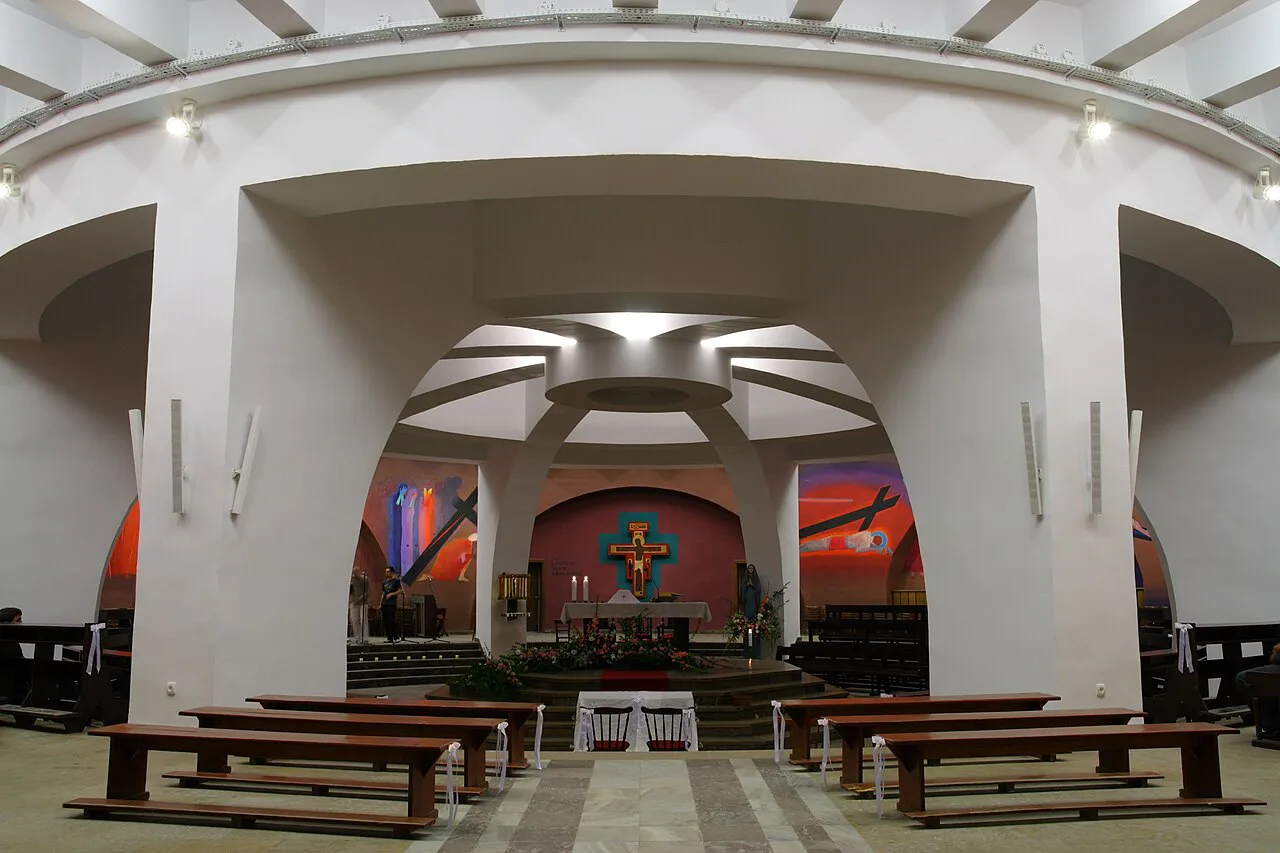
Treat it as a short, high-impact stop rather than a half-day attraction. The payoff is the sheer scale of the nave and the contrast between the sober exterior and the light-filled interior, not a collection of artworks or exhibits. If you are weighing it against Katowice's industrial and museum sights, it is the easiest big-hitter to combine with a walk through the centre.

Where the cathedral stands in Katowice and how to reach it
The cathedral's parish address is Plebiscytowa 49A, 40-041 Katowice, in the central part of the city. That puts it within walking distance of the main streets and squares of the centre, so most visitors arrive on foot rather than by bus or tram; the building is hard to miss once you are on the right street.
If you are planning your day around the cathedral, think of it as a landmark between the centre and the city's cultural district rather than a destination in its own right. Combine the walk with a stop for coffee or a look at the surrounding streets, and you have a natural hour of sightseeing without any transport. For a broader view of how the pieces fit together, see the guide to things to do in Katowice.

The exterior: what to look for from the street
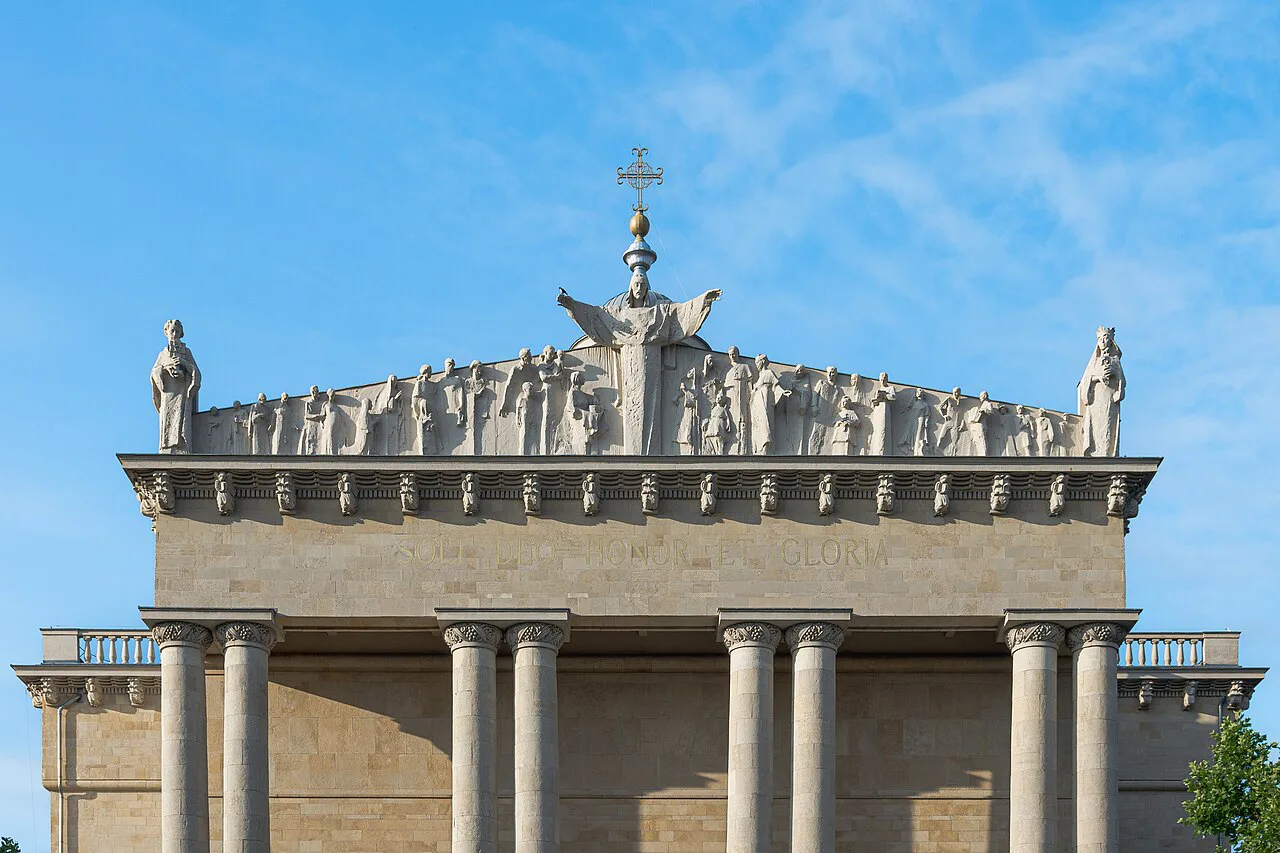
The cathedral's most striking quality from the street is its bulk: a long, high mass of masonry crowned by a dome that dominates the roofline. Walk around the building rather than stopping at the first view, because the scale only registers when you have more of it in front of you. Look up: the upper storeys and the dome most clearly mark this as a 20th-century building rather than a neo-classical copy.
The setting gives you a second, wider perspective. Katowice's centre mixes grand civic architecture with post-industrial buildings and wide roads, and the cathedral's classical form stands in deliberate contrast to that backdrop. It photographs best from a little further back, where you can fit the upper facade and dome into one frame.
Inside the cathedral: scale, layout and the organ
Inside, the nave is long and high, with a clear central axis leading the eye to the altar. Visitors consistently find the interior feels even larger than the exterior suggests. The parish maintains a page on the cathedral organ if you want to know more about the instrument before you go.
As a working cathedral, the interior is a place of worship first and a sight second. Keep your voice low and stay out of the way of anyone praying. If a service is in progress, wait at the back or come back later rather than walking the aisles.
The cathedral's 20th-century history and its place in the Archdiocese of Katowice
The cathedral belongs to the Archdiocese of Katowice and serves as the seat of its archbishop, which makes it the focal point of Catholic life in the city rather than a relic of an earlier era. The parish website carries sections on the cathedral's history and art, its organ, the academic church and the crypt of the Katowice bishops, which is the most useful starting point for context before a visit.
The building is modern, so its story is bound up with Katowice's growth as a city in the 20th century rather than with medieval patronage. That context helps you read the classical styling as a statement of civic and ecclesiastical confidence rather than an attempt at antiquarianism. The crypt and the cathedral chapter give the building a living institutional life beyond tourism.
How long to allow for a visit
Budget 30 to 45 minutes for the cathedral itself: ten minutes outside to take in the facade and the dome, twenty minutes inside walking the nave, and the rest for a quiet sit or a closer look at the altar area. If you attend a service, add the length of the service. It is not a place that rewards a rushed two-minute photo stop, but neither does it need a half-day.
In a one- or two-day Katowice itinerary, the cathedral works best as the first or last stop of a central walk, paired with the streets around the market square. On a longer break, keep it for an unhurried morning and spend the afternoon in the Culture Zone, where the Silesian Museum and Spodek sit together. That split keeps the cathedral from feeling like an afterthought.
Practical visiting details and where to confirm them
Admission conditions are not something to assume, so check the parish website before travelling if the cathedral is a priority for your day. The parish site publishes the current order of services and the sacraments timetable, alongside the parish office contacts, which is where any change to access will appear first.
Contact details are worth noting if you have a specific question: the parish lists a telephone number and an email address alongside the Plebiscytowa address. For a group visit or a particular interest in the organ or the crypt, ask the parish office in advance rather than turning up and hoping. The same site carries the Mass schedule, which is the single most useful thing to check on the day.
What is nearby in central Katowice
The cathedral sits within a comfortable walk of several of Katowice's better-known sights, which is why it fits neatly into a short break. The Culture Zone, with the Silesian Museum and the striking Spodek arena, is the obvious next stop and rewards a couple of hours on its own. Between the cathedral and the zone you pass through the modern city centre, so the walk is part of the sightseeing.
Closer in, Mariacka Street is the city's best-known run of historic tenements and a natural place for a drink or a meal after the cathedral. The Silesian Insurgents' Monument and the Goldstein Palace are both in the central area and can be folded into the same walk. Pick two or three rather than all of them; central Katowice is compact, but the walking adds up.
Where the cathedral fits in your Katowice break
Give the Cathedral of Christ the King half an hour to forty-five minutes and you get the scale of the building, a look at the organ and dome, and the quiet of a working cathedral in the middle of a busy city. It is an easy add-on to a central walk rather than a reason to plan a day around it, which makes it ideal for a first or second morning in Katowice.
Build your route around the cathedral, the Culture Zone and Mariacka Street, and you have a coherent day of sightseeing on foot. Confirm the service schedule on the parish website before you set out, then let the rest of the day unfold around it.
Explore more Katowice guides
Frequently Asked Questions
Where is the Cathedral of Christ the King in Katowice?
The parish address is Plebiscytowa 49A, 40-041 Katowice, in the central part of the city, within walking distance of the main streets and squares of the centre. Visitors normally arrive on foot rather than by bus or tram.
How long should I allow for the Cathedral of Christ the King?
Budget 30 to 45 minutes: about ten minutes outside for the facade and dome and twenty minutes inside walking the nave, with the rest for a quiet sit or a closer look at the altar area. Add the length of any service you attend.