
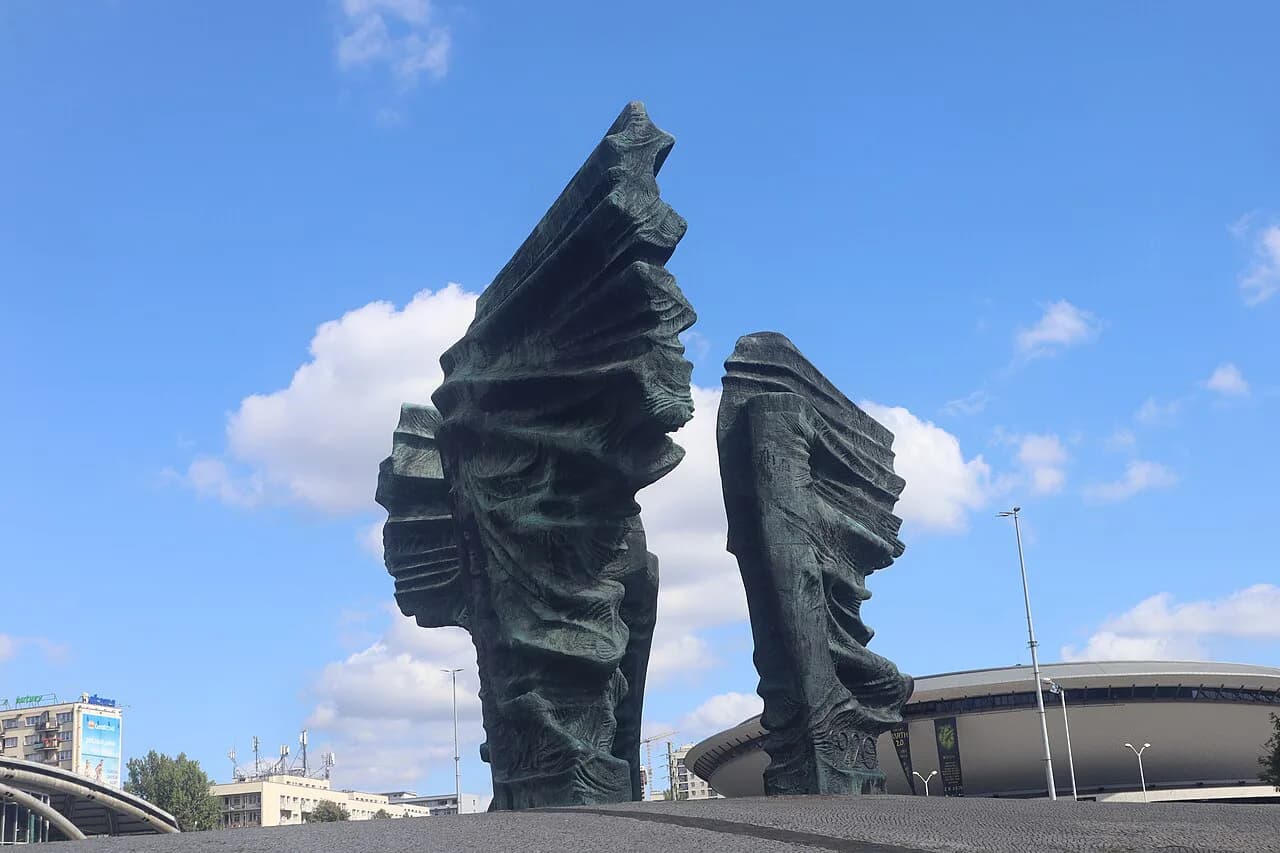
Silesian Insurgents' Monument (Pomnik Powstańców Śląskich), Katowice

The Silesian Insurgents' Monument honours the people who took part in the three Silesian Uprisings of 1919, 1920 and 1921, and it stands in the open on Aleja Korfantego in central Katowice. Treat it as a short stop of roughly fifteen to twenty minutes on a walk between the Rynek and the Culture Zone rather than a destination in its own right. This guide covers what it commemorates, how to reach it, what else is close enough to combine with it, and where it fits among Katowice Attractions: 9 Visitor Guides.
What the Silesian Insurgents' Monument commemorates
The monument remembers participants in the insurrections referred to in its name as the three Silesian Uprisings of 1919, 1920 and 1921. Keep the three years distinct in your head rather than reading them as one event, and treat the monument as a commemorative marker rather than an explanatory display.
Katowice is the capital of the Silesian Voivodeship and the centre of a metropolitan area of more than two million people, and its public spaces lean heavily on this industrial and insurrectionary heritage. The monument is one piece of that civic self-portrait, standing in a city that pairs memorials with a rebuilt Culture Zone on former colliery ground.
For the longer version of the story, the permanent exhibition on Upper Silesia at the Silesian Museum carries the narrative from early settlement through the industrial era to the political break of 1989. If the monument leaves you wanting depth, that exhibition is the obvious next stop.

Where the monument stands
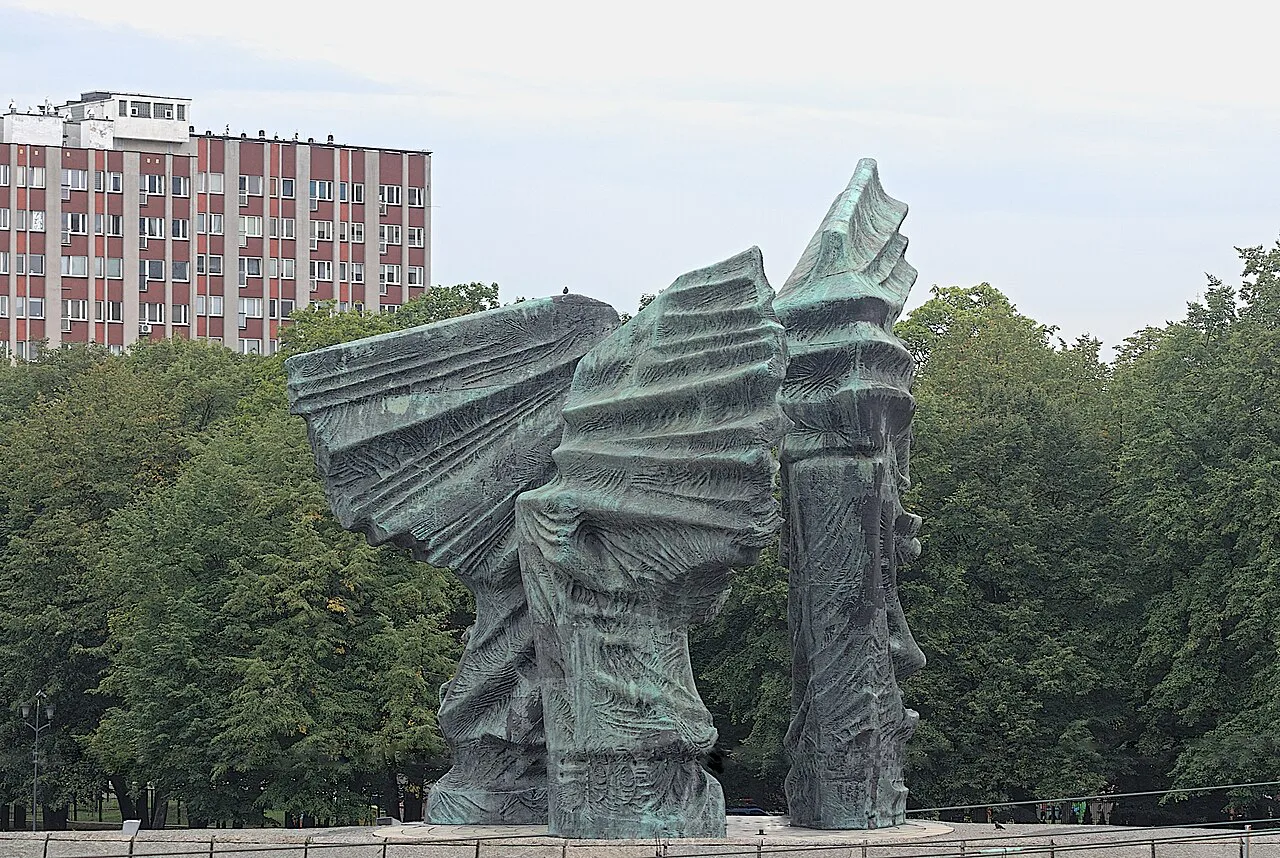
The monument occupies an open setting on Aleja Korfantego in Śródmieście, the central district of Katowice, with the Spodek Katowice arena close by. Aleja Korfantego is one of the main axes through the centre, so you will pass along or across it on most walks between the main square and the museum quarter.
Its position is what makes it easy to slot into a day: you are not detouring to a suburb but pausing in a central location between shopping streets and the Culture Zone, where the Silesian Museum, Katowice Attractions: 9 Visitor Guides and the Spodek sit. Approach from the Rynek side and you meet it head-on; approach from the Spodek side and it forms a natural pause before you head towards the museums.
Katowice has more than one memorial to the insurgents, so check the name before you set off. A separate Silesian Insurgents Monument stands in Stara Ligota and was first unveiled in 1922, which makes it a different structure in a different district, not another view of the central one.


How to reach it on foot
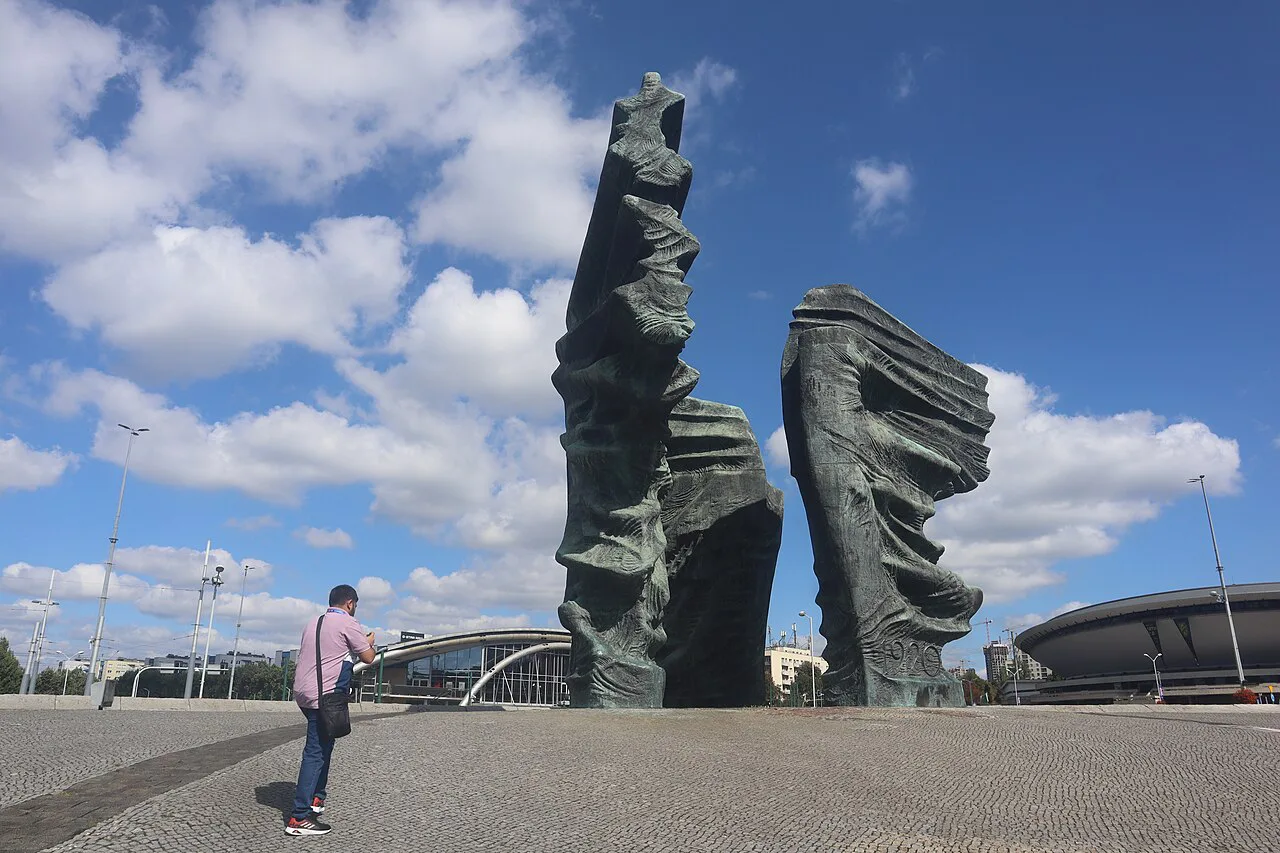
From the Rynek, head north-west along the main shopping streets towards Aleja Korfantego; the walk is short and flat, and the monument's open setting means you will see it before you reach it. From the main railway station the route is also straightforward on foot, following the central axis towards the Spodek.
From the Culture Zone, the Silesian Museum sits at Dobrowolskiego 1 on the site of a former mine, with the Spodek visible from its observation tower, so the monument and the museum sit at opposite ends of the same short walk. That makes a simple loop: monument, Spodek, museum, and back.
Trams and buses running along the Aleja Korfantego corridor put you within a couple of minutes of the square. Detailed transport planning sits outside this page; here it is enough to know the monument is squarely in the middle of the walkable centre.
Reading the monument: context and the three uprisings
Walk a full circuit rather than stopping at the first face: the views from different angles change what you notice, and the surrounding open ground gives you room to step back. The monument is a civic-scale memorial intended to be read in the round.
The three uprisings were separate outbreaks with their own triggers and outcomes, and the monument's role is commemoration rather than explanation. If you want the sequence spelled out, pair the visit with a museum stop where the region's twentieth-century history is interpreted in permanent exhibitions, such as the Upper Silesia exhibition at the Silesian Museum.
Katowice has held UNESCO Creative City of Music status since 2015 and hosts OFF Festival and Tauron Nowa Muzyka, so the central squares often carry event infrastructure that changes how a memorial square reads. If staging or barriers are up, view the monument from the side streets rather than skipping it.
How long to allow, and when to come
Budget fifteen to twenty minutes for the monument itself, or a little more if you want to circle it and read the setting properly. It works best as the opening or closing beat of a half-day walk rather than a standalone outing.
Light matters more than timing here: in open ground the low sun of morning and late afternoon brings out textures and shadows, while flat midday light flattens it. Weekday mornings are generally quieter on the surrounding streets than Saturday afternoons, when the shopping axis and the arena draw crowds.
No ticket desk or booking is described for the monument, and its open setting means there is nothing to book and nothing to miss if your schedule slips. Check current conditions if a major event is taking over the surrounding squares.
Inside the Silesian Museum, a short walk away
The Silesian Museum is the heavyweight nearby: in 2022 it opened Tuesday to Sunday from 10.00 to 20.00, and combined tickets covering all exhibitions cost 24 złoty for adults, with the observation tower on the old Warszawa II shaft tower priced separately at 5 złoty. Its Upper Silesia exhibition is presented in Polish, English and German, with voice narration in Silesian.
The concert hall of NOSPR and the International Congress Centre Katowice complete the cluster, giving the area a full afternoon of things to see or hear even if you skip the museum. Pair the monument with one of these rather than trying to cover everything.
More Silesian Insurgents memorials elsewhere in Katowice
The Stara Ligota monument is the one to know about if you are tracing the commemorations across the city. It was first unveiled in 1922, and it stands in a western district rather than in Śródmieście, so it is a separate visit with its own setting.
Check that you are heading to the right one before you travel: the central monument on Aleja Korfantego and the Stara Ligota memorial are distinct structures, and the names alone will not tell you which you have found on a map. If your interest is the central memorial, stay in Śródmieście.
Should the monument be on your Katowice shortlist?
Yes, as a fifteen-minute pause woven into a Culture Zone walk rather than as a reason to cross the city. It sits between the Rynek, Spodek Katowice and Silesian Museum, Katowice, so it costs you little but time to include.
Build the stop into a bigger day: arrive from the main square, see the monument, walk on to the museum for the Upper Silesia exhibition and finish with the view from the tower. That sequence gives the memorial its context without making it carry more than it should.
Explore more Katowice guides
Frequently Asked Questions
Is the Silesian Insurgents' Monument free to visit?
It is an outdoor public monument with no ticket desk described, so no admission is described for the monument itself. Any charges apply to nearby attractions such as the Silesian Museum, not to the monument.
Do I need to book a time to see the monument in Katowice?
No booking is described. The monument stands in the open on Aleja Korfantego, so you simply walk up to it when you are in the centre. Check current conditions if you visit during an event.
How long does a visit to the monument take?
Most visitors need fifteen to twenty minutes to walk around it and take in the setting. It works best combined with the Spodek and the Culture Zone in the same walk.
Is this the same as the Silesian Insurgents memorial in Stara Ligota?
No. The central monument on Aleja Korfantego and the memorial in Stara Ligota, first unveiled in 1922, are separate structures in different districts.
What is Katowice famous for besides the monument?
Katowice is known for its industrial heritage turned cultural quarter, its UNESCO Creative City of Music status, the Spodek arena and major music festivals such as the OFF Festival.