Łódź Street Art: Murals, Where to Find Them and How to See Them
Łódź street art guide: the murals that made the city's name, which districts to walk, the artists behind the walls and how to plan a route on foot.
On this page
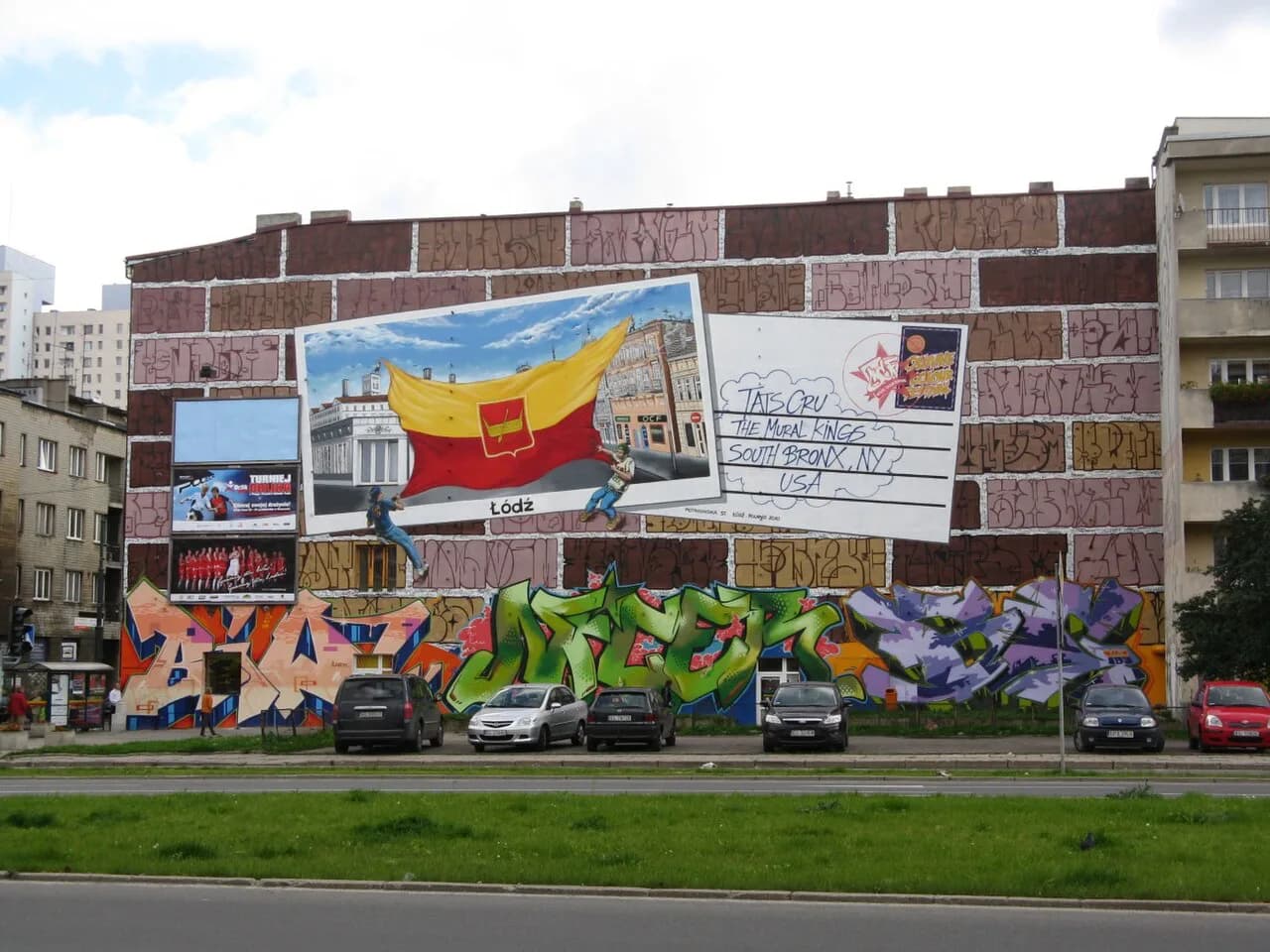
Łódź street art means big painted walls, and the city's name in urban art rests on works by Os Gemeos, Aryz, Vhils, Inti, Alexis Diaz and others listed by the city's street art archive. The concentration that matters for a short break is in Bałuty, where roughly 20 large murals sit within a walkable area of irregular streets north of the centre. This guide names the walls worth seeking out, explains the smaller inscriptions you will pass between them, and sets out a realistic route.
Expect a different kind of sightseeing from a museum afternoon. The murals are outdoors, free to look at, and spread across a district whose layout grew without a plan, so navigation takes more attention than the art itself. Pair the walk with the city's indoor collections if the weather turns, and use the museums in Łódź guide to plan that half of the day.
Why Łódź is known for street art
The city's reputation was built abroad before it was built at home. Łódź Street Art records that CNN broadcast a feature on the city's large-scale painting in 2013, that the Huffington Post gave Łódź an art-city label a year later, and that the French magazine Graffiti Art Magazine placed the city's murals among five major street art projects worldwide in 2012.
What visitors see today is the result of organised mural programmes rather than random painting. Several Bałuty walls were coordinated by the Urban Forms Foundation, including INO's Bomber and a festival piece by Stormie Mills, which explains why the works are large, deliberate and attached to specific addresses.
Where the murals are: districts and streets
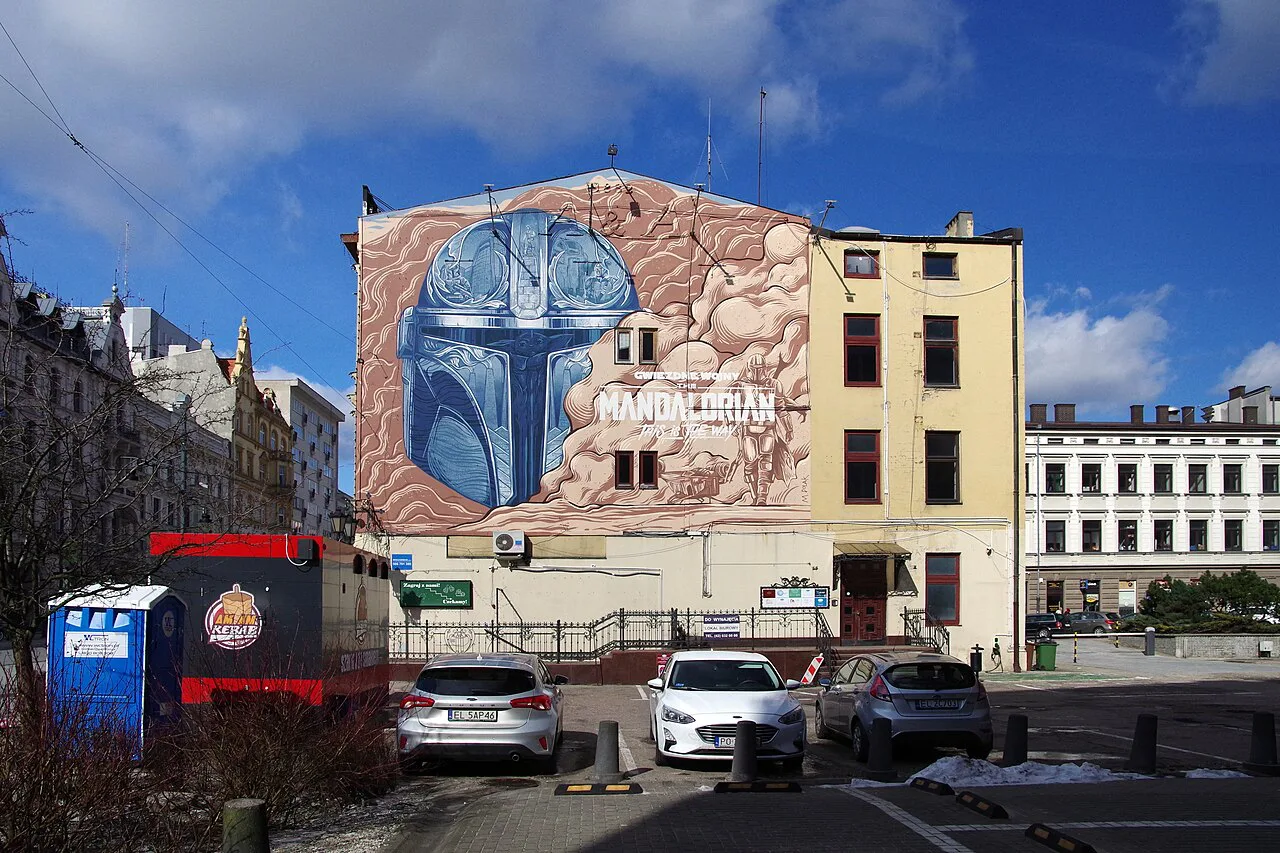
Bałuty holds the densest cluster and the strongest reason to leave the centre. The district grew as a separate workers' settlement, was the most populated village in Europe at one point, and only joined Łódź during the First World War, which is why its streets and buildings sit in an irregular jumble rather than a grid. That layout is the trade-off: the most interesting walls are in the district with the least conventional sightseeing.
Beyond Bałuty, individual walls are scattered across the city. Treat the addresses as pins rather than a continuous trail, and expect to cross gaps of ordinary streets between the pieces worth photographing. For the wartime and occupation story that sits behind much of this district, the Łódź WW2 Sites guide covers the ground a mural walk cannot.
Bałuty murals: Bomber, Shida and Otecki
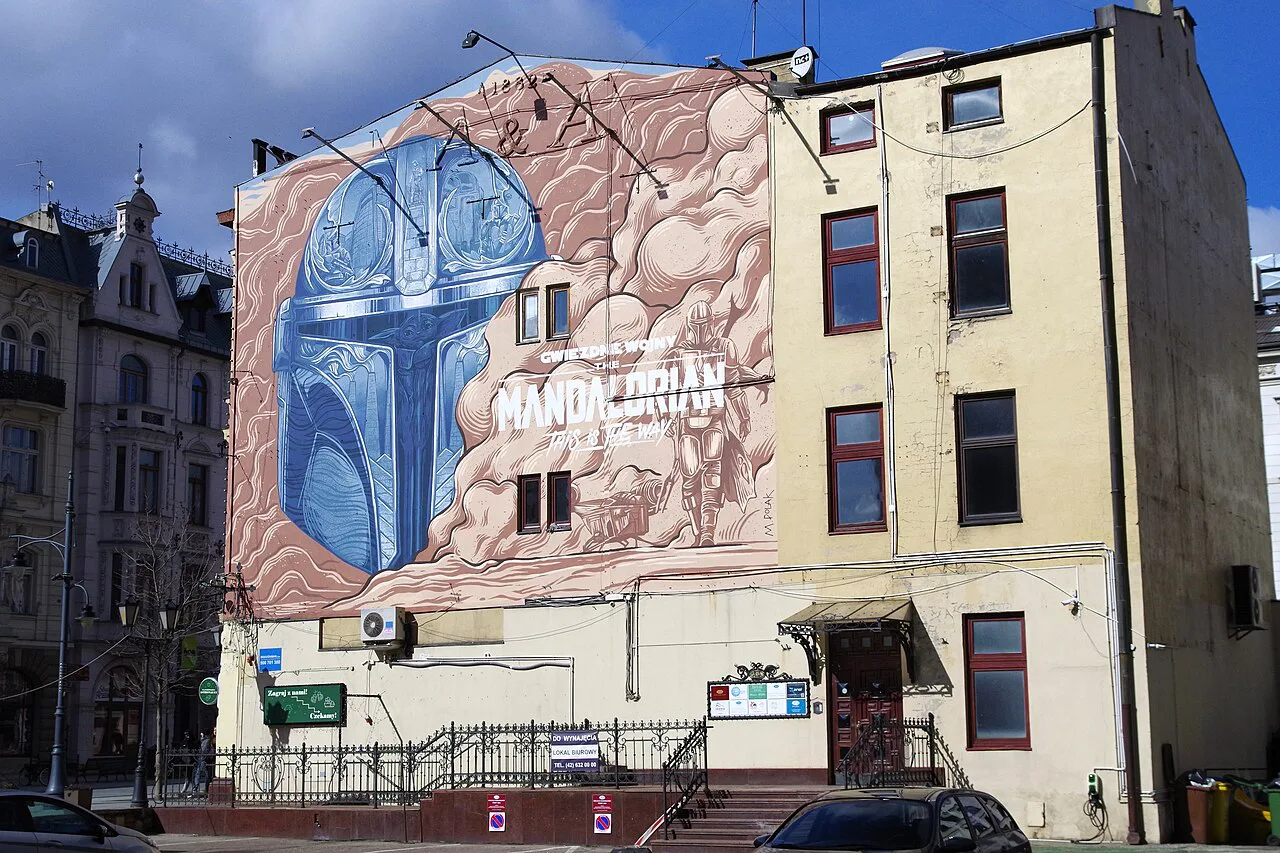
Start with INO's Bomber at Marynarska 54, described as one of the biggest and most original murals in the city, painted by a Greek artist whose real identity stays secret and whose figures are black and white with a single blue element. The scale is the point: give it a few minutes rather than a passing glance.
At Wojska Polskiego 84, Mik Shida's mural uses an expressive, psychedelic style built on fractal forms and monstrous figures drawn from science fiction and fantasy. Otecki's work at Rybna 2/4 takes the opposite approach, choosing colours to match the facade so the piece settles into the street rather than shouting across it, with references to local folklore and legends.
Stormie Mills painted Thank You at Młynarska 2 for the city's Energy of the City festival, in his monochrome Lost Giants series. Młynarska was once the commercial heart of Bałuty, with three cinemas and a Jewish cafe before the war, so the wall is a marker of what the street used to be as much as a piece of art.
Moneyless, the Italian artist Teo Pirisi, painted at Wojska Polskiego 3 in an abstract, geometric style that stays minimal while carrying movement. Łanowa 14 holds a piece by Carne. Between these addresses you are covering a compact slice of the district, so the murals work as a route rather than separate outings.
The Romani Forge on Wojska Polskiego
Beside Shida's mural at Wojska Polskiego 84 stands the Romani Forge, one of the surviving buildings of the former Roma camp that existed during the Second World War. Inside, an exhibition covers the extermination of the Roma and the history of the camp, and the building remains under the care of the Museum of Independence Traditions.
Visit the Forge as a memorial first and a photo stop second: the mural outside is bright and the exhibition inside is not, and treating the two with the same energy misses the point of the address. If you want the wider wartime story of the city, the Łódź WW2 Sites guide covers the occupation and the Litzmannstadt Ghetto in more depth than a street art walk can.
Notable artists on Łódź walls
The international names are the reason the city gets mentioned abroad. Os Gemeos from Brazil, Aryz from Spain, Vhils from Portugal, Inti from Chile, Alexis Diaz from Puerto Rico and Daleast from China all appear on the city's mural list, alongside Polish painters including M-City, Etam, Robert Proch and Sepe.
For a self-guided day, the Gallery button system on the Łódź graffiti tracker is more useful than a printed list: each map pin opens photos of the spot, and layers can be filtered by category such as Mighty Murals or Hidden Secrets, so you can judge whether a wall is worth the detour before walking to it.
If painted walls lead you toward the city's indoor art, the museums in Łódź guide sets out the galleries and collections worth a half-day, and the opening days that decide which half of the day comes first.
Wall writings and smaller pieces
The inscriptions on Bałuty walls are part of the texture of the district, not decoration between murals. Most are in Polish and many are made by Bałuty Pany i Panie, an author who observes and describes the neighbourhood in paint, so what you are reading is local commentary rather than advertising or tagging.
Smaller pieces carry memory as well: murals under the Children of Bałuty project record people and places from the district's past, and a Gouda piece titled Beauty / Bałuty sits among the art installations. Slow down on the side streets here; the modest walls often say more about the neighbourhood than the showpieces do.
Building a walking route
Cluster the walk around Bałuty rather than trying to cover the city. Put Marynarska 54, Wojska Polskiego 3, Wojska Polskiego 84, Rybna 2/4, Młynarska 2 and Łanowa 14 in that order or close to it, and allow half a day including the Romani Forge and a pause for the wall writings you pass.
Reach Bałuty on foot or by public transport from the centre and plan the return before you set out, because the street pattern does not lend itself to a neat loop. Allow extra time between pins, since the distances are short but the turns are not obvious, and note the locations you want on a phone map rather than relying on memory.
Independent walk or guided tour
Walking it yourself costs nothing beyond your time and lets you linger at the Romani Forge and the memory murals, but you lose the context behind the artists and the addresses. The house style of the district, the festival history behind Stormie Mills's wall and the meaning of the Polish inscriptions are the details a guide adds.
The Part of Streets blog, which documents Łódź street art, also runs street art tours in the city; check directly for what is currently offered and at what price before you book. If you go alone, download the address list first so you are not relying on a screen mid-walk, and the Łódź architecture guide explains the factory-era streets you are walking through.
Art, history and the rest of the day
Street art pairs well with the city's heavier sights. The Survivors' Park in Bałuty sits near the mural route and is a natural place to pause, and the Łódź history guide explains how the factory city and its workers' district grew into one place.
If you have a second day, the Łódź ghetto guide and the Łódź castle guide cover the wartime and industrial stories that sit behind these walls, and both fit an afternoon after a morning of murals.
Is the Bałuty walk worth half a day?
Yes, if you accept what Bałuty is: a working district with uneven streets, a difficult history and the best concentration of large murals in the city. Go for the walls at Marynarska 54, Wojska Polskiego 3 and 84, Rybna 2/4 and Młynarska 2, and treat the Romani Forge as the reason to slow down rather than a backdrop for photos.
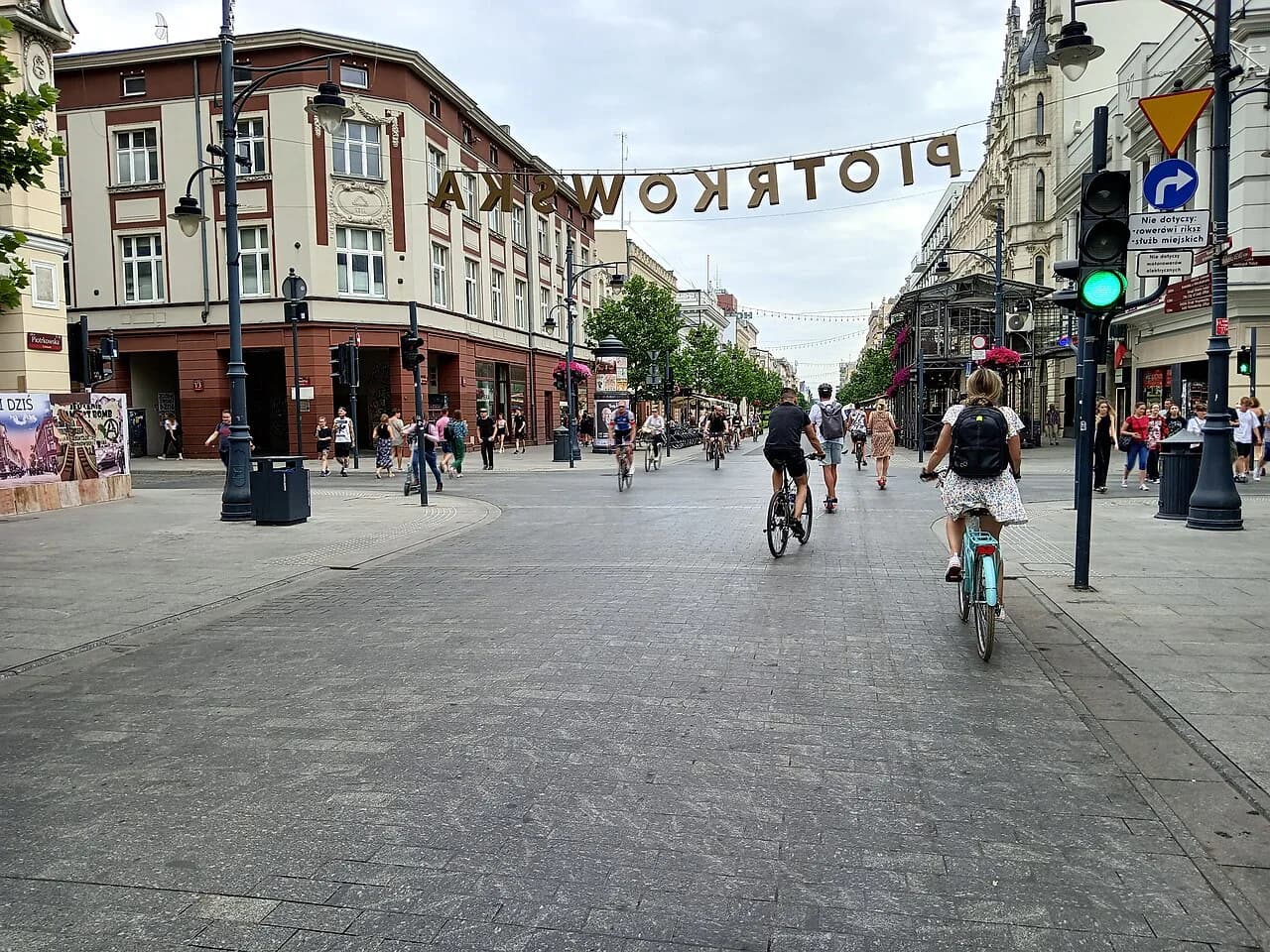
Build the route around one cluster, allow half a day including the Forge, and keep the centre for the museums and Piotrkowska Street. The results are better than a citywide checklist that spends more time walking than looking.
Explore more Łódź guides
Sources
Notes for your next Polish city break
Optional updates to our Poland guides.
You might also like
Continue reading
More guides you'll find useful