
Nadodrze, Wrocław: street art, courtyards and old German traces

Nadodrze works best as a two-hour contrast to the Old Town, not a replacement for it: cross the Oder north and you get murals in back courtyards, fading German shop signs and a 19th-century grid that is half renovated, half waiting its turn. This page covers what to see, where to eat, how to walk there from the centre, and who should skip it.
Where Nadodrze is and how to walk there from the Old Town
Nadodrze sits directly north of the Odra, the river that wraps the Old Town, so the natural approach is on foot across one of the northern bridges rather than by any transport you have to plan. Once across, the neighbourhood's own info point sits just over the river at ul. Władysława Łokietka 5/1, a sensible first stop if you want to pick up local material or talk to residents before wandering.
Distances inside the district are short and the streets are laid out on a regular 19th-century grid, so walking is the only realistic way to cover the courtyards, squares and riverside in a single loop. Treat the main streets as connectors and the archways off them as the actual destinations, because most of what makes Nadodrze interesting is set back from the pavement.
If you are building a wider Wrocław itinerary, Nadodrze pairs naturally with a morning in the Old Town and can be swapped for other districts on a longer stay. Our Wrocław Neighborhoods: 5 Area Guides sets out how the centre, Ostrów Tumski, Fabryczna and the rest differ, so you can see what Nadodrze adds that the others do not.

What Nadodrze is: a 19th-century artisan district rebuilt after the war
Nadodrze was a 19th-century artisan quarter, severely damaged during the Second World War and then troubled by poverty in the post-war decades before a large urban revitalisation programme changed its trajectory over the last decade or so. That history explains the fabric you see: decorative tenements, utilitarian concrete blocks and brand-new playing fields sharing the same few streets.
Its tenements are among the parts of the city that survived the war relatively intact, which is why old German commercial signs keep surfacing as paint comes off facades. That makes a stroll here a lesson in how Breslau became Wrocław, visible in the brickwork rather than explained on a board.

How the area feels today: shabby and chic side by side
Expect a district caught mid-transformation rather than a finished attraction: freshly painted facades stand next to crumbling abandoned structures, and restored courtyards sit behind doors that give nothing away from the street. Negotiating with many separate building owners has slowed repairs, so the mix is patchy from one block to the next.
The upside for visitors is authenticity: this is a working neighbourhood with young cultural initiatives, workshops, galleries and cafes opening in odd spaces, not a staged heritage zone. The trade-off is that there is little signage and no single ticket that unlocks it, so you get out what you put into wandering.
Who Nadodrze suits, and who should skip it
Nadodrze suits travellers who have already seen the main square and the cathedral island, enjoy street art and small independent cafes, and are happy to spend an hour or two without a checklist. It also suits photographers, since the courtyard murals and old signs reward slow looking more than quick ticking off.
Skip it if this is your only day in the city, if you are travelling with people who need clear signposting and obvious set-piece sights, or if uneven pavements and crumbling entrances would spoil the day. It is not grimy enough for thrill-seekers and has no landmark that competes with the Old Town, so it works as contrast rather than headline.
Street art and murals: hunting them in the inner courtyards
The murals are the main reason to come, and most of them are inside the large passage courtyards rather than on the main streets, so duck under the nondescript archways and look up. In Your Pocket counted more than 30 works around the neighbourhood at the time of writing, a useful rough scale rather than a fixed total.
Ul. Roosevelta is the best-known cluster: residents there wanted to break up the grey of their quarter and invited street artists to paint facades, with every house able to suggest ideas and some murals depicting people who still live in the block. Start there, then work outward through the side streets rather than following one fixed route.
Old German signs and Breslau traces
Because some buildings have gone decades without repainting, weathered German company signs and advertisements reappear as the outer layer flakes away, and they are scattered across the district rather than concentrated in one place. This is the closest thing Nadodrze has to a treasure hunt, and it rewards a slower pace and a look above shopfront level.
Film-makers have used the district precisely for that period Breslau look: Bridge of Spies shot Berlin-set scenes in streets here, mainly around ul. Kurkowa and Ptasia, with residents paid to temporarily remove satellite dishes. Those streets are also due for renovation, so the backdrop is changing rather than fixed.
Landmarks worth seeking out
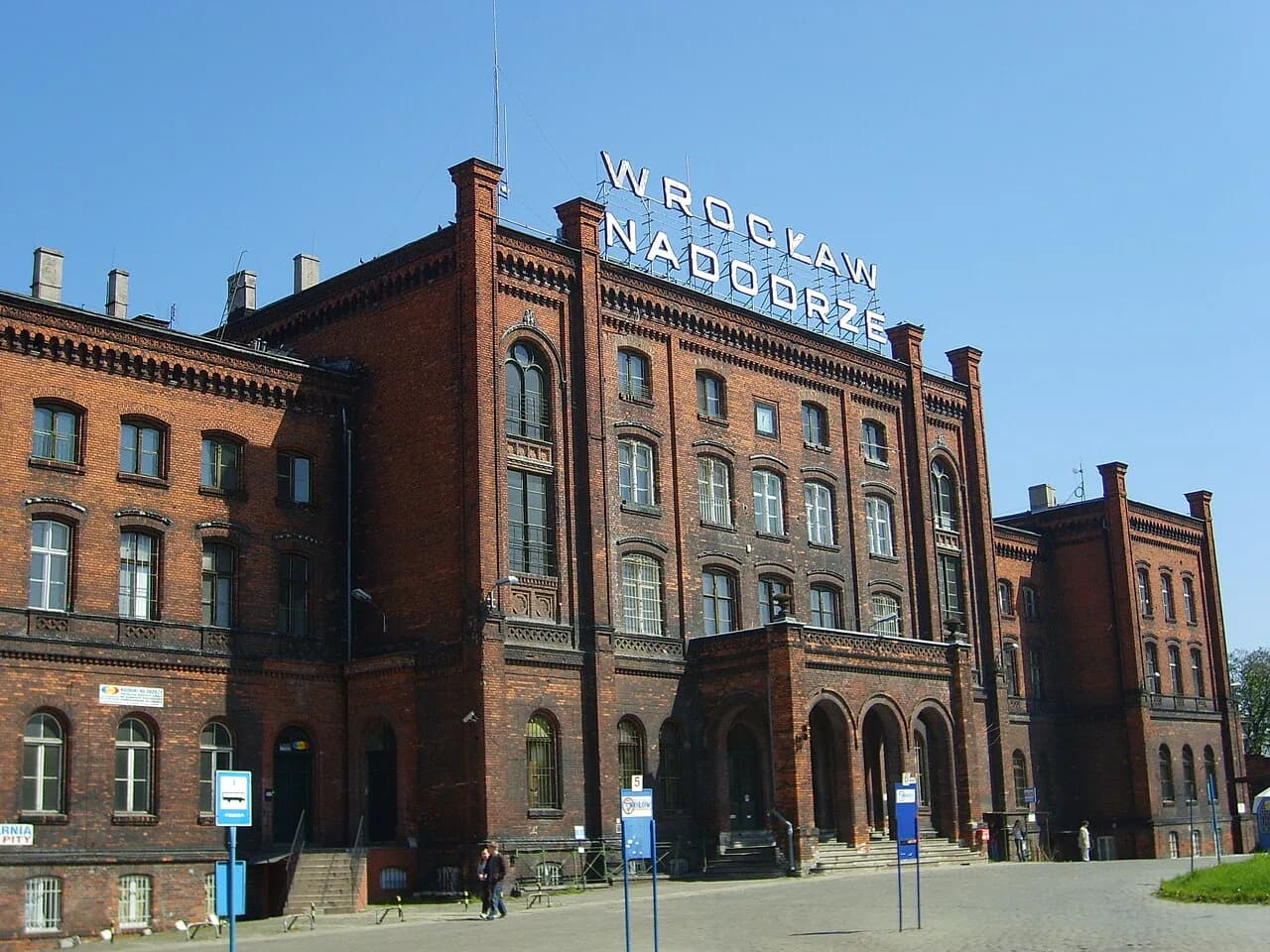
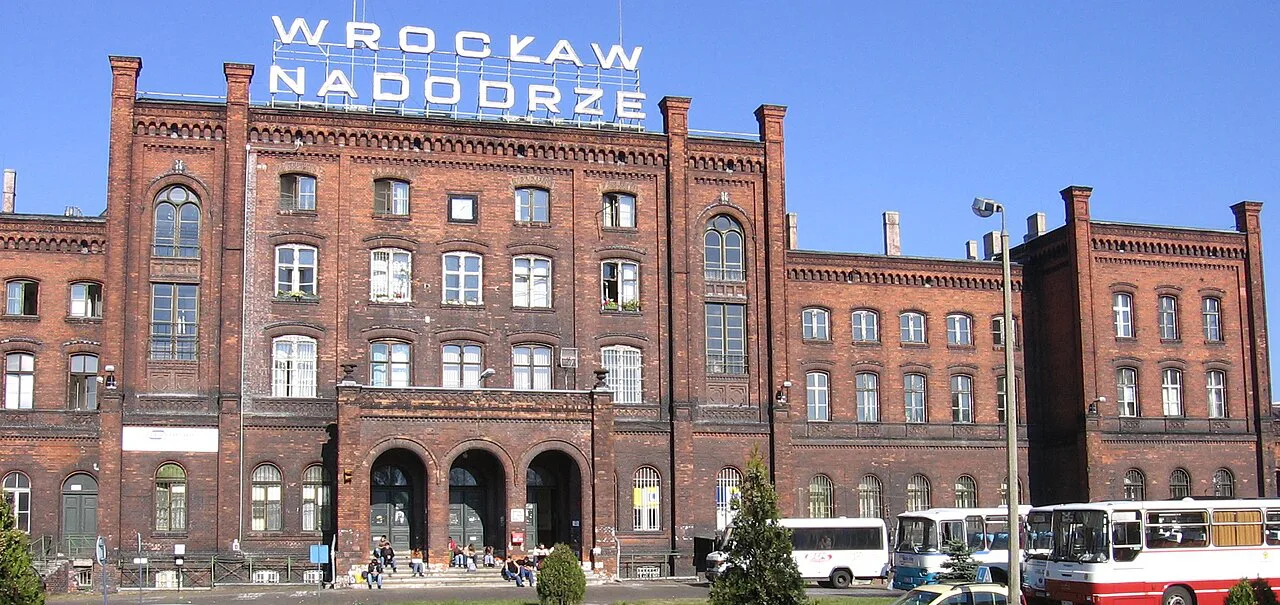
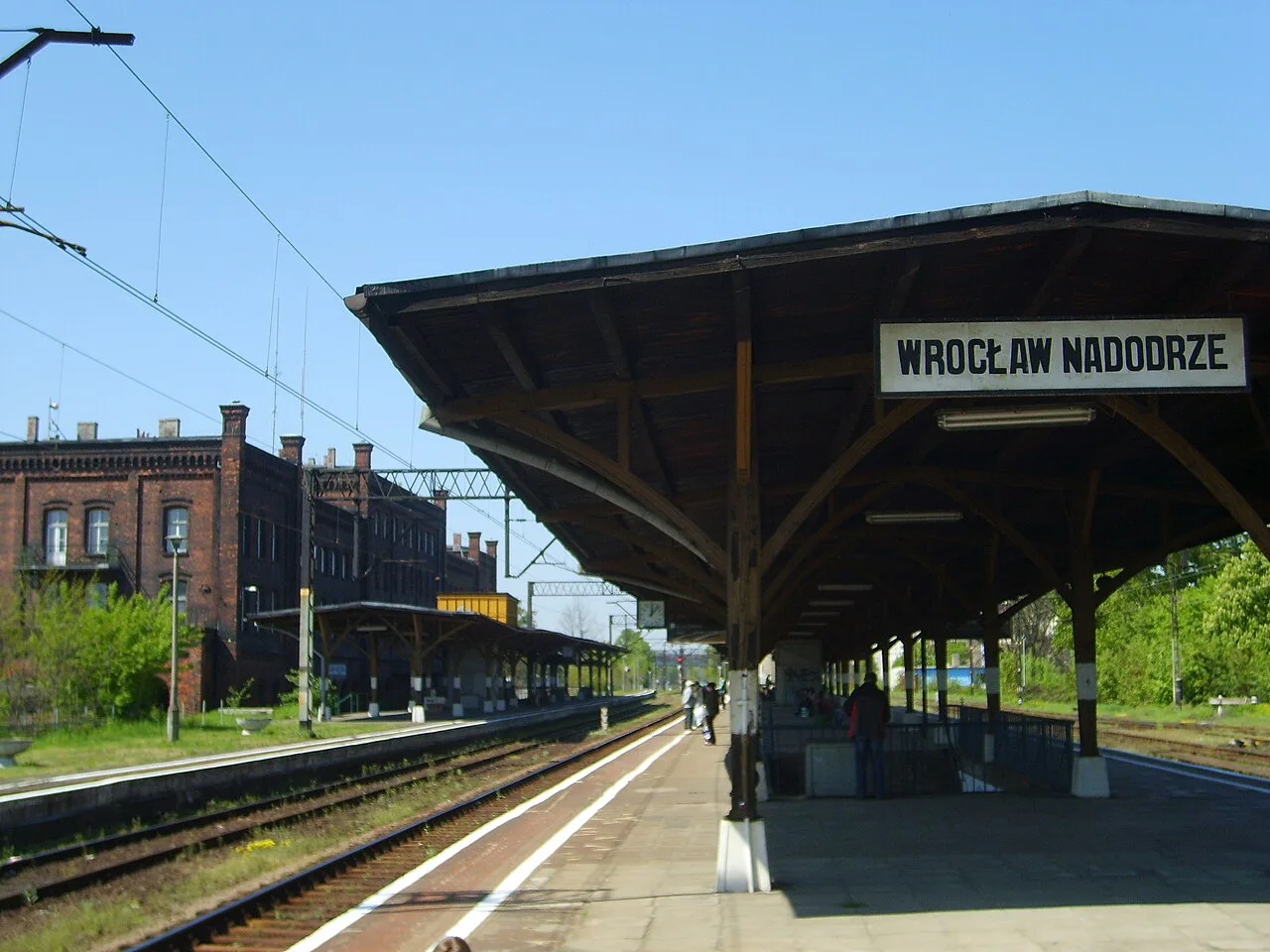
Four anchors give the wander some structure: the derelict 1868 railway station in German historicist style, designed by Hermann Grapow; the above-ground Second World War air-raid bunker where ul. Św. Wincentego merges into ul. Ołbińska; the monument to Poles exiled to Siberia on Skwer Sybiraków; and the power plant, which you will spot without a map.
None of these is a visitor attraction with a ticket desk, so treat them as things to find and look at on the way between courtyards rather than as stops in their own right. Check opening arrangements for the station building before planning around it, since it is described as derelict.
Green breathing spaces: Zwierzyniecki Boulevard and Plac Św. Macieja
When the pavement slog needs a break, head for the riverside Józef Zwierzyniecki Boulevard, described as the most charming spot for a stroll or some bench time in the district. It is the obvious place to sit with a coffee before or after crossing back towards the Old Town.
Inland, Plac Św. Macieja is the largest and most inviting of the neighbourhood's green squares, sitting at the heart of the district and making a natural midpoint for a loop through the streets around it.
Coffee, food and small shops
The eating and drinking side of Nadodrze is deliberately small-scale: cafes, bistros, galleries and resto-bars often blur into one another, many of them in converted ground-floor spaces with little exterior Polish. Bema Cafe, Cafe Rozrusznik and Mango Mama are three named places to look out for while walking the grid.
Coffee culture is part of the district's appeal, alongside the small independent shops that have appeared as revitalisation has progressed. Opening days, hours and prices are not fixed across these places, so check each venue's own listing before you build a day around one.
Using the neighbourhood info point
The info point at ul. Władysława Łokietka 5/1 is a genuinely useful first call, both for neighbourhood information and for connecting with people who live in the area. It is a small local operation rather than a city-wide tourist office, so treat it as a place to ask about the streets around you rather than about Wrocław as a whole.
Wrocław's larger districts each have their own character, and it helps to see where Nadodrze sits before committing a half-day to it. The river island of Ostrów Tumski, for instance, gives you the cathedral quarter and lamplit streets that Nadodrze deliberately lacks, so the two make a good pair across a long weekend.
How long to allow and how to structure the walk
Allow roughly two hours for a loop that takes in the Roosevelta murals, a couple of courtyards, Plac Św. Macieja and the riverside boulevard, with time added for coffee or lunch. Half a day is plenty; anything longer starts to feel like padding unless you are specifically hunting street art or old signage.
A sensible order is to cross the river, call at the info point on Łokietka, work north through the side streets and courtyards, then finish on the boulevard or in Plac Św. Macieja before walking back. Because everything is close together, you can cut the loop short at any point without losing much.
Where to base yourself in or near Nadodrze
Nadodrze is not a conventional base for a short city break: it has no set-piece sights and the evening offer is limited to small cafes and restobars rather than a wide choice. Most travellers will sleep in or near the Old Town and visit Nadodrze as a half-day, which keeps the main sights and restaurants within walking distance of the hotel.
If you prefer a quieter, more residential stay and do not mind crossing the river for the main square, the district does have apartment-style accommodation. Choose it for the atmosphere and the lower-key streets, not for convenience to the station or the Old Town.
Safety after dark: what the evidence supports
Nadodrze was once known as a notoriously grim and dangerous neighbourhood, and that reputation is part of why its turnaround is talked about so much today. Those descriptions refer to its past, not to conditions now, and no source here rates current safety, so the fair approach is to treat it as you would any less-polished urban district after dark and stay on lit main streets.
In practice, the district is busiest in daylight, when courtyards are open and cafes are trading, and that is when it makes most sense to visit anyway.
Should Nadodrze make your Wrocław shortlist?
Yes, if you have two or more days and want a contrast to the Old Town: give it a morning or an afternoon, start on ul. Roosevelta, look inside the courtyards, and finish on the Zwierzyniecki Boulevard. No, if this is your only day or if you want obvious sights with clear signposting, because the district rewards curiosity over checklist-ticking.
Pair it with a different district on the same trip to see how Wrocław's neighbourhoods differ. Fabryczna, the old industrial quarter south of the centre, offers a sharper contrast of industry and housing than Nadodrze's artisan streets and is worth a separate half-day.
Explore more Wrocław guides
Frequently Asked Questions
Is Nadodrze safe?
The district was described in the past as notoriously grim and dangerous, and that reputation is what makes its turnaround so widely discussed. Published sources do not rate its current safety, so treat it as any less-polished city district after dark: stay on lit main streets and visit in daylight when the courtyards and cafes are open.
What is Nadodrze known for?
Street art in inner courtyards, old German shop signs that reappear as facades weather, a derelict 1868 station, a Second World War bunker and a riverside boulevard. It is also known as the district that changed from a poor, troubled quarter into one of Wrocław's creative centres.