
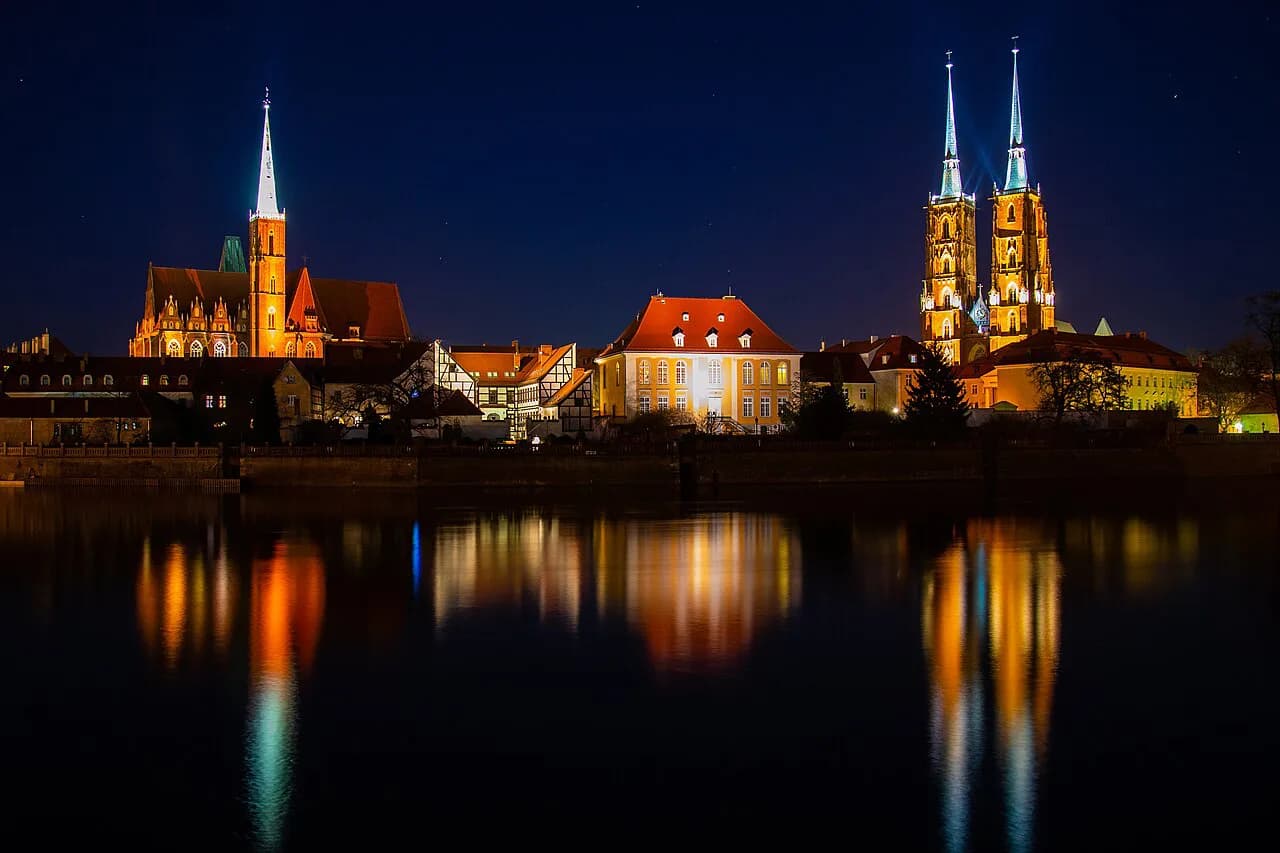
Ostrów Tumski, Wrocław: A Neighbourhood Guide to Cathedral Island

Ostrów Tumski deserves an afternoon rather than a full day: it is a small, quiet quarter of churches and gardens, reached in about 20 minutes on foot from the Rynek over a distance of roughly 1.5 kilometres. It is the oldest inhabited part of Wrocław, and the walk in carries you across Plac Nowy Targ and Wyspa Piasek before you reach the river crossing.
This guide sets out the quarter's character, the route in, the individual sights in walking order and the practical trade-offs, including where it does and does not work as a base. It stays within the district.
What Ostrów Tumski is and why it is worth the walk
Ostrów Tumski began as a fortified settlement on an island between branches of the Odra and Oława, and it was the seat of the first Piast rulers from the tenth century onwards. The first cathedral on the site was built in the early eleventh century, replacing a smaller church, and the whole quarter was sold to church authorities in 1315, after which secular jurisdiction no longer applied there.
The name is a half-truth today. 'Ostrów' is old Polish for island, but a branch of the Odra alongside the quarter was filled in from 1807 when the old city walls were demolished, so the district has been joined to the mainland ever since; the pond in the Botanical Garden is the surviving trace of that channel.
The Second World War left much of the quarter damaged, and among the larger buildings the churches of Św. Krzyża and Św. Marcina came through in comparatively good condition. Walking the streets now, you are reading a rebuilt district as much as a medieval one, which is part of why it feels so calm and uncrowded compared with the market square.

Where it sits and how to get there from the Rynek
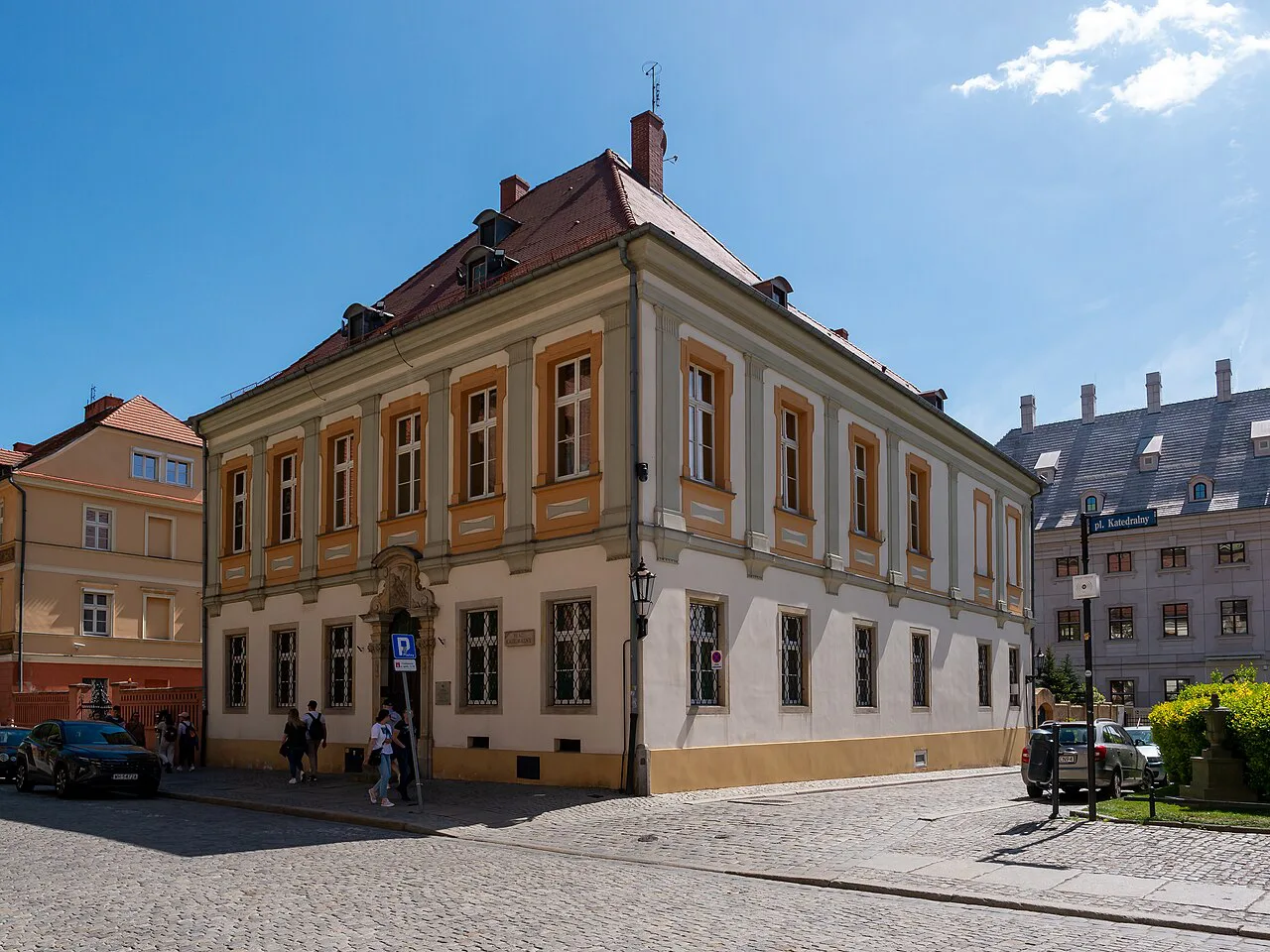
The quarter lies north-east of the Rynek, and the simplest approach is on foot through Plac Nowy Targ and Wyspa Piasek, then across Most Tumski on to ulica Katedralna, where the sightseeing naturally begins. Allow around 20 minutes at an easy pace.
If you would rather ride, trams and buses stop at Plac Bema, Katedra, Ogród Botaniczny, Świętokrzyska and Urząd Wojewódzki, all within a short walk of the sights. The historic core itself is closed to public transport, so no service runs into the heart of the quarter.
Walking is the better choice for most visitors, because the approach over the river is the introduction to the district. Take the tram only if you are fitting the quarter into a tight schedule or arriving from the far side of the city.
Walking route in: Plac Nowy Targ, Wyspa Piasek and Most Tumski
Start at Plac Nowy Targ, the square that marks the edge of the old centre, and head for Wyspa Piasek, the sandy island that sits between the market square and the cathedral quarter. From there the route runs straight to Most Tumski and into ulica Katedralna, which is the spine of the district.
This order matters. Arriving over the bridge puts the river, the church towers and the lanterns in front of you in one view, and it means the rest of the walk is downhill in effort if not in gradient: every sight sits within a few minutes of the next.
Most Tumski: the 1889 steel bridge
Most Tumski was built in 1889 to link the ecclesiastical and secular halves of the city, a steel structure about 52 metres long and nearly 7 metres wide. Locals also call it Most Zakochanych, the bridge of lovers, and it has become the quarter's signature photograph.
At the island end stand two figures, St Jadwiga and St John the Baptist, the patron of the archcathedral. In earlier centuries a boundary post at the bridge marked the edge of the church's little state, and the custom was to remove your hat on crossing it.
Plac Kościelny and Kościół Św. Idziego
Plac Kościelny is the open square in the middle of the quarter, ringed by church buildings and the kind of cobbles that punish thin soles. Kościół Św. Idziego stands nearby, a small Romanesque church that is easy to walk past if you are fixed on the cathedral towers.
Treat this stretch as the slow part of the visit. The square and the lanes around it are where the district's quiet pays off, and a bench here is a better use of ten minutes than rushing to the next doorway.
Brama Kluskowa and the Archikatedra Św. Jana Chrzciciela
Brama Kluskowa, the Dumpling Gate, is a small archway beside the cathedral and one of the quarter's more photographed oddities. The Archikatedra Św. Jana Chrzciciela is the Gothic cathedral at the centre of the island, the building the whole district is arranged around.
Both are working religious buildings rather than attractions with a turnstile, so time your visit around services and keep noise down inside. The cathedral is the highlight for most visitors; the gate is a two-minute pause on the way past.
Ogród Botaniczny and the filled-in river channel
The Botanical Garden sits at the edge of the quarter, and its pond is the last visible remnant of the Odra branch that once separated Ostrów Tumski from the mainland. That makes it the one place where the district's island past is still legible on the ground.
It is also the best green space in the area and a natural end point to a walking loop. Garden opening is seasonal, so check the current times before planning your day around it.

The gas lanterns and the lamplighter
Ostrów Tumski keeps gas street lighting, and a lamplighter still walks the route in the evening to light the lamps by hand. It is the detail most visitors remember, and it gives the district a reason to be seen after dark as well as in daylight.
The lamplighter's rounds are the sort of thing that shifts with the season, so ask locally or check the city's visitor information for the current evening timing rather than turning up on spec.
Who Ostrów Tumski suits and who it does not
This is a district for people who like churches, river views, cobbled lanes and slow walks, and it rewards anyone willing to spend two or three unhurried hours there. Couples, photographers and travellers interested in the city's early history get the most out of it.
It does not suit travellers who want bars, shops and evening buzz on the doorstep, or families needing a full day of activities. If that is your trip, base yourself nearer the Rynek and visit the quarter as an excursion, and compare livelier districts such as Fabryczna, Wrocław or Nadodrze, Wrocław.
Eating and staying in and around the district
Ostrów Tumski is short on restaurants and places to sleep, and most visitors eat and stay in the streets between the Rynek and the river instead. Plan the quarter as a half-day visit with a meal before or after, rather than expecting to spend the whole day within its boundaries.
If you want a quieter base with the cathedral within walking distance, the lanes towards Wyspa Piasek and Plac Nowy Targ put you close enough to walk in each morning. Compare that with Krzyki Wrocław or Biskupin Wrocław if you prefer residential streets further out.
How long to allow and when to come
Two to three hours covers the bridge, the cathedral, Plac Kościelny and the botanical garden at a comfortable pace; an hour and a half is enough for a quick circuit if you skip the garden. Add time if you plan to attend a service.
Early morning and late afternoon are the quietest stretches, and the lantern lighting makes an evening visit worthwhile in itself. Church interiors keep their own visiting arrangements, so check the notice on the door if a particular building matters to you.
Should you make Ostrów Tumski your base?
Visit it, but do not base yourself in it. Ostrów Tumski is the best single walk in Wrocław for history and atmosphere, and 20 minutes from the Rynek is a small price for the calmest hour of your trip.
Stay nearer the market square for food and evening life, and use the neighbourhood guides to choose your bed and your days: the Wrocław Neighborhoods: 5 Area Guides cover the alternatives in one place.
Explore more Wrocław guides
Frequently Asked Questions
What does the name Ostrów Tumski mean?
Ostrów is old Polish for island, and the district was once a genuine island between branches of the Odra and Oława. The island was joined to the mainland after a river channel alongside the quarter was filled in from 1807, when the old city walls were demolished.
Which rivers flow through Wrocław?
The Odra is the main river, and the Oława joins it in the city; the early settlement at Ostrów Tumski grew up where the Odra split into channels between the mouths of the Oława, Ślęza and Widawa. Those branches created the islands on which the quarter was built.
Can you see the lamplighter on Ostrów Tumski?
Yes, gas lamps are still lit by hand in the quarter in the evening, and the lamplighter is one of the district's attractions. The timing changes with the season, so check the city's visitor information for the current evening routine rather than relying on a fixed hour.
How far is Ostrów Tumski from the Rynek?
About 1.5 kilometres, which takes roughly 20 minutes on foot via Plac Nowy Targ and Wyspa Piasek. Trams and buses also stop at Plac Bema, Katedra, Ogród Botaniczny, Świętokrzyska and Urząd Wojewódzki if you prefer not to walk.