Zakopane Architecture: The Zakopane Style and Where to See It
Zakopane architecture means the Zakopane Style: wooden villas, carved detail and folk motifs. See where the style began and which buildings repay a stop.
On this page
Zakopane architecture is one main story: the Zakopane Style, a late nineteenth-century movement that turned Podhale highland timber building into a self-conscious Polish national style. You can see its first experiment, its museum and its clearest interiors within a short walk of ul. Krupówki, which makes it the easiest architectural theme to follow on a city break. This guide explains what the style is, what to look for on a facade, and which buildings merit a ticket.
The strongest stops cluster around the centre: the Tatra Museum on ul. Krupówki 10 and Willa Koliba on ul. Kościeliska 18 for the style itself, plus the Władysław Hasior Gallery on ul. Jagiellońska for a postwar counterpoint in an old wooden shell. An academic survey of the town's vernacular wooden architecture and regional culture is useful background for understanding why timber, not stone, defines the place.
What Zakopane architecture actually is
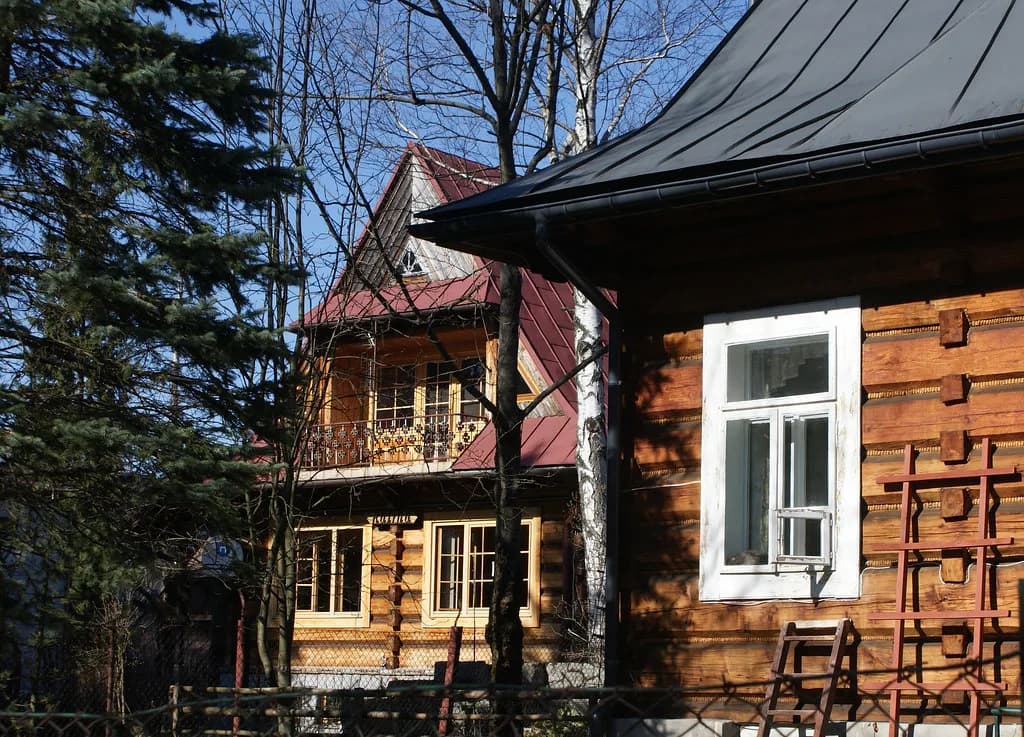
Zakopane's traditional building stock is highland wooden construction: log walls, steep pitched roofs, deep eaves and carved detailing, adapted to heavy snow and long winters. The Zakopane Style took that vocabulary and systematised it, treating a highland cottage as the starting point for villas, churches and public buildings. The result is a town where the most interesting architecture is timber framed, not masonry.
Because the tradition is regional rather than a single period, the buildings span roughly a century of work, from nineteenth-century villas to postwar galleries. Read the town by area: the centre around ul. Krupówki and ul. Kościeliska for villas and museums, and the outskirts for wooden churches and sanctuaries. A walk along ul. Krzeptówki takes in the Sanctuary of Our Lady of Fatima, the Sabała cottage and the way out towards Dolina za Bramką in about an hour over 2.2 km, which shows how quickly the built town gives way to timber and trees.
How the Zakopane Style began
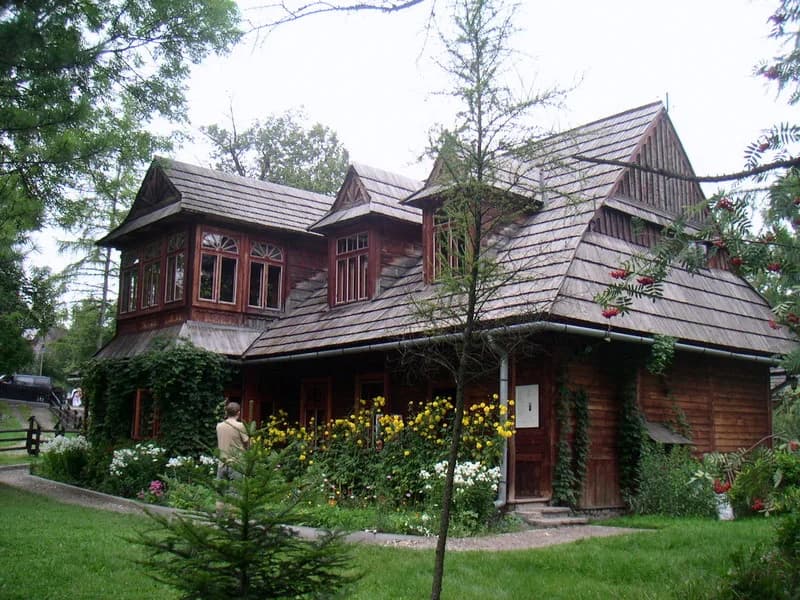
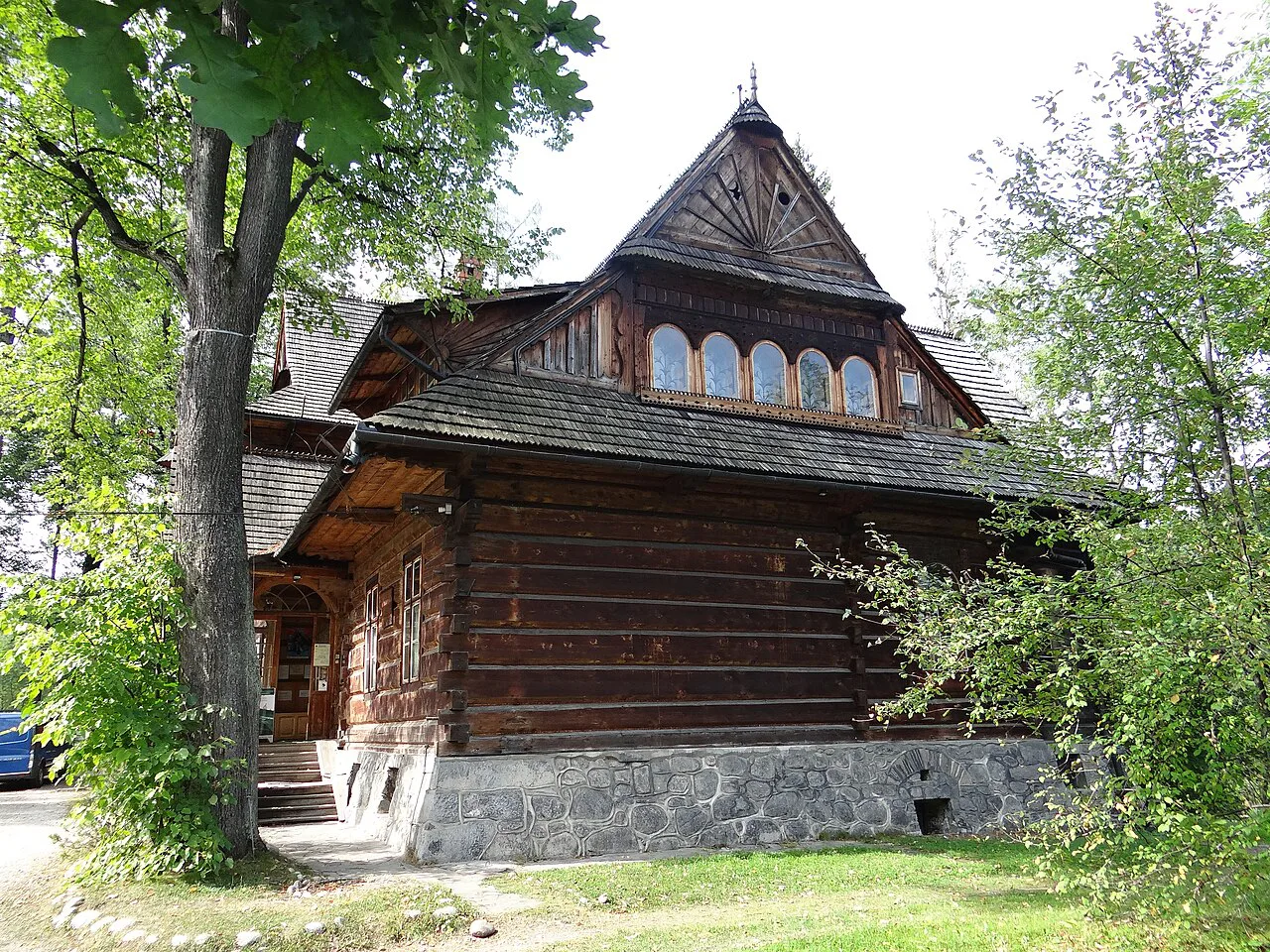
Stanisław Witkiewicz is the figure behind the movement, and Willa Koliba on ul. Kościeliska was his first experiment in what became the Zakopane Style. The villa is now a museum of the movement, and its interiors let you read the idea room by room rather than only on a facade. Seeing Koliba first makes the rest of the town legible.
Witkiewicz's aim was to build a modern Polish architecture from local materials and craft rather than importing historic styles from elsewhere. That ambition is why Zakopane Style buildings look both traditional and designed: the whole interior was meant to belong to one system. It invites comparison with the English Arts and Crafts movement, which pursued a similar total-design ideal.
What to look for on a Zakopane Style building
Start at roof level. Look for steep pitches with wide overhanging eaves that shed snow, and for timber laid in visible horizontal courses rather than hidden behind render. On a good example the construction is the decoration.
Then drop your eye to the joinery: carved window surrounds, shaped gable boards, folk motifs cut into beams and balustrades. Proportions matter as much as ornament, with compact, vertical massing that suits the mountain setting. If a building has the motifs but not the discipline, it is Zakopane-Style-inspired rather than the real thing.
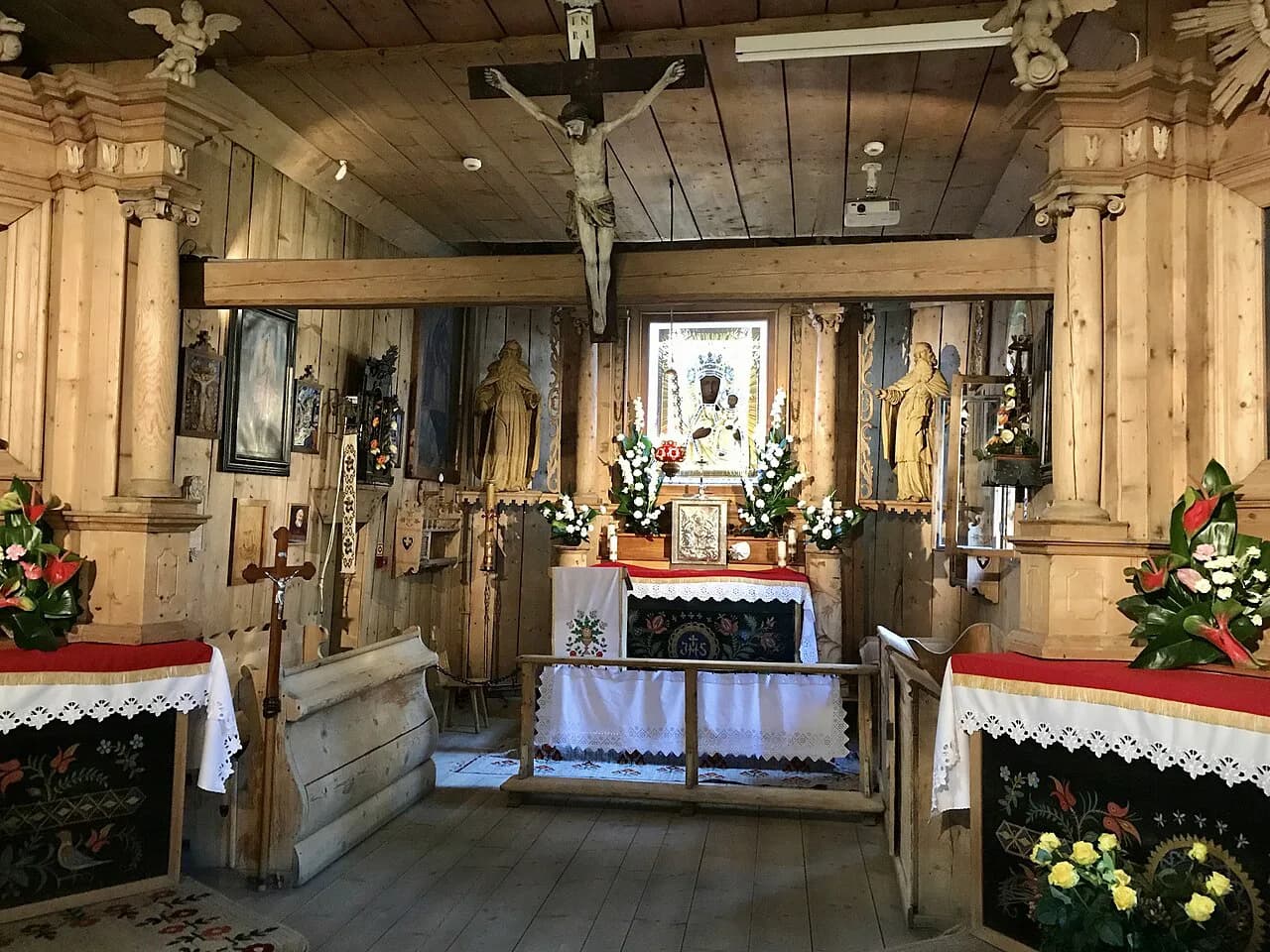
Inside, the same logic applies to ceilings, stoves, furniture and textiles. Willa Koliba is the place to see a complete interior scheme, where the fittings were designed as part of one idea rather than bought separately. Giving Koliba an hour before any other villa stop changes what you notice afterwards.
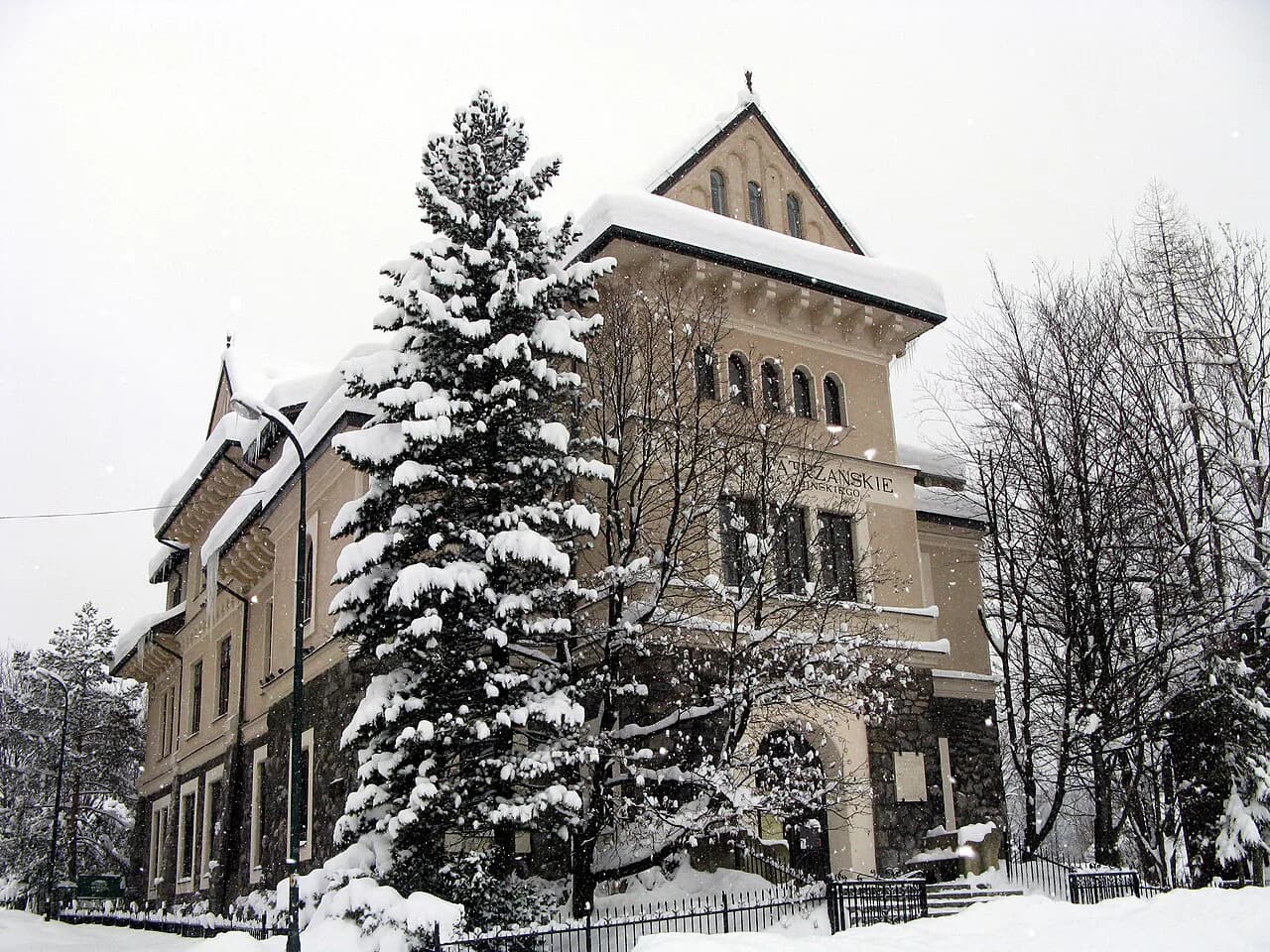
The Tatra Museum on ul. Krupówki 10: where the collection explains the style
The Tatra Museum on ul. Krupówki 10 is the obvious first stop, because the collection explains the style rather than merely exhibiting it. Founded in 1875, it is among the oldest regional museums in Poland, and it holds folk art, local costume, flora and fauna and interiors of old highlander dwellings. It moved into its purpose-built home in 1922, which is itself part of the architectural story.
Expect a traditional, parts-fusty presentation: this is an old regional collection, not a polished interactive display. The payoff is context, with geology upstairs and ethnographic material that makes the carved detail on the villas easier to read as living culture rather than ornament. If you want the wider picture of the town's museum landscape, our guide to museums in Zakopane maps the branches against each other.
The Muzeum Tatrzańskie runs the main building and a network of branches, including Willa Koliba, the Władysław Hasior Gallery, the Karol Szymanowski Museum at Villa Atma and the Kornel Makuszyński Museum. Opening days and ticket prices are published on its own site, so check the hours and cennik page for the dates you are in town rather than relying on older listings.
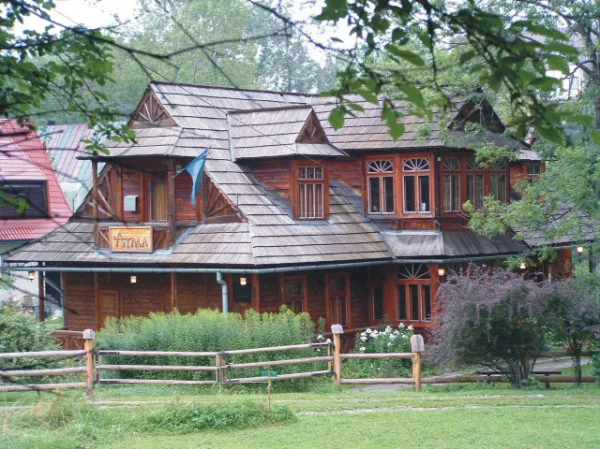
Willa Koliba on ul. Kościeliska: the first house built in the style
Willa Koliba is the building to prioritise if you only enter one Zakopane Style house. It was the first residence in the style, and its rooms show how such a villa was meant to work as a single designed scheme. The art Nouveau inflection blended with highland detail is part of what to look for.
There is a bonus for art lovers: the museum also displays pastel portraits by Witkiewicz's son, Witkacy, whose work sits oddly and memorably against the tidy interior scheme. Budget roughly an hour, and read the rooms as a designed whole before photographing individual objects. Koliba is a Muzeum Tatrzańskie branch, so its current opening days come from the museum's own published information.
The Władysław Hasior Gallery: a postwar counterpoint in an old wooden building
The Władysław Hasior Gallery on ul. Jagiellońska is the deliberate contrast to the nineteenth-century material. Hasior was one of the leading postwar Polish artists, and he designed the gallery himself, filling it with assemblages built from magazine cuttings, old clocks, toys and prams. It occupies the interior of an old wooden sanatorium, so the historic timber shell and the unsettling modern contents argue with each other.
Treat it as the counterpoint stop rather than an accessory: seeing Hasior after Koliba makes clear that Zakopane's wooden architecture is a container for very different periods. The gallery is a Muzeum Tatrzańskie branch, so its opening pattern comes from the museum's own published hours. If the weather turns, it is one of the better indoor hours in town, and our Zakopane rainy day guide has more options.
Where else the style shows up in central Zakopane
Beyond Koliba, two further villa museums reward the walk. The Karol Szymanowski Museum at Villa Atma on ul. Kasprusie 19 was the composer's home for much of the 1930s, and the interiors are recreated with his personal belongings. The Kornel Makuszyński Museum on ul. Tetmajera 15 occupies the house where the children's author lived with his wife, with art among the contents.
For wider art in the same tradition, the Kulczycki Art Gallery on ul. Koziniec 8 is one of the Muzeum Tatrzańskie branches and holds an art collection built up over many years. Then look up rather than in: ul. Krupówki and the streets off it give you a free survey of villa roofs, carved gables and timber balconies, which is the cheapest way to train your eye before paying for an interior.
Branches further out, such as the Zagroda Bafiów in Chochołów and the Zagroda Korkoszów in Czarna Góra, extend the story into rural wooden building. They work best as a single extra outing rather than part of a central walking day. The Muzeum Tatrzańskie lists every branch in one place, which makes it simpler to build a route.
How much time to give it and how to link the sights on foot
A realistic half-day covers the Tatra Museum on ul. Krupówki 10, Willa Koliba on ul. Kościeliska 18 and one more villa or the Hasior Gallery. All sit within central Zakopane, so you can link them on foot without transport, and the walking is flat compared with the mountain trails above town. Give the Tatra Museum the longest slot if you want the style explained properly.
Order matters more than distance. Start with the Tatra Museum for context, move to Koliba for the interiors, then finish with Hasior for the contrast, or swap in Villa Atma if music interests you more than postwar art. Check published opening days across the branches before you set out, since a single closed door can break the sequence; the Muzeum Tatrzańskie site carries the current hours.
If you want to extend beyond the centre on foot, the marked town walks on the official Zakopane site give distances and timings, such as the Krzeptówki route at 2.2 km and about an hour. That is a sensible way to see wooden church architecture and older cottages without committing to a mountain day. One of those walks passes the Sabała cottage, a private timber house from around the turn of the eighteenth and nineteenth centuries that you arrange to see by phone.
Trade-offs: which buildings reward a stop and which are a quick look
Be selective. Willa Koliba and the Hasior Gallery justify both a ticket and real time, because each is a complete designed interior that you cannot read from the street. The Tatra Museum is worth it primarily if you want the explanation rather than the spectacle.
The biographical villa museums are smaller and more niche: excellent if the person interests you, thin if not. Kulczycki and the outlying farmsteads are for committed followers of the style. For everything else, walk the streets and look up, which costs nothing and still shows you the roofs, timber and carving that define the town.
For the religious side of the same building tradition, including wooden churches, see our guide to churches in Zakopane worth visiting. The two subjects overlap, since carving and timber construction run through both. Group them on one loop rather than making separate trips.
Which building should you enter first?
Start with the Tatra Museum on ul. Krupówki 10, then walk to Willa Koliba on ul. Kościeliska to see the style at full strength, and finish at the Hasior Gallery if you want the modern riposte. That sequence gives you explanation, executed design and contrast in a single central loop.
Check the Muzeum Tatrzańskie's published hours and cennik for the branches before you go, because the routes only work if the doors are open on your days. Everything else, including the carved gables along ul. Krupówki, is free to look at.
Explore more Zakopane guides
Frequently Asked Questions
Is the Zakopane Style the same as highland folk architecture?
It grew out of it but is not identical. Highland wooden building is the local vernacular tradition, with log walls, steep roofs and carving. The Zakopane Style took that vocabulary and turned it into a designed system for villas, churches and public buildings, with every element intended to cohere.
Do I need to book tickets for the Zakopane Style museums in advance?
The Muzeum Tatrzańskie operates the main building and its branches, and its website carries the current visiting information for each one. Use that page to confirm opening days and how tickets are sold for the dates you plan to be in Zakopane.
Can I see the architecture without paying for entry?
Yes. Walking ul. Krupówki and the surrounding central streets shows you roofs, timber, carved gables and balconies at no cost. Paying to enter Willa Koliba or the Hasior Gallery adds interiors, which is where the style is fully explained.
Sources
Notes for your next Polish city break
Optional updates to our Poland guides.
You might also like
Continue reading
More guides you'll find useful