Wrocław WW2 Sites: What Happened Here and How to Visit
How Wrocław's wartime story unfolded as German Breslau, from the Jewish community and deportations to the 1945 handover, and how to visit with respect.
On this page
Wrocław was German Breslau for the whole of the Second World War, and it only became Polish Wrocław when the borders moved west in 1945. That single fact explains why the city's wartime story is a German story, a Jewish story and a Polish story at once, and why so little of what stood in 1939 survives. This guide follows the timeline from the pre-war Jewish community through the deportations to the post-war handover, then sets out how to approach the ground itself with context and respect.
If you are planning the rest of a city break, keep the Museums in Wrocław in view alongside this wartime material, because the two overlap in places and a single afternoon rarely covers both well.
Treat the wartime chapter as a half-day of thinking rather than a checklist of monuments, and you will get far more from it. The sites reward background reading more than most of the city's attractions.
Breslau: the name the city had in the war
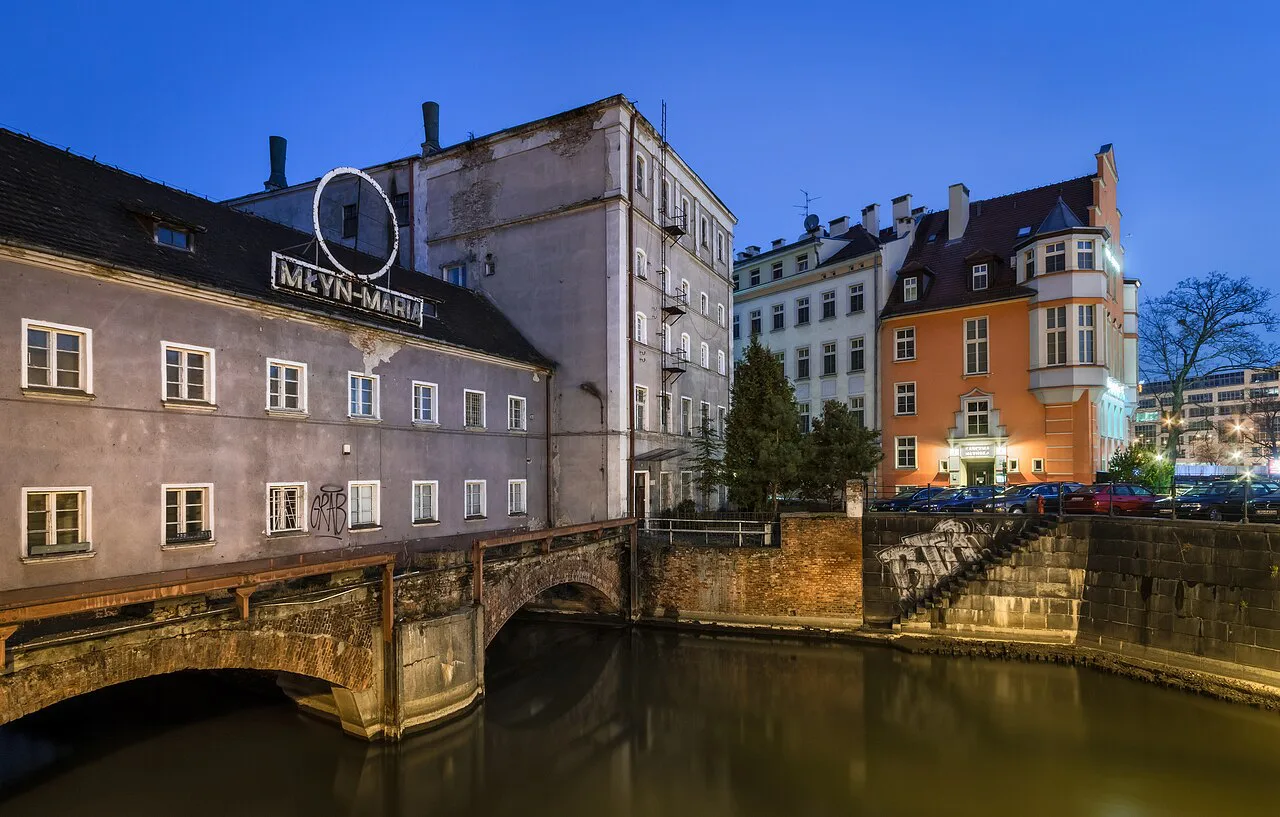
Between 1939 and 1945 the city was Breslau, in Germany, and the '45 Aid Society, which records the stories of child and teenage Holocaust survivors brought to Britain after the war, describes it that way in its account of the city. The same account notes that it is now Wrocław in western Poland. Almost every wartime reference you will encounter on plaques, in archives and in memoirs uses the German name, so expect to search under both.
Breslau was the historic capital of Silesia and changed hands repeatedly over the centuries, passing through the Kingdom of Poland, Bohemia, the Austrian Empire, Prussia and Germany before returning to Poland in 1945. That layered past is the reason the city's fabric mixes Gothic churches, Habsburg-era institutions and Prussian civic buildings within a short walk. Reading the wartime period as one layer in that sequence is more honest than treating 1939 as a sudden break.
Where Breslau sits in the wider war
The war in this part of Europe opens with the German invasion of Poland in September 1939, and Breslau sat inside Germany from the outset rather than being occupied later as Polish cities to the east were. The city's Jewish residents therefore experienced persecution from the peacetime years onward, with cultural and social life shut down before the war had spread across the continent.
In 1945 the borders of Poland were moved westwards, the city became part of Poland again, and the German population was expelled, among them German Jewish survivors. Poles arriving from Vilnius and Lviv, cities annexed by the Soviet Union during the war, replaced them. The population of the city you walk through today arrived almost entirely after 1945, which is why family memory of the war years in Wrocław itself is rare.
The Jewish community of Breslau before the war
Breslau had a long-standing Jewish community with a large, prominent Reform congregation, and the oldest Jewish tombstone found in the city dates to 1203. By 1290 the community was the second largest in east central Europe after Prague. The medieval period was not secure: a pogrom struck in 1349 during the Black Death, and Jews were expelled in 1453 and barred from living in the city until 1744, when Frederick II permitted an official community after Prussia annexed the city.
The modern community flourished, becoming an important centre of the Haskalah, the Jewish Enlightenment, with Orthodox and liberal congregations both active and led by distinguished rabbis and scholars. The city counted 19,743 Jewish residents in 1900 and 10,300 in 1939, a decline that reflects emigration and persecution across four decades. For the wider Jewish story beyond the war years, the Jewish Wrocław guide covers the cemetery, the White Stork Synagogue and the community that remains.
In November 1938, during the Kristallnacht pogroms, Jewish cultural, social and educational activities were halted and synagogues and Jewish schools were destroyed. What you see of Jewish Breslau today is therefore largely reconstruction and memory rather than survival. Approach the subject with that in mind when you read about the city's synagogues.
Deportation and the Holocaust in Breslau
From September 1941 Jewish residents were driven from their homes and crowded into Judenhäuser, or Jews' houses, before being deported to transit camps in Silesia and from there to the German Nazi Auschwitz II-Birkenau concentration and extermination camp. From April 1942 the remaining Jews were deported to Auschwitz, to the German Nazi Sobibór extermination camp, or to ghettos in Riga and Theresienstadt. Of the 3,800 deported to Theresienstadt, only 200 survived.
These are the numbers recorded for one city, and they are worth carrying with you rather than skimming. Because the deportations were organised from the city outward, there is no single camp site in Wrocław to visit; the history attaches to addresses, plaques and archives rather than to a preserved compound. Visitors who expect a camp memorial will not find one here, and that absence is itself part of what the wartime landscape teaches.
What happened to the city in 1945
After the war the city became a transit centre for Jewish survivors returning from concentration camps in Silesia and Poland, and from 1946 Jews arriving from former Polish territories annexed by the Soviet Union made Wrocław the largest Jewish community in Poland. Numbers reached 17,747 in 1946 before falling sharply after the Kielce pogrom in July that year, and by 1974 there were 3,000 Jews in the city. A revival began in the late 1980s, and today roughly 300 to 350 registered members belong to the Jewish Community of Wrocław, with the wider Jewish-identifying population estimated at around 800.
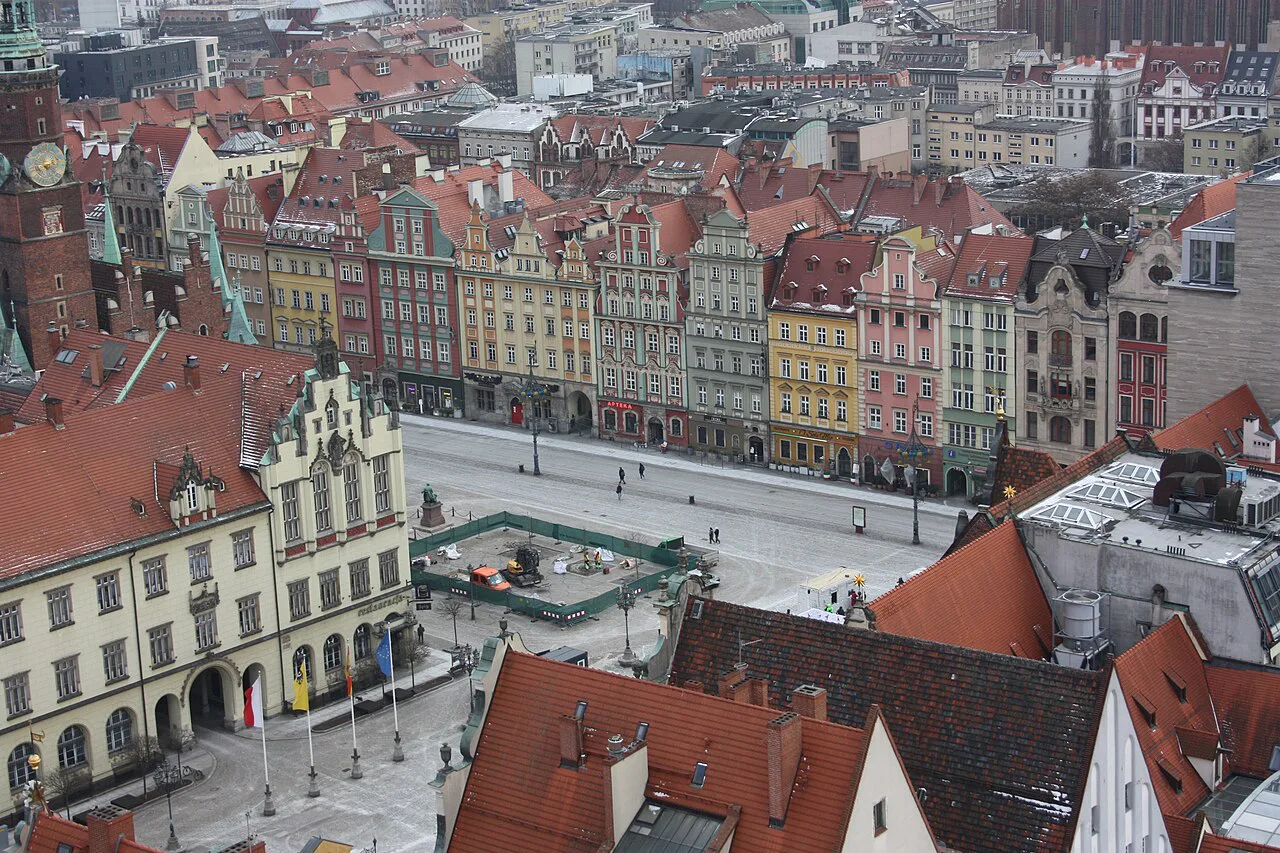
The same year saw the German population expelled and the city resettled, which shapes what survives: a largely rebuilt centre, a handful of buildings whose fabric dates from before 1945, and an archive and museum record carrying the rest. When you look at the rebuilt Główne Miasto, the absence of old fabric is the wartime evidence.
What you can actually visit
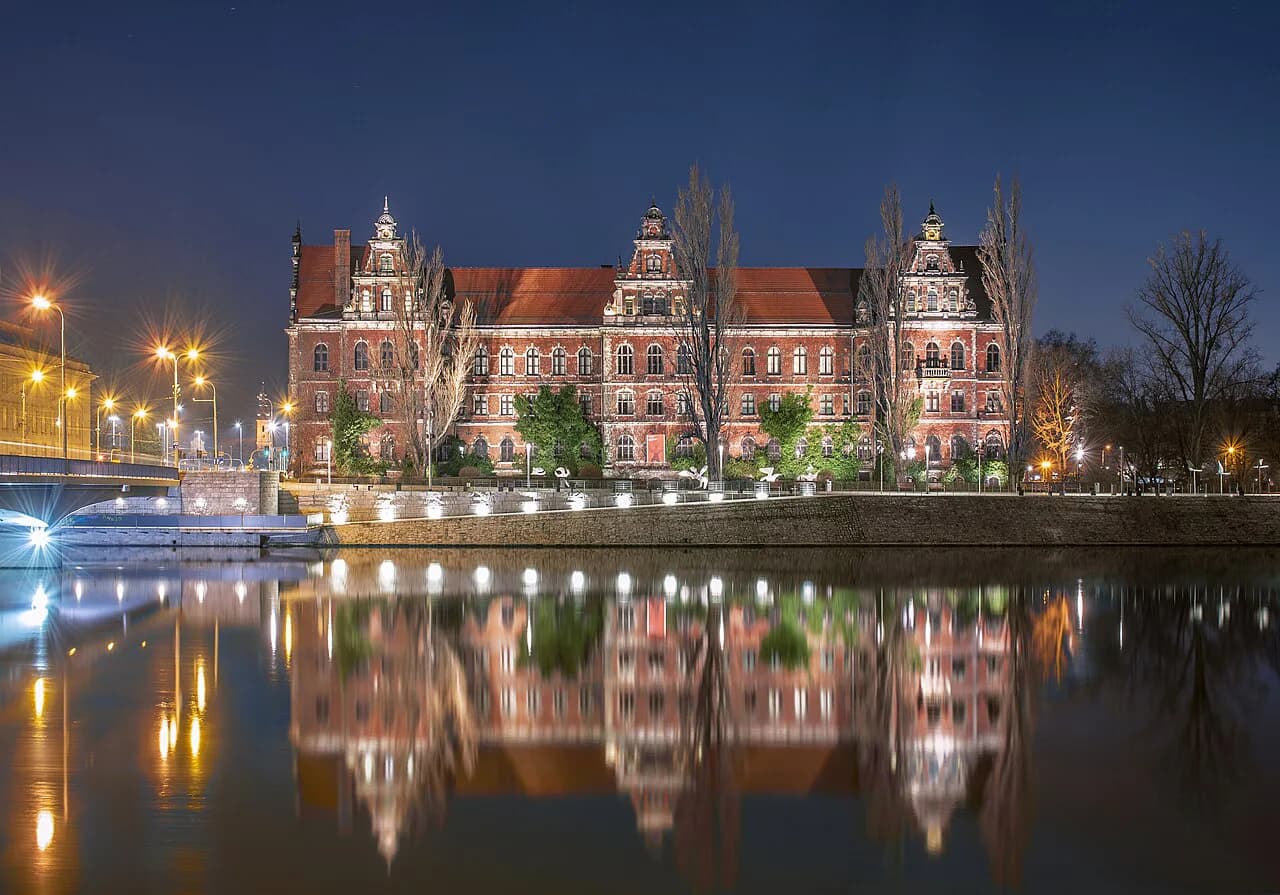
The material most useful to a visitor is held in the city's museums and archives rather than at a battlefield or camp, and the museums in Wrocław guide maps out the institutions, their contents and their opening patterns. Wartime-era collections sit alongside the Silesian and wider European holdings, so allow time beyond a single display case.
Civic history is the other route in: the Wrocław history pages trace how the city changed hands and how its institutions were built, renamed and rebuilt, which gives the wartime years their context. A building's present name and function often mask three earlier identities, and one of them was German.
Architecturally the wartime years are legible in what was replaced, and the Wrocław architecture guide is the clearest way to read a rebuilt streetscape. Pairing it with the wartime story stops you treating the Rynek and surrounding streets as untouched medieval fabric.
The attractions guide is the practical companion if you want to balance a sombre morning with something lighter in the afternoon, such as the river walks or the islands.
Guided tour or independent visiting?
Guided options exist and are marketed around the Second World War and Third Reich period in Wrocław and Lower Silesia, typically as full-day tours from the city that cover little-known wartime sites in the region, including life under Nazi occupation. Their value is interpretation: a guide can explain a site with no interpretive panel, and the format makes sense if you want the regional picture in one day.
Visitor commentary on these tours suggests they suit travellers who want the narrative in depth and are happy to spend a full day on it. The trade-off is fixed timing and limited choice of stops, and the guided day can crowd out the rest of a short break.
Walking independently suits a shorter visit and lets you set your own pace, but be realistic: without interpretation, plaques and museum captions carry the whole burden, and some addresses are explained in Polish only. If your Polish is limited, choose one museum with English labelling and one guided morning rather than spreading thin across many scattered sites.
Practicalities: days, tickets and timing
Specific tour departure points, durations and departure days are set by the operator, so confirm them directly when booking. Prices for tours and museum entry in złoty change, so check the ticket pages for each venue before you commit a day to one of them.
Polish museums commonly close one day a week, so build your wartime reading around opening days rather than assuming every museum is open on a Monday. If a memorial day lands on a Monday, treat the city walk and the surviving architecture as the substitute.
A half-day is realistic for the museum-and-memorial side of Wrocław's wartime story, and a full day if you add a guided regional tour. Attempting both in one day leaves you with neither finished properly, and the guided tour alone consumes a whole day for most people.
Fitting the wartime story around the rest of the city
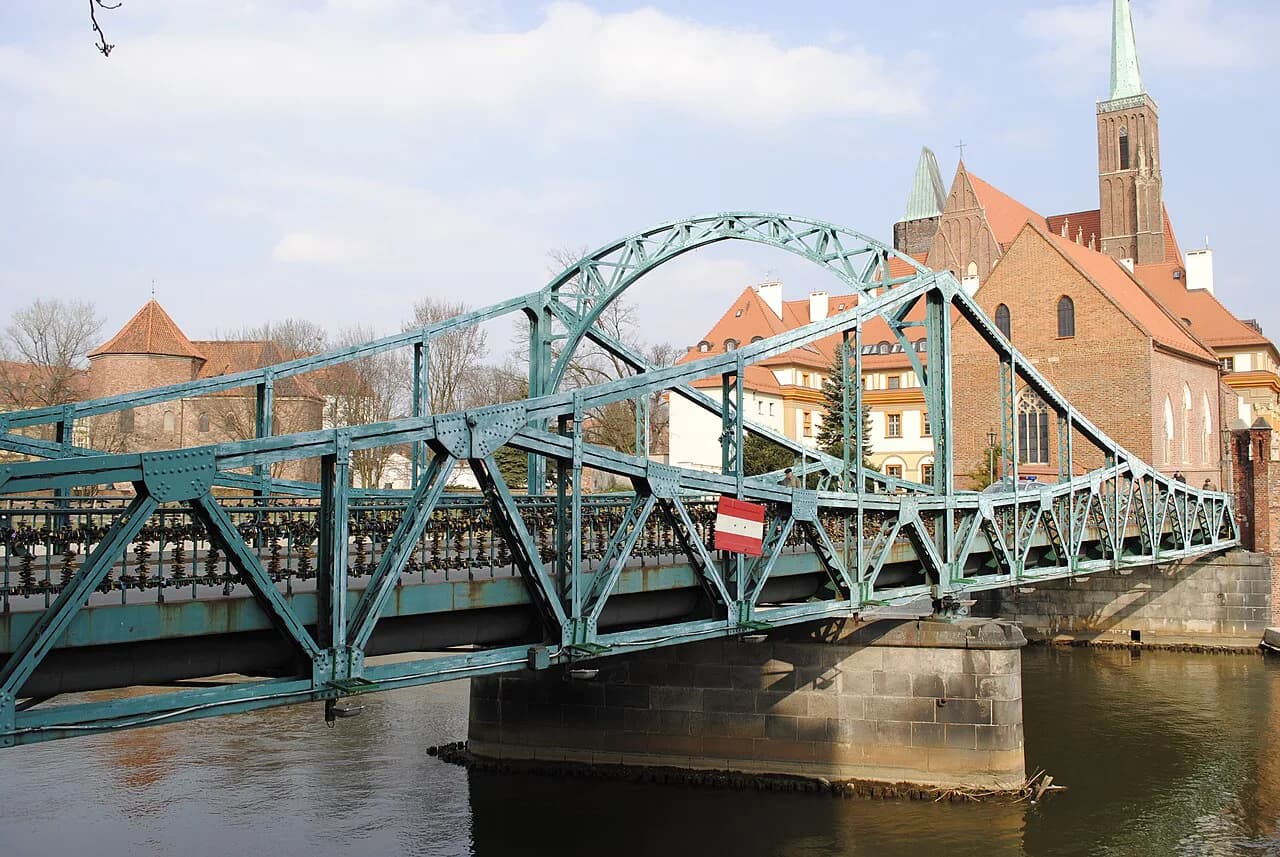
The wartime sites are scattered rather than grouped, so pair them with the route you are already walking. The cathedral on Ostrów Tumski and the river crossings are close enough to combine with a museum morning, and the walk itself gives you the physical scale of the 1945 destruction.
If you want a change of register, the street art guide covers the murals that carry the city's more recent memory work, which gives a useful contrast with wartime commemoration.
Is the wartime story worth a half-day of your trip?
Yes, if you go in expecting an urban history told through museums, plaques and rebuilt streets rather than a single preserved site. The payoff is a much sharper eye for what is old, what is rebuilt and what was erased, and that changes how the rest of the city reads.
Skip the dedicated day if your break is only two days and you would rather spend the time on the Rynek, the river islands and the museums you came for. Either way, check each venue's current opening days and ticket prices before you set out.
Explore more Wrocław guides
Frequently Asked Questions
What was Wrocław called during World War II?
The city was German Breslau throughout the war, and it is now Wrocław in western Poland. Wartime documents, memoirs and plaques usually use the German name, so search under both when researching the period.
Can you visit a concentration camp in Wrocław?
No. Breslau's Jewish residents were deported to transit camps in Silesia and then to the German Nazi Auschwitz II-Birkenau, Sobibór, Riga and Theresienstadt, none of which are in Wrocław. The city's wartime record is held in its museums and archives rather than at a camp site.
How long should I allow for Wrocław's wartime sites?
Half a day covers a museum visit and a walk past relevant addresses and memorials. A guided regional tour that covers Lower Silesia takes a full day, so choose one approach rather than trying to do both.
Sources
Notes for your next Polish city break
Optional updates to our Poland guides.
You might also like
Continue reading
More guides you'll find useful