
Centennial Hall Wrocław: what to see at the Hala Stulecia

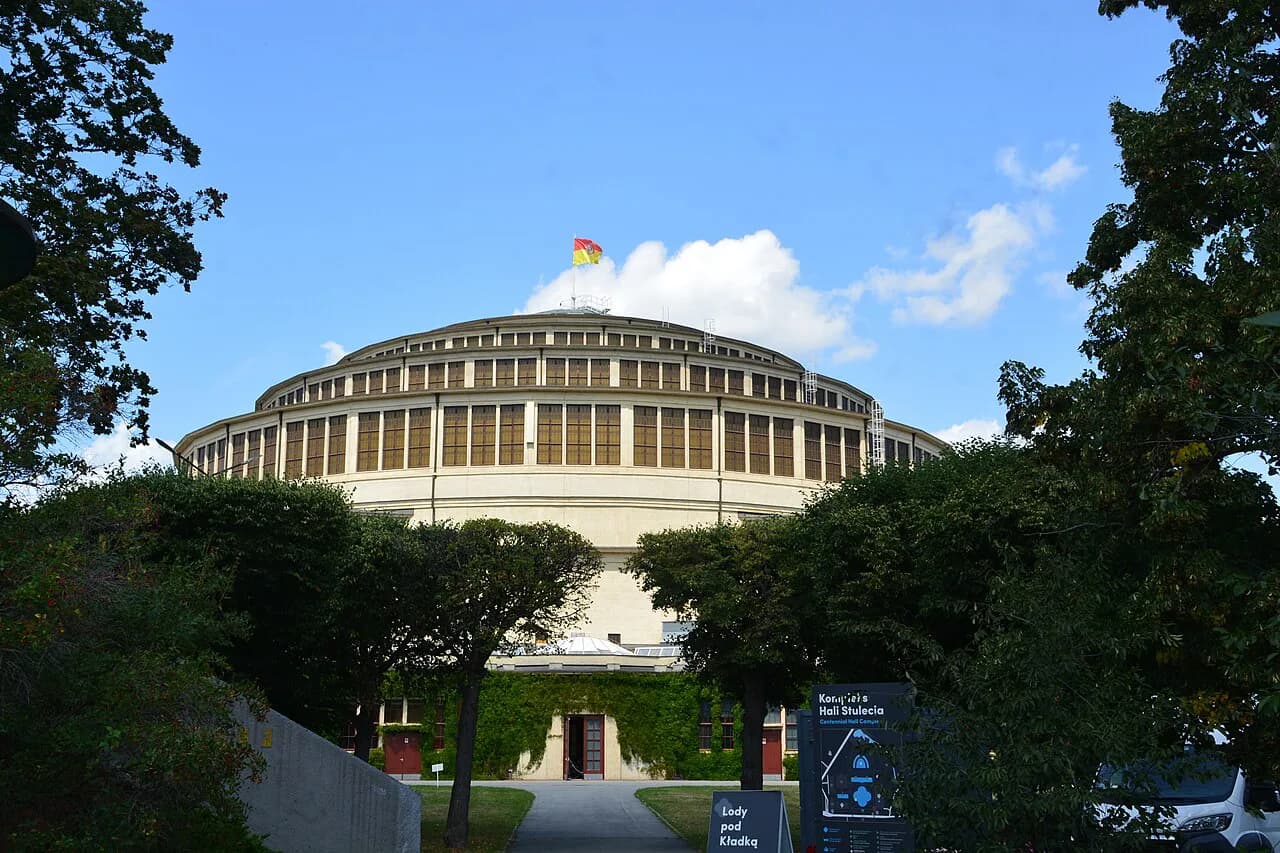
The Centennial Hall (Hala Stulecia) is worth the trip east from the Rynek if you care about architecture, and still worth an hour if you don't. Max Berg's reinforced concrete dome was built in 1911-1913 and the complex was inscribed on the UNESCO World Heritage List in 2006, so you are seeing a building UNESCO calls a milestone in the history of reinforced concrete architecture. This guide covers where it sits, what to look at in the hall and its surroundings, and how to fit the visit into a city break.
What the Centennial Hall is and why it matters
The UNESCO listing describes the hall as a milestone in the history of reinforced concrete architecture, designed by Max Berg and built between 1911 and 1913. That framing is the key to the visit: this is not a cathedral or a palace but an early demonstration that a huge enclosed space could be made from concrete ribs rather than stone walls and columns.
Berg called the building a Cathedral of Democracy, and the hall's own account ties that idea to the modernist principle that form should follow function. Look for the consequence when you arrive: the plan is organised around a vast central space for exhibitions, concerts and sporting events, with ornament kept to a minimum. Knowing that argument in advance makes the exterior read as a statement rather than a plain box.
The UNESCO listing covers the complex rather than the dome alone, which matters for how you spend your time on site. Treat the hall, the exhibition grounds and the surrounding park as one visit rather than a single ticketed interior.
Where it sits: Wystawowa 1 in the eastern parkland
The hall stands at ul. Wystawowa 1, on the exhibition grounds inside Szczytnicki Park, east of the city centre. It is not on the Rynek and it is not a five-minute stroll from the Old Town, so plan it as a half-day excursion rather than a stop you squeeze between two squares.
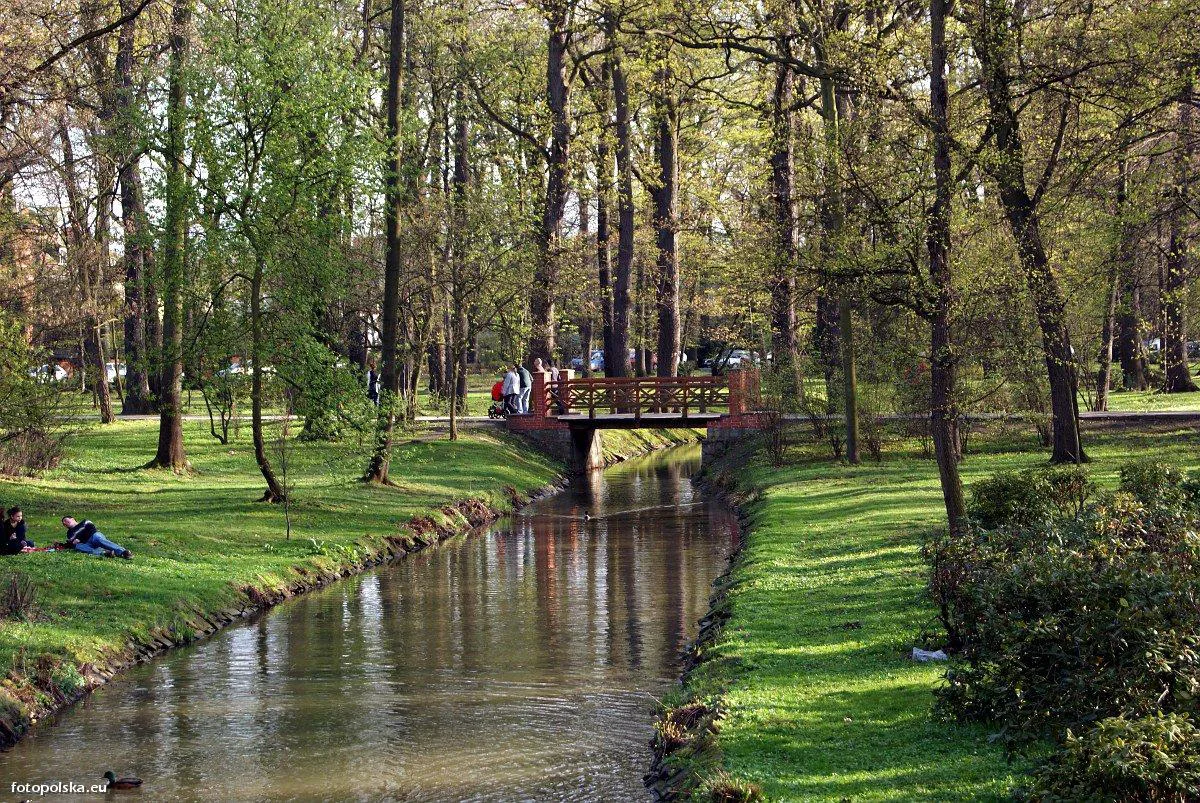
The park setting is part of the appeal: the hall's site presents the building as a meeting point set in green space, with the grounds and pavilions around it forming the wider ensemble. Arriving through the park rather than from a car park gives you the view the architects intended.

How to get there and how long to allow
Trams run east from the centre towards Szczytnicki Park and the exhibition grounds, and the ride is short enough that a taxi is hard to justify unless you are pressed for time. Check the current route and stop on the city transport map before you set out, since lines and stops change.
Allow around two hours for the hall and the immediate grounds, and half a day if you add the Japanese Garden, the Four Domes Pavilion and a loop through Szczytnicki Park. The trade-off is real: pushing the visit into 45 minutes leaves you with a look at the facade and nothing else.

The building itself: what to look at inside and out
From outside, walk the full circumference before going in. The dome's scale only registers when you see how the lower structure steps up to it, and the concrete ribs are easiest to read against the sky from the far side of the approach. Bring a wide lens or accept that photographs will understate it.
The interior is a working events venue rather than a museum, so what you can see depends on what is happening that day. The hall's visitor information sets out sightseeing options and an availability calendar, and that calendar is the honest way to find out whether the interior is open during your dates.
If the interior is closed, the exterior and grounds still justify the trip, and the building's own site lists the surrounding sights as part of the visit. Check the hall's plan-your-visit pages before travelling east so you know which parts are open.
Why it was founded as the Jahrhunderthalle
The hall opened in 1913 as the Jahrhunderthalle, a name marking the centenary of Frederick William III's appeal to his people in 1813 and, six months later, the Battle of Leipzig. That is the historical weight behind a building that now reads as pure modernism.
The name shifted over the century, from People's Hall to Centennial Hall, and the building served as an exhibition venue, a cinema and a sports and congress hall at different points. Keep that layering in mind when you look at the interior: it has been adapted repeatedly rather than preserved as a single-period monument.
The complex around it: Pergola, Iglica, Japanese Garden and more
The hall's site names the structures that make up the wider complex: the Pergola, the Iglica, the Japanese Garden, the Four Domes Pavilion, the WUWA exhibition, Szczytnicki Park and the Church of St John of Nepomuk. That list is your walking plan, and it is why the grounds reward more time than the dome alone.
The Japanese Garden is one of the structures the hall's site lists within the complex and a draw in its own right, worth an unhurried detour. Entry arrangements change with the season, so check before you build it into the afternoon.
The WUWA exhibition covers the model housing estate built alongside the hall in the late 1920s, and the Four Domes Pavilion hosts exhibitions of its own. Both sit within easy walking distance, so a single loop covers them without backtracking.
Szczytnicki Park and the Church of St John of Nepomuk
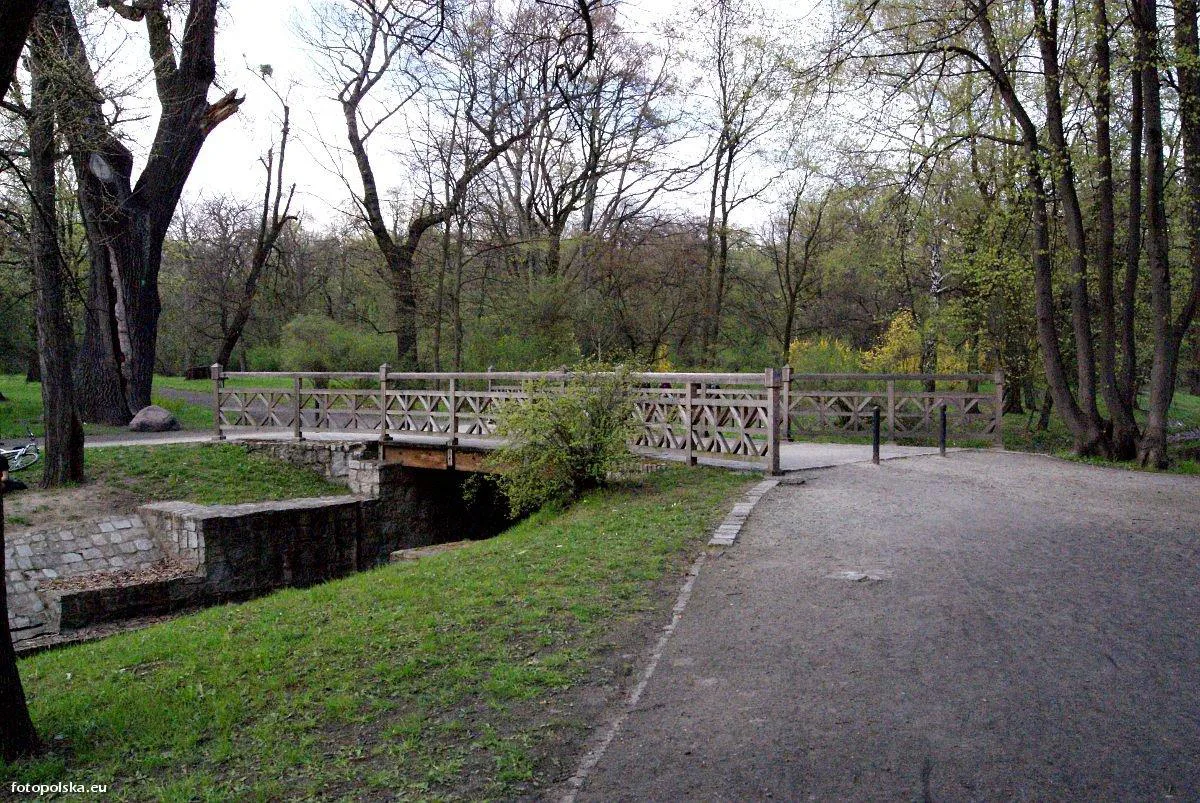
Szczytnicki Park wraps around the exhibition grounds and gives the visit its breathing space. The hall's site lists the park among the surroundings of the complex, and the mature trees and open lawns make it a good place to sit after the hall, which is why the area feels like a day out rather than a single building.
The Church of St John of Nepomuk stands nearby and the hall's site lists it among the structures of the wider complex. It is a short walk from the main grounds, so pair it with the park loop rather than making a separate journey.
Tickets, opening hours and booking
The hall's site publishes sightseeing information, a visitor centre page and an availability calendar, but the practical details for your dates are best confirmed there directly. Ticket prices, guided tour times and interior access depend on the event schedule, so check the calendar page before you travel.
The public grounds and park are the parts you can enjoy without booking anything, and they are the reason a visit works even on a day when the interior is in use. Build your plan around the grounds first and treat the interior as a bonus.
Is it worth the detour from the Rynek?
Yes, if you have any interest in twentieth-century architecture, and as a half-day rather than an afternoon errand. The Rynek is a polished market square; the Centennial Hall is a piece of engineering history in a park, and the two do different jobs. Skipping it means missing the building that put Wrocław on the modernist map.
If your trip is short and architecture is not your priority, the grounds alone are still a pleasant park visit, but do not expect the interior to fill a morning. For contrast, the city's other vertical viewpoint is the Sky Tower, which offers a very different kind of visit.
What to combine with the visit
Pair the hall with the rest of the eastern parkland and then work back towards the centre, rather than making two separate trips east. A single loop through the exhibition grounds takes in more than the dome and costs you nothing extra in travel.
In the evening, the Opera Wrocławska gives the centre a different kind of architecture to compare with Berg's concrete, and it is a natural anchor for a day that started in the park. Book ahead if you want a specific performance.
If you are building a longer list of sights, the University of Wrocław and its baroque Aula Leopoldina make a good counterweight to the hall's modernism. Both sit in the Old Town area, so they slot into a different part of the day.
Is the Centennial Hall worth your half-day?
Go if you want to see one of the first great reinforced-concrete buildings and you are happy to spend time in a park. The hall rewards a little preparation: read the UNESCO description first, walk the full exterior, then use the availability calendar to decide whether the interior is on the table.
Leave it out of a one-day city break centred on the Rynek, and keep it for a trip of three days or more where one morning east of the centre fits comfortably. Either way, the grounds are open to walk and the view of the dome from the park is free.
Explore more Wrocław guides
Frequently Asked Questions
Where is the Centennial Hall in Wrocław?
It stands at ul. Wystawowa 1 on the exhibition grounds inside Szczytnicki Park, east of the city centre. It is outside the Old Town, so plan it as a half-day excursion rather than a stop between two Rynek squares.
When was the Centennial Hall built and by whom?
UNESCO records that Max Berg designed it and it was built between 1911 and 1913. It opened in 1913 as the Jahrhunderthalle, a name marking the centenary of Frederick William III's 1813 appeal to his people and the Battle of Leipzig that followed.
Is the Centennial Hall a UNESCO World Heritage Site?
Yes. The complex was inscribed on the UNESCO World Heritage List in 2006, and UNESCO describes the hall as a milestone in the history of reinforced concrete architecture.
Can I go inside the Centennial Hall?
The interior is a working events venue, so what you can see depends on what is happening on your dates. The hall publishes sightseeing information and an availability calendar; check these before travelling east.
What else is there to see around the hall?
The hall's site lists the Pergola, the Iglica, the Japanese Garden, the Four Domes Pavilion, the WUWA exhibition, Szczytnicki Park and the Church of St John of Nepomuk as part of the wider complex, so a single loop covers several sights.