
Szczytnicki Park in Wrocław: a Visitor's Guide

Szczytnicki Park is the big landscape park east of the Old Oder, cut in two by ulica Mickiewicza, and it rewards a half-day rather than a quick detour. The Japanese Garden, the wooden church of St John of Nepomuk and the Centennial Hall sit in the southern section, while the rhododendron groves and rose garden lie on the far side of the road. This guide covers where the park sits, what to see in each half, how long to allow and which nearby sights pair with it.
The park covers about 115 hectares of naturalistic, English-style planting, which is reason enough to put comfortable shoes on and treat it as a walk rather than a tick-list. Most paths are gravel and free to wander, but the Japanese Garden is a separate enclosure and the church keeps limited visiting hours. A little planning around the Mickiewicza divide makes the difference between a pleasant amble and a lot of backtracking.
What Szczytnicki Park is and why it is worth the walk
Szczytnicki Park is a 115-hectare landscape park laid out in the English manner, with free-running paths, broad clearings and clumps of planting that imitate a natural scene. Ulica Mickiewicza divides it into a north-western section beside the Olympic Stadium, with the rhododendron groves and rose garden, and a south-eastern section around the Japanese Garden and the Centennial Hall. Most visitors concentrate on the south-east, but the planting interest is spread across both halves.
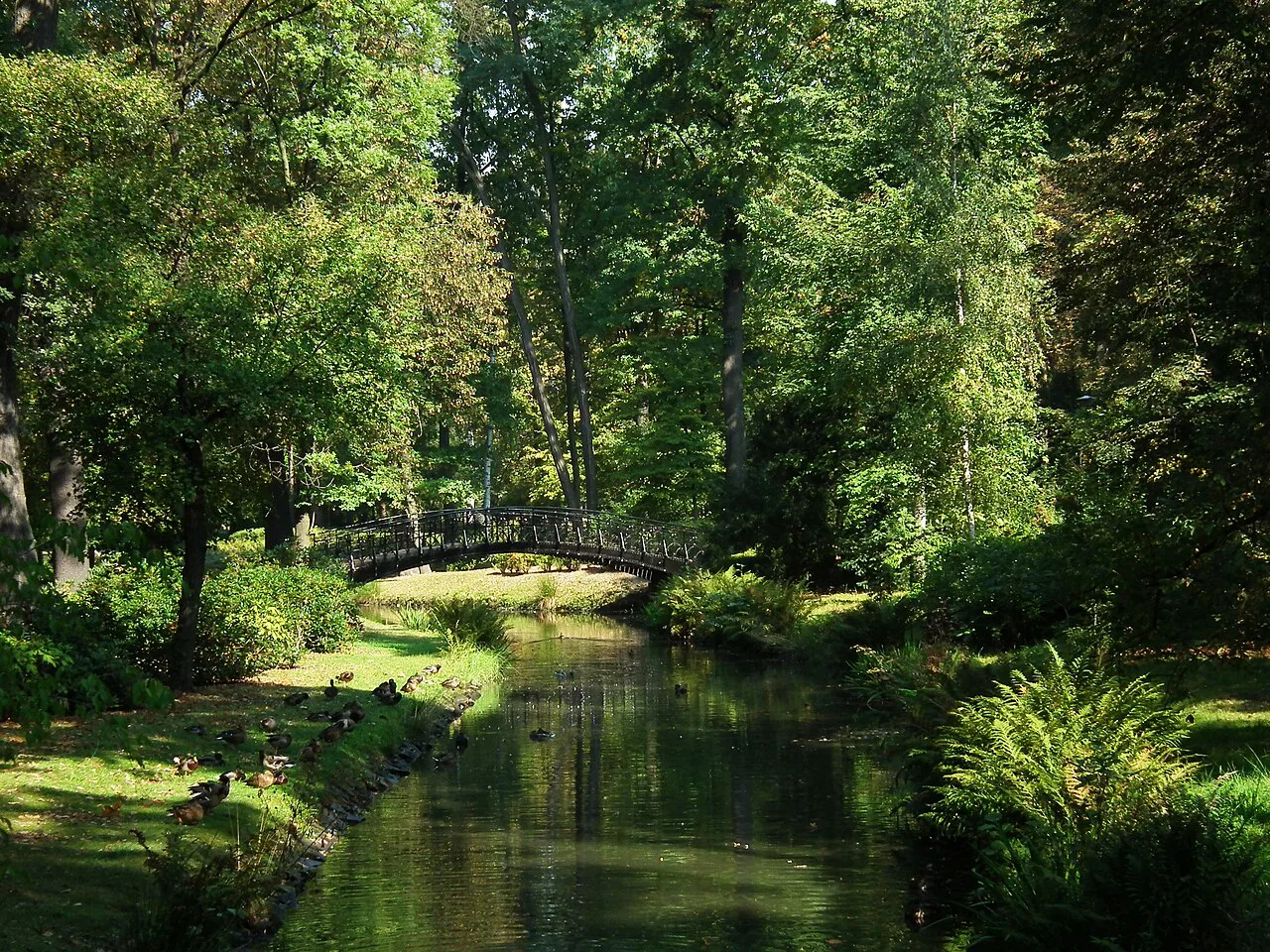
The tree collection is the real draw: native oaks, hornbeams, beeches and limes dominate, alongside a large range of introduced species from the Balkans, the Caucasus, Japan, China and North America. Look for the great old oaks and poplars near the old Oder and deeper into the park, and for named specimens such as the scarlet oak, the Caucasian oak and the Japanese katsura tree. This is a park to read through its planting, not just to cross.

Where the park sits and how ulica Mickiewicza splits it
The park lies east of the Old Oder on the edge of Wielka Wyspa, the island complex whose water intakes serve the city. It began as the grounds of the village of Szczytniki, and the forest there was already popular with Wrocław residents in the mid-eighteenth century before Duke Frederick Louis of Hohenlohe-Ingelfingen laid out an English-style park in 1785. The city bought the land in 1854 and has run it as a public park since.
Treat ulica Mickiewicza as your planning line. The south-eastern half holds the Japanese Garden, the Pergola, the Iglica spire, the wooden church and the Centennial Hall, and it is where first-time visitors should spend their time. The north-western half is quieter, with the rhododendron collections and rose garden near the Olympic Stadium; cross over only if you have a spare hour and an interest in planting.
Getting there from the city centre and Rynek
From the Rynek, head east past the university quarter and cross the Oder bridges towards the Centennial Hall; it is a walk of roughly half an hour at an easy pace, and tram routes along the eastern streets will cut that down. Coming from the city centre, aim first for the Centennial Hall and the Pergola, because everything else in the southern section radiates from there.
The Centennial Hall, the Iglica and the Four Domes Pavilion form the complex at the park's southern edge, while the university's astronomical institute and a PAN space research centre occupy buildings nearby, so the area mixes exhibition architecture with working science. The Centennial Hall is the unmistakable landmark to navigate by, and the Pergola curves away from it in the shape of the old racecourse that once stood here.
The Japanese Garden, the wooden church and the Pergola
The Japanese Garden was created for the 1913 Centennial Exhibition to a design by the Japanese gardener Mankichi Arai, lost most of its Japanese detail after the show, and was only properly restored in 1994 with help from Japanese gardeners. It sits within the park's south-eastern section near the Centennial Hall and Pergola, so it is easy to slot into a walk. Check the garden's own page before you go for current hours and ticket rules.
The wooden church of St John of Nepomuk dates from the turn of the sixteenth and seventeenth centuries and was moved to the park for the 1913 exhibition, which is why a small timber church stands among Wrocław's grander brick architecture. It is a modest building with a stone cross beside it, and visits are best treated as a short pause rather than a sight in its own right. Confirm opening times locally before making it the centrepiece of a day.
The Pergola and the Iglica belong to the Centennial Hall ensemble: the pergola echoes the outline of the former racecourse, and the steel spire was built in 1948 as the centrepiece of the Recovered Territories Exhibition. Both are free to see from outside and take only minutes, so bundle them with a walk around the hall rather than treating them as separate stops. The hall itself is the piece worth paying to enter.
The north-west side: rhododendrons and the rose garden
Across ulica Mickiewicza, the north-western section borders the Olympic Stadium and holds the park's best seasonal planting, with rhododendron groves and a rose garden that give this half a different character from the exhibition side. Late spring is the obvious time for the rhododendrons, while the roses carry the interest later in summer. If your trip falls outside those weeks, this section is a pleasant wooded walk rather than a spectacle.
The two halves are close enough to combine, but they are not a single continuous circuit, so decide on your entry and exit points before setting off. A sensible order is the Centennial Hall complex first, then the Japanese Garden, then a crossing of Mickiewicza for the flower gardens if time allows. Anyone short of time should stay on the south-east side.
The Centennial Hall, Four Domes Pavilion and WuWa estate
The Centennial Hall complex anchors the southern edge of the park, and the adjoining Four Domes Pavilion is a separate attraction with its own programme, so plan them as two stops if you want to go inside both. The pavilion is home to the National Museum's modern art collection, while the nearby Multimedia Fountain is a separate evening attraction. Bought together, they fill an afternoon; a quick exterior look takes twenty minutes.
Near the pergola you can still find remnants of the WuWa model housing estate from the 1929 Werkbund exhibition, including a modernist building fronted by two bear sculptures that formed part of the display. It is a niche pleasure for anyone interested in interwar architecture, and it sits naturally at the end of a park walk rather than as a destination in itself.
How long to allow and how to walk it in a loop
Allow two to three hours for the southern section at a relaxed pace: about an hour around the Centennial Hall, Pergola and Iglica, an hour for the Japanese Garden when it is open, and the rest for the paths towards the church and back. Add an hour if you cross Mickiewicza for the rhododendrons and rose garden. This is a park for loitering, and rushing it defeats the point.
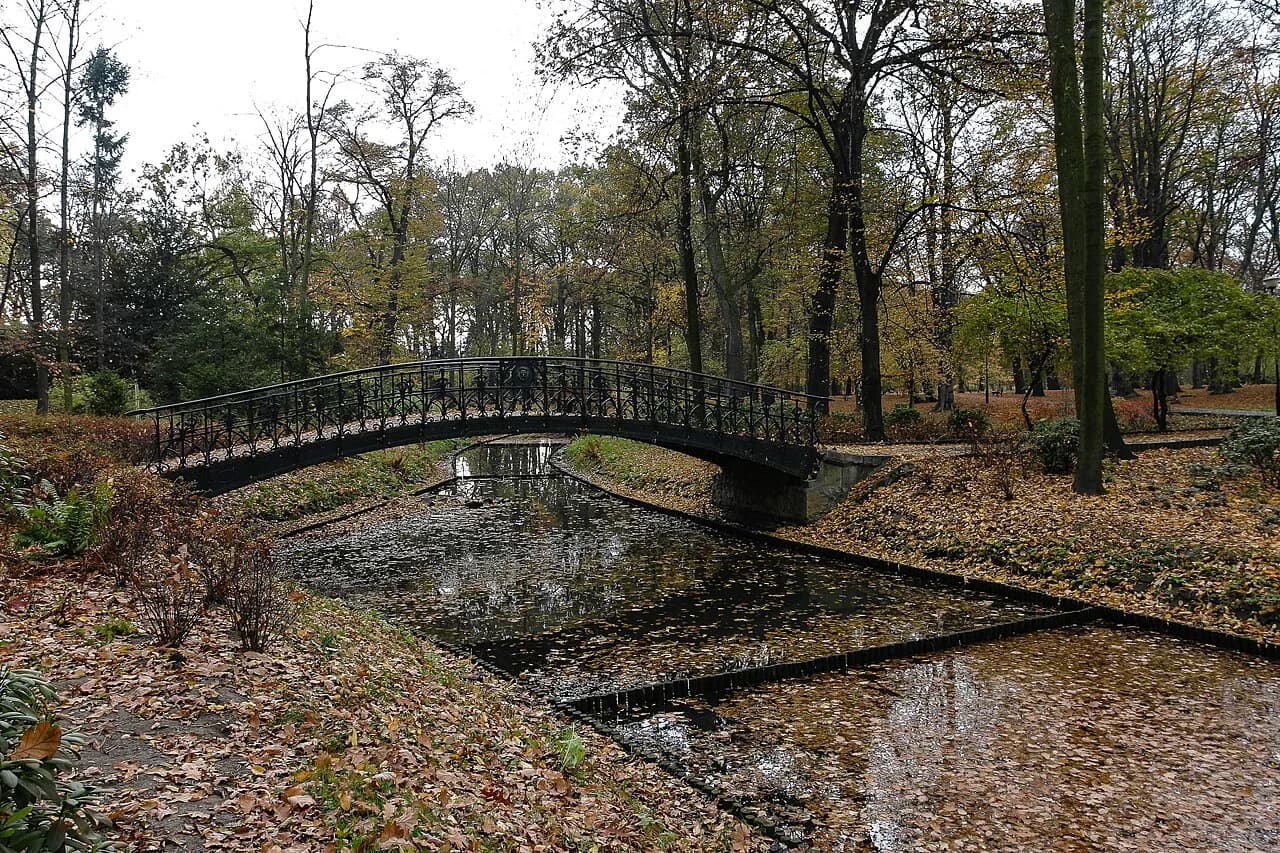
A workable loop starts at the Centennial Hall, follows the Pergola, drops into the Japanese Garden, then runs north-east along the gravel paths towards the wooden church before returning past the institute buildings to the hall. Paths are mostly gravel with kerbs, and small bridges carry you over the watercourses. Keep the hall in view as your reference point and you cannot go far wrong.
Opening details and where to confirm them
The park itself is open public ground and free to walk through, while the Japanese Garden and the wooden church keep their own arrangements, so check current hours and any ticket price before you set out. Published times for the church shift with the season. If those two interiors matter to you, plan the rest of the walk around them rather than the other way round.
The Centennial Hall and Four Domes Pavilion run on their own exhibition timetables, with the pavilion charging admission for its shows; check the venue pages for the day you plan to visit, since Polish museums commonly close one day a week. None of this needs booking far ahead outside peak weekends, but arriving without checking can mean a locked door.
Nearby sights that pair naturally with a park visit
The Olympic Stadium, the zoo and the paths along the Old Oder are all within easy reach of the park, so a morning here can roll into an afternoon elsewhere without a tram ride. The university quarter and the city centre lie a comfortable walk west across the river, which makes the park a natural first or last stop of a day.
For a change of scale, the Sky Tower viewing terrace gives you the city from above on a different day, and the Wrocław opera and the Racławice Panorama fill an evening or a rainy afternoon indoors. None of these needs to be crammed into the same outing as the park.
Who the park suits and where it falls short
Szczytnicki Park suits walkers, gardeners, families with room to roam and anyone who wants a green counterweight to the Old Town's streets. It is less rewarding for travellers with only one day in Wrocław, who will get more from the Rynek, the university and the cathedral island. The southern section also carries a lot of exhibition architecture, which will not appeal to everyone.
Its weaknesses are practical: the split by ulica Mickiewicza forces a choice, the Japanese Garden and church are extra stops with their own arrangements, and the park's pleasures are seasonal, peaking with the rhododendrons and roses. Come expecting a long, flat walk rather than dramatic viewpoints, and you will enjoy it for what it is.

Is Szczytnicki Park worth half a day?
Yes, if you have two days or more in Wrocław and want one long green walk with the Centennial Hall complex attached to it. Base yourself at the hall, take in the Pergola and the Japanese Garden, then decide whether to cross Mickiewicza for the flower gardens. Budget two to three hours and wear shoes that handle gravel.
If your trip is short, see the hall and the Pergola from outside and save the interior visits for another time. Either way, check the Japanese Garden's hours and the church's opening before you commit a morning to them.
Explore more Wrocław guides
Frequently Asked Questions
Is Szczytnicki Park the largest park in Wrocław?
It is one of the largest, covering around 115 hectares, and it ranks among the city's best-known green spaces. Whether it is the single largest depends on how you count parkland and the island complex around it, so treat the hectare figure as the useful number.
Is the park free to enter?
The park is open public ground and free to walk through. The Japanese Garden is a separate stop with its own visiting arrangements, and the Centennial Hall and Four Domes Pavilion charge for their exhibitions, so check each venue before you go.
Do you need tickets for the Japanese Garden?
The Japanese Garden sits within the park but keeps its own visiting arrangements, so plan for a separate admission step from the open park. Check current hours and ticket rules on the garden's own page before your visit, since these change with the season.