Katowice Old Town: What's There and How to Walk It
Katowice has no medieval old town, but its rebuilt Market Square and surrounding streets fill a morning. Here is the layout, what to see and how to walk it.
On this page
Katowice has no medieval old town: there is no castle, no ring of walls and no market square that grew up in the Middle Ages. What visitors call the old town is the rebuilt centre around the Market Square (Rynek), and it makes a good half-day walk rather than a full day. This guide covers what sits on the square, the streets that fan out from it, the buildings worth looking up at and where the route naturally ends.
The absence of a medieval quarter is not a flaw so much as the city's character. Katowice grew as an industrial centre in Upper Silesia, and its centre was cut and reconstructed in the 20th century, which is why the architecture mixes tenement houses, Modernism and later concrete. Expect a compact, walkable core rather than a cobbled postcard.
What 'old town' means in Katowice
Most Polish cities sell a medieval Rynek with a town hall in the middle; Katowice does not work that way. The centre was shaped by industry, war damage and postwar rebuilding, so the square you stand on today is largely a 20th-century creation. That is why the first reaction of many visitors is that the centre feels modern, open and a little raw.
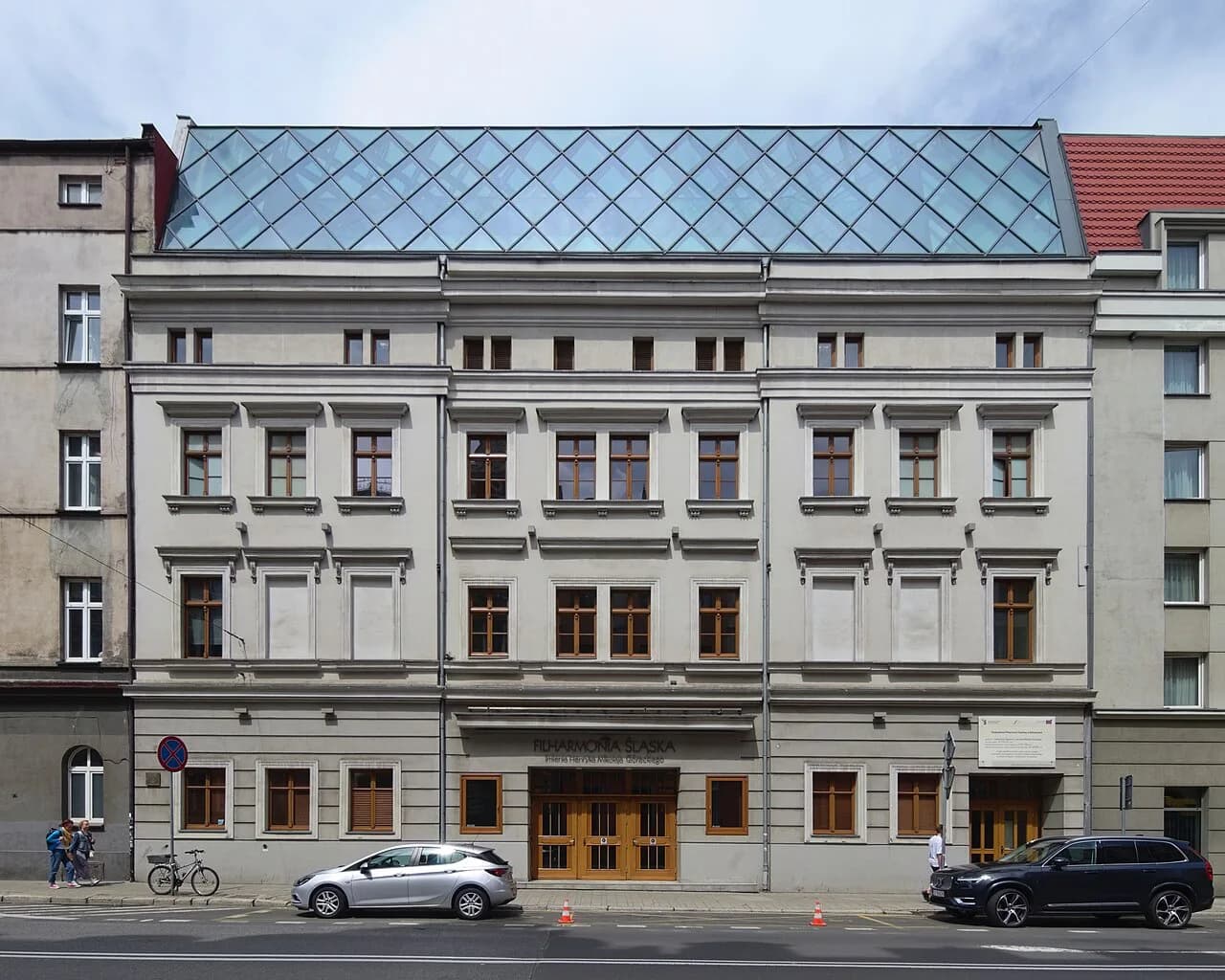
Knowing this changes how you walk it. Instead of hunting for Gothic gates, you look at the mixture: restored tenement facades in the backstreets, grand public buildings from the interwar years, and concrete monuments that belong to the communist period. The reward is a centre that reads like a history of the region in a few streets.
How the centre is laid out
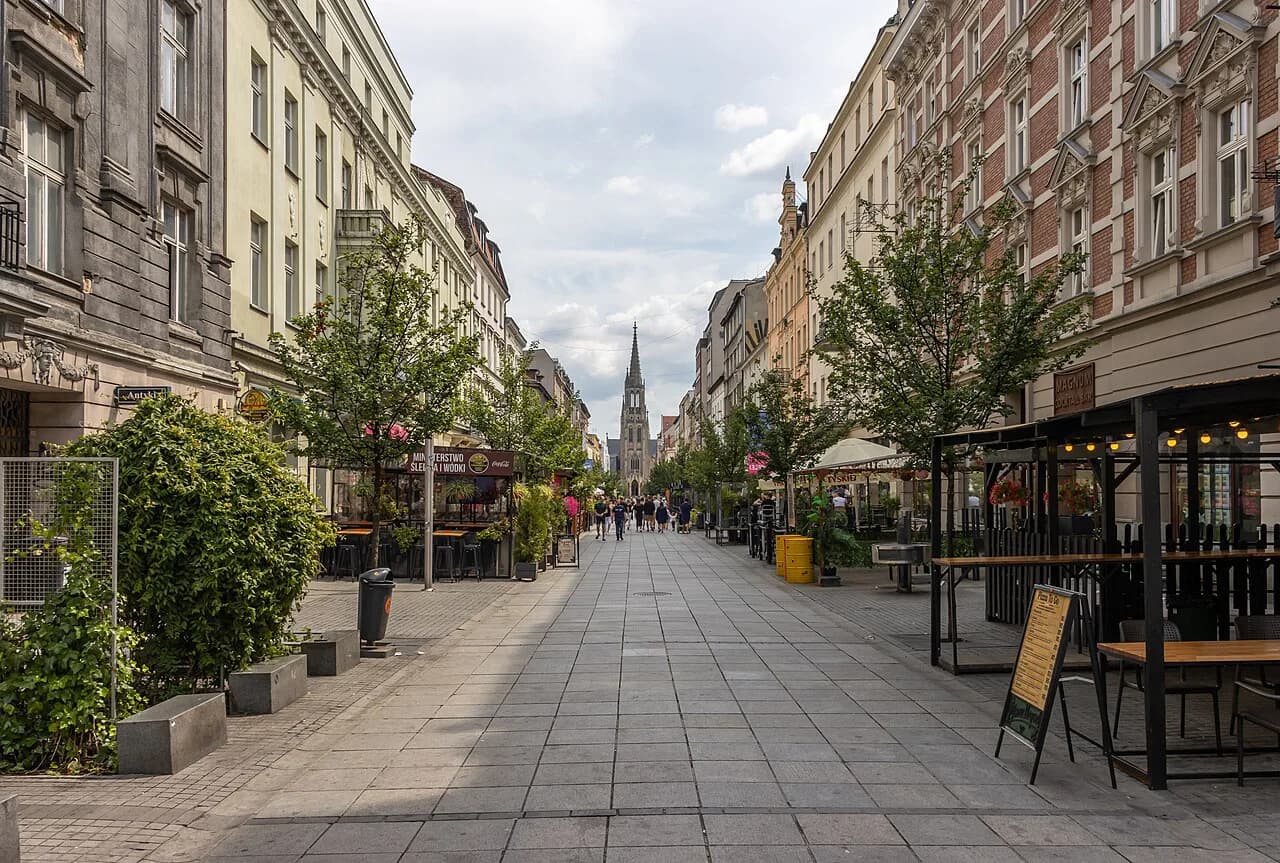
The Market Square (Rynek) is the anchor, and Mariacka Street runs as the main pedestrian spine towards the south. Around them, a grid of backstreets holds shops, cafés and most of the tenement houses worth photographing. The whole core is small enough to cross on foot in fifteen minutes, so you never need transport within it.
Treat the layout as three layers. The square is the front room, Mariacka is the corridor, and the backstreets are where the older architecture survives. A sensible order is square first, then Mariacka, then a loop through the side streets, finishing at the monuments to the west. Our Katowice walking tour sets out the same core in a fixed order if you prefer to follow a route.
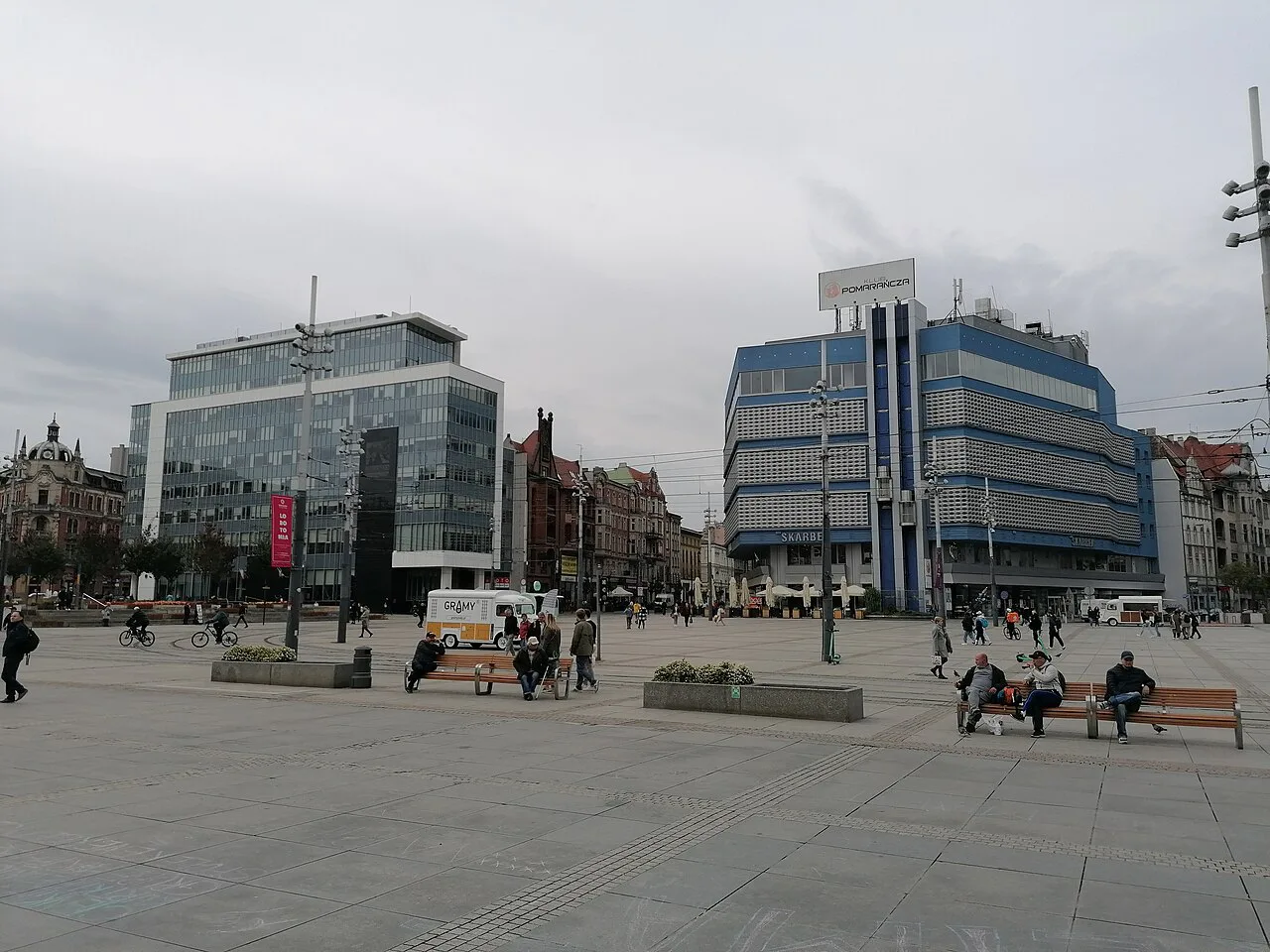
Start on the Market Square
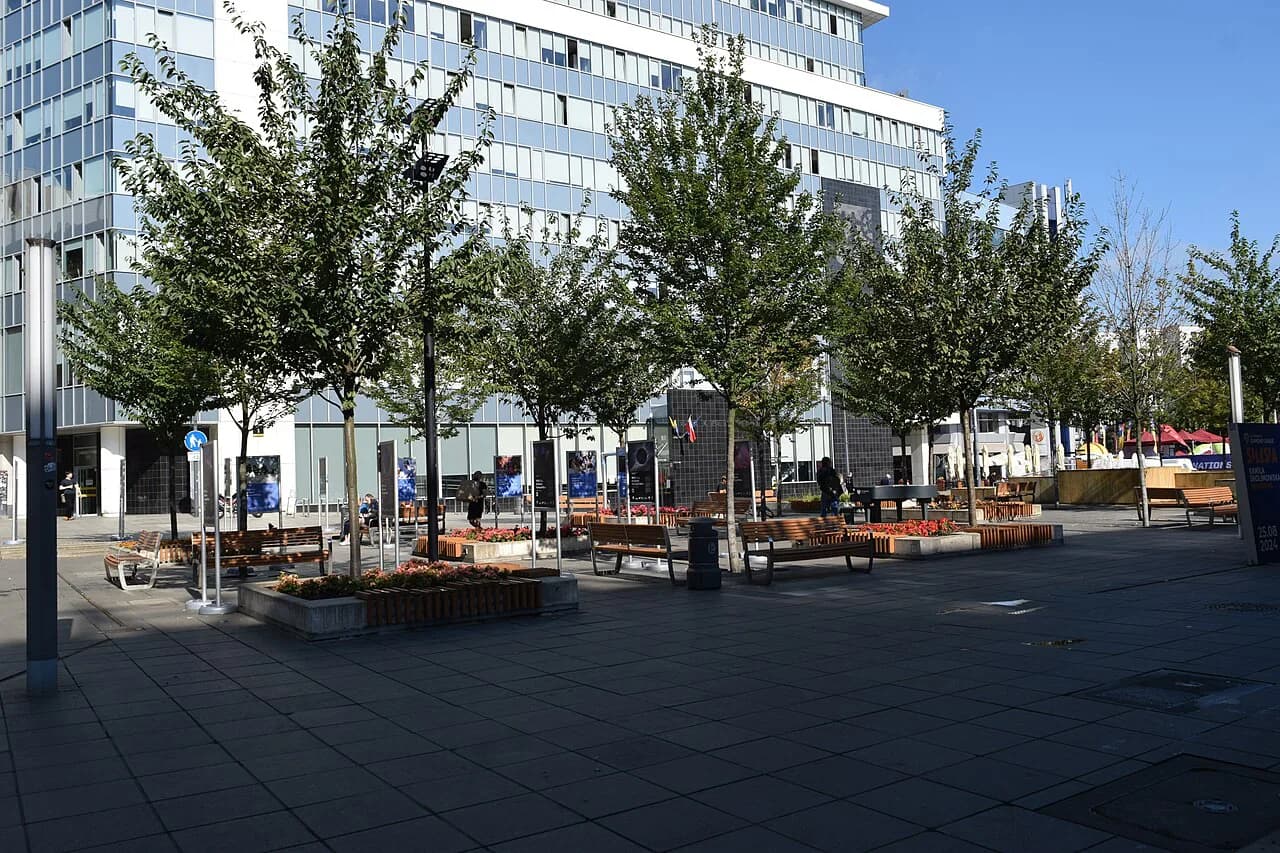
The square functions as the city's front room: open, paved and used for gatherings rather than filled with a single showpiece building. Stand in the middle and look outwards rather than searching for one monument, because the interest is in the ring of facades and the way the space opens up. It is also the obvious meeting point before a walk.
Expect the square to be busier with locals passing through than with sightseers, which is part of its appeal. Give it ten minutes, take in the surrounding streets and move on; the best of the centre is around it rather than on it.
The neo-Gothic school building near the square
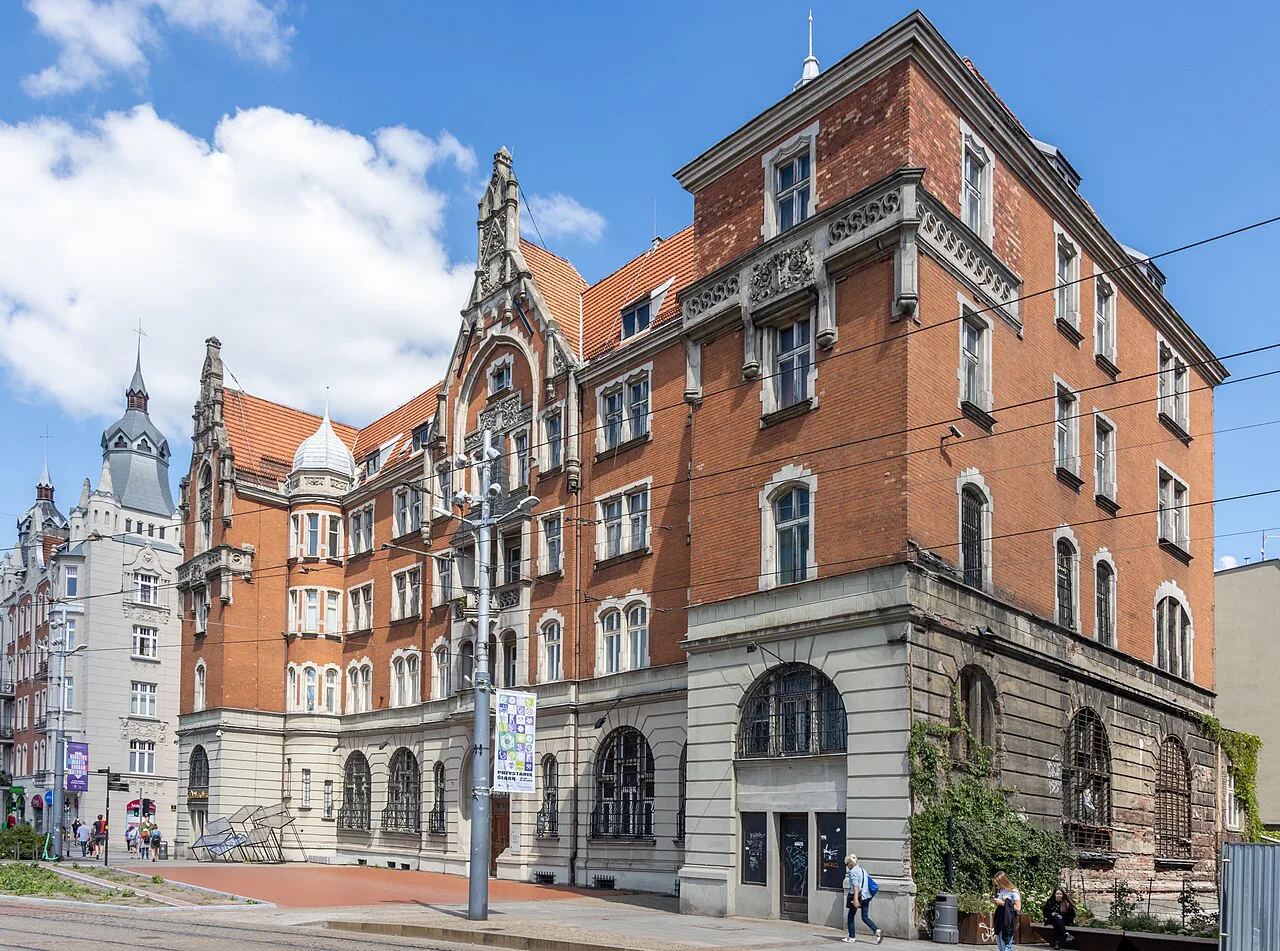
One of the architectural set pieces close to the square is a red-brick school in neo-Gothic style, the kind of building that looks older than the square around it. It is a quick stop rather than a sight with a ticket desk, so fold it into the first ten minutes of the walk. Look at the brickwork and the roofline, then carry on.
The building matters because it shows the layer beneath the postwar reconstruction: the centre did have substantial architecture before the war, and parts of it survived or were restored. Photographers should approach from the side streets for a cleaner angle away from traffic.
Walk Mariacka Street
Mariacka Street is the pedestrian spine of the centre, lined with shops, cafés and restored facades, and it works as the natural route between the square and the streets to the south. Walk it once by day for the architecture and the shopfronts, and again after dark if you are staying nearby, when the lighting changes the mood completely. It is short, so you will not lose time.
Use it as a connector rather than a destination. Walk down one side and back up the other, ducking into the backstreets when something catches your eye. If retail is the point of your trip rather than architecture, shopping in Katowice is concentrated in larger centres outside this core.
Look up: Modernist and Brutalist layers
The centre rewards anyone who lifts their eyes above shop level. Tenement houses in the backstreets keep their decorative facades, while the wider streets carry Modernist public buildings and, further out, concrete blocks from the postwar decades. The mix is the story of a city rebuilt quickly and then rebuilt again.
Walk with a deliberate rhythm: tenement streets first, then the bigger civic buildings. You will notice that the scale changes abruptly, which is exactly what makes the centre legible. A camera with a wider lens earns its place here, because the buildings sit close together.
Where the walk stops: the monument and the 'spaceship'
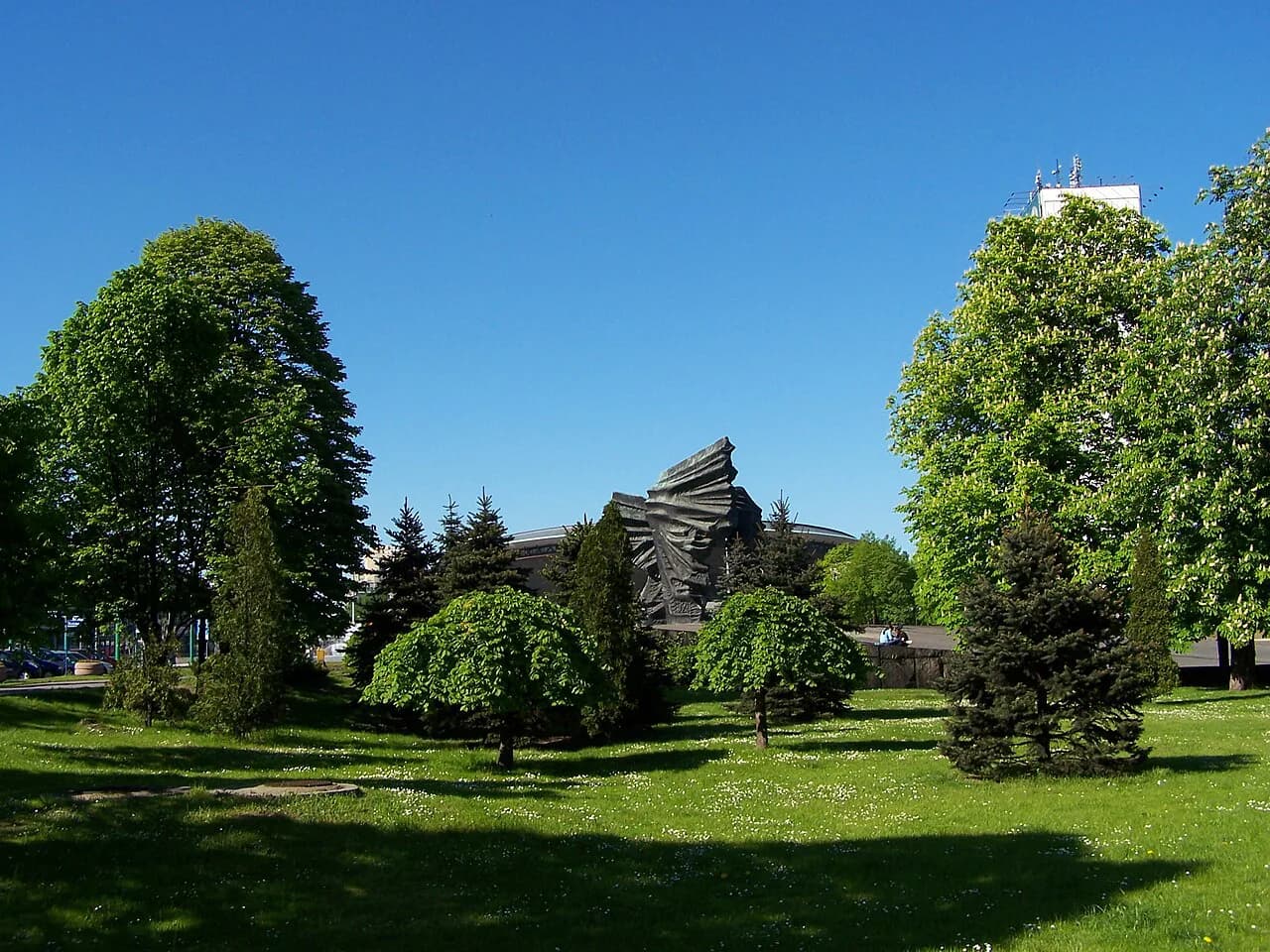
West of the centre, the Silesian Insurgents Monument is the emotional full stop of the walk, a heavy sculptural composition rather than a plinth with a statue. Beyond it, the rounded building locals call the spaceship marks the edge of the historic core and the start of the wider civic zone. Both are free to look at and need no booking.
This is the point to decide how to spend the rest of the day. Turning back gives you a comfortable half-day in the centre; continuing west takes you towards the Silesian Museum, which is a separate visit of two to three hours rather than a five-minute add-on. If you want the fuller menu of sights, the things to do in Katowice guide sets out the alternatives across the Silesian Voivodeship.
How long the walk takes and what to combine it with
Allow two to three hours for the centre at an unhurried pace, including a coffee stop and time on the square. The distances are short, so the limit is your attention rather than your legs. Add a museum and you are into a full day.
The main trade-off is centre versus Nikiszowiec. The miners' estate at Nikiszowiec is a half-day in itself and sits outside the centre, so pairing it with a full old-town walk leaves little slack. A workable plan is the centre on your arrival afternoon and Nikiszowiec or the Silesian Museum on a full second day.
Eating around the square and Mariacka Street
The streets around the square and along Mariacka are where you will find coffee stops and sit-down meals, including Silesian dishes such as hearty dumplings and pork with cabbage. Prices vary too much between venues to quote sensibly, so check the menu board outside before sitting down. Our Katowice food guide goes deeper on what to order and where.
For a quick lunch, the backstreets off Mariacka tend to be calmer than the square itself. If you are self-catering, a small convenience store or a station shop is the simplest place to pick up supplies.
Is the centre worth half a day?
Yes, if you arrive expecting a rebuilt industrial centre rather than a medieval town. The square, Mariacka Street, the neo-Gothic school and the walk out to the Silesian Insurgents Monument fill a relaxed half-day, and the compact layout means you waste no time in transit.
If you only have one day, do the centre in the morning and pick one of the Silesian Museum or Nikiszowiec for the afternoon. Anything more and you will be rushing both.
Explore more Katowice guides
Frequently Asked Questions
What is Katowice known for?
Katowice is known as an industrial and mining city in Upper Silesia that reinvented its heritage as museums, galleries and concert spaces, rather than for a medieval old town.
Is Katowice a major city?
It is the capital of the Upper Silesian region and a substantial urban centre, with a compact, walkable core that suits a one to three day break.
Do they speak English in Katowice?
In the centre, cafés, museums and hotels generally handle English, but carry a translation app for menu boards and smaller shops off Mariacka Street.
Sources
Notes for your next Polish city break
Optional updates to our Poland guides.
You might also like


Continue reading
More guides you'll find useful