Katowice Markets: Market Square, Food Halls and Flea Markets
Katowice's Market Square anchors the city centre, with food halls, street markets and flea markets nearby. Here is what to see and how to plan around it.
On this page
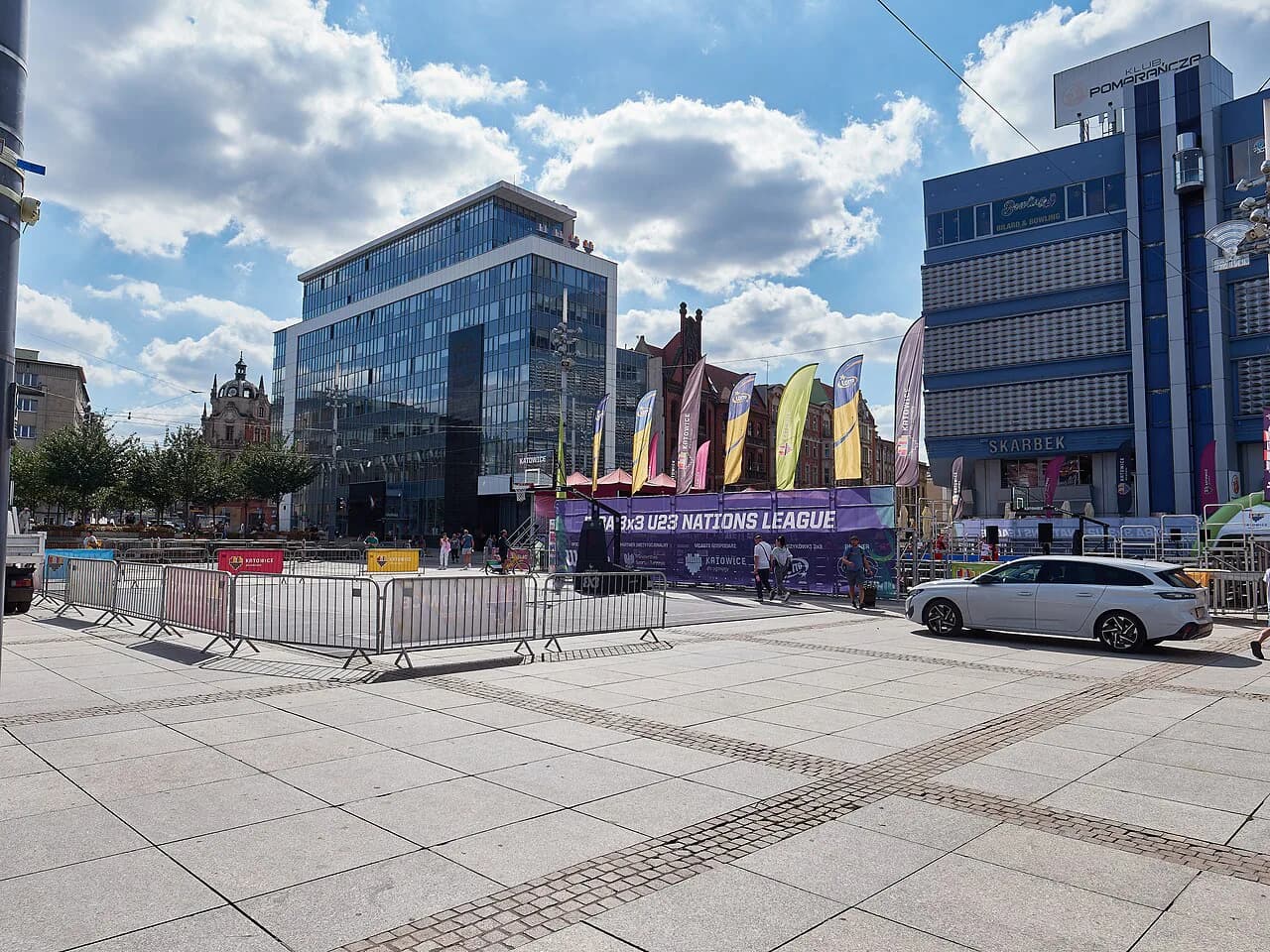
Katowice's main market is the Rynek, the Market Square in the Śródmieście district, and it works as a public square rather than a daily row of stalls. Treat it as the central point of the city and build the morning around what is nearby. This guide covers what you will actually find on the Rynek, the market halls and covered food markets around it, flea and street market listings, and how to fit a market visit into a short city break.
The Rynek sits in the city centre, and the wider set of things to do in Katowice spreads out from there towards the Culture Zone and Spodek. Most visits to the square take twenty to forty minutes unless an event is on, so pair it with a museum or a walk rather than making it the whole day. Check the city's visitor pages before you travel for any market event confirmed for your dates.
Where the Rynek sits in Śródmieście
The Rynek is the market square at the centre of Śródmieście, Katowice's central district. It is a public space, so you can walk through it at any time and use it as a landmark when you are finding your way around the centre. The streets around it lead towards the main shopping and cultural streets, and the square is the natural place to start a first wander.
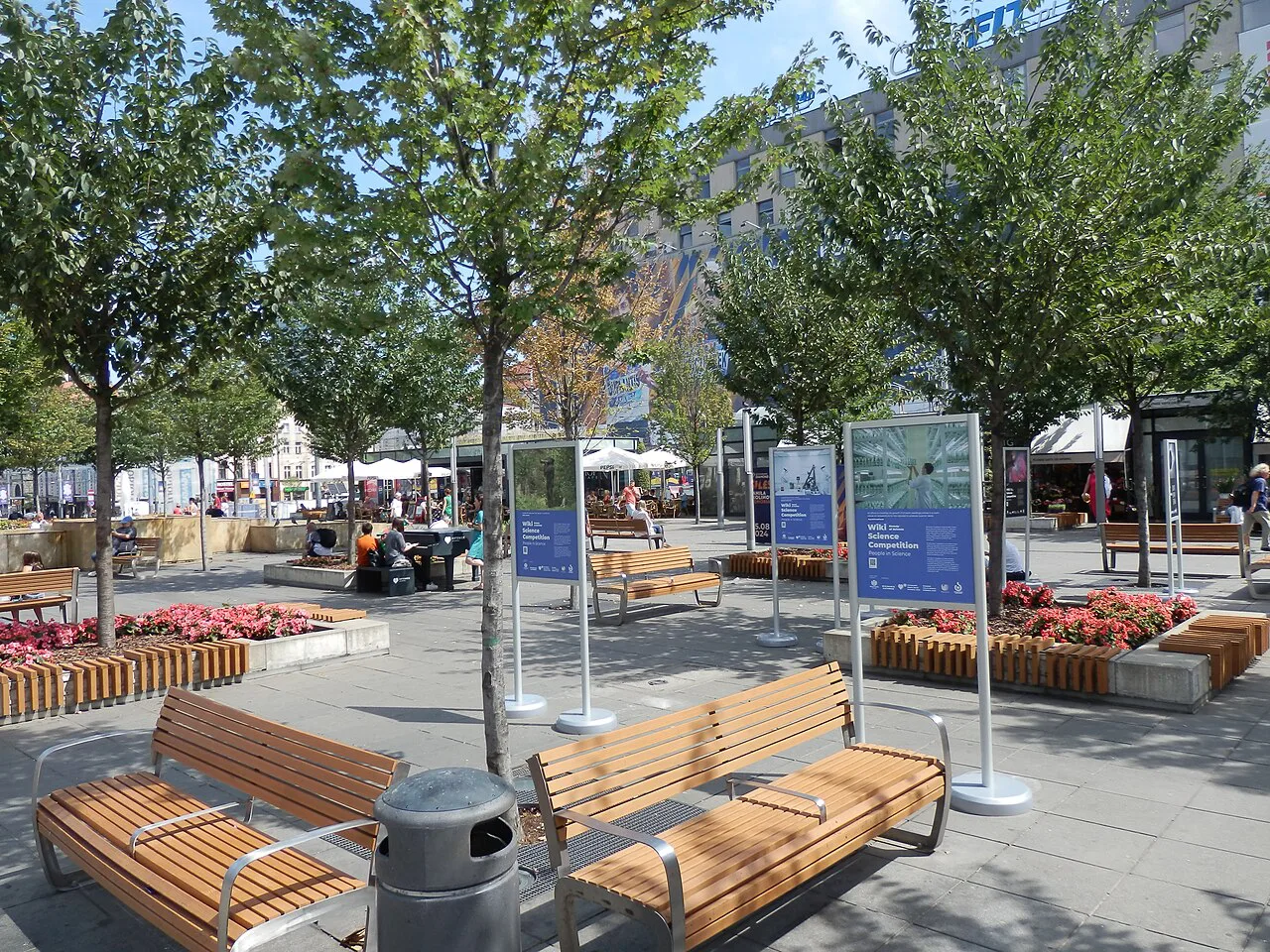
Katowice is the capital of the Silesian Voivodeship and the centre of a metropolitan area of over two million people, so the square reads as a city-centre space rather than a village market. Expect a mix of paving, benches and surrounding buildings. On an ordinary weekday the Rynek is a square you pass through, not a market you shop at, and that distinction matters when you are deciding how to spend a morning.
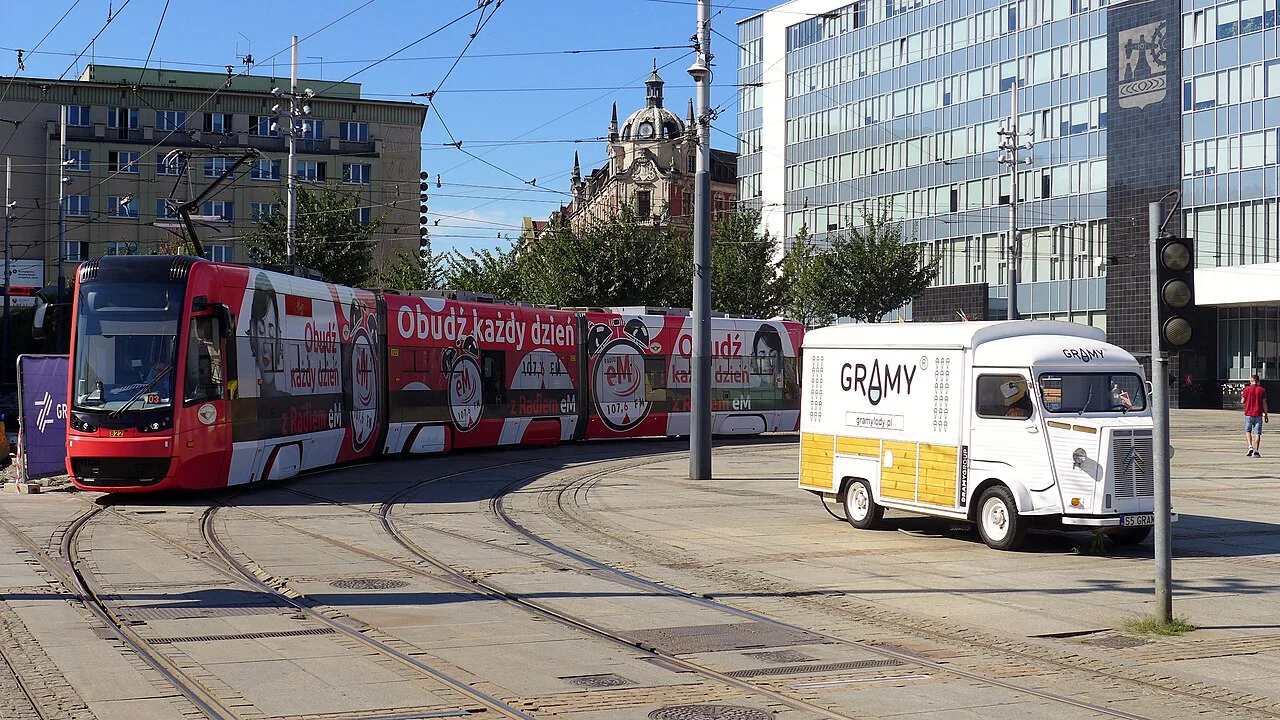
What you will actually find on the Rynek
The Rynek is best understood as a public square that hosts events, not a permanent market. The city's visitor site describes Katowice as a place where culture and music shape the city's character, and the square is one of the spaces where that public life happens. If you arrive expecting a fixed line of food stalls every day, you will be disappointed; if you arrive expecting a central square to orient yourself around, it does the job.
For stalls you can actually browse, look to the named market listings rather than the square itself. The marketplace directories that cover Katowice are limited, and the clearest named entry is Rynek Smaku, listed among the city's flea and street markets. Treat Rynek Smaku as a market to research for your dates, and check its own listing for where it sets up and when before building a morning around it.
Market halls and covered food markets
Katowice's covered market and food scene is not concentrated in one grand hall in the way some Polish cities have it. The practical approach is to use the centre as your base and look for food halls and covered markets as you walk between the Rynek and the Culture Zone. Named venues and their hours change, so confirm what is open for your dates rather than relying on a fixed list.
For the food side of a market morning, the city's restaurant and food listings are the place to start, and the Rynek area is within easy walking distance of the centre's eating options. Our Katowice food guide covers the dishes worth seeking out across the city.
Flea and street markets: what is listed and what to expect
Flea and street market listings for Katowice are thin on the ground. The available listing names Rynek Smaku among the city's flea and street markets, but gives no days, hours or location. What is sold at these markets varies by trader, so go with an open mind and cash rather than a shopping list. If a specific market is the reason for your trip, confirm its date and location directly before you travel.
Beyond the market listings, Katowice's shopping extends beyond open-air markets. If your interest is browsing shops rather than stalls, our shopping in Katowice guide covers the main options including Silesia City Center. Set your expectations accordingly: a market morning here is a short, local activity, not a full-day destination.
Which days and times to go
The Rynek itself has no opening hours because it is a public square, so any time of day works for a walk through. For named markets such as Rynek Smaku, the listing is the place to check days and times, and those details can change with the season. Do not assume a weekend market will be running on your dates without confirming it first.
Museums and other sights around the square keep their own hours, and those are more predictable than market days. The Silesian Museum is open Tuesday to Sunday from 10.00 to 20.00, with the observation tower on the same hours, and both close on Mondays. Build your day around the fixed sights and slot the market in around them rather than the other way round.
How long a market visit takes and how it fits a short break
Allow twenty to forty minutes for the Rynek and its immediate streets, and half a morning if you are combining it with a named market and a coffee stop. That fits comfortably into a one to three-day Katowice break alongside the Culture Zone, Spodek and Nikiszowiec. The market is a nice-to-have rather than the reason to come, so plan the museums first.
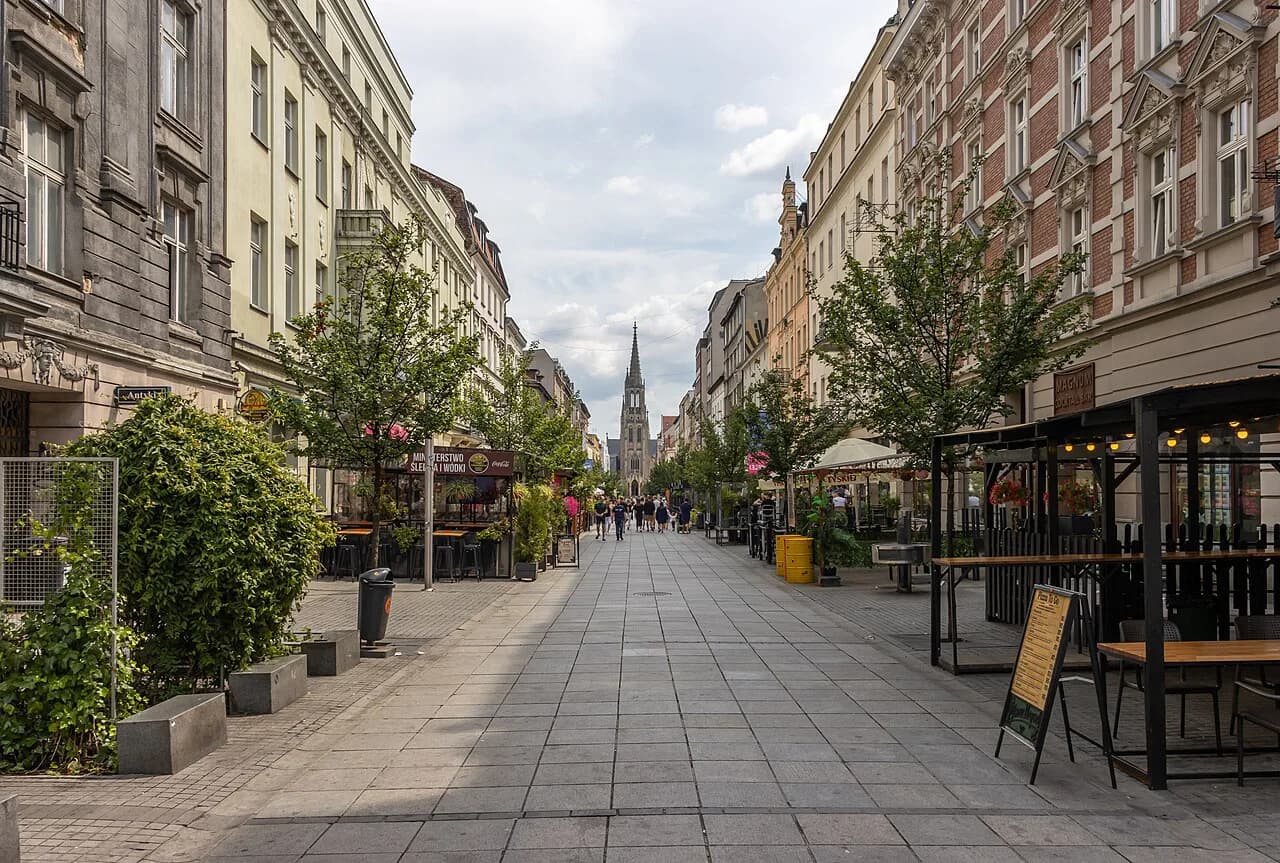
A workable shape for day one is the Rynek and the old town streets in the morning, then the Silesian Museum and the Culture Zone in the afternoon. Day two can take in Nikiszowiec, the red-brick workers' district, which is a separate trip out from the centre. Our Katowice walking tour covers a route through the centre that passes the square, and the city's visitor site is a good place to check the Culture Zone and what is on.
Where the market sits relative to the Culture Zone, Spodek and Nikiszowiec
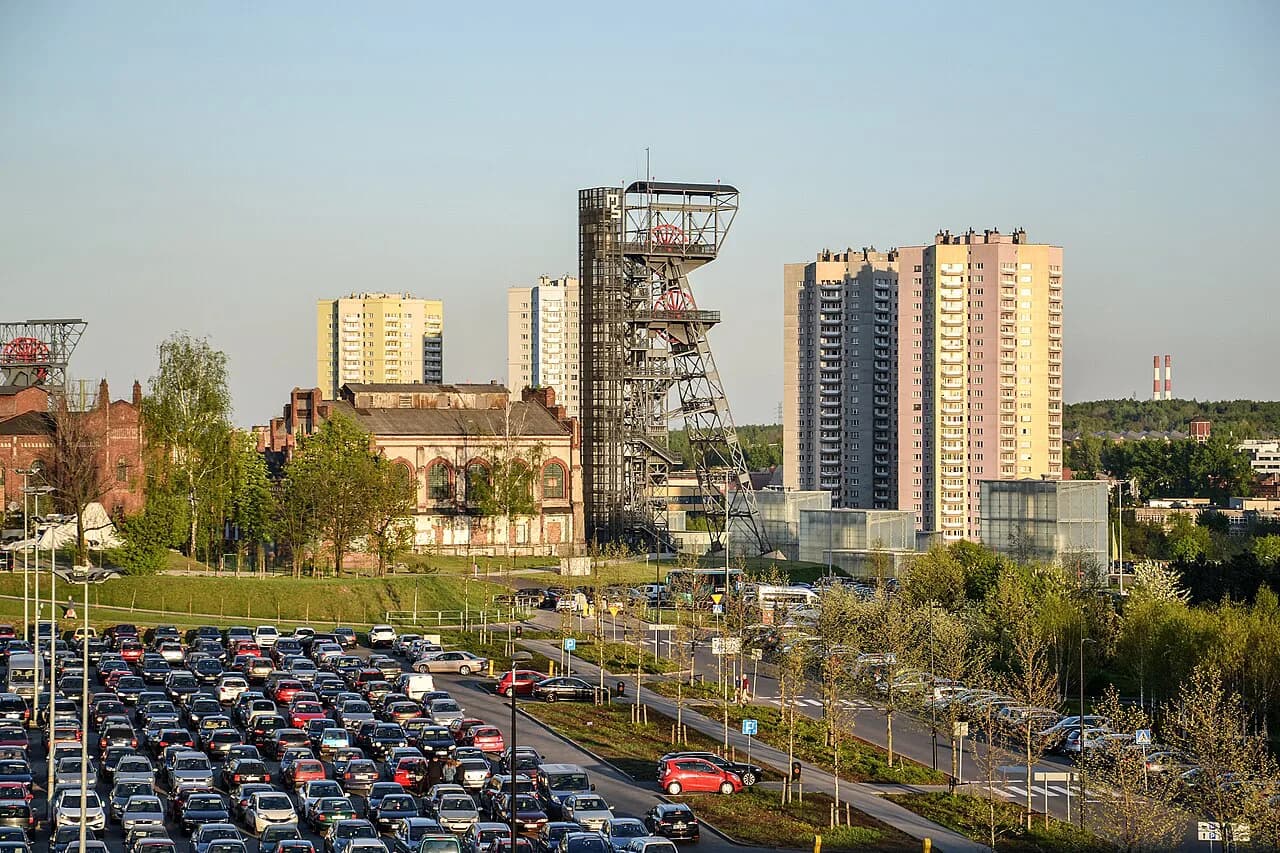
The Rynek is in the centre, the Culture Zone and Spodek are nearby, and Nikiszowiec is further out to the east. The Culture Zone was built on the grounds of a former coal mine, which is why the Silesian Museum's towers and brick buildings sit so close to the modern concert halls. That makes a centre-based day easy to plan on foot.
From the Silesian Museum's observation tower you can see the Spodek, which helps you place the city's landmarks relative to one another. The tower is forty metres high and reached by lift, and access is closed in bad weather. For a market day, this is one viewpoint over the centre worth pairing with the square.
Practical points: cash in złoty and Polish signage
Polish signage on stalls is usually straightforward for food and produce, and numbers are written in the same digits you use at home. If a price is not displayed, ask before you buy.
British visitors will find the centre compact and walkable, with the Rynek as a natural meeting point. Katowice is a UNESCO Creative City of Music and hosts the Rawa Blues Festival, so check the events calendar for your dates in case something is taking over the square. Our Katowice events guide covers what runs through the year.
Is the Katowice market worth building a morning around?
Yes, if you treat the Rynek as a central square and a starting point rather than a market you shop at. Give it half a morning combined with the old town streets and a museum, and check named markets such as Rynek Smaku for your dates before you go. If you want a market-led day, confirm the specific market first.
The rest of the city carries the trip: the Silesian Museum's Upper Silesia exhibition, the Culture Zone and Nikiszowiec are the reasons to come, and the market square is the thread that ties a centre-based day together. Plan the fixed sights around the market rather than the reverse.
Explore more Katowice guides
Frequently Asked Questions
Is Katowice's Market Square a real market?
The Rynek is a public square in the centre of Katowice, not a daily stall market. It hosts events and is a useful landmark, but for actual stalls you should look to named market listings such as Rynek Smaku and confirm the details for your dates.
Do I need cash for Katowice markets?
Carry some złoty in small notes and coins. Market traders commonly work in cash, and having change makes browsing easier. Check any specific market's own information before relying on card payment.
Sources
Notes for your next Polish city break
Optional updates to our Poland guides.
You might also like


Continue reading
More guides you'll find useful