Katowice Cathedral: The Archcathedral of Christ the King
A visitor's guide to Katowice cathedral, the Archcathedral of Christ the King: its scale, its Corinthian portico and how to fit it into a city-centre walk.
On this page
Katowice cathedral is the Archcathedral of Christ the King, a classical church on Plebiscytowa Street in the city centre and the largest archcathedral in Poland. Allow around twenty to thirty minutes for the building itself, then carry on into the centre. This guide covers its scale, its Corinthian portico, where it sits in the street plan and how to visit around services.
The Archcathedral of Christ the King: why it is worth the stop
The Archcathedral of Christ the King is one of the largest churches in Poland and the largest archcathedral in the country, so its size is the reason to come rather than any single treasure inside. It is also the seat of the Metropolitan Archbishop of Katowice, which makes it the ecclesiastical centre of the city. Treat it as a short, striking stop on a central walk rather than a half-day sight.
Where the cathedral is on Plebiscytowa Street
The cathedral stands at 49A Plebiscytowa Street in the centre of Katowice, close enough to the main business and shopping streets to reach on foot between other stops. Plebiscytowa runs through the heart of the centre, so the building fits naturally into a walk between the market square and the city's museums. It is a working church rather than a ticketed attraction, so it belongs in the gaps of a day rather than as a scheduled visit.
If you are building a day around the centre, the surrounding streets hold several of the city's bigger draws, and the museums in Katowice sit within easy walking distance of this stretch. Pair the cathedral with one museum rather than trying to cover everything on foot in a single afternoon. A simple loop from the centre, past the cathedral and back through the main streets keeps the walking manageable.
The building: dates, dimensions and classical style
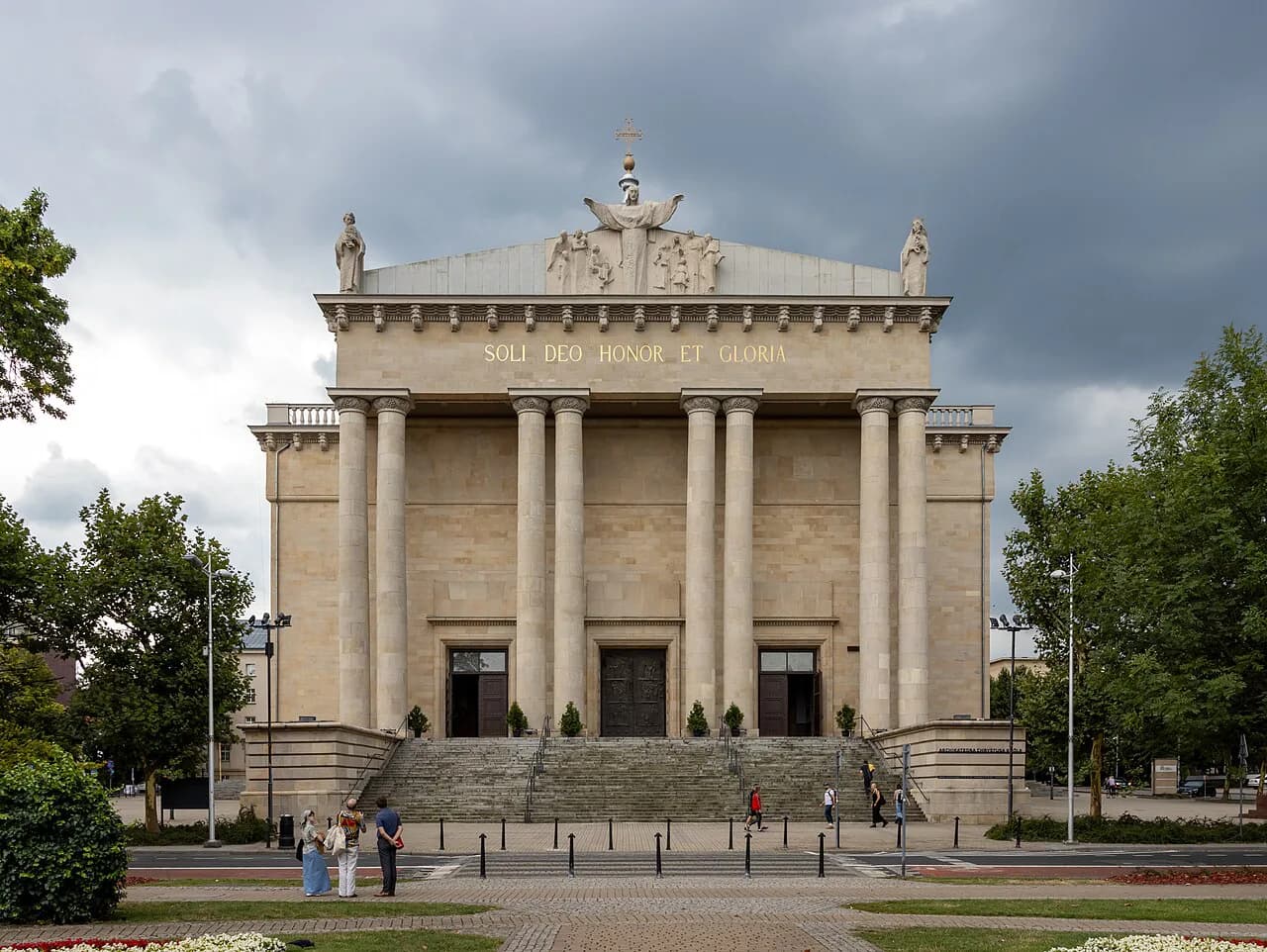
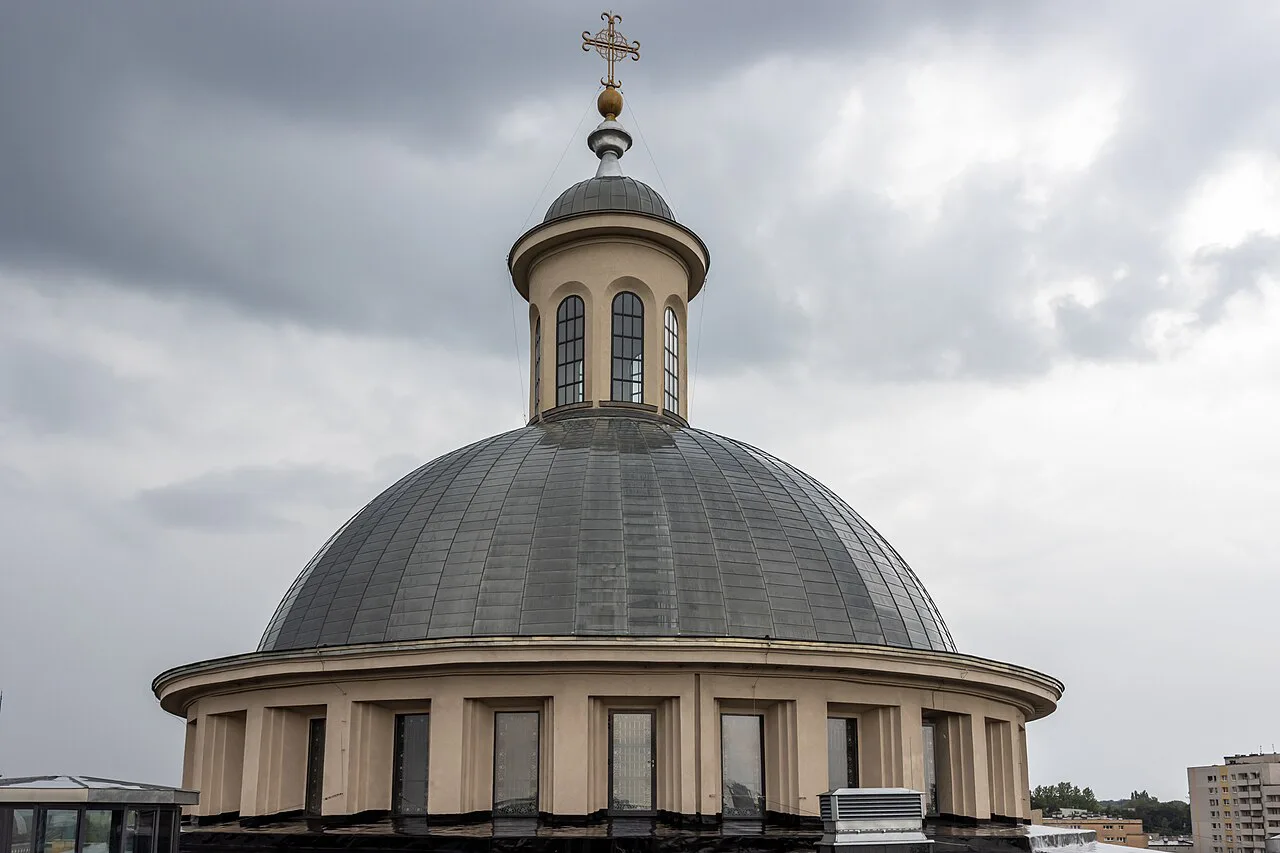
Construction ran from 1927 to 1955, an unusually long span that explains the building's austere, monumental character. The cathedral was built in a classical style, and the result is a deliberately formal, symmetrical composition rather than a Gothic spire or a Baroque facade. The long build also means the church carries the marks of a turbulent period in the region's twentieth-century history, which the Katowice history guides set out street by street.
The dimensions are the clearest way to judge the scale before you arrive: 101 metres long, 50 metres wide and 64 metres high. Its interior volume is about 120,000 cubic metres, which is why the nave feels more like a hall than a parish church. Those figures make it one of the biggest churches in Poland.
The portico and facade: what the Corinthian columns signal
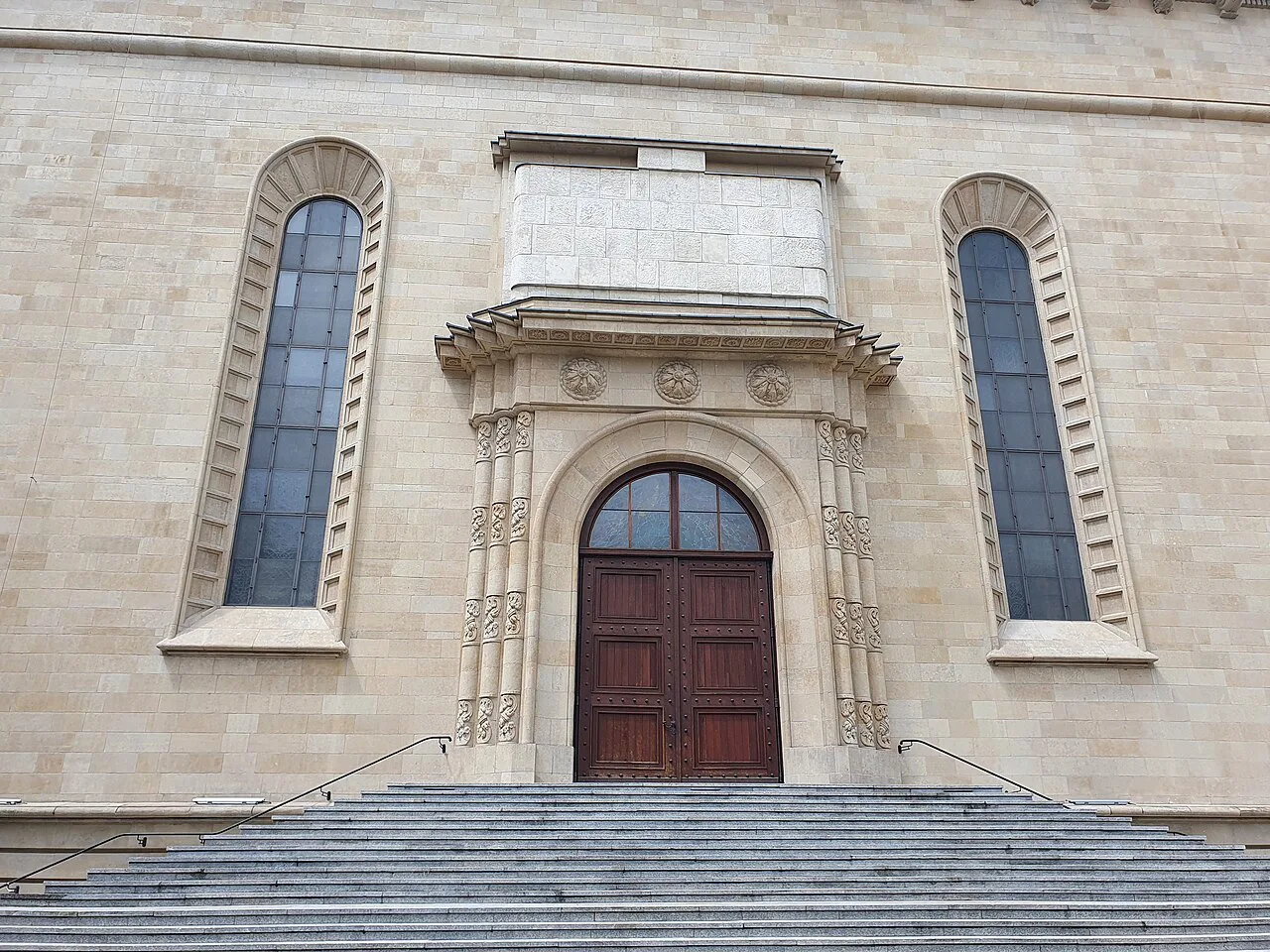
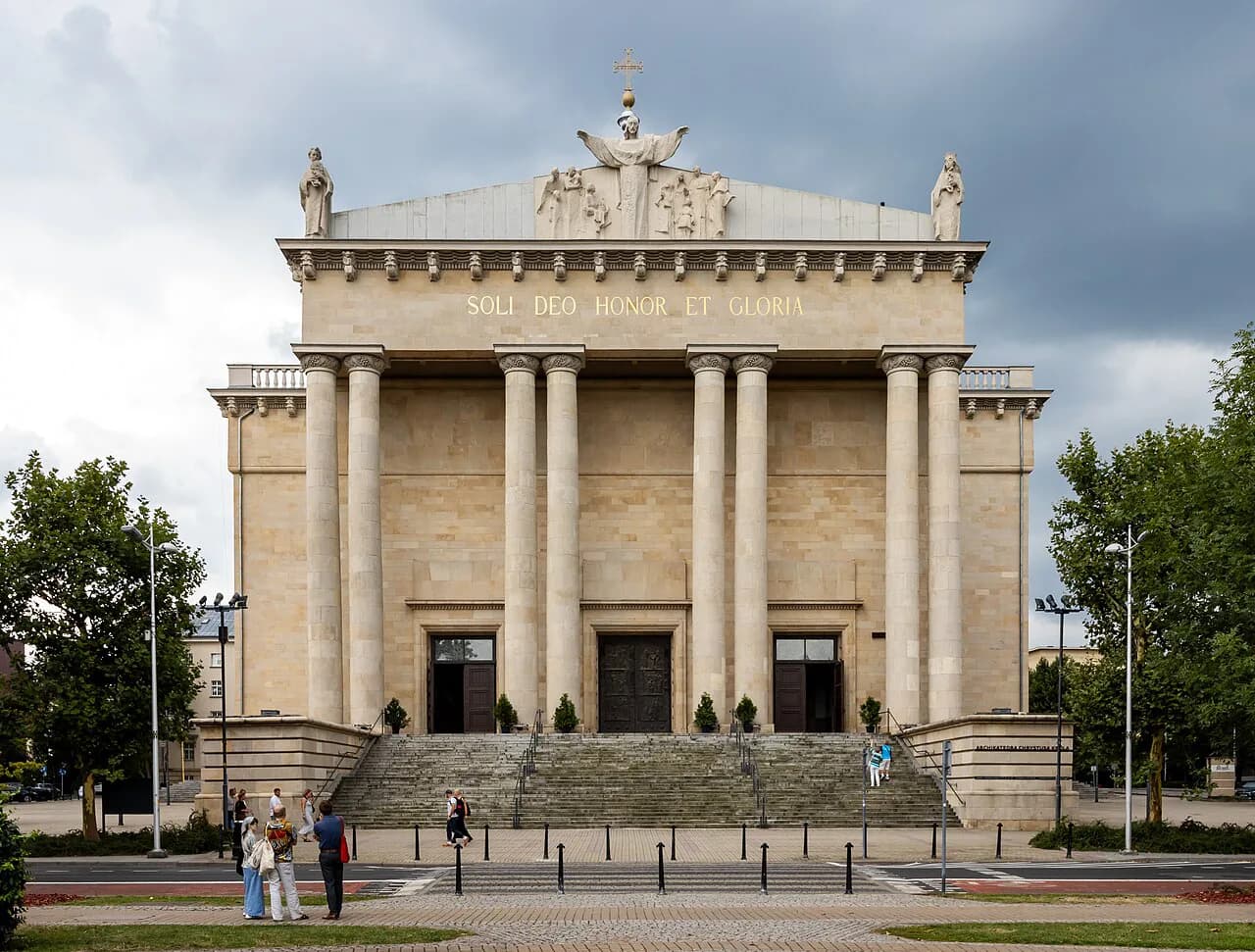
The portico is formed in part by paired Corinthian columns, a classical device that gives the entrance a formal, temple-like front. That colonnade is the detail to look for before you go in: it sets up the scale of everything behind it. The classical exterior signals a twentieth-century monument built to impress rather than a medieval church that grew over centuries.
Given the size of the building, the facade is best appreciated from across the street, where you can take in the full width and height in one view. Walk the length of the outside before going in, because the 101-metre frontage only reads properly from a distance. The contrast between the plain classical shell and the busy city around it is part of the appeal, and it is the same interwar confidence you can trace in the wider Katowice architecture of the centre.
Visiting respectfully around services
This is an active archcathedral and the seat of the Metropolitan Archbishop of Katowice, so services take priority over sightseeing. Visit outside Mass times, keep voices low and stay behind any cordoned areas rather than wandering into the sanctuary. Because it is a working church, short, quiet stops sit well with its everyday use.
Photography inside is a matter of judgement rather than a published rule, so follow whatever notices are displayed and keep out of the way of anyone praying. Restrict yourself to the parts of the building that are clearly open to visitors. A short, quiet look is more appropriate than a long tour of the interior.
How long to allow and what to pair with it
Budget twenty to thirty minutes for the exterior and a respectful look inside, which is enough to take in the scale and the portico. It is not a museum with rooms to work through, so a longer stop has to come from attending a service or from lingering on the architecture. Build it into a half-day loop of the centre rather than making it the day's main event.
The strongest pairing is one of the city's museums, which make the obvious anchor for a culture-heavy day in Katowice, with the cathedral as a short add-on. If you want more of the city's history, the Katowice WW2 sites around the centre give context to the period in which the cathedral was built. Two stops plus a walk between them makes a comfortable, unhurried day.
Is Katowice cathedral worth the detour?
Yes, if you are already in the centre: the Archcathedral of Christ the King is the largest archcathedral in Poland and a genuinely imposing piece of twentieth-century classical architecture. No, if you are expecting a ticketed attraction with a tower to climb or a collection to browse; this is a working church, seen in half an hour. Slot it into a walk past the museums and treat the scale, the dimensions and the Corinthian portico as the main event.
Explore more Katowice guides
Sources
Notes for your next Polish city break
Optional updates to our Poland guides.
You might also like
Continue reading
More guides you'll find useful