
Praga, Warsaw: What to See and Who It Suits

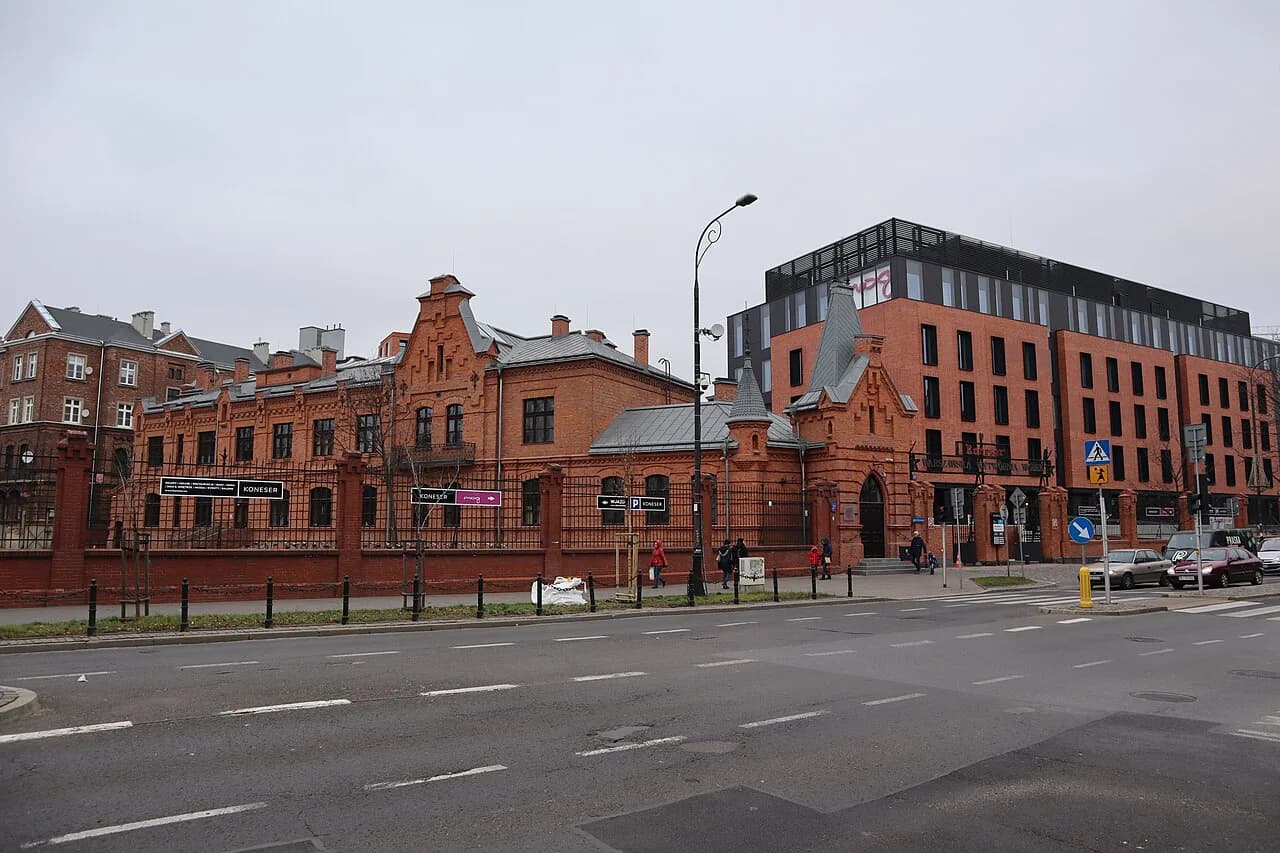
Praga is worth half a day to a full day if you want the Warsaw that survived the war rather than the Warsaw rebuilt after it. The historic core, Stara Praga, sits directly across the Vistula from the Old Town and escaped major wartime devastation, so its tenements, courtyard shrines and cobbled lanes are original fabric rather than reconstruction. This guide covers what to see, who the district suits, where to eat and how to reach it on foot.
Set expectations first: parts of Praga still look neglected, and that scruffiness is exactly what draws artists, small businesses and travellers tired of polished old towns.
What Praga is and where it sits
Praga is the district on the right bank of the Vistula, and Stara Praga is its historic heart within Praga-Północ. It grew up as an independent town before being absorbed into Warsaw in the late 18th century, and two railway stations built in the 19th century turned it industrial. That history left the worker tenements and factory buildings you walk past today.
The location is the practical draw: you can stand on the right bank and look straight back at the Old Town skyline. St Florian's Cathedral is one of Praga's symbols and is plainly visible from the other side of the river, which makes the crossing feel like entering a different city. Use our Warsaw Neighborhoods: 5 Area Guides to see how Praga compares with the districts on the left bank.
For a district-wide overview of how the area has changed, the Hamilton May area guide describes Praga-Północ as a raw, rough-edged district undergoing major revitalisation, with parts still worn and shabby. That framing is honest: this is not a museum neighbourhood, and the mix of renovated and crumbling buildings is the point.

Who Praga suits, and who it does not
Praga suits travellers who have already done the Old Town and the Royal Route and want a contrast, and who are happy to wander without a checklist. It rewards slow walking, looking up at facades and courtyards, and stopping for cheap local food. Anyone with only one day in Warsaw should probably spend it on the left bank and treat Praga as a second visit.
It does not suit people who want a tidy, signposted heritage zone with cafes on every corner. Expect uneven pavements, some down-at-heel streets and long stretches with little signage. If you want a calmer, greener contrast instead, Mokotów, Warsaw offers a very different side of the city.

The streets to walk: Ząbkowska, Brzeska and Jagiellońska
Ząbkowska is the spine of a Praga walk: a cobbled street lined with bars and restaurants that leads towards the Koneser complex. Brzeska holds rundown tenements from the end of the 19th century and Bazar Różyckiego, the old market on the street itself. Walk both rather than just one, because they show opposite sides of the district's regeneration.
Jagiellońska and the surrounding grid carry much of the district's heritage, from the Orthodox church near Dworzec Wileński metro station to the old Jewish community buildings. Okrzei Street is where the meticulously restored Neo-Gothic Pod Sowami building shows what renovation can do to a tenement. A simple loop of Ząbkowska, Brzeska, Jagiellońska and Okrzei covers most of the sights on this page in two to three hours on foot.
St Florian's Cathedral and the Orthodox Church of Mary Magdalene
Start with the Orthodox Church of Mary Magdalene on Aleja Solidarności, a 19th-century church whose parish now draws Polish, Ukrainian, Belarusian, Bulgarian and Kazakh worshippers. It sits by Dworzec Wileński metro station, which makes it a sensible first stop when you arrive by metro rather than on foot.
The Neo-Gothic St Florian's Cathedral on Floriańska is the most important Catholic church on the right bank. It was completely destroyed by the German Nazis and rebuilt after the war, and it remains one of the district's most recognisable landmarks from across the water. Both churches are working parishes, so keep visits quiet and brief if a service is under way.
Courtyard shrines and the tenements that survived the war
Look into courtyards as you walk: small shrines to Mary or Jesus are a specifically Warsaw tradition, and especially common in Praga. They were built during the Nazi occupation, when residents were not allowed to leave their houses, and served as local chapels. They are the single detail that best explains why this district feels different from the rebuilt left bank.
The tenements themselves are the sight. Many were built during the Industrial Revolution to house factory workers, and according to the Hamilton May area guide they survived the war with only token bullet scars, some of which are still visible. Restoration is gradual and uneven, so you will see a beautifully repaired facade next to a peeling one on the same street.
Jewish heritage along Jagiellońska, Kłopotowskiego and Sierakowskiego
Praga was a traditionally multicultural area, home to Catholic, Jewish and Orthodox communities, and the streets around Jagiellońska, Kłopotowskiego and Sierakowskiego hold the Jewish community's pre-war buildings. The mikveh, a traditional ritual bathhouse at Kłopotowskiego 31, belongs again to the Jewish Community in Warsaw and now houses a multicultural high school. The Jewish Academics Dormitory at Sierakowskiego 7 is where Menachem Begin lived as a student.
Near the mikveh, a playground with a small hill conceals the ruins of Warsaw's first synagogue, built in 1836, which survived the war but was destroyed by the communists in the 1950s. Around the corner is the former Jewish orphanage of 1914, whose children were moved by the Nazis into the Warsaw Ghetto, with most not surviving. The building is run-down but its Neo-Renaissance architecture is still legible, and it now holds a kindergarten and the Baj puppet theatre at Jagiellońska 28.
Walk these three streets quietly and read up before you go; the buildings are ordinary working addresses, not a formal trail with panels. For the left-bank Jewish story and the ghetto, this is background rather than the main sight.
Bazar Różyckiego, Warsaw's oldest market
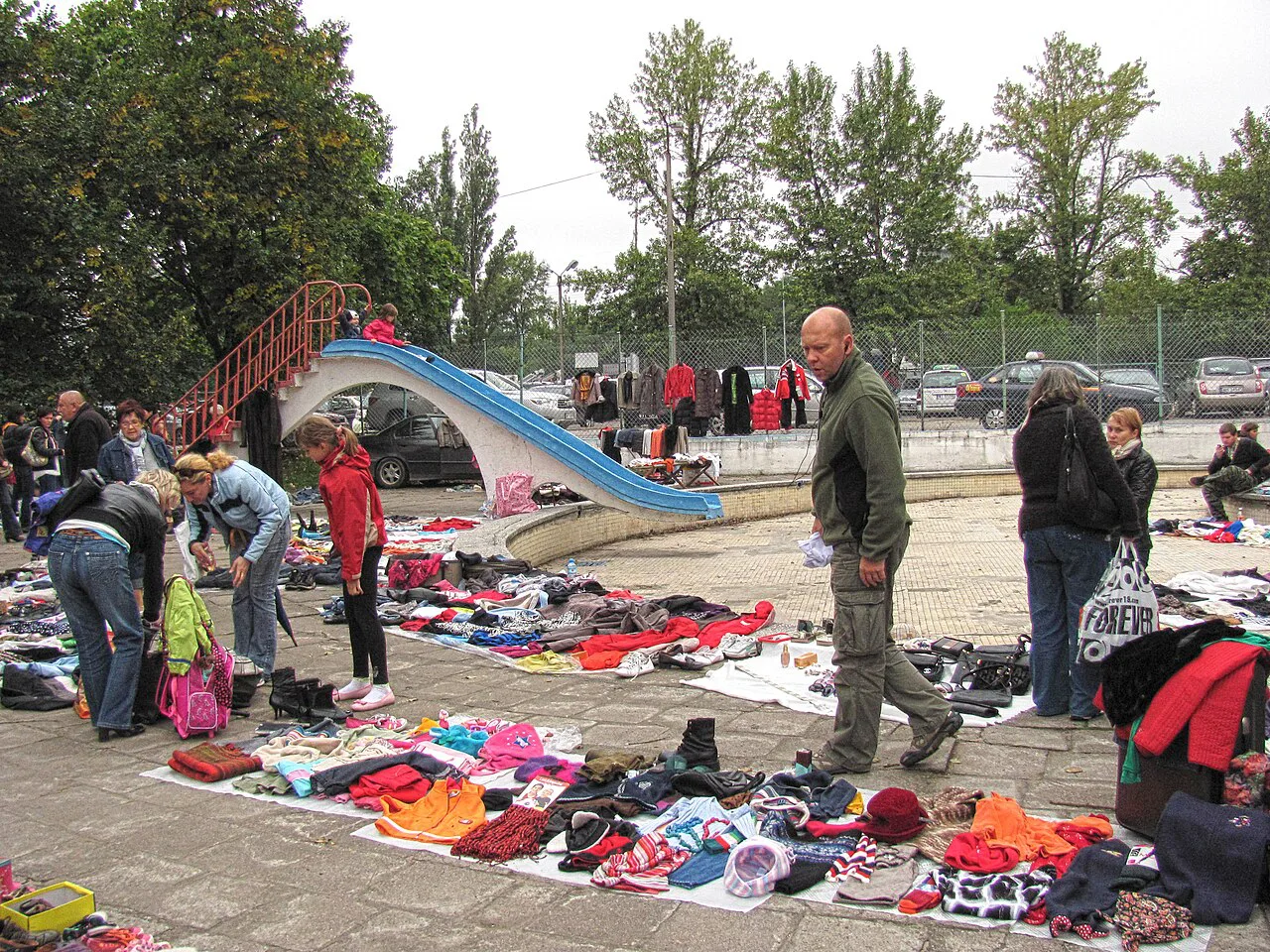
Bazar Różyckiego, on Brzeska, is described as the oldest market in Warsaw, and most of its stalls now stand abandoned. What remains worth seeing is the older Praga residents whose culture and slang are slowly disappearing, so go for the atmosphere rather than for shopping. Treat it as a five-minute pause on a Brzeska walk rather than a destination in itself.
Centrum Koneser and the vodka museum complex
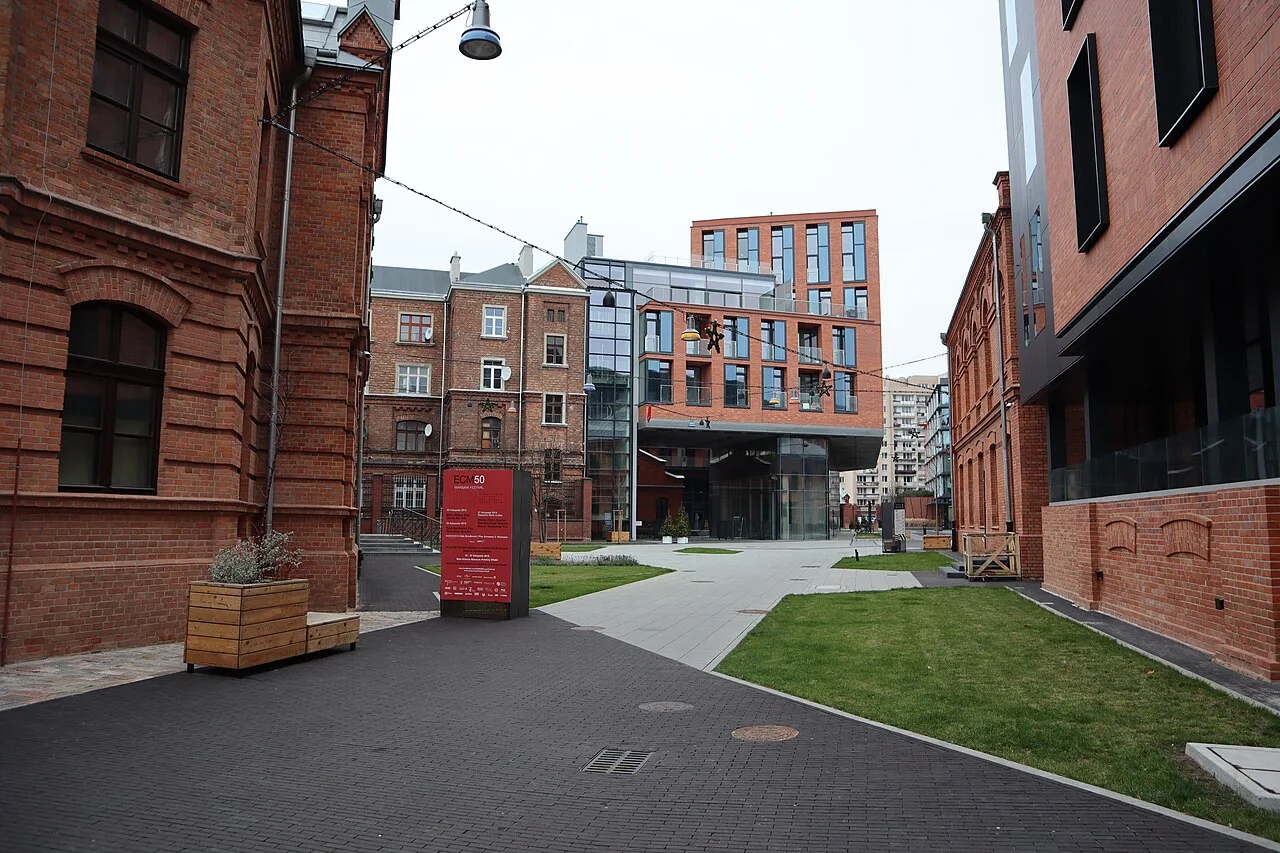
Centrum Koneser is a 19th-century vodka factory turned mixed-use hub, and it is the most polished thing in Praga. The complex holds offices, restaurants, galleries and a museum dedicated to vodka, and it faces onto the cobbles of Ząbkowska. The rooftop bar Koneser 3/4, in the Polish Vodka Museum building, gives a wide view over the complex and the district.
Koneser gives you a clean, restored version of the district in one stop, which is useful if you are short on time or the weather turns. For the Polish Vodka Museum, check the venue's own site for current opening days and ticket prices before you build a visit around it. If you want to compare it with the rest of the city, our guide to museums in Warsaw sets out the main collections.
Where to eat and drink in Praga
The cheapest and most characteristic meal is at a milk bar. Bar Ząbkowski on Ząbkowska 2 is one of the few remaining milk bars in Warsaw, serving simple, cheap food in the style that made milk bars popular during communism. For something more specific, Pyzy Flaki Gorące at Brzeska 29/31 is a small, plain bistro serving pyzy, a dumpling-like dish usually stuffed with meat and topped with lard or fried onion, and flaki, a beef tripe stew that many visitors find too much.
At the other end of the scale, Koneser's restaurants include Boska, Orzo, Bombaj Masala and Koneser Grill, and the Bazar restaurant on Jagiellońska 13 occupies two floors of the Owl House and hosts concerts and weekend events. The trade-off is straightforward: a milk bar costs a fraction of a Koneser dinner and tells you more about the district, so do one of each if you are eating twice.
Getting there and getting around on foot
Praga is a walk from the Old Town across the Vistula bridges, and once across you can reach Ząbkowska and Brzeska in minutes on foot. For a longer stay, Dworzec Wileński metro station on the right bank puts the Orthodox church and the lower end of Jagiellońska within a short walk. A guided walking tour of the district is also an option if you want the streets interpreted rather than just seen.
On foot, everything in this guide sits within one compact grid: Ząbkowska, Brzeska, Jagiellońska, Kłopotowskiego, Sierakowskiego and Okrzei. Plan for two to three hours of walking plus time in Koneser and at a meal. Praga pairs naturally with the Old Town on the same day, and if you want the other side of the river's story, New Town Warsaw lies just beyond the Old Town on the left bank.
Is Praga worth the crossing?
Yes, if you have more than a day in Warsaw and want to see the city's surviving fabric rather than its reconstruction. Give Praga half a day: arrive at Dworzec Wileński, take in the two churches, walk Ząbkowska and Brzeska, look into the courtyards, and finish at Koneser or in a milk bar depending on your budget.
If you only have a day, stay on the left bank and save Praga for next time. Either way, verify museum opening days and event schedules on the venue's own site before you travel, because those change by season.