Warsaw Royal Route: Walking It from Castle Square to Wilanów
Walk Warsaw's Royal Route from Castle Square past Krakowskie Przedmieście and Nowy Świat to Łazienki and Wilanów, with stops in order and honest trade-offs.
On this page
Walk the Royal Route as two outings, not one: the northern city stretch from Plac Zamkowy along Krakowskie Przedmieście and Nowy Świat, then a separate southern trip to Łazienki and Wilanów. The full route links Warsaw's three royal residences, beginning at the Royal Castle on Plac Zamkowy, passing the Palace on the Island in Łazienki Park and finishing at Wilanów Palace, a course of about 11 km. This guide sets out the stops in order, the branches worth adding and the parts to cut when time is tight, within a wider plan of things to do in Warsaw.
Treat the northern half as a walk and the southern half as a destination. Between Castle Square and Nowy Świat you are never far from a church, monument or café, so the distance passes quickly, while the stretch south to Łazienki and on to Wilanów is longer, greener and easier to cover by public transport or taxi. Deciding that split before you set out is the single most useful choice you will make on this route.
What the Royal Route is and which residences it links
The Royal Route runs from the Royal Castle on Plac Zamkowy, through Łazienki Park and its Palace on the Island, to Wilanów Palace, joining the city's three royal residences along one axis. That sequence is the spine of the walk, and knowing it helps you decide where to stop rather than drift.
Its core is the pair of streets running south from Castle Square: Krakowskie Przedmieście, then Nowy Świat. Walking them in that order keeps the major sights on your right and the historic centre behind you, so the route unfolds in the sequence the city itself grew.
Published descriptions of the route's length differ: one puts it at 11 km, another stretches it to 15 km, which reflects different definitions of where it ends and how much of the southern approach is counted. Plan on somewhere in that range and split the walk in two rather than treating either number as an exact target.
Where it starts: Plac Zamkowy and Castle Square
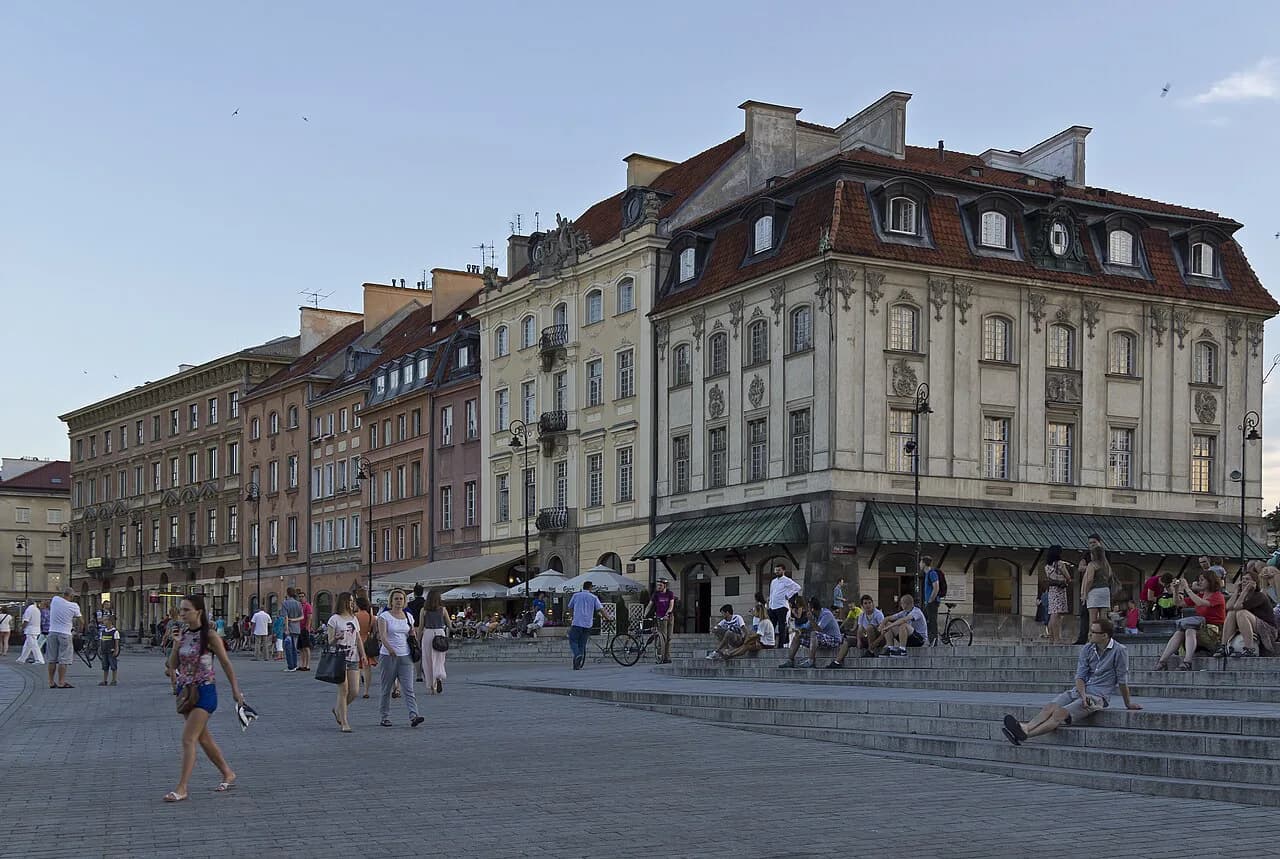
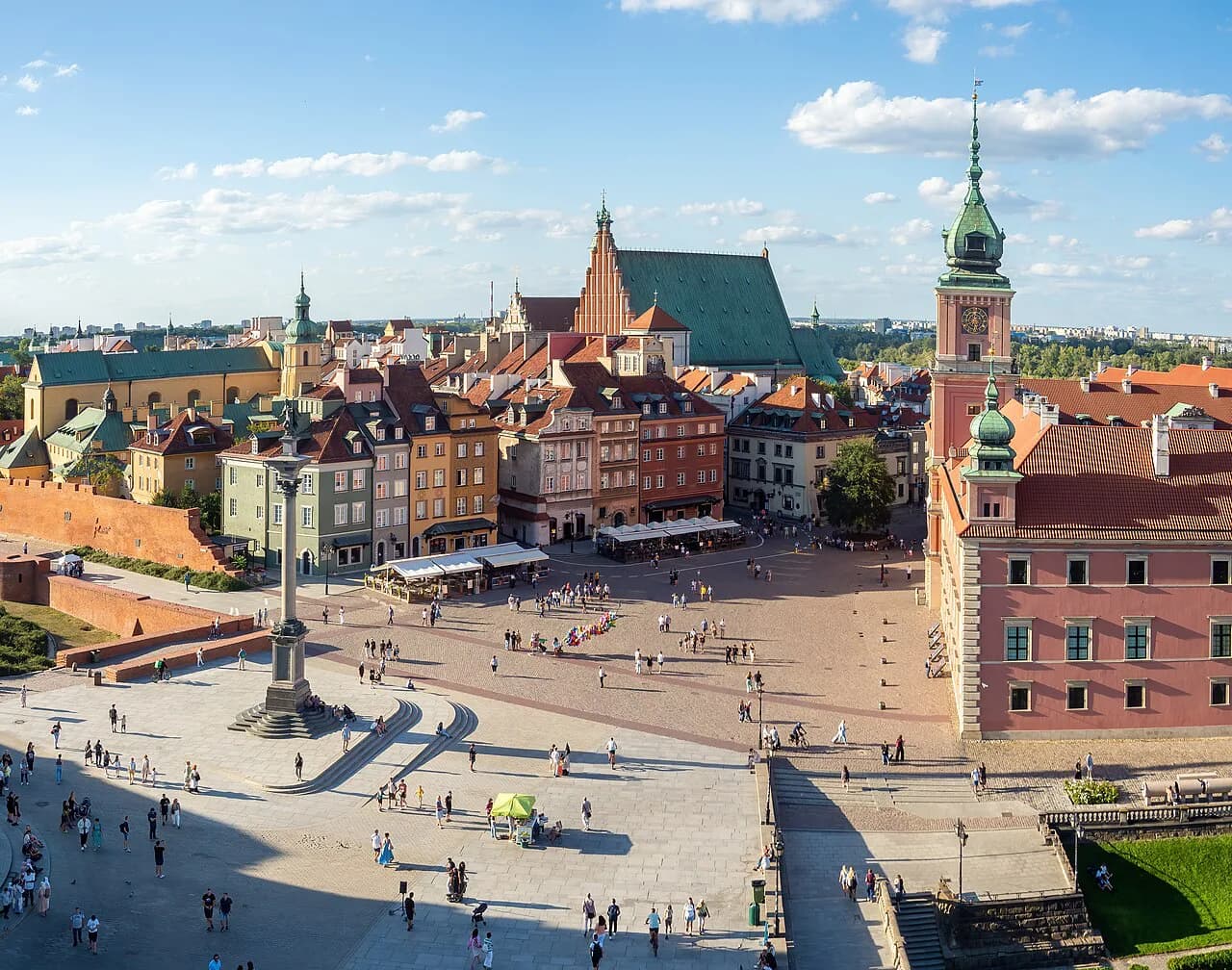
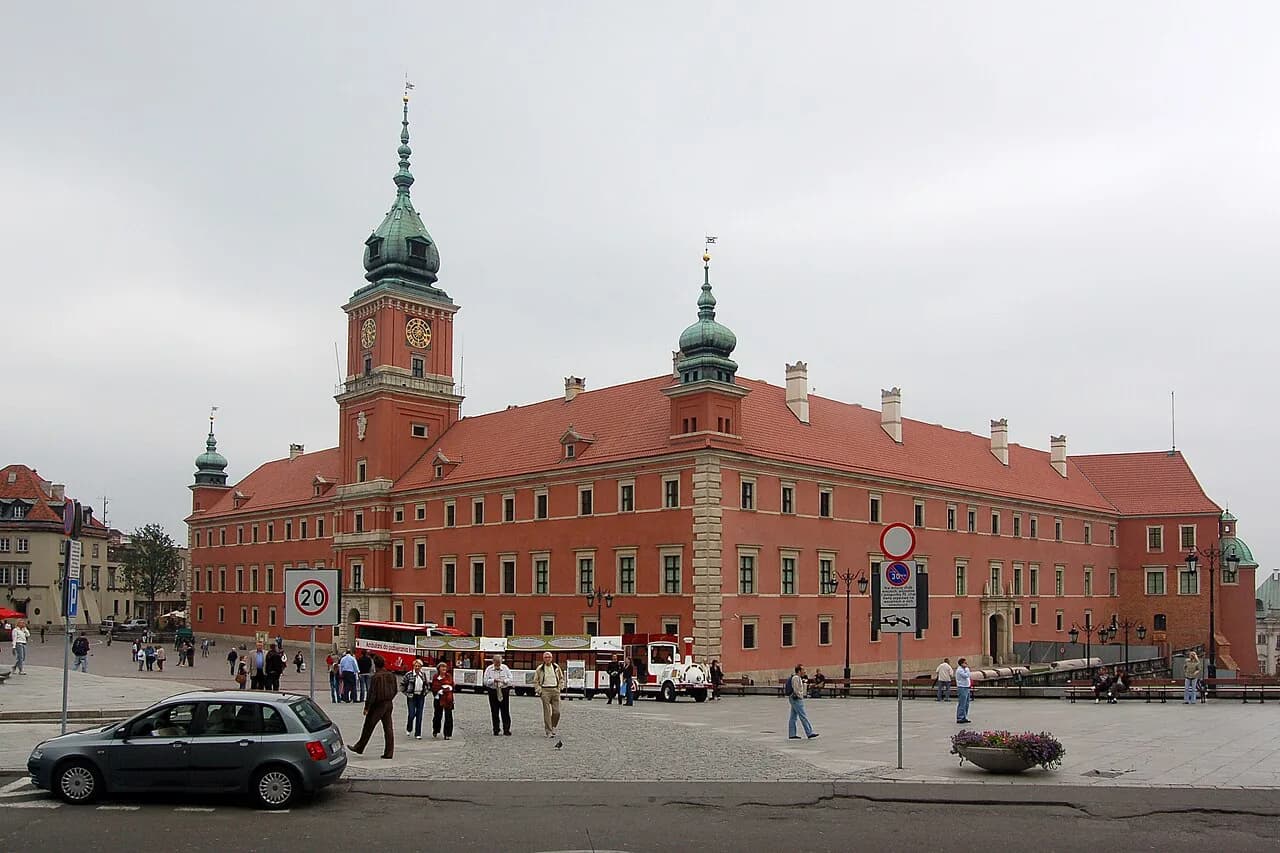
Start at Plac Zamkowy, the square in front of the Royal Castle, where the column of Sigismund III stands and the route traditionally begins. The castle itself is the main palace of the Polish monarchy from the moment the capital moved to Warsaw from Kraków, and the red tower above it is the image on most postcards of the city.
The square is framed by the castle facade and the tall townhouses around it, and it works as a natural orientation point before you head south. Stalls around the edge sell obwarzanki and small souvenirs, so it is easy to pause here longer than planned.
Budget for the castle interior only if you want the state apartments and the art collection, which operate as a museum. The building has suffered repeatedly across its history, including damage under German Nazi occupation during the Second World War, and what you walk through today is a reconstruction. Check the castle's own site for current opening days and ticket prices before committing an hour or two to it.
Walking Krakowskie Przedmieście: St Anne's, the Presidential Palace and two churches
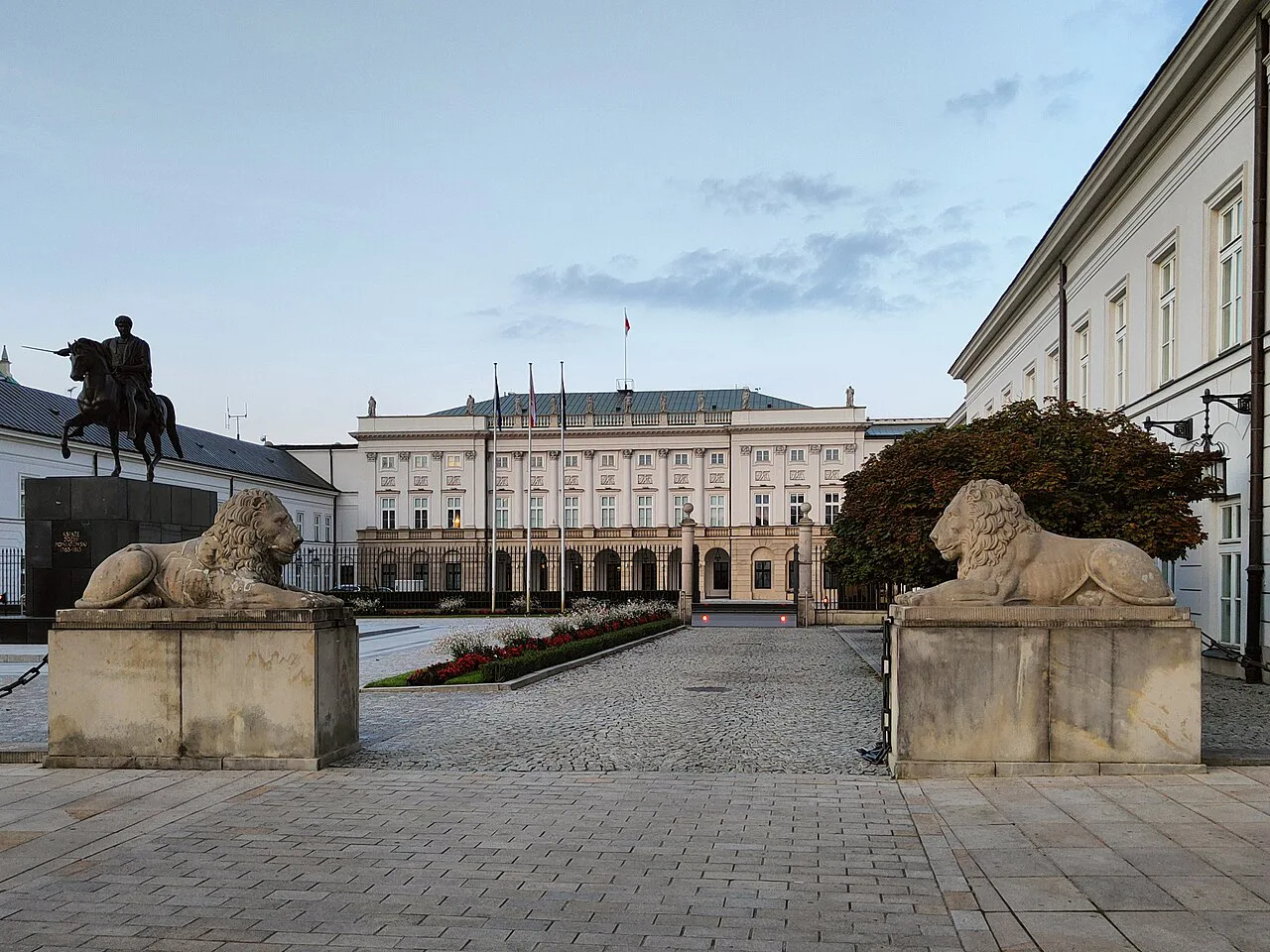
Krakowskie Przedmieście begins immediately south of Castle Square and carries most of the route's city-centre sights in a single, walkable line. St Anne's Church, founded in 1454 and rebuilt in neoclassical style in the eighteenth century, sits on this stretch and has a viewing terrace on its tower that looks directly over Castle Square and the Old Town rooftops.
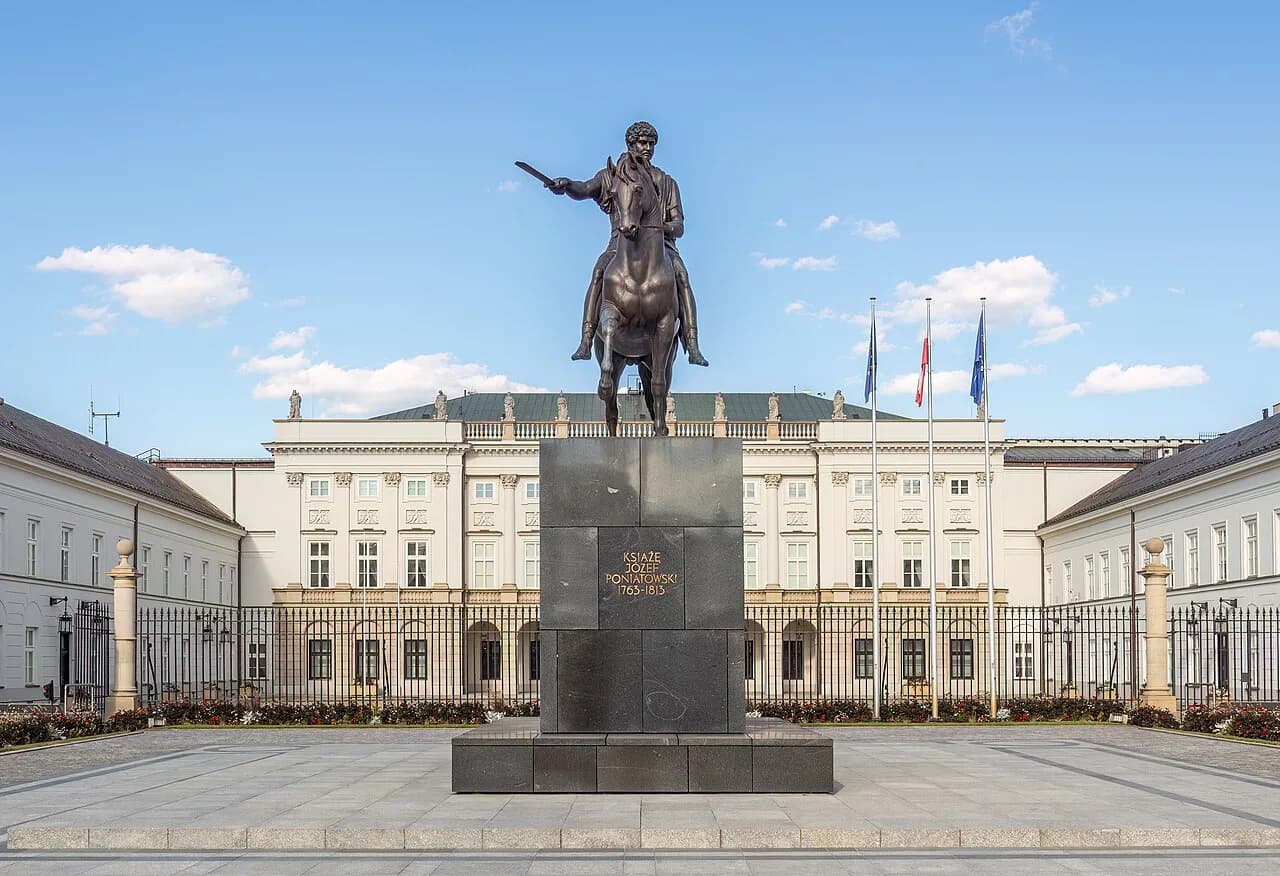
Continue past the Presidential Palace and you reach two churches that reward a short detour inside: the Carmelite Church and the Visitationist Church, both on or just off the same street. Their interiors are cooler, quieter breaks from the pavement, and they cost nothing to step into.
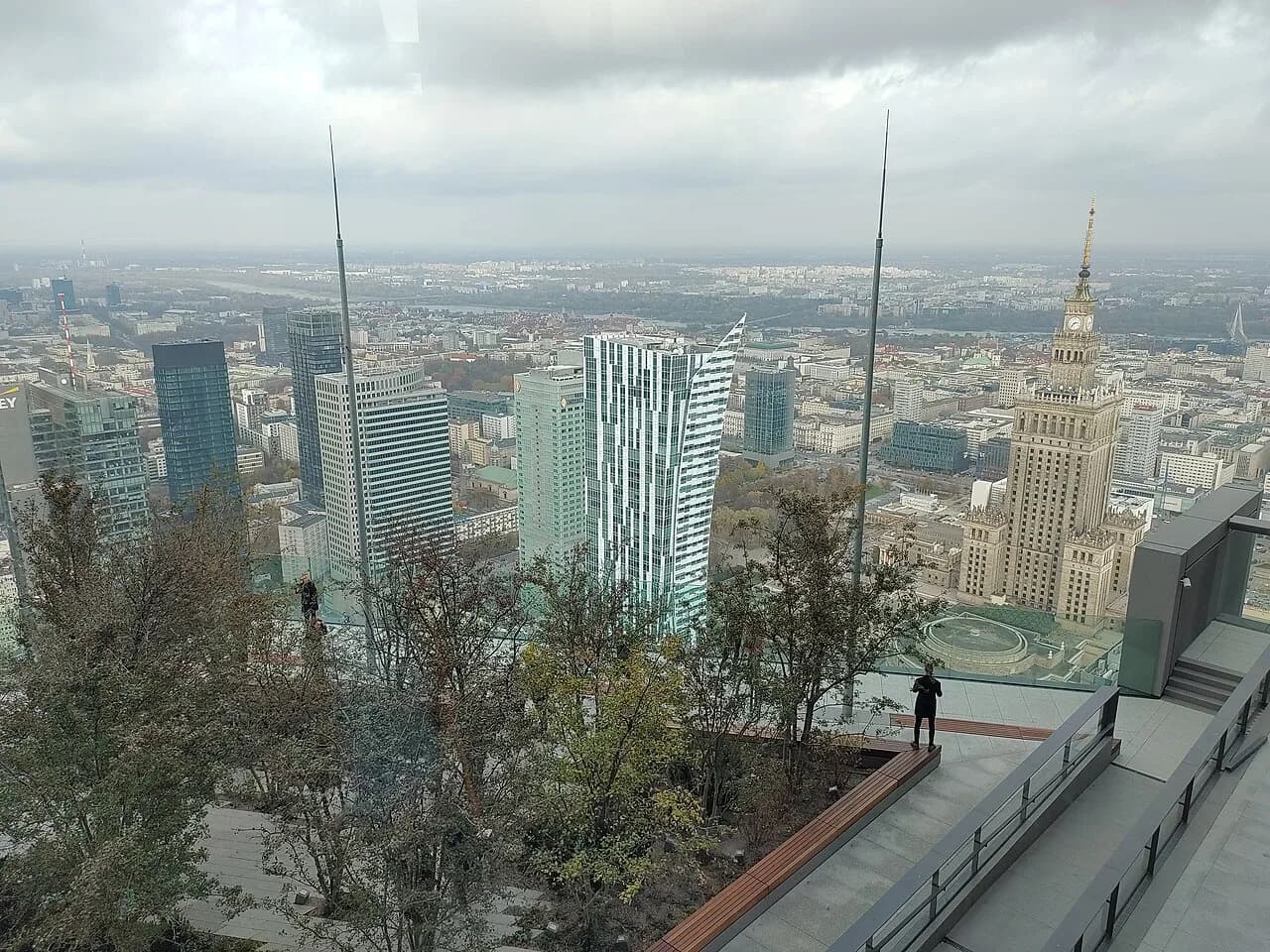
If you plan only one elevated view on this stretch, make it the tower at St Anne's for the direct sightline back across the square. Compare alternatives across the city in our guide to the best views in Warsaw.
Nowy Świat, Holy Cross Church and the Copernicus monument
Where Krakowskie Przedmieście ends, Nowy Świat takes over as a broad, shop-lined avenue leading south towards the city's modern centre. The churches and cafés of the earlier stretch give way to a busier, more commercial street, and the pace of the walk changes with it.
Holy Cross Church stands on this avenue and holds Chopin's heart, while the Copernicus monument sits just outside it on the same stretch. Both are quick stops that take a few minutes each and anchor the middle of the walk.
This is also the natural place to break for coffee or lunch before the route becomes greener and more spaced out further south. If you would rather hand the navigation over to someone else, a guided Warsaw walking tour can cover the same streets with the historical context attached.
Branching off the route: the Saxon Garden
The Saxon Garden sits between Marszałkowska Street and Piłsudski Square, just in front of the Sofitel Warsaw Victoria, a short step west of the route's main line, and is one of the oldest public parks in the world. It is a branch rather than a stop on the axis, which makes it easy to slot in on the way south or leave out entirely if you are behind schedule.
Take it if you want a shaded pause with fountains and formal paths before rejoining the traffic on Nowy Świat. Skip it if you are already planning to spend the afternoon in Łazienki, where the parkland is far larger. For more green space options, see our round-up of parks in Warsaw.
The nearby National Ethnographic Museum on Kredytowa Street is another optional add-on if the weather turns, with permanent and temporary exhibitions across a range of themes. It works best as a rain plan rather than a fixed point on the walk.
Ujazdowski Castle and the stretch south through Ujazdów
South of Nowy Świat the route enters the Ujazdów area, passing Ujazdowski Castle before the long approach to Łazienki. This is where the walking thins out: fewer shopfronts, more open space, and a longer gap between sights.
Many visitors treat this middle stretch as transit rather than sightseeing, which is a fair trade-off. If your time is limited, take a bus or taxi from the city centre to Łazienki and spend the saved hour inside the park instead of on the pavement.
Łazienki Park and the Palace on the Island
Łazienki Park is the second royal residence on the route and the point where the walk becomes a proper park visit. The Palace on the Island sits on the water within the grounds, and the park itself is large enough to absorb a couple of hours without effort.
Give Łazienki its own slot in the day rather than squeezing it between the city streets and Wilanów. The park alone justifies the trip south, and treating it as a destination rather than a waypoint is the difference between a pleasant stop and a rushed one; see our Warsaw Old Town guide for the historic core on the other end of the route.
Opening arrangements for the palace and the park's individual buildings change with the season, so confirm both on the day you plan to go before setting out.
Wilanów Palace as the route's end point
Wilanów Palace closes the route, and it is the one of the three residences that survived the Second World War without the reconstruction the others needed. That makes it architecturally distinct from the Royal Castle and Łazienki, and it rewards a dedicated visit rather than a quick look at the facade.
The problem is distance: Wilanów lies well beyond Łazienki, and walking the whole way from Castle Square in one push is a full-day commitment with little time left for interiors. Arrive by bus or taxi, see the palace and its gardens properly, then return to the centre separately.
How far it is and how to split the walk across a day
Plan for two half-days rather than one long march. The northern segment from Plac Zamkowy along Krakowskie Przedmieście and Nowy Świat to the Saxon Garden is compact, mostly flat and packed with named sights, so it comfortably fills a morning at an unhurried pace.
The southern segment, Łazienki and Wilanów, is where the kilometres add up and where transport earns its place. Covering that stretch on foot and still seeing both palaces properly means committing most of a day, which leaves no room for the Old Town loop or the riverside.
Choose your split by what you value: the northern half for architecture, churches and street life, the southern half for parks and palaces. Anyone walking the whole route end to end should count on a long day outdoors with limited interior time.
If you only have half a day: the segment to keep
Keep the northern segment. From Plac Zamkowy to Nowy Świat you get the Royal Castle, St Anne's terrace, the Presidential Palace, two churches, Holy Cross Church and the Copernicus monument in a single continuous walk with no transport required.
That half-day is dense enough that most visitors run out of time before they run out of sights. Add the Saxon Garden only if you have a spare hour, and leave Łazienki and Wilanów for a return visit or a separate afternoon.
How the Royal Route fits around the Old Town and New Town loop
The Royal Route begins at Plac Zamkowy, which is also the gateway to Warsaw's old town and, beyond it, the New Town. That geography lets you loop the two historic districts in the morning and start the route south from Castle Square in the afternoon without any backtracking.
The Old Town itself is a UNESCO World Heritage site, rebuilt after the war, and its market square holds the Mermaid statue that serves as the city's symbol. Walking it first gives the Royal Castle and the reconstructed streets downstream a context they otherwise lack; our Warsaw Old Town guide covers the district in detail.
Allow a couple of hours for the loop, more if you stop at the market stalls or climb a tower. A free walking route through this area is one of the simplest free things to do in Warsaw, and it pairs naturally with the start of the Royal Route.
When to go and how the walk shapes a one-to-four-day Warsaw plan
Spring and early autumn suit this route best: the northern half is exposed pavement for long stretches, and the southern half is parkland that loses its appeal in poor weather. Build the walk into a day when you are happy to be outside for several hours with limited shelter.
On a one-day visit, do the Old Town loop and the northern segment, and leave Łazienki out. With two days, give Łazienki a full afternoon; with three or four, Wilanów earns its own slot, and the Vistula embankment or a Warsaw river cruise can fill another.
Food fits easily into the plan: the streets around Nowy Świat and the Old Town market square have the densest choice, and our Warsaw food guide covers what to order. Sample the city's markets and bakeries if you want to eat cheaply between stops.
Should you walk the whole Royal Route or split it?
Split it. Walk the northern segment on foot from Plac Zamkowy to Nowy Świat in a single morning, then treat Łazienki and Wilanów as separate outings reached by transport. That gives you the architecture and street life at walking pace and still leaves time to see the palaces properly.
If you only have half a day, stay north and add the Old Town loop at the start; if you have three days or more, give Łazienki a full afternoon and Wilanów a morning of its own. Browse more Warsaw Attractions: 10 Visitor Guides and shopping in Warsaw to fill the gaps between them.
Frequently Asked Questions
Is the Royal Castle in Warsaw worth visiting?
Yes, if you want the state apartments and the art collection, which are run as a museum inside the reconstructed castle. If your time is short, the exterior, the square and the view from St Anne's terrace cover the essentials without an interior visit.
How do I get to Warsaw's Old Town?
Walk south from the city centre along Krakowskie Przedmieście to Plac Zamkowy, where the Old Town begins behind the Royal Castle. The same square is the starting point of the Royal Route, so the two fit into one morning.
Sources
Notes for your next Polish city break
Optional updates to our Poland guides.
You might also like
Continue reading
More guides you'll find useful