
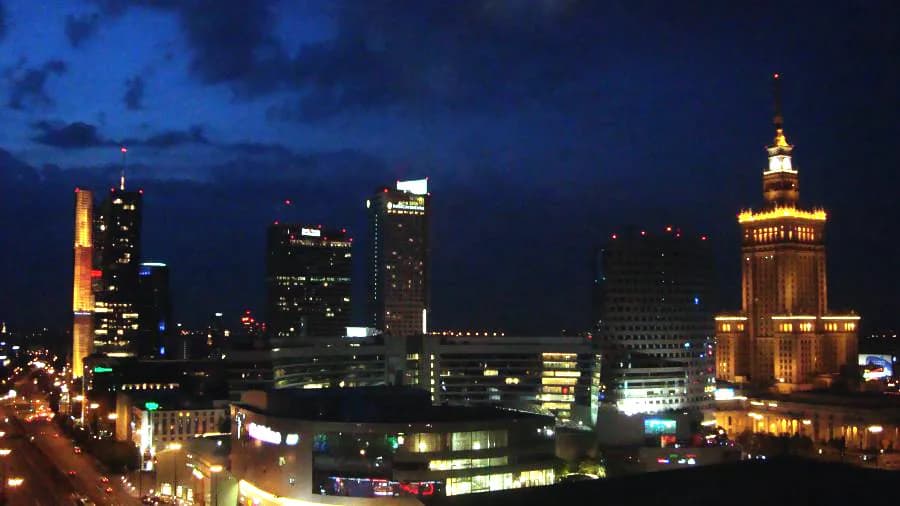
Śródmieście, Warsaw: what the city-centre district covers

Śródmieście is the district that holds almost everything a short Warsaw break is built around: the Old Town and New Town, the Royal Route along Krakowskie Przedmieście and Nowy Świat, and the modern centre around the Palace of Culture and Science. It is the most metropolitan and most diverse part of the capital, where restored historic townhouses sit alongside a forest of towers. This guide covers the district alone, quarter by quarter, so you can choose where to walk and whether to base yourself inside it.
The one structural fact worth holding onto is that Jerozolimskie Avenue divides the district into a northern and a southern half, which is also how the city's own walking guidance splits it. The north side holds the Old Town, Castle Square and the lower stretch of the Royal Route; the south side carries the newer centre and the quarters beyond it. Once you know which side you are on, the district stops feeling overwhelming and starts behaving like two compact areas.
What Śródmieście is and how far it stretches
Śródmieście is one of Warsaw's 18 auxiliary units and sits on the left bank of the Vistula, which places it squarely in the middle of the city rather than off to one side. Its boundaries take in the Old Town, the historic core and the modern business streets, so the district covers both the oldest and the newest layers of Warsaw. Treat it as a region rather than a single sight: you could spend a day in its northern quarters and another entirely in the south.
Confusingly, the district has never had one fixed centre point. The city's own walking guidance traces how the focal point shifted from the Old Town Square to Teatralny Square, then to the area around today's Powstańców Warszawy Square after the Wiedeński railway station arrived in 1845, and finally to the Palace of Culture and Science when it opened in 1955. That history explains why a walk here keeps producing new centres rather than one main square.
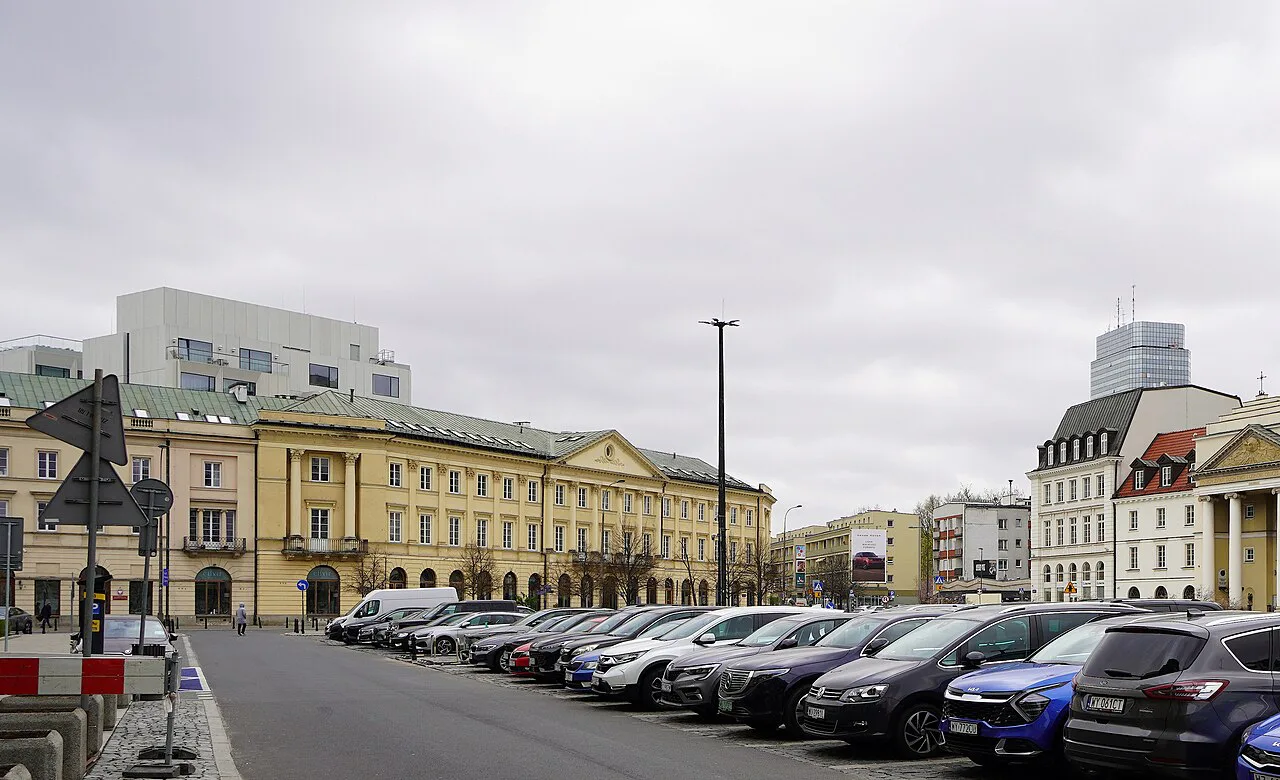

Why the district feels like several places at once
The district's identity begins at its foundation in the late 13th and early 14th centuries and runs through Warsaw becoming the Polish capital in 1596, the Swedish Deluge in the mid-17th century, the recovery of independence and the Warsaw Uprising of the Second World War. Each episode left its mark, and wartime destruction stripped away most of the earlier fabric. What you see today is therefore a layered rebuild rather than an untouched medieval town.
That history produces the district's central oddity: the Old Town looks old but is largely reconstructed, and the reconstruction was done well enough to earn a UNESCO World Heritage listing. The Royal Castle itself was only rebuilt between 1971 and 1984, and the statue of King Zygmunt III Waza on his column was put in place in 1949. Knowing this before you arrive makes the cobbles and painted facades easier to read honestly.
The Old and New Town: Castle Square, Zygmunt's Column, the Royal Castle and the Old Town Square
Start at Castle Square, where Zygmunt's Column stands as one of Warsaw's symbols and two original columns rest beside the Royal Castle's south wall; the older of those is nearly 380 years old. The Royal Castle itself was the home of Polish kings and the site of the Constitution of 3 May 1791, and it now anchors the top of the escarpment. From here the whole northern quarter unfolds on foot.
Walk into the Old Town Square to see the Mermaid statue and the colourful townhouses along the cobbled lanes, then head for the Museum of Warsaw, which occupies townhouses that survived rather than being rebuilt. At the northern edge of the old walls stands the Barbican, a fortified gate you pass through to reach the New Town. Build in time for this stretch rather than rushing it, because the lanes off the square reward wandering.
In the New Town, most of the townhouses are post-war rebuilds too, and one of them at 16 Freta Street houses the Maria Skłodowska-Curie Museum. The Multimedia Fountain Park sits at the foot of the escarpment and is known for its evening shows. Its display schedule should be confirmed locally before you plan an evening around it.
Krakowskie Przedmieście and Nowy Świat along the Royal Route
The Royal Route links three royal residences: the Royal Castle on Castle Square, the Royal Łazienki and Wilanów Palace. Inside Śródmieście it runs along Krakowskie Przedmieście and Nowy Świat, two streets with a dense concentration of sights within easy walking distance of each other. The practical implication is that you do not need transport for this leg; you need comfortable shoes and a willingness to pause often.
Start at the Krakowskie Przedmieście end, near Castle Square, and walk south towards Nowy Świat, letting the street carry you past churches, monuments and university buildings. The trade-off is crowds: this is the busiest, most obvious line through the district, which is exactly why it works so well for a first orientation. Save the quieter side streets for later in the day.
The tower of St Anne's Church and the view back over the Old Town
Climbing the tower of St Anne's Church at the start of Krakowskie Przedmieście pays off with a view of the Old Town, the skyscrapers of the modern centre and the Vistula valley in one sweep. It is the single best way to grasp how compact the district is and how abruptly the historic quarter meets the towers. Do it early, before you have worn yourself out on the streets below.
Access to the tower follows the church's own arrangements, so check at the entrance when you are there. Build the climb into a morning rather than treating it as an optional extra: the orientation it gives you changes how you read everything afterwards. The steps are also a reminder that Śródmieście is built on an escarpment, not a flat grid.
Kozia Street, the Museum of Caricature and the quieter lanes off the route
Kozia Street is the antidote to the Royal Route crowds: a peaceful, lesser-known lane ending at the Museum of Caricature, which holds a wide collection of humorous art. Behind the museum sits a small park containing a time capsule of a post-war modernist apartment block built for high-ranking communist party officials, still impressive in scale today. This is the detour to take when the main streets have worn thin.
Kozia Street ends near the Adam Mickiewicz monument and the church beside it, which quietly returns you to the Royal Route without retracing your steps. Treat this loop as a two-hour breather rather than a destination in its own right, and go when you want fewer people rather than more sights. It is the clearest illustration of how a single turn off the main drag changes the district's mood.
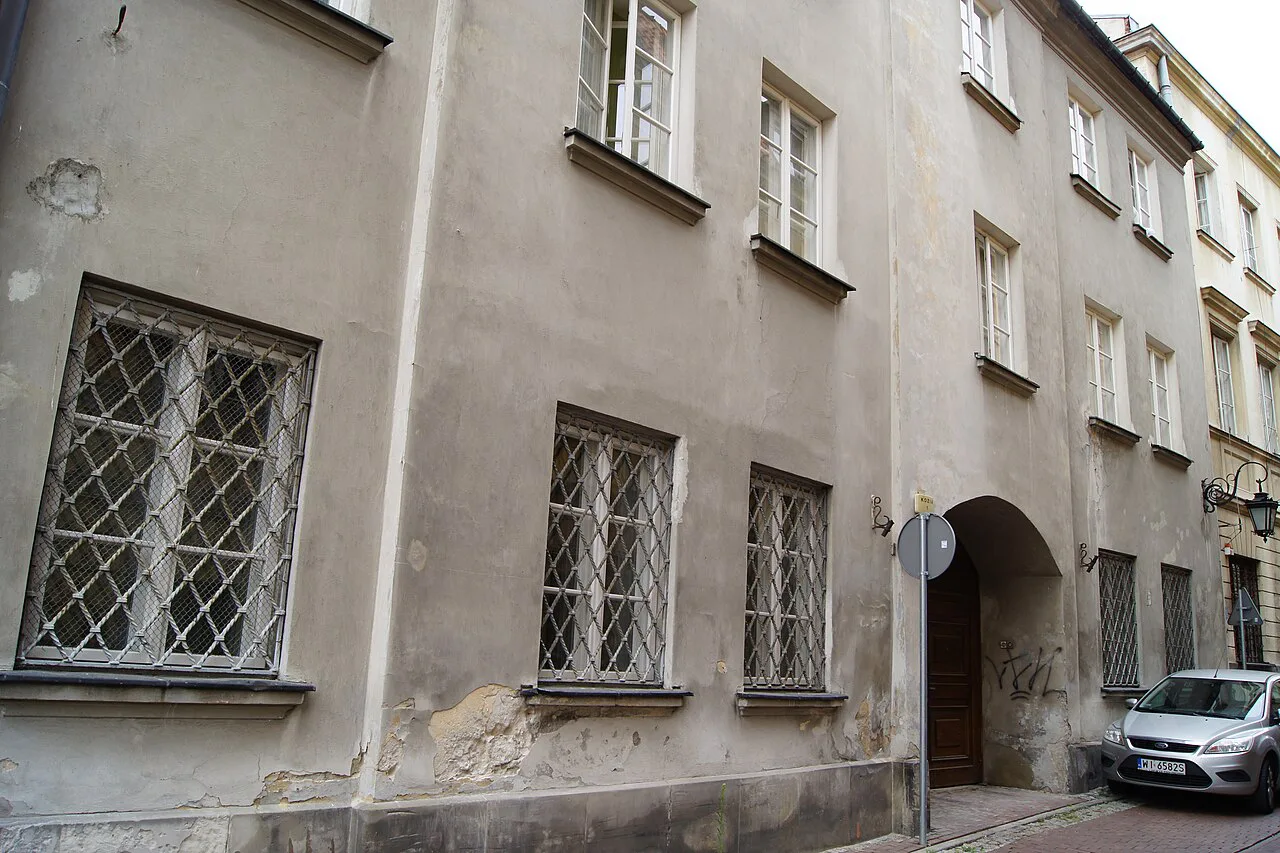

Muranów and Powiśle: the two ends of the district's character
Muranów and Powiśle sit at opposite edges of Śródmieście's personality. Muranów lies north of the Old Town, while Powiśle drops down towards the Vistula below the escarpment. Both are part of the central district rather than separate trips, which makes them easy to fold into a longer walk.
Powiśle's position at the foot of the slope gives you a different angle on the Old Town and a natural route back up towards the centre. If you have three days in Warsaw, this is where to spend the third morning instead of repeating the Royal Route. If you have only one day, leave it for next time and concentrate on the northern quarter.
Who the district suits, and who should base themselves elsewhere in the city
Śródmieście suits anyone on a first visit or a short break who wants to walk out of the door and be among the main sights without planning transport. It is at its best for two- and three-day trips where the Old Town, the Royal Route and the modern centre all matter. Travellers who want a calmer, more residential base will find the district's bustle tiring by the second evening.
Anyone prioritising green space, quieter streets or a different architectural story should base themselves outside the centre and commute in; both alternatives give you a different version of Warsaw to return to at night. Mokotów, Warsaw is the calmer, leafier option, while Praga, Warsaw puts you across the river among pre-war streets that survived the war. Choose the centre for convenience and the others for character, and do not try to have both from one base.
Getting in and around on foot, by tram and by metro
Walking is the default inside Śródmieście: the Old Town, the Royal Route and the modern centre connect on foot, and the escarpment gives the district its stairs and slopes rather than long flat stretches. To reach Castle Square, you arrive by tram at the stop below and then climb the stone steps or the escalator built in the late 1930s to reach the top of the Warsaw Escarpment. That one climb is the handiest way into the historic quarter from Ratusz Arsenał metro station.
Stay within the district on the metro and tram network and you can hop between the northern and southern halves without long walks along Jerozolimskie Avenue. Confirm the exact station name for your journey before you travel, as several stations serve the district and it helps to know which one your route uses.
Where to eat and stay within the district
For a short break, the strongest base inside Śródmieście is the northern half: it puts the Old Town, Castle Square and the start of the Royal Route within a few minutes' walk. The southern half is better if you want to fold the newer quarters beyond Jerozolimskie Avenue into long walks. Either way, staying in the district saves you daily travel time rather than money.
Eating follows the same logic: the busy streets along the Royal Route are built for foot traffic, while the lanes around Kozia Street and quieter stretches off the main route are where you find calmer tables. Prices vary from street to street, so compare menus on the spot rather than budgeting from a website. Reserve nothing on the strength of a name alone; walk past first.
Which quarter should you start in?
Start in the northern half at Castle Square, climb St Anne's Church tower, then follow the Royal Route south along Krakowskie Przedmieście and Nowy Świat, ducking into Kozia Street when the crowds build. That single day covers the district's historic core and gives you the orientation to plan a second day in Muranów or Powiśle. It is the most efficient first move in Śródmieście.
If you have only one day, skip the southern half and concentrate on the Old Town, the Royal Route and the tower. If you have three, give Muranów and Powiśle a morning each rather than squeezing them into an afternoon. And if you want more on the area, read the Warsaw Neighborhoods: 5 Area Guides before you book.
Explore more Warsaw guides
Frequently Asked Questions
Is Warszawa Śródmieście the same as Warszawa Centralna station?
No. Warszawa Śródmieście is a separate railway station located in the district, and Warszawa Centralna is a different station in the same part of the city. Check which one appears on your ticket and allow time to move between them.
Can you see the main sights of Śródmieście in one day?
You can cover the Old Town, Castle Square and the Royal Route on foot in a full day without transport. Allow a second day if you want St Anne's tower, Kozia Street and the New Town without rushing.