Warsaw in April: Weather, Daylight and How to Plan a Spring City Break
Warsaw in April brings mild days, cool nights and longer daylight. Here is what temperatures to expect and how to shape a three-day spring city break.
On this page
Plan a Warsaw city break for April and you get mild-to-warm afternoons, cold evenings and a real chance of rain, in exchange for smaller crowds and cheaper rooms than midsummer. Three full days is enough to see the Old Town, the royal route and Royal Łazienki park without rushing. This guide covers typical April temperatures, how to split early and late April, and a day-by-day plan that keeps a wet afternoon in reserve.
What Warsaw in April is like: mild days, cold evenings, changeable weather
April in Warsaw behaves like a handover month: daytime highs climb steadily while nights stay genuinely cold, and the gap between the two is what catches visitors out. Forum regulars describing typical April conditions put daytime figures around 10–15°C, with occasional snow flurries still possible early in the month. Treat any single sunny afternoon as a bonus rather than the baseline, and keep a warm layer for the evening.
The practical consequence is that April rewards flexibility more than any other spring month. A day that starts grey and damp can turn bright by mid-afternoon, so plan each day with one indoor anchor and one outdoor stretch that can swap order. That way a shower costs you nothing but a change of sequence.

Typical April temperatures and rainfall, with spring highs and lows
Climate averages give a clearer picture than any single year. In Warsaw, April averages about 57°F (around 14°C) by day and 38.5°F (about 3.5°C) at night, with roughly 1.33 inches of precipitation across the month. Those are long-run averages from climate data, not a forecast, so treat them as the shape of the month rather than a promise.
Rain in April tends to arrive in showers and frontal bands rather than all-day drizzle, and the monthly total is lower than in the wettest summer months. Check a forecast about a week before you travel and firm up which day gets the park; earlier than that the picture is too unsettled to act on.
Easter and late-April timing: what moves, what stays open
Easter is a movable feast that falls in late March or April, so an early-April trip may overlap the holiday weekend. Confirm the year's exact Easter dates and any associated closures before you book, since the date shifts annually.
Beyond Easter, April in Warsaw is spring-blossom season, with Japanese cherry trees (sakura) among the seasonal draws and appeals mentioning fairs, guided walks, concerts and street-food festivals. Dates and line-ups shift year to year, so check what is on for your specific week rather than planning around a named event.
Split the month in two when you choose dates. Early April is cooler and more likely to catch Easter crowds and closures; late April brings warmer afternoons and much longer evenings, which makes a post-dinner walk along the Vistula realistic. If you want a broader comparison of months, the guide to the best time to visit Warsaw sets April against May, summer and autumn.
How to build a three-day plan around April daylight
April daylight stretches enough to fit two substantial sightseeing blocks per day with a slow lunch in between, which suits a three-day break. Give day one to the reconstructed Old Town (Stare Miasto) and the Warsaw Uprising Monument, day two to the royal route and a museum, and day three to Royal Łazienki park with a reserve indoor option. Keep the park on whichever day the forecast looks driest.
Book your museum slots loosely and your walking days not at all. Because showers pass quickly, it is usually better to carry a compact waterproof and duck into a church or arcade than to schedule around the radar. Read the outdoor sights in the morning when streets are quiet and leave afternoons for interiors that do not mind a downpour.
Old Town and Krakowskie Przedmieście on a dry morning
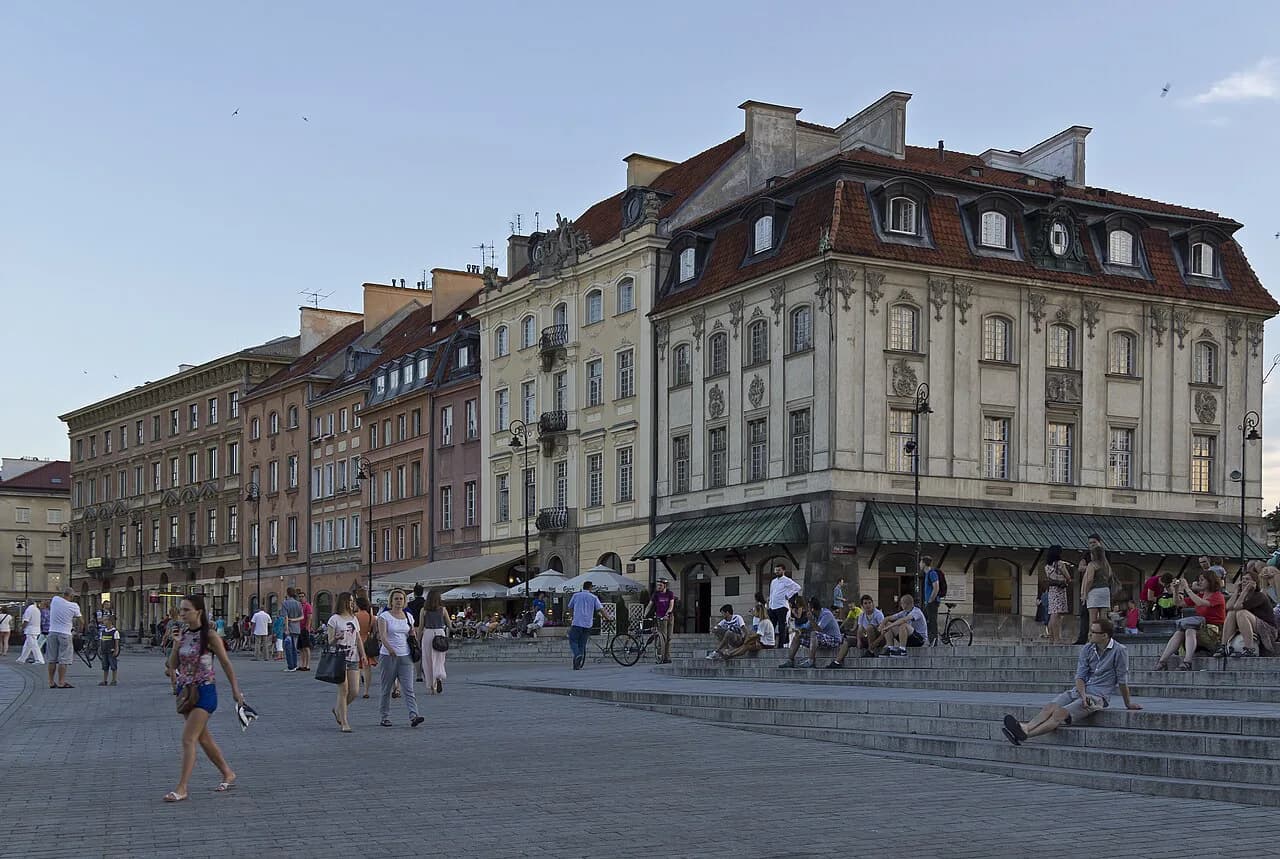
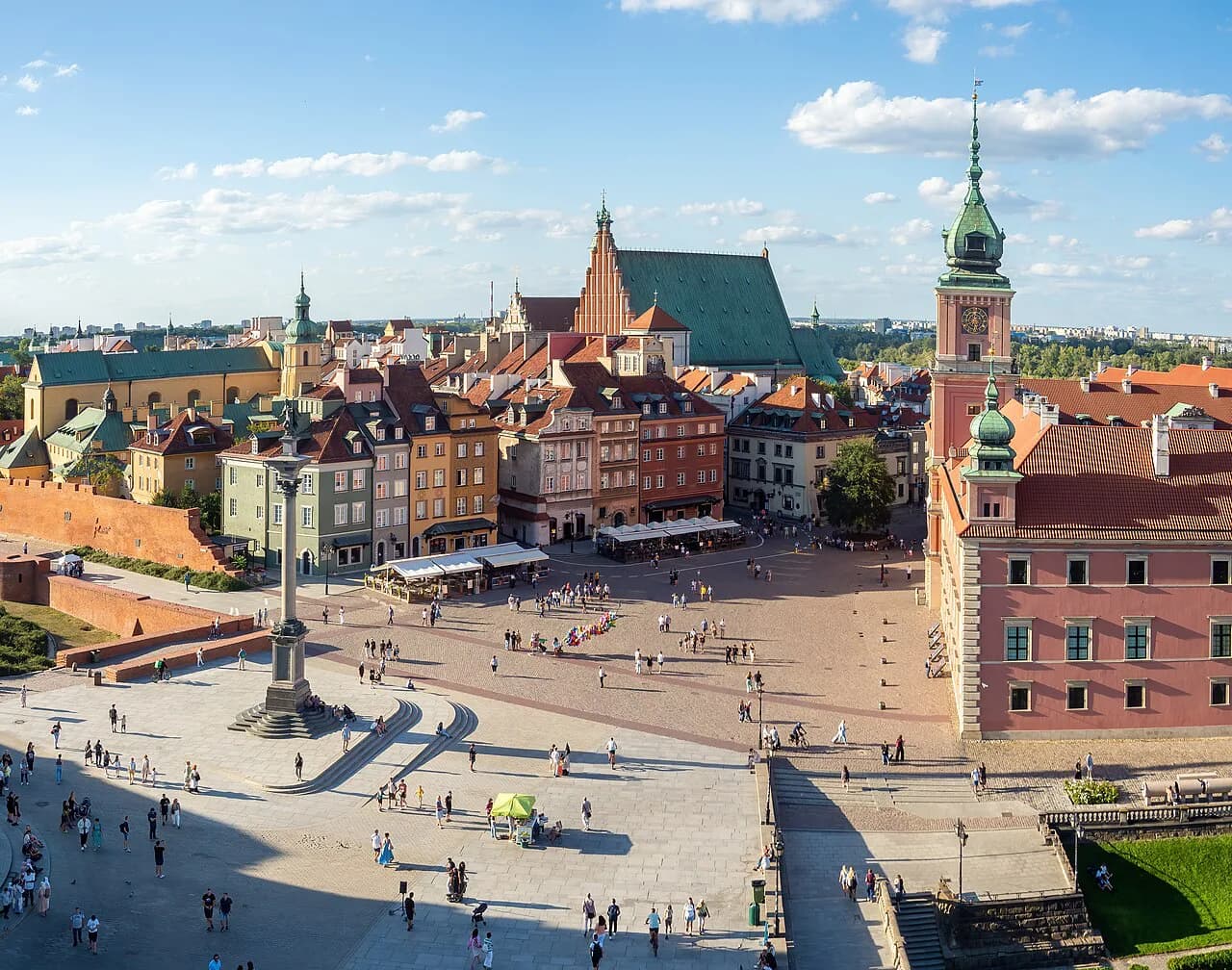
Start at Castle Square and walk the length of the Old Town's market square before the tour groups arrive, then follow the royal route south along Krakowskie Przedmieście. This street links the Old Town to the museums and palaces further south and gives you a continuous line of churches, monuments and university buildings without any transport. Two to three hours covers it at an unhurried pace.
The Uprising Monument and the surrounding streets repay a slower look, and the rebuilt façades are best appreciated in flat morning light. April's lower sun and thinner crowds make this stretch far more comfortable than the same walk in July, when the pavements fill and the heat builds by midday.
Museums and indoor sights for a wet afternoon
Keep one afternoon free for an interior that suits rain, and decide which one the day before. Polish museums often close one day a week, so confirm your chosen venue's opening day for the date you plan to visit rather than assuming a pattern. The memorial and history collections around the city centre are the obvious wet-weather anchors and reward two hours or more.
If the weather holds, swap the museum for a second outdoor stretch and push the interior to the following day. That swap is the whole logic of an April trip: you are buying flexibility rather than guaranteed sunshine, and a loose plan lets you use whatever the sky gives you.
Royal Łazienki park and gardens in early spring
Royal Łazienki is the best place in Warsaw to spend a mild April afternoon. The park's outdoor piano concerts run from May to September, so April visits fall just before the series starts and the gardens are quieter for it. Expect early-spring bedding rather than full summer colour, and allow two hours to walk the main axes and around the water.
The park is large and exposed, so it feels colder than the city centre on a breezy day. Pair it with a nearby indoor stop rather than making it your only plan. If your dates drift into late spring, the Warsaw in summer guide covers the same park once the concerts and warm evenings arrive.
Visitors planning further ahead often compare spring with the autumn months, when the park's trees turn and the city calms down again; Warsaw in October covers that trade-off. Either way, April and autumn share the same advantage of thinner crowds than the summer peak.
What to wear and pack for cool mornings and warm afternoons
Dress in layers you can remove by noon and add again after dark. A T-shirt under a shirt or light jumper, a waterproof shell with a hood, and a warmer jacket for evenings cover almost every April day in Warsaw. Sturdy shoes matter more than usual because cobbled streets stay slick after showers.
Pack for the cold end of the forecast rather than the warm end. An evening that drops towards freezing is entirely normal in early April, and restaurants and terraces are far more pleasant if you are not shivering. A small umbrella lives in the bag; a heavy coat can stay home by late April.
April trade-offs: fewer crowds than summer, but unreliable weather
The case for April is straightforward: airfare and room rates stay below peak summer levels, the main sights are less congested, and daylight is already generous. Against that, the weather is genuinely unpredictable, and a cold snap can make outdoor plans uncomfortable. If you need reliable warmth, June to August is the safer bet, at the cost of crowds and higher prices.
A useful compromise is a three-day break in late April with one bookable indoor highlight and two flexible outdoor days. That way the trip works whatever the sky does. If you build your shortlist first, the Warsaw Attractions: 10 Visitor Guides hub lets you choose sights and then slot them into wet or dry days.
If your dates are fixed by school holidays or cheap flights, accept the weather risk and plan around it. If they are flexible, late April and early May offer the best balance of warmth, daylight and manageable crowds. Check Warsaw events through the year before you lock in dates, since a festival weekend can change the feel of the city centre.
Should you book Warsaw for April?
Book April if you want a quieter, cheaper Warsaw with long days and you can live with cold evenings and passing showers. Skip it if sunshine is the point of the trip, and look at summer instead. Either way, plan one indoor anchor per day and leave the park flexible.
A three-day break covers the Old Town, the royal route and Royal Łazienki comfortably, with room for a wet afternoon indoors. Confirm Easter dates and museum opening days for your specific week, then build the rest around the forecast.
Sources
Notes for your next Polish city break
Optional updates to our Poland guides.
You might also like
Continue reading
More guides you'll find useful