
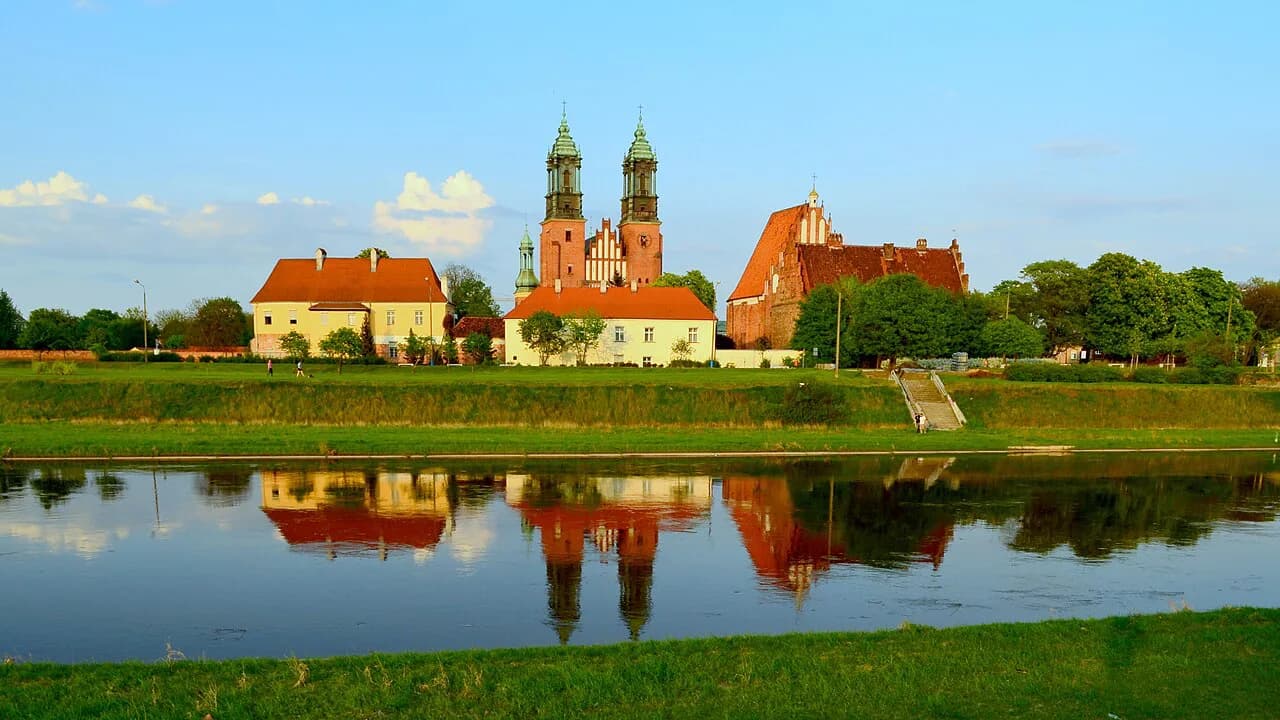
Ostrów Tumski, Poznań: what to see on the Cathedral Island

Ostrów Tumski needs about half a day, and it is the part of Poznań to see first if you care where the city and the Polish state began. It sits on an island in the Warta, across the river from the Główne Miasto, and you reach it on foot from the Old Market Square. This guide covers the walk over, the cathedral and the churches and palace around it, the Archaeological Museum, and where to go afterwards.
The name itself is a plain description: Ostrów is an old Polish word for an island or a patch of raised ground in a river, and Tumski refers to the cathedral. Expect a compact, quiet district of brick churches, cloisters and cobbles rather than a sight with a turnstile — you wander it, and pay only where you go inside.
Where Ostrów Tumski is and why it matters
Ostrów Tumski lies east of the Główne Miasto (Main Town), on the far bank of the Warta, and its lanes begin near ulica Prymasa Stefana Wyszyńskiego before running in towards the cathedral. The district is the oldest part of Poznań, the ground from which the city spread rather than a later addition to it. Treat it as a separate quarter to walk to, not as one building to tick off.
The reason to come is the layering: a Gothic cathedral with twin spires, working churches and monasteries, the archbishop's palace, and a museum holding finds from the region and from Polish excavations in North Africa. It is a religious quarter first, so you will be sharing the lanes with worshippers and students rather than tour groups.

Walking there from the Old Market Square
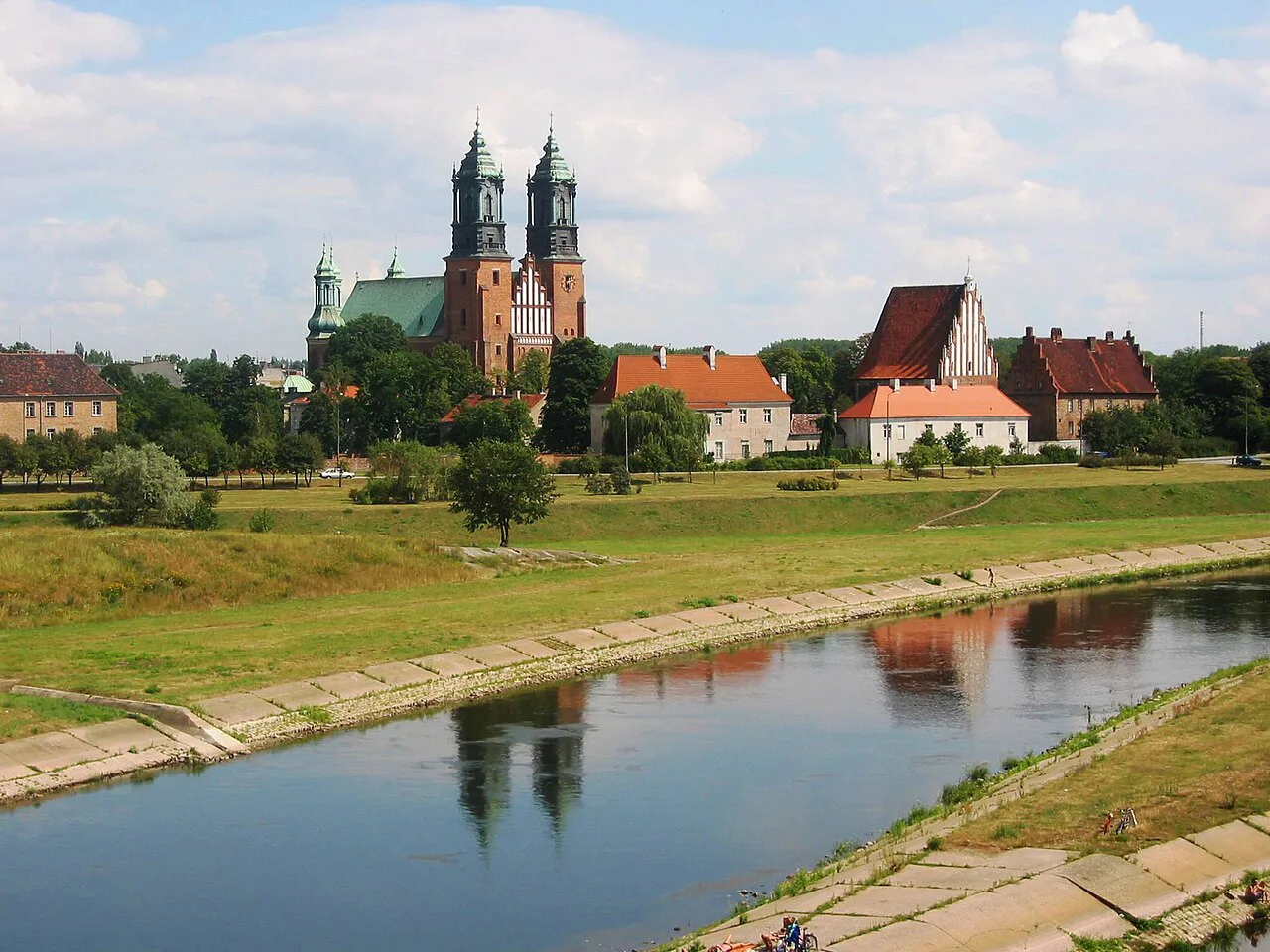
From the Stary Rynek, head east through the main town towards the river; the island is on the opposite bank and the walk is a modest one on foot. If you have already spent the morning at the Poznań town hall and around the Old Market Square, keep the afternoon free for this side of the river.
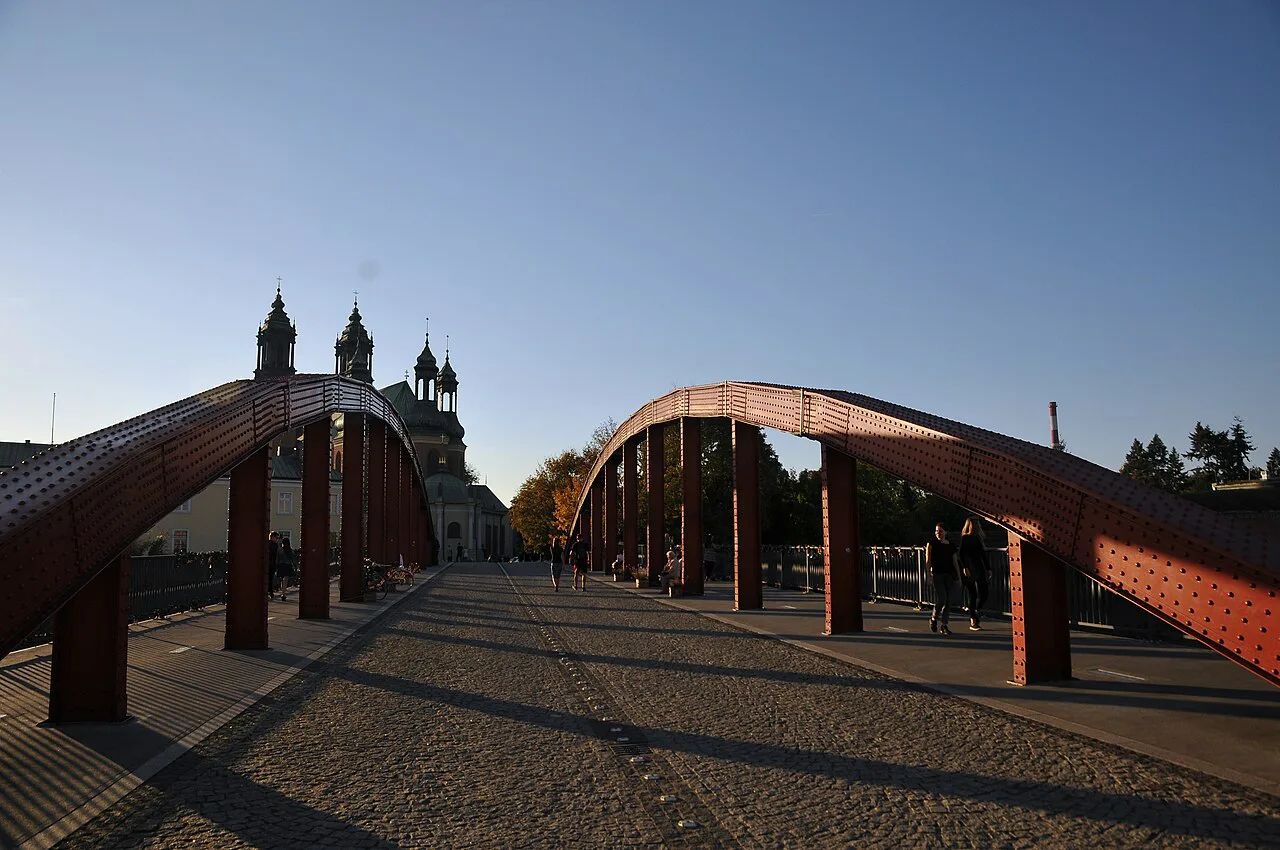
The walk itself is part of the visit. You cross the Warta and the character changes within a few minutes — the market bustle gives way to a low skyline of church roofs and trees. Wear shoes you can walk in for a couple of hours, because the surfaces are cobbled and uneven in places.

The cathedral and the churches around it
The cathedral is the anchor of the district: a twin-spired Gothic building standing beside the river and visible from the main town side. The island also holds a cluster of churches and monasteries, an archbishop's palace and a cathedral square worth lingering on. See the cathedral from the outside first — walk round the apse and look back across the water — then go in if the doors are open.
Around the cathedral the district is dense with religious architecture: the church of the Blessed Virgin Mary, monastery buildings, and the archbishop's palace, all within a few minutes of each other. As an active place of worship, the cathedral can be closed to sightseers during services, so time your arrival outside the usual Mass hours and check the parish's own noticeboard once you are there. Walk the lanes through the island and back rather than hunting individual addresses; the pleasure here is the ensemble.
The Archaeological Museum in the Górka Palace
The indoor stop on the island is the Archaeological Museum in the Górka Palace, which holds permanent galleries as well as temporary exhibitions, plus a courtyard with an obelisk from Berlin's Egyptian collection. The museum's North African rock-art gallery presents engravings and paintings from the Eastern Sahara, drawn from Polish research in Algeria, Egypt and Sudan, with the oldest images estimated at more than ten thousand years old. There is a multimedia layer for adults and children, and a boulder where younger visitors can copy animal engravings with carbon paper and graphite.
Note the Egyptian gallery's status before you plan around it: the museum states that its Egyptian exhibition closed in June 2024, with a new exhibition scheduled for 2026. If Egyptian material is your reason to come, treat the rock-art gallery and the palace as the core of the visit instead. Entry charges and the free-entry day, if any, are published on the museum's tickets and opening-hours pages, so read those before setting out.
How much time to allow
Half a day covers it comfortably: an hour and a half for the walk over, the cathedral and the lanes, and another hour for the museum if you go in properly. Without the museum, ninety minutes to two hours is enough for the island itself, including the crossing each way.
The trade-off is depth against breadth. If you have only one full day in the city, do the Old Market Square and this island and leave the rest; if you have two or three days, spread the museums — the National Museum in Poznań on Al. Marcinkowskiego holds a collection of Spanish paintings, including Zurbarán, Ribera and Velázquez, and deserves its own slot rather than sharing this one. See the National Museum in Poznań guide for its layout.
Crossing to Śródka and the rest of the day
Once you have walked the island, cross back towards Śródka, the neighbourhood on the same bank, for a change of scene and something to eat away from the main-town crush. From there the walk back to the Główne Miasto is straightforward, and you can end the day on the Old Market Square.
For the wider plan, the Poznań Attractions: 9 Visitor Guides collection sets this district alongside the city's other stops. Families often add the Poznań Croissant Museum, where the St Martin's croissant tradition is the draw, and anyone with a warm afternoon spare can head out to Lake Malta in Poznań for the water and the walking paths. Garden and glasshouse lovers have the Poznań palm house, and history of a different era sits at the Poznań Imperial castle and up at Park Cytadela in Poznań.
Is Ostrów Tumski worth half a day?
Yes, and it should be high on a first visit to Poznań. The island gives you the city's origin story in an hour or two of walking, with the cathedral at the centre and a serious museum at the edge.
Go early, keep the museum for the middle of the day, and finish in Śródka or back on the Old Market Square. Check the cathedral's service times and the museum's opening hours and ticket prices before you set out, then let the rest of the half-day run at walking pace.