
Poznań Croissant Museum: A Visitor's Guide to the Rogalowe Muzeum

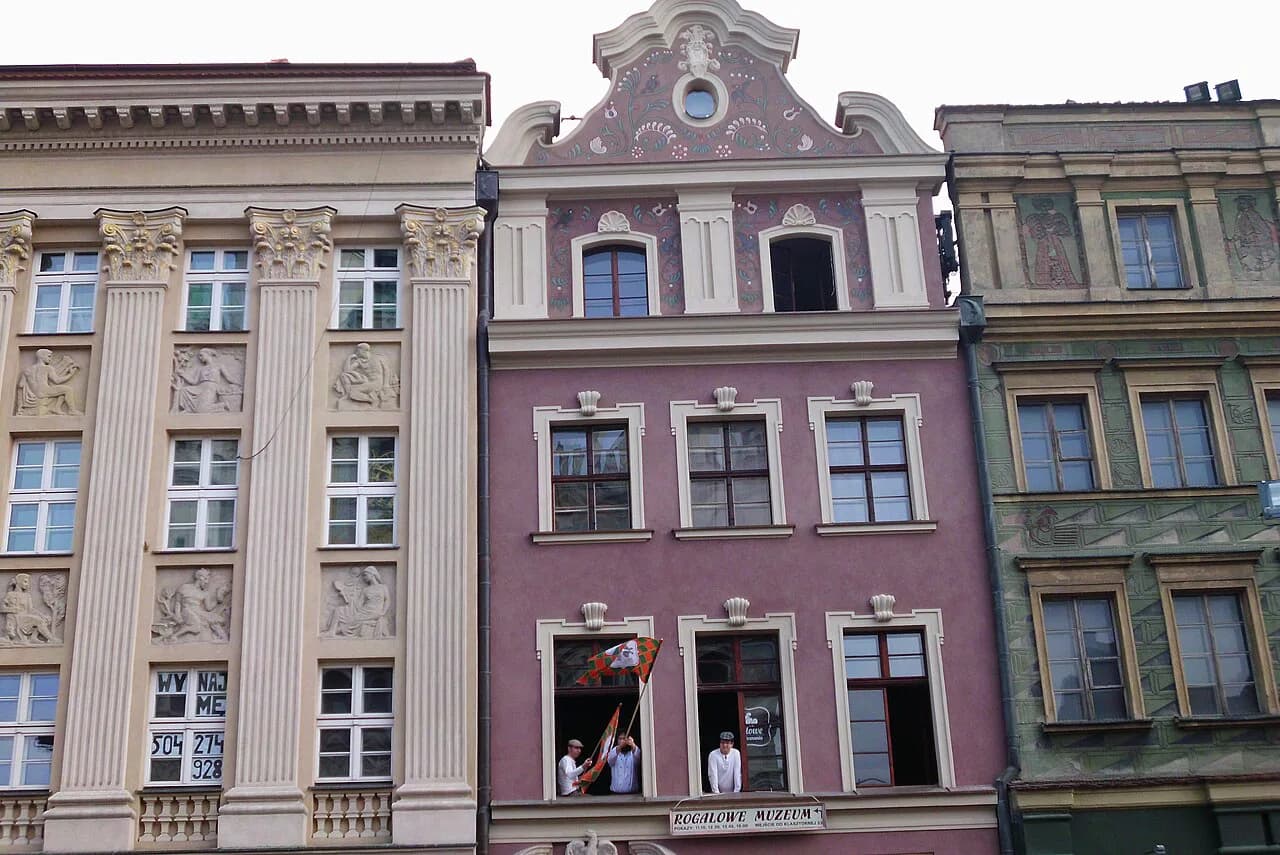
The Poznań Croissant Museum is not a museum in the glass-case sense: it is a ticketed interactive show, roughly an hour long, in which staff make St Martin's croissants in front of you and volunteers join in. It occupies a townhouse at Stary Rynek 41/2, with the entrance on Klasztorna Street 23 and windows looking out over the Old Market Square. This guide covers what happens during a show, how the croissant show differs from the croissant and goat show, what tickets cost, when English-language shows run and who the format suits.
Where the museum is and how to reach it
The address is Stary Rynek 41/2, 61-772 Poznań, and you enter from Klasztorna Street 23 rather than from the square itself, so look for the side-street door. Because the building faces the market square, the show's window segment frames the town hall and the famous billy goats that appear above its clock. Allow a short walk across the square from most Old Town hotels and tram stops; the museum is on the first floor, reached by stairs.
The Rogalowe Muzeum Poznania publishes its entrance details, phone number and email on its site, along with a note that the staircase is not adapted for disabled access and there is no lift. If stairs are a problem for anyone in your group, that is worth knowing before you book rather than on arrival.

What happens during a show
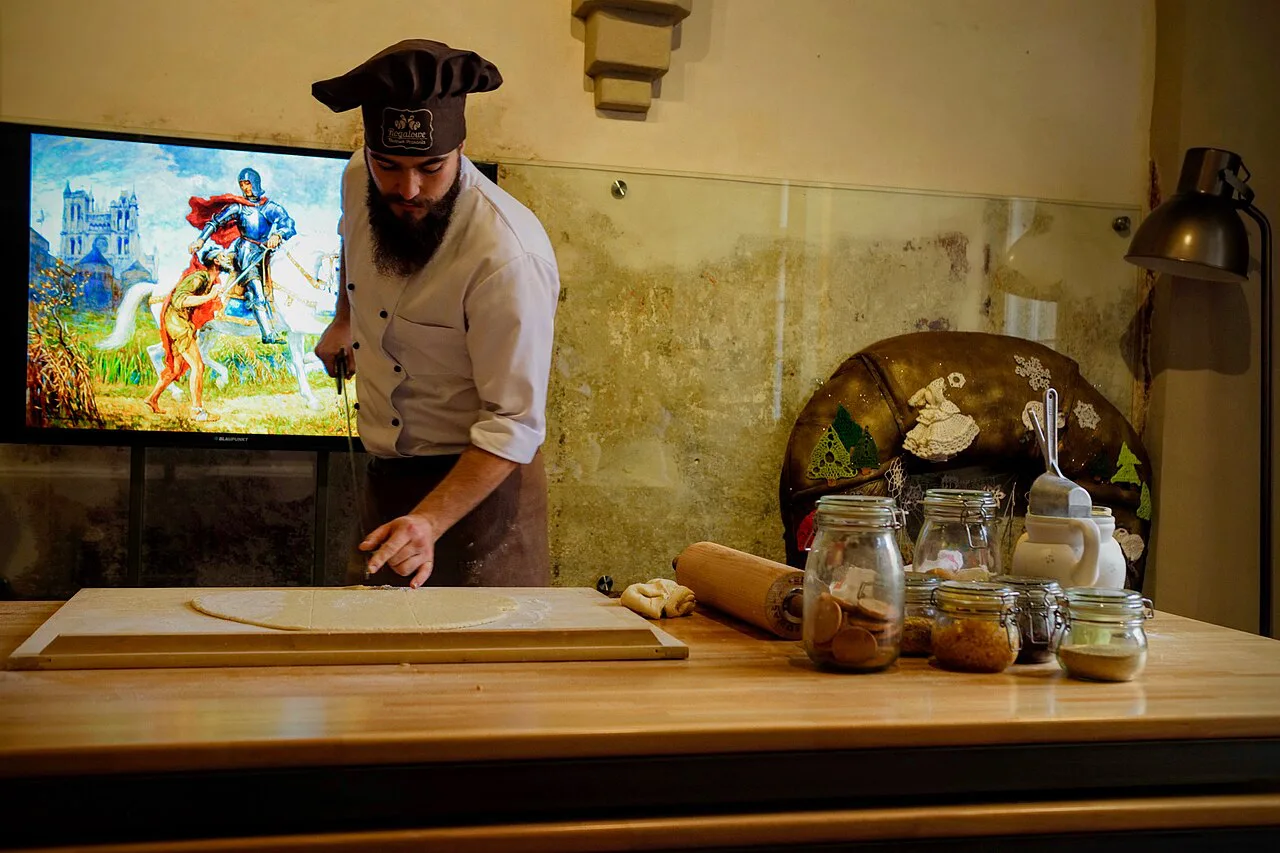
A show mixes demonstration, storytelling and comedy. Staff prepare St Martin's croissants using traditional utensils, talk through the original recipe and ingredients, and recount the legends around the pastry, with some of Poznań's local dialect thrown in. Volunteers are dressed in hats and aprons to help, and the whole thing is delivered in a friendly, casual tone by local staff who work in English.
Partway through there is a multimedia animation covering highlights of the city's history, and every guest gets a tasting of an original St Martin's croissant, packed in a paper bag so you can take it away. Children (and adults) leave with an apprentice certificate written in the Poznań dialect. It is closer to a small theatre performance than a guided exhibit, which is why the format holds the attention of mixed-age groups.

Croissant show or croissant and goat show?
There are two products, and the difference matters. The croissant and goat show runs about 65 minutes and adds a segment at the museum windows where you watch the billy goats above the town hall clock, hear the story behind them and get a raised view over the square that works even in bad weather. The plain croissant show runs about 60 minutes and leaves the goat view out entirely.
The museum publishes the plain croissant show at 15:30 as a fallback, launched when the 14:00 show is fully booked or unavailable, and notes that it often appears on Saturdays. If you take that option, the advice on the site is to see the goats on the square at 15:00 instead. Choose the combined show if the goats are part of why you came; choose the shorter one if you simply want the croissant demonstration and tasting.
Tickets and prices
Open shows in English cost 47 PLN per person from the age of three, with a nominal 1 PLN for under-threes; open shows in Polish are listed at 37–47 PLN per person. Dedicated group shows in English, German or French are 47 PLN per person with a minimum of 25 or 35 tickets. Book online where you can: the museum states that capacity is around 50 people and that guests holding online tickets have priority to enter.
Tickets can be bought online, by card, bank transfer or BLIK, usually from one day to 30 days before a show, or at the ticket office, which opens 15 minutes before shows and often runs all day and takes cash and common cards. The souvenir shop forms part of the ticket office, selling fresh St Martin's croissants, magnets and croissant-themed jewellery before and after shows.
When English shows run
For individual visitors, the English croissant and goat show at 14:00 runs daily in July and August, on Saturdays and Sundays throughout the year, and on many other days. A 15:30 English croissant show appears when the 14:00 slot is full or unavailable. Treat this as the published pattern rather than a fixed timetable: availability is confirmed in the online booking section, and some slots are reserved for pre-booked groups.
Groups of more than 25 can request additional English, German or French show times, such as 9:30, 11:00, 12:30, 14:00 or 15:30, by emailing or phoning the museum with a proposed date, headcount and language.
House rules and access
Arrive ten minutes before the start time at the ticket office, and switch your phone to silent. Photography is allowed throughout the show, but video and voice recording are not. Toilets and cloakrooms are inside on the floors, large suitcases and trolleys can be stored unattended in the building, and bikes can be attached outside.
The staircase is not adapted for disabled access and there is no lift, which is the single practical point most likely to affect a booking. For families, the museum recommends the show for children aged three and over, visiting with a parent, to get the full experience. Remember that the show is performed live and relies on understanding the stories, so the English-language slots matter more than they might at a conventional museum.
What is nearby in the Old Market Square
You are in the middle of the Old Town, so the rest of a half-day is easy to fill on foot. The town hall with its mechanical goats stands on the same square, and the surrounding streets are directly outside the door. For a change of scale, the Poznań palm house and its glasshouses are a short tram ride away, and Lake Malta in Poznań offers walking and waterside paths if you want open air after a morning indoors.
Further afield, the Imperial Castle in Poznań and the National Museum in Poznań (Muzeum Narodowe w Poznaniu) suit a longer stay, while Ostrów Tumski, Poznań covers the cathedral island and its older history. If your itinerary is still taking shape, the Poznań Attractions: 9 Visitor Guides collection sets these against each other.
How long to allow and who it suits
Allow roughly 75 minutes door to door for the croissant and goat show: about 65 minutes of performance plus the ten-minute pre-show arrival. Add time to browse the souvenir shop for fresh croissants or gifts. It is a natural wet-weather or first-morning activity, and the goat-viewing segment gives it an edge over the shorter version.
The show suits families with children over three, couples wanting an hour of light entertainment, and anyone curious about Poznań's association with a croissant. It is not the place for a quiet, scholarly exhibition on baking history, and visitors with limited mobility should weigh the stairs before booking.
Is the croissant show worth booking?
Yes, if you want an hour of performance and a genuine taste of St Martin's croissant, and book the 14:00 combined show so the billy goats are included. Skip the short version if the goats are a priority, and use the online booking section to confirm which English slot is running on your dates.
Check show times and ticket availability against the museum's site before you commit.
Explore more Poznań guides
Frequently Asked Questions
Why is Poznań famous for croissants?
The city's association comes from St Martin's croissant, a traditional pastry tied to 11 November and the feast of St Martin. The Croissant Museum builds its show around that heritage, the legends of the pastry's origin and the local dialect that goes with it.
What is the most famous Polish croissant?
St Martin's croissant, made in Poznań, is the pastry most identified with the city and the one the museum demonstrates. Buy one from the museum's souvenir shop to taste the real thing.
Where can you buy St Martin's croissants in Poznań?
The museum's souvenir shop, part of the ticket office, sells fresh St Martin's croissants before and after shows. Bakeries around the Old Market Square also stock them, especially in the run-up to 11 November.