
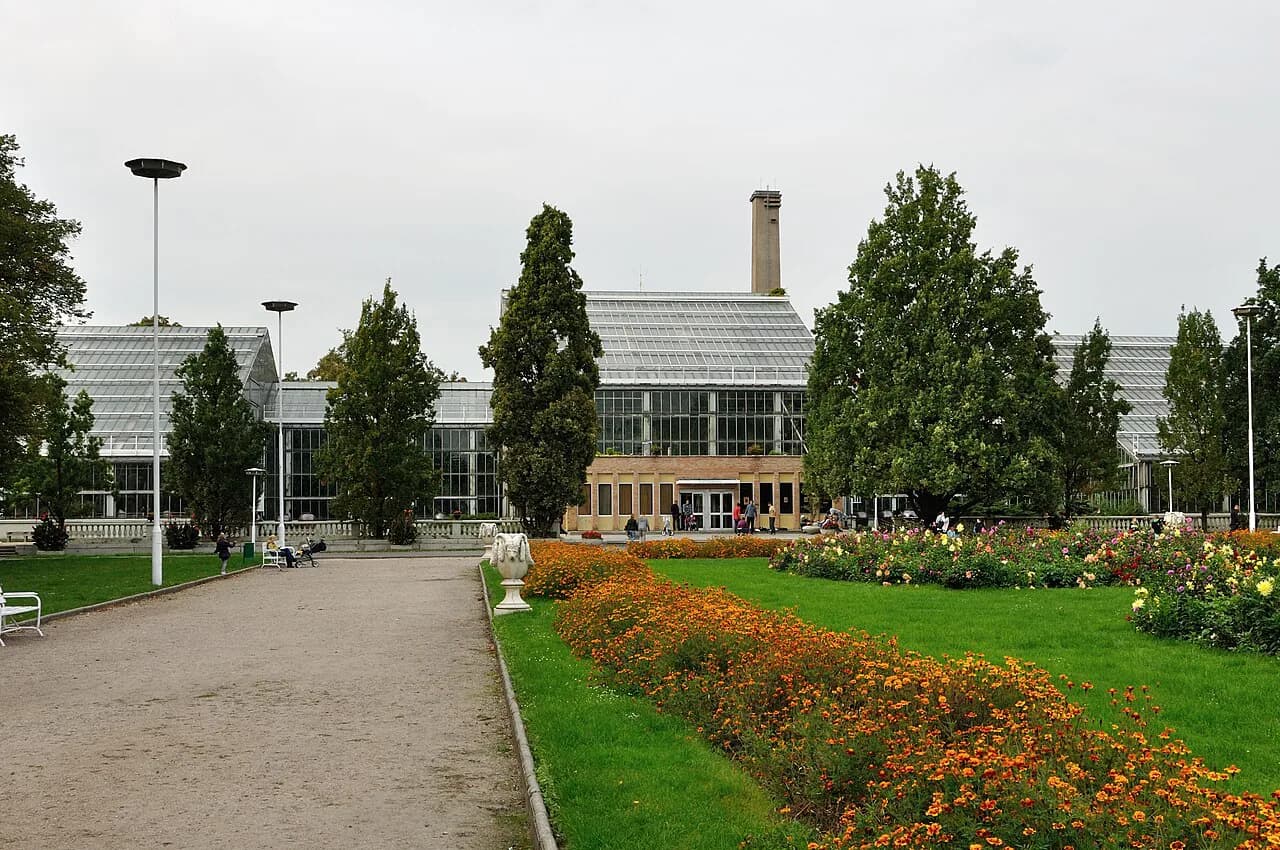
Poznań Palm House: What to See Inside Palmiarnia Poznańska

The Poznań Palm House is worth an hour of a city break if you want a warm, green, rain-proof stop between the Old Market Square and the western districts. Palmiarnia Poznańska packs palms, cacti, orchids and fish ponds into a network of themed pavilions in Wilson Park, and it costs little enough to keep as a flexible filler rather than a headline sight. This guide covers where it sits, how to reach it, what you walk through inside and how long to allow.
Where the Palm House sits: Wilson Park in Łazarz
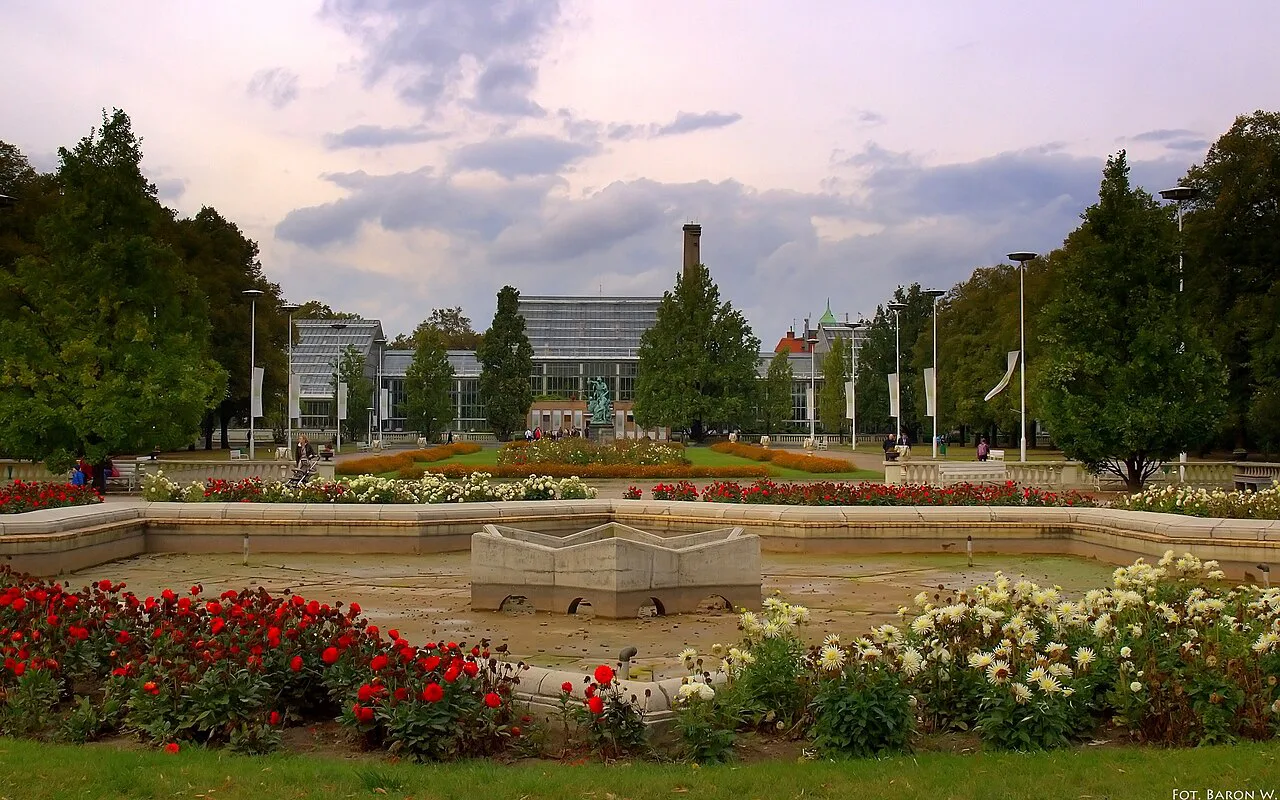
The Palm House stands in Park Wilsona, the Wilson Park, in the Łazarz district on the western side of the city rather than in the historic centre. Its address is Matejki 18, which makes it a straightforward landmark to aim for if you are coming from the main station area on foot or by public transport. The park setting matters: you can pair the glasshouse with a short wander outside rather than treating it as a standalone museum trip.
The building is a botanical exhibition and educational institution, described as the largest of its kind in Poland and among the largest in Europe, which explains why the glasshouse feels roomier than its park-side frontage suggests. It occupies roughly 4,600 square metres inside Wilson Park. Set against a one-to-four-day city break, it reads as a compact, well-defined stop.

How to get to the Palm House
Public transport drops you at the Park Wilsona tram and bus stop right beside the park, served by tram line 14 and buses 201, 213, 218 and 223. Those route numbers identify the lines that stop there rather than a timetable, so check departure times on the day you travel. From the stop, the glasshouse is a short walk into the park.
Wilson Park lies close to the main railway and bus station, so the Palm House slots naturally into a first or last afternoon in Poznań without a detour across town. If you are building a wider plan, the Poznań Attractions: 9 Visitor Guides collection shows how this stop fits alongside the Old Market Square and Ostrów Tumski. Walking from the station through the park is the practical option when the weather is dry.

Inside the pavilions: from rainforest to savanna
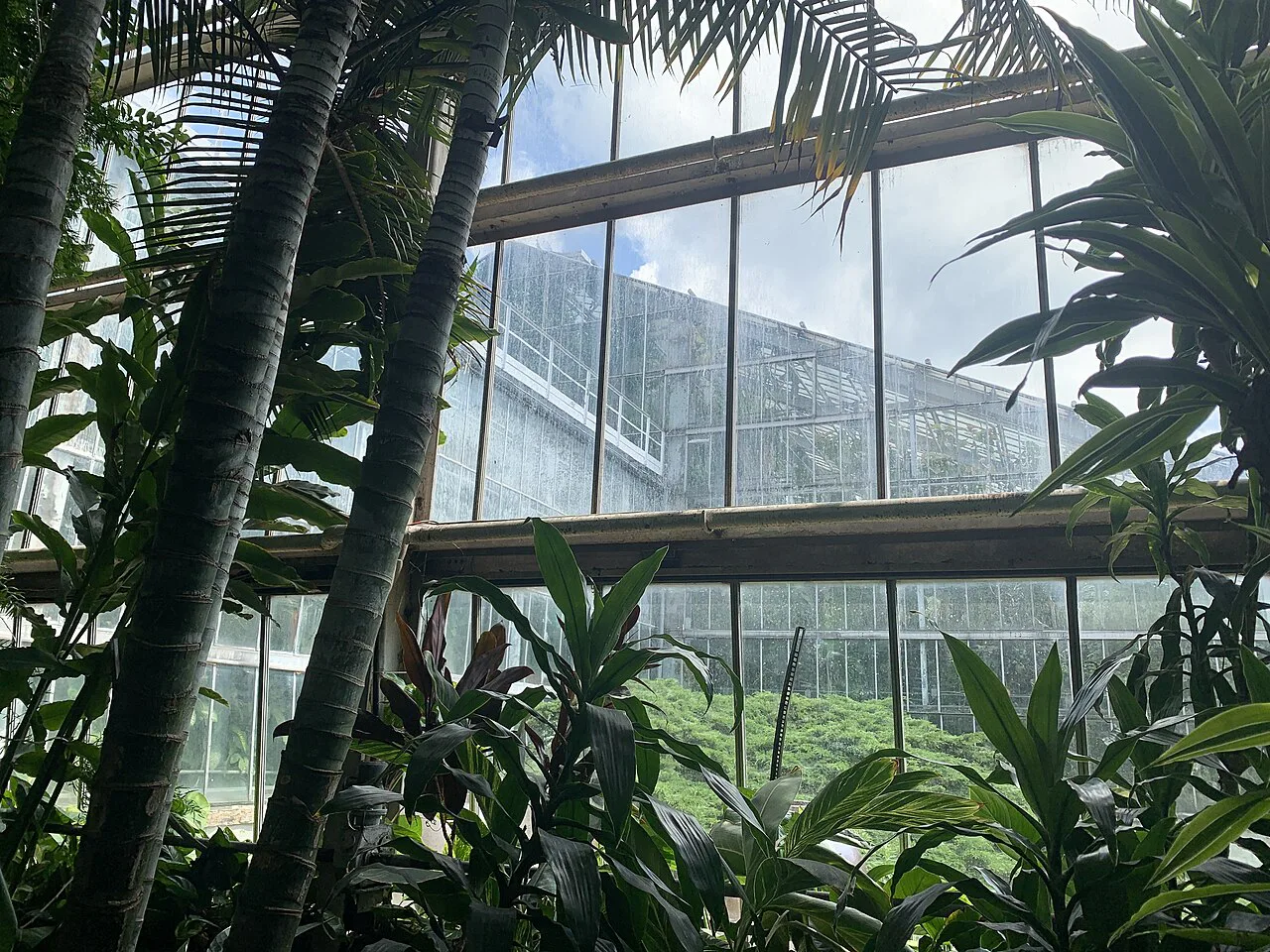
The interior is divided into themed zones that move you from humid subtropical and tropical planting through to drier savanna and desert displays. Along the way you pass palms, cycads, cacti and orchids, with tens of thousands of plants across more than 1,000 species. The route follows a logical sequence, so you naturally walk through every zone in turn rather than doubling back.
Water is part of the experience as well as the planting: the ponds hold more than 170 species of fish, from large koi carp to piranha. Signage explains where plants come from and how they are pollinated, which turns a pleasant stroll into a readable self-guided tour. Expect the labels to be largely in Polish, so download a translation app or lean on the visual displays if you do not read the language.
The layout rewards a slow pace: allow at least half an hour to work through all the climate zones, the aquarium section and the fish ponds, and give yourself closer to an hour if you like reading the plant labels.
The Solarium of 1929 and the fish ponds
The Solarium dates from 1929 and shows rainforest planting, desert cacti and tropical fish in the same stretch of the building. It is the historic heart of the Palm House and the reason the glasshouse feels a century older than the newer visitor facilities around it. Look for it as a distinct room rather than an open section of the main walk.
The fish ponds and aquarium displays give the visit a second layer beyond plants, and reviewers single out the aquatic section as an enjoyable addition. Children tend to spend longer here than adults, which is worth factoring in if you are travelling as a family. Rainy days make the indoor ponds especially appealing, since everything is under cover.
The café among the palms
A café sits inside the glasshouse among the planting, serving cakes and coffee under the palm canopy, and reviewers describe it as a pleasant place to linger. Table space is limited at busy times, so it works better as a mid-visit break than a full meal stop. If you want a proper lunch, plan to eat in the centre afterwards.
The main practical niggle raised by visitors is the lack of explanatory material in languages other than Polish at the entrance. That is a reason to arrive with a rough idea of the zones rather than to skip the place altogether. Families with young children often find the visuals carry the visit regardless.
Tickets: adult, concession and the Poznań City Card
A consumer travel listing quotes admission at 16 złoty for adults and 12 złoty for children and students, with the same 12 złoty rate for holders of the Poznań City Card. Treat those figures as a guide only and confirm the current tariff at the ticket desk or on the Palm House's own website before you budget on them. They are modest enough that the Palm House rarely decides whether a city card pays off.
A cloakroom is available for bags, which is useful if you are arriving straight from the station with luggage. Buying online in advance is worth considering later in the day, when queues build at the ticket window.
Opening days, hours and what to expect
One listing reports the Palm House as closing on Mondays, with hours of 9:00 to 18:00 Tuesday to Friday and 9:00 to 17:00 on Saturdays, Sundays and public holidays, and last entry an hour before closing. That listing also shows the site as temporarily closed, so do not plan a visit around those hours without checking the official Palmiarnia Poznańska website for the day you intend to go.
Arriving early is the simplest way to avoid queues, and the glasshouse is a sensible wet-weather plan in a city where many sights involve walking between squares and churches. If your Poznań days are tight, slot the Palm House into a park afternoon rather than a dedicated half-day. The nearby Old Zoo is within walking distance if you want to extend the outing.
How long to allow and what is nearby
Plan on an hour, with a two-hour ceiling if you stop for coffee and linger at the fish ponds. That leaves the rest of the day for the centre: Plac Wolności is about a kilometre away, the Royal Castle and the Town Hall around two kilometres, and the Old Zoo next door. The Palm House is a filler rather than the reason for the trip.
Back towards the centre, the Old Market Square and its town hall are the obvious next stop, and Stary Rynek is where most city-break itineraries begin. If you are planning beyond this one building, the broader things to do in Poznań list covers the main squares, museums and parks worth your time.
For a contrast to the glasshouse, Lake Malta in Poznań offers an outdoor waterside walk, while the Poznań Imperial Castle and the National Museum in Poznań (Muzeum Narodowe w Poznaniu) cover the city's history and art. The Poznań Croissant Museum, known locally as Rogalowe Muzeum Poznania, is a lighter option for families.
Is the Palm House worth an hour?
Yes, if you want a low-cost, weatherproof hour between bigger sights, or if you are travelling with children who will enjoy the fish and the jungle heat in February. Skip it if your Poznań days are short and you would rather spend the time on Ostrów Tumski, the Citadel park or the archaeological museum.
Frequently Asked Questions
How long does it take to visit the Poznań Palm House?
Allow at least half an hour to walk the climate zones, see the fish ponds and stop at the café; give it closer to an hour if you read the plant labels, and up to two hours only if you plan to linger.
Is the Palm House in Poznań open on Mondays?
A consumer listing gives Monday as a closing day, with Tuesday to Friday running 9:00 to 18:00 and weekends 9:00 to 17:00, but it also shows the site as temporarily closed. Confirm the day you plan to visit on the official website before travelling.
Do I need to book Poznań Palm House tickets in advance?
Buying online is useful if you arrive later in the day and want to skip the ticket queue, but the glasshouse is small enough that advance booking is rarely essential.