
National Museum in Poznań: A Visitor's Guide

The National Museum in Poznań is the city's main art museum and the collection most worth your time if you want Polish painting under one roof. Allow around two hours for the highlights, or three if you linger in the Spanish and Italian rooms. This guide covers where the building sits, how to get there, the painters to look for and what else is within a few minutes' walk; for the wider city, see Poznań Attractions: 9 Visitor Guides.
What the museum is and where it sits on Aleje Marcinkowskiego
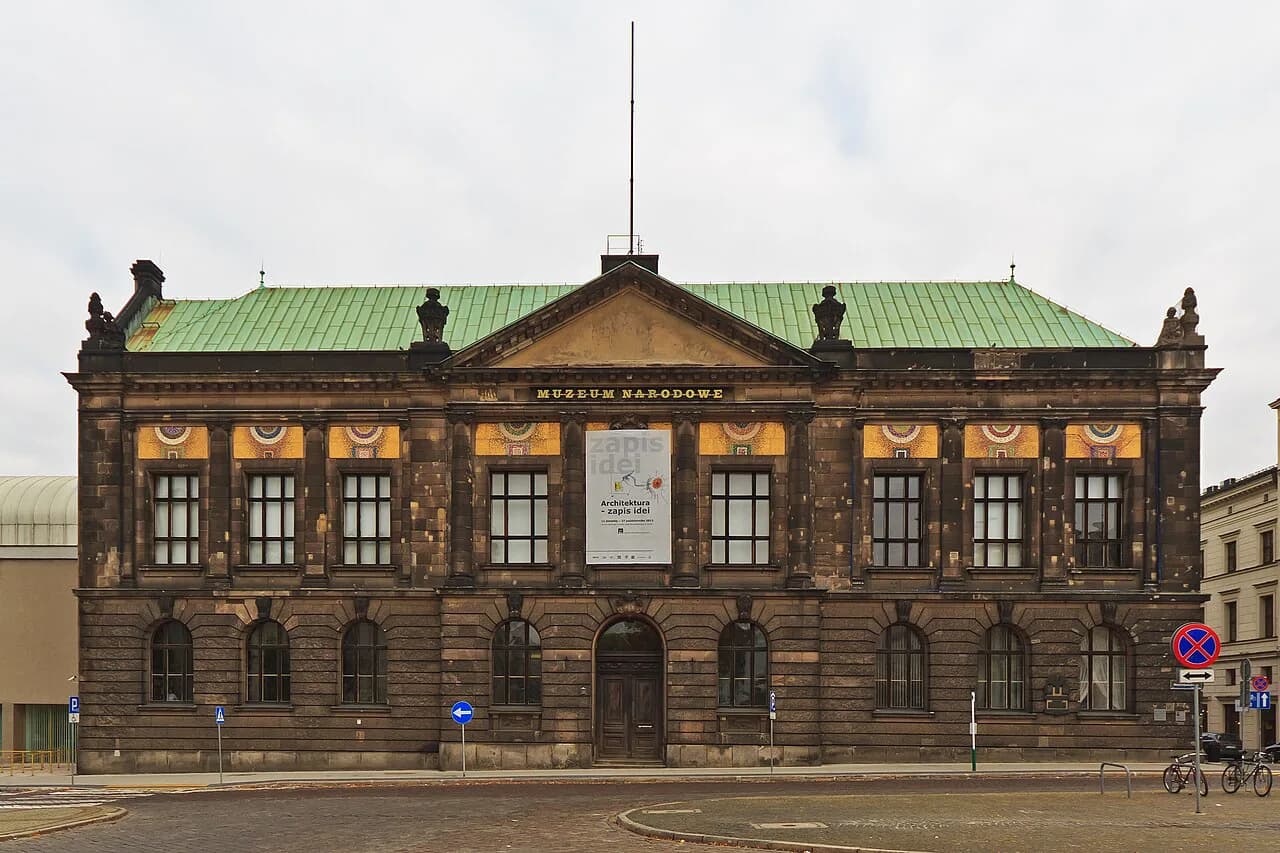
The main building stands at Aleje Karola Marcinkowskiego 9, on the wide avenue that runs along the western edge of the old centre. That address puts it a few minutes from the Imperial Castle and the Stary Rynek, so it slots easily into a day in the middle of town. The collection dates back to 1857, when the Museum of Polish and Slavic Antiquities was founded, and the present building is early 20th century.
Beyond painting, the museum holds ancient Egyptian and Greek art and examples of decorative and applied craft, so there is more here than pictures. Families often find the ancient material easier to engage with than the baroque portraits. If you have an hour left after the main galleries, spend it here; otherwise keep it as a reason to come back.

Getting there from Poznań Główny and around the centre
From Poznań Główny, the walk through the centre to Aleje Marcinkowskiego takes roughly 15 to 20 minutes, which makes it feasible even on a short city break. Trams and buses run along the avenue and nearby streets, so any route heading for the old centre puts you within a few minutes of the door. If you are staying centrally, walking is simplest and lets you approach past the Imperial Castle or Adam Mickiewicz Square.
Parking in the immediate area is paid and tight, so leave the car behind unless you are driving in from outside the city. The location on the avenue lets you combine the museum with the old market square on foot; the centre is compact but the distances add up over a day.

The Gallery of Painting and Sculpture: Polish art over centuries
The Gallery of Painting and Sculpture is the core of the visit, tracing Polish art from the Middle Ages through to the 20th century. You get medieval panels, baroque casket portraits and later canvases in a run of high-ceilinged rooms. That long chronological sweep is what makes the museum worth more than a quick look, so give it the bulk of your time.
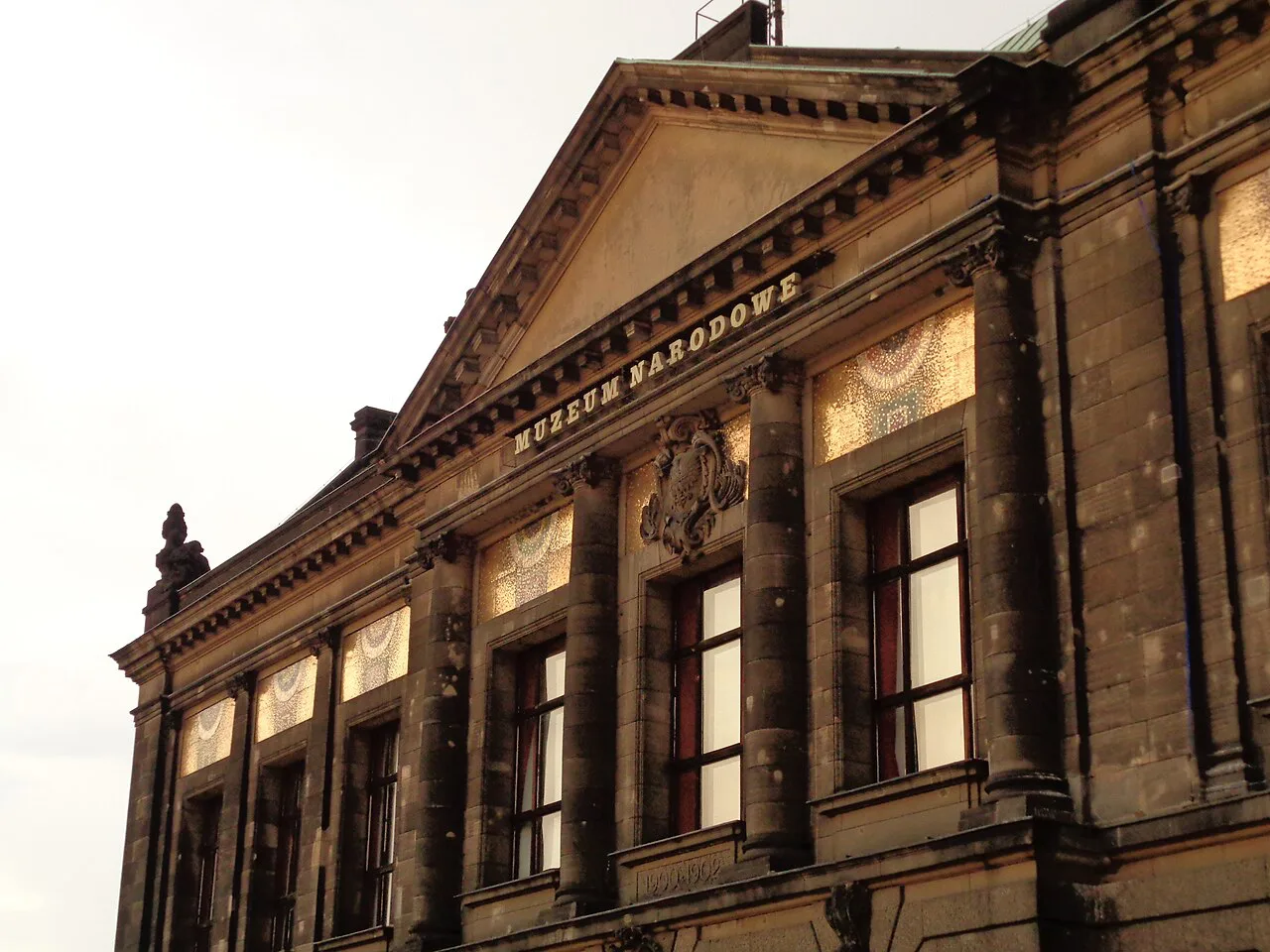
The building's early 20th-century architecture, with a facade and rooms designed to carry a collection of this size, is part of the experience. The layout rewards slow walking rather than ticking off rooms. If you are visiting with someone who prefers less art, aim for a focused hour in this gallery.
The named Polish painters to look for: Matejko, Wyspiański and Malczewski
The Polish holdings include works by Jan Matejko, Stanisław Wyspiański and Jacek Malczewski, names that anchor the national story in painting. Matejko is the history painter, Wyspiański the playwright and designer whose visual work carries its own weight, and Malczewski the symbolist. Seek them out in the Polish rooms rather than expecting them in the European galleries.
Which specific canvases hang on any given day depends on the museum's display and loans, so treat these names as a guide to what the collection is known for rather than a fixed list. The reward for going in without a checklist is discovering the lesser-known Polish names around them.
Western European holdings: Flemish, Dutch and Italian pictures
The Western European galleries give the museum its breadth, with Flemish and Dutch paintings by artists such as Jan van Goyen, Salomon Ruysdael and Willem Claesz Heda, and works by Quentin Massys and Joos van Cleve. Italian pictures include pieces by Sofonisba Anguissola, Bronzino, Bellini and Strozzi. For a museum outside the big capitals, that is an unusually strong spread.
There are also early 19th-century German works, including pieces by Arnold Böcklin and Johann Overbeck. If you have seen the big national collections in London or Amsterdam, the pleasure here is the smaller scale and the chance to look closely. Flemish and Dutch painting is worth a little extra time.
Poland's only collection of Spanish painting: Zurbarán, Ribera and Velázquez
The Spanish collection is the museum's distinctive draw: as the City of Poznań's culture pages describe it, this is Poland's only collection of Spanish painting, with works by Zurbarán, Ribera and Velázquez. Spanish old masters are thin on the ground in this part of Europe, so this is the room to prioritise if you want something you will not see elsewhere in the country. It is also the reason a detour here beats another hour in a cafe.
Ask for the Spanish rooms when you arrive, because the collection is small enough to miss if you drift through the Polish galleries first. If you are short on time, do this and the Polish gallery and leave the rest.
Ancient Egyptian and Greek collections and the decorative arts
Beyond painting, the museum holds ancient Egyptian and Greek art and examples of decorative and applied craft. These collections give the place a wider range than a pure picture gallery, and they are a good change of pace if you have been standing in front of canvases for an hour. Families often find the ancient material easier to engage with than the baroque portraits.
These collections give the place a wider range than a pure picture gallery, and they are a good change of pace after an hour of canvases. If you have time to spare after the main galleries, this is where to spend it.
Other departments: ethnography, military history and musical instruments
The museum also runs specialised departments covering ethnography, military history and musical instruments, which makes it a regional institution rather than a single gallery. They are not all in the same building, so check which department you want before setting out.
For most visitors on a one- to four-day city break, the main building on Aleje Marcinkowskiego is enough. Treat the other departments as a bonus for a longer stay or a specialist interest.
How much time to allow and how to handle temporary exhibitions
Two hours covers the Polish gallery and the Spanish and Italian rooms at a reasonable pace; three hours lets you take in the Flemish, Dutch and ancient material without hurrying. The museum also hosts temporary exhibitions, lectures and masterclasses, so a special show can add an hour.
If you only have a morning, do the Polish gallery and the Spanish collection and skip the rest. If it is raining, the museum is a sensible way to spend a wet afternoon in the centre, and you can pair it with the Imperial Castle next door.
Tickets and opening days: where to confirm before you travel
Ticket prices and opening days are set by the museum and change, so confirm them on the museum's website, www.mnp.art.pl, before you travel; you can also phone +48 61 856 80 00 to ask about a specific gallery.
Because a visit here often sits in the middle of a day, check the day before you plan to go and build in a fallback nearby. The Imperial Castle and Adam Mickiewicz Square are within a few minutes' walk if the museum is busier than expected. Assume nothing about which day it closes until the museum confirms it.
What is nearby: Imperial Castle, Adam Mickiewicz Square and Lake Malta
The Imperial Castle in Poznań stands a short walk from the museum, and Adam Mickiewicz Square sits between the two, making a natural pairing for a half-day in the centre. Lake Malta in Poznań, with waterside paths and open-air space a few kilometres east of the centre, offers a different side of the city.
The Old Market Square, with the Poznań town hall, is also within walking distance and makes a good end to the day. If you want something lighter after the museum, the Poznań Croissant Museum tells the story of the St Martin's croissant and suits a shorter attention span.
Is the National Museum worth half a day in Poznań?
Yes, if you want Polish painting and the Spanish collection in one stop. It is the strongest art museum in the city, sits in the middle of the centre and fits neatly with the Imperial Castle and the old market square. Allow two to three hours and check the museum's own site for the day's opening and ticket details before you set out.
Explore more Poznań guides
Frequently Asked Questions
How long does it take to visit the National Museum in Poznań?
Two hours covers the Polish gallery and the Spanish and Italian rooms at a steady pace, and three hours lets you add the Flemish, Dutch and ancient material. A major temporary exhibition can add an hour, so check what is showing before you go.
What is the best way to reach the museum from Poznań Główny?
The walk through the centre takes roughly 15 to 20 minutes, and trams and buses along the nearby streets also put you within a few minutes of the door. If you are staying centrally, walking is the simplest option.
Which paintings should I prioritise if I only have an hour?
Start with the Spanish collection, which the city's culture pages describe as Poland's only collection of Spanish painting, then spend the rest of the hour in the Polish gallery. That gives you the museum's distinctive holding and a sense of the national collection without rushing every room.