
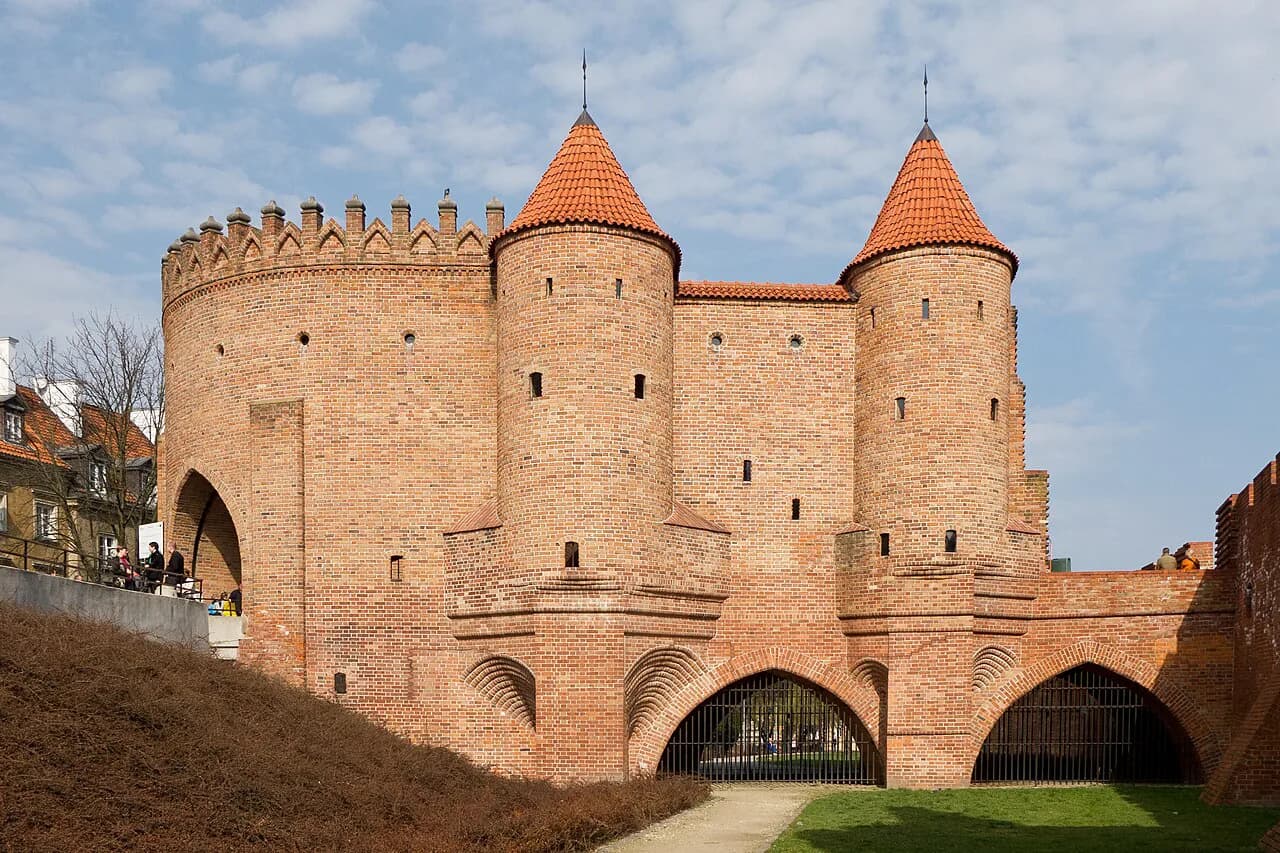
Barbican Warsaw: What to See at the Old Town Gate and Walls

The Barbican is a free stop: you can walk through the gate and along the defensive walls all year round at no cost, and allow about 20 to 30 minutes. The paid part is the small exhibition inside the structure, which the Museum of Warsaw runs as a summer-only display at Nowomiejska Street 15/17. This page covers what the Barbican is, how to reach it from the Old Town, what the walls give you and when the interior opens.
What the Barbican is and where it sits
The Barbican is a red-brick 16th-century gateway that now stands between Warsaw's Old Town and New Town, rebuilt after the Second World War. That reconstruction matters to how it reads today: the brickwork is crisp and the gate sits neatly in the street line rather than looking like a ruin, so treat it as a piece of the Old Town circuit rather than a standalone monument.
It is one of a small number of surviving traces of the city's fortifications in this part of Warsaw, and older brick from earlier centuries is still visible in the walls. Pair that with the reconstruction story and the Barbican makes most sense when you look at it as a gateway you pass through on the way up Nowomiejska Street, not as a building you queue for.
The structure is a branch of the Museum of Warsaw, which is the institution that runs the interior display and sets the visiting rules. If you are building a wider Warsaw plan around single sights, the Warsaw Attractions: 10 Visitor Guides hub collects the other named stops worth slotting in.
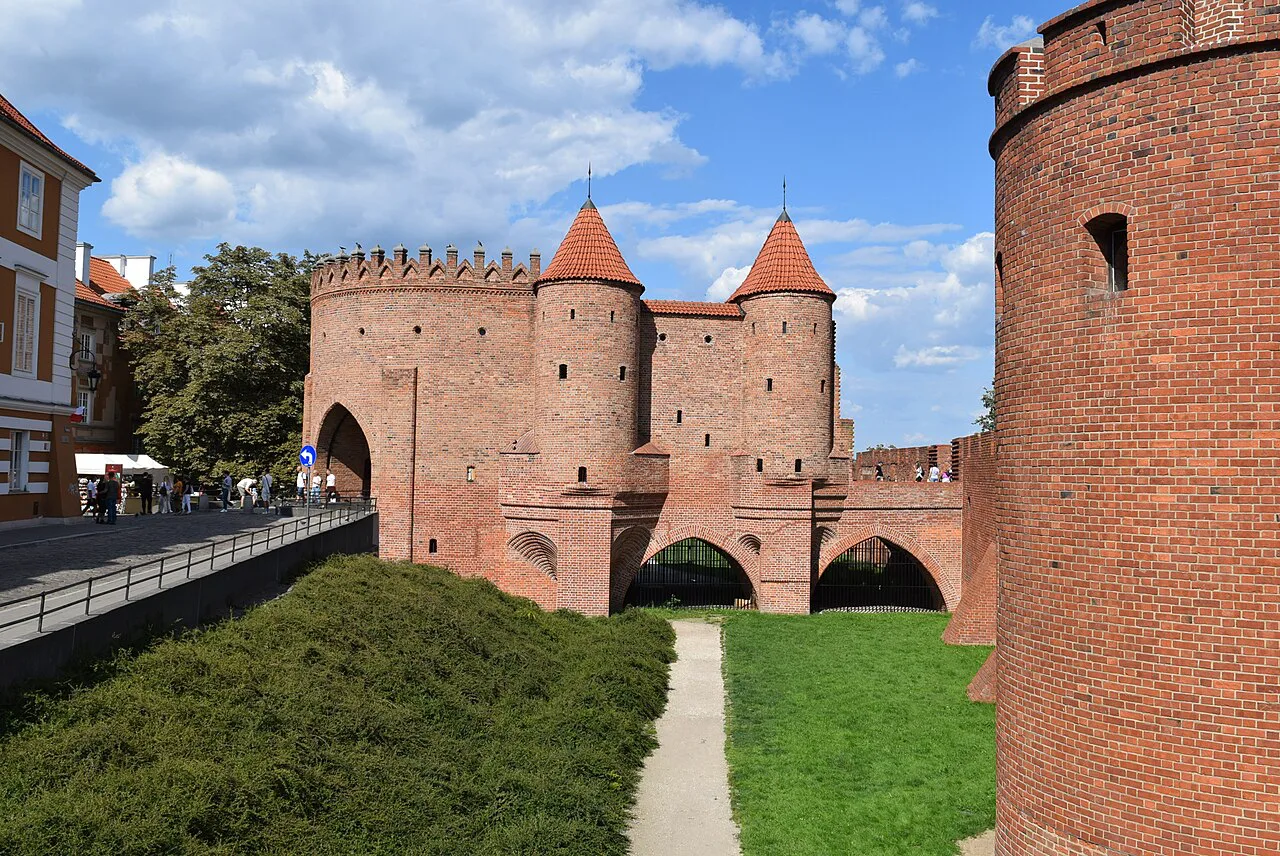

Where it is: Nowomiejska Street and getting there on foot
The address is Nowomiejska Street 15/17, in Warsaw. The gate sits at the top corner of the Old Town, where the market square and the streets running north meet the start of the New Town, so you reach it on foot rather than by planning transport. From the Old Town square it is a few minutes' walk north along the main street.
Getting there is easiest on foot through the Old Town lanes, and the museum itself points visitors towards public transport for the wider trip, with timetables on the city transport site. Build the Barbican into a walk that starts at Castle Square, continues up through the Old Town and finishes at the New Town rather than making a separate journey.
Walking through the gate and on the walls is free and possible all year round, which makes it a sensible filler stop when you are between the Old Town and the New Town. The Museum of Warsaw advises that the possibility of visiting the Barbican depends on the prevailing weather conditions, so keep it as a flexible stop rather than the anchor of a fixed schedule.

Walking the gate and the defensive walls
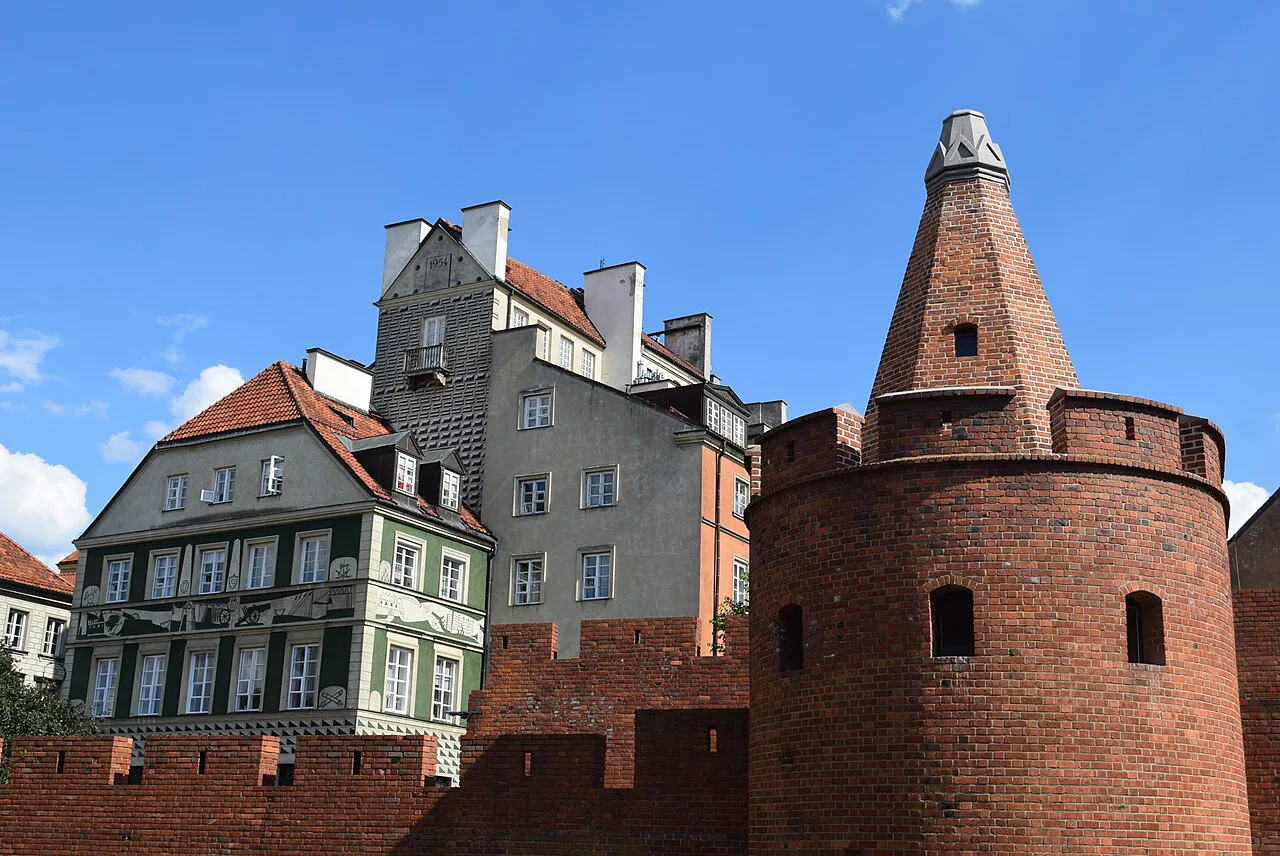
The gate passage and the wall walkway are the part most visitors actually use, and neither costs anything: passing through the gate and along the walls is free. That means you can loop through it several times across a short break without thinking about tickets.
The walkway gives you a raised look back over the Old Town's roofs and lanes, which is the best reason to climb it rather than simply walk beneath the arch. Give it 20 to 30 minutes end to end, and longer if you stop for photographs where the walls open onto views.
Set expectations around what the wall walk is: a short stretch of reconstructed fortification, not a full circuit of the old city. If you want a bigger, more structured historical stop afterwards, the Warsaw Uprising Museum is the obvious next booking on the same trip, while the Palace of Culture and Science covers the post-war city from a different angle.
The exhibition inside and the summer season
The interior display is small and seasonal. The Museum of Warsaw publishes the exhibition as opening only in the summer season, from May 20 to August 29, with the interior closed in the autumn and winter. Treat those dates as the published season rather than as fixed calendar dates that shift each year.
Opening days inside that window are limited: Wednesday and Saturday, 1PM to 5PM. That is two afternoons a week, so if the exhibition is the reason you are coming, plan your Warsaw days around a Wednesday or Saturday.
Because the interior depends on a short season and a two-day week, the sensible approach for anyone visiting outside the summer months is to enjoy the gate and walls and skip the interior entirely. If you are in Warsaw for a Wednesday or Saturday in the season, the display is quick to add to an Old Town morning.
Ticket prices for the exhibition
Inside the season, admission is 12 PLN regular and 8 PLN reduced, payable for the exhibition only; the gate and walls themselves remain free. Two tickets and a free wall walk is an inexpensive addition to a day that already includes the Old Town.
The museum does not publish a free-entry day for the Barbican, so budget for the ticket if you want the interior. Buy on arrival rather than building the day around an advance booking, since the display is small and the hours are narrow.
How much time to allow and what to combine nearby
Allow around 30 minutes for the gate and walls and up to an hour in total if you also see the exhibition on an opening afternoon. That is short enough to slot the Barbican into a half-day Old Town walk without displacing anything else.
Nearby, the Old Town square, the streets running south towards the Royal Castle and the New Town lanes north of the gate all sit within a few minutes' walk. For a full short-break plan, the things to do in Warsaw guide sets these stops into a wider one- to four-day structure.
If the weather has closed the wall walk, the Copernicus Science Centre is an indoor alternative across the city, and the Koneser vodka factory covers the Praga side on a different day. Neither is close to the Barbican, so treat them as separate outings rather than same-afternoon add-ons.
Practical notes for the gate and walls
The gate passage is a public route, so walk through rather than stopping in the arch, and keep the wall walkway clear where it narrows. The structure is reconstructed rather than ancient fabric throughout, and describing it that way to anyone you are travelling with saves disappointment.
Check the Museum of Warsaw's plan-your-visit page before travelling if the exhibition matters to you, since the season and the Wednesday and Saturday hours are the parts that change the plan. The walls need no booking at all.
Is the Barbican worth the stop?
Yes, as a 20 to 30 minute free stop on an Old Town walk, and as a paid add-on only on a Wednesday or Saturday in the May 20 to August 29 season. Come for the walls and the view back over the Old Town, and treat the interior as a bonus rather than the main event.
Anyone with only a day in the city should pass through the gate on the way between the Old Town and New Town rather than making a dedicated trip. If you want a longer, more substantial historical visit, book the Warsaw Uprising Museum instead and keep the Barbican as the short stop it is.