
Neon Museum Warsaw: a visit guide to Muzeum Neonów

The Neon Museum (Muzeum Neonów) is a compact attraction on the fourth floor of the Palace of Culture and Science, not a standalone building, so the entry point matters as much as the collection. Allow around 45 to 60 minutes for the signs themselves and treat it as one stop in a central Warsaw day rather than a whole afternoon. This guide covers the location, the route to the entrance, hours, ticket prices in złoty and what you actually see once inside.
What the Neon Museum is
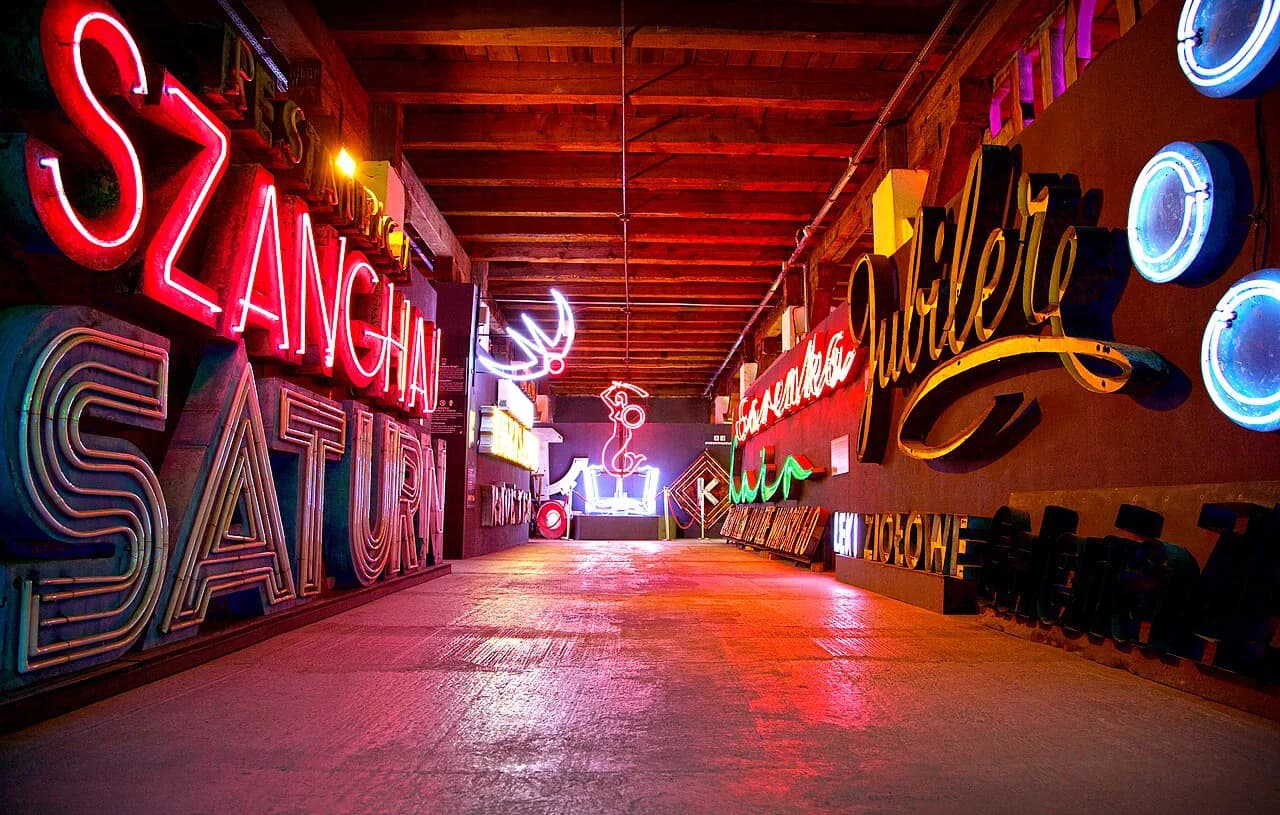
Muzeum Neonów exists to document and protect the illuminated advertising signs put up across Poland after the war, the residue of the large-scale neonisation campaigns run in Eastern Bloc countries. The permanent collection runs to roughly one hundred old neons and other advertising installations, and the museum notes that many were designed by artists and graphic designers also associated with the Polish School of Poster.
The institution has been involved in researching and renovating old neons since 2005, and it also campaigns to keep historic signs in their original street settings rather than only indoors. That work includes the red Cepelia rooster restored to the facade of a building at ul. Grzybowska 37, now carrying a new neon message. If you want to see signs in the wild as well as in the collection, that address is a worthwhile addition to the museum visit.

Where the museum is
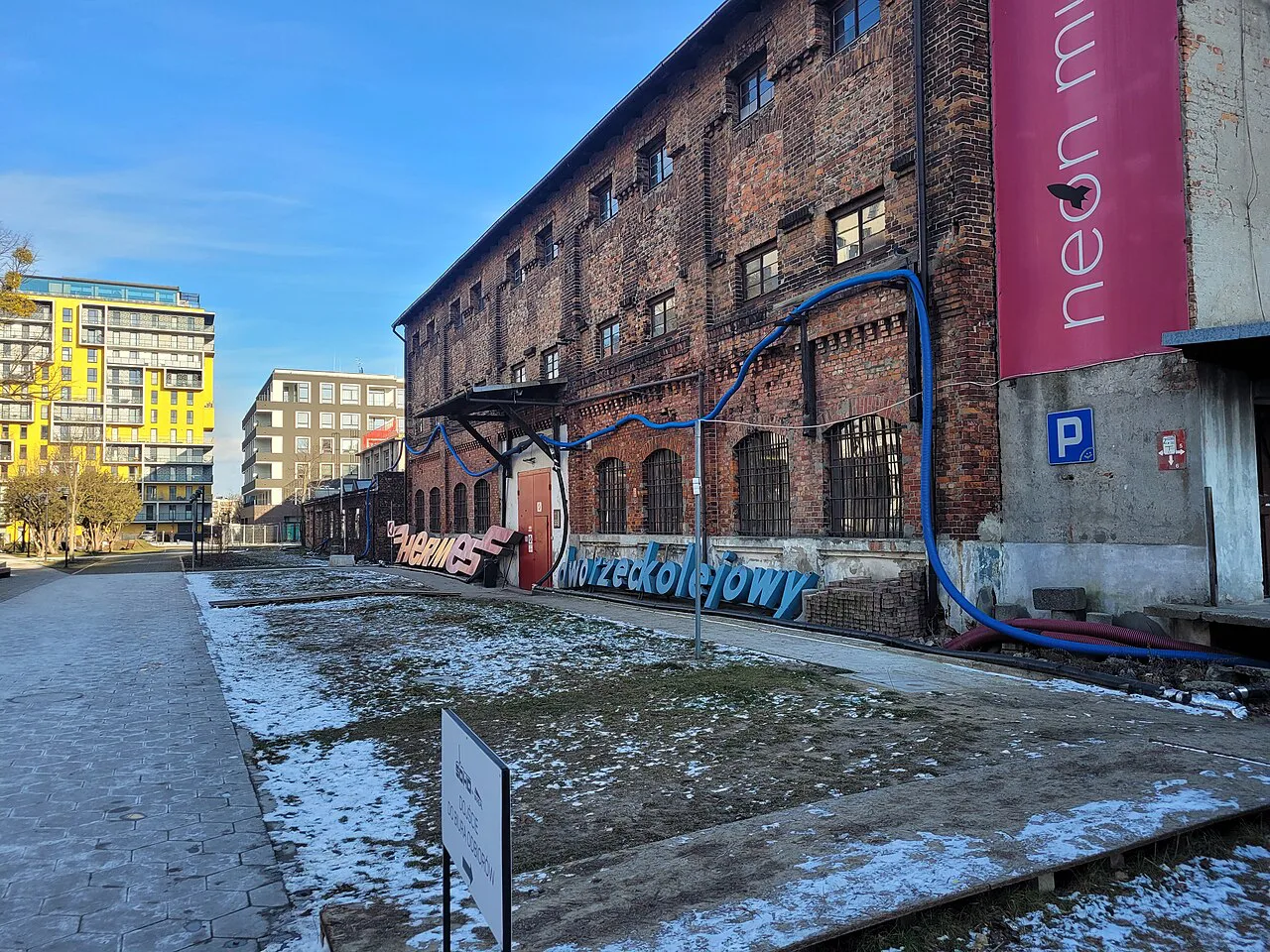
The museum occupies the fourth floor of the Palace of Culture and Science at Plac Defilad 1, in the Śródmieście centre. You enter through the main entrance on ul. Marszałkowska and take the side lifts from level -1 up to the fourth floor. That detail saves a lot of wandering: the palace is vast, and the museum is not signed from every side.
Because the museum sits inside the palace, you can pair it with the building's other draws without leaving the complex. The wider Warsaw Attractions collection is a useful way to slot the palace and its neighbours into a route through the centre.

Opening hours
The museum opens every day of the week. From Monday to Thursday and on Sunday the doors are open from 11:00 to 18:00, while Friday and Saturday extend the close to 19:00. That makes an evening slot on the two late days realistic if your daytime is already full.
The seven-day pattern is convenient for short city breaks, since a Monday arrival does not force you to reshuffle the plan as it can with museums that close one day a week. Check the museum's own site before travelling in case of seasonal changes.
Tickets and prices
A standard ticket costs 28 zł and a reduced ticket 18 zł, with free admission for children under six. Tickets are sold at the museum's ticket office. Budget roughly the price of a couple of coffees for two adults.
Because the museum is a private institution that does not receive public funding, ticket income and donations support both the collection and the sign-restoration work around the city. Paying at the desk is a direct contribution to keeping the neons lit.
What you actually see
The appeal is proximity: the signs are displayed so you can inspect them close up, and much of the pleasure is in the lettering, colour and craftsmanship of a form of commercial art that has largely vanished from the streets. The collection mixes large illuminated lettering with other advertising installations, and there is no fixed route, so a slower pass through the rooms repays the attention.
Some pieces come from outside Poland; the museum's own news page records a České Dráhy logo from Brno-Královo Pole railway station, dated to around 1960, joining the collection. Read the signs as documents of design history rather than nostalgia alone and the compact rooms repay a slower pass.
How long to allow
Plan for about 45 to 60 minutes if you read the displays and photograph a few favourites. The space is modest, so a longer slot only makes sense if you are visiting with a guided group or attending one of the museum's events.
The sensible trade-off is to pair the museum with the rest of the palace and the central streets around Plac Defilad and ul. Marszałkowska. A museum of this size works badly as the anchor of a whole afternoon but very well as a colourful break between larger sights.
Booking, groups and after-hours visits
The museum takes individual visitors and larger groups, and runs special events, educational sessions, film screenings and guided tours. It also offers viewing of the collection outside normal opening hours on prior arrangement, for an extra charge. If a group visit or a private slot matters to you, contact the museum in advance rather than turning up and hoping.
The museum's news page is where temporary exhibitions and one-off events are announced, so it is the place to look if you want something beyond the permanent collection.
Nearby after your visit
Stepping out of the palace puts you on Plac Defilad with the wide sweep of ul. Marszałkowska close by, an easy starting point for the central sights. The Palace of Culture and Science itself is the obvious first stop if you have not yet seen it, and the wider Warsaw Attractions collection is a useful way to plan the rest of a central route. If you are building a longer trip, the city's other options for things to do in Warsaw sit within reach of this area.
For a heavier historical counterweight on the same trip, the Warsaw Uprising Museum (Muzeum Powstania Warszawskiego) is a substantial museum devoted to the 1944 uprising. It pairs naturally with the Neon Museum as a study in contrasts: one documents the city's losses, the other its mid-century visual confidence.
Is the Neon Museum worth a slot in your Warsaw plan?
Yes, if you want a short, distinctive collection that explains a slice of post-war Polish design, and you are already near the Palace of Culture and Science. Treat it as a 45-to-60-minute stop with a fixed price at the desk, and build the rest of the day around the central streets and the palace itself.
Skip it if you are short of time and want only the headline sights; a single compact floor cannot compete with a full afternoon elsewhere. Check the museum's site for the day you plan to go, then walk in through ul. Marszałkowska and take the side lifts from level -1.
Explore more Warsaw guides
Frequently Asked Questions
Where exactly is the Neon Museum in Warsaw?
Muzeum Neonów is on the fourth floor of the Palace of Culture and Science at Plac Defilad 1, in the Śródmieście centre. You enter through the main entrance on ul. Marszałkowska and take the side lifts from level -1 up to the fourth floor.
What are the opening hours?
The museum opens every day of the week. The museum's published hours are Monday to Thursday and Sunday from 11:00 to 18:00, and Friday and Saturday from 11:00 to 19:00.
How much does a ticket cost?
A standard ticket is 28 zł and a reduced ticket 18 zł, and admission is free for children under six. Tickets are sold at the museum's ticket office.
How long should I allow for a visit?
Allow around 45 to 60 minutes for the signs themselves. The space is modest, so treat it as one stop in a central Warsaw day rather than a whole afternoon.
Can I visit outside normal opening hours or bring a group?
The museum takes individual visitors and larger groups, and it offers viewing of the collection outside normal opening hours on prior arrangement for an extra charge, so contact it in advance.
What will I see in the collection?
A permanent collection of roughly one hundred old neons and other advertising installations. The signs are displayed so you can inspect them close up, and many were designed by artists and graphic designers also associated with the Polish School of Poster.