Poznań Castle: The Royal Castle on Góra Przemysła
Poznań's Royal Castle on Góra Przemysła is a rebuilt medieval seat holding the Museum of Applied Arts. Here's what it is and what to see nearby.
On this page
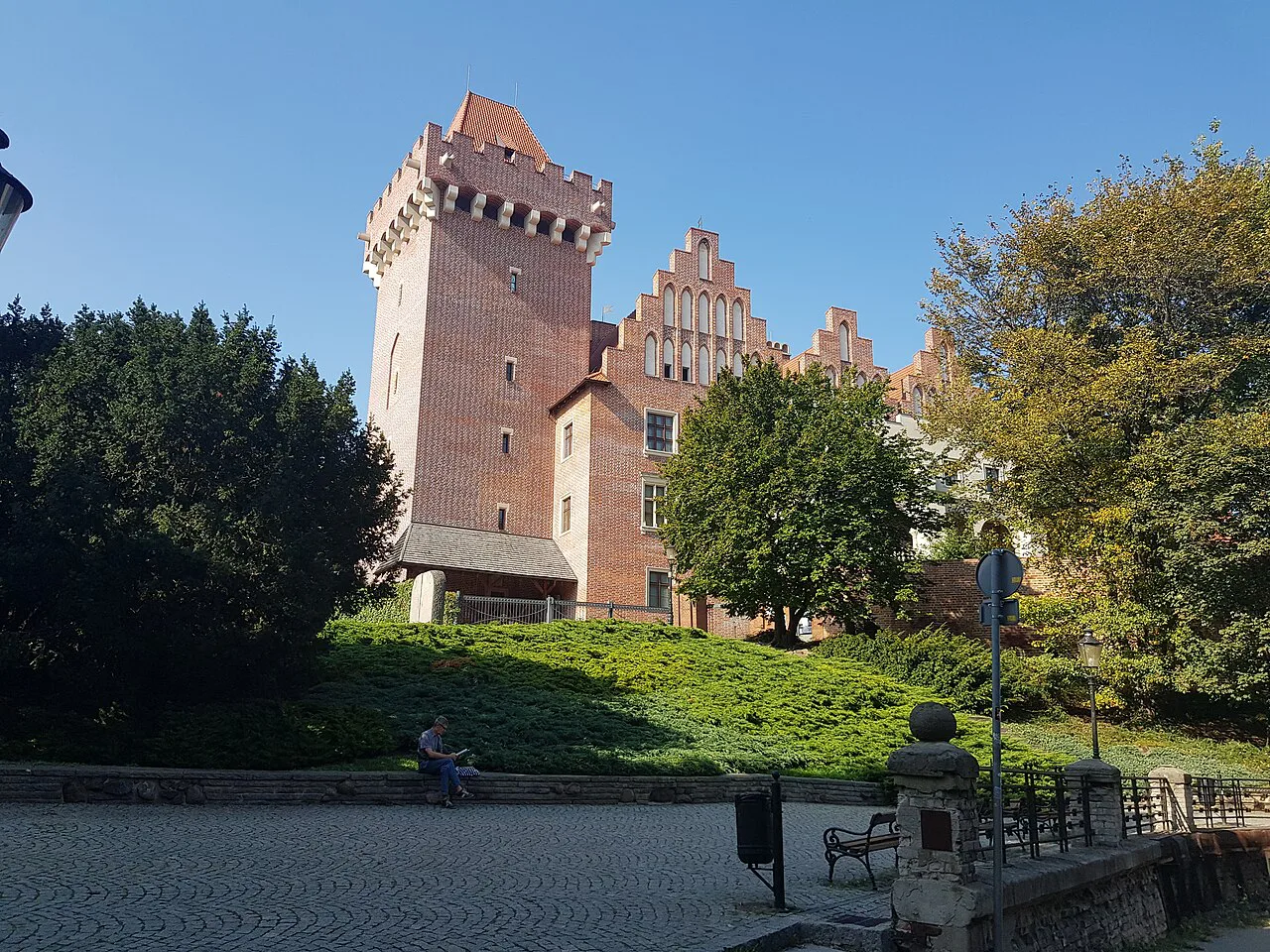
Poznań castle most often means the Royal Castle on Góra Przemysła, the hill above the Old Town where a rebuilt wing now houses the Museum of Applied Arts, a branch of the National Museum in Poznań. It is a small, quick visit built on very old foundations rather than a sprawling palace, so give it an hour and pair it with the streets below. This guide explains what stands there today, how much of it is reconstruction, and how to tell it apart from the city's other castle.
What Poznań castle is and where it sits on Góra Przemysła
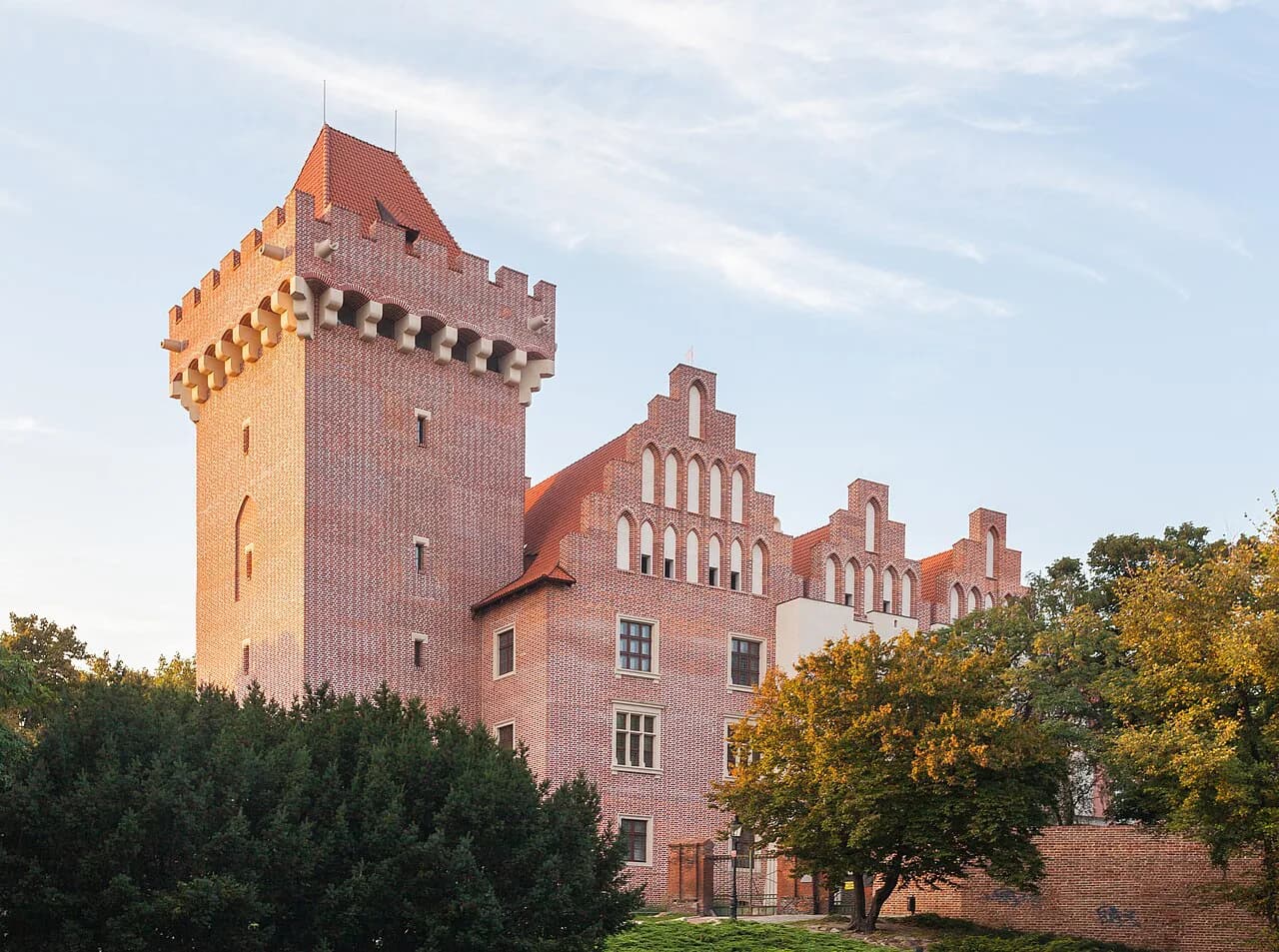
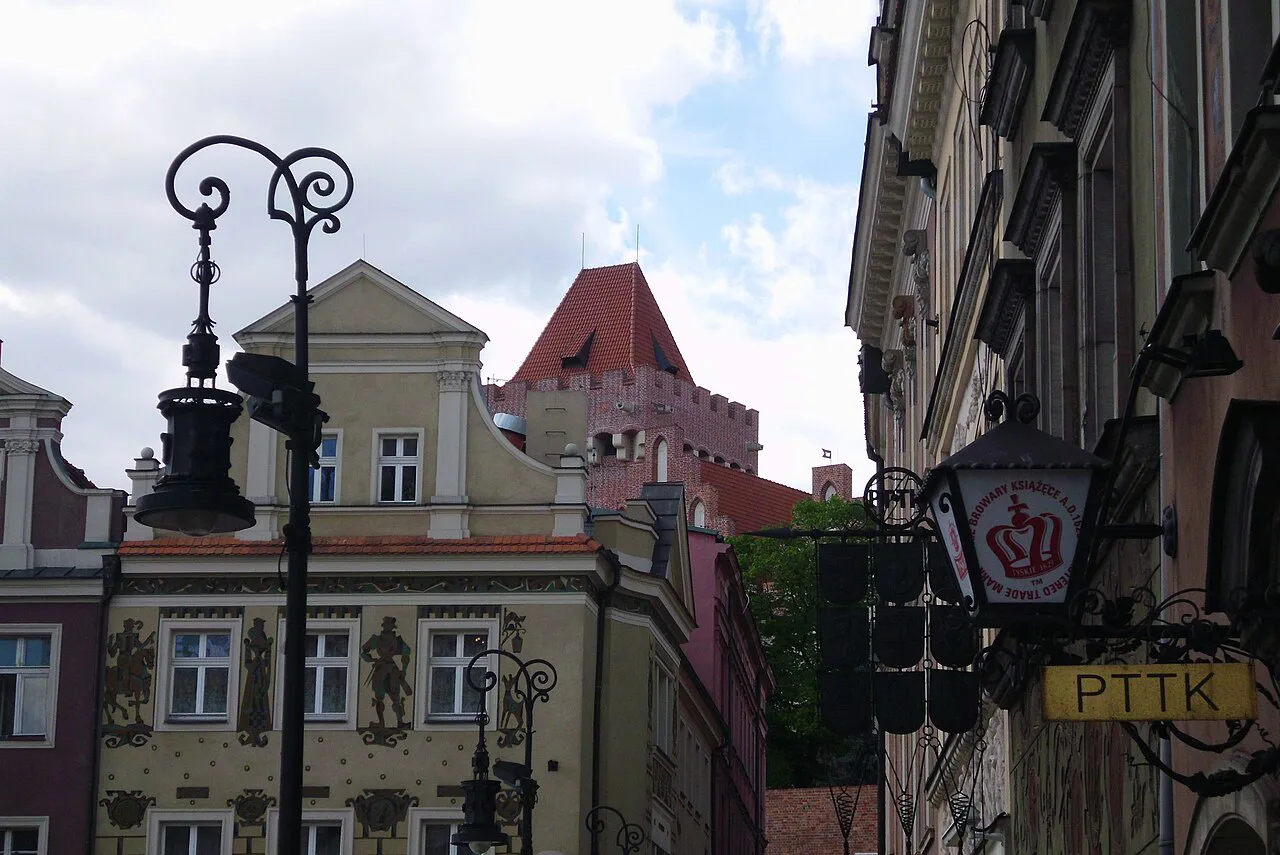
The Royal Castle occupies the top of Góra Przemysła, the modest hill that rises directly south of the Old Town market square. That position is the whole point: you climb a few minutes from the Rynek and arrive at a terrace looking back over the roofscape. The address is Góra Przemysła 1, and the museum inside is the Museum of Applied Arts, whose contact number the regional catalogue lists as +48 61 856 81 83.
Treat the hill as a viewpoint stop rather than a destination in its own right, because the standing building is one wing and a tower, not a full castle circuit. The reward is the setting and the collection, not ramparts and dungeons. If you are short of time in Poznań, come up for the outlook and decide on the museum once you see the entrance.
Royal Castle vs Imperial Castle: two different buildings, one keyword
Search for a Poznań castle and you will hit two buildings that share nothing but the word. The Royal Castle on Góra Przemysła is the medieval royal seat, ruined and partly rebuilt. The Imperial Castle is a neo-Romanesque former Imperial residence on Święty Marcin, built between 1904 and 1910 for the German Emperor Wilhelm II, and it sits in the Castle District a comfortable walk west of the Old Town.
Decide which one you actually want before you set out. For royal history, a hilltop view and a design collection, go to Góra Przemysła. For a monumental early-twentieth-century interior and the university quarter around it, go to Święty Marcin. Many visitors do both, since they are on the same side of the centre.
The Royal Castle in brief: from Piast residence to ruin and reconstruction
The hill was fortified early, with a residential tower on an eleven-metre square projection, a gate tower and a bridge on the southern side, and walls on the north, west and south while the steep eastern slope relied on timber and earth. Polish rulers visited, and the castle also served as the seat of the royal governors of Wielkopolska. Under Casimir III the Great a rectangular tower of about thirteen by fifteen metres rose on the northern edge, with three rooms on each level.
The building's fortunes followed the city's wars. A fire in 1536 all but destroyed it, and it was rebuilt between 1536 and 1551 as a brick building with crow-stepped gables; later damage came with the Swedish deluge and the Great Northern War. By 1783 a baroque-classical archive had been built on the ruins of the northern part, and in the nineteenth century a new building went up on the Gothic cellars of the southern part, serving as Prussian regency offices, a court and an archive until 1939.
The Second World War left only walls standing. One wing and the so-called royal kitchen, the residential tower on the northern slope, were rebuilt between 1959 and 1964, while plans to reconstruct the whole castle came to nothing for decades. A social commission formed in 2002 and ran a design competition; the winning scheme looks back to the castle's shape after the mid-sixteenth-century rebuilding, with a high tower, crow-stepped roofs and an arcaded loggia at the front.
What survived and what was rebuilt after 1945
Set your expectations by the word reconstruction. The sixteenth-century interior is gone: only ceramic floor fragments, brick moulders and sandstone window cornices survive from that building's decoration. What you see today combines the rebuilt wing and tower of the 1960s with the newer reconstruction work on the hill.
That makes the castle a lesson in how Poznań has chosen to remember its past rather than a walk through original royal rooms. Read the hill that way and it is rewarding; expect a preserved medieval fortress and you will be disappointed.
The Museum of Applied Arts inside the castle
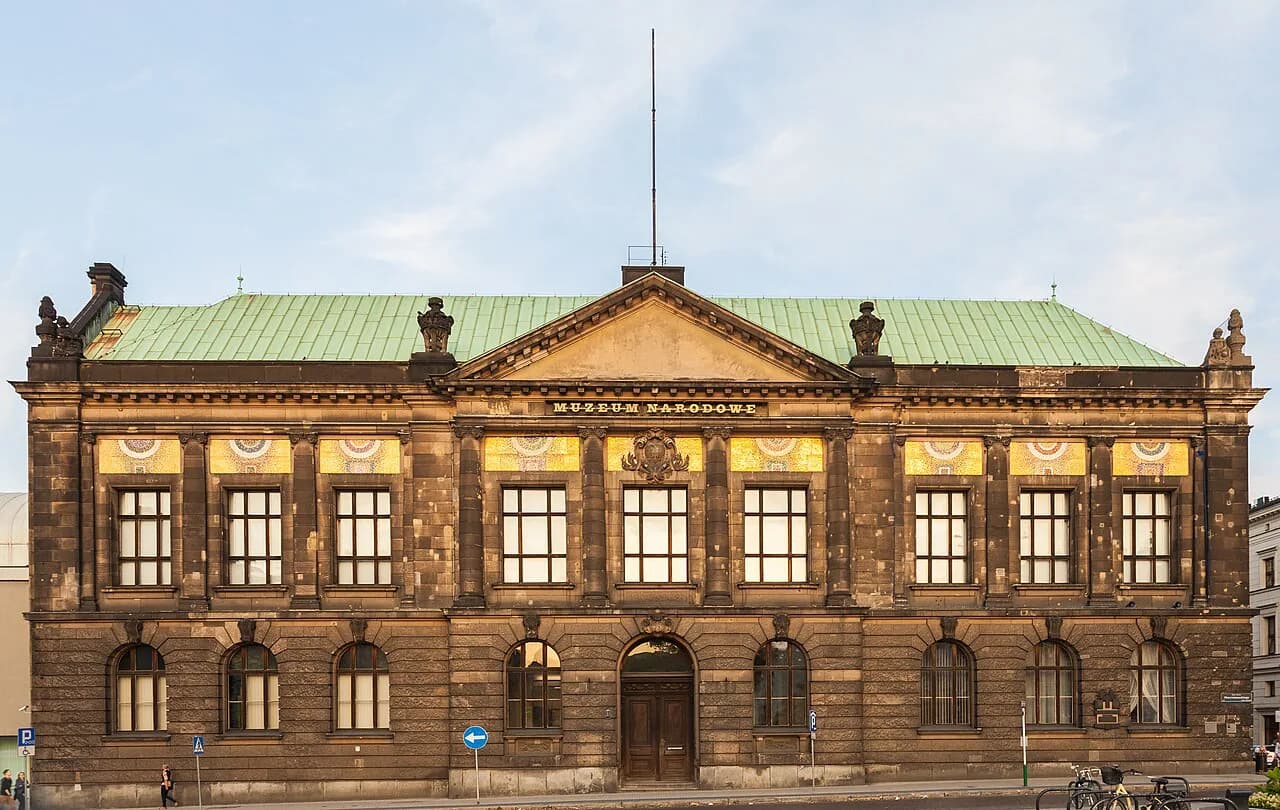
The interior is given over to the Museum of Applied Arts, a branch of the National Museum in Poznań, so the visit is a design and craft collection in a castle shell rather than a castle museum. Expect furniture, ceramics, glass and metalwork rather than arms and armour. That suits anyone building a museums-in-Poznań itinerary around objects and interiors.
Check the museum's own pages for confirmed opening days, ticket prices in złoty and any free-entry day before you travel, because Polish museums commonly close one day a week and the day varies by venue. Those details change, so a same-week check is worth the two minutes.
Nearby sights on and around the hill to pair with a visit
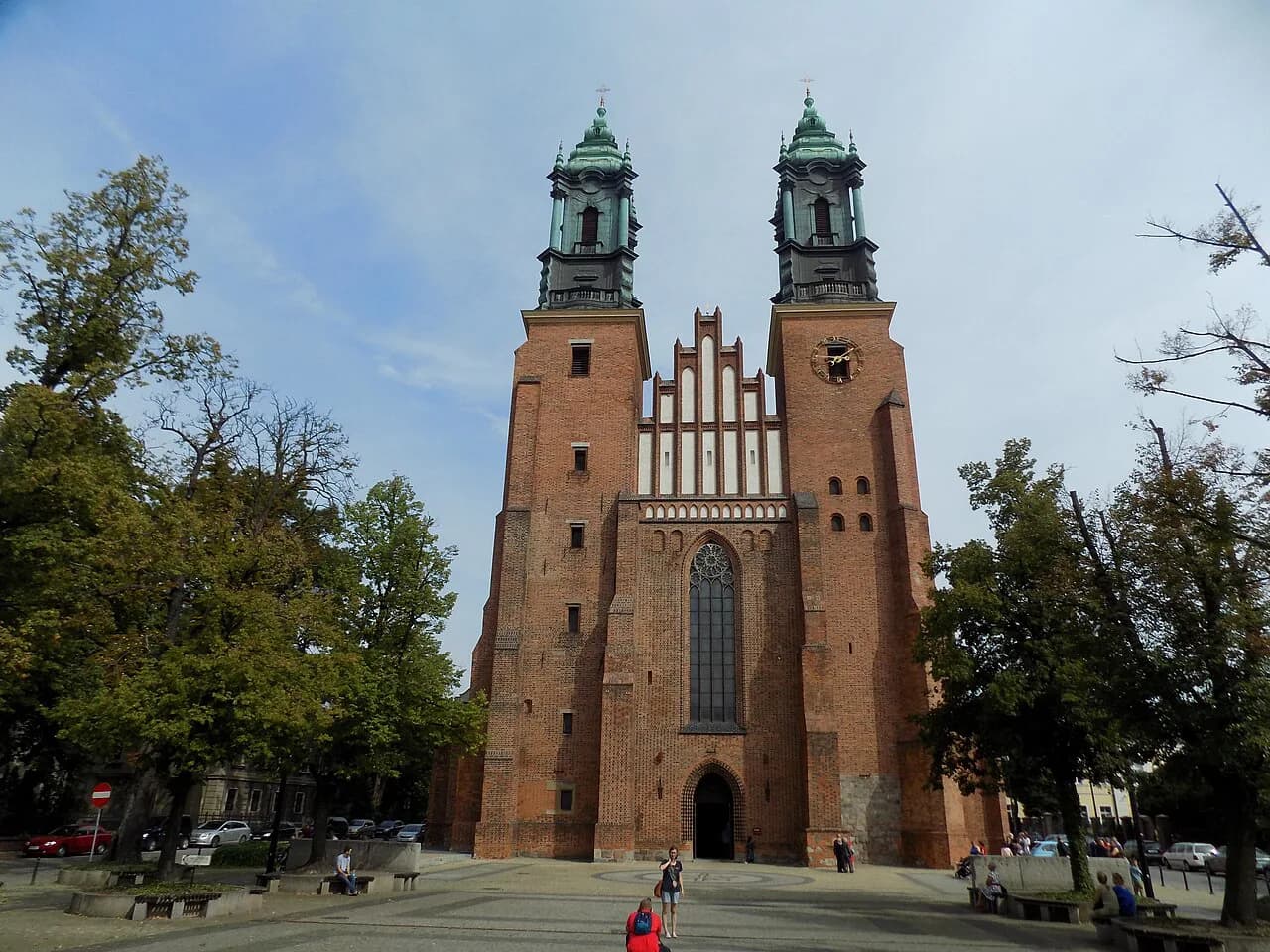
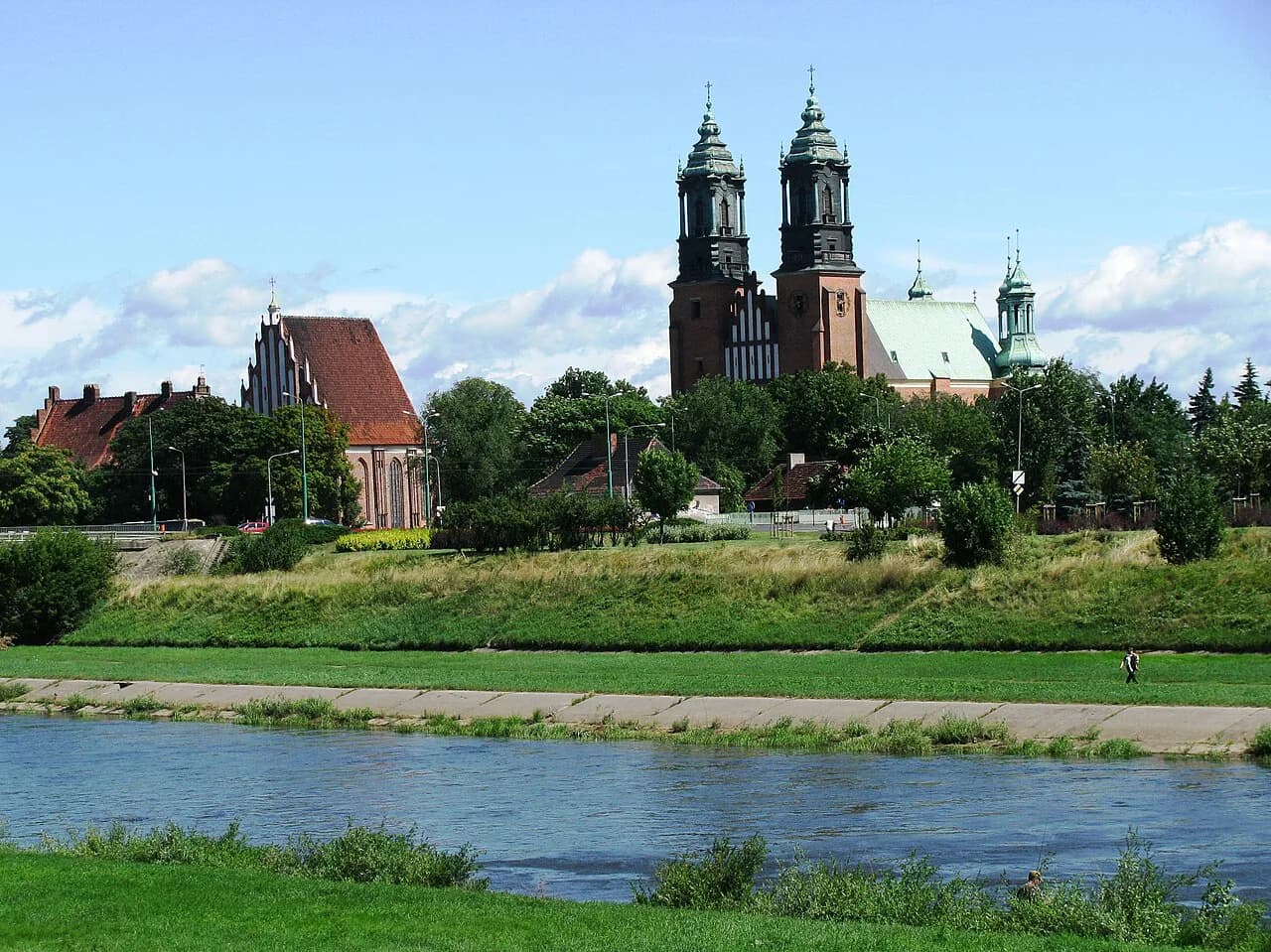
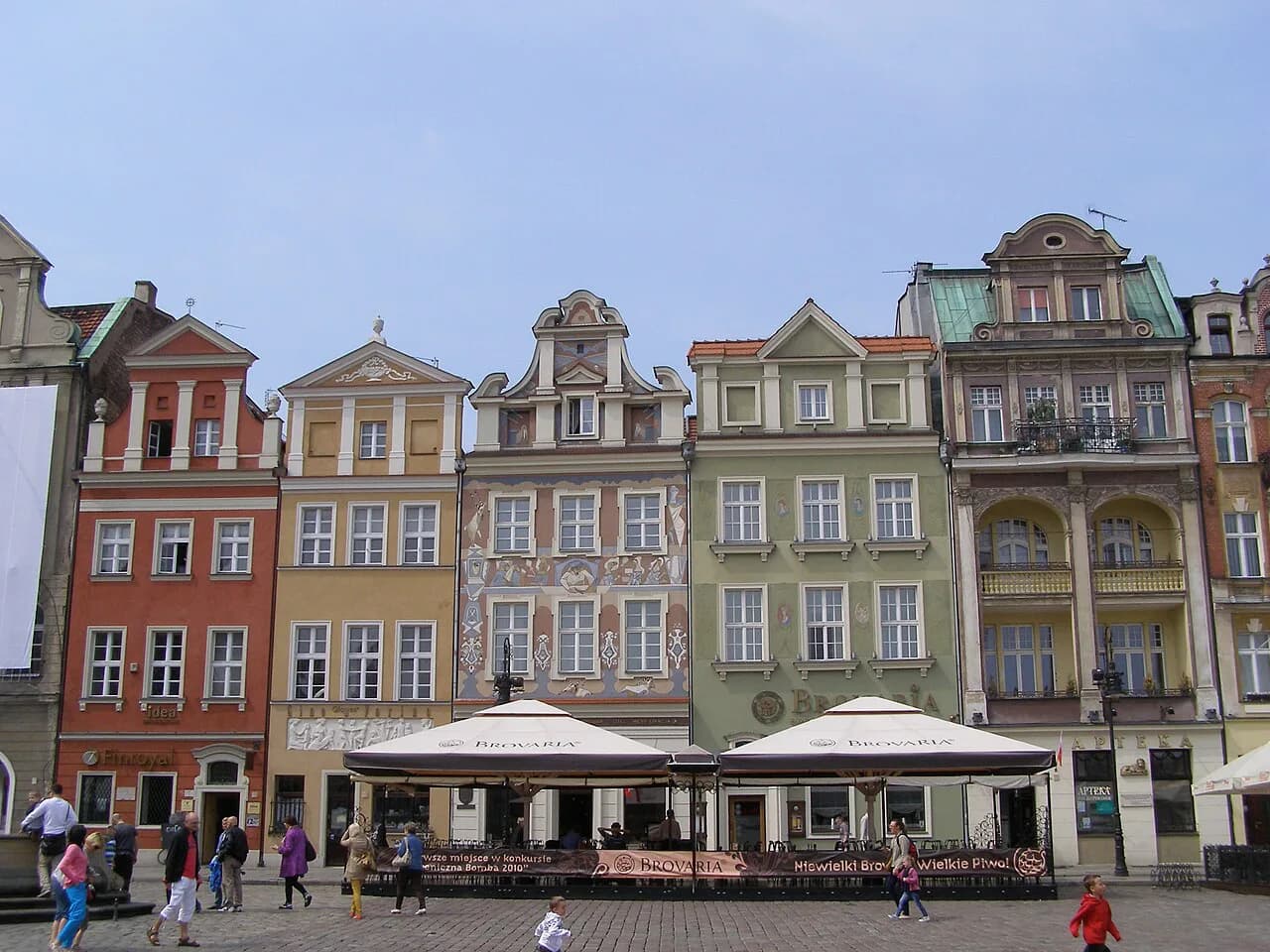
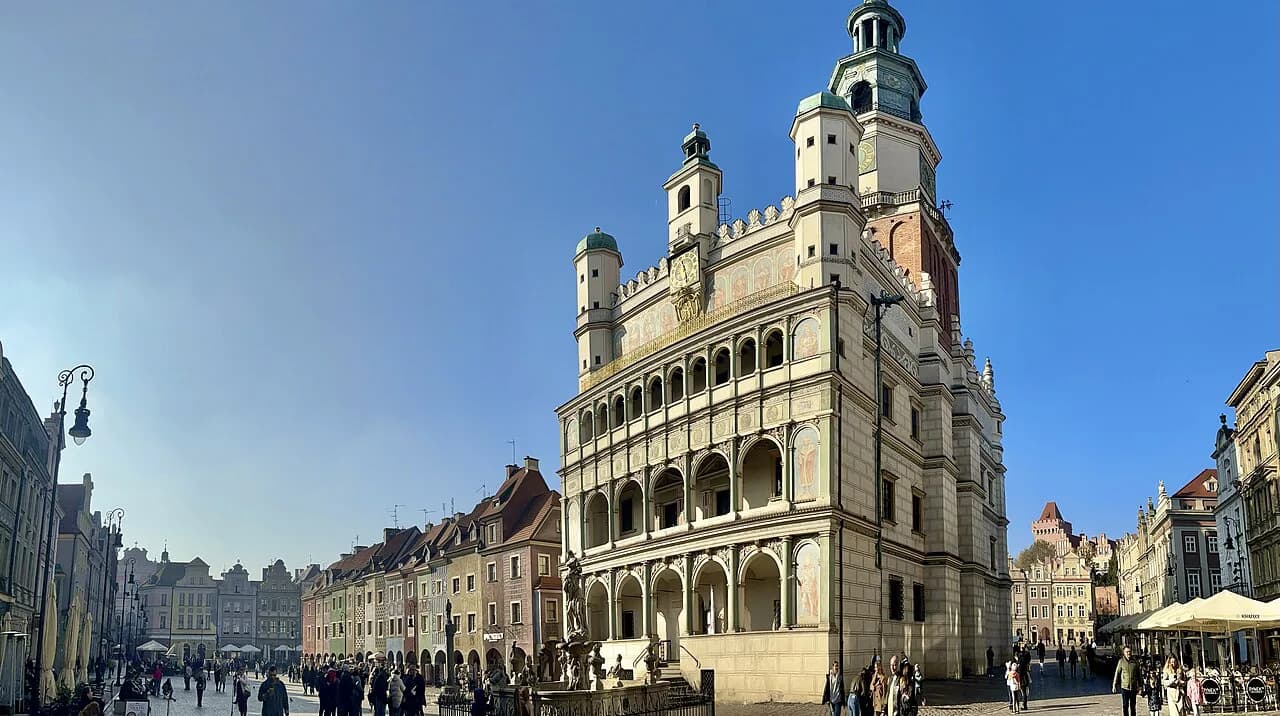
The Old Town is a few minutes downhill, so the natural pairing is the market square with its town hall and the surrounding streets, followed by the climb to the castle terrace. From there you can walk on to Cathedral Island for the cathedral and the quiet lanes around it, which gives you a half-day of churches, squares and one hill without any transport.
For travellers following the city's twentieth-century history, the German Nazi occupation and the fighting in 1945 are documented at sites across Poznań, and the Imperial Castle on Święty Marcin is the obvious next stop in that direction. Use the Poznań WW2 Sites guide to place the occupation and the 1945 fighting in the streets you are already walking, and give that story unhurried time rather than a box-ticking stop.
Where to find opening days and ticket prices
Ticket prices and opening hours for the Museum of Applied Arts are published by the National Museum in Poznań for the castle branch, so buy or confirm at the museum rather than relying on an older guidebook figure. Polish museum tickets in złoty are generally modest by UK standards, but they are revised, and a free-entry day may apply on one weekday.
Note too that Sunday trading restrictions in Poland mean some shops stay shut, though museums and cafés generally follow their own schedules. That makes a Sunday castle and Old Town day perfectly workable, provided you have confirmed the museum is open.
Royal Castle or Imperial Castle first?
Choose the Royal Castle on Góra Przemysła if you want the oldest layer of Poznań, a short hilltop climb and a design collection in a reconstructed shell. Choose the Imperial Castle if you want a grand early-twentieth-century residence and the streets around Święty Marcin. If you have a full day, do the Old Town and the hill in the morning and walk west to Święty Marcin afterwards.
Explore more Poznań guides
Frequently Asked Questions
Is the Poznań castle original?
Only in part. The Royal Castle on Góra Przemysła was wrecked in the Second World War, and the standing wing and residential tower were rebuilt between 1959 and 1964, with later reconstruction on the hill following a design competition launched in 2002. Surviving original decoration from the sixteenth-century building amounts to floor fragments, brick moulders and sandstone cornices.
How long does a visit to the Royal Castle take?
Plan around an hour for the hill and the Museum of Applied Arts, plus the walk up from the Old Town. It is a compact site, so it works best combined with the market square and Cathedral Island rather than as a standalone half-day.
Sources
Notes for your next Polish city break
Optional updates to our Poland guides.
You might also like
Continue reading
More guides you'll find useful