Szczecin History: The Periods That Shaped the City
Szczecin's history in brief: Griffin dukes, Swedish rule, Prussian Stettin and the shipyards, plus the castle and churches where you can still see it.
On this page
Szczecin's history is best read as a sequence of handovers: a Griffin duchy, a Swedish interlude, two centuries as Prussian Stettin, then a Polish city after 1945. For a short break that means one compact historic core around Castle Hill and the Odra, where a castle, three Brick Gothic churches and the Old Town Hall carry most of the story. This guide takes each period in turn and points to the building where you can still see it.
The griffin you will notice on facades, tenements and street water pumps across the city is the emblem of the House of Griffins, the dynasty that made Szczecin its capital. A large winged griffin stands on the square in front of the Town Hall, lit in colour in the evening, so the motif is hard to miss even on a first afternoon.
The Griffin dukes and the Duchy of Pomerania
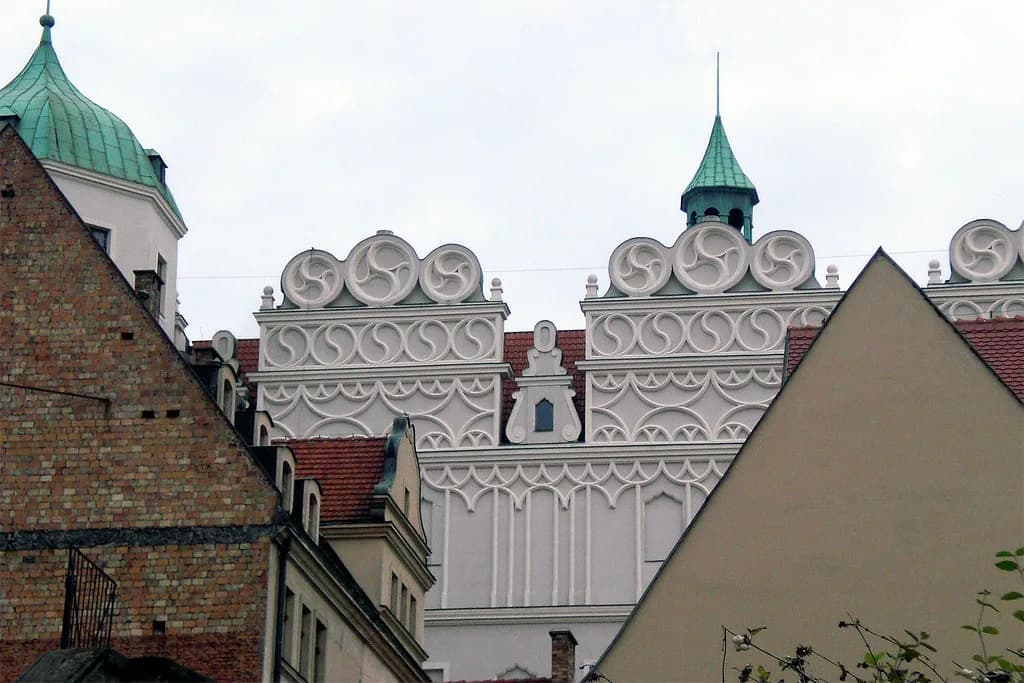
The oldest settlement on Castle Hill dates from the 8th century, and in 1124 the citizens of Szczecin were baptised after Duke Wartislaw I, the first known Griffin ruler, converted. Bishop Otto of Bamberg carried out two Christianising missions at the request of Bolesław III Wrymouth, and Wartislaw's wooden manor stood beside a pagan temple to Triglav. That layers pagan, ducal and Christian history onto the same small hill above the river.
Duke Bogislaw X unified the Duchy of Pomerania at the end of the 15th century and made Szczecin its capital; his second wife was Anna Jagiellon, daughter of the Polish King Casimir Jagiellon. The line ended in 1637 with Bogislaw XIV, who died without an heir, after which outside powers took over the city.
Medieval Szczecin: the town charter and the Brick Gothic churches
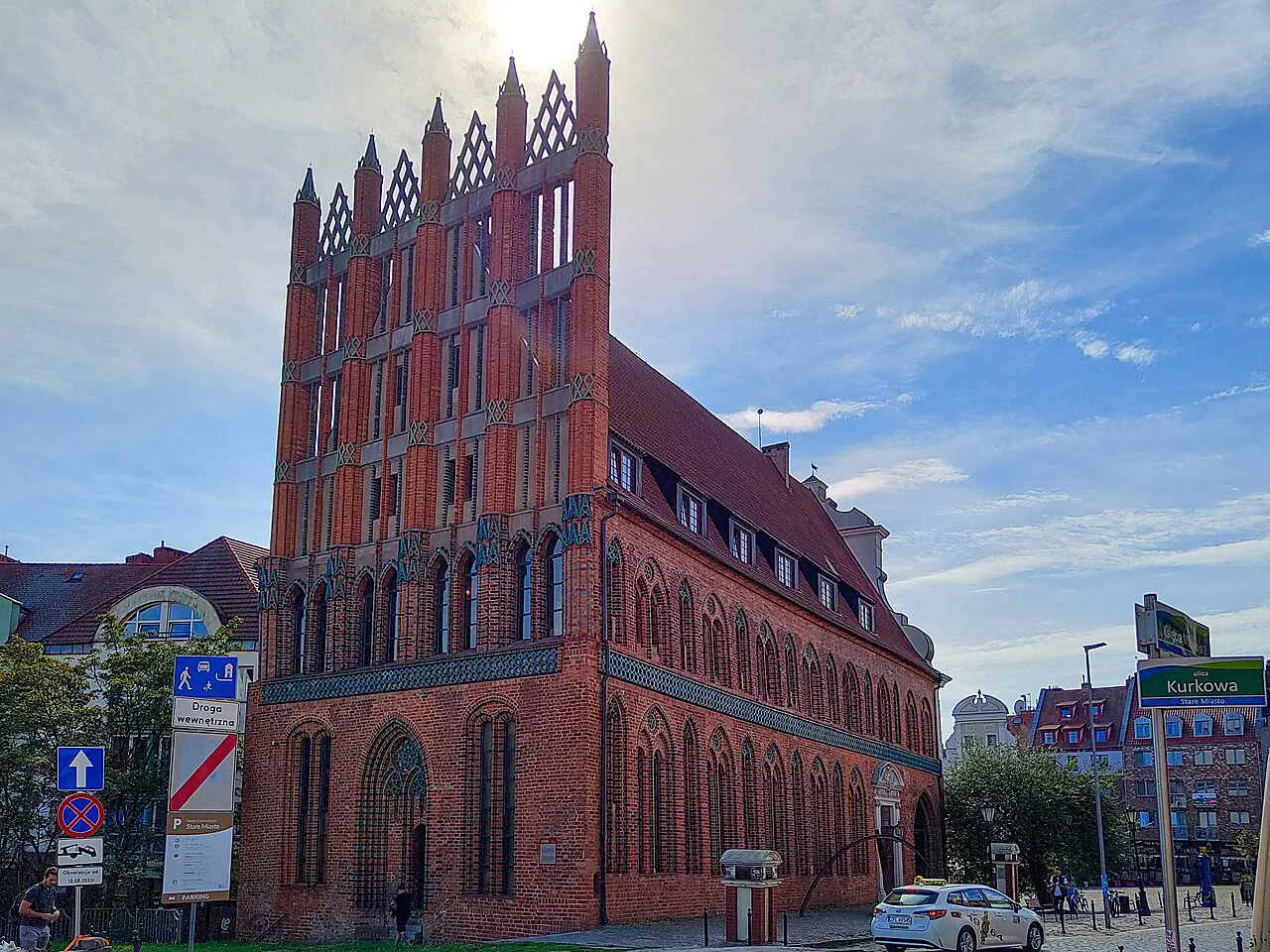
Duke Barnim I the Good granted Szczecin a town charter on 3 April 1243, modelled on the Magdeburg charter, and the city later joined the Hanseatic League, trading grain and fish. In 1346 his grandson Barnim III the Great began the Stone House against the wishes of the city's patricians, the forerunner of today's castle.
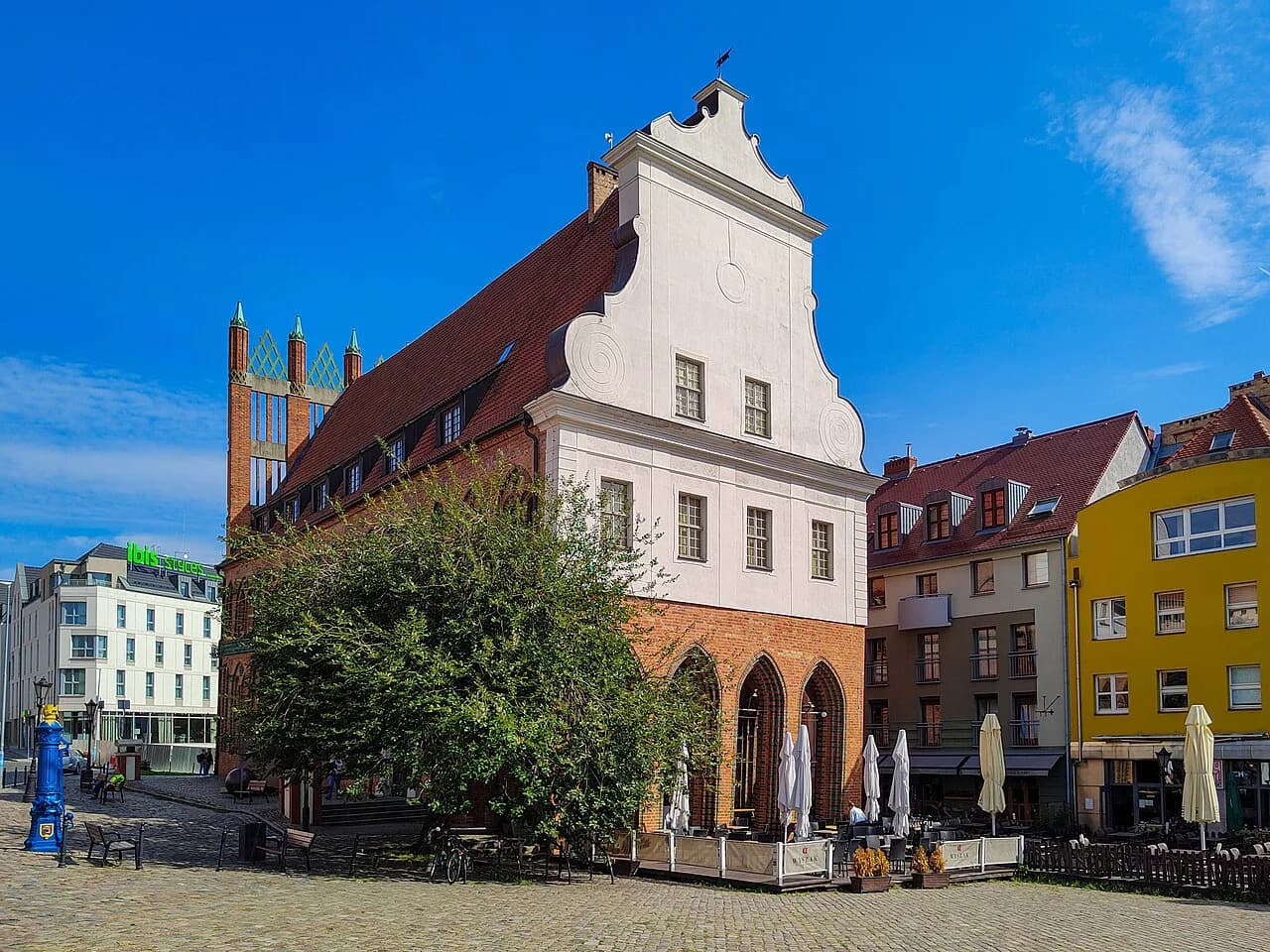
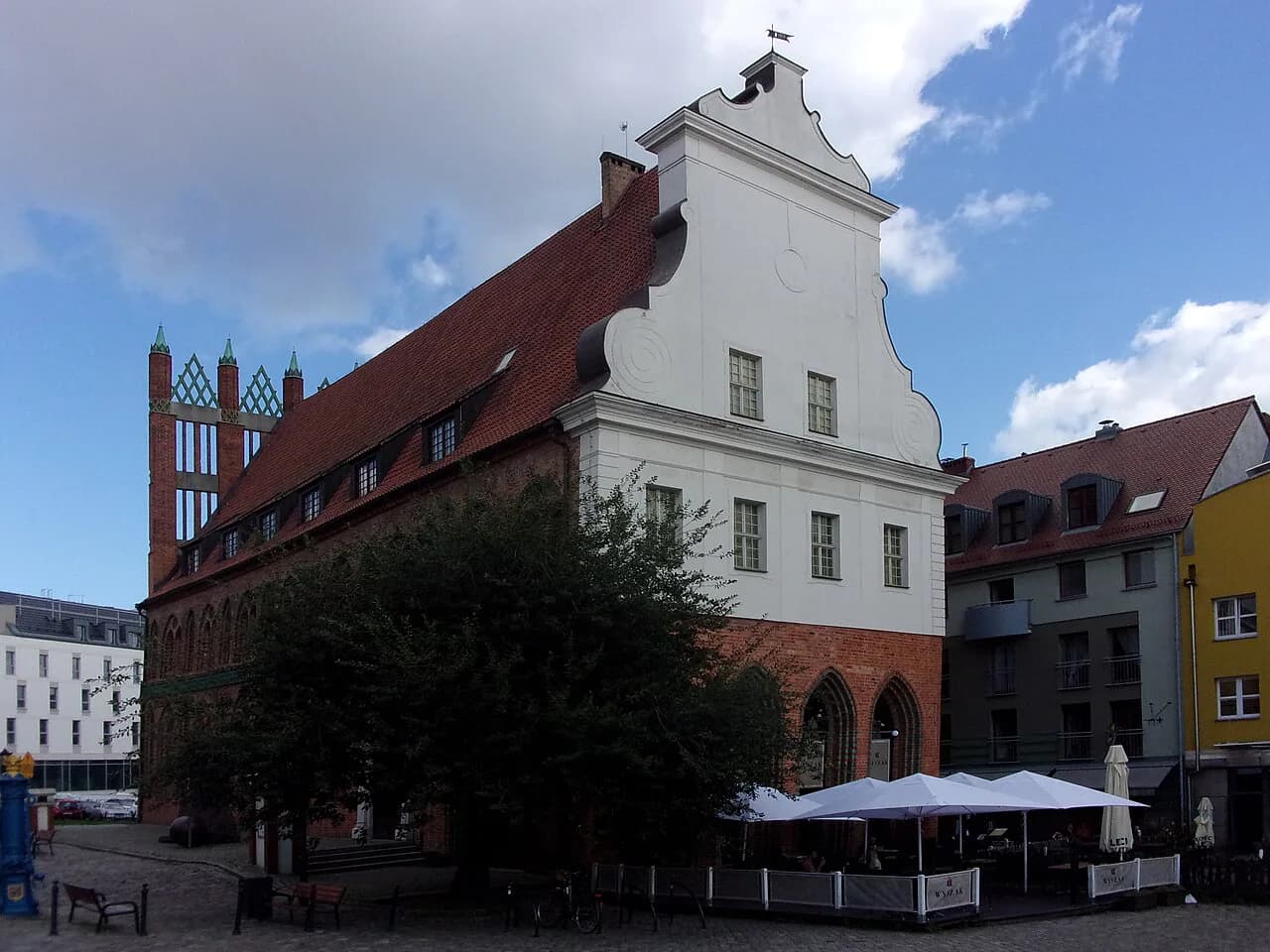
The Gothic legacy survives as the Old Town Hall and three churches, all listed on the European Route of Brick Gothic, which makes them easy to string together on foot in the old centre. If you want to see the brickwork in detail, the Archcathedral Basilica of St James the Apostle is the obvious starting point.
The Swedish period and the lions on the coat of arms
The Swedish army of Gustav II Adolf reached the city walls in 1630, and the Treaty of Westphalia in 1648 split Pomerania, giving the western part including Wolin and Szczecin to Sweden for almost a century. After a siege by the Elector of Brandenburg, King Charles XI of Sweden added Swedish lions to the crowned griffin's head on the city's coat of arms as thanks for its defence.
Szczecin was ceded to Prussia in 1720, ending the Swedish chapter and opening the long German period in which the city was known as Stettin. The lion-and-griffin arms are the quickest visual reminder that the city answered to Stockholm before it answered to Berlin.
Prussian Stettin: the port that supplied Berlin
Under Prussia, Stettin became Germany's leading Baltic port, and cheap rail freight to Berlin gave its merchants an edge over Hamburg when supplying the German capital. Berliners took the train to Stettin to board steamers for the Baltic resorts on Usedom, Rügen and Wolin, so the waterfront and its shipping were the city's working heart.
The port's weakness was geography: downstream the Odra spreads into a shallow lagoon hemmed in by sandy islands, kept open by ice-breakers in winter. Despite that, Stettin served as a northern trading gateway for central Europe, a Baltic counterpart to Trieste on the Adriatic.
The shipyards and the ocean liners built here
Arriving from the east by car or train, your first view of Szczecin is the shipyard complex. In the late 19th century it built some of the world's great liners, including the Kaiser Wilhelm der Grosse, which took the Blue Riband for the fastest Atlantic crossing in 1898, and later the four-funnelled SS Deutschland.
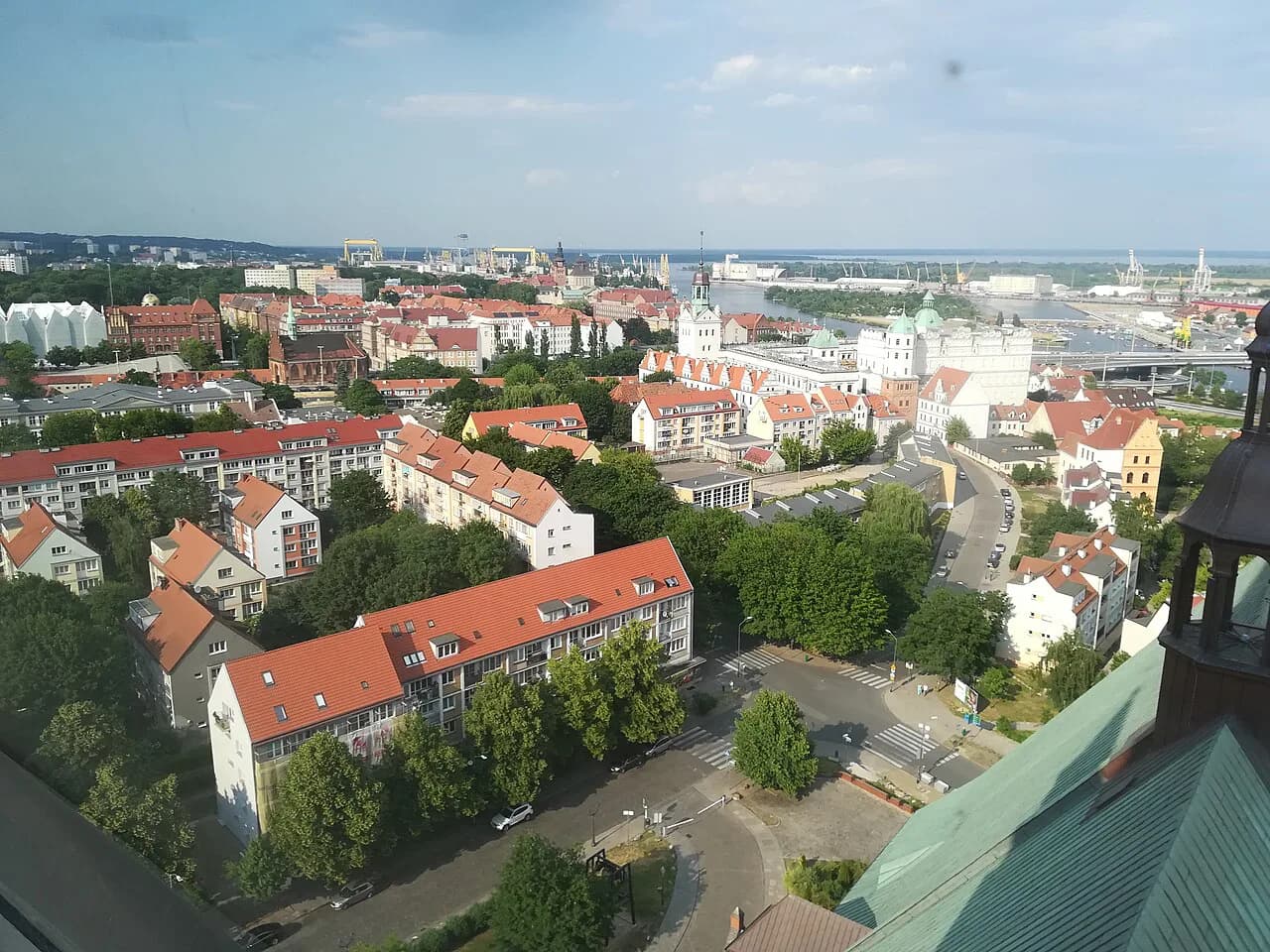
The port landscape today is gritty rather than picturesque, with silent cranes on the far bank of the Odra, and it rewards travellers who prefer industrial history to postcard views. The shipyards are an industrial landscape seen from outside rather than a visitor attraction with a ticket desk, so treat them as a viewing stop on the way in.
1945 and after: Stettin becomes Szczecin
After the Second World War, German Stettin became Polish Szczecin as territory east of the Oder was assigned to Poland, though the city itself lay mainly on the west bank. The Potsdam Conference in 1945 agreed the Oder-Neisse Line as the approximate line of Germany's new eastern border, and the renaming marked the city's new Polish identity.
That shift explains why the same streets carry German, Swedish and Polish layers at once, and why the city has spent decades defining its role in modern Poland. Szczecin is now the capital of the West Pomeranian Voivodeship and the largest city in Western Pomerania.
The war years themselves left the deepest mark on the modern city, from the destruction of the old centre to the redrawing of the border that followed. For those sites and what happened between 1939 and 1945, work through Szczecin WW2 before you walk the rebuilt streets.
Where to see this history: the Pomeranian Dukes' Castle
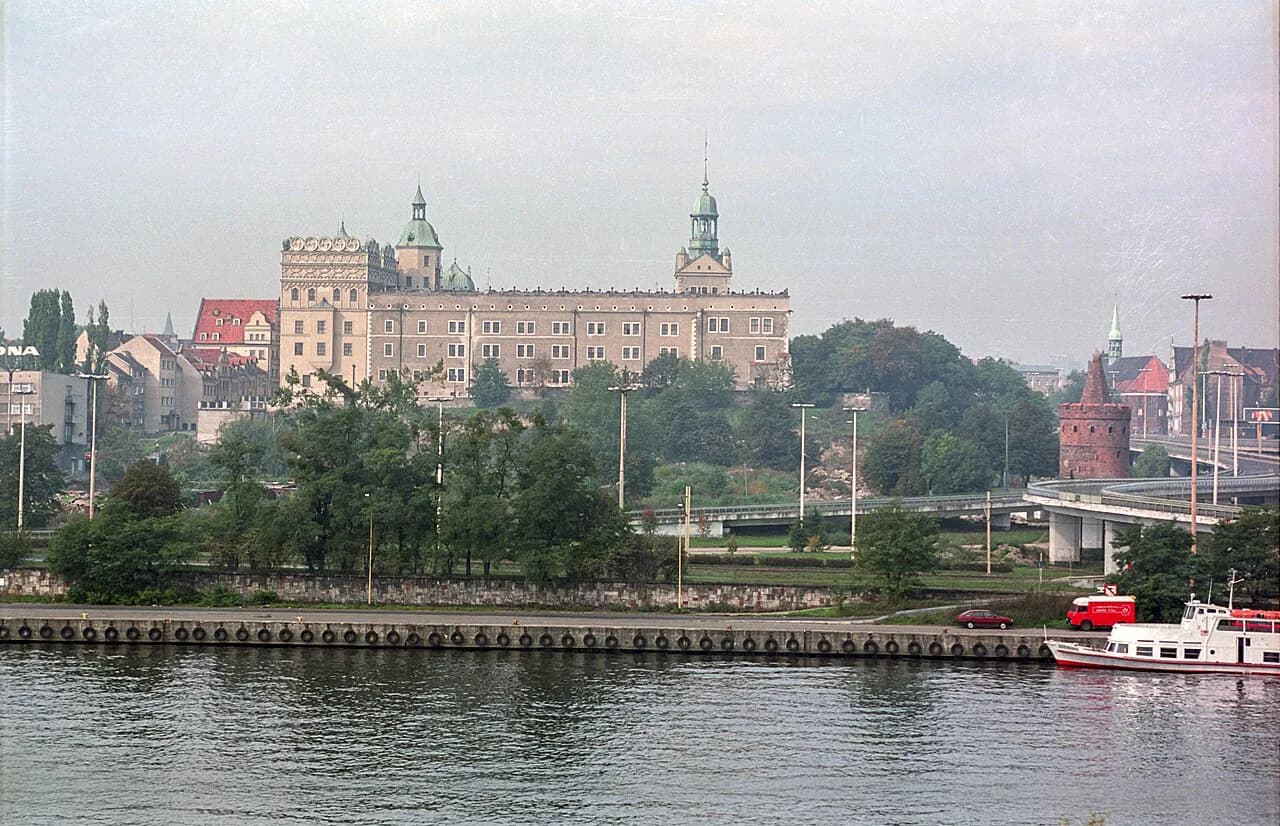
The castle on Castle Hill is the one site that spans the whole Griffin story, from Barnim III's Stone House of 1346 to the fifth, two-storey museum wing added at the start of the 17th century to create a second courtyard. Eilhard Lubinus's Great Map of the Duchy of Pomerania, made at the initiative of Duke Philip II and decorated with city engravings and the Griffin genealogical tree, is displayed inside.
Allow around an hour for the courtyards and the exhibitions, more if the map and ducal rooms hold your attention. Ticket prices and opening days change, so check the castle's own listing before you set out.
Where to see this history: the Old Town Hall and the waterfront
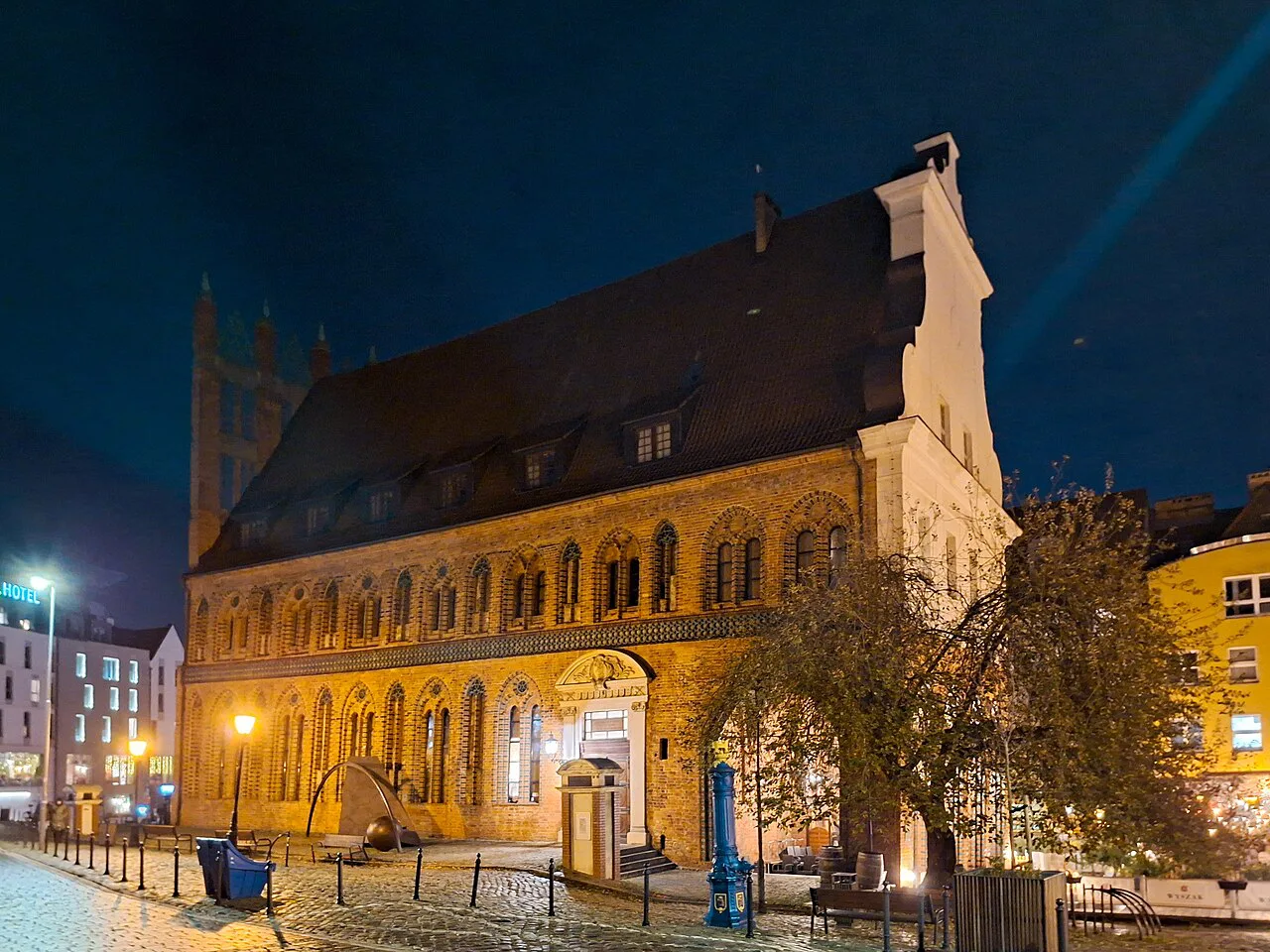
The Old Town Hall is one of the Gothic civic monuments on the European Route of Brick Gothic, and the griffin sculpture in front of it is the best free introduction to the city's emblem. From there the streets run down towards the Odra, where the waterfront shows the port that made Stettin rich.
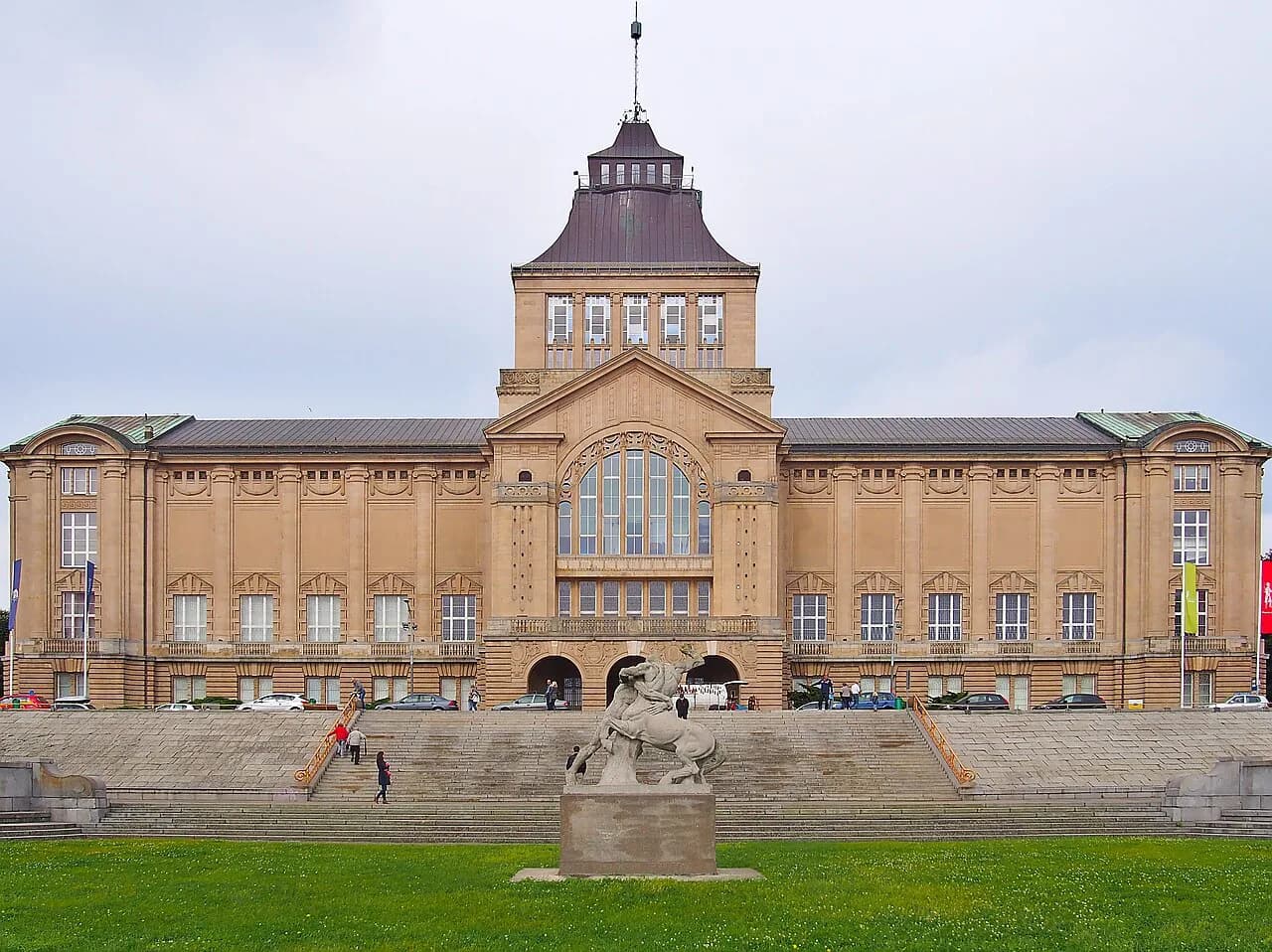
For the collections that fill in the gaps, the National Museum in Szczecin covers the city's art and material history, and our guide to museums in Szczecin sets out which collections suit a short break. The post-war and industrial layers are easiest to follow through Szczecin architecture, where the rebuild and the newer cultural buildings sit side by side.
How much time to give the historical sights in a short break
One day covers the essentials: Castle Hill and the castle, the Old Town Hall square, the three Brick Gothic churches and a walk to the waterfront. Two days let you add a museum and the shipyard views without rushing, and three gives room for a slower loop along the Odra.
Group the sights by period rather than by street: Griffin castle first, Gothic churches second, then the waterfront and waterfront museums for the Prussian and modern city. The whole historic core is compact enough to walk, which keeps the history in sequence.
Which period should you follow first?
Start with the Griffins on Castle Hill, because every later layer, Swedish arms, Prussian port and Polish city, refers back to that ducal capital. If industrial history appeals more, begin at the shipyard views on arrival and save the old centre for the afternoon.
Whichever order you choose, the city's museums and the castle keep varying schedules and ticket prices, so confirm the current times with each venue before you set out.
Explore more Szczecin guides
Frequently Asked Questions
What is Szczecin famous for?
Szczecin is known for its Griffin dynasty heritage, symbolised by the griffin on buildings and street pumps across the city, and for the shipyards that built record-breaking Atlantic liners such as the Kaiser Wilhelm der Grosse. Its Old Town Hall and three Gothic churches are on the European Route of Brick Gothic.
What do Germans call Szczecin?
Germans call the city Stettin, the name it carried through its Prussian and German period. The city became Polish Szczecin after 1945, when the post-war border settlement assigned the territory to Poland.
How is Szczecin pronounced?
Szczecin is a Polish tongue-twister for visitors, and the city has put up signs showing how the name should be said. It is still worth hearing a Pole say it before you arrive rather than guessing from the spelling.
Sources
Notes for your next Polish city break
Optional updates to our Poland guides.
You might also like
Continue reading
More guides you'll find useful