Szczecin WW2 Sites: What Happened and How to Visit
Szczecin was German Stettin until 1945, and the war reshaped most of the city. Here are the wartime sites, memorials and shelters you can visit today.
On this page
Szczecin was German Stettin for the whole of the Second World War, and that single fact explains most of what you will see. The city was a shipbuilding and industrial centre of the Third Reich, it was bombed repeatedly by the Allies between 1943 and 1945, and it became Polish only after the German surrender. Plan on a half day for the wartime story if you concentrate on the embankment and one museum, or a full day if you add the shelter and the Central Cemetery.
This guide covers the sites themselves: what happened, which buildings are original, where the memorials stand and how to group them on foot. It sticks to what museums, memorials and published histories record, and leaves you to confirm opening days and tickets before you set out.
Stettin: a German city at war
Stettin was the capital of the German province of Pomerania and a stronghold of the Nazi movement before the war. The city's importance to the Reich rested on its port, its shipyards and its armaments industry, which grew sharply after 1933. That industrial weight is why the Allies treated it as a military target rather than a historic city.
The German army used the city as a base during the invasion of Poland in 1939 and as a launch point for the attack on Denmark and Norway. German forces also ran a large network of forced labour camps in and around the city during the occupation, including camps reserved for Poles. This is not comfortable context, but it is the context that makes the surviving sites legible.
Allied bombing raids hit Szczecin from 1943 to 1945, with British RAF and American USAAF aircraft flying more than twenty raids on the port and factories. The raids caused firestorms and heavy civilian casualties. Look at the city's layout with that in mind: the gaps between buildings are often the war, not the planning.
How much of the city survived
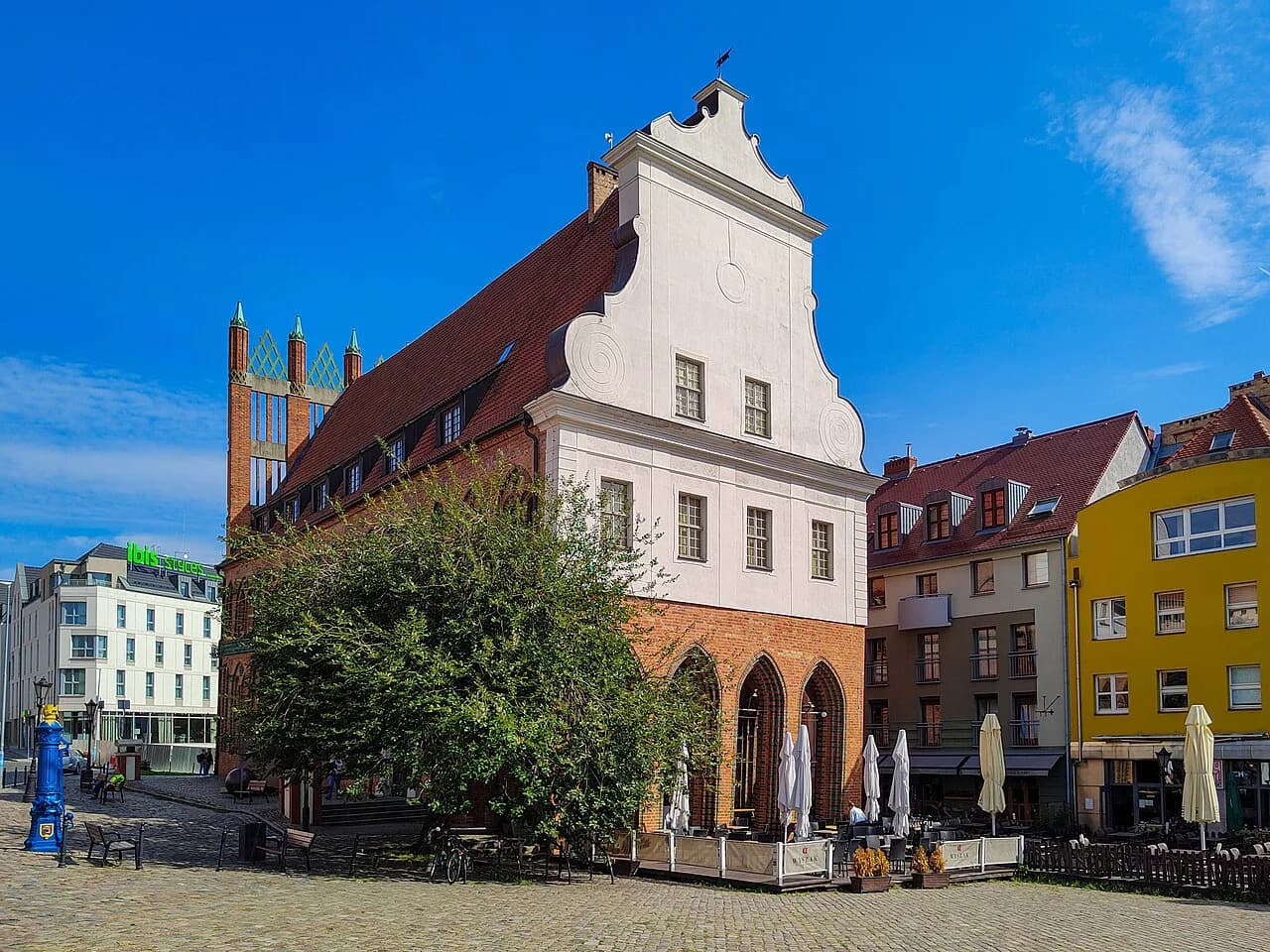
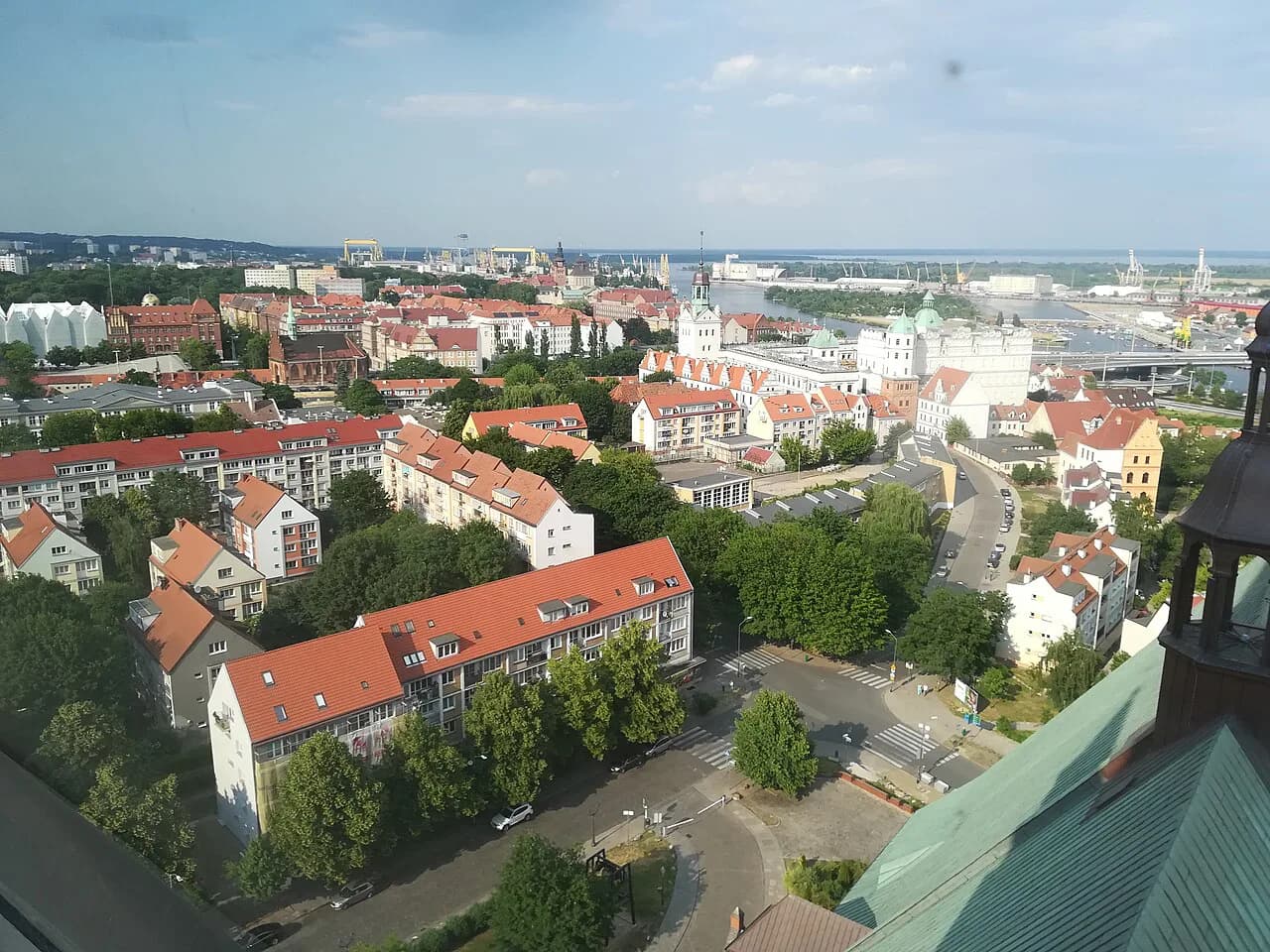
The destruction figures are the key to reading modern Szczecin. Roughly 60 per cent of the city's buildings were obliterated, and about 95 per cent of the Old Town was destroyed. When you walk the rebuilt Old Town today, you are looking at postwar reconstruction on a medieval street plan, not at original fabric.
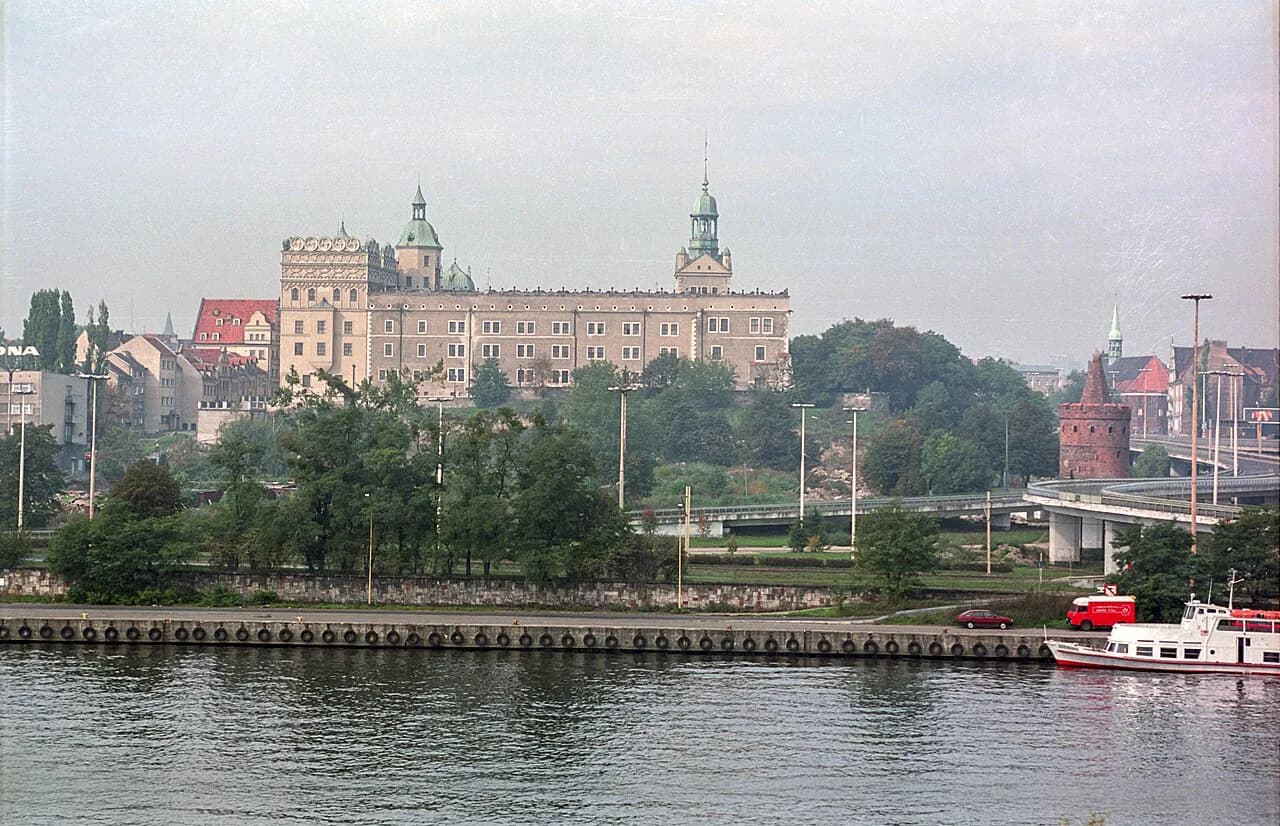
Two areas came through largely intact. The Paris Quarter, laid out in the 1880s by the German architect James Hobrecht on a French model, retains its fin-de-siècle apartment blocks. Wały Chrobrego, the raised tree-lined escarpment above the Oder, also escaped serious damage. These are the streets where you can still see the Stettin that existed before 1945.
For the wider story of how the city was rebuilt and what came before, our guide to Szczecin history sets the wartime years in a longer sequence. It helps to know that the Polish city you see now was largely assembled after 1945 by settlers from elsewhere in Poland.
Wały Chrobrego and the 1938 rally site
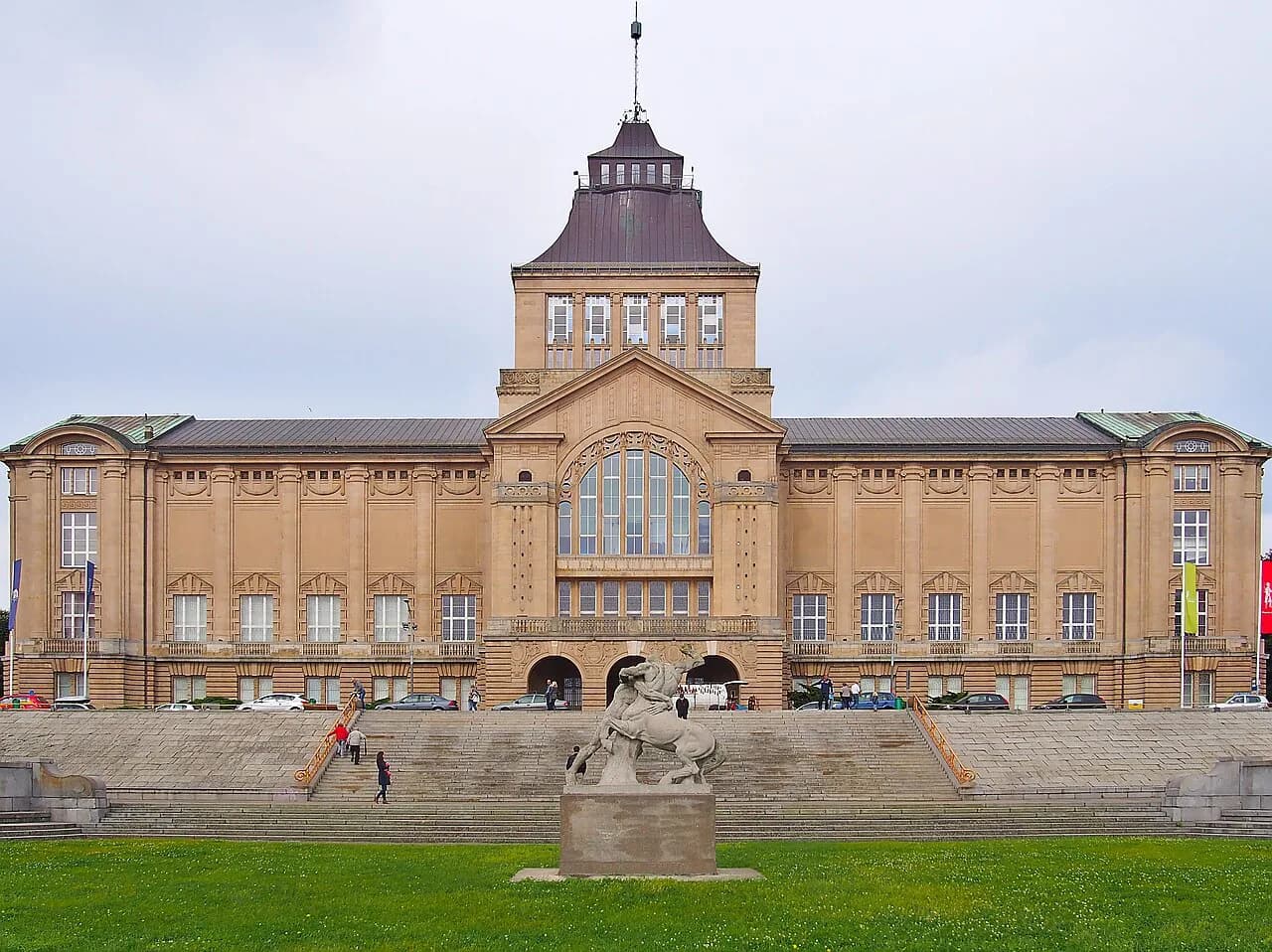
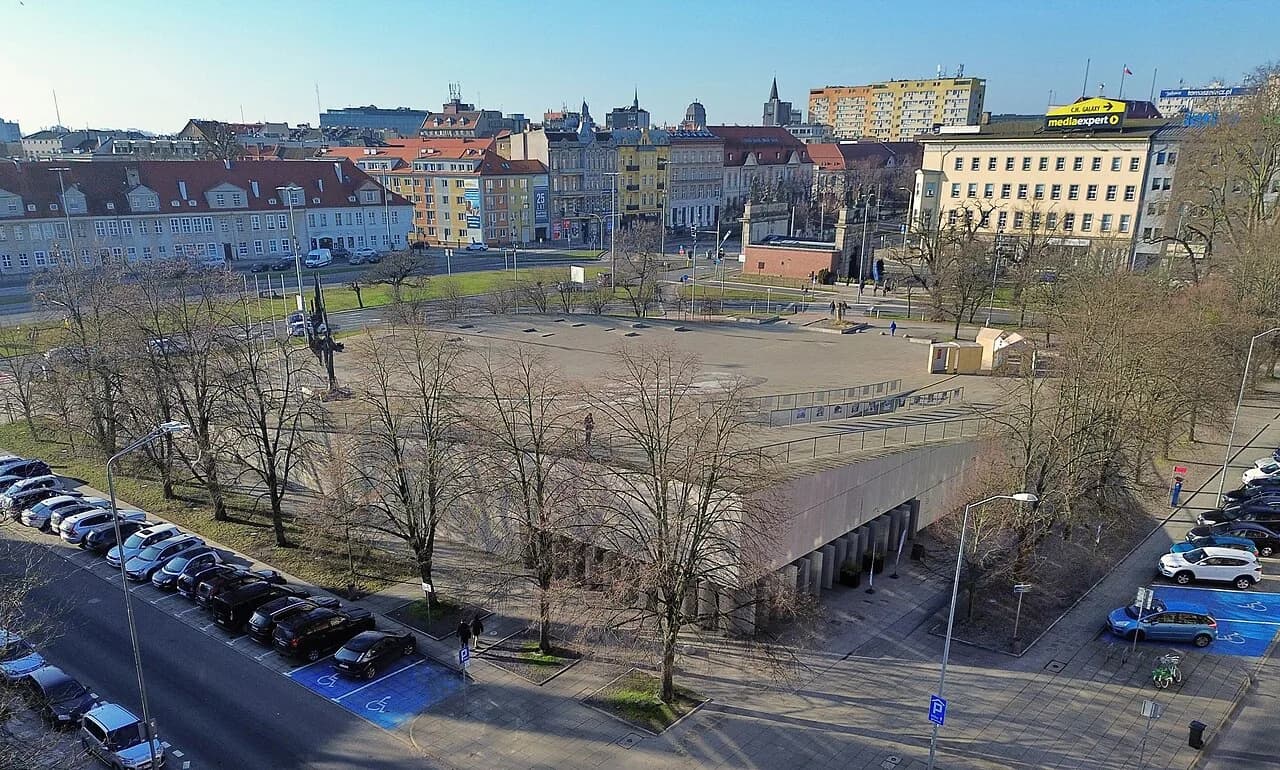
Wały Chrobrego is the most rewarding wartime site in Szczecin because it is both beautiful and loaded. The embankment runs nearly a third of a mile along the Oder, lined with historic public buildings, and it is free to walk at any time. The observation platform is where Adolf Hitler addressed a carefully staged rally on 12 June 1938, when the city was still Stettin.
An estimated 100,000 spectators filled the streets that day, and the local Nazi newspaper covered the visit in messianic terms. Standing on the platform now, with the river below and the Philharmonic hall nearby, the contrast between the 1938 photographs and the present city is the point of the visit. Give it twenty minutes and read the setting rather than looking for plaques.
The postwar Philharmonic concert hall sits close by and is a useful marker of how thoroughly the city has been remade. Our guide to Szczecin architecture covers the modern buildings and the older streetscapes around the embankment.
Walking the wartime city
Enough streets and buildings survive from the Stettin years to reconstruct much of Hitler's route through the city on foot. HistoryNet describes this as an easy 90-minute walk, starting from the main railway station area and taking in the embankment and the streets between. Treat the timing as a rough guide and allow longer if you stop to read the buildings.
A practical quirk: German street names were all replaced with Polish ones after the war, so a pre-1945 map will not match what you see on the corner. Carry both versions if you want to follow a historic route. The Paris Quarter is the easiest place to do this, because the tenement blocks themselves are largely original.
Pair the walk with the city's museums if you want documents and objects rather than streetscapes. Our guide to museums in Szczecin lists the institutions worth your time and which days they open.
The civilian air-raid shelter
One of the largest civilian air-raid shelters of its kind in Europe survives under Szczecin, complete with a network of tunnels and exhibition rooms. A private operator runs guided visits inside, with displays on the bombing raids, life in the bunker and the Soviet takeover. This is the most physically immersive wartime site in the city.
The same operator's Second World War tour combines the shelter with a guided walk around the Central Cemetery and runs about two and a half hours including transfers. Its published rates are per person and fall as the group grows, from 500 PLN for a solo traveller down to around 130 PLN each for six. Those are tour prices covering transport, guide and entrances, not shelter admission on its own, so ask the operator what a visit without the cemetery costs if you only want the bunker.
Book ahead rather than turning up, since the shelter is not a walk-in museum with fixed public hours. The operator lists contact details and confirms availability by language. If you prefer a self-guided half day, the embankment and cemetery need no booking at all.
Central Cemetery and the Katyn memorial
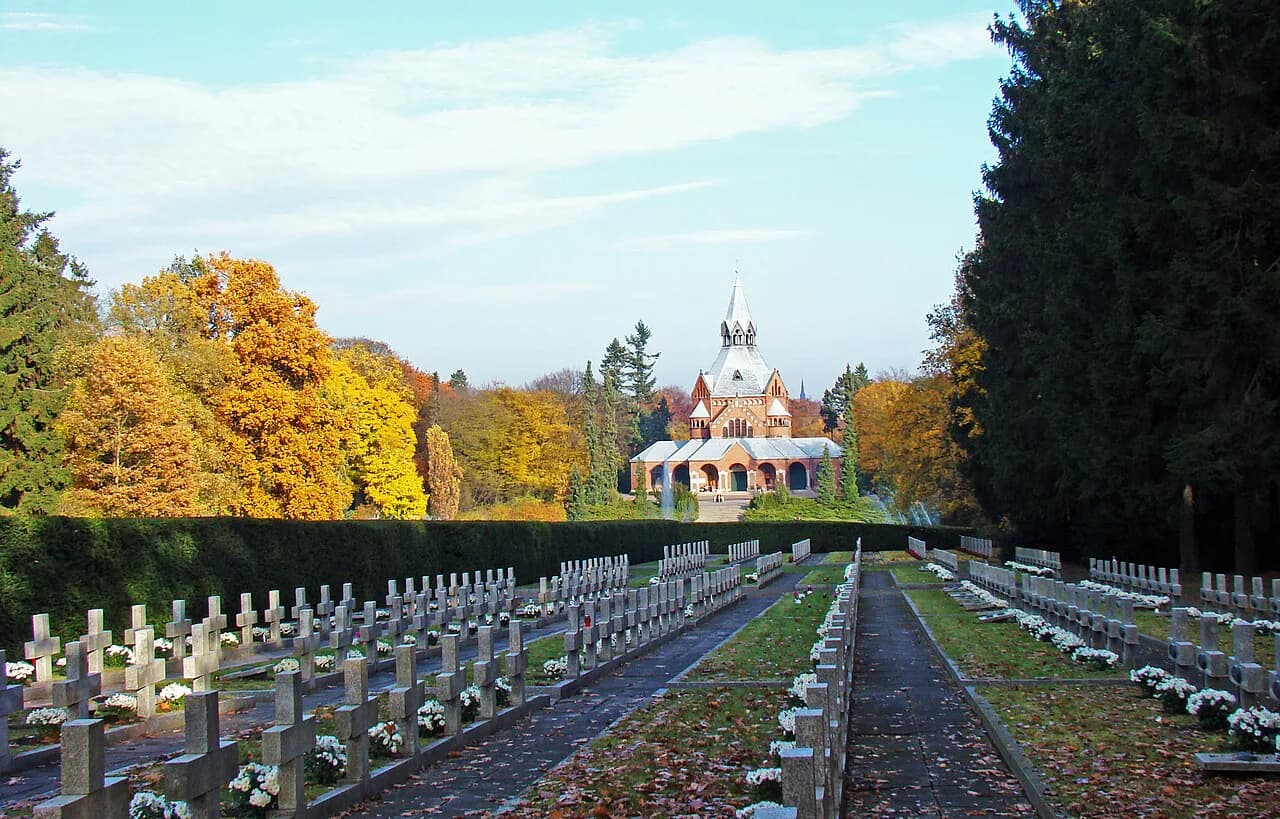
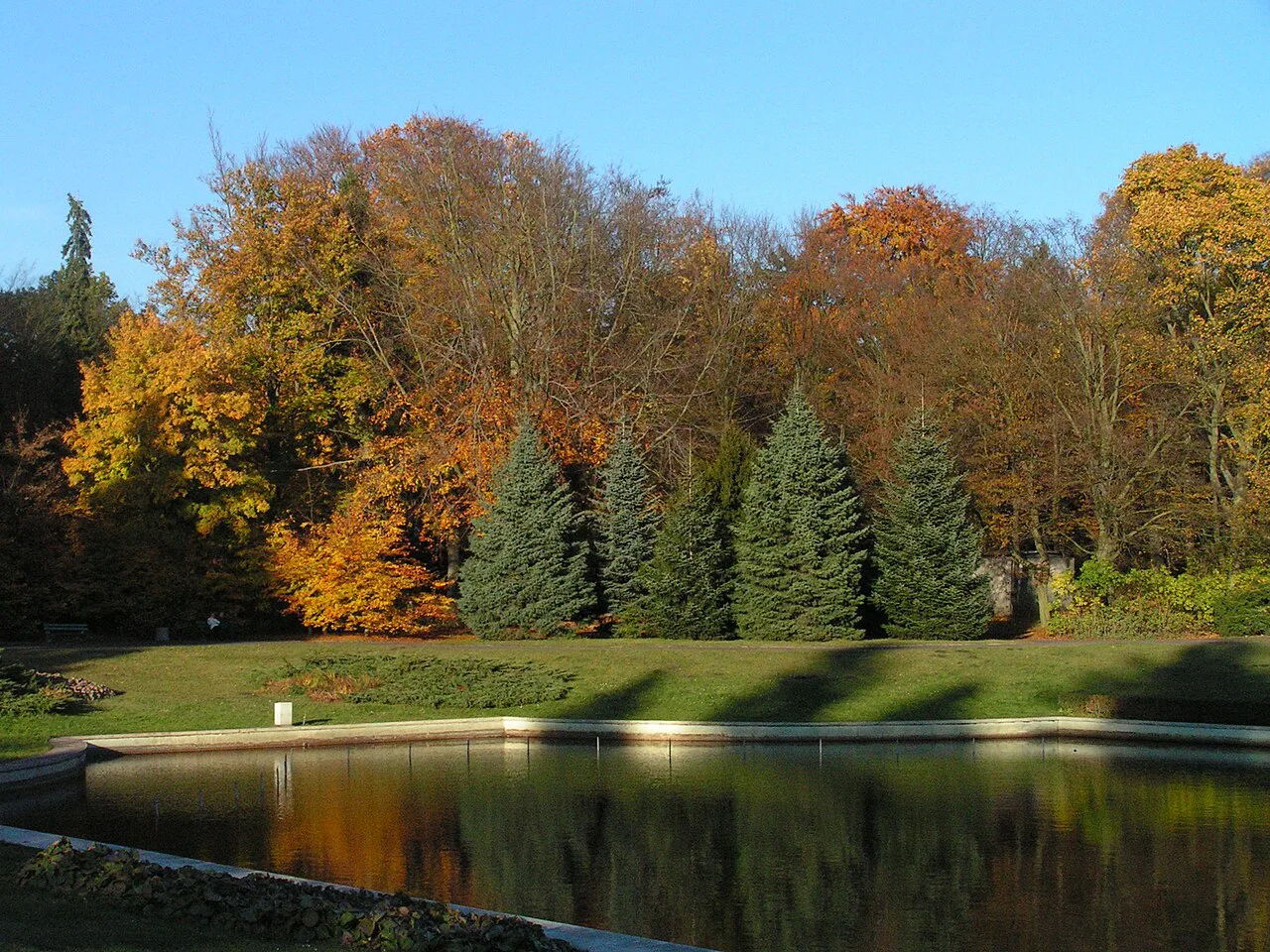
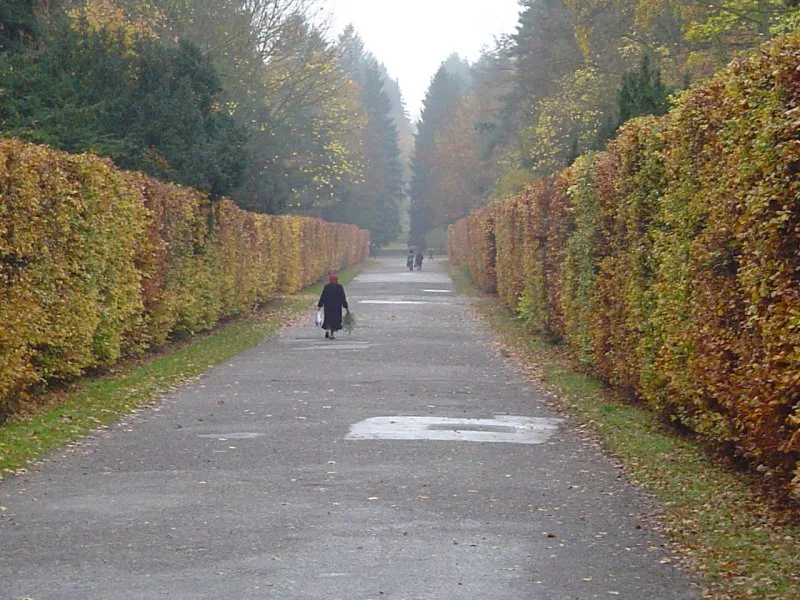
Cmentarz Centralny is the largest cemetery in Poland and one of the largest in the world, and it holds the city's most concentrated set of war memorials. The main gate building, chapels and avenues are themselves worth the walk. The war quarters and the Katyn monument, commemorating Polish officers murdered in 1940, are the focus for most visitors.
Treat this as a memorial walk rather than a sightseeing stop. Keep your voice down, stay on the paths and do not photograph mourners or fresh graves. An hour covers the main war sections comfortably, and the size of the cemetery means you should pick a route before you arrive rather than wandering.
Memorials, museums and a short city break
Szczecin's wartime story sits across several sites rather than in one building, which is what makes it work for a short break. The Central Cemetery handles commemoration, the embankment handles the prewar and Nazi period, and the museums handle documents and objects. The Old Town's reconstruction is the visible consequence of everything else.
For a one or two-day visit, do the embankment and Paris Quarter walk on the day you arrive, then give a morning to the shelter or the cemetery. Note that the cemetery holds a wartime walk with a guide only as part of the operator's tour, so independent visitors rely on their own reading. Confirm the opening days of any museum you plan to enter before you build the day around it.
Grouping the sites on foot
The wartime sites split neatly into two clusters. Wały Chrobrego, the Paris Quarter and the Old Town sit within walking distance of each other on the west bank of the Oder. The Central Cemetery lies further out and is best reached by tram or taxi.
Build in slack. The 90-minute route through the old streets is optimistic if you read the buildings, and the cemetery is far larger than it looks on a map. A half day covers one cluster well; two clusters plus a museum is a full day.
If your interest runs to churches and the cathedral as well, our guide to Szczecin cathedral covers the Archcathedral Basilica of St James the Apostle, which stands in the rebuilt Old Town. It is a natural companion to the wartime walk rather than a separate trip.
Should the wartime sites be on your Szczecin itinerary?
Yes, if you want to understand why Szczecin looks the way it does rather than treating it as a pretty stopover. The embankment and Paris Quarter give you the prewar city, the shelter gives you the raids, and the Central Cemetery gives you the memory. Together they explain a place that lost most of its old fabric and rebuilt itself as Polish.
Go with the shelter booked and a rough route in mind, and check museum opening days the week you travel. Two sentences of homework save you a wasted morning.
Explore more Szczecin guides
Frequently Asked Questions
Why was Szczecin given to Poland?
Szczecin was German Stettin until 1945. Germany ceded the region after the war and the city became part of Poland, with German street signs recast in Polish. The wartime sites in this guide date from that German period and from the Allied bombing that ended it.
What do Germans call Szczecin?
Stettin. That was the city's official name until 1945, and you will still see it on prewar maps, photographs and German-language material. It is the same place, so a map labelled Stettin is useful for tracing the wartime route.
Sources
Notes for your next Polish city break
Optional updates to our Poland guides.
You might also like
Continue reading
More guides you'll find useful