Szczecin Old Town: What to See and How It Fits Together
Szczecin's Old Town is a rebuilt district of separate landmarks, not a dense medieval core. See the market square, town hall, castle and waterfront.
On this page
Szczecin's Old Town is worth a half day, but not because it looks like Gdańsk or Kraków. Stare Miasto on the map is a rebuilt district whose sights sit many city blocks apart, so you walk between separate landmarks rather than drift through one continuous medieval quarter. This guide covers what each stop involves, how the centre is laid out, and how to fit the Old Town into a one to three day break.
The district was almost entirely destroyed in the Second World War and reconstructed through the 20th century, which is why the Old Town reads as isolated set pieces against a much larger city centre. Approach it as a series of short visits linked by tram or on foot, and the day makes sense.
What Szczecin's Old Town actually is
Szczecin's Old Town, Stare Miasto, is the oldest historical district of the city, and it is a municipal neighbourhood in its own right rather than an open-air museum. Expect a working district with a handful of reconstructed landmarks, not a walled historic core. The Old Town Hall, the Ducal Castle and the cathedral are the anchors; everything between them is ordinary city.
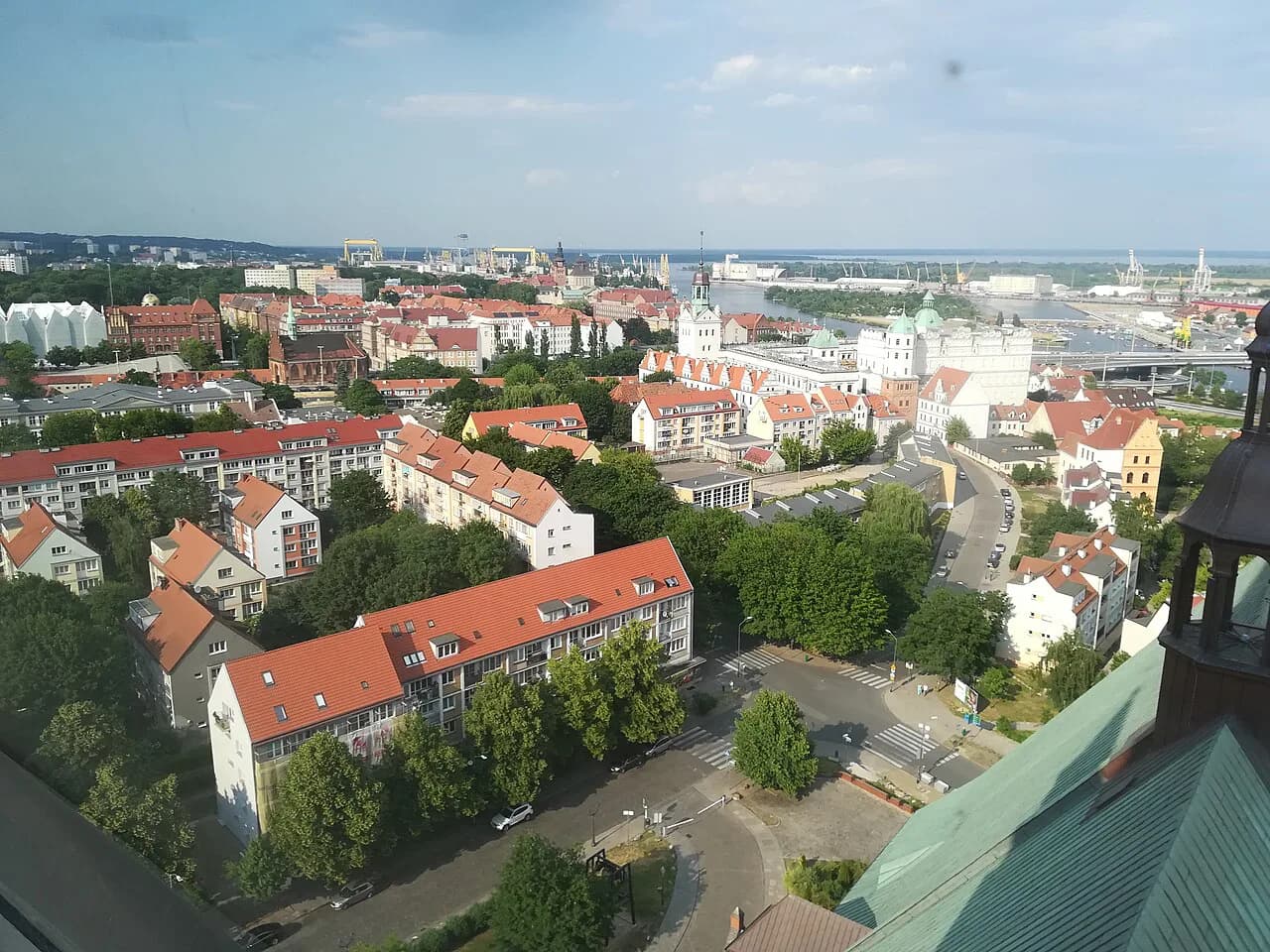
The rebuilding matters to how you read the place. The Ducal Castle and the surrounding Old Town were almost entirely destroyed in the war and reconstructed over the following decades, so much of the brickwork you photograph is 20th-century work on historic foundations. Visitors who know that in advance tend to enjoy the district more than those expecting an untouched Hanseatic streetscape.
How the centre is laid out and why the sights sit apart
Do not plan the Old Town as a loop of lanes. The landmarks are many city blocks from each other, and Szczecin as a whole is spread out compared with most European cities of its size, which is why a 12-route tram system serves the centre. A short break here works best when you group two or three stops and ride between groups.
The useful mental map is a line from the Old Town down to the Oder. Sienny Market Square and the Old Town Hall sit together in the Old Town; the Ducal Castle rises above the same skyline; the cathedral and the Łasztownia waterfront lie to the east; and Wały Chrobrego runs along the river to the north. Tourist trail street signs through the centre help you link them.
Sienny Market Square and the Old Town Hall
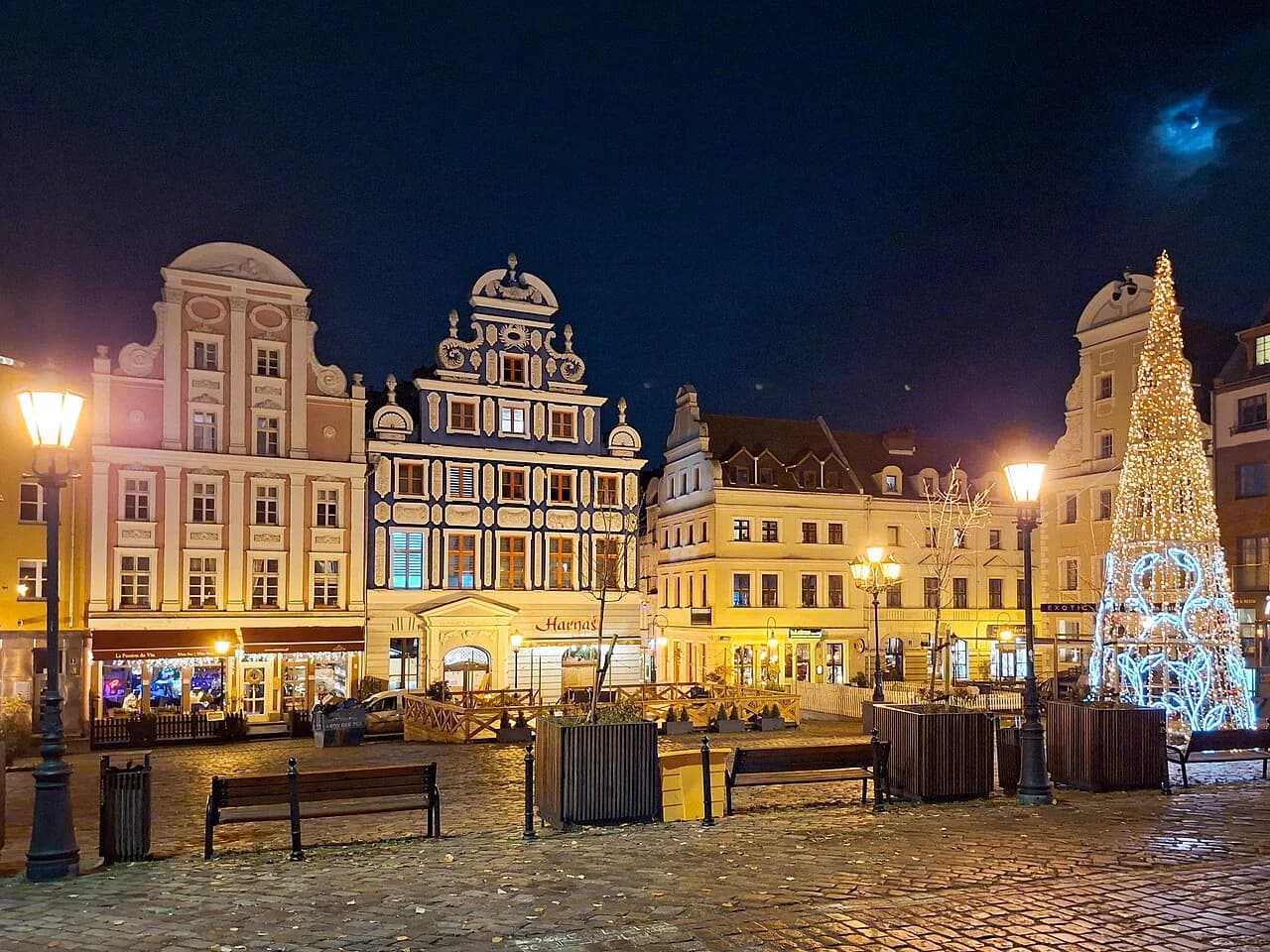
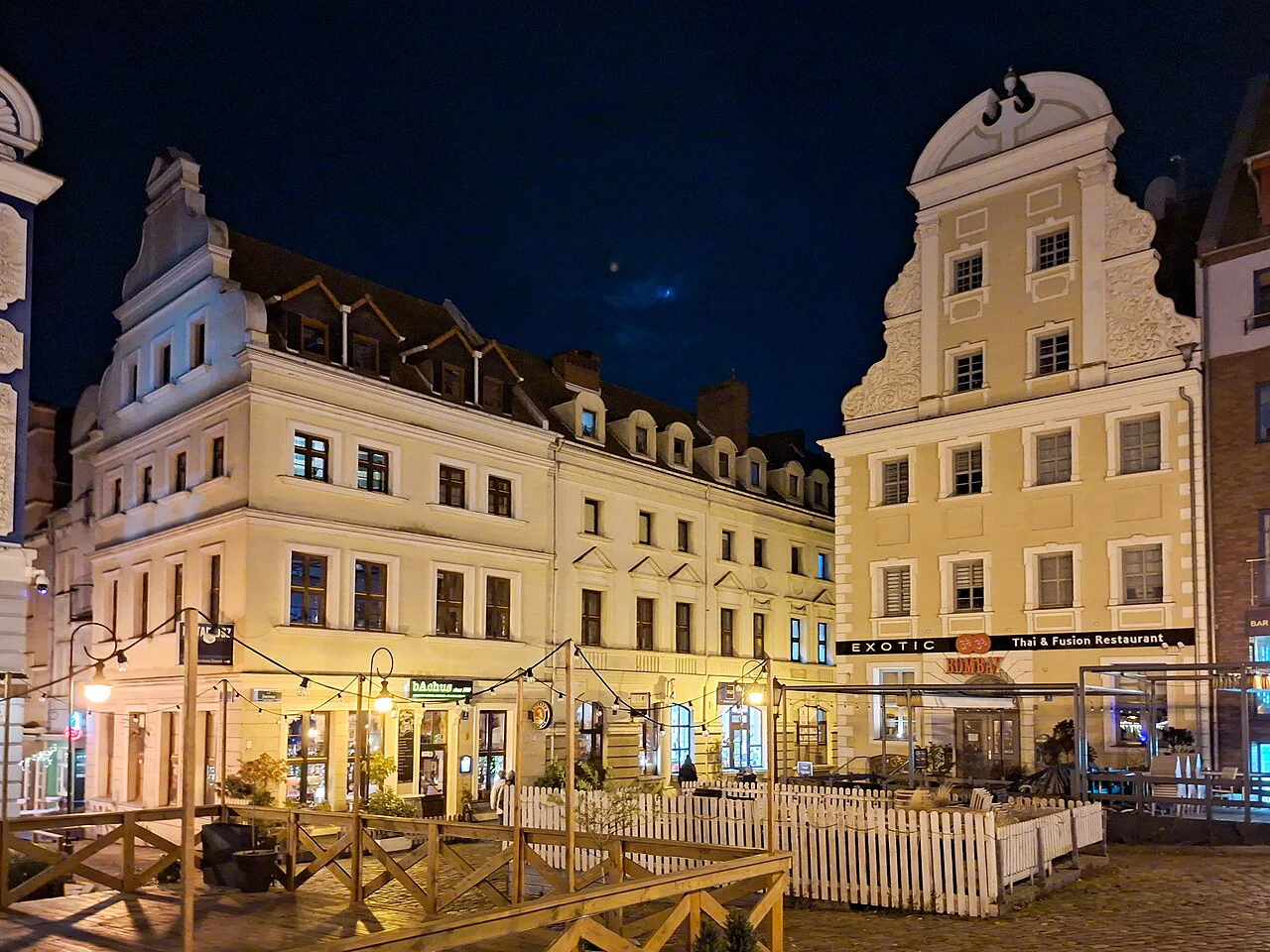
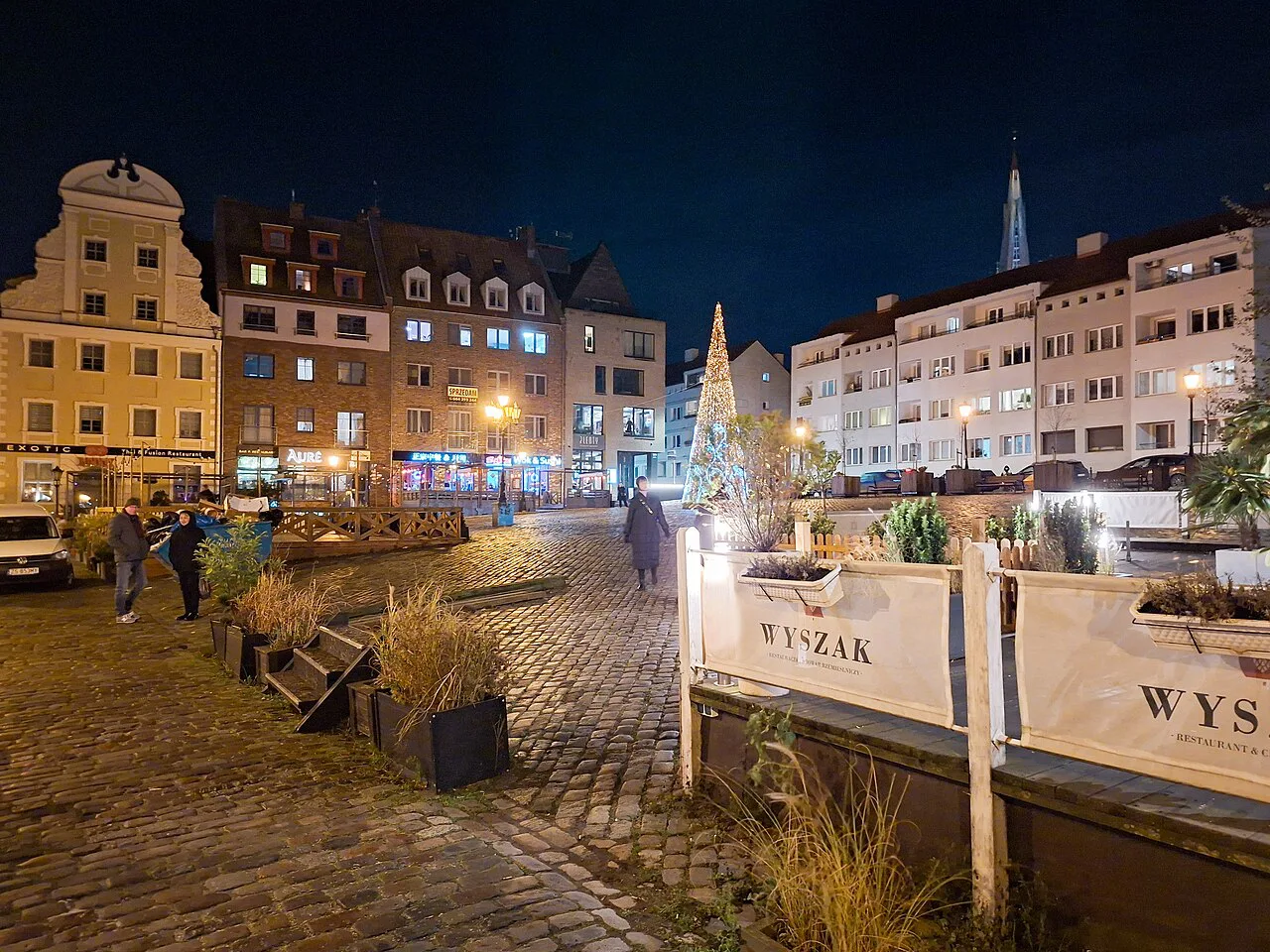
Sienny Market Square, Rynek Sienny, is the small heart of the Old Town: a gently sloping cobbled street lined with colourful 18th-century townhouses that now hold places to eat and drink. It is compact and quick to see, and it is the natural place to start before the larger sights.
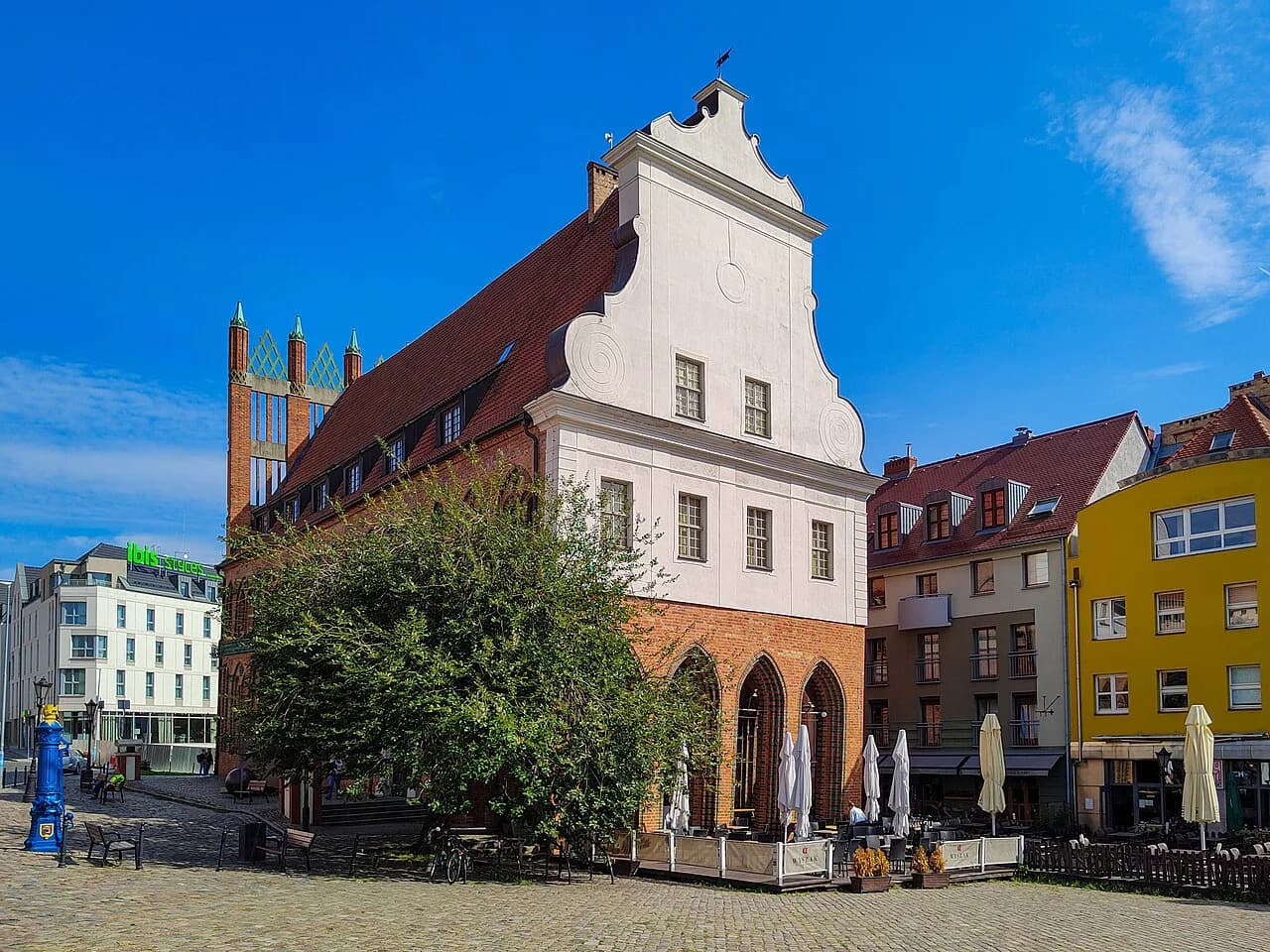
The Old Town Hall stands at the southern corner of the square, a whitewashed facade above Gothic brick arches, with a neo-Gothic tower facing the street side. Inside is Szczecin's History Museum, whose collection runs from archaeological relics of the 8th century onward and traces the city under Prussian, Swedish, German and Polish rule. If you see one museum in the Old Town, make it this one.
Check the museum's current opening days and ticket price on its own site before you go, since Polish museums commonly close one day a week. The square itself is a simple cobbled street of eateries and is worth a short pass at any hour.
The Ducal Castle above the skyline
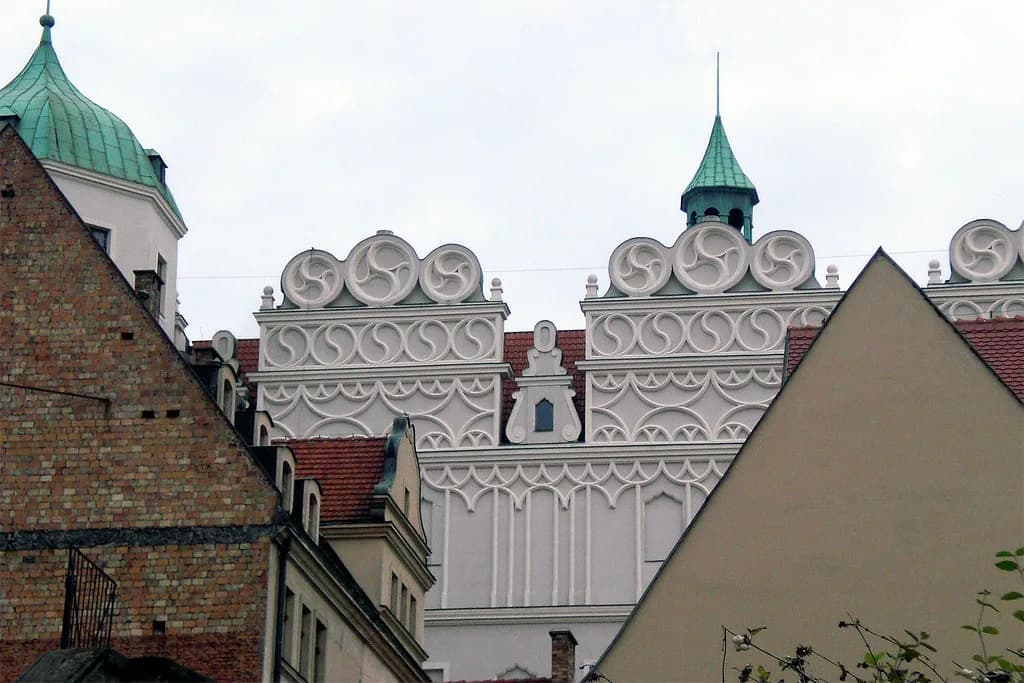
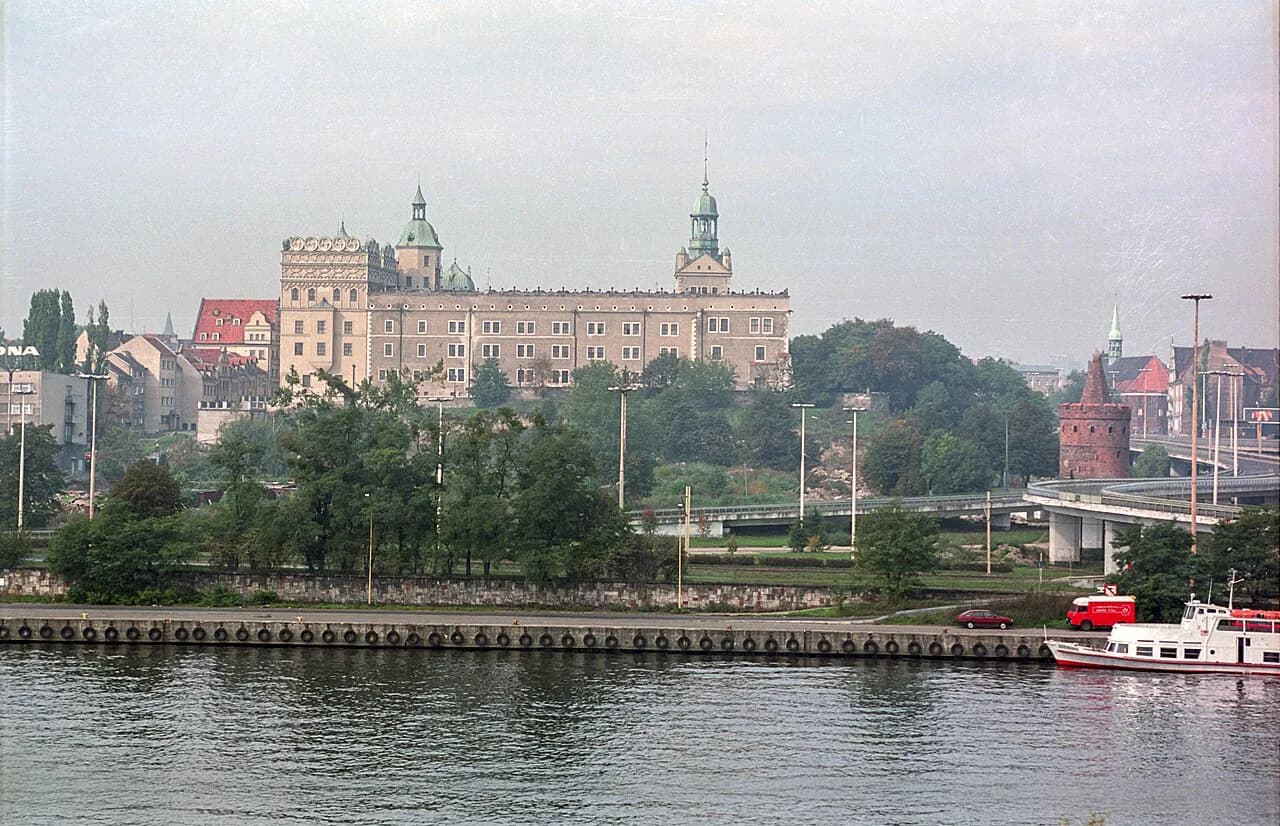
The Ducal Castle, Zamek Książąt Pomorskich, looms over the Old Town and is hard to miss. It was completed in 1428 as the seat of the Pomeranian dukes of the House of Griffins, whose griffin head still appears across the city and on the castle's mechanical clock. The castle also has a Russian connection: Sophia Augusta, later Catherine the Great, spent part of her childhood here.
Treat the castle as the second anchor of an Old Town morning, paired with the market square below it. Courtyard access and any exhibitions are managed separately, so check the castle's own published information for what is open on your dates.
The Cathedral Basilica of St. James and the Łasztownia view
The Cathedral Basilica of St. James the Apostle is the city's link to its earliest days, built in the 14th century and standing east of the Old Town towards the river. It is an active place of worship, so visit quietly and step outside if a service is under way.
For the best single view of the Old Town, go to the Łasztownia waterfront across the water and look back. From there the Cathedral of St. James and the Ducal Castle line up together above the river, which makes the scatter of landmarks legible in one frame. Łasztownia itself grew as the port district when Szczecin was Germany's major Baltic port.
Wały Chrobrego as the riverside viewpoint
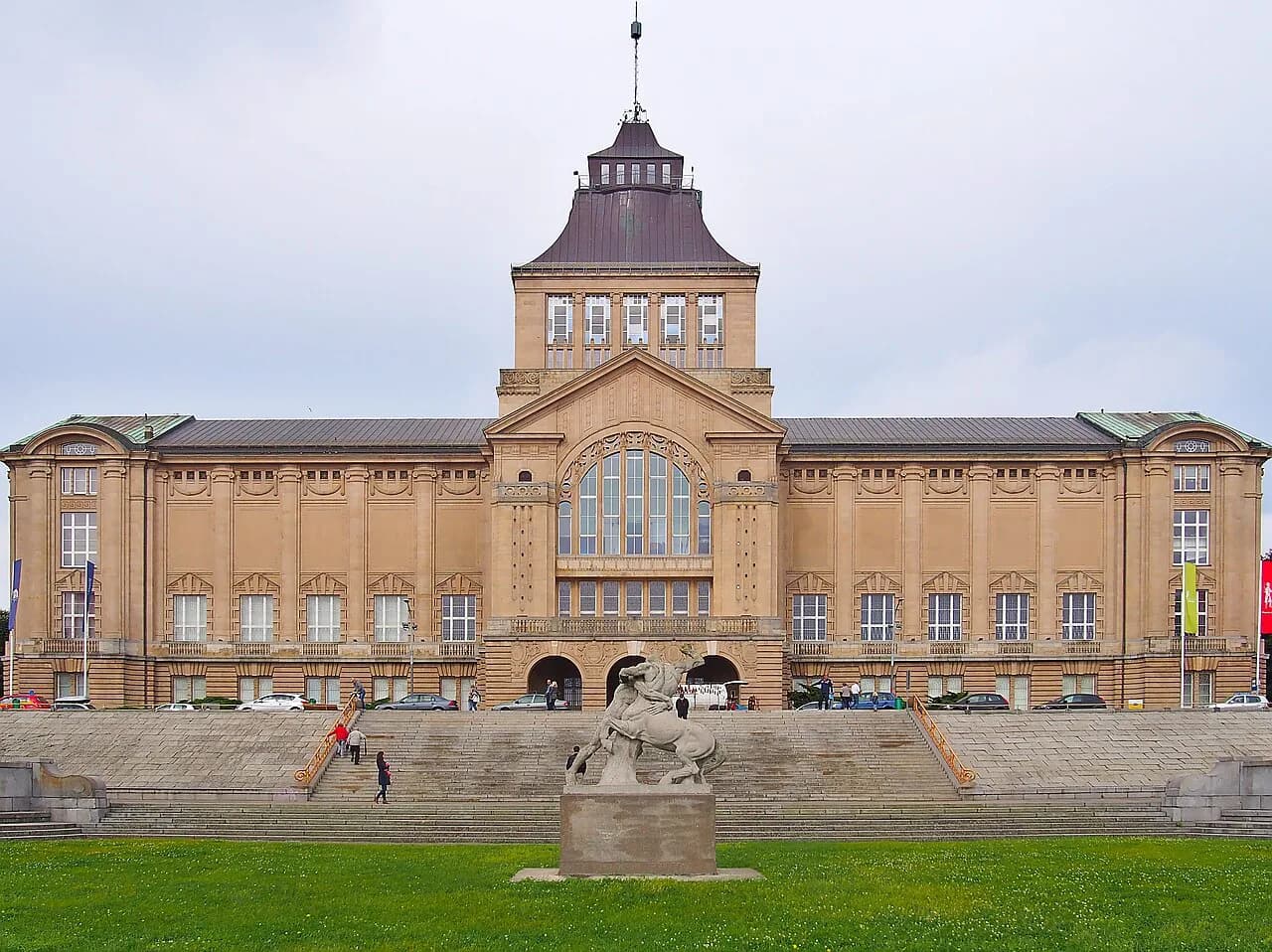
Wały Chrobrego, known in its German period as Hakenterrasse, is the observation deck over the Oder riverside and the city's grandest set piece. It is a promenade rather than a museum, so it suits the end of an afternoon when you want the river, the terraces and the light. It sits outside the Old Town proper, so pair it with a tram ride rather than a long walk.
Somewhere to eat after the terraces rounds off the afternoon. Our Szczecin food guide covers what to order and where the local cooking sits; a dedicated Szczecin Walking Tour can also string the market square, castle and waterfront into one line for you.
Underground City Trails and the bunker network
Under the city is a network of German bunkers and air-raid shelters built during the Second World War, and the Szczecin Underground City Trails museum opens part of it to visitors as wartime subterranean life. It is the most distinctive stop in the centre and the one most people leave out. Check entry times ahead, because timed entry into underground routes is normal for this kind of site.
Modern history has its own stop nearby. The Dialogue Center "Upheavals" covers Szczecin's role in the anti-communist Solidarity movement, and the Philharmonic building is worth seeing at night for its architecture and lighting. Together they give a short break a second, more recent layer beyond the rebuilt Old Town.
Getting around: trams, bikes and the Tourist Card trade-off
With sights spread over a large centre, transport is part of the plan. Szczecin's 12-route tram network reaches all corners of the centre, and the city's scan-and-go bike system is supported by plenty of bike paths. For a two or three day visit, a tourist card that covers public transport and gives half-price museum entry can pay off; for a single afternoon around the market square and castle, it usually will not. The local tourism authority publishes current card terms and prices.
For the wider trip, see flights to Szczecin from the UK, and if you are weighing up the destination as a whole, an honest answer on whether Szczecin is worth visiting sets expectations before you book.
How much time the Old Town needs
Give the Old Town half a day if you want the market square, the History Museum and the castle, and a full day if you add the cathedral, the Łasztownia view and Wały Chrobrego. On a one-day break, keep the Old Town to a morning and spend the afternoon on the river terraces, finishing at Wały Chrobrego; on a three-day visit, spread the underground trails and the Philharmonic over a separate evening.
The Old Town does not fill a city break on its own, and it is not meant to. Its value is as one cluster within a spread-out centre, complemented by the riverside, the underground routes and the modern-history sights. Treat it as the historic opening chapter rather than the whole book, and plan the rest of your things to do in Szczecin around that spine.
Where the Old Town sits against the rest of the centre
The Old Town is one district within a centre that includes the Prussian-era city blocks, the Łasztownia port area and the Oder terraces, all linked by tram. Plan your days by district rather than by sight, and you will spend less time crossing the city and more time looking at it.
Beyond the Old Town, the city's parks and riverside walks reward a slower half day, and a Szczecin boat trip from the port gives a different angle on the Oder. If you are in the city over specific dates, check the events calendar before you lock in an evening.
Is the Old Town worth half a day?
Yes, if you go expecting a scatter of reconstructed landmarks rather than a medieval quarter. Start at Sienny Market Square and the Old Town Hall museum, climb to the Ducal Castle, then head for the cathedral and the Łasztownia view before finishing on Wały Chrobrego.
Build in a tram ride between groups, check each museum's opening days and ticket prices on its own site, and leave the underground trails for a second visit if time is short. That is an honest half day, and a good one.
Explore more Szczecin guides
Frequently Asked Questions
What is Szczecin famous for?
Szczecin is known for its position on the Oder and its layered past under Swedish, Prussian, German and Polish rule, which the History Museum in the Old Town Hall traces. Its signature landmarks are the Ducal Castle of the Pomeranian dukes, the Cathedral Basilica of St. James, the Wały Chrobrego terraces and the wartime bunker network beneath the centre.
What should I expect from the Old Town?
Szczecin's Stare Miasto is the city's oldest historical district, but it was almost entirely destroyed in the Second World War and rebuilt through the 20th century. Its landmarks — the Old Town Hall and History Museum, the Ducal Castle and the cathedral — sit many city blocks apart, so plan it as a scatter of separate stops linked on foot or by tram rather than one continuous medieval quarter. Street signs for the tourist trail help you connect them.
Sources
Notes for your next Polish city break
Optional updates to our Poland guides.
You might also like
Continue reading
More guides you'll find useful