Katowice Architecture: What to See and Where to Walk
Katowice architecture in one walking route: the modernist centre, Nikiszowiec's red-brick estate and the Culture Zone, with what to look for in each.
On this page
Katowice is a young industrial city, not an old-town city, so its architecture is best read as a story of mines, factories and the civic buildings that grew around them. Give it a full day if you want the centre and Nikiszowiec, or half a day for the centre and the Culture Zone alone.
Two reference points shape the walk below. Buildings of real age are scarce in Katowice because it only gained city rights in the second half of the 19th century, and most of what you see is industrial-era and later. What follows orders the districts into a walk, names what to look for in each, and separates the city-centre route from the Nikiszowiec trip, which needs its own slot.
What Katowice architecture is known for
The city's first official mention dates to 1598, but the fabric you walk through today belongs overwhelmingly to the 19th and 20th centuries, when Katowice became the main industrial hub of Upper Silesia. That makes it a different kind of architecture city from Kraków or Wrocław: you are reading industry and civic ambition, not medieval streets.
Look for three layers as you move around. First the red-brick workers' estates on the city's edge, then the interwar and post-war centre rebuilt around a working city, and finally the converted industrial sites where mines and mills have been turned into cultural buildings.
Start in the centre: the Rynek and ulica 3 Maja
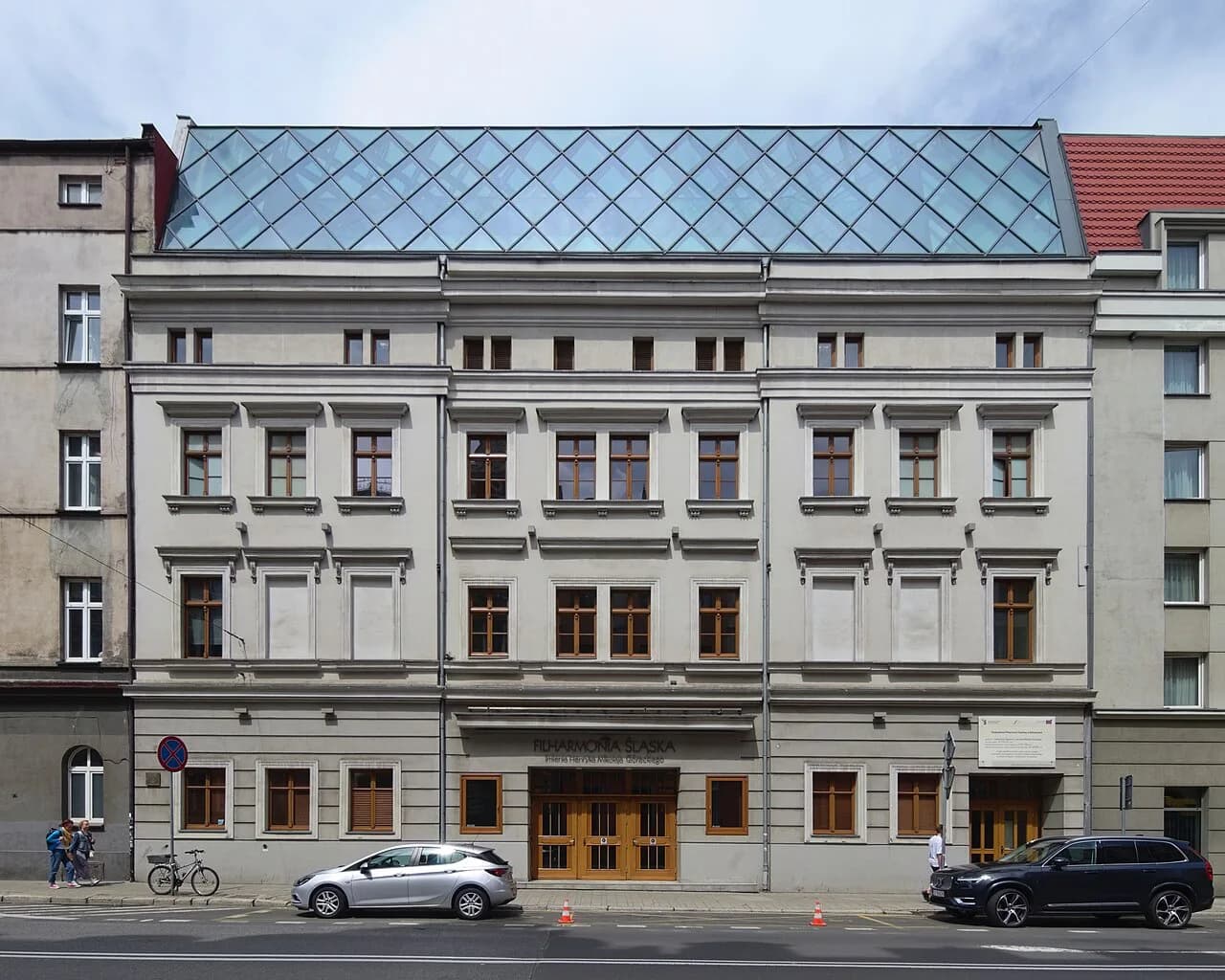
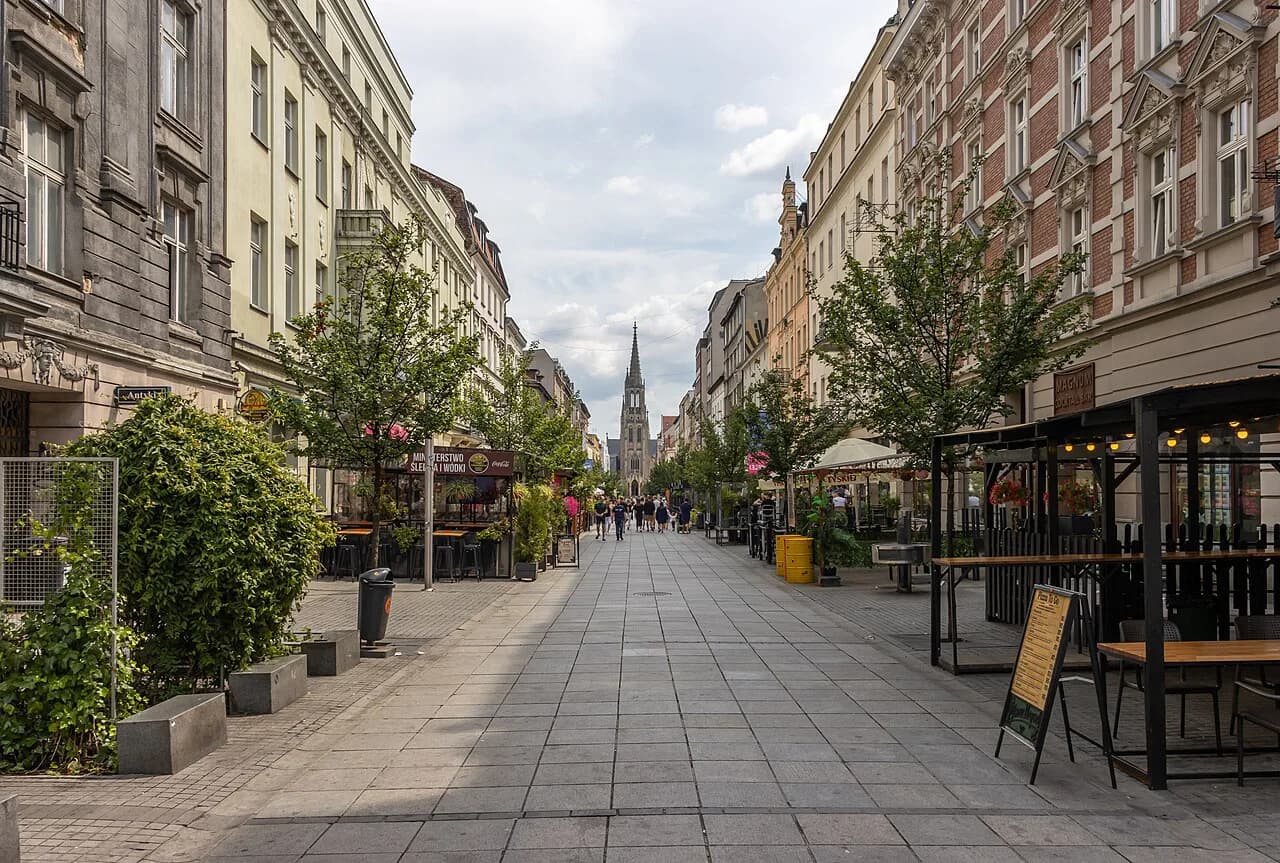
Begin where the city presents itself: the central market square and the streets that radiate from it, including ulica 3 Maja. Katowice's centre is compact and pedestrian-friendly, and the pleasure here is in the mix rather than in single set-piece buildings — interwar facades pressed up against later infill, with shopfronts at street level.
Walk slowly and look up. Modernist detailing shows in window proportions, plain rendered elevations and stair towers rather than in ornament, and it is easy to miss at eye level. The centre also rewards attention to what has been replaced, since rebuilding and later redevelopment have left a patchwork rather than a single period.
The Culture Zone: the Silesian Museum and its neighbours
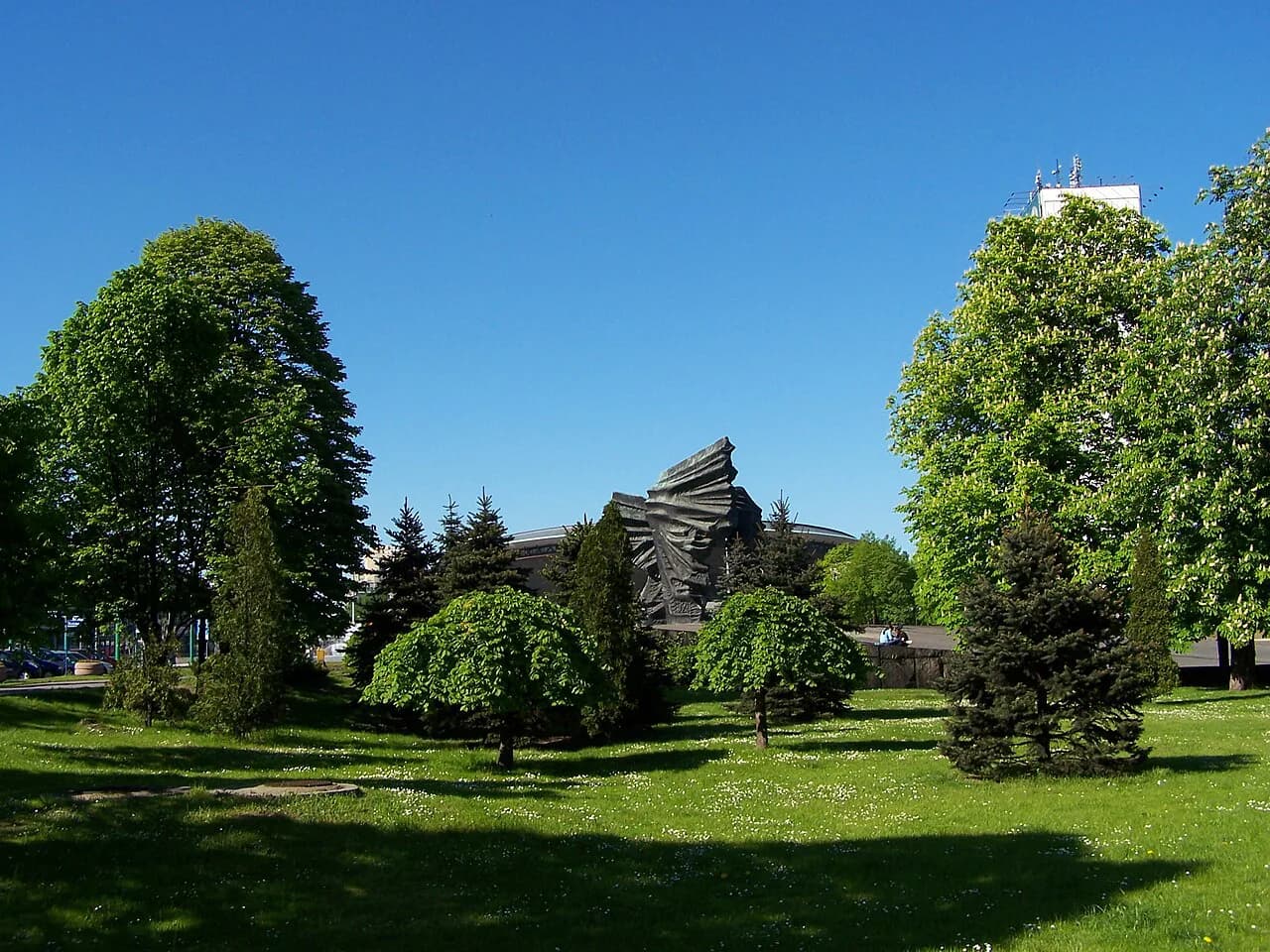
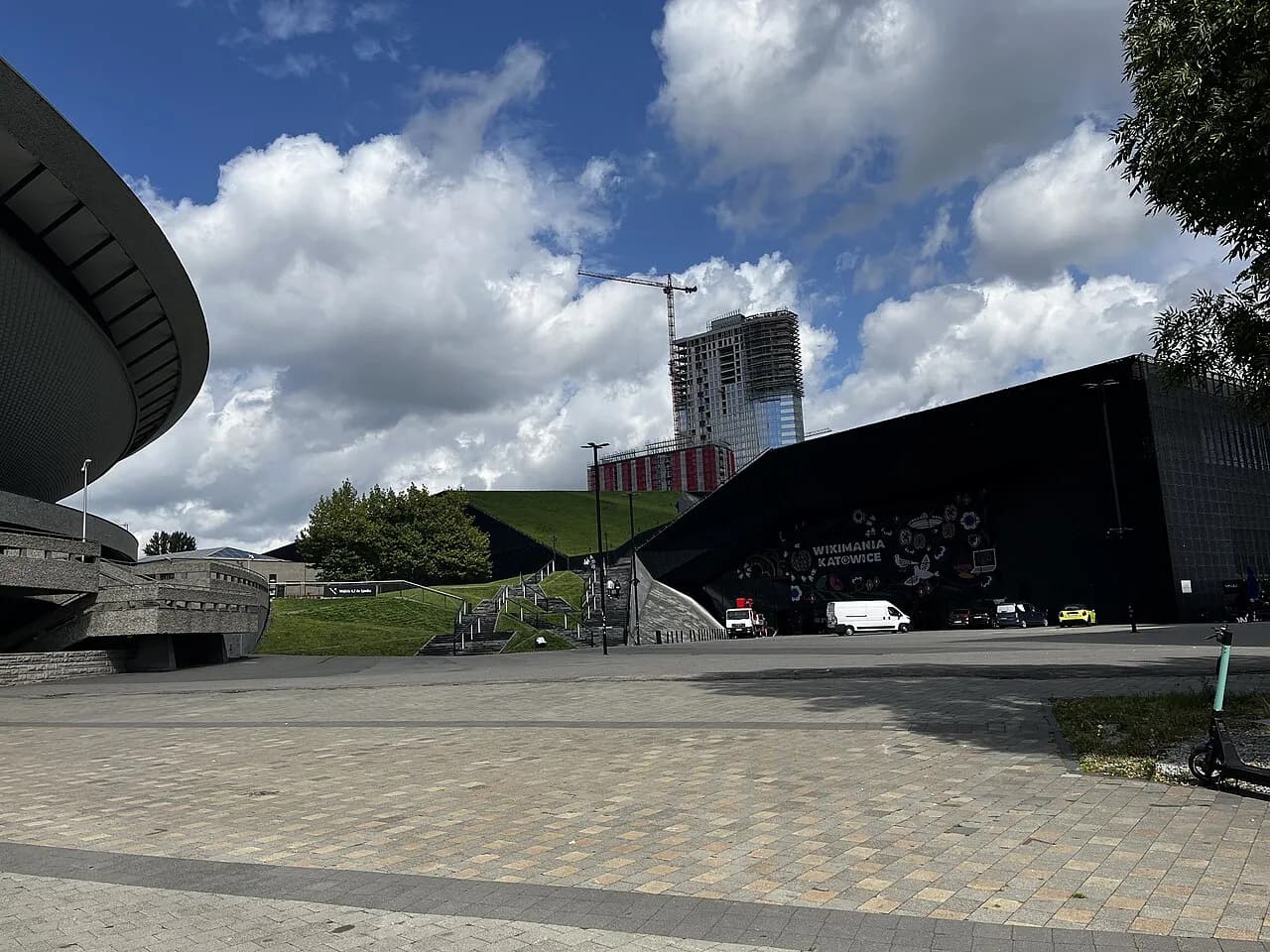
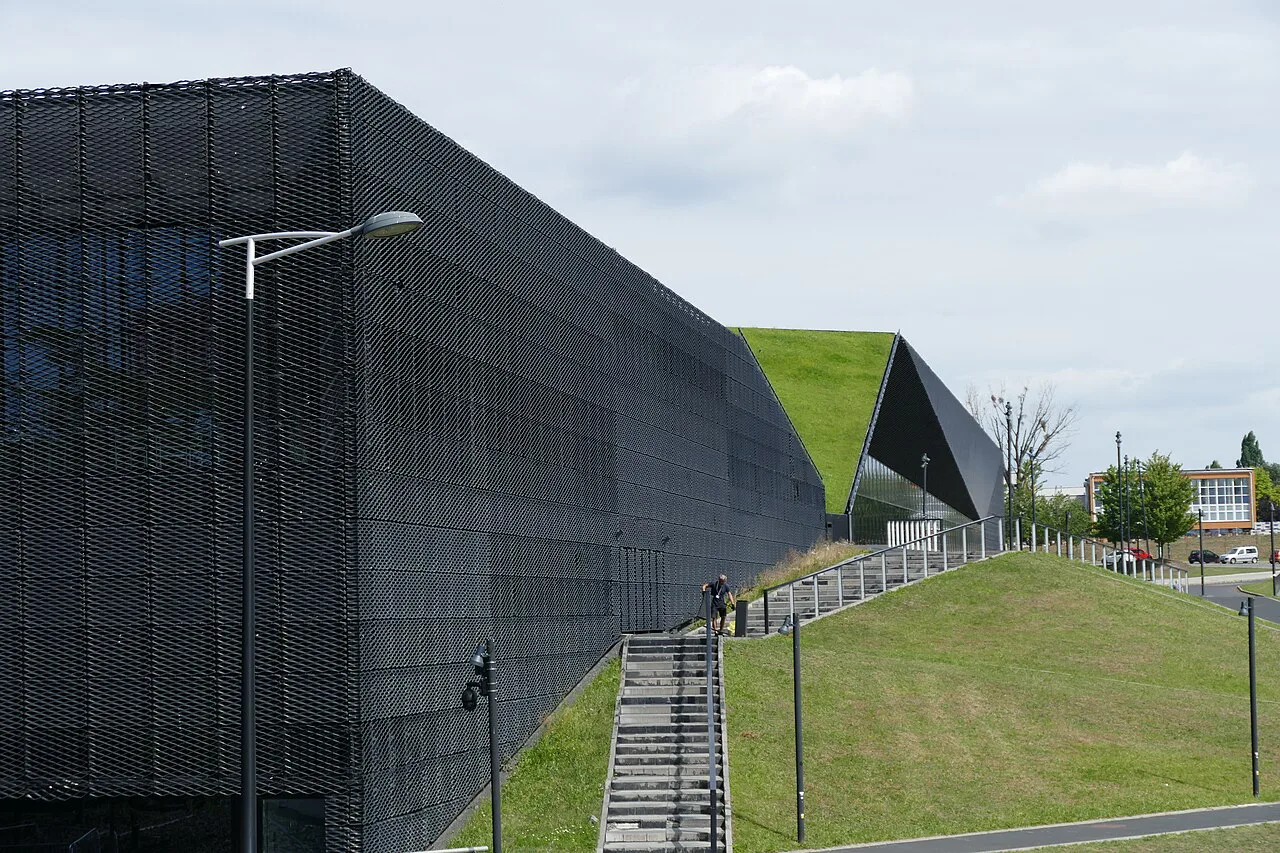
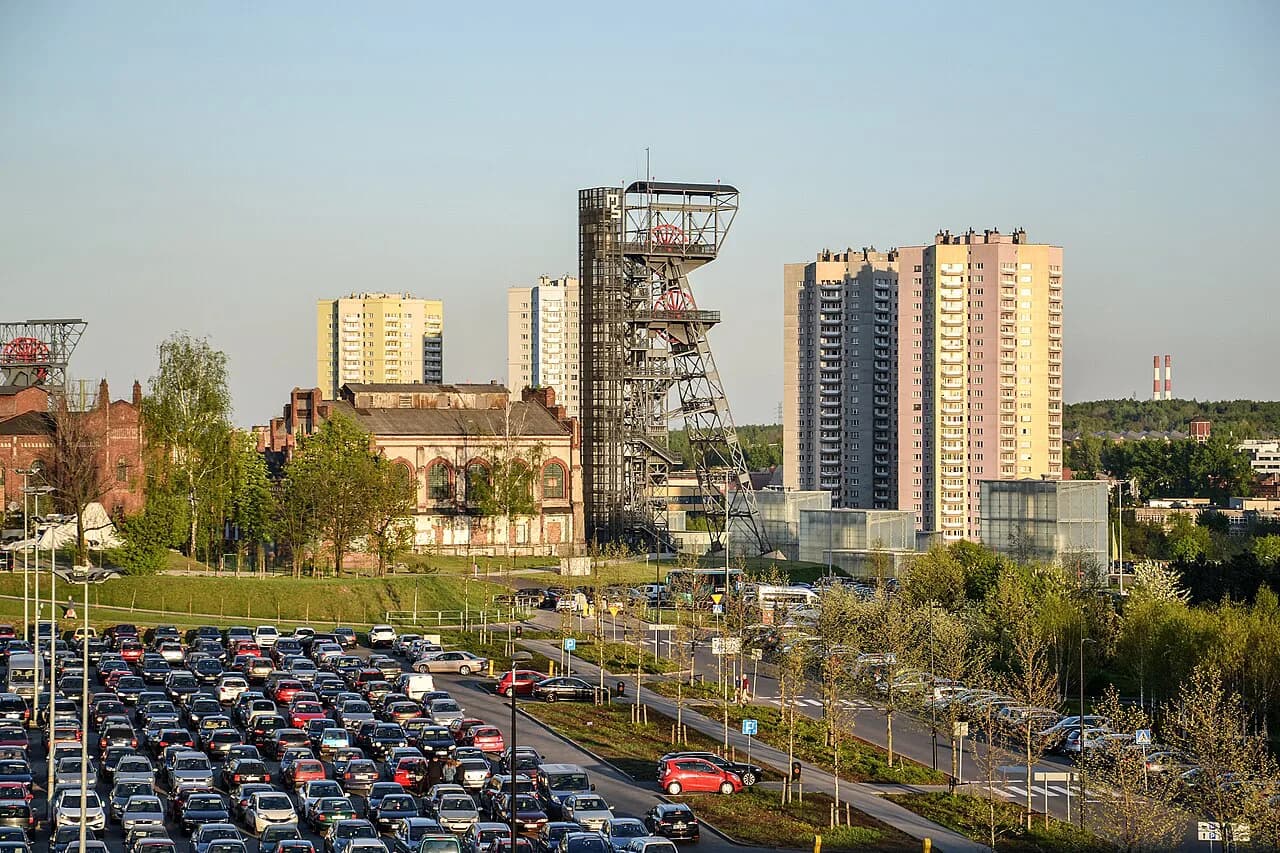
The Culture Zone is the strongest single stretch of architecture in Katowice and the best place to see industrial land remade. The Silesian Museum sits on the grounds of the former coal mine "Katowice", and its neighbours include the headquarters of NOSPR (Polish National Radio Symphony Orchestra), the International Conference Centre and Spodek.
Treat the zone as urban design rather than a museum visit: the interest lies in how the buildings sit against the old mine structures and how the space between them works. For the exhibitions themselves, including the collection that runs from Matejko and Wyspiański to Malczewski, see the guide to museums in Katowice and plan the zone separately from the galleries.
The Warszawa II shaft beside the museum carries a viewing platform, reached from the museum grounds and included with the museum ticket. Head up to read the city's layout from above: the flat industrial plain, the ring of districts and the gap where the mine once worked.
Nikiszowiec and Giszowiec: the workers' estates
Nikiszowiec and Giszowiec are the reason to give Katowice a full day. These are planned workers' estates built for mining families, and Nikiszowiec in particular is a dense grid of red-brick blocks with distinctive detail in the brickwork and the enclosed courtyards.
What to look for: repeated brick patterns and rhythm along the terraces, the way upper floors and stairwells are expressed, and the covered passages and courtyards that make the estate feel like one building spread out. This is domestic architecture, not monument architecture, so the interest is in consistency and repetition rather than a single facade.
Nikiszowiec sits away from the centre and needs its own time slot, so do not try to fold it into a short centre walk. Check how you will reach it and how long that takes before setting out, and pair it with the centre on separate halves of the day rather than rushing between them.
Brutalist and late-20th-century Katowice
The post-war decades left Katowice with heavy, plain-faced buildings that divide opinion sharply. Spodek is the obvious example in the Culture Zone, and the wider city has plenty of concrete of the same era. Some travellers find the scale and rawness compelling; others find it bleak, and it is fair to say the pleasure depends on whether you enjoy that kind of massing.
Approach it as a matter of taste and look for the things that make brutalism work or fail: how the building meets the ground, whether the concrete is patterned or blank, and how public space is handled around it. The best results come when a heavy structure has a clear job and a legible entrance, rather than when it turns a blank face to the street.
Industrial heritage as architecture: mines, shafts and converted sites
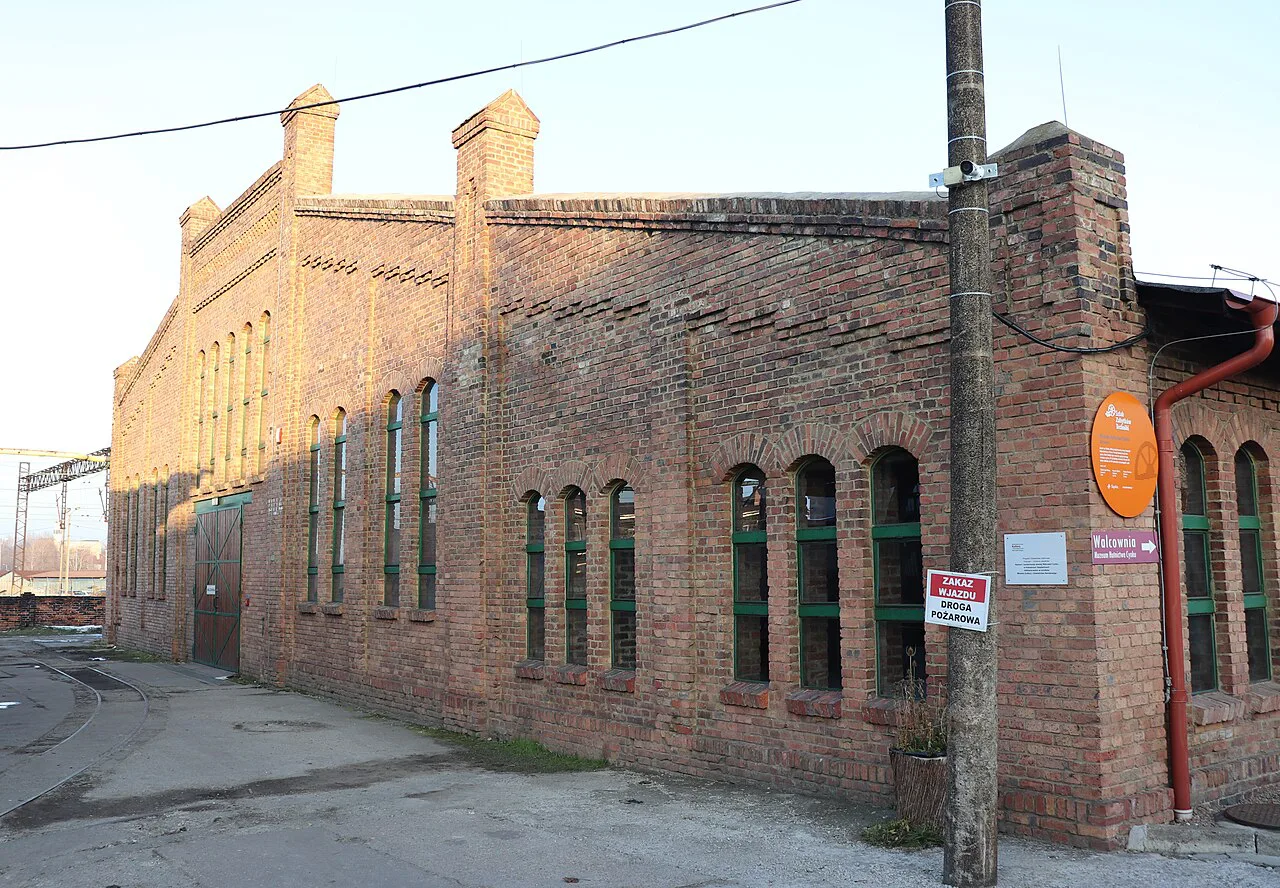
Katowice's industrial buildings are architecture in their own right — headframes, shafts, workshops and mill halls built for function and now read for form. Some mines still operate, while others have closed and taken on cultural uses, which lets you compare working industrial fabric with converted sites in the same trip.
The Wilson Shaft Gallery is a converted site worth adding to an art-and-architecture afternoon, and the former Zinc Rolling Mill works as a counterpoint to the tidied-up Culture Zone. Silesian Park gives you a different kind of planned landscape, useful when you want a break from streets.
Street art as a counterpoint to the planned city
Katowice has a visible street-art scene, which gives you an informal layer on top of all the planning and engineering. Look for it in the centre and around the converted industrial sites: large murals change the reading of a blank wall and are the quickest way to see how the city is being used now rather than how it was designed.
How to walk it: half a day and a full day
For half a day, start at the central square and walk the streets around it, then head to the Culture Zone and finish at the Warszawa II shaft viewing platform for the overview. That order keeps you on foot, ends with height and context, and leaves the estate for another time.
For a full day, put Nikiszowiec in the morning, when you can give the brickwork proper attention, return to the centre for the market square and street art, and finish in the Culture Zone. If industrial conversions appeal, add the Wilson Shaft Gallery and the former Zinc Rolling Mill on a second day rather than cramming them in.
How many days Katowice architecture needs alongside the museums
Two days covers the architecture comfortably: one for the centre and Culture Zone, one for Nikiszowiec and the industrial sites. If your main interest is buildings rather than collections, you can compress the museums into an hour or two and spend the rest outdoors; if you want both, give the city three days and treat the galleries as a separate half-day.
For the wartime layer of the city's buildings and memorials, keep it as a distinct walk rather than mixing it into the architecture route, and give it its own time. Katowice WW2 covers those sites in a way this architectural route deliberately does not.
Is Nikiszowiec worth the trip out?
Yes, if you care about how a city housed its workers. Nikiszowiec gives you brickwork, courtyards and repetition that the centre cannot, and it is the single building experience most likely to stay with you. Skip it only if your time in Katowice is short and the centre plus Culture Zone already fills your day.
Build the rest of the visit around that decision: centre streets first, Culture Zone second, viewing platform last, since the view is the best way to make sense of a city that grew up around its mines.
Explore more Katowice guides
Frequently Asked Questions
Does Katowice have an old town?
Not in the sense that Kraków or Wrocław does. Katowice gained city rights only in the second half of the 19th century, so the buildings you see belong mostly to the industrial era and later, not to a medieval core. Plan the visit around industrial and modernist architecture instead of hunting for an old-town square.
Where do you see the best view of Katowice?
The viewing platform on the Warszawa II shaft beside the Silesian Museum gives you a panorama over the city and the industrial plain; it is included with the museum ticket. Check the museum's own notices before you build your day around it, in case access changes.
Can you see Nikiszowiec and the centre in one day?
Yes, but split the day in two. Give Nikiszowiec the morning for the brickwork and courtyards, then return to the centre for the market square and the Culture Zone in the afternoon. Trying to squeeze both into a half-day leaves no time to actually look.
How much walking is the centre route?
The central streets and the Culture Zone sit close together and can be covered on foot in an afternoon, with the shaft viewing platform as the finish. Nikiszowiec is a separate trip away from the centre and needs its own time slot.
Sources
Notes for your next Polish city break
Optional updates to our Poland guides.
You might also like


Continue reading
More guides you'll find useful