Free Things to Do in Gdańsk: Sights, Walks and Views
A practical guide to free things to do in Gdańsk, from the Royal Way and Długi Targ to the Motława embankment, Mariacka Lane and Gradowa Hill views.
On this page
Gdańsk is one of Poland's easiest city breaks to do cheaply, because the headline sights are streets, squares and waterfronts rather than ticketed attractions. The Royal Way, Długi Targ and the Neptune Fountain, the Motława embankment with the Crane, and Mariacka Lane can all be seen in a single day on foot without paying an entry fee. This guide orders those free stops into a workable route, adds the memorial settings and parks outside the centre, and separates the paid extras, such as tower climbs and the big museums, so you can decide where your money goes.
The compact layout is the reason a budget visit works. The main sights cluster in the Main Town, known in Polish as Główne Miasto, and the walk from the Upland Gate to the river takes minutes rather than hours, so you spend time looking rather than travelling.
Why Gdańsk works well on a small budget
Almost everything that defines Gdańsk in visitors' mental images is public space: the gabled merchant houses, the length of ulica Długa, the river frontage and the amber-shop terraces of Mariacka Lane. You pay only when you go inside somewhere, climb a tower or join a guided group, which means a one-day visit can cost nothing beyond food and drink.
The trade-off is concentration of people. Długa and Długi Targ are the busiest stretches in the city, so an early start or a late-afternoon return gives you the same streets with fewer tour groups, and the free stops cost nothing extra either way.
Walk the Royal Way from Brama Wyżynna to Długi Targ
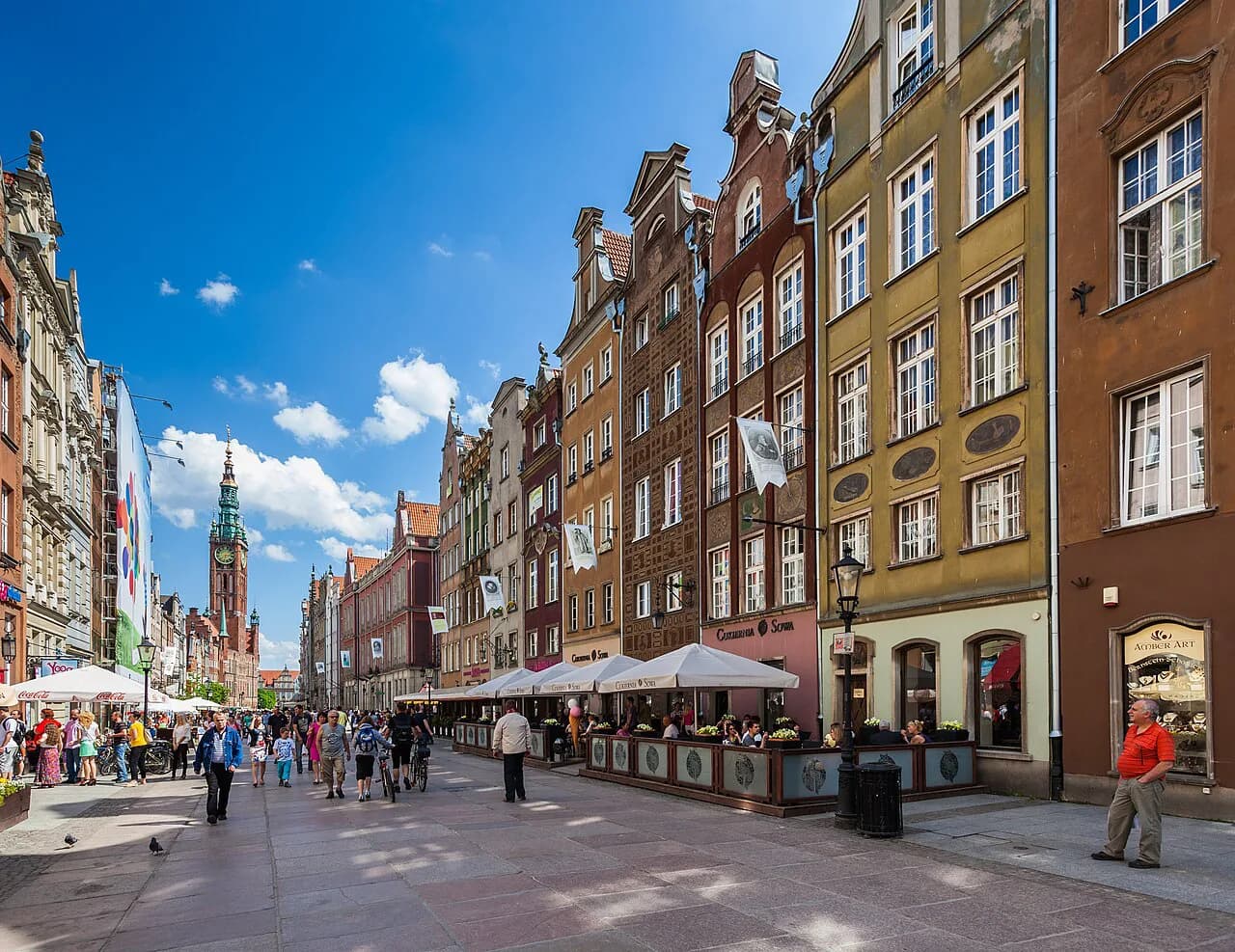
Start at Brama Wyżynna, the Upland Gate, where the Royal Way begins, and walk the length of ulica Długa towards the Green Gate. The street runs roughly 500 metres and is lined with restored merchant houses, cafés and the city's most important historic buildings, so it rewards a slow pace rather than a march.
Much of what you see was rebuilt after the war, and the restoration deliberately recreates the historic appearance of the facades. Look out for the Golden House, built in 1618 and among the most ornate buildings on the route, and the Prison Tower at the top of the street.
The Prison Tower at the top of the street is worth a pause as you pass, and it houses a torture museum if you later decide to spend money on a small attraction. On the street itself, the pleasure is the architecture and the buzz, and both are free.
Długi Targ and the Neptune Fountain: the free heart of the Main Town
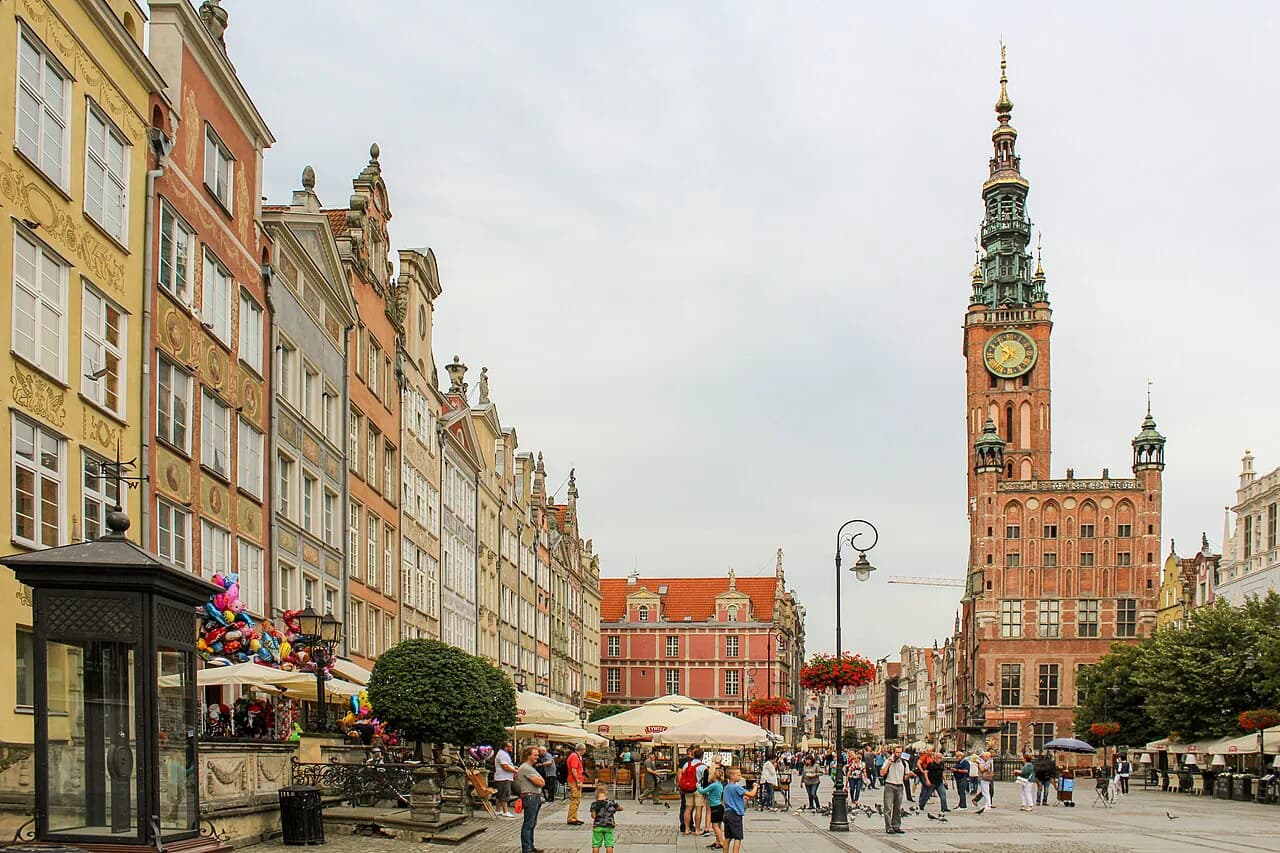
Długi Targ, the Long Market, is the centrepiece of the Main Town and the first place to aim for if you only have an afternoon. The Neptune Fountain stands in front of Dwór Artusa, beside the Main Town Hall, and the bronze figure, made by Abraham van den Blocke in the early seventeenth century, is the city's best-known symbol.
Both the fountain and the square are accessible to everyone at any hour, which makes them the obvious anchor for a free day. The Main Town Hall, a Gothic-Renaissance building that housed the city authorities from the mid-fourteenth century until 1921, is free to admire from outside; its 80-metre tower, with a summer panorama from the top, is a separate paid visit.
Dwór Artusa itself now holds a branch of the Gdańsk Museum, so step inside only if the exhibitions appeal and you are happy to pay. Outside, the square is also where you will find the main tourist office, useful for maps and for checking what is running during your stay.
St Mary's Basilica: what is free and what the tower costs
Bazylika Mariacka, the Basilica of St Mary, is the vast brick church that dominates the Main Town skyline and one of the city's top attractions. It is an active parish church, so treat it as one: the interior can be visited, but the tower climb is a paid extra and the only part of the visit that costs money.
If your priority is a view rather than a church interior, the free alternative is Gradowa Hill, which gives you the panorama without a ticket. Save the tower for a clear day and decide on the spot; either way, the church's exterior and its setting among the surrounding streets cost nothing to see.
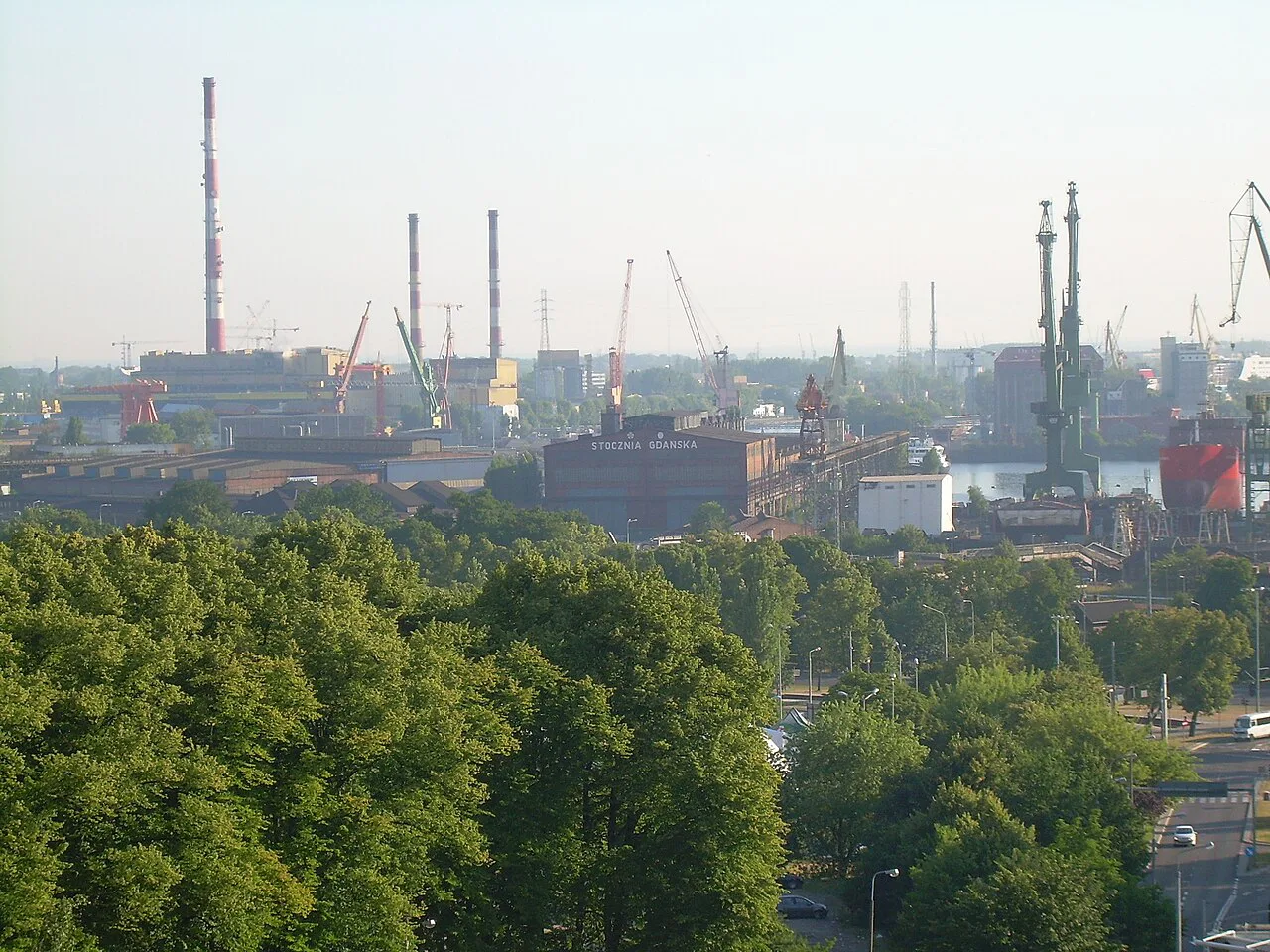
Mariacka Lane: amber shopfronts and stone terraces
Ulica Mariacka runs from the basilica towards the river and is the most atmospheric street in the Main Town, with stone terraces and shopfronts given over to amber. Walking it costs nothing, and the window displays are effectively a free exhibition of the Baltic trade that made the city rich.
If you want to understand what you are looking at before browsing, read up on how amber is graded and what the different colours mean, then use the lane for comparison rather than impulse buying. The shops themselves are a browsing exercise; the street is the attraction.
The Motława embankment and the Żuraw
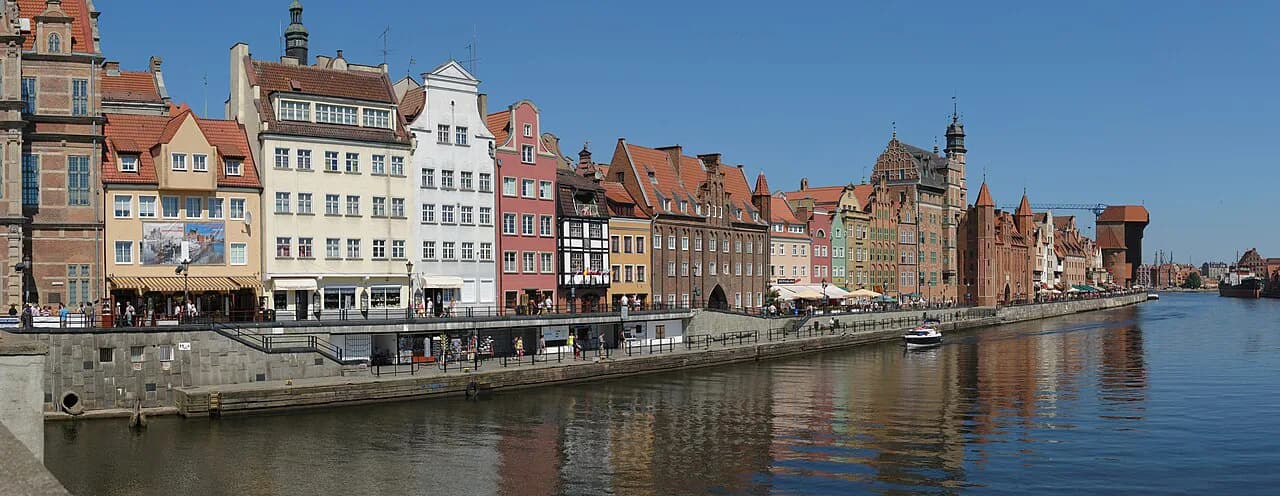
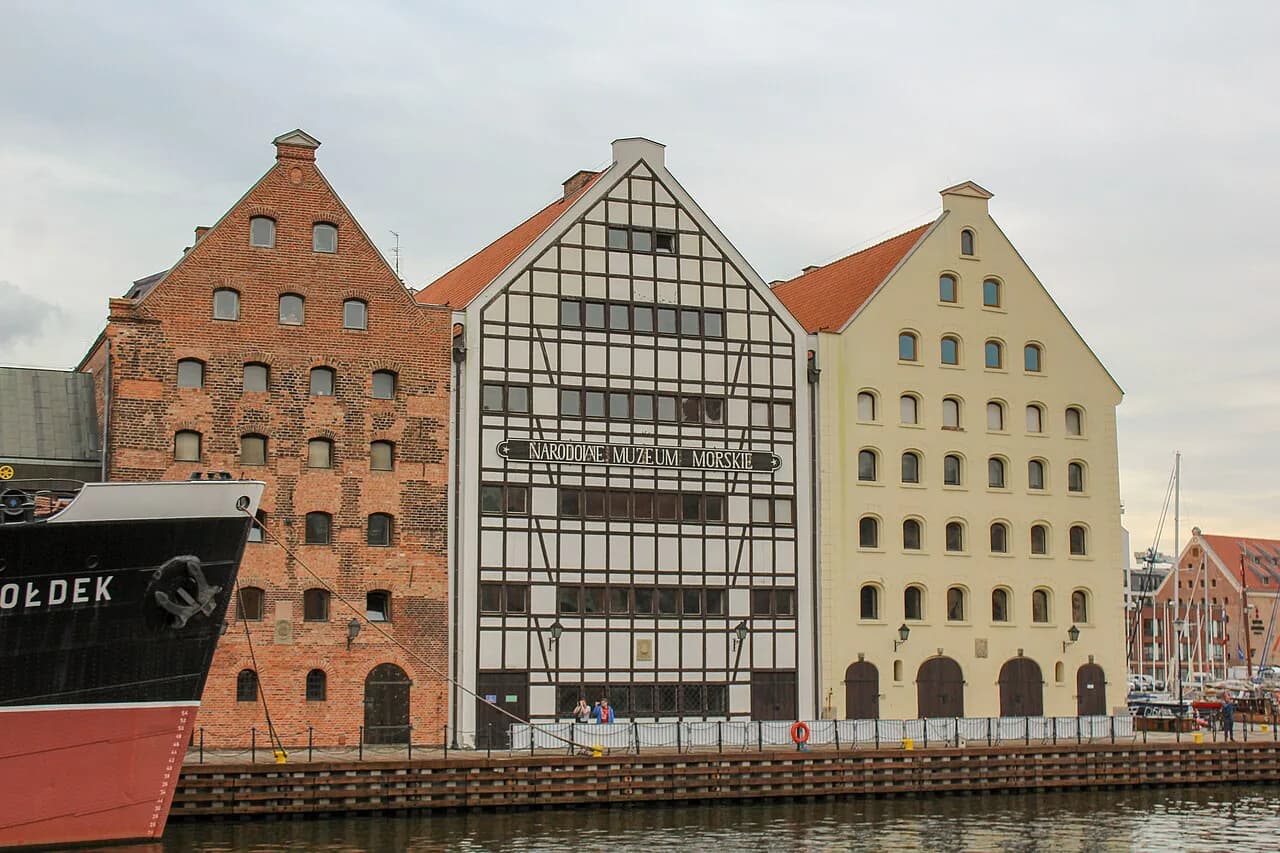
Długie Pobrzeże, the Motława embankment, is the best free waterside walk in the city, especially in the evening when the riverside buildings are lit. One side is lined with historic houses and the iconic Żuraw, the historic port crane, and the whole stretch is open to anyone.
Boats leave from this stretch for river trips and for Westerplatte, which is where the free walking ends and a paid ticket begins. If a boat trip appeals, compare operators and prices at the quay rather than committing to the first offer you see.
The Crane and parts of the waterfront have been through long restoration, and scaffolding can obscure sections at times. The walk still works around any works, so treat the embankment as a flexible hour rather than a fixed sight.
Granary Island and the shipyard side
Wyspa Spichrzów, Granary Island, sits across the river from the Main Town and is free to wander, with rebuilt warehouses now filled with places to eat and drink. It is a good add-on to the embankment walk rather than a destination in itself, and the views back across the water are the reason to go.
Further north, the shipyard neighbourhood is where the Solidarity movement began, and it is undergoing a revival as old warehouses are patched up and turned into food halls and bars. The public spaces and the memorial settings there are free; the museums are not.
The European Solidarity Centre and the Museum of the Second World War from outside
Both the European Solidarity Centre and the Museum of the Second World War charge for their exhibitions, but their exteriors and settings are part of the city's public landscape. The Solidarity centre's rust-coloured architecture stands at the edge of the shipyard, and the Second World War museum's angled building rises near the river in the Main Town.
Treat these as orientation stops: walk past, read the outdoor memorial panels, and decide whether either collection justifies a ticket. The exhibitions are substantial and deserve time, so if you are on a strict budget, pick one and give it a proper half-day rather than trying to fit both around free sightseeing.
Westerplatte, the peninsula where the war in Europe began, is a separate trip downriver and best reached by boat or bus. Its memorial ground is free to walk, and the register there is sombre rather than spectacular, so go for the history rather than for entertainment.
Gradowa Hill: a free walk and a view back over the Main Town
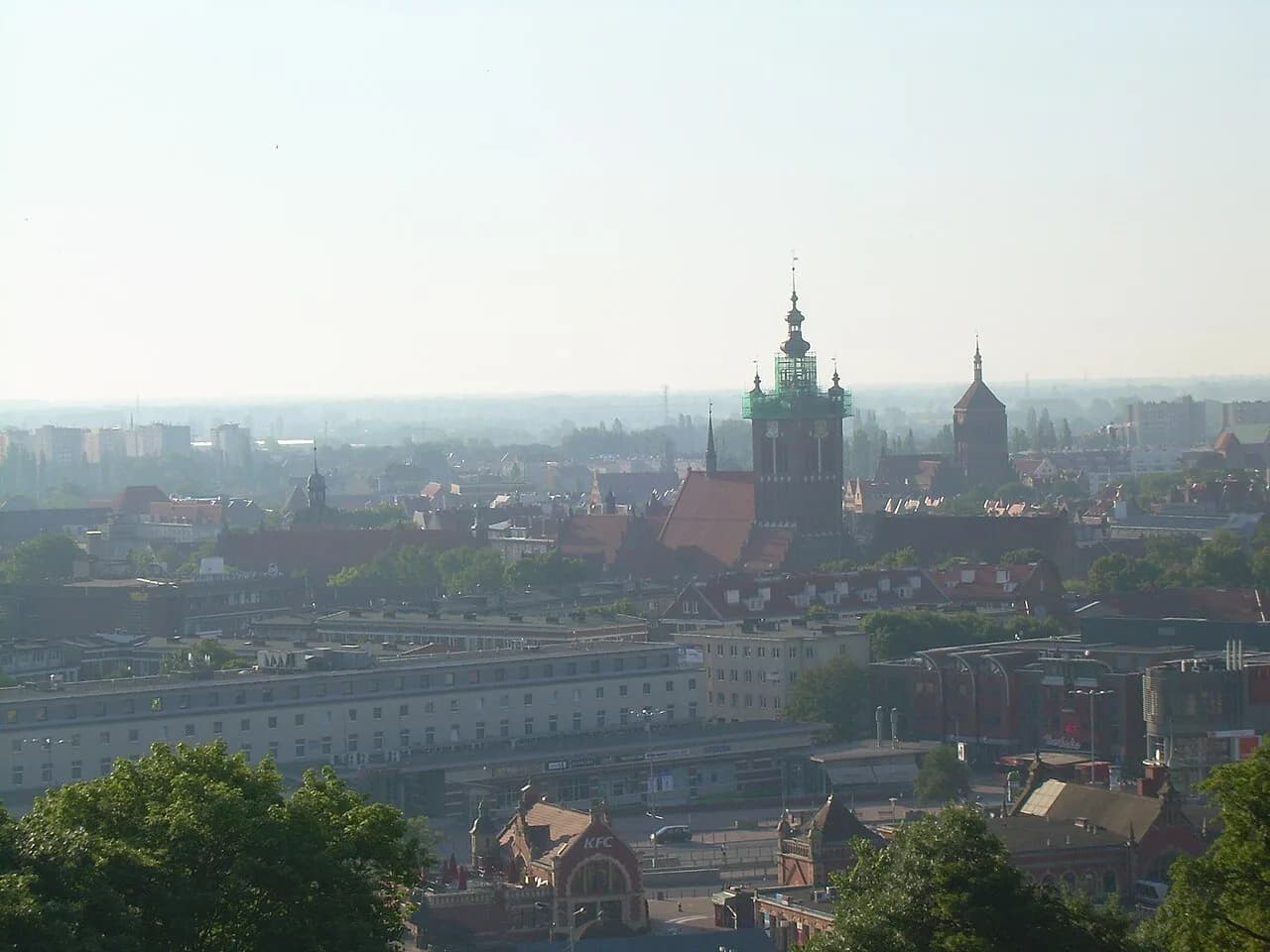
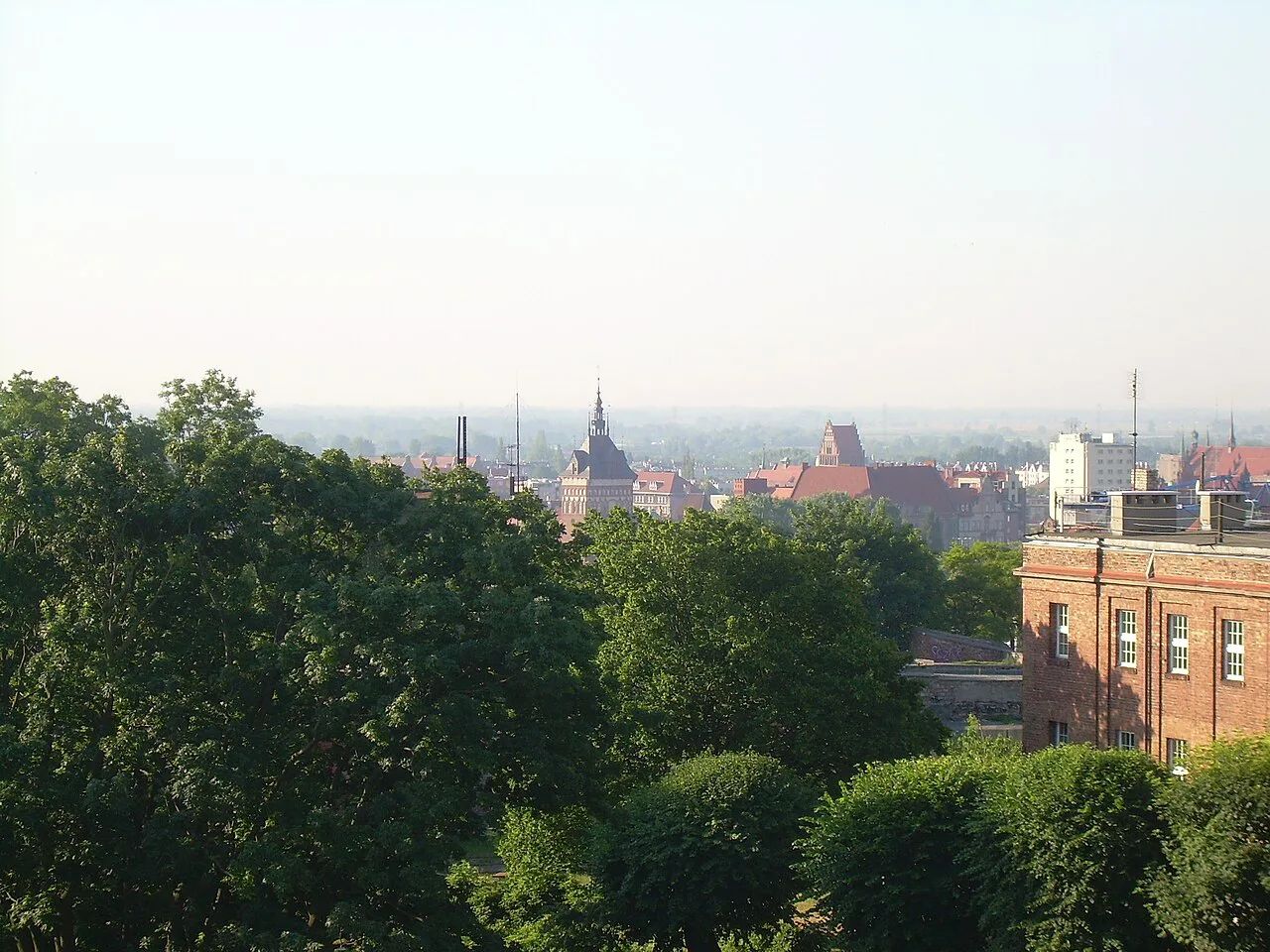
Gradowa Hill is the free viewpoint to choose if you want the panorama without paying for a tower. It sits above the city and gives you a wide view over the rooftops, which makes the walk up worthwhile even on a short break.
Go late in the day for the light and allow time to walk back down before dark if you are not familiar with the streets. The hill is a park-like space rather than an attraction with facilities, so bring water and treat it as a stroll with a reward at the top.
Oliwa Park: a free green afternoon outside the centre
Park Oliwski, in the Oliwa district, is a proper park with formal gardens and old trees, and it gives you a free afternoon away from the crowds of the Main Town. It appears on the city's own list of top attractions and pairs naturally with the Oliwa cathedral.
Oliwa is a train or tram ride from the centre, so it suits a half-day when you have already covered the Royal Way and the river. The gardens reward a slow wander with a picnic rather than a checklist of sights.
Free museum days in Gdańsk: what is confirmed
It is often said that Gdańsk's museums are free on Mondays, and at least one widely read guide to the city states that most museums there are free of charge on that day. Treat it as a lead rather than a rule: individual museums set their own arrangements, and the larger ones such as the Museum of the Second World War and the European Solidarity Centre are the likeliest to differ.
The Gdańsk Card bundles entry to around twenty museums plus public transport across Gdańsk, Sopot and Gdynia, which is worth pricing against your actual list before you buy. If you plan to visit two or three paid collections, do the arithmetic in złoty at the ticket desk and the tourist office on Długi Targ before committing.
How to fill a free day: the order of stops
Begin at Brama Wyżynna and walk ulica Długa to Długi Targ, pausing at the Neptune Fountain and the Main Town Hall. Continue to Bazylika Mariacka, drop down Mariacka Lane and finish on the Motława embankment by the Żuraw: that loop is the free core of the city and fits comfortably into a morning.
Use the afternoon for one paid choice, whether that is a museum, the St Mary's tower or a boat to Westerplatte, then end the day on Gradowa Hill for the view. If you have a second day, give it to Oliwa and the park, or to the shipyard memorial spaces.
What is not free: tower climbs, museums and paid attractions
The things that cost money in Gdańsk are mostly the interiors and the heights: the Main Town Hall tower, the St Mary's tower, the amber and torture collections, and the two big museums. None of them is expensive by western European standards, but the total adds up if you try to do everything, so choose by interest rather than by completeness.
Boat trips and guided tours are paid extras that can replace a lot of walking, and a private guided walk is a way to make sense of the city's complex history if that matters more to you than saving money. For most visitors, the free streets plus one museum is the better balance.
Is a free day in Gdańsk enough?
A single free day covers the best of Gdańsk: the Royal Way, Długi Targ and the Neptune Fountain, the basilica from outside, Mariacka Lane and the Motława embankment. Add Gradowa Hill for the view and you have seen the city's signature sights without paying for admission.
If you have a second day, spend it on one paid museum, the Oliwa park or a boat to Westerplatte, rather than trying to squeeze every tower and collection into a short break.
Explore more Gdańsk guides
Frequently Asked Questions
Is Gdańsk cheap for a city break?
Gdańsk can be done cheaply because its signature sights, including the Royal Way, Długi Targ, the Neptune Fountain, Mariacka Lane and the Motława embankment, are free public spaces. Costs come from museum tickets, tower climbs, boat trips and guided tours, so decide which of those you actually want before you go.
Is two days enough for Gdańsk?
Two days is enough to see the Main Town on foot and add either one major museum or a trip to Oliwa or Westerplatte. A single day covers the free core; a second day lets you go inside somewhere without rushing the streets.
What can I do in Gdańsk in one day?
Walk from Brama Wyżynna along ulica Długa to Długi Targ, see the Neptune Fountain, visit Bazylika Mariacka and Mariacka Lane, then follow the Motława embankment past the Żuraw. Finish with the free view from Gradowa Hill if the weather is clear.
Are Gdańsk museums free on Mondays?
A common claim is that most Gdańsk museums are free on Mondays, but individual venues set their own arrangements and the large museums are the likeliest to differ. Check the current offer at the tourist office on Długi Targ or on each museum's own site before building your day around it.
Sources
Notes for your next Polish city break
Optional updates to our Poland guides.
You might also like
Continue reading
More guides you'll find useful