Gdańsk Walking Tour: A Self-Guided Route Through the Main Town
Walk Gdańsk's Main Town in a half day: a stop-by-stop route from Długa and Długi Targ to the Żuraw, with walking times and museum stop options.
On this page
A self-guided Gdańsk walking tour through the Main Town takes roughly three to four hours at an unhurried pace, covering about three kilometres between the Royal Route, St. Mary's Basilica, the Motława riverside and Ołowianka. That makes it a half-day plan rather than a full day, and it leaves room for one museum or a tower climb without rushing. This route runs in the order you would actually walk it, with cumulative times and the trade-offs for a one-day visit.
The walk stays inside Główne Miasto, the Main Town, which is where most of the named sights cluster and where the streets are flat and continuous. Everything here is walkable in ordinary shoes; the only real climb is optional. Pair the route with a wider list of things to do in Gdańsk if you have two or three days and want to spread the sights out.
What a Gdańsk walking tour covers and why the Main Town suits a half-day on foot
Główne Miasto is the compact core of the historic city, and the classic sightseeing axis runs straight through it. A walking tour here strings together the Royal Route, the basilica, the riverside waterfront and the island opposite without any transport at all. Because the distances are short, the limiting factor is how long you spend inside buildings rather than how far you walk.
Plan the walk as a single arc rather than a loop: start inland, drift towards the water and finish across the river. That shape avoids backtracking and means you end near somewhere to eat. If you only have an afternoon, the first three stops still give you the essential Gdańsk.
Start point and layout: the Royal Route through Długa and Długi Targ
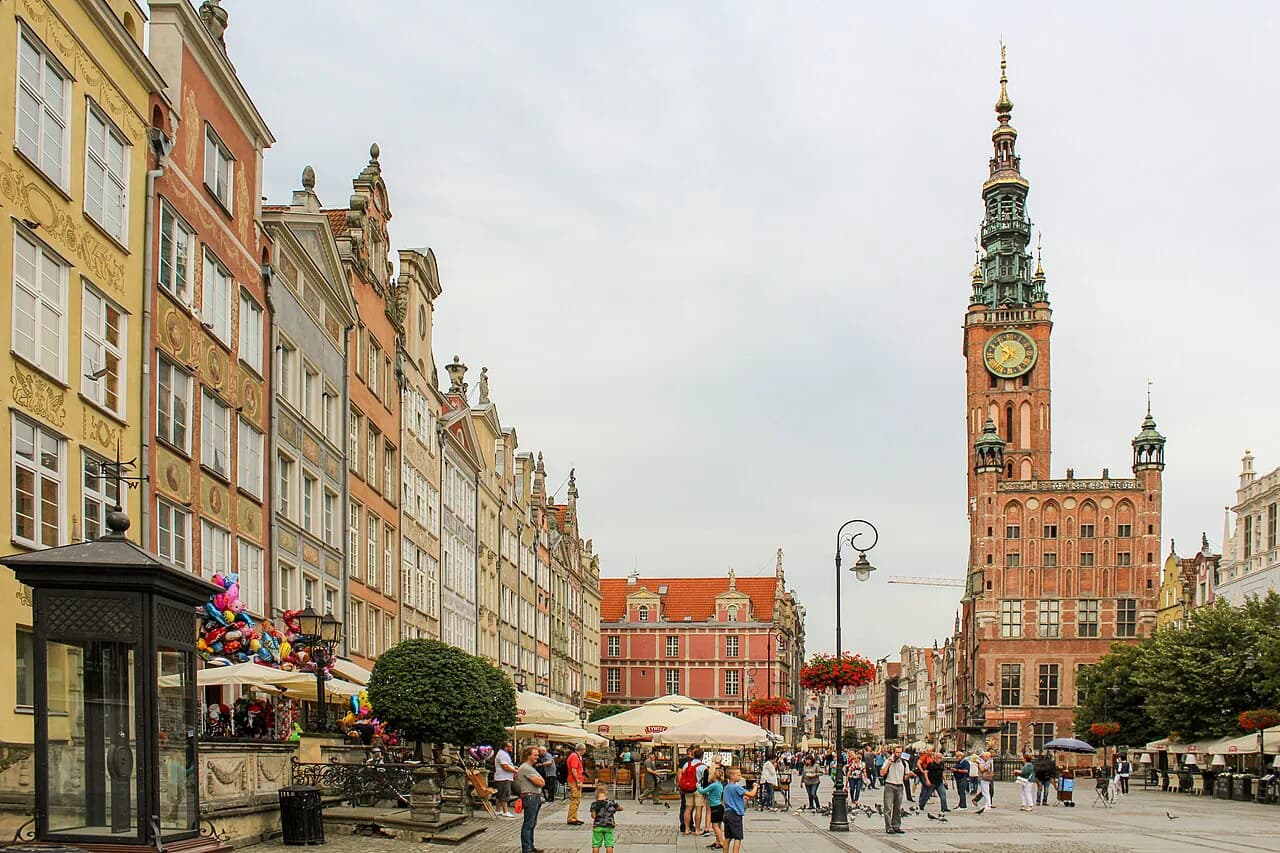
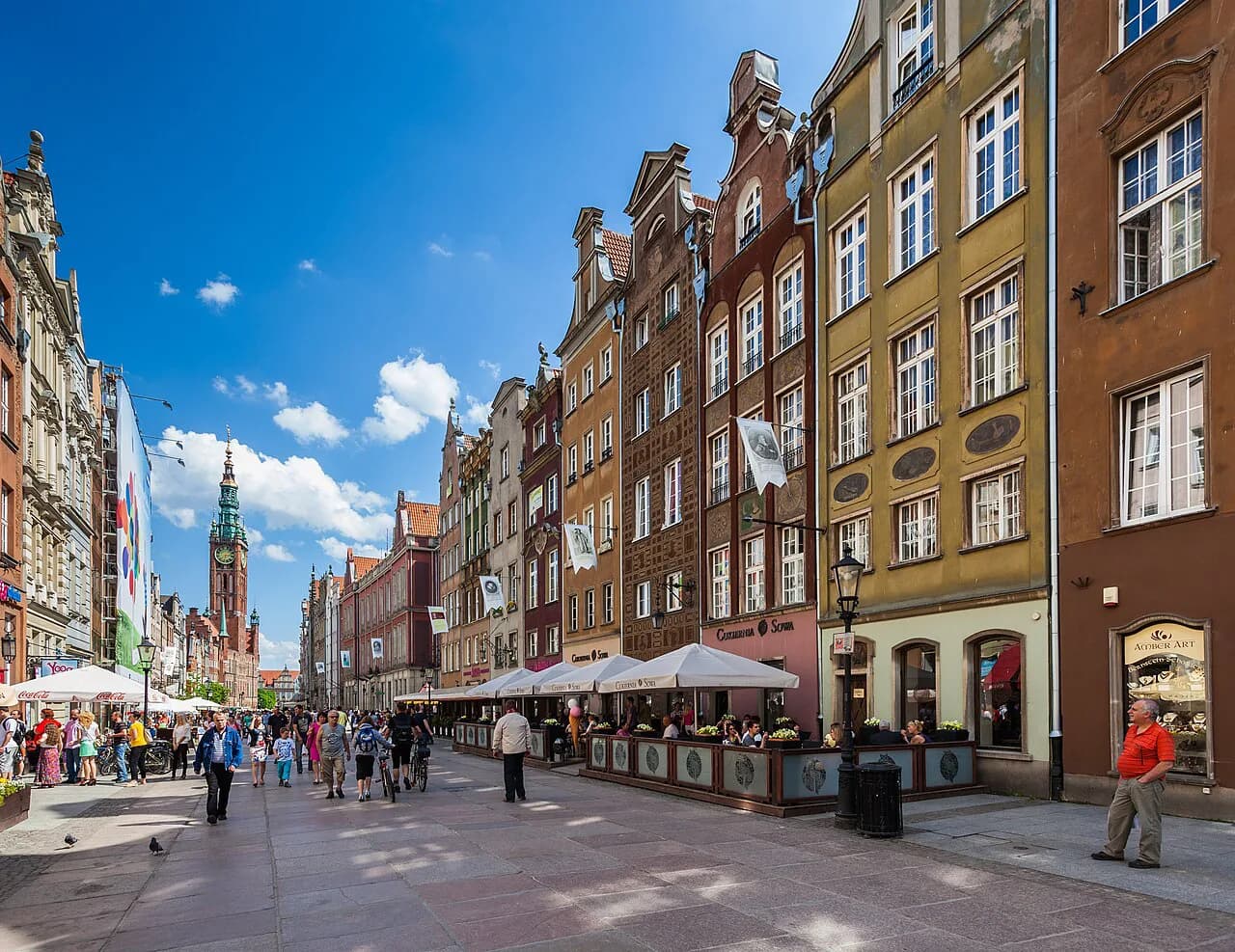
Begin at the Golden Gate end of ulica Długa, the long pedestrian street that opens the Royal Route. Walk south-east along Długa towards Długi Targ, the broad market square at its end, and you pass the tall burgher houses that define the Main Town's look. Allow ten to fifteen minutes for the length of Długa itself, more if you stop to look up at the façades.
The layout is easy to hold in your head: Długa feeds into Długi Targ, Długi Targ runs down to the river at Długie Pobrzeże, and Mariacka Street cuts back inland towards the basilica. Once you have walked that triangle you have effectively learned the Main Town. For a fuller picture of how this quarter relates to the rest of the city, the Gdańsk Old Town guide fills in the surrounding streets.
Stop 1: Długa and Długi Targ, with Artus Court and Neptune Fountain facing each other
The centrepiece of Długi Targ is the pairing of Artus Court and the Neptune Fountain, which stand across from one another in front of the town houses. Artus Court was the meeting house of the merchant brotherhoods and remains the square's most ornate frontage; the fountain in front of it is the square's natural meeting point. Together they take maybe twenty minutes including a slow circuit of the square.
This is also the densest stretch for cafés and shopfronts, so it is the obvious place to break the walk. Treat the square as your first rest stop rather than racing through it. If amber is on your list, Długi Targ and the streets around it are lined with jewellers, though the serious browsing belongs to the next stop.
Stop 2: St. Mary's Basilica and its tower as an optional detour
From Długi Targ, head inland to St. Mary's Basilica, the vast Gothic church that dominates the Main Town skyline. The interior is the reason most people come, and the tower climb is the optional extra: it rewards you with the best roofscape view in the city, but it costs time and effort. Budget thirty to forty-five minutes for the church alone, and add the climb only if your legs and schedule allow.
The climb is the single best place on this route to see the whole layout of the Main Town at once, which helps you plan the rest of your stay. Skip it on a tight one-day visit and keep the church. For alternatives at a lower exertion level, the best views in Gdańsk covers the other vantage points worth knowing.
Stop 3: the riverside at Długie Pobrzeże and the Żuraw (the Crane) on the Motława
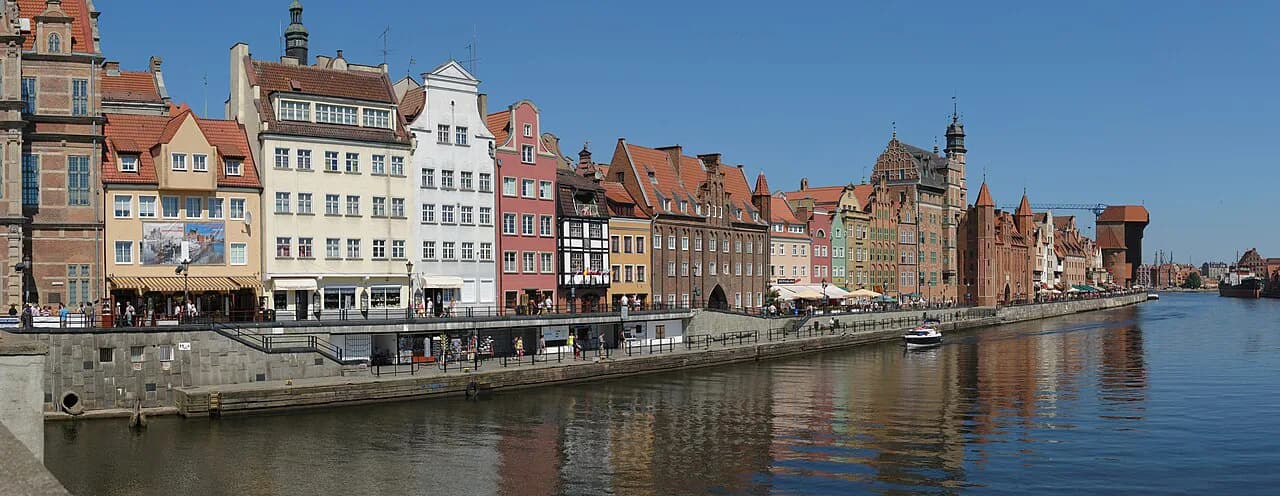
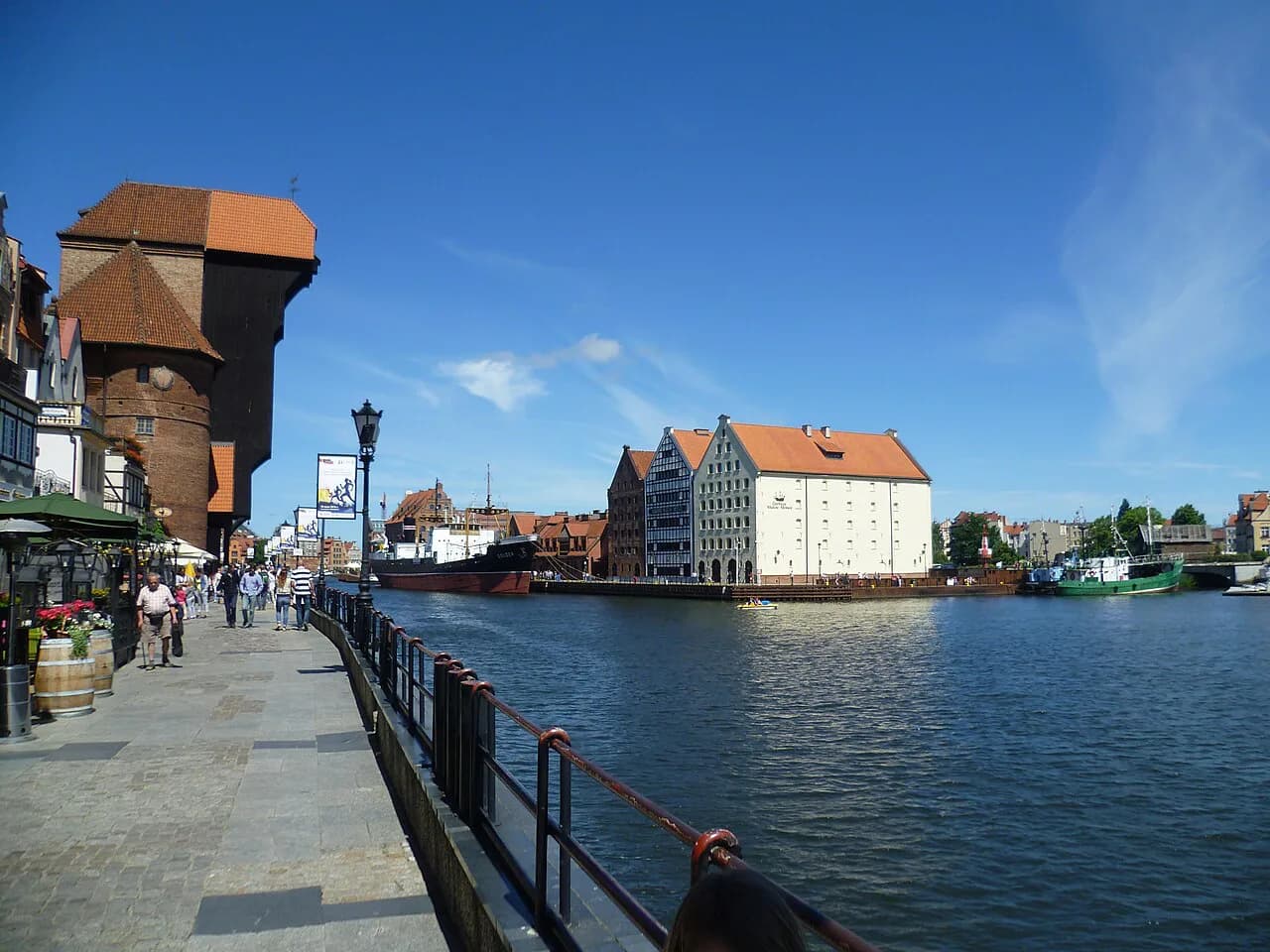
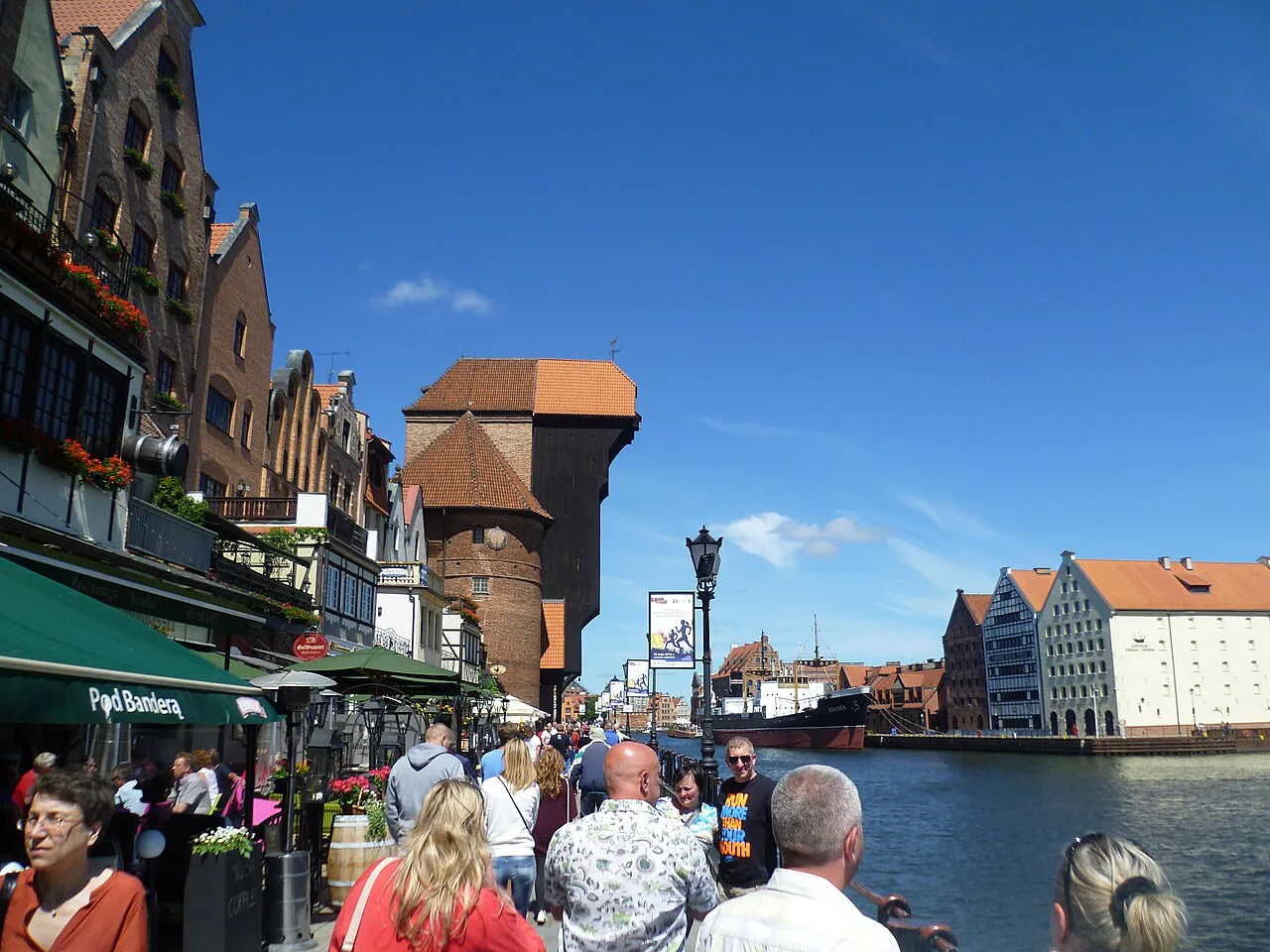
Drop down from the square to Długie Pobrzeże, the waterfront promenade along the Motława, and turn right towards the Żuraw, the medieval crane that is Gdańsk's maritime emblem. The walk along the river takes five to ten minutes and is the most photogenic stretch of the route, with the timber crane and the riverside façades on one side and the water on the other. The Żuraw sits at the end of this promenade, so you cannot miss it.
This is also where the city's port history becomes legible: the waterfront was a working quay, not a decorative one. Read the promenade as the boundary between the merchant town and the river trade that paid for it. Continue past the crane to the footbridge that leads across to Ołowianka on the far bank.
Stop 4: Mariacka Street and the amber shops between the basilica and the river
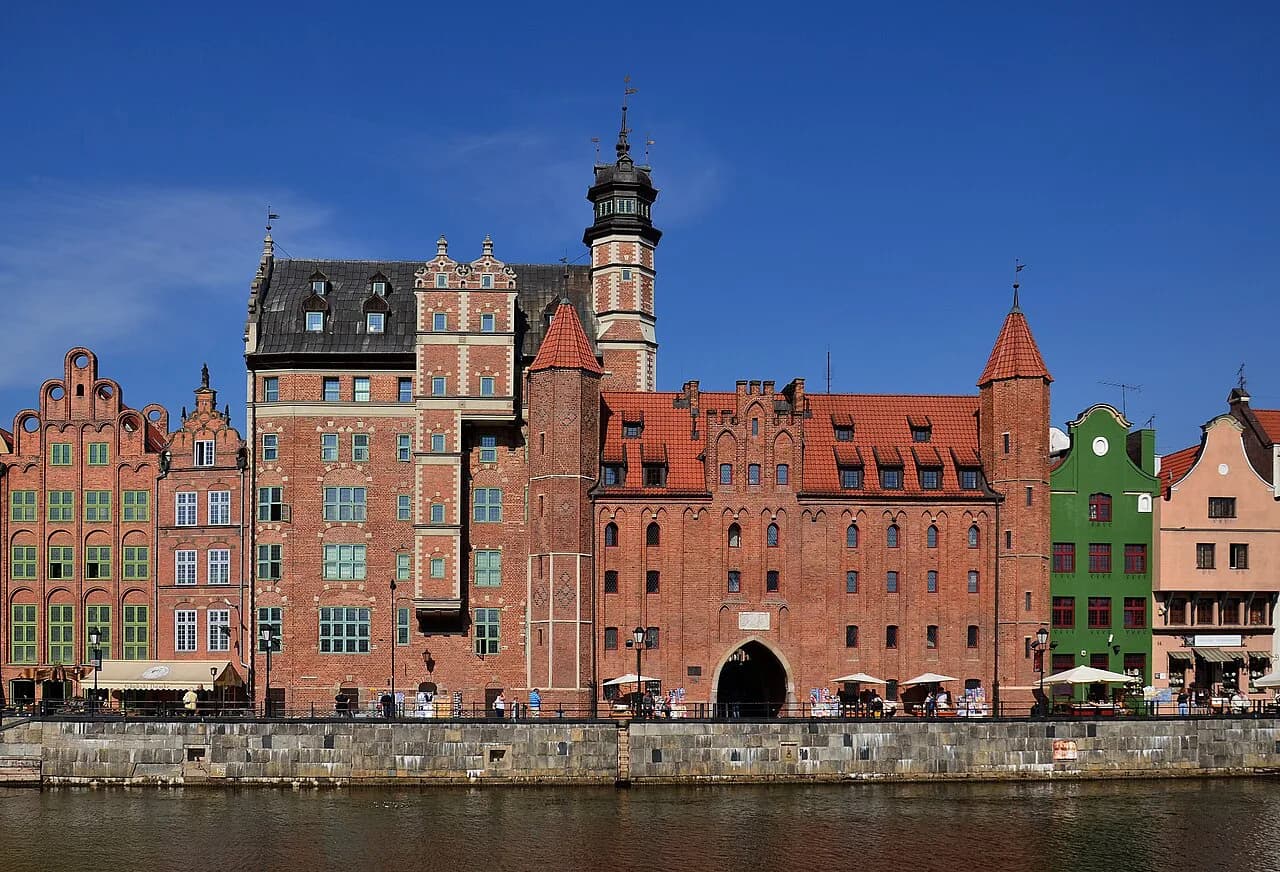
Work Mariacka Street into the walk either before or after the basilica, depending on which direction you take the loop. It runs between the church and the waterfront and is the street most associated with amber workshops and small frontages, with stone stoops leading up to the doors. Fifteen minutes covers the length of it, longer if you go into the shops.
If amber is a serious interest rather than a browse, read up on amber in Gdańsk before you commit to a purchase, so you know what you are looking at. And if the shopping is the main point of the trip, the shopping in Gdańsk guide covers the wider options. Otherwise, use Mariacka as the scenic connector between the church and the river.
Stop 5: crossing to Ołowianka for the National Maritime Museum and the Polish Baltic Philharmonic
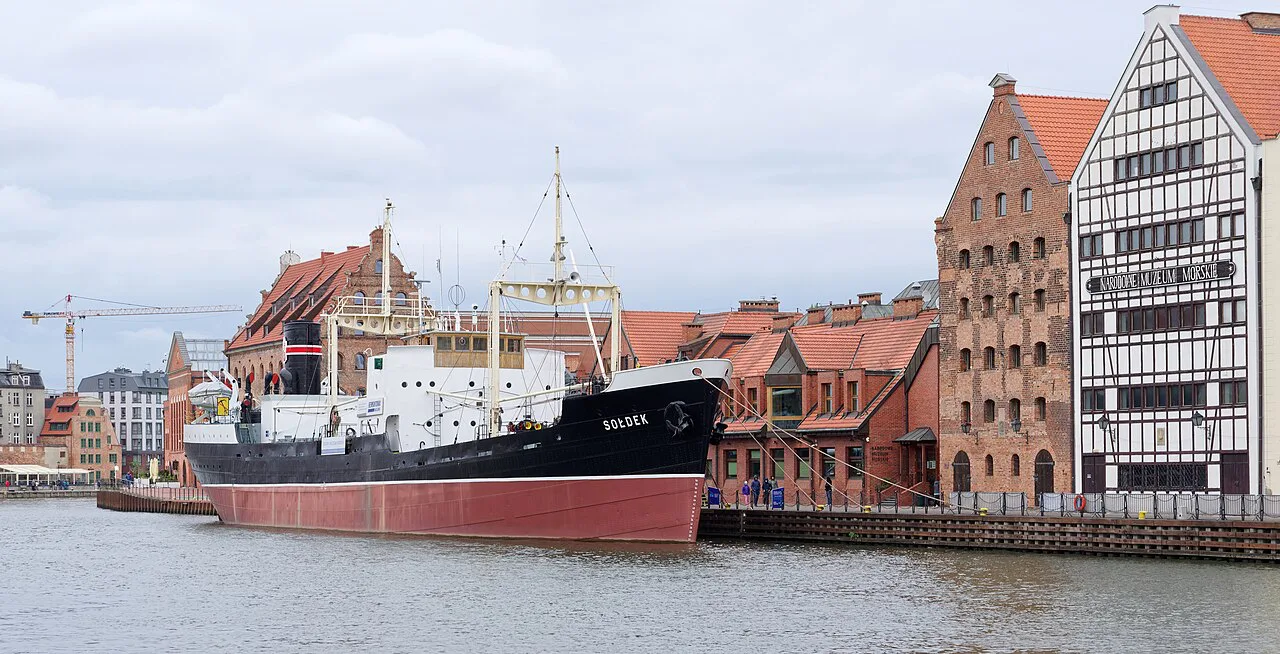
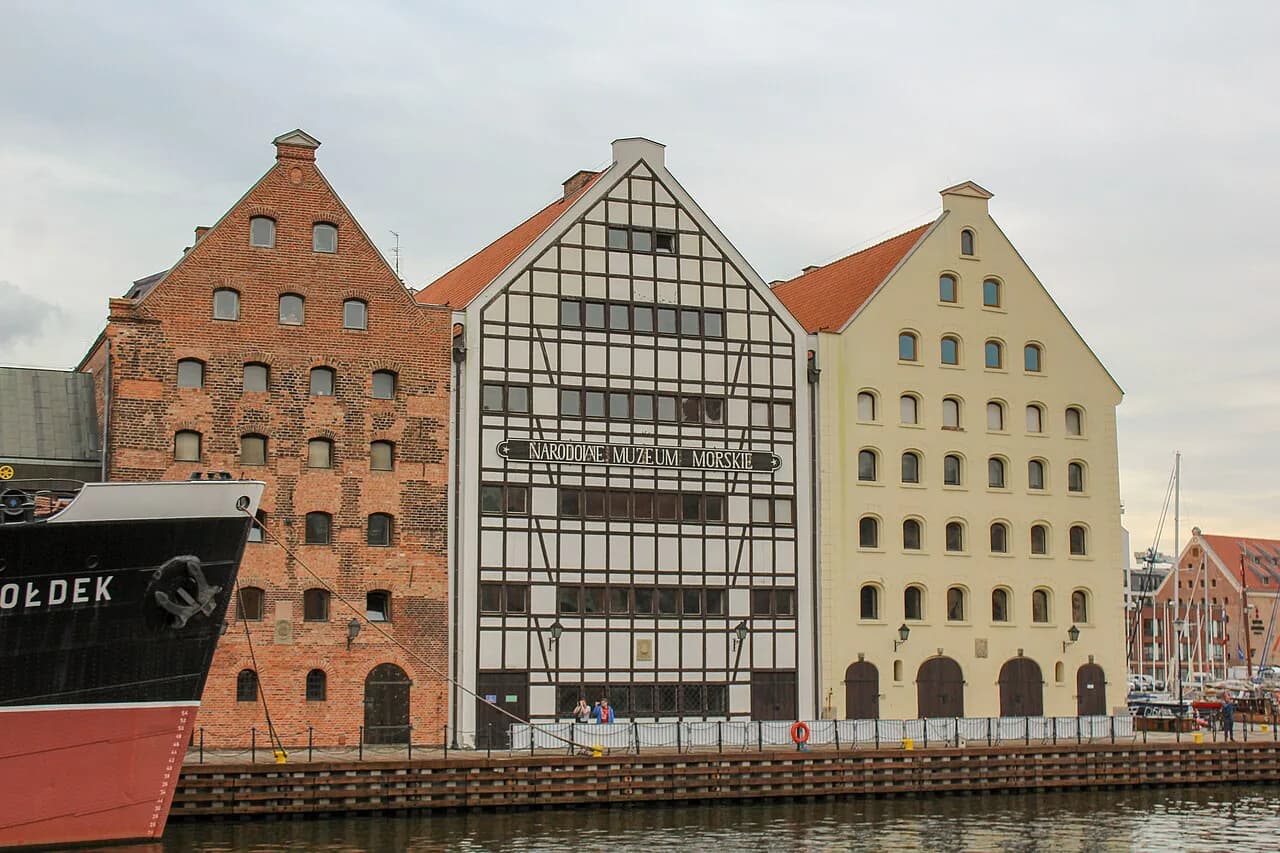
Cross the footbridge over the Motława to Ołowianka, the island opposite the Main Town, where the National Maritime Museum and the Polish Baltic Philharmonic share the waterfront. The crossing takes a couple of minutes and the reward is a quiet bank with the whole Main Town façade laid out across the water. It is the natural end point of the walk and a good place to sit down.
Decide here whether the Maritime Museum is worth your afternoon or whether the view from the far bank is enough. On a half-day schedule, the crossing and the view cost you twenty minutes; the museum is a separate commitment of a couple of hours. If you have already spent time at the basilica, the view alone is a fair trade.
Optional extension: the European Solidarity Centre and the Shipyard area
Add the European Solidarity Centre and the Shipyard area only if you have a second half-day, because they sit north of the Main Town and need transport or a longer walk to reach. The Shipyard is the historic birthplace of Solidarity, and the centre is the substantial museum attached to it. Treat this as its own outing rather than tacking it onto the Main Town route, and the Gdańsk WW2 sites guide covers the memorial ground in more detail.
Guided operators list their own durations if you would rather have someone else do the explaining: a Gdańsk Shipyard Uncovered walk on the birthplace of Solidarity is listed at 1 hour 45 minutes, and a guided European Solidarity Centre tour at 2 hours. Neither is a substitute for the Main Town route, but both are worth booking if the labour history is the reason you came.
Route length, walking time and a realistic half-day schedule
The full route from Długa through the Main Town, along the waterfront and across to Ołowianka is about three kilometres and takes roughly three hours of walking and looking, or four hours once you add a church interior. Add forty-five minutes if you climb St. Mary's tower. Start late morning and you finish on Ołowianka in the early afternoon with the rest of the day free.
A realistic half-day schedule looks like this: Długa and Długi Targ with a coffee stop, the basilica interior, Mariacka Street down to the waterfront, the Żuraw and the promenade, then the crossing to Ołowianka. Keep one museum slot in reserve rather than booking two. The pacing matters more than the checklist, because the Main Town rewards slow walking.
Which days museums open and how to slot a museum visit into the walk
Museum opening days vary between Gdańsk venues, so build the walk around whichever day the museum you most want is open rather than assuming a fixed pattern. Check the venue's own site for the day you plan to be there before you fix your route, and leave the museum slot flexible until you have. Your hotel or the museum ticket desk can confirm the same thing on the day.
Slot the museum in at the end of the walk rather than the middle, so a longer-than-expected visit does not wreck the route. Ołowianka is the sensible place to do this, since the Maritime Museum sits at the route's natural finish. That way the walking is done first and the indoor time is the reward.
Trade-offs: what to cut on a one-day visit versus a longer stay
On a one-day visit, cut the tower climb and the Maritime Museum, and keep Długa, Długi Targ, St. Mary's Basilica, Mariacka Street and the Żuraw. That core is roughly two hours and delivers the Main Town's character without any indoor commitments. The Ołowianka crossing becomes a ten-minute view stop rather than a destination.
With two or three days, run the full route at an easy pace, do the tower on a clear morning, and give the Maritime Museum and the European Solidarity Centre a slot each on separate days. The longer version trades the satisfaction of seeing everything in one sweep for actually absorbing it. The things to do in Gdańsk overview helps you sequence those extra days.
Guided versus self-guided: what a tour adds on top of this route
A guided Main Town walk covers much of this same ground and adds the historical narrative and the local knowledge that a self-guided route cannot supply. One operator's Welcome to Gdańsk Main Town guided walk is listed at 2 hours 30 minutes in several languages on a pay-what-you-wish basis, and its From Free City to Nazi Terror: WWII in Gdańsk walk at 1 hour 45 minutes focuses on the Free City period and the occupation. The self-guided route only touches on that material.
The pay-what-you-wish model means you decide what the tour was worth at the end, which suits travellers who want flexibility; book a place in advance because the popular departures fill. An alternative operator publishes its own free walks in Gdańsk, such as a 2 hours 30 minutes Discover Gdansk walk and a 1 hour 30 minutes Royal Route stroll, if you want to compare routes before committing. Self-guided is better for photographs and changing plans; guided is better for context.
Should you walk the Main Town alone or with a guide?
Walk it yourself if the Main Town is one part of a wider Gdańsk trip and you want to set your own pace between the basilica, the waterfront and lunch. Take a guide if the history is the reason for the trip, particularly for the WWII and Shipyard material that needs explaining rather than just viewing. Either way, the route above is the spine of the day.
Build the walk around one museum you actually want to see, start late morning on Długa, and finish on Ołowianka. That structure gives you a half-day that feels complete rather than a rushed circuit of squares. Keep the tower for a second visit when the weather is clear and you have nothing else booked.
Frequently Asked Questions
Is Gdańsk a walkable city?
The Main Town is compact and flat, and the route in this guide connects Długa, Długi Targ, the basilica, the Motława waterfront and Ołowianka on foot in about three kilometres. The exceptions are the Shipyard and the European Solidarity Centre to the north, which are easier by tram or bus. Within the historic core you will not need transport.
Where should I avoid in Gdańsk?
There is no district to avoid on this route, but be realistic about distances: the Shipyard and the European Solidarity Centre sit outside the Main Town and are not a casual add-on to a half-day walk. Skipping them on a one-day visit is a scheduling decision, not a safety one.
Sources
Notes for your next Polish city break
Optional updates to our Poland guides.
You might also like
Continue reading
More guides you'll find useful