Gdańsk Old Town: Upland Gate to Długi Targ and the Crane
Gdańsk's Old Town in one focused walk: the Royal Route gates, Długa and Długi Targ, St Mary's Church and the Żuraw crane on the Motława, with the layout explained.
On this page
Gdańsk's Old Town needs one full day, walked as a single line rather than a checklist: enter through the Upland Gate, follow Długa to Długi Targ, climb into St Mary's Church and finish at the Żuraw on the Motława. The route below is short enough to do slowly, and it explains how the streets fit together so you always know what comes next. For planning around it, see our wider guide to Things to Do in Gdańsk.
The historic centre is not one district. The Główne Miasto (Main Town), the commercial heart with Długa and Długi Targ, sits beside the older settlement core and they are usually bundled together as the Old Town. The walk takes you through the Main Town first and then out to the waterfront, which is where most visitors end up anyway; our Gdańsk Walking Tour covers the same centre street by street.
What the Old Town is and how it relates to the Główne Miasto (Main Town)
Gdańsk's historic centre splits into two parts that visitors tend to treat as one. The Główne Miasto (Main Town) is the mercantile quarter laid out around Długa and Długi Targ, and it holds nearly every sight on this route. The Old Town proper lies just to the north, around the church of St Catherine and the old granaries, and is quieter and less polished.
For a one to three day city break, the Main Town is where your time goes and the northern Old Town is what you add if you have a spare afternoon. Self-guided walking material for the centre treats the historic streets as a continuous route rather than separate attractions, which suits the layout: the buildings sit close together and you cover more by walking than by planning.
Our wider guide to Things to Do in Gdańsk sets this walk against the rest of the city, including the shipyard heritage sites and the museums that need their own time slots. Read that first if you are still deciding how many days to give Gdańsk.
How the centre is laid out: the Royal Route from Upland Gate to Green Gate
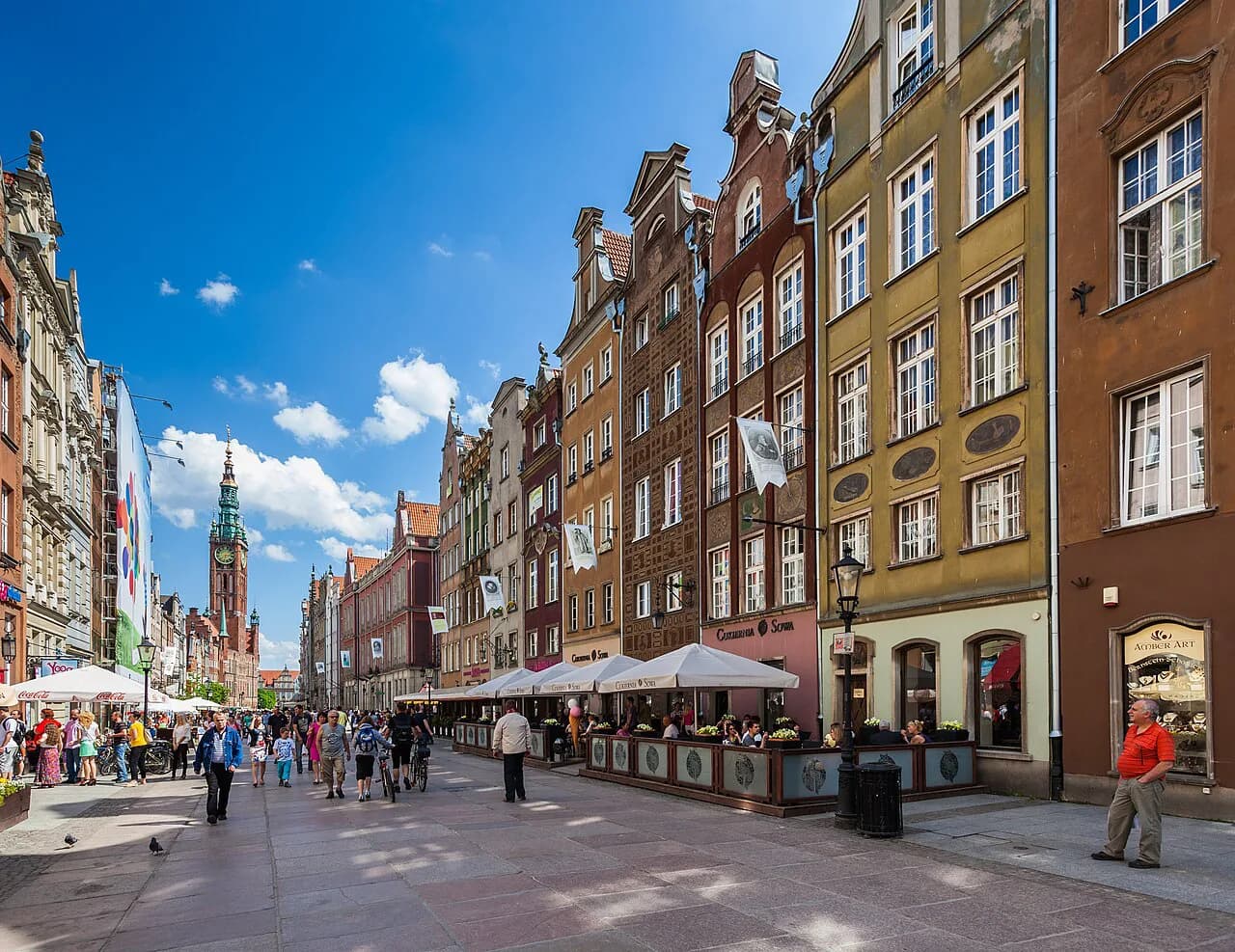
The spine of the Main Town is the Royal Route, a straight ceremonial line running east from the Upland Gate through the Golden Gate, along Długa, across Długi Targ and out through the Green Gate to the Motława. The sequence of gates and street makes the route self-explanatory on foot. Walk it eastwards and the whole district unfolds in the right order.
Because the route is linear, you can start at either end and never double back. Starting at the Upland Gate puts the grandest approach first and leaves the river for the finish. Starting at the Green Gate reverses it and drops you straight into the busiest stretch of Długi Targ.
Upland Gate, Golden Gate and the start of Długa
The Upland Gate is the heavy stone entrance at the western edge of the Main Town, and the Golden Gate stands a few steps further on, set into the old fortifications. Both are passages rather than destinations, so give them a look and keep moving. The Golden Gate's ornamented facade is the one to photograph, and passing beneath it marks the real start of the historic streets.
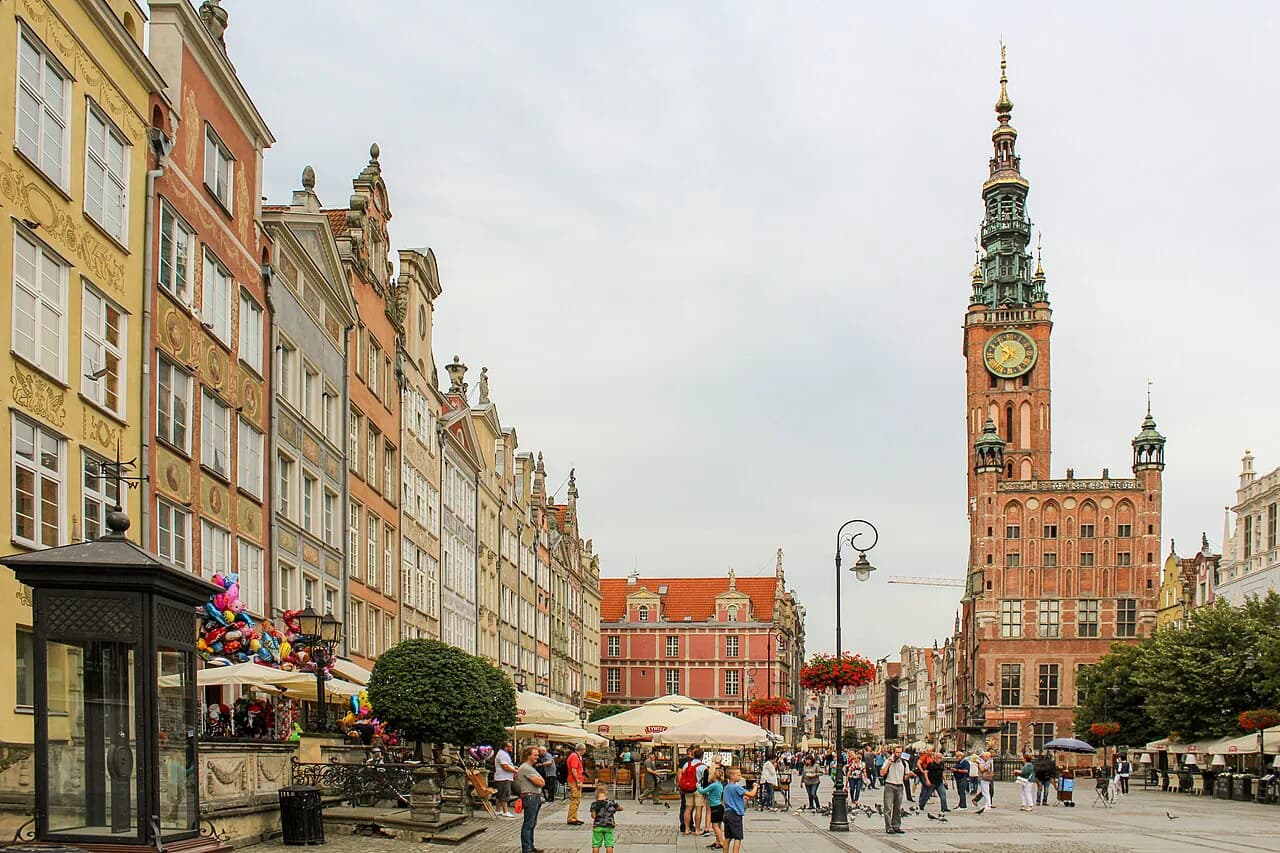
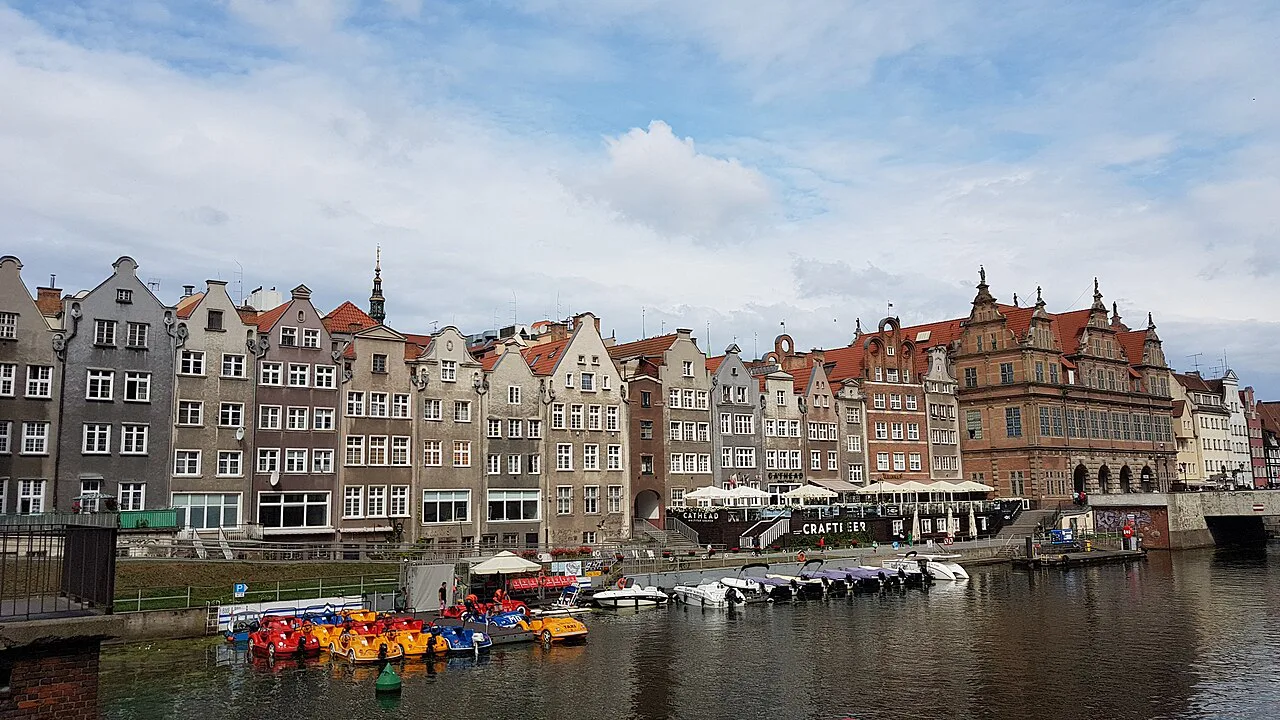
Beyond the gates, Długa runs straight and narrow, lined with tall townhouses whose gables and painted fronts are the image most people carry of Gdańsk. The street is at its best on foot. Take it slowly: the facades change from house to house and the details reward a slow pace more than a fast one.
Długi Targ and the waterfront
Długa widens into Długi Targ, the long market square that functions as the Main Town's living room. The town hall with its tall tower dominates the north side, and the Artus Court and the Neptune Fountain stand near the middle of the square. The fountain is the meeting point everyone uses, so it is easy to find if your group splits up.
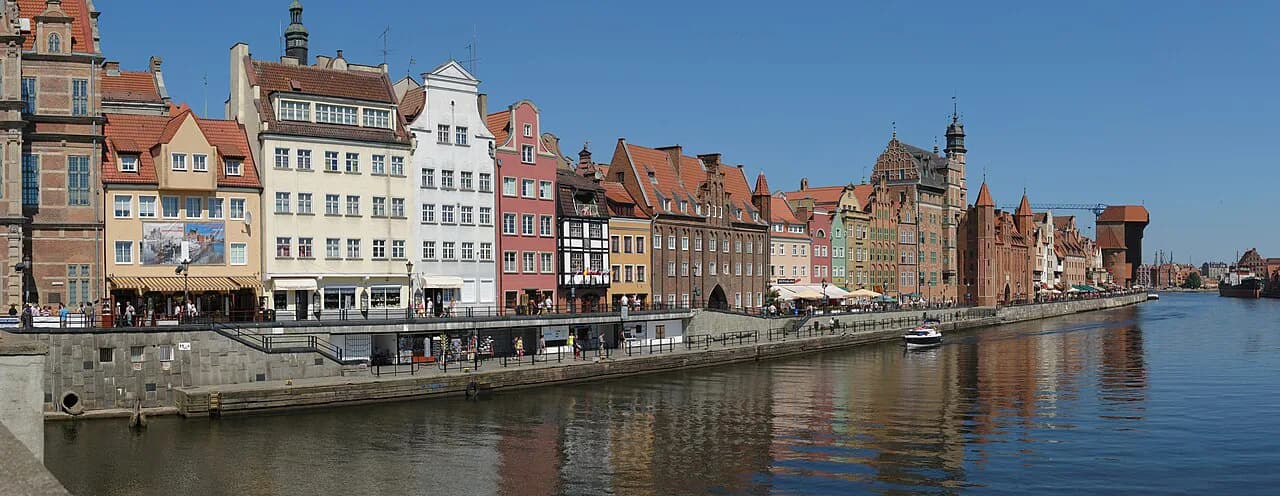
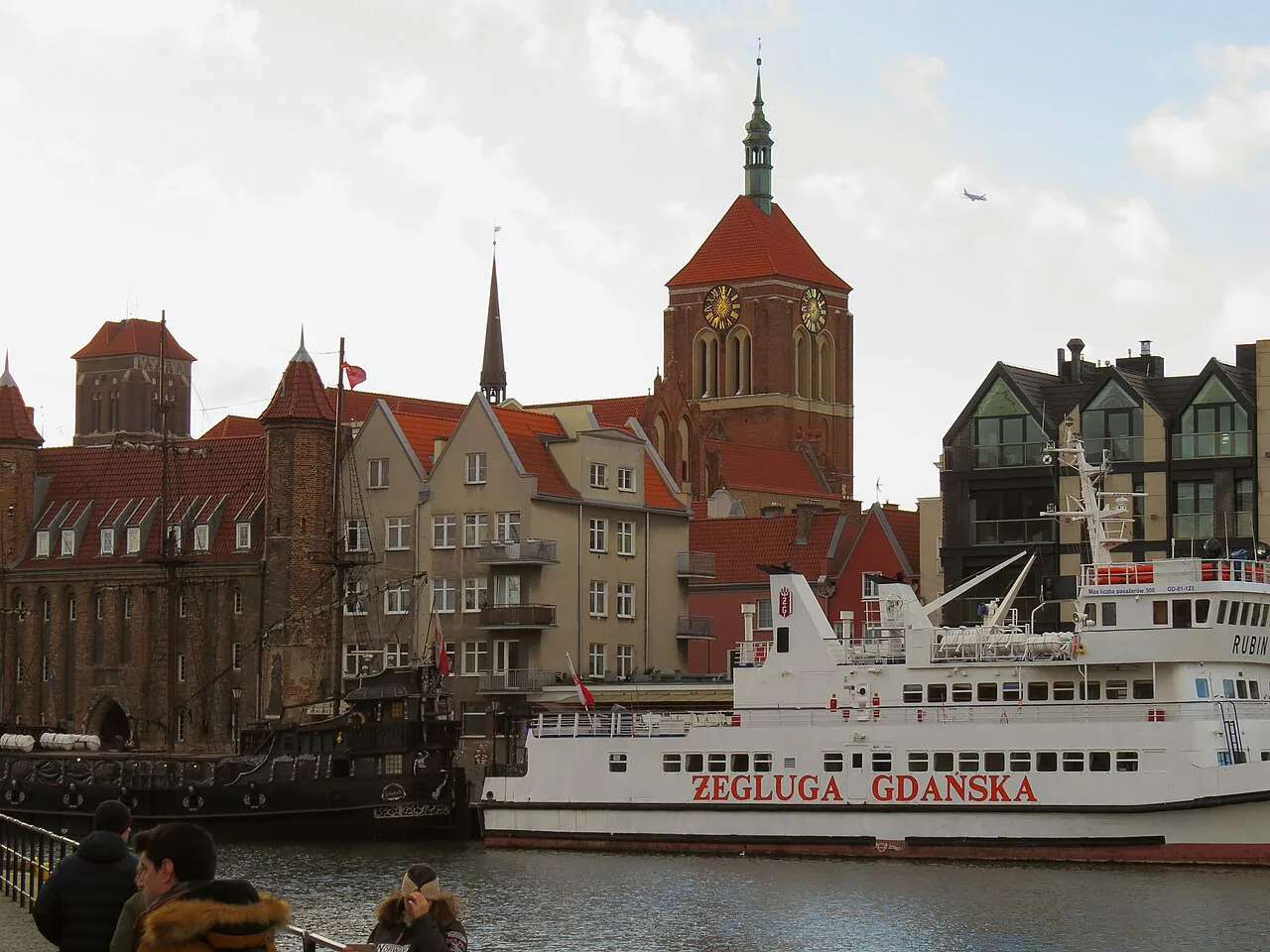
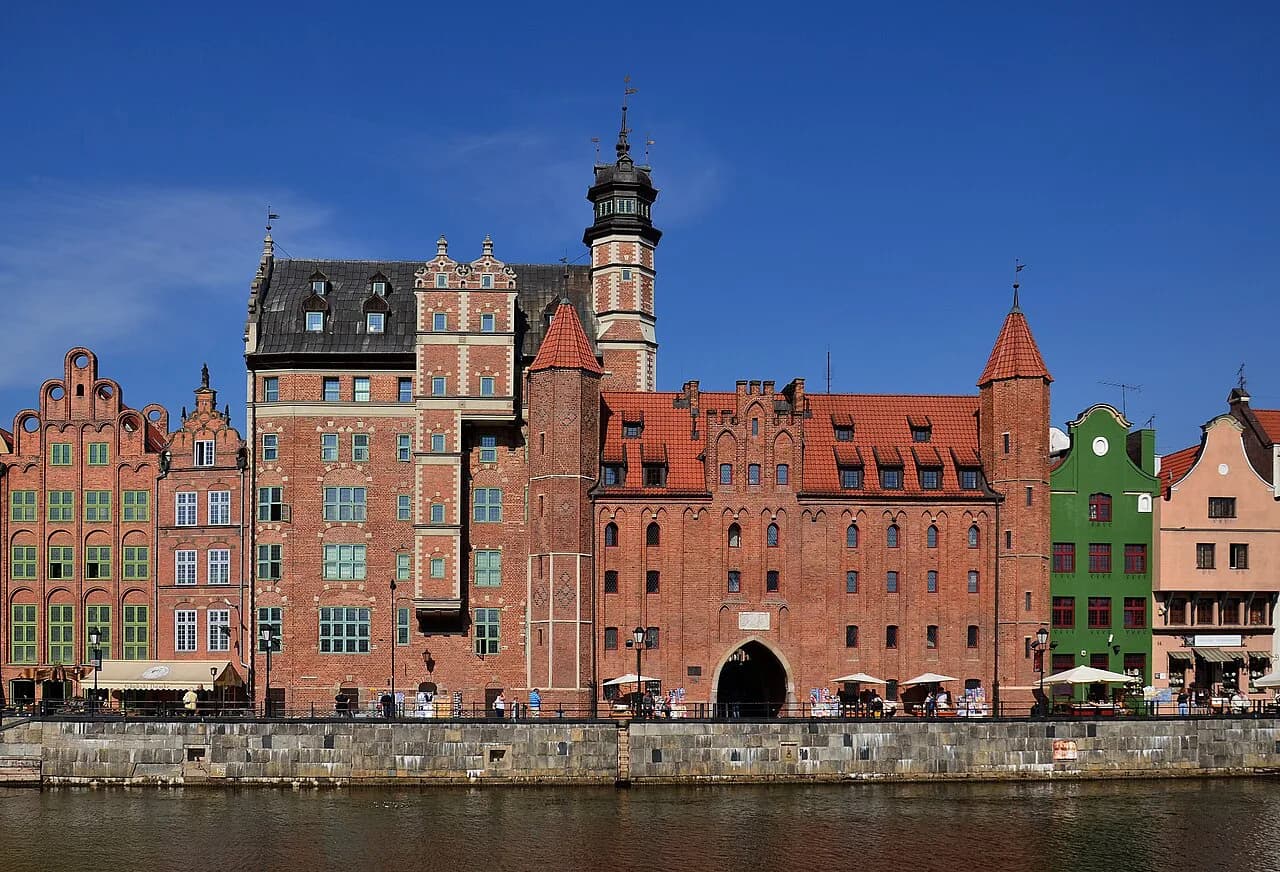
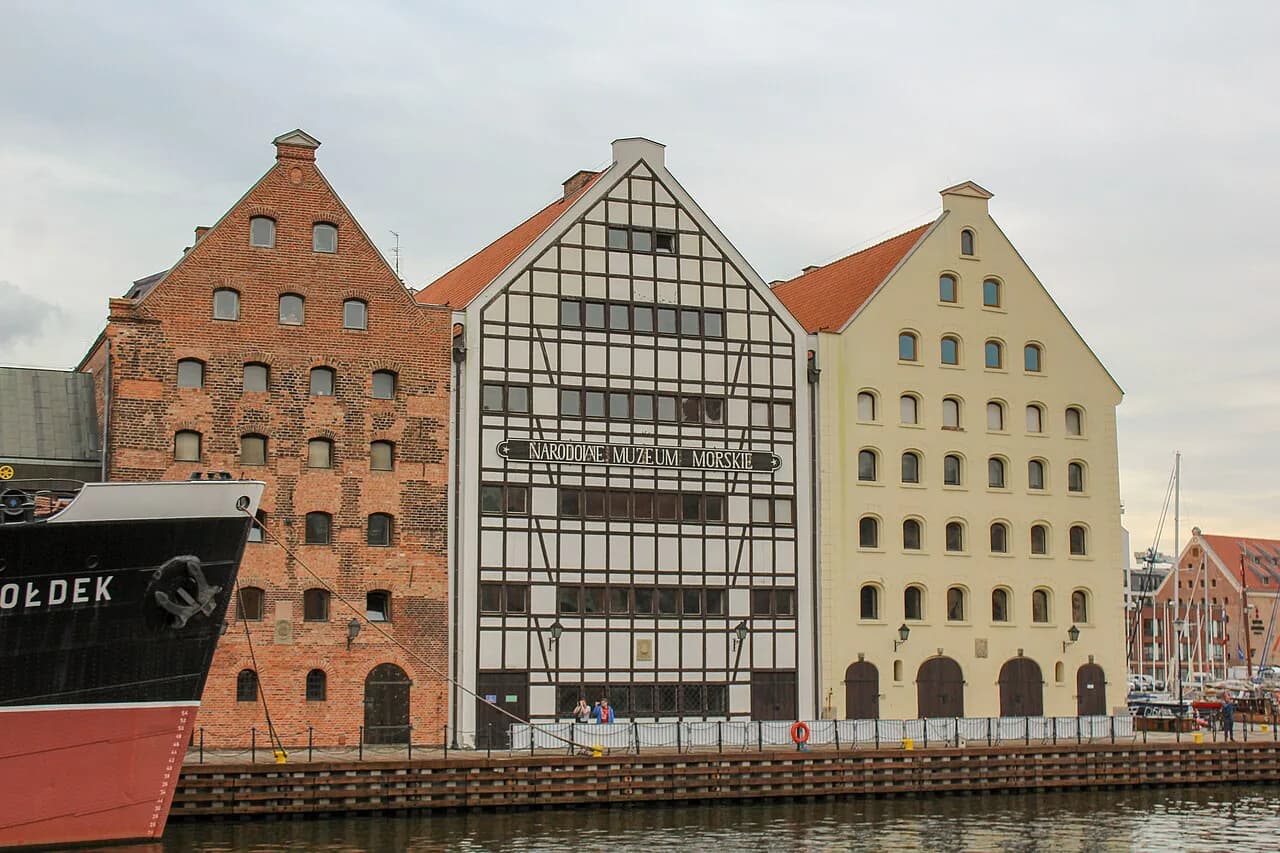
The Green Gate closes the eastern end of Długi Targ and opens onto the Motława embankment, where colourful facades face the river. The waterfront runs north and south with the water on one side and rebuilt granaries and townhouses on the other. A river trip is one way to see the facades from the water.
Allow time for the square itself rather than treating it as a corridor. It is where the cafes and the amber shops cluster, and where you will find the largest concentration of stalls and galleries in the centre.
St Mary's Church and its size
St Mary's Church sits just off Długa and is the sight that stops people in their tracks. It is known above all for its scale, and the interior confirms it: the nave runs long and high and the floor is crowded with chapels and monuments. Step inside to understand the building rather than to tick it off.
The church is a working parish as well as a monument, so keep your visit quiet and treat services as services rather than sightseeing. If you want the tower rather than the nave, check the church's own notices for current access, since tower entry is managed separately from the main building.
The Żuraw (the Crane) on the Motława
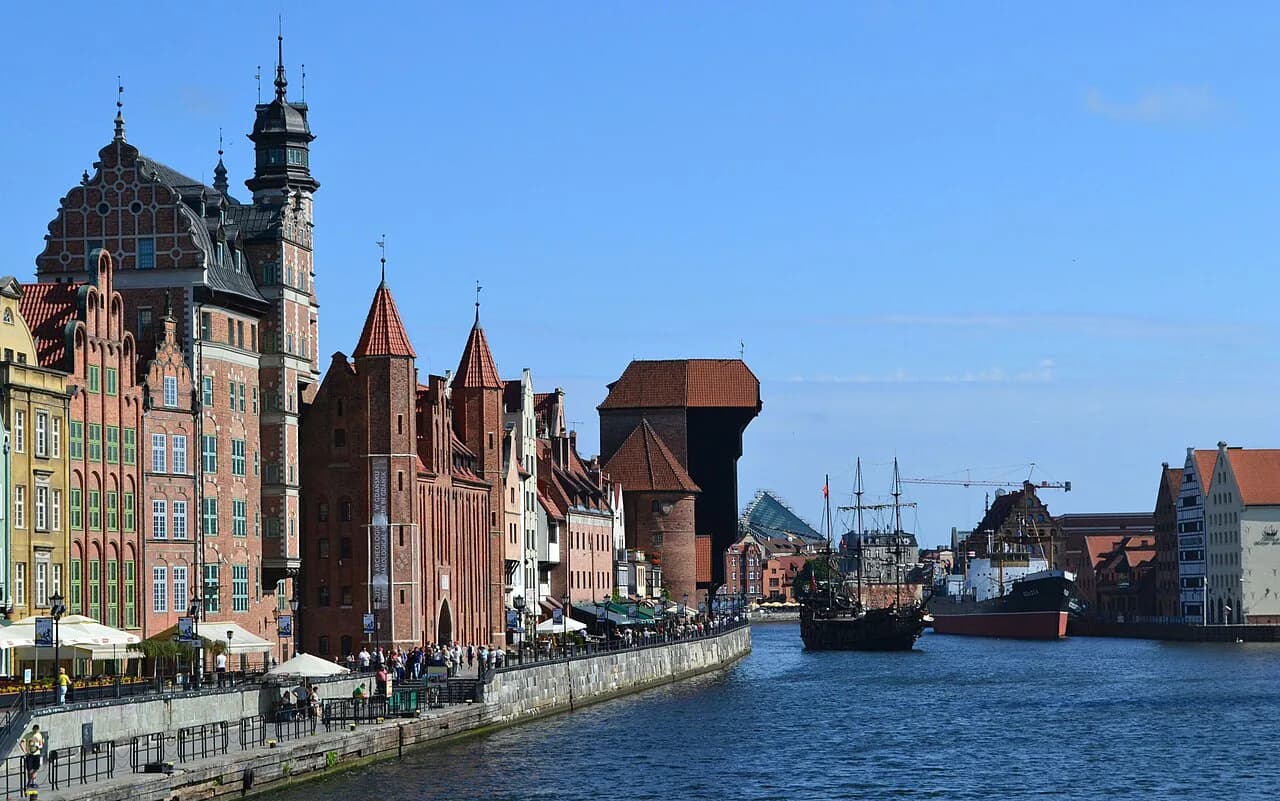
The Żuraw, the Crane, is the landmark on the Motława embankment and the reason this waterfront reads differently from any other in Poland. A brick structure with timber lifting gear, it now belongs to the maritime museum. Look at it from the embankment and from the opposite bank to see the whole waterfront behind it.
Stand on the opposite bank for the full view of the Crane and the waterfront behind it, then cross back for the close-up. The embankment here is the natural end of the walk, with the river opening out and the light on the water at its best late in the day.
How much of the Old Town was rebuilt after 1945
Much of what you walk through is post-war reconstruction. Gdańsk was heavily damaged in 1945, and the Main Town was rebuilt in the decades that followed in historic forms. That is why the facades can look old while much of the fabric behind them is twentieth-century. Knowing this changes what you notice: the rhythm of the street is authentic even where individual bricks are not.
The rebuilding is not hidden, and the base of the townhouses along Długa and the church brickwork repay a close look. Comparing surfaces is the most honest way to read the city, and the streets themselves are free to walk.
A walking route and how long to allow
The full route runs from the Upland Gate through the Golden Gate, along Długa, across Długi Targ, into St Mary's Church and down to the Żuraw, and it is short enough to walk in a couple of hours at a brisk pace. Give it half a day if you want to go inside the church, look at the Crane properly and stop on the waterfront. That leaves the rest of the day for one museum or the shipyard.
Add the northern Old Town, around St Catherine's, if you have the time; it is quieter and gives you a sense of the older street plan. If instead you want a lower-key half day, our round-up of free things to do in Gdańsk covers the streets, squares and waterfront walks that cost nothing.
One day in Gdańsk: what to prioritise
With one day, do the route in order and do not skip the church. Start at the Upland Gate in the morning, walk Długa and Długi Targ, spend real time in St Mary's Church and finish on the Motława at the Crane. If something has to give, give up the northern Old Town rather than the waterfront, which is what people remember.
If you have a second day, split it between the museums and the shipyard side of the city, which are covered in our overview of Gdańsk attractions. Eating is easy to fold into the walk: the Main Town is dense with places to stop, and our Gdańsk food guide covers what to look for.
Shopping along Długa and Długi Targ is mostly amber and souvenirs, and the streets are the point rather than the shops. Our guide to shopping in Gdańsk sets out where the real variety is.
Which part of the Old Town should you do first?
Start at the Upland Gate and walk east. The route is a single line, it puts the grandest architecture first and the river last, and it means you never retrace your steps. If you only have a morning, stop after the Crane and leave the northern Old Town for a return visit.
The one thing to confirm before you go is entry to anything you want to see inside, especially St Mary's Church and the Crane's museum, since these are managed separately from the streets.
Explore more Gdańsk guides
Frequently Asked Questions
How long does the Old Town walk take?
The route from the Upland Gate through the Golden Gate, along Długa, across Długi Targ, into St Mary's Church and down to the Żuraw is short enough to walk in a couple of hours at a brisk pace. Allow half a day if you want to go inside the church, look at the Crane properly and stop on the waterfront.
What is the difference between the Old Town and the Główne Miasto (Main Town)?
The Główne Miasto (Main Town) is the mercantile quarter laid out around Długa and Długi Targ and holds nearly every sight on the walk. The Old Town proper lies just to the north, around the church of St Catherine and the old granaries, and is quieter and less polished.
What can I see on the Royal Route?
The Royal Route runs east from the Upland Gate through the Golden Gate, along Długa, across Długi Targ and out through the Green Gate to the Motława. Along the way you pass the town hall with its tall tower, the Artus Court and the Neptune Fountain on Długi Targ.
Was Gdańsk's Old Town rebuilt after the war?
Much of what you walk through is post-war reconstruction. Gdańsk was heavily damaged in 1945 and the Main Town was rebuilt in the following decades in historic forms, which is why the facades can look old while much of the fabric behind them is twentieth-century.
What is the Żuraw?
The Żuraw, the Crane, is the landmark on the Motława embankment, a brick structure with timber lifting gear that now belongs to the maritime museum. The embankment by the Crane makes a natural end to the walk, with the best light on the water late in the day.
Sources
Notes for your next Polish city break
Optional updates to our Poland guides.
You might also like
Continue reading
More guides you'll find useful