Gdańsk in Summer: What to See and Do in June, July and August
Plan a summer city break in Gdańsk with Main City sights, waterfront walks, tower climbs and museums, plus honest notes on crowds and timing.
On this page
Three days is the right length for Gdańsk in summer: one for the Main City and its towers, one for the war and Solidarity museums, and one for the waterfront, amber and a slower afternoon. The season brings long daylight and mild Baltic air, but also the year's heaviest footfall on Długa and Długi Targ, so a little ordering goes a long way. This guide sets out what to see from June to August, how to pace a hot day and where the crowds thin out.
One naming point first, because it decides which streets you walk. The colourful heart of the city is the Main City (Główne Miasto), while the Old Town proper sits nearer Gdańsk Główny station; most visitors spend their time in the Main City without realising the distinction.
What summer is like in Gdańsk
Summer here is a northern Baltic season: long evenings, changeable skies and a sea breeze coming off the water. Treat the weather as typical climate rather than a promise, and pack a light layer for the waterfront even on a warm afternoon.
The practical consequence is that summer is when the Main City fills up. Długa and Długi Targ are the busiest stretches, and they stay lively well into the evening, which suits anyone who would rather wander after dinner than queue at noon.
Public transport is the easy way to widen your radius without a car: buses and trams cost 4.80 PLN for a single ticket, or 6 PLN for a 75-minute ticket that lets you switch lines. That makes a hot afternoon trip out to a greener district cheap and simple.
How many days you need, and how to pace a hot day
Two days covers the Royal Route, St Mary's Church and one major museum; three days lets you add Oliwa and a boat trip without rushing. If the heat builds, put the shaded interiors in the middle of the day and save the embankment and terraces for the evening, when the light on the Motława is at its best.
Build the day around opening times rather than the other way round: check each museum's day off before you set out, since Polish museums commonly close one day a week. Confirm the current timetable on the venue's own site when you book.
Start on the Royal Route: Długa street and Długi Targ
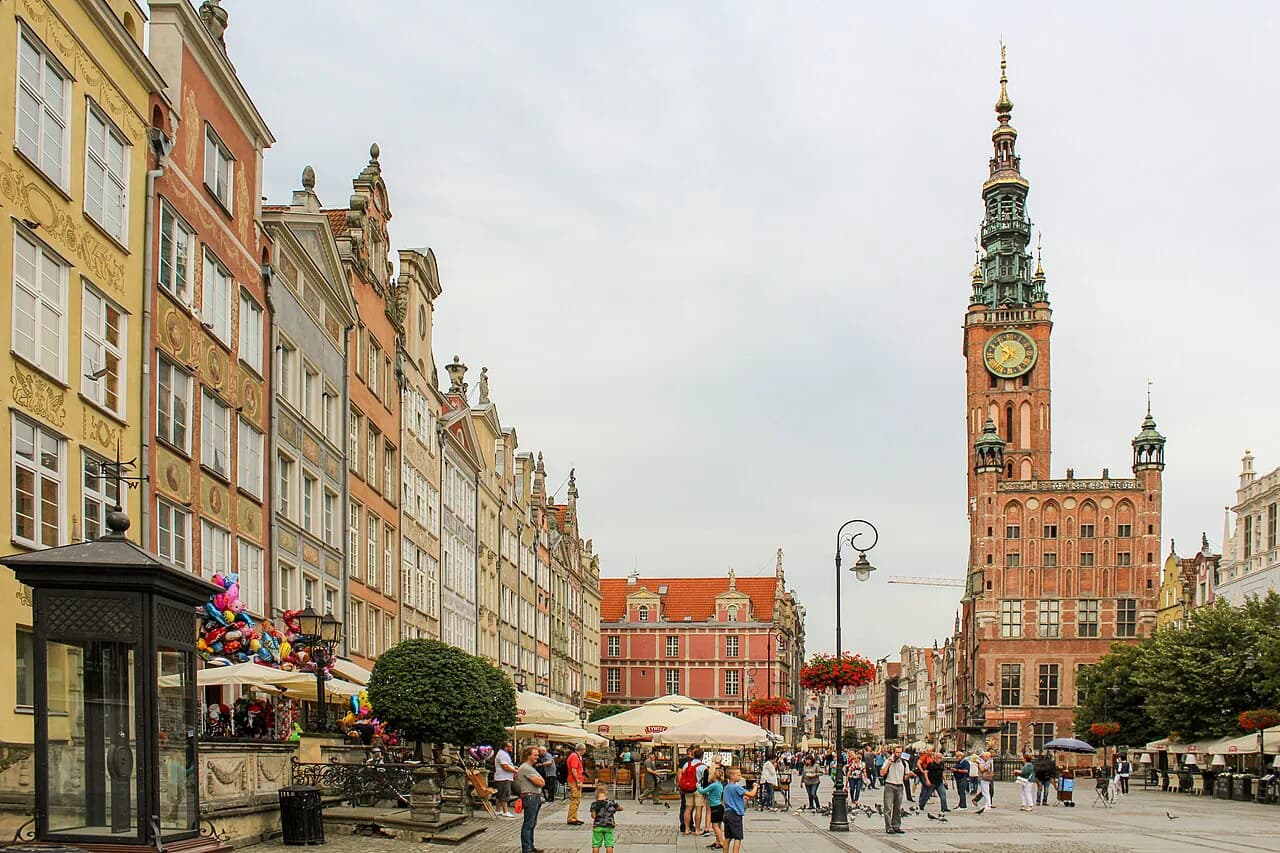
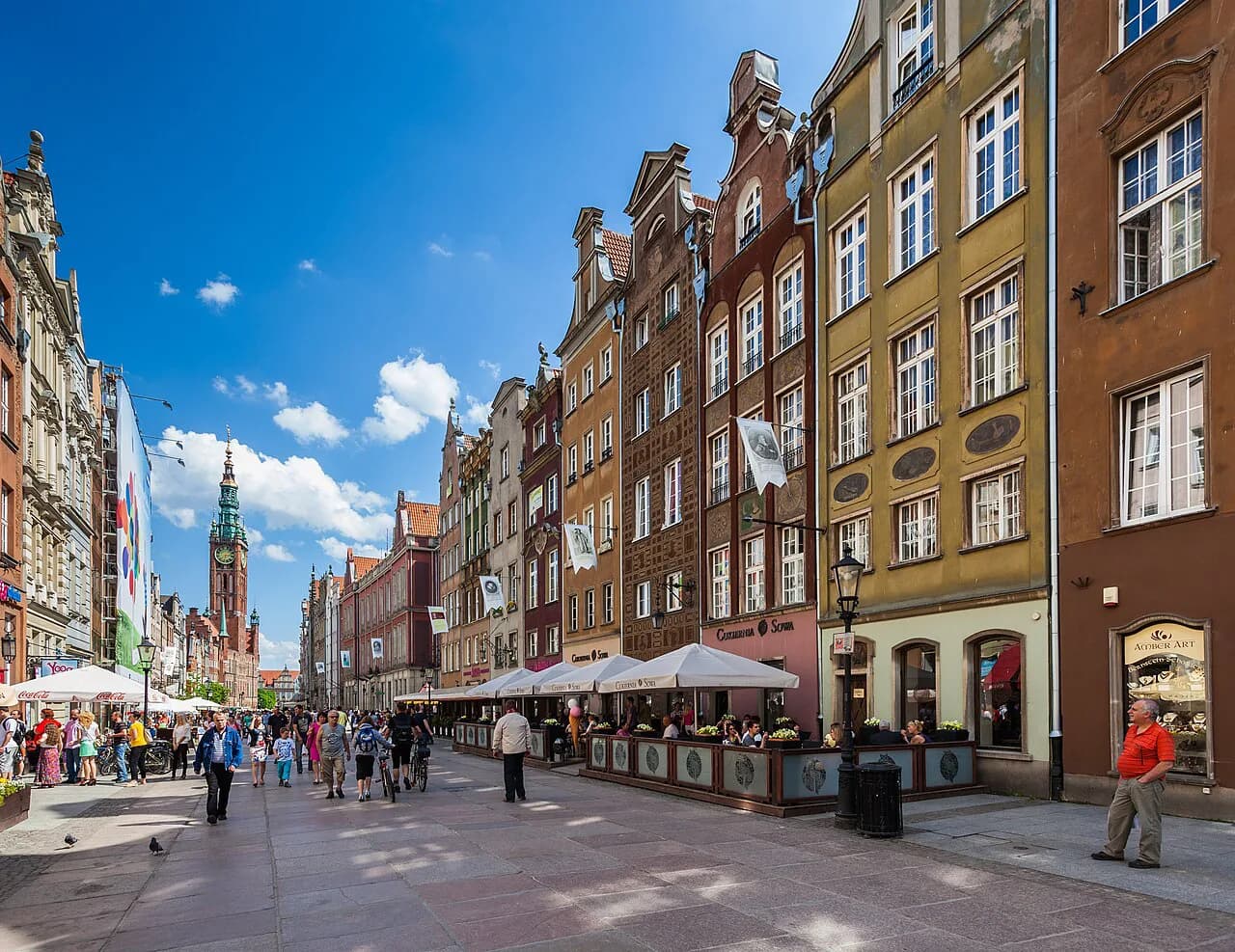
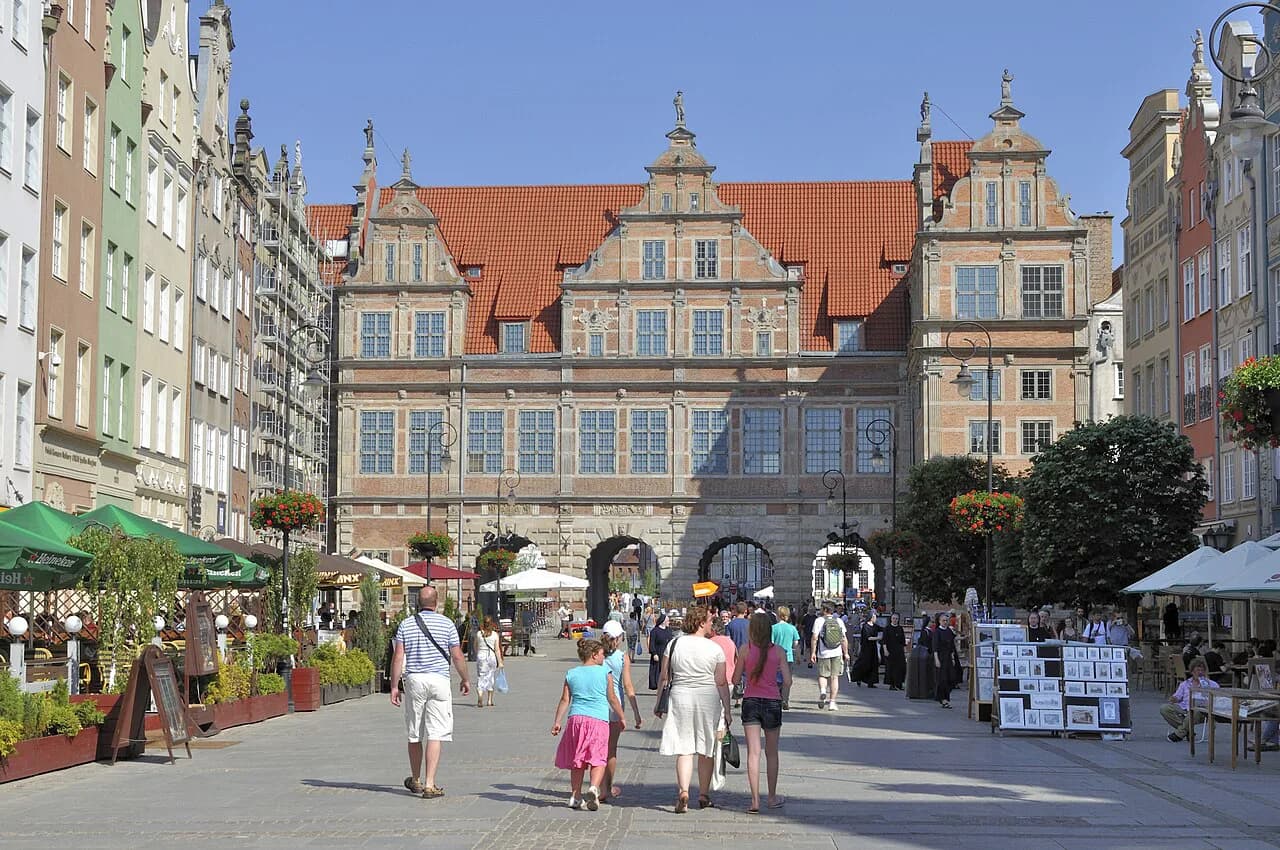
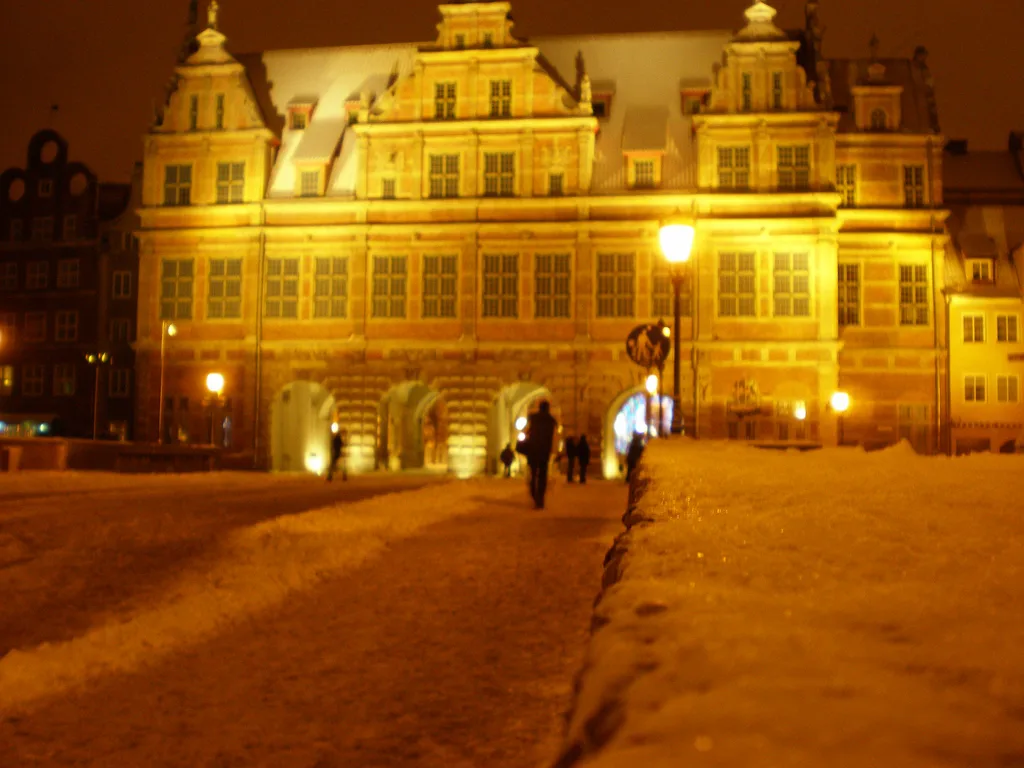
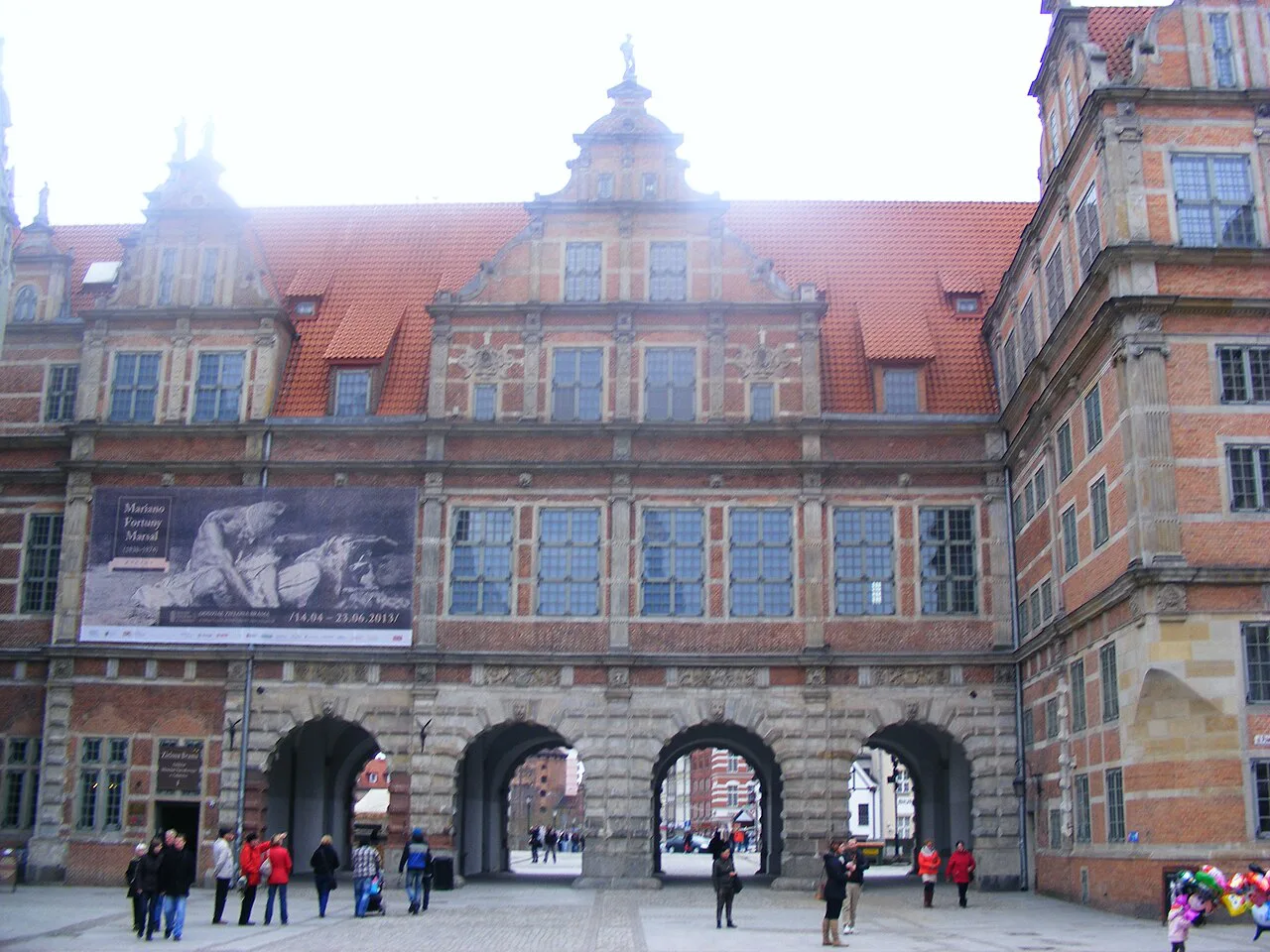
Begin at the Golden Gate and walk the Royal Route, the Trakt Królewski, down Długa to Długi Targ and on to the Green Gate by the river. This is the line the kings of Poland followed into the city, and it remains the most rewarding single walk in Gdańsk.
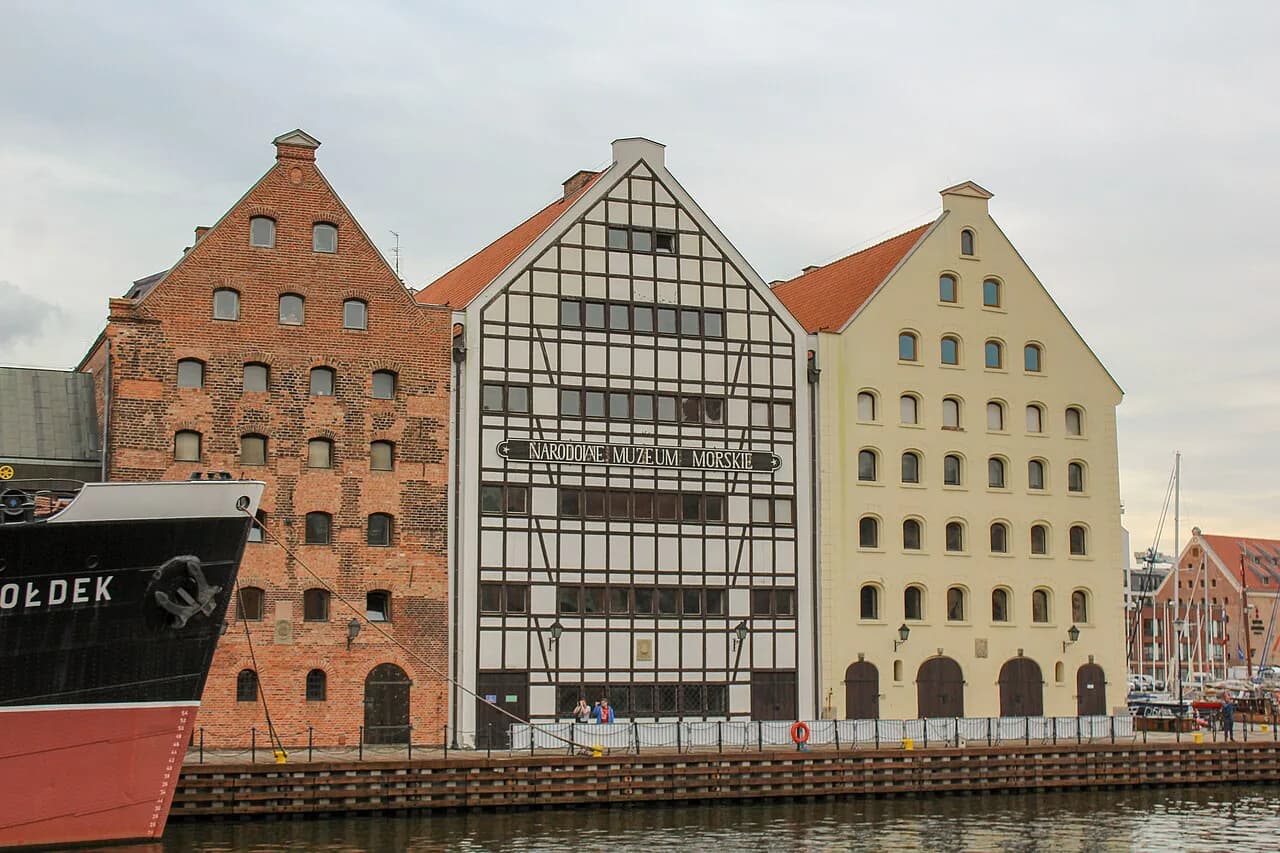
It is touristy, with restaurant touts and souvenir stalls, but look upwards: the tall, narrow tenement houses carry elaborate gables, coats of arms and gargoyles in sweet pastel colours. The Flemish influence is strong enough that stretches of the street feel closer to Amsterdam or Lille than to the Baltic.
The Green Gate separating the street from the river was built to house Polish monarchs, who found it too cold and moved across to Artus Court instead. That small piece of history is a good excuse to slow down at the river end rather than pushing straight on.
Climb a tower: the Town Hall or St Mary's Church
Two climbs compete for your legs. The Town Hall of Gdańsk, the Ratusz, gives the classic view straight down Długa, and it also houses the Museum of Amber, so one ticket covers both the collection and the tower. Entry to the amber museum was 12 zł in 2025.
St Mary's Church, Kościół Mariacki, is the larger and more spectacular building, and its tower goes higher, but the climb is more enclosed. The trade-off is simple: the Ratusz for the street view and the amber, St Mary's for height and the sheer scale of the brick interior.
Whichever you choose, go early or late on a summer day, because the stairwells hold the heat. Both towers sit within a few minutes of each other on the Royal Route, so you can pick one without rearranging the rest of the day.
Walk the Motława waterfront past the Żuraw
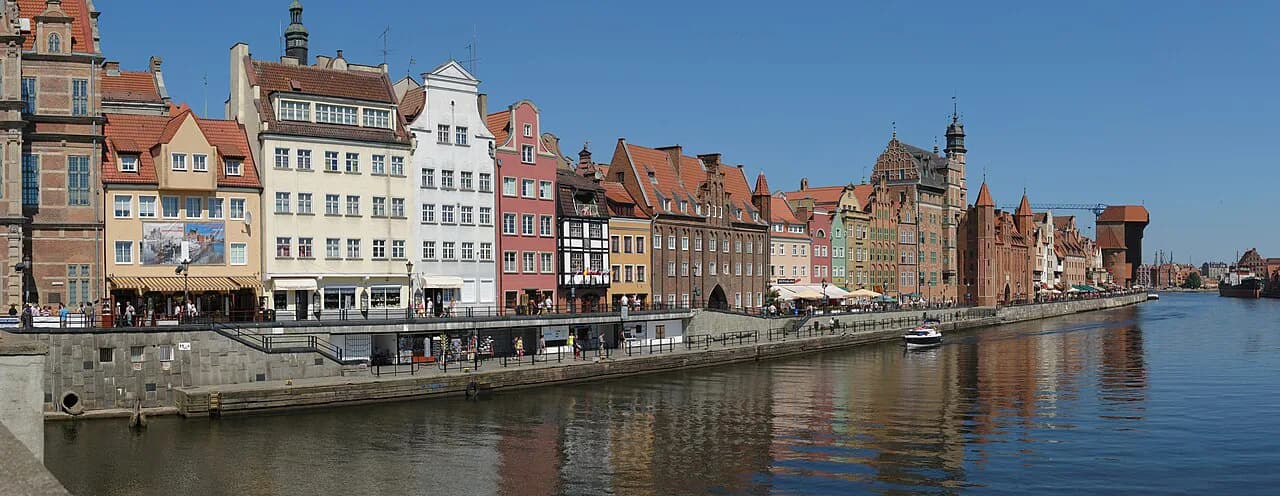
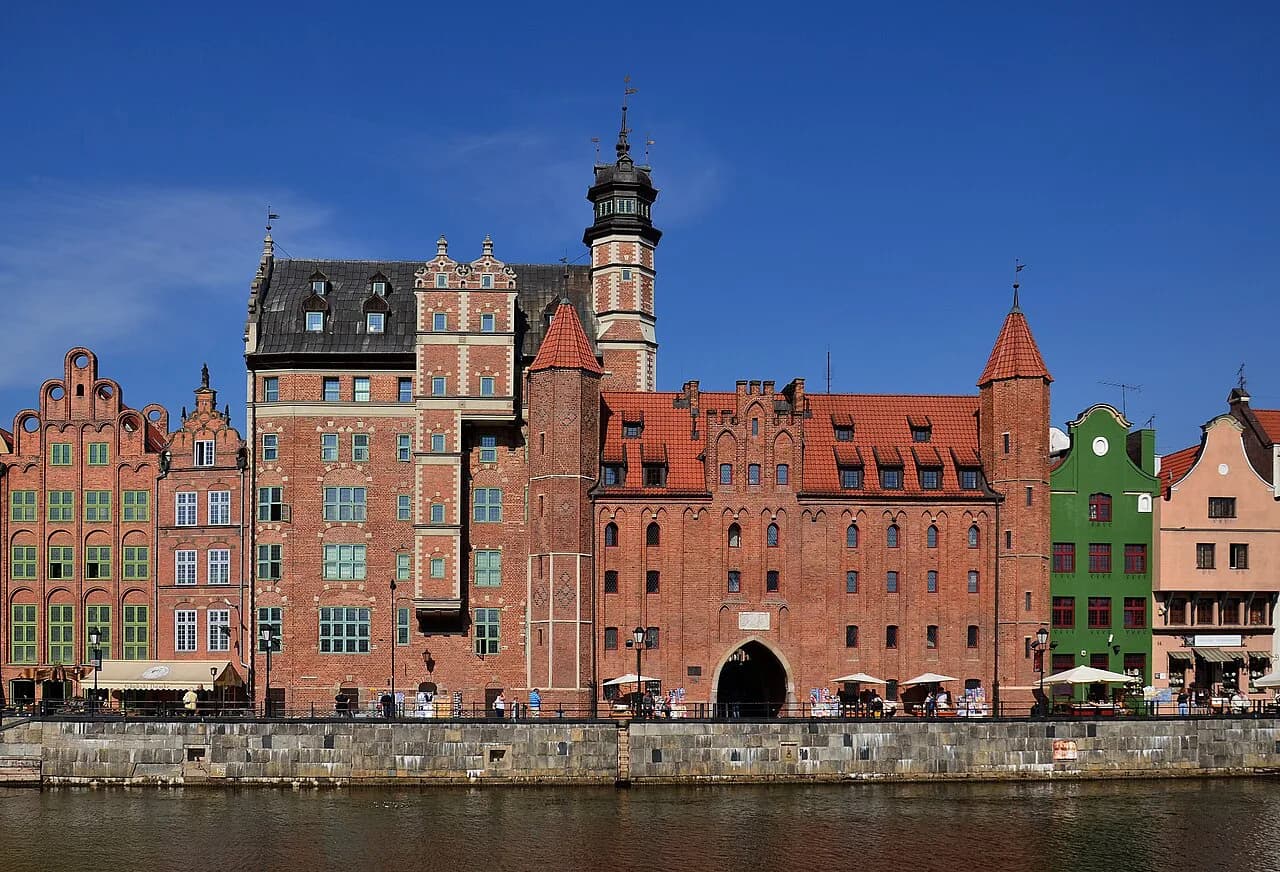
Head north from the Main City to the Motława and follow the Długie Pobrzeże embankment, where the historic waterfront buildings line the river. It is the most photogenic stretch in the city and the natural place to end a morning's walking.
The Żuraw, the medieval port crane, is the landmark to look for: reconstructed after the destruction of the Second World War, it once served the working port. It anchors the northern end of the embankment walk.
From the waterfront you can also pick up a river boat or kayak tour, an easy way to see the city from the water without committing a whole afternoon. Sopot and its beach are a short train ride away if you want a seaside hour, though the city itself rewards the time more.
Museums that fill a warm afternoon
The Museum of the Second World War is the big, modern, content-heavy option, and its below-ground exhibition halls are a sensible refuge when the sun is at its strongest. Allow a proper half-day rather than an hour, and expect to come out drained rather than refreshed.
The European Solidarity Centre tells the story of the movement that helped end communist rule in Poland, housed in a striking building marked by tall crosses. It pairs naturally with the war museum as a second indoor day, and together they explain more about Gdańsk than any walk can.
Amber on Mariacka Street and in the Town Hall
Mariacka Street is the place to see and buy amber, with workshop windows and jewellery displays running the length of the prettiest lane in the city. Amber has been part of Gdańsk's trade for centuries, and the street presents it better than any single shop.
For context before you buy, the amber collection inside the Town Hall gives you the history and the range, and at 12 zł it is the cheapest museum ticket on this itinerary. Browse the exhibition first, then walk Mariacka with a better eye for what you are being sold.
Where to pause in the heat: Oliwa Park
Oliwa, a former separate city absorbed in 1926, is the green escape: a peaceful district with a park and forest on one side and its own train station. On a hot afternoon the shade here is a genuine change of pace from the brick and cobbles of the centre.
The SKM urban train runs along the spine of the Tricity from Gdańsk Śródmieście, a short walk from the Main City, out to Oliwa and on to Sopot and Gdynia. Train fares depend on distance and start from 5.50 PLN, so the trip out is cheap enough to make on a whim.
Eating well in summer without blowing the budget
Gdańsk's milk bars, the surviving post-communist canteens, are the honest budget option, and Bar Mleczny Neptun on the Royal Route is the convenient one for a mid-walk lunch. Expect plain rooms, low prices and hearty Polish cooking rather than anything fashionable.
Summer menus lean on whatever is in season, and the waterfront terraces charge for the view. Eat your main meal inland or at a milk bar and save the riverside tables for a drink, when the light over the Motława is worth the premium.
Summer crowds and timing on Długa and Długi Targ
The Royal Route is at its worst in the middle of the day in July and August, when tour groups and day visitors converge. Walk it before breakfast or after dinner instead: the same gables and gargoyles, far fewer people, and better light for photographs.
If you are weighing seasons, summer gives you the longest days and everything open, while spring and autumn trade some warmth for thinner streets. The wider comparison belongs in the Best Time to Visit Gdańsk guide, but the summer rule is simple: front-load the sights and keep the evenings for wandering.
Should you book Gdańsk for summer?
Book summer if you want long evenings, everything open and the waterfront at its liveliest, and accept that the Main City will be busy at midday. Three days gives you the Royal Route, one tower, both big museums and a shaded afternoon in Oliwa without feeling rushed.
If crowds bother you more than cool weather does, shift to late spring or early autumn and keep summer for the boat trips and terraces. Either way, check the museums' weekly closing day before you fix your dates, and confirm current ticket prices at the door or on the venue's site. If you are coming in spring, our Gdańsk in April guide covers what changes.
Explore more Gdańsk guides
Frequently Asked Questions
Is Gdańsk warm in summer?
Summer is the mild northern Baltic season, with long daylight and a sea breeze off the water rather than Mediterranean heat. Expect changeable skies and keep a light layer for the waterfront, especially in the evening.
Are two days in Gdańsk enough?
Two days covers the Royal Route, one tower climb and one major museum at a comfortable pace. Add a third day if you want Oliwa Park, the second museum or a boat trip from the Motława without cutting anything short.
What should I do in Gdańsk on a hot afternoon?
Move indoors: the Museum of the Second World War and the European Solidarity Centre are both substantial exhibitions that absorb two or three hours. Alternatively take the SKM train out to Oliwa for shade in the park, then return for the waterfront in the evening.
Sources
Notes for your next Polish city break
Optional updates to our Poland guides.
You might also like
Continue reading
More guides you'll find useful