One Day in Gdańsk: A Realistic Walking Itinerary
Plan one day in Gdańsk with a walking route through the Main Town, Długi Targ, Mariacka Street and the Motława riverfront, plus one museum stop.
On this page
One day in Gdańsk is enough to walk the Main Town end to end, take in one museum and finish on the Motława riverfront. The whole route sits inside the historic centre, so you can leave the buses and trams for another day. This guide sets out the stops in walking order from the Golden Gate to the Crane, then sets out which afternoon detour is worth taking and what to drop when time runs short.
The plan assumes a full day on foot with daylight to spare, which suits spring through early autumn best. One-day Gdańsk itineraries from travel writers start around nine in the morning or earlier so the riverfront is still quiet. This one covers the main squares and streets of the Main Town, one museum, a viewpoint and a lunch stop, and it treats the big outlying sights as choices rather than obligations. If you want a longer version, the Gdańsk Itinerary covers multi-day planning.
Start at the Golden Gate and walk Długi Targ
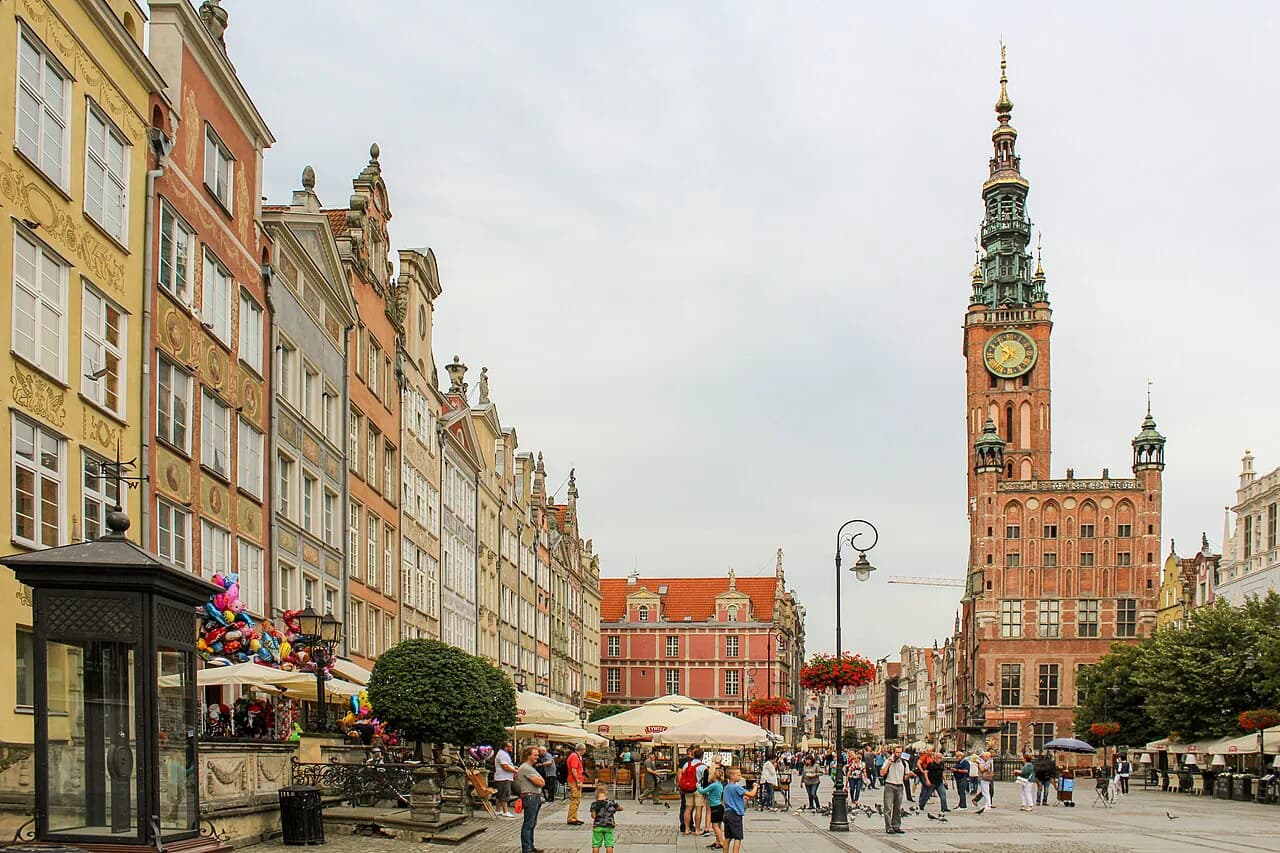
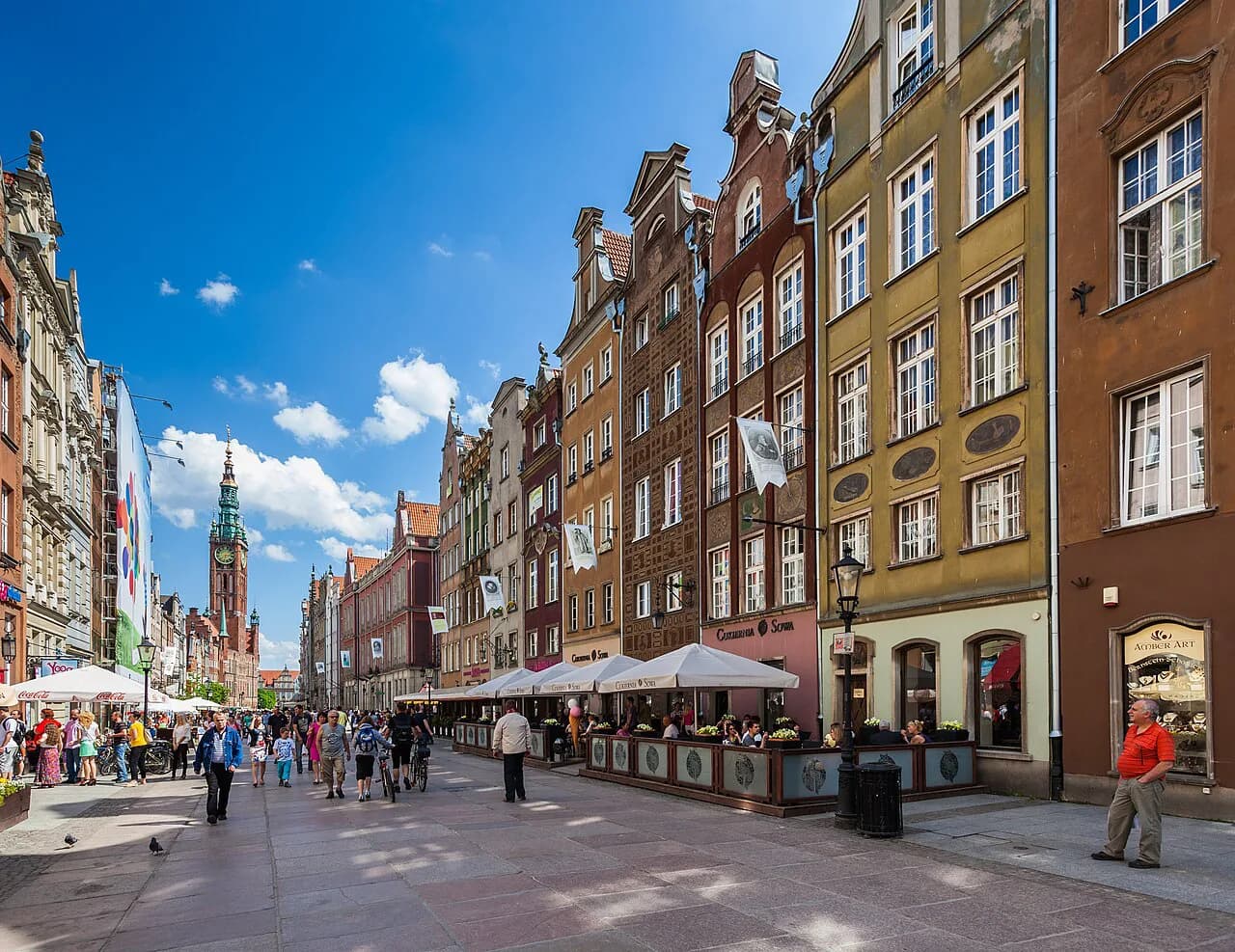
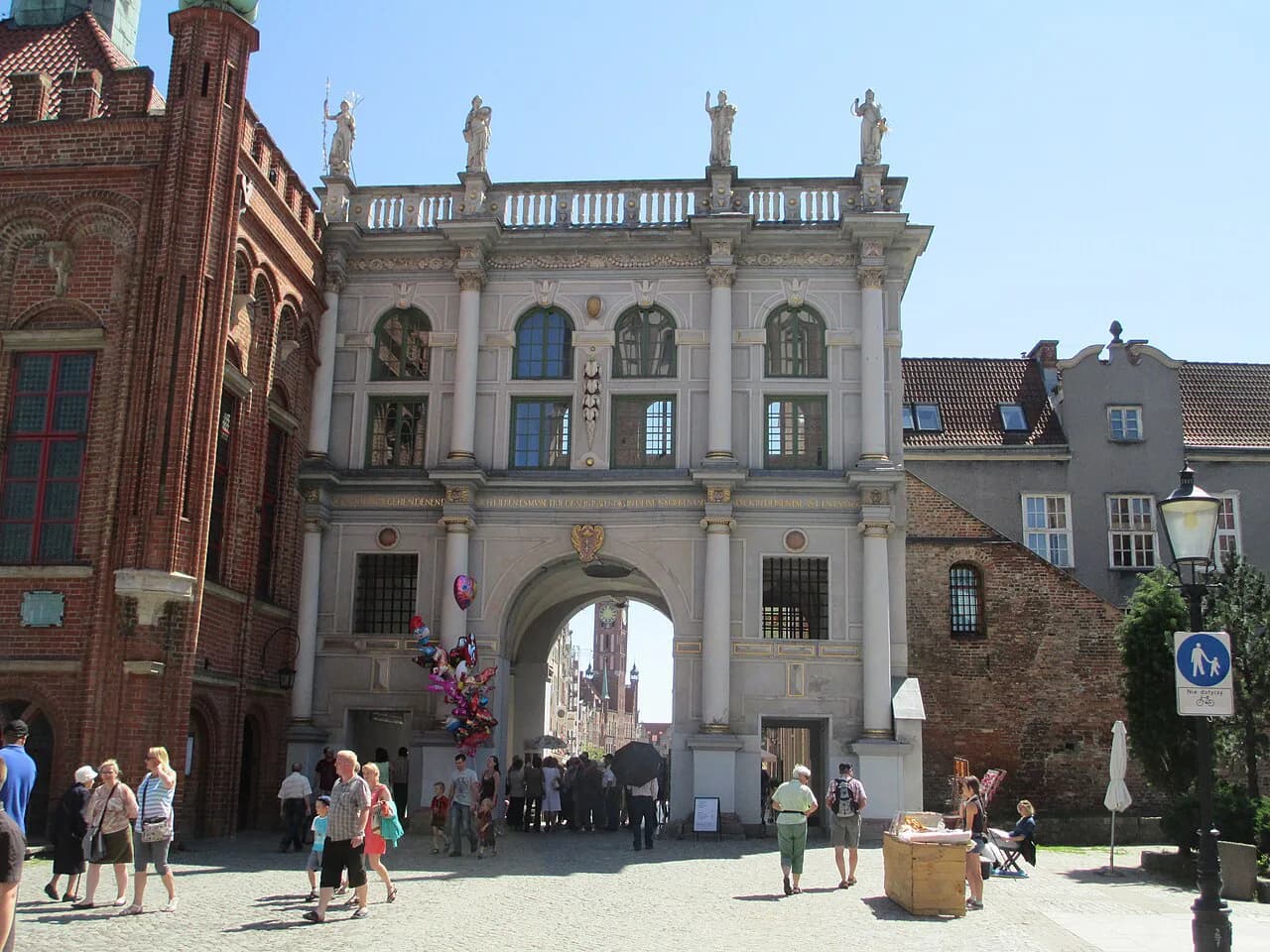
Begin at the Golden Gate, the ornate entrance that marks the western end of the Royal Way. From there the route runs straight along Długi Targ, the Long Market, past the Neptune Fountain and Artus Court to the Green Gate, so you never double back on yourself. The stretch between the two gates is short, which means you can slow down and look up at the painted facades rather than marching through. For more on the district as a whole, see the Gdańsk Old Town guide.
Długi Targ works as the day's spine: every other stop on this route hangs off it or sits a street or two away. Start early and the square is quiet enough for photographs; arrive at mid-morning and you will share it with tour groups. Give this opening walk half an hour at an easy pace before any museum opens. If you would rather hear the histories on the spot, a Gdańsk walking tour covers the same ground with a guide. If a single day leaves you wanting more, A Weekend in Gdańsk builds a longer break on this same route.
The Neptune Fountain and Artus Court
The Neptune Fountain stands in front of Artus Court, facing the townhouses along Długi Targ. Neptune faces the former residences of Polish kings, and the fountain you see today reflects repeated post-war renovation of its seventeenth-century original. Both are landmarks on the same patch of paving, so you can see them in a few minutes without planning a separate stop. The wider set of city sights is collected in the Gdańsk attractions guide.
Artus Court itself is now a branch of the Gdańsk History Museum, and inside you can see works of art from medieval times. It is a compact museum rather than a sprawling one, which makes it the easier pick if you want culture without losing half the day. Treat it as a thirty-to-forty-minute stop and keep the rest of the daylight for the streets. The city's wider story is set out in the Gdańsk history background.
Choose one museum: the Amber Museum or Artus Court
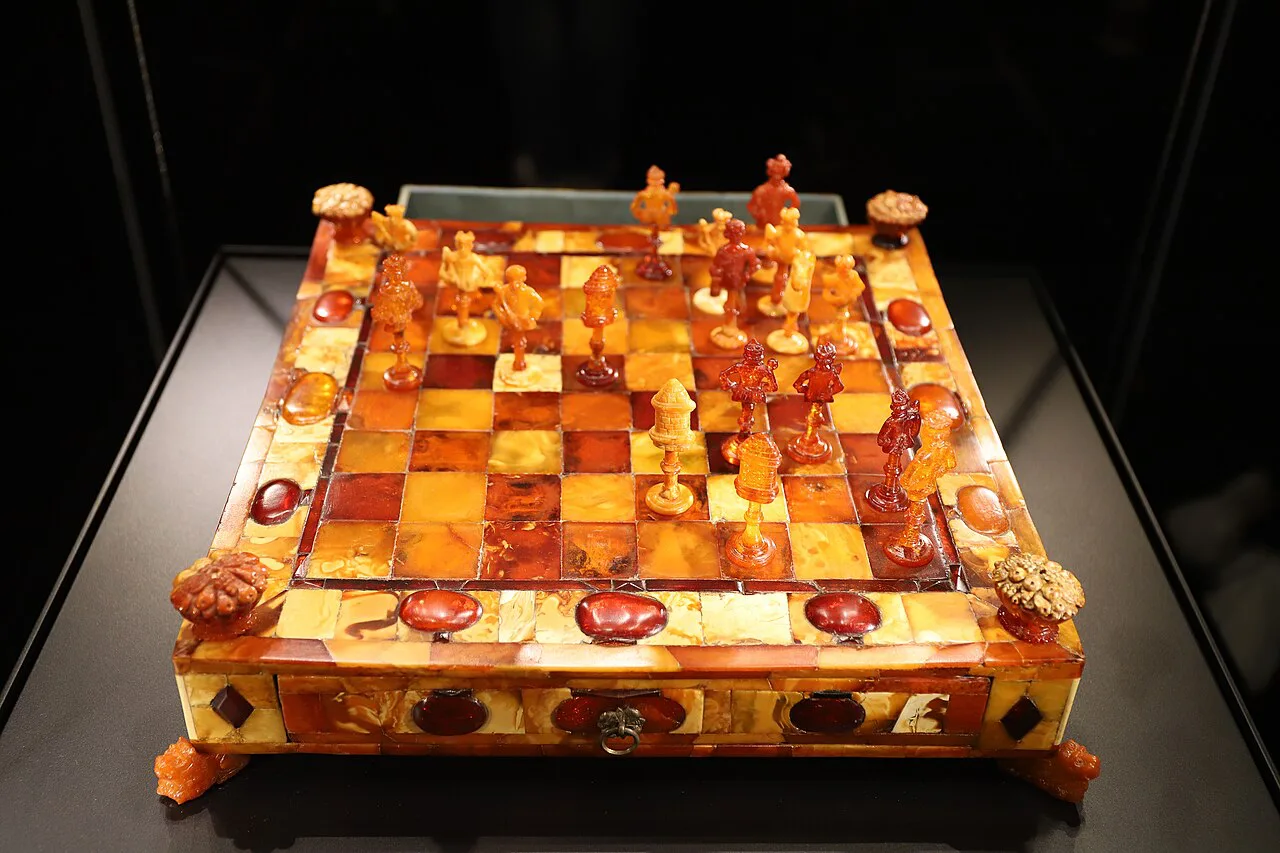
One museum is the right number for a single day. The Amber Museum explains how Baltic amber forms, how it is extracted and how it becomes jewellery, with both raw lumps and finished pieces on display. It suits anyone curious about the city's long association with the amber trade, and it pairs naturally with the amber workshops you will pass later on Mariacka Street. More on the trade is in the Amber in Gdańsk guide.
Artus Court gives you the merchant history of the city in a single hall, while the Amber Museum gives you a broader collection with more to read. Pick one and accept that you will walk past the other. Fitting in both means spending your afternoon indoors and arriving at the riverfront tired rather than curious. For more options, see the museums in Gdańsk guide.
Climb St Mary's Church or the Main Town Hall tower
If you want a view over the red roofs and church spires, choose between St Mary's Church and the Main Town Hall tower rather than aiming for both. St Mary's sits just off Długi Targ and is the bigger landmark, and on days when it is open for climbing it rewards you with the classic rooftop panorama. The town hall tower keeps you closer to the square and takes less time out of the schedule. Check which towers are open on your date before you commit. A wider list of vantage points is in the best views in Gdańsk guide.
Whichever you pick, go up before lunch: legs are fresher, queues are shorter and the light is usually better for photographs. Count on spending around an hour on the climb and the look-out if the venue is open that day, and check its own noticeboard for opening hours and the ticket price in złoty on the spot. Trying to climb both towers is the most common way a one-day route overruns. Daylight and crowds change through the year, so see when to visit Gdańsk.
Mariacka Street for amber workshops and facades
Mariacka Street runs parallel to Długi Targ, and it is the most photogenic lane in the Main Town for its stepped gables and stone terraces. Amber shops and workshops line the street, which makes it the natural place to browse after the Amber Museum. Come here after the museum rather than before, when the displays mean more.
This is the best stretch of the day for a slow walk. The street is short, so even a thorough browse takes twenty minutes. Use it as the bridge between the church tower and the river, and you keep the route moving west to east without retracing a single step.
The Motława riverfront and the Żuraw
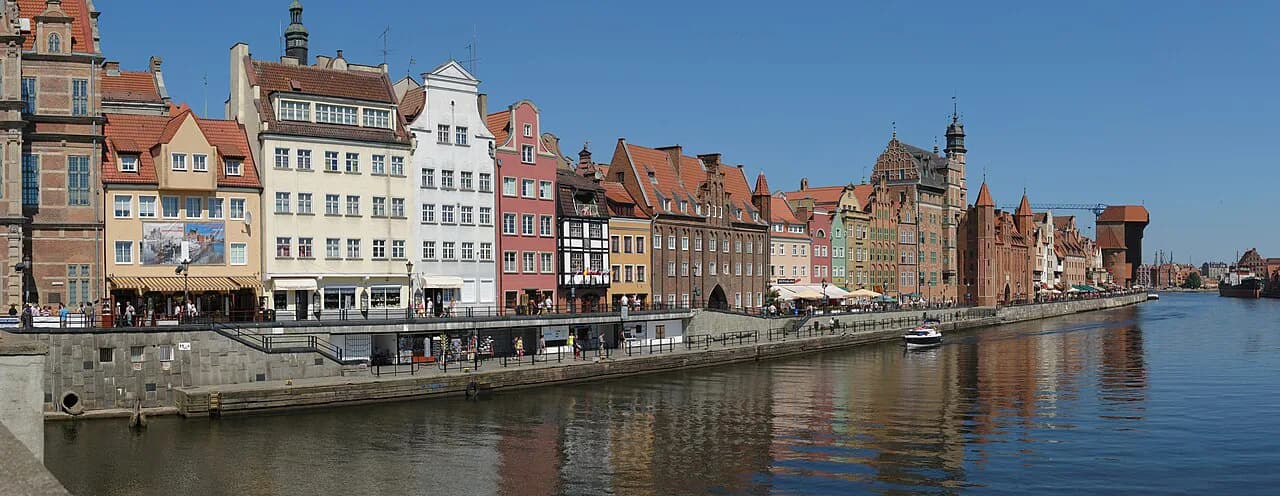
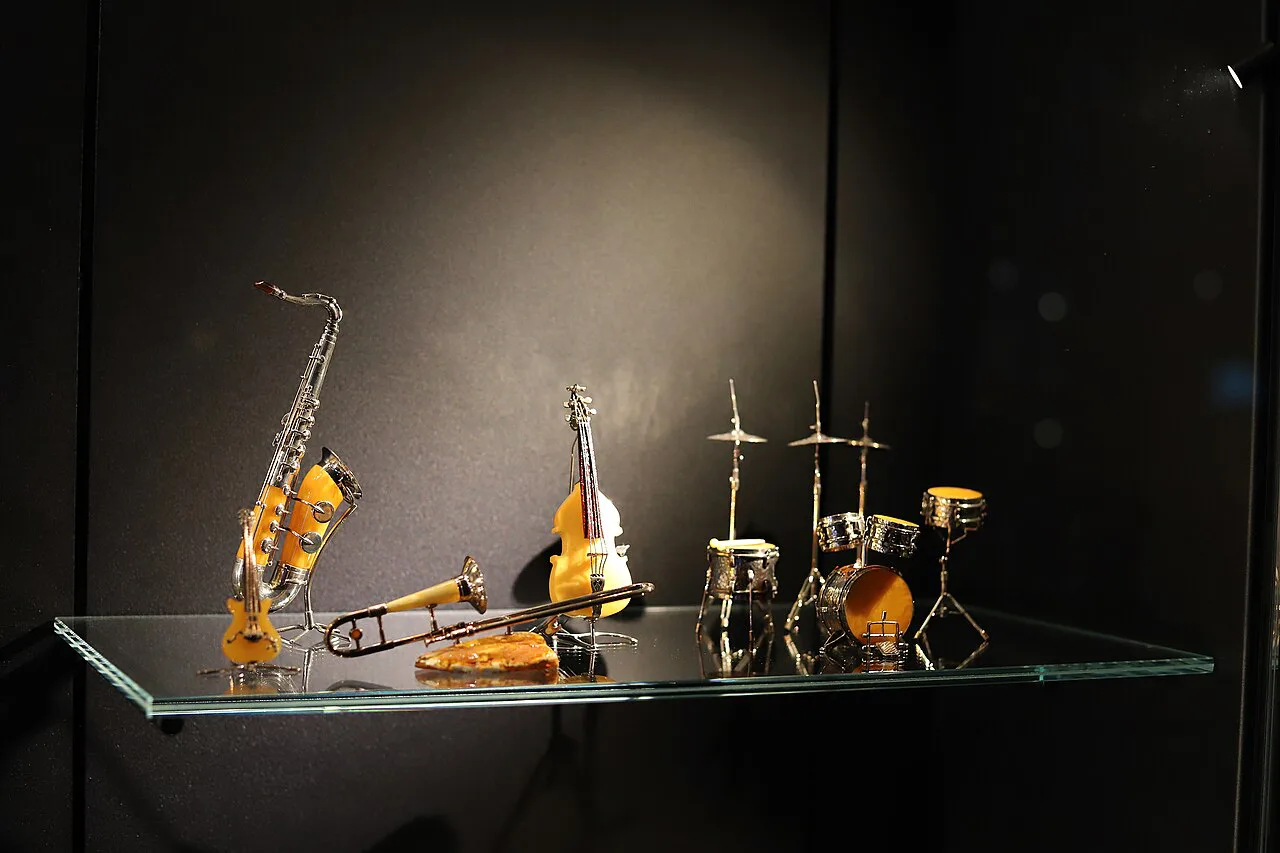
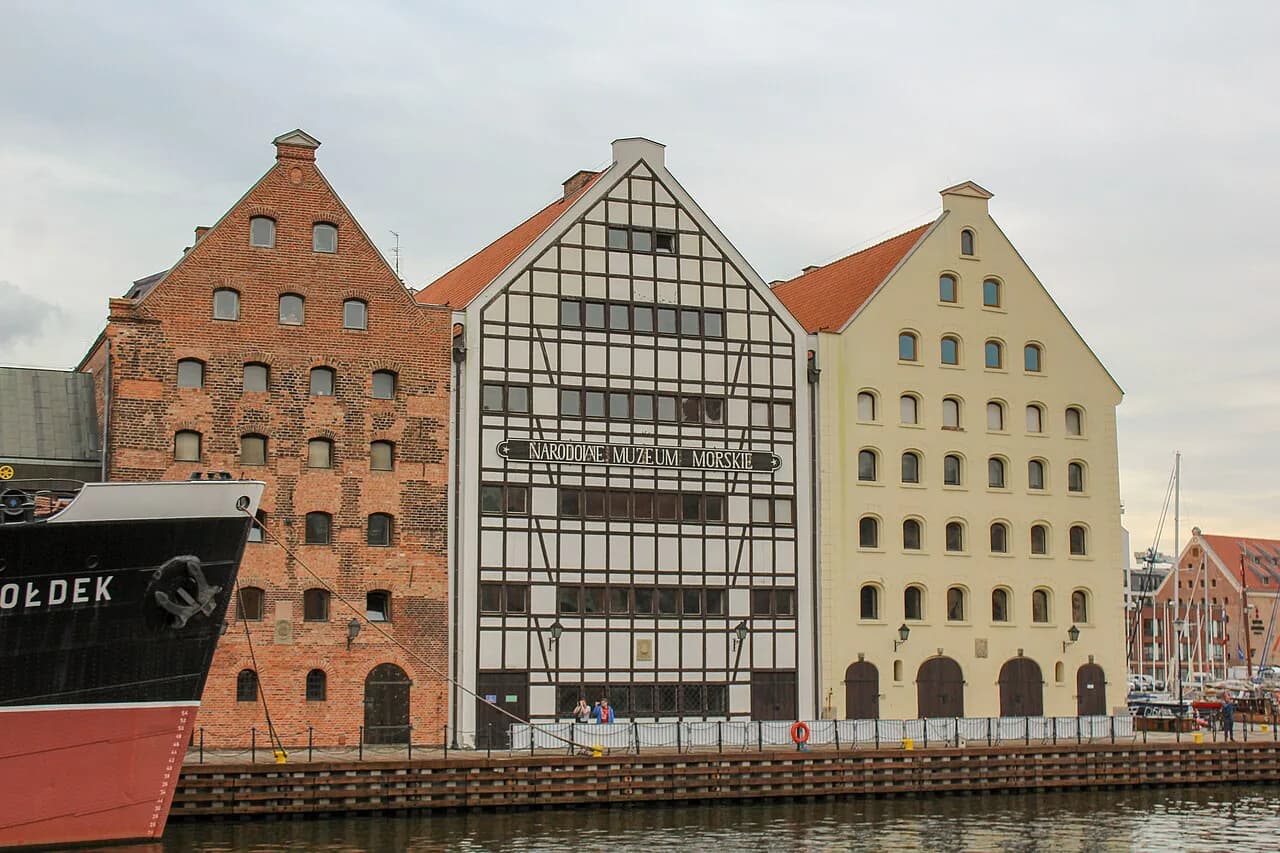
Pass through the Green Gate and you arrive on the Motława riverfront, where the merchant houses and former warehouses reflect in the water. Early morning is the quietest time here, so if you started at the Golden Gate promptly you will reach the river before the crowds build. Walk east along the embankment until the Żuraw, the Crane, comes into view. The step-gabled facades are the subject of the Gdańsk architecture guide.
The Crane is the natural end point for the morning: it is a landmark you can see from outside. Sit on the embankment for ten minutes and the riverfront does the rest. From here you can turn back into the Main Town for lunch.
Lunch: a milk bar or a sit-down restaurant in the Main Town
The Main Town has both milk bars, the cheap canteen-style places, and full sit-down restaurants a street or two back from Długi Targ. A milk bar gets you a hot meal quickly and leaves more of the afternoon free; a restaurant costs more and takes longer but gives you a proper break. Either way, eat between twelve and one so the afternoon stays usable. For specific places, see the Gdańsk food guide.
Prices vary by venue, so scan the menu board outside before you commit and pay in złoty. Keep lunch to an hour and the day still has room for one more sight.
Afternoon options: Westerplatte or the Olivia Star viewpoint
The two strongest afternoon additions pull in opposite directions. Westerplatte, the peninsula the source describes as the site where World War II began, is a memorial landscape of ruins and monuments that needs a bus or boat ride each way, so treat it as a half-day commitment rather than a quick look. The Olivia Star tower, by contrast, gives you a rooftop view over the whole Tricity with a short taxi or tram ride from the centre. The wartime sites are set out in the Gdańsk WW2 sites guide.
Choose Westerplatte if the history matters more than the skyline, and Olivia Star if you want photographs and an early finish. Neither fits comfortably after two museums, which is the honest reason to limit yourself to one. Both also eat into the evening, so decide over lunch rather than at four in the afternoon.
How the day changes with one museum instead of two
Adding a second museum costs you roughly an hour and a half, and it typically comes out of the riverfront or the tower climb. With one museum you can walk the full route, climb one tower and still reach the Motława with daylight left for the Crane. With two, the afternoon detour to Westerplatte or Olivia Star disappears entirely.
The practical fix is to front-load the walking and keep the museum for the middle of the day, when legs and attention both dip. That way the second museum becomes an optional extra rather than a plan you have to break. It also leaves the late afternoon free for whichever viewpoint you chose.
Where a one-day route falls short and what to cut
A single day gives you the Main Town and one museum, and that is the realistic limit. Cut the tower climb first if the weather closes in, then the second museum, then the afternoon detour; keep Długi Targ, Mariacka Street and the riverfront, which define the city. A late start of eleven or later means skipping the tower and heading straight for the water after lunch.
The route is entirely walkable within the centre, so transport only matters for the outlying options. Sopot's beach sits a short train ride away if you want sea air, but it belongs to a different day. Spend the last hour of light back on the Motława embankment, where the day began.
Which afternoon addition should you pick?
Pick Westerplatte if you want the history of September 1939 told on the ground, and Olivia Star if you want the panorama and an early finish. Both are worth the trip, but neither belongs in the same afternoon as a second museum. Decide over lunch and commit, because the light fades before either detour is done.
If you would rather keep the day simple, stay in the Main Town: the Golden Gate, Długi Targ, Mariacka Street and the Crane make a complete circuit without a single bus ride. That version leaves you time for a proper lunch and a slow walk back along the river. Full planning for a longer stay is in the Gdańsk itinerary.
Frequently Asked Questions
Is Gdańsk a walkable city for a one-day visit?
The Main Town is compact and flat, and the route from the Golden Gate through Długi Targ to the Motława fits into a single day on foot. Only the outlying sights, Westerplatte and the Olivia Star tower, need a bus, tram or boat.
Do you need to book Gdańsk attractions in advance?
Many visitors book popular museums and tower climbs ahead in busy periods, but the walking route itself needs no ticket. Check each venue's own website for its opening days and whether timed entry applies on your date.
What should you not miss on a one-day visit?
Długi Targ with the Neptune Fountain and Artus Court, Mariacka Street and the Motława riverfront with the Żuraw are the essential sights. Add one museum and one tower climb and the day is full.
Sources
Notes for your next Polish city break
Optional updates to our Poland guides.
You might also like
Continue reading
More guides you'll find useful