Poznań in October: Weather, Sights and How to Fill the Days
Poznań in October brings cooler days, shorter light and quieter squares. Here is what to see and how to plan around the weather.
On this page
Two full days is the right length for Poznań in October. The Old Town core, Ostrów Tumski and a wet-afternoon museum fit comfortably into a two-day break, and October's thin crowds make the compact centre easy to cover on foot. This guide sets out what October weather does to a visit, how the sights connect and how to shape the days around shorter light.
The trade-off is honest: you get a quieter square and a cheaper, calmer city, but daylight is the constraint and grey skies can swallow an afternoon. Plan outdoor sights for the morning and keep one indoor fallback per day. Museum opening days vary, so confirm the ones you care about against each venue's own listing before you travel.
October in Poznań: what to expect in one paragraph
October is the month Poznań stops performing for summer visitors. The square empties out, the student city settles into term time and the main practical question becomes how much daylight you have rather than how many sights you queue for. The rebuilt Old Town is still the anchor, but it rewards an hour rather than an afternoon, which leaves room for Ostrów Tumski, Jeżyce and one or two indoor stops.
The city's biggest strength for a short break is that almost everything worth seeing sits within walking distance of the centre. Nothing here needs a car or a day of logistics. If you want a broader menu of sights before you commit, our guide to things to do in Poznań sets the full range alongside this seasonal plan.
Typical October temperatures, daylight and rain
Use published climate averages rather than any forecast for your dates, because October in Poland swings widely from mild, bright spells to raw grey days. Poznań's late autumn is known for short light and limited sunshine, which matters more than temperature when you are planning a short break. Treat any average as a planning benchmark and pack for both.
BootsnAll's Poznań guide is candid about the seasonal difference, noting that November to February is grey, cold and short on light, with December getting roughly 37 hours of sunshine across the whole month. October sits on the kinder side of that curve but still moves fast towards it, so assume early-afternoon light and plan the outdoor stretch for the middle of the day.
How the city is laid out: Stary Rynek, Święty Marcin and Ostrów Tumski on foot
Poznań's centre is a happy accident of geography: the market square, the main shopping streets and the cathedral island all lie within a walk of each other. Stary Rynek is the pivot, Święty Marcin runs south-east towards the Imperial Castle, and Ostrów Tumski sits north-east across the Warta. You can cover the core on foot in a morning without using a tram.
The shape that works best is a loop: start at the square, walk south-east along Święty Marcin, then come back north to the river and cross to the cathedral island. Keep the return leg for the afternoon, when the light fades early. Our Poznań old town guide covers the square and the surrounding streets in more detail if you want to plan that first leg properly.
The Old Town core: Stary Rynek, the Town Hall and the mechanical goats at noon
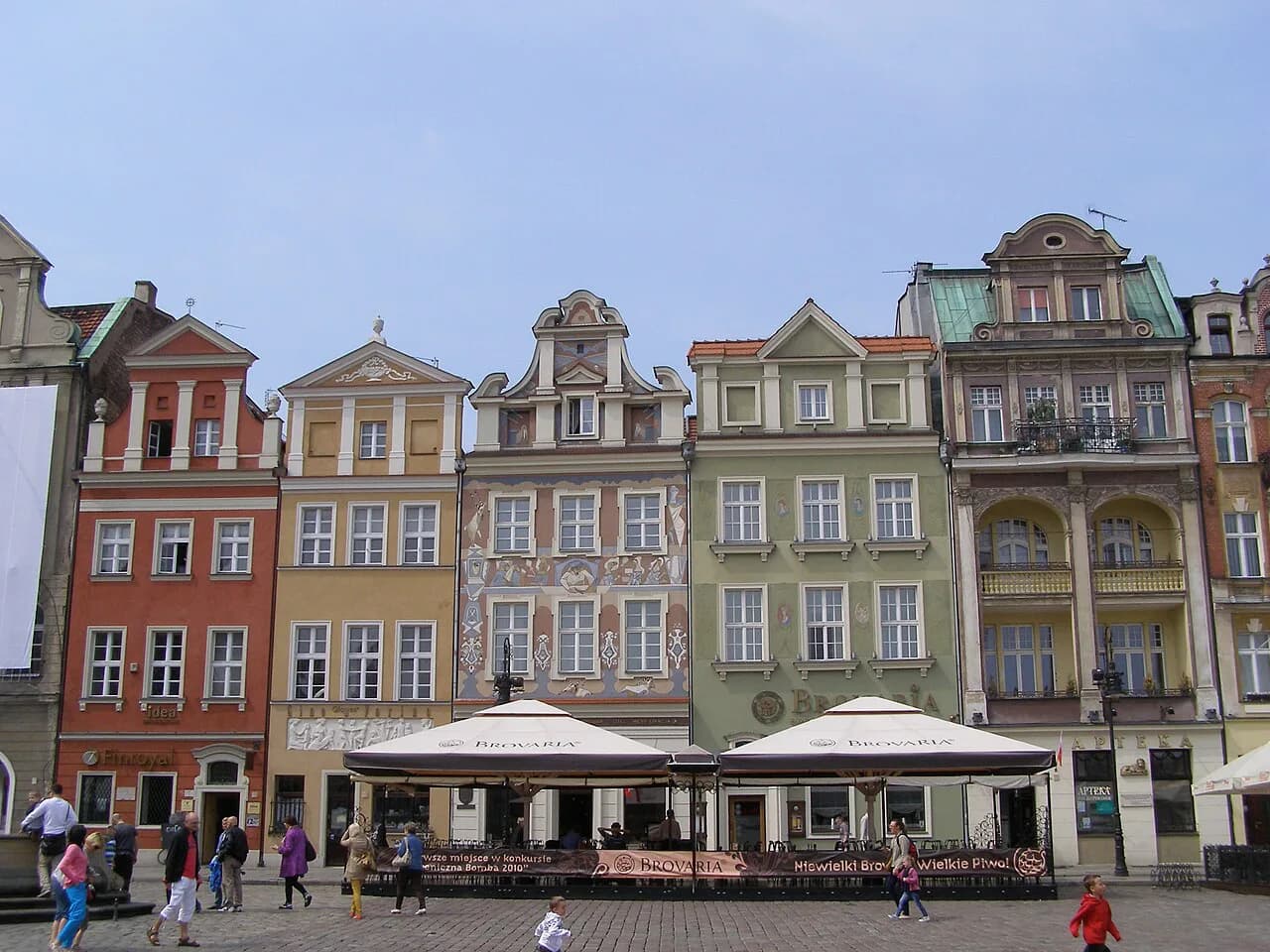
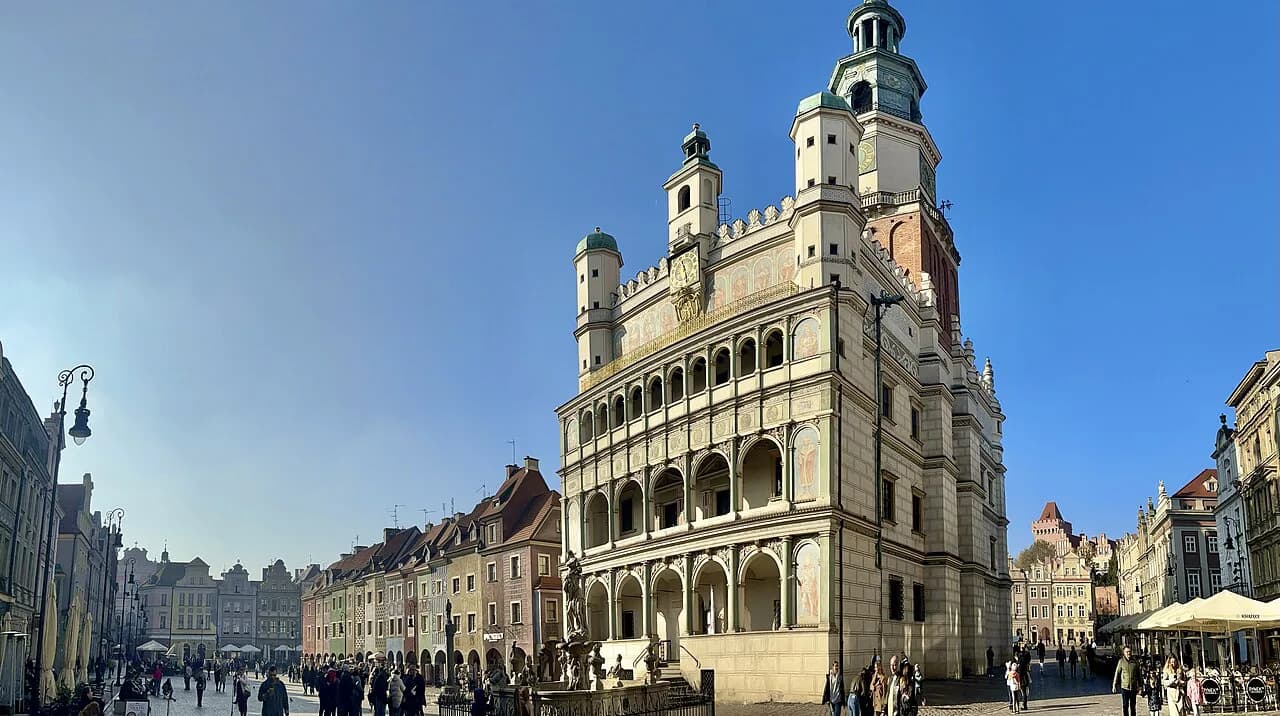
Stary Rynek is a broad, rebuilt square ringed by restored townhouses, and its centrepiece is the Renaissance town hall rebuilt by the Italian architect Giovanni Battista di Quadro between 1550 and 1560. The clock and its two mechanical goats have been part of the building since 1551, which makes them the oldest running fixture on the square.
The goats do their thing at noon, and since 2022 they have done it again at 15:00 every day, which gives you a second chance if the morning slips. The show lasts about a minute, so do not build an afternoon around it. Arrive a few minutes early, watch, then move on to the streets behind the square.
One honest warning: almost every restaurant facing the square is aimed at people who will not come back. Eat elsewhere. The square is for looking at, and the rebuilt facades are postwar reconstruction after the 1945 siege left the Old Town in ruins, which explains the tidy uniformity of the arcades.
Ostrów Tumski and the cathedral: the walk across the Warta
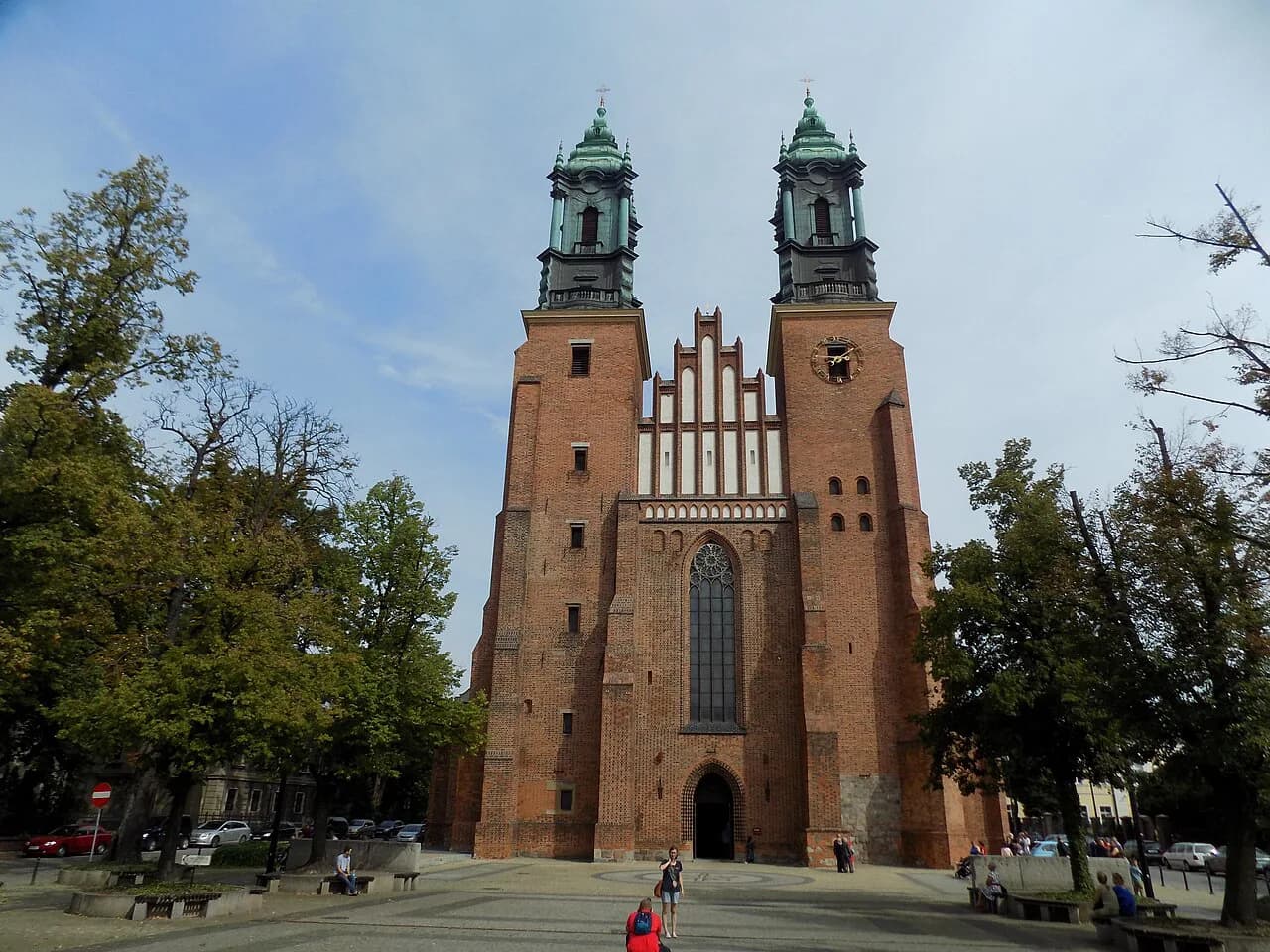
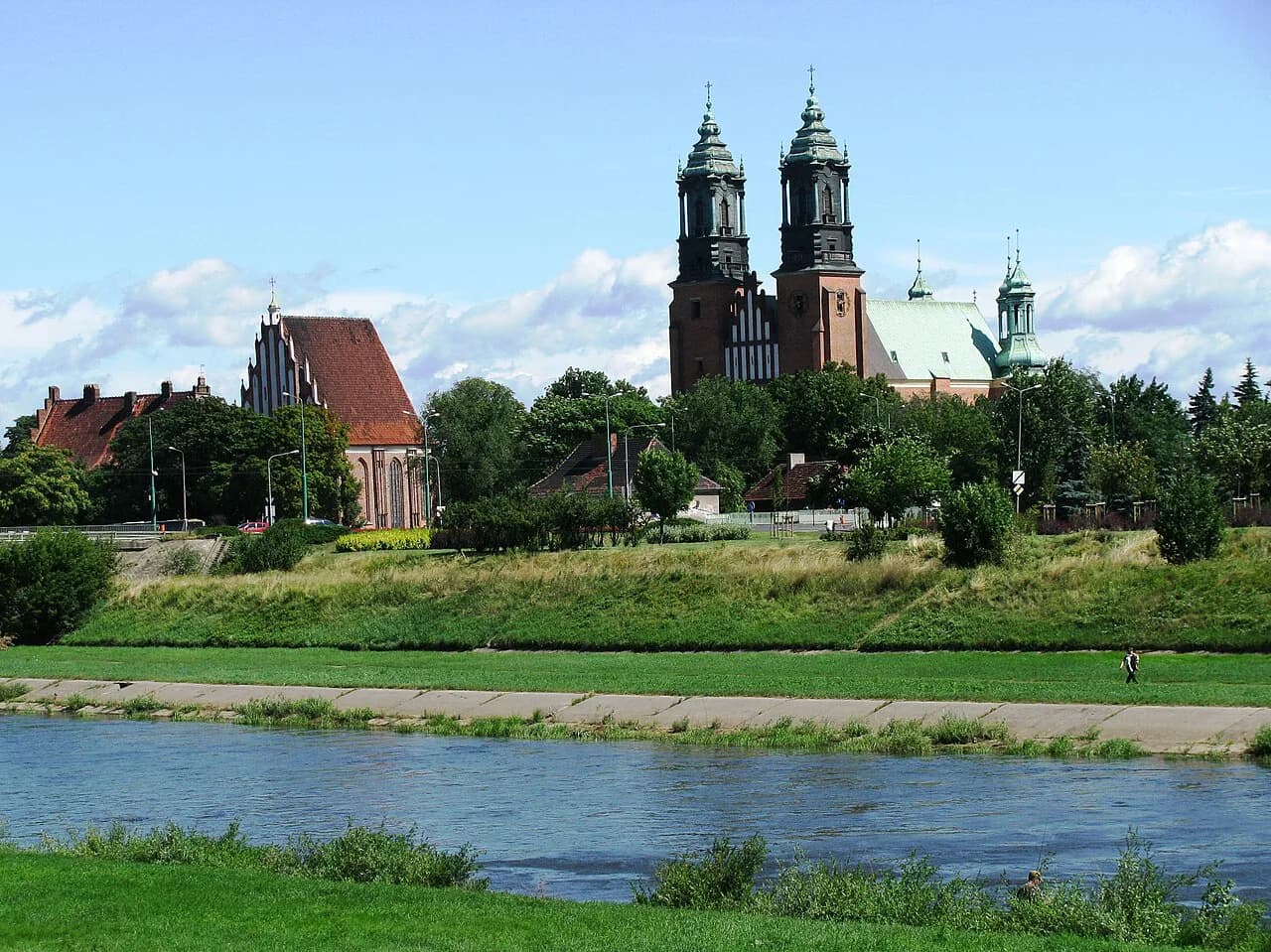
Ostrów Tumski is where Poznań began, a fortified settlement of the Polans in the 9th and 10th centuries and the site of the country's oldest cathedral. Mieszko I was baptised in 966, possibly here — Ostrów Lednicki, 35 kilometres away, claims the same honour — and the cathedral holds the tombs of Mieszko and his son Bolesław Chrobry. It is the one sight in the city with genuine historical weight rather than reconstructed charm.
The walk across the Warta is short and flat, and the island itself is quiet enough to feel like a different city. In October the riverbank light is best around midday, so slot this between the square and lunch rather than saving it for late afternoon. Allow an hour for the crossing, the cathedral and a slow look back at the skyline.
Indoor options when it rains: the Enigma Cipher Centre and the Croissant Museum
When the rain sets in, Poznań has two indoor stops that suit a wet afternoon better than a scramble around the square. The Enigma Cipher Centre covers the code-breaking story and rewards a couple of hours, which makes it the stronger choice for a serious rainy day. Lonely Planet builds a full day of its five-day Poznań itinerary around it, which tells you how much there is to see.
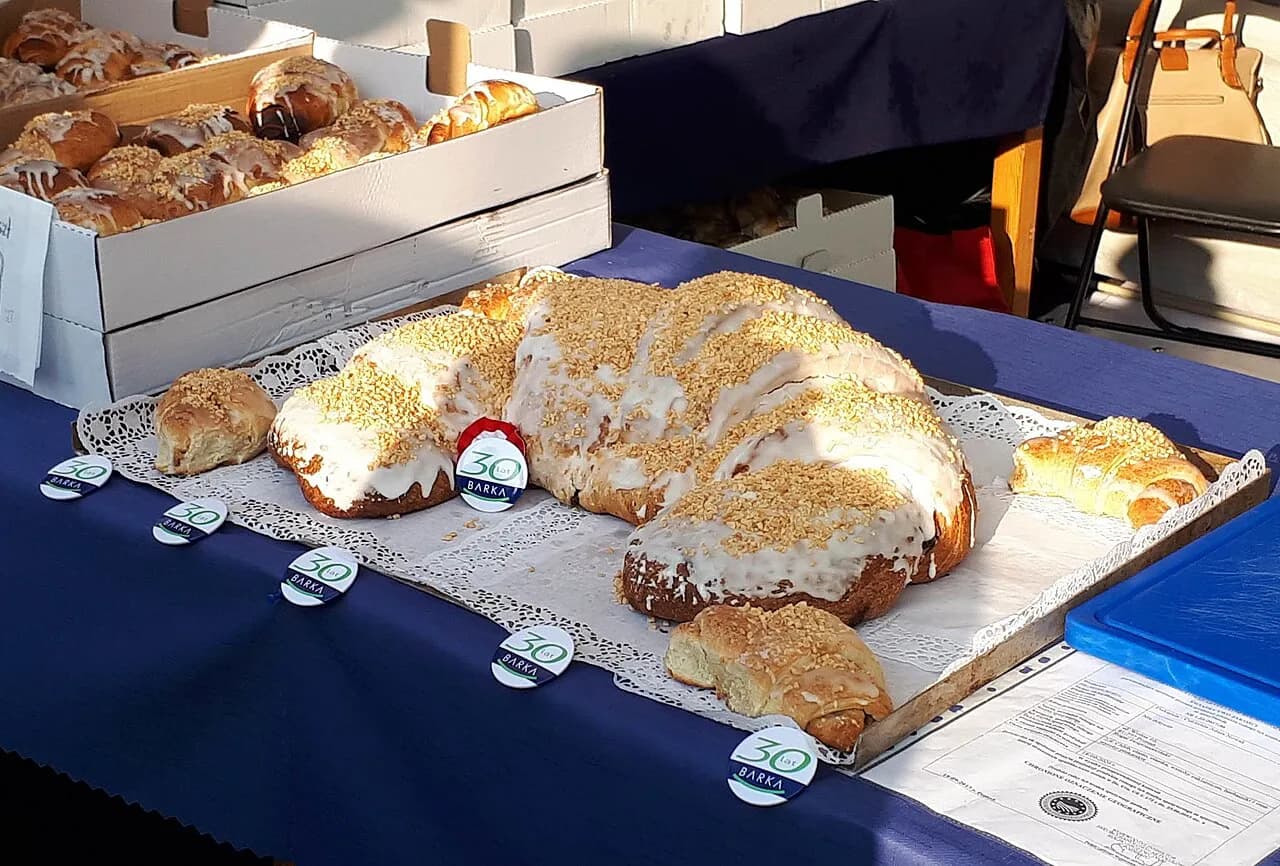
The Poznań Croissant Museum is the lighter option, built around the local St Martin's croissant and its protected recipe. It runs as a show rather than a silent gallery, so it suits families and anyone who wants the city's food story told quickly.
Pick one, not both, on a two-day trip. Both are popular and neither is huge, and October's early dusk means your indoor slot will eat into the outdoor time you have left. Check the day each venue opens before you commit your afternoon.
The Imperial Castle on Święty Marcin and the June 1956 memorial
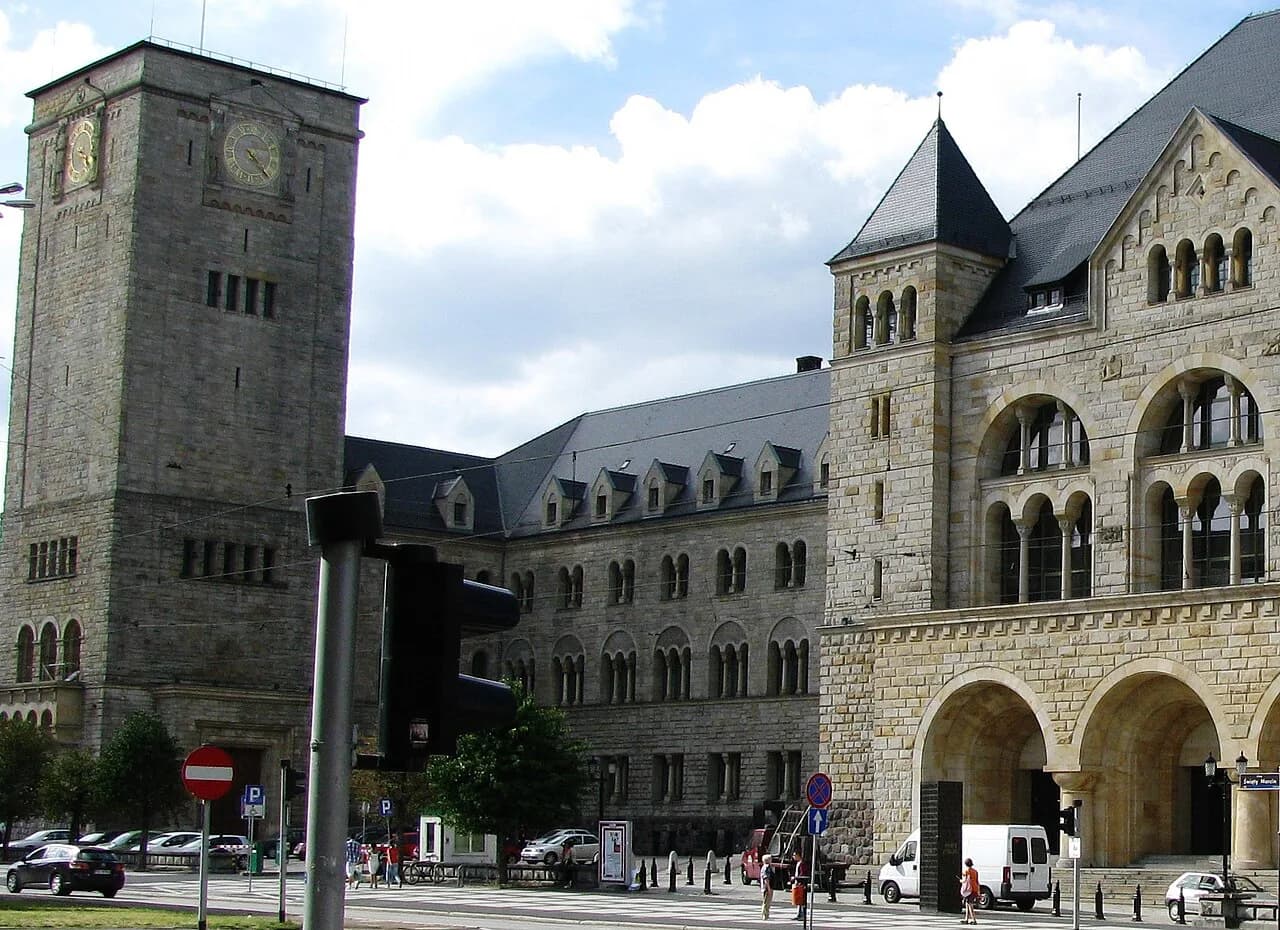
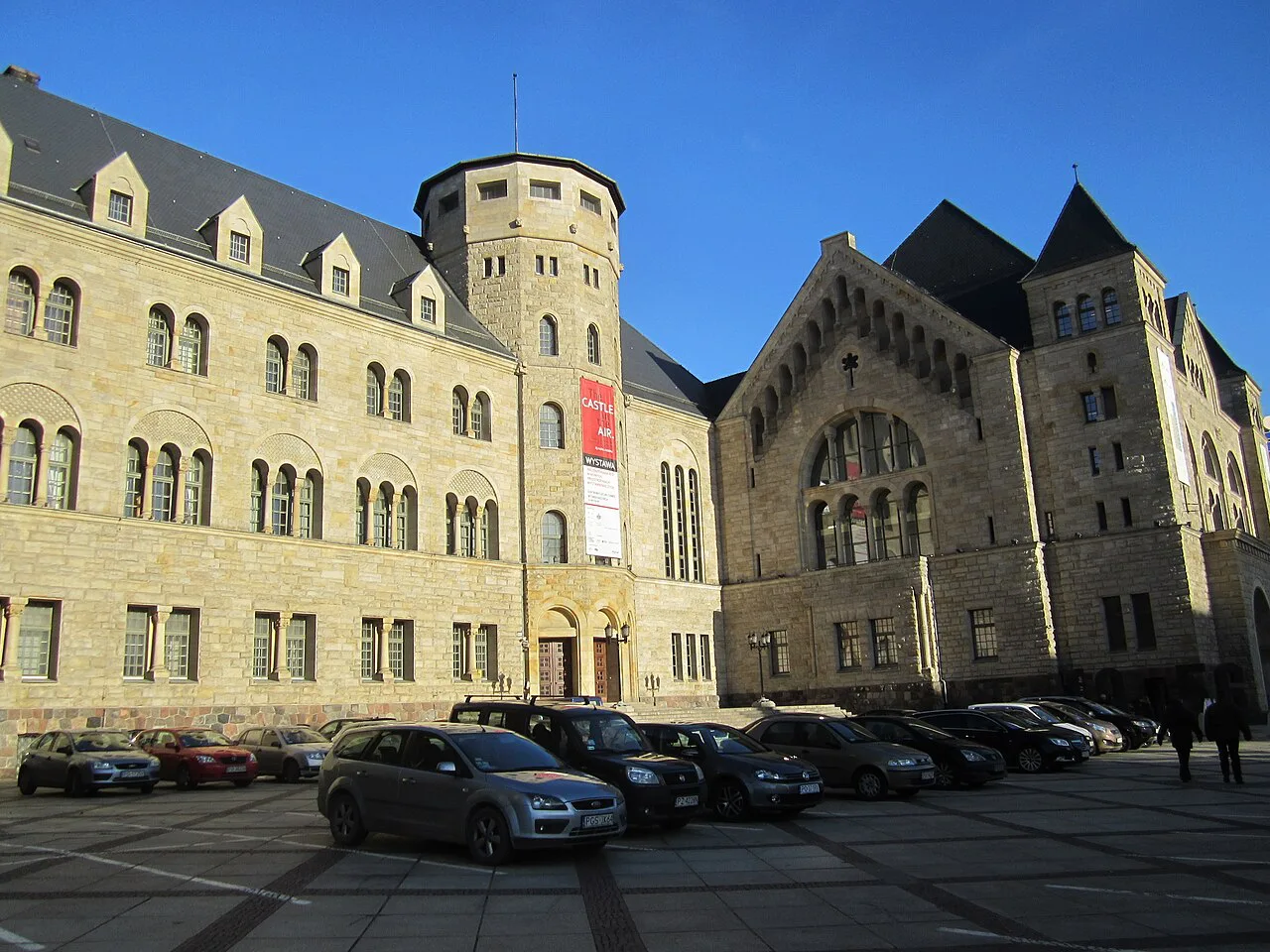
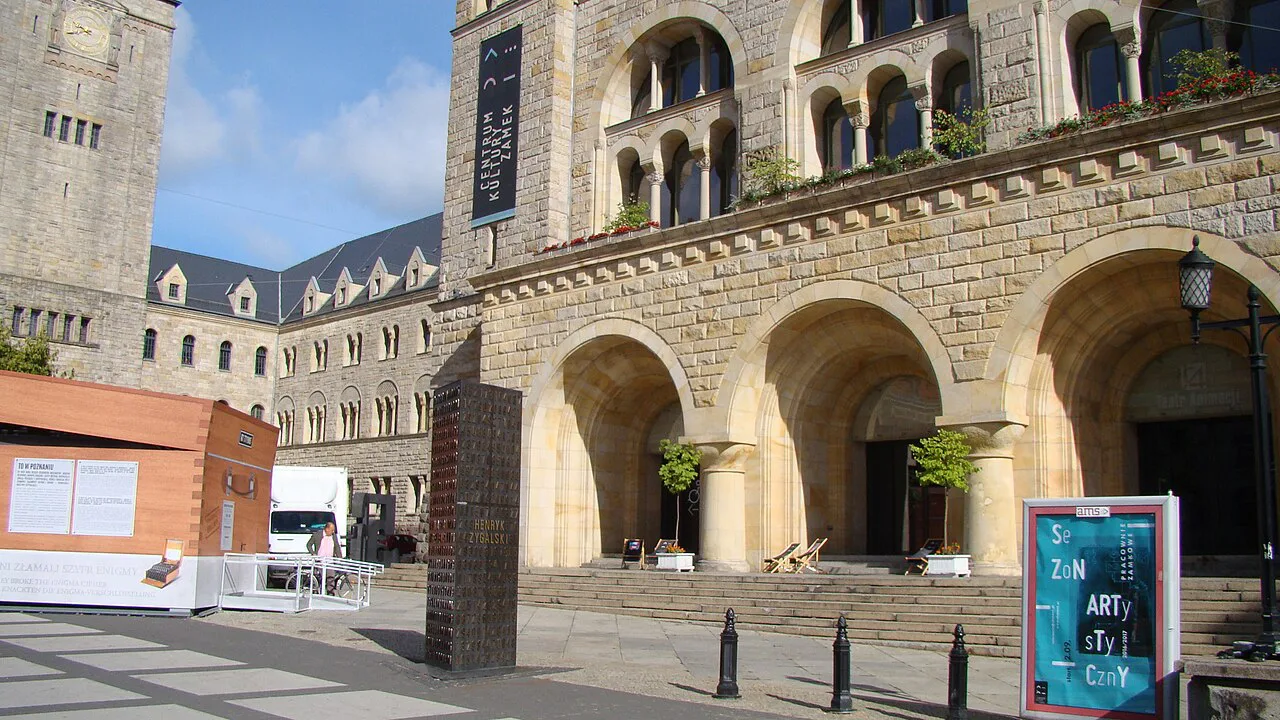
The Imperial Castle on Święty Marcin was finished in 1910 for Wilhelm II, part of the German quarter built west of the old centre after Prussia took the city. It is not a castle in the medieval sense, and the BootsnAll guide says so plainly, which is useful honesty before you pay for a ticket. Visit it for the architecture and the twentieth-century history rather than for towers and battlements.
The other essential stop on Święty Marcin is the Poznań Crosses monument to the victims of June 1956, when workers from the Cegielski factories marched and troops opened fire. Estimates of the dead vary widely, from 57 to more than a hundred, and the monument marks that day without spectacle. It takes ten minutes and stays with you.
Which museums suit a wet afternoon and which need a dry one
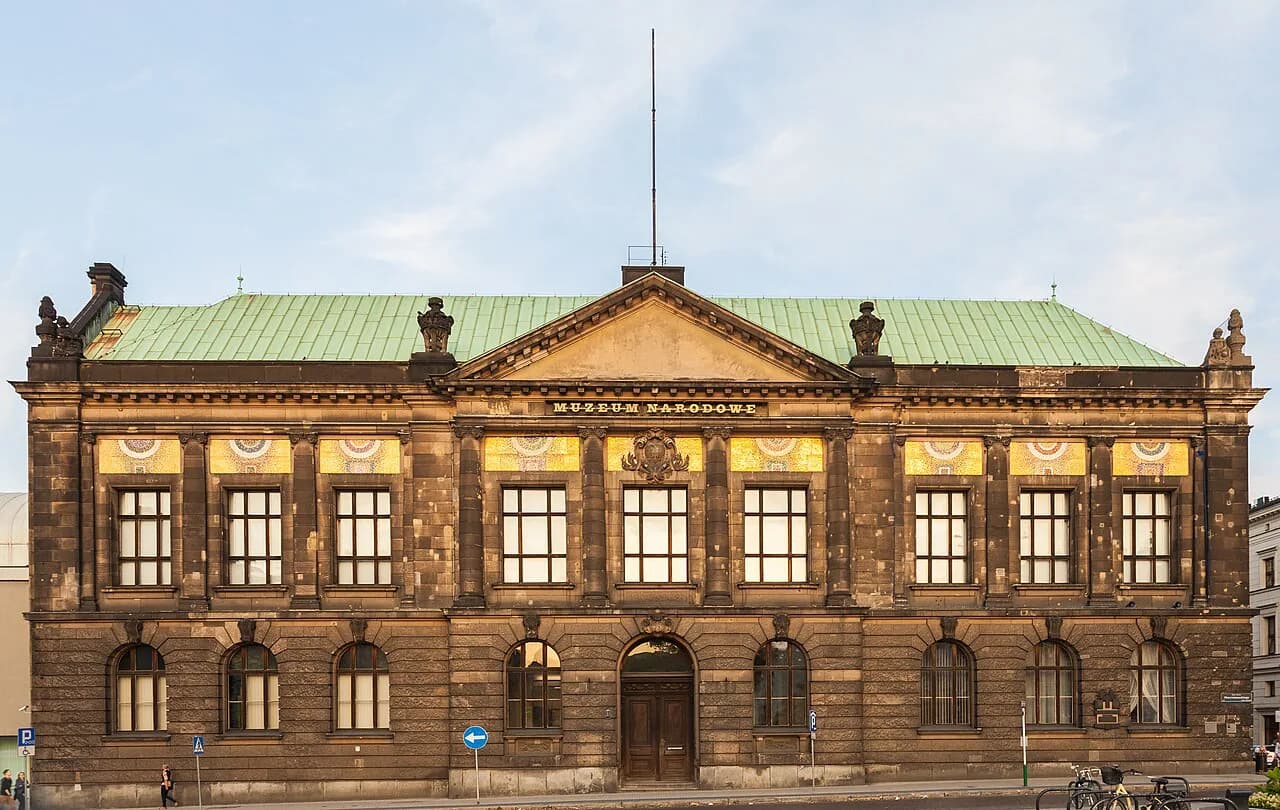
The rule for October is simple: keep the museum for the wettest part of the day and save the walks for the gaps. The Enigma Cipher Centre and the Croissant Museum both work as a two-hour rain shelter. The Citadel and its open ground do not, so move them to a dry morning if the forecast looks settled.
Opening days are the trap. Polish museums commonly close one day a week, often Monday, but which day varies by venue and season, so confirm each one against its own listing rather than assuming. If your trip lands on a Monday, build the day around outdoor sights and hold the museum for the next morning.
For a wet-weather plan that does not depend on tickets, our list of free things to do in Poznań includes Park Cytadela and other open-ground options that cost nothing when the rain stops.
Jeżyce and the neighbourhood eating cluster for a long lunch
Jeżyce sits west of the centre and is where locals eat, with a cluster of restaurants that give Poznań its best food value. The BootsnAll guide calls it out as the evening answer to the tourist-facing square, and the local cooking is plain and regional rather than showy. A long lunch here is the right use of a fading October afternoon.
For a broader look at what the city serves and where, our Poznań food guide maps the options beyond the square. The St Martin's croissant, with its protected recipe, is the local item to hunt down.
Walking times and a realistic two-day shape for October daylight
Give the first morning to the Old Town: the square, the town hall, the noon goats and the streets behind it. Walk east along Święty Marcin for the Imperial Castle and the June 1956 memorial, then eat in Jeżyce. That sequence keeps you outdoors while the light is strongest and puts you near indoor options by the afternoon.
Save day two for Ostrów Tumski and the cathedral while the morning is dry, then take the Enigma Cipher Centre as your afternoon fallback. If the weather holds, swap in a park or the Citadel instead. The distances are all walkable, so the plan bends without a taxi.
If you would rather follow a fixed route than improvise, our Poznań walking tour covers the core on foot in the order that makes sense.
What October does to opening hours and Sunday trading
October sits outside the main tourist season, and some venues trim their hours once summer ends. Nothing in the published listings promises the same timetable year-round, so check the venue you care about for the days you are there. Two sentences of checking saves a wasted morning.
Poland restricts Sunday trading, so do not count on a Sunday for a shopping stop. Build the day around sights and food instead. If retail matters to your trip, our shopping in Poznań guide points to Ulica Wrocławska and the streets that carry the main chains.
Should you go in October or wait for another month?
Go in October if you want the city without the crowds and can live with grey skies and short afternoons. The square, the cathedral island and the museums all work at this time of year, and the trade-off is light rather than access. You will simply do less per day than a summer visitor would.
Wait if you need long evenings outdoors or want to bank on sunshine. November is harder still, with markedly less sun, so October is the last comfortable month before the city turns properly inward. If a milder, greener version of the same trip appeals, compare it with Poznań in April before you book.
Either way, decide the shape of your two days first and the date second. The city rewards a slow plan more than a packed one.
October or not: how to decide
Poznań in October suits a traveller who wants a quiet, walkable Polish city and does not mind planning around the light. Front-load the Old Town and Ostrów Tumski, keep one indoor option for each afternoon, and let the noon goats set your morning rather than your whole day.
If crowds and sunshine matter more than calm and value, wait for spring. If they do not, October gives you the same sights with fewer people and a slower pace, which is the honest case for going now.
Explore more Poznań guides
Sources
Notes for your next Polish city break
Optional updates to our Poland guides.
You might also like
Continue reading
More guides you'll find useful