Warsaw Architecture: What to See and Where, by Period
Warsaw architecture from the reconstructed Old Town to socialist-realist façades and modern towers, with the streets and buildings worth seeking out on a city break.
On this page
Warsaw is best read as three cities stacked on top of each other: the reconstructed historic centre, the postwar socialist-realist core and the glass towers of the last two decades. If you have one day for architecture, walk the Old Town and the Royal Route; if you have two, add the Palace of Culture and Science area to see the contrast at its sharpest. This guide groups the buildings by period and by area so you can build one route instead of chasing a checklist.
The most useful thing to know before you start is that the Old Town is not medieval fabric. The UNESCO listing for the Historic Centre of Warsaw is explicit that what stands there is a reconstruction, carried out as a holistic recreation of the urban plan complete with the Old Town Market, its townhouses, the circuit of the city walls and the Royal Castle. That makes the district a piece of postwar planning as much as a piece of history, and it changes what you should look at.
Layers are what make Warsaw rewarding, and they are also what makes it confusing: a single street can run from rebuilt Gothic walls to a Stalinist façade in ten minutes. Plan by area, not by period, and the city starts to make sense.
What Warsaw architecture is: a rebuilt historic centre beside postwar and modern layers
Warsaw's architecture is defined less by any one style than by sequence. The historic core was recreated after the Second World War, the postwar state then rebuilt the commercial centre in a socialist-realist idiom, and the last two decades have added contemporary towers around that core. Understanding the order of those layers is the key to reading the city on foot.
The UNESCO inscription is the single most useful frame for the first layer. Its description of the reconstruction sets out that the urban plan, the Old Town Market, the townhouses, the circuit of the city walls and the Royal Castle were all recreated as part of a holistic scheme, which is why the district reads as a coherent ensemble rather than a set of survivals. Look at how uniform the rooflines and façades are along a single street, and you are seeing the reconstruction as much as the original design.
The second layer is the postwar centre, where the scale jumps from four storeys to monumental. The third is contemporary: office and residential towers that sit close to the historic core rather than in a distant business district. The pleasure of Warsaw is that these three are within walking distance of each other, and the tension between them is the city's most distinctive architectural quality.
The Old Town and its market square: what the reconstruction recreated and what to look for
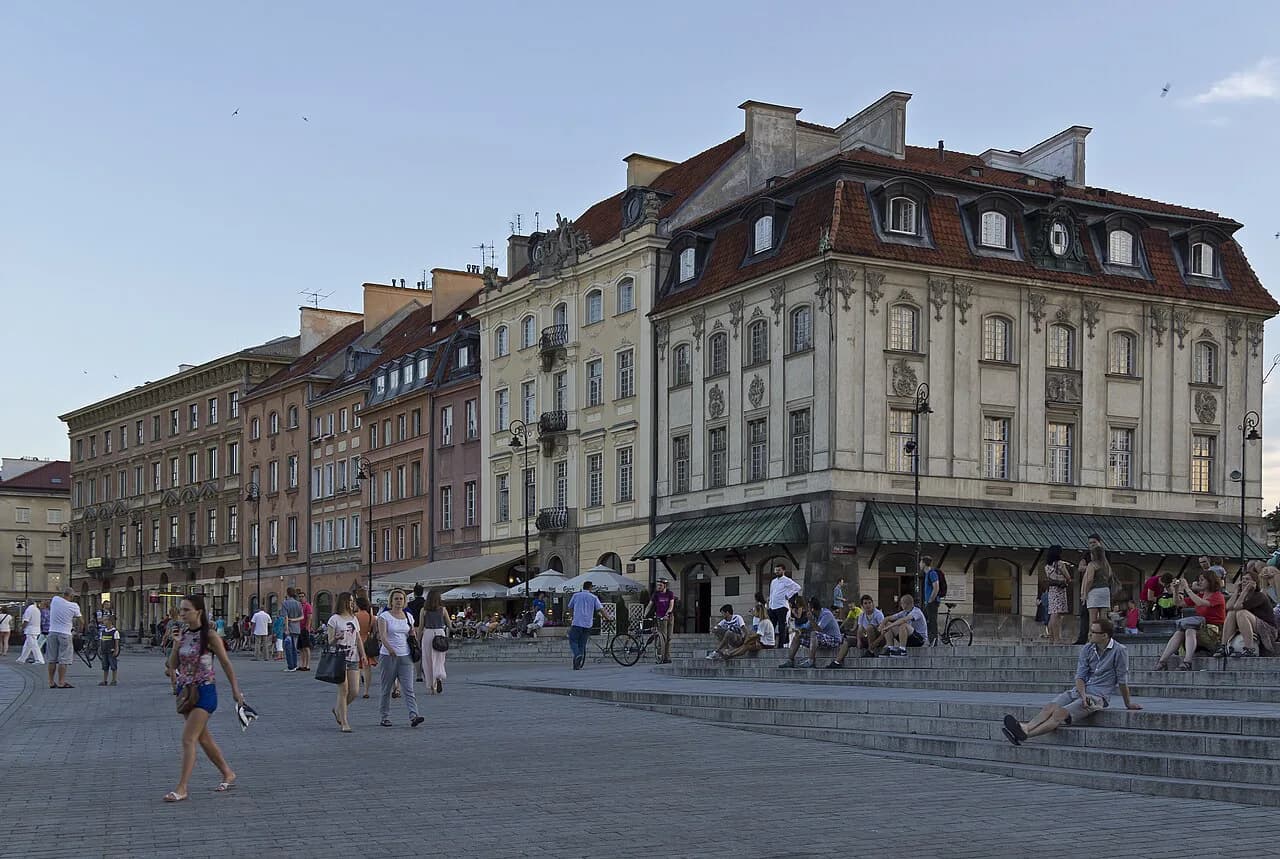
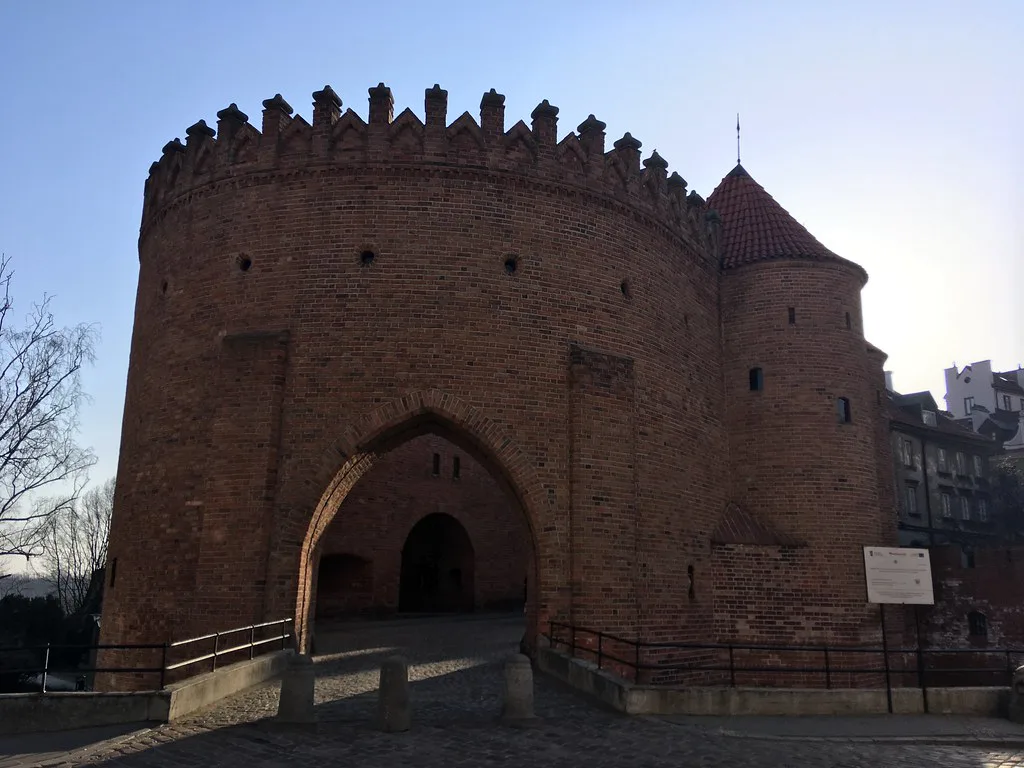
Start at the Old Town Market Square and read it as a piece of reconstruction rather than a survivor. The UNESCO description names the market, the townhouses, the wall circuit and the Royal Castle among the elements recreated in the postwar scheme, so what you are admiring is a careful act of civic memory. Look at the rhythm of the façades and the way the square closes on itself; that coherence is the achievement.
The wall circuit is the part visitors most often miss. Walk the surviving and rebuilt stretches of the old defences and you get the clearest sense of the medieval plan that the reconstruction was working from, and the line of the walls explains why the streets bend where they do. It also frames the district neatly, so it makes a sensible start or end to a walk.
For the wartime and occupation context that explains why the district had to be rebuilt, the wartime sites material is the natural companion to this walk. Read it before you go rather than during, so the streets themselves stay the focus.
For the interiors that sit inside this rebuilt shell, the museums in Warsaw are the place to plan which collections you want to see and on which days, since opening patterns vary from venue to venue.
Along the Royal Route: churches, palaces and townhouses from the Old Town southwards
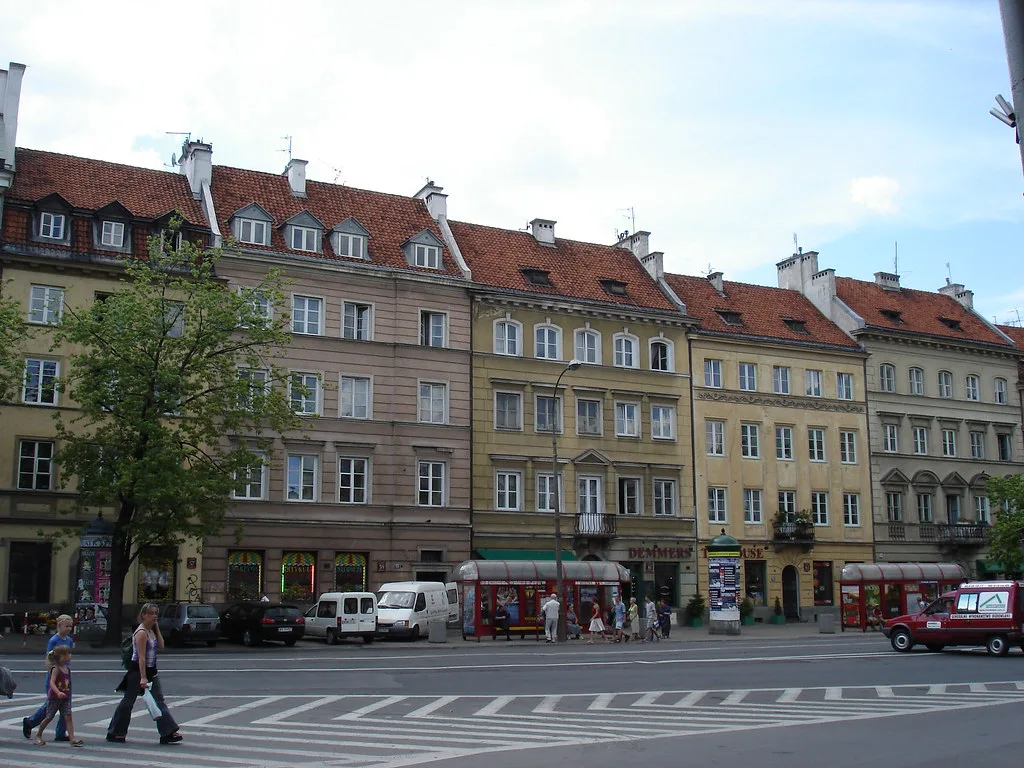
The Royal Route is the spine of any architecture walk: it runs south from the Old Town through the city's grandest addresses, and it lets you see palaces, churches and townhouses in sequence without doubling back. Treat it as a line rather than a list of stops, and walk it in one direction.
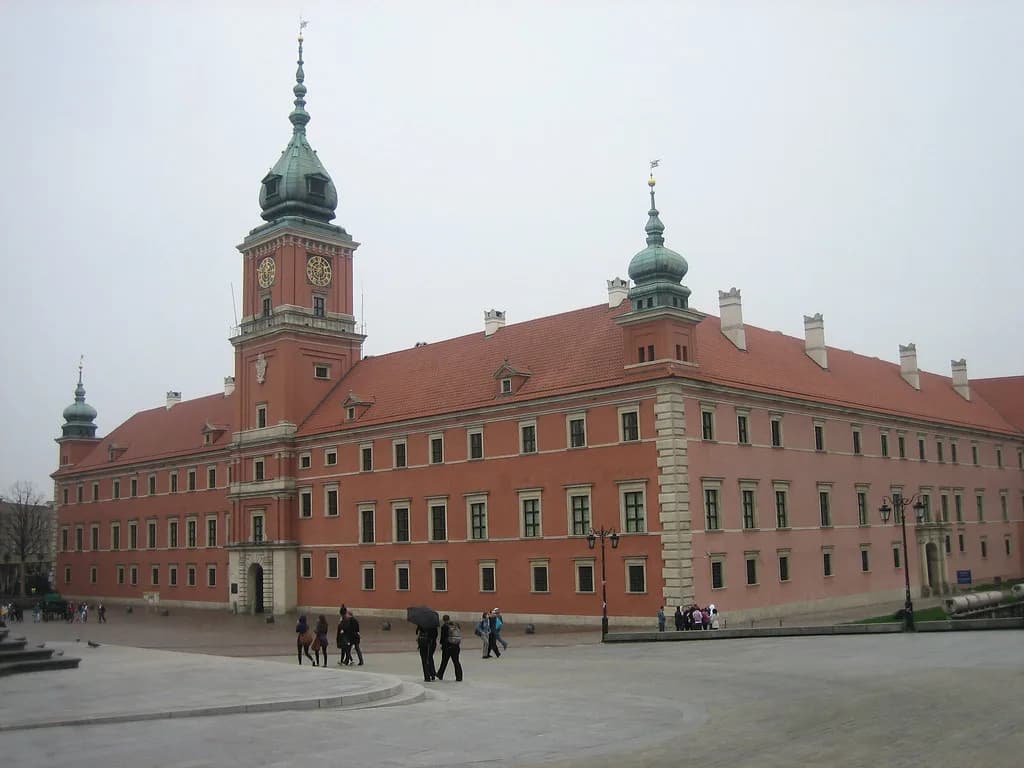
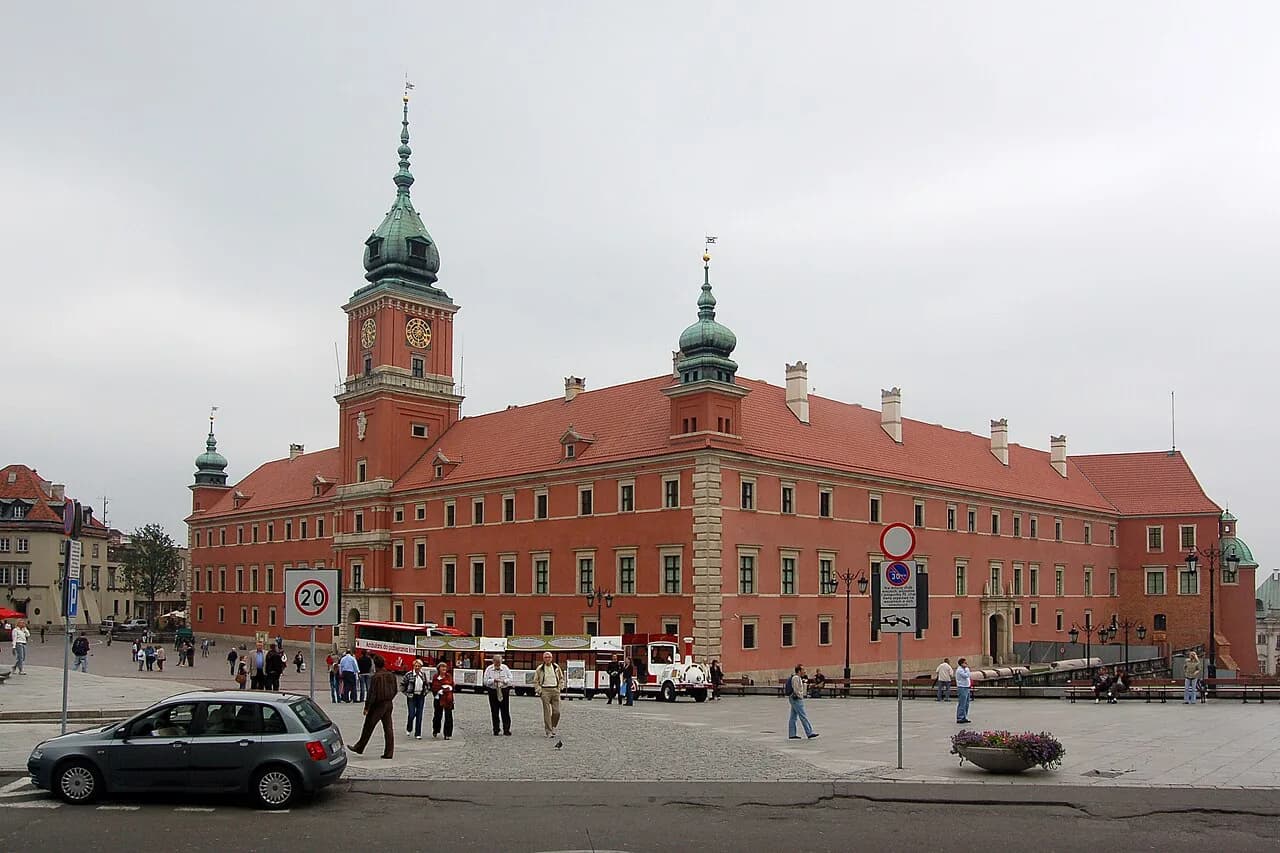
The Royal Castle anchors the northern end, and the UNESCO reconstruction description names it among the elements recreated in the postwar scheme, so it belongs in the same story as the market square rather than in a separate one.
Church architecture along the route repays slow looking more than fast ticking off, because the interest is in the interiors and the way the façades frame the street. A focused guide to the city's churches helps you decide which few are worth your time.
Further south the route continues past the Teatr Wielki – Polish National Opera, a building worth reading from the street as you move from the historic route into the postwar and modern city.
Socialist realism and the Palace of Culture and Science: the postwar city centre
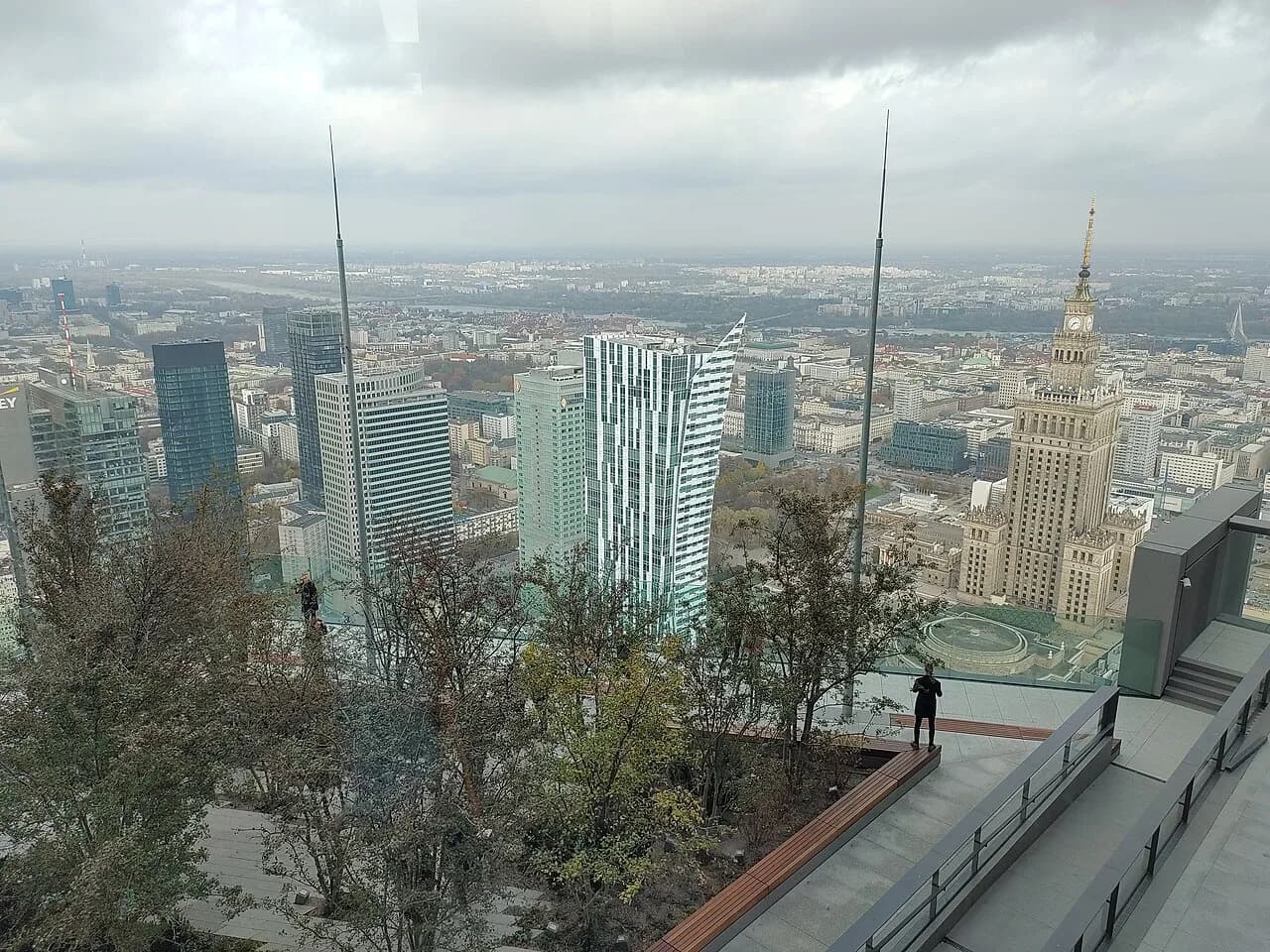
The Palace of Culture and Science is the landmark most associated with Warsaw's architectural identity and the obvious centrepiece of the postwar city. Come to look at it as a set piece: its scale, its symmetry and the way it dominates the surrounding streets are the point.
Around the palace, the postwar centre reads as a single planned gesture: wide streets, heavy cornices and uniform heights. The trade-off for a short break is real, because this area rewards a focused hour rather than a whole afternoon, and it competes with the Old Town for the same daylight.
If the weather turns, keep the architecture day but move indoors: the city's rainy-day options let you keep the day's shape while the rain passes.
Where to walk to read the layers: the streets and squares that show the most in one route
The most efficient route runs from the Old Town Market Square through the Royal Route and finishes at the Palace of Culture and Science, because it takes you from the reconstructed medieval plan to the postwar core in a single direction. Do it once, on foot, and you have read the whole sequence.
One smaller detour is worth planning in. The Nożyk Synagogue is a historic building in the centre, and it belongs in a walk that takes Jewish heritage seriously rather than as an afterthought.
For the heritage around it, the Warsaw ghetto material explains the streets you are walking through, and it makes far more sense of the district than a façade-by-façade commentary.
A composer's footsteps make a good second thread through the same streets: Chopin in Warsaw gives you a reason to look at particular buildings rather than simply walking past them.
If you want the longer historical arc behind the fabric, the city's history material fills in the periods between the layers you are seeing.
Modern Warsaw: contemporary buildings and where they sit in the city
Contemporary Warsaw is not in a separate district: it sits directly beside the historic and postwar layers, which is why the contrast is so visible from street level. The most rewarding way to see it is to look up as you walk the routes above rather than to make a separate trip.
The Faculty of Architecture at the Warsaw University of Technology is a reminder that the city trains the people who design it. It was founded in 1915 and is based at ul. Koszykowa 55, with research spanning architectural design, housing, building technologies and the maintenance and adaptation of historic buildings.
The Faculty of Architecture and the palace and opera house above show how the modern layer continues the pattern of landmark buildings by institutions and public architecture. Use them to identify what you are looking at in the skyline rather than as a ranking.
How long to give architecture on a one- to four-day break, and how to fit it round museum days
Give architecture a half-day on a one- or two-day break and a full day on a three- or four-day one. The half-day route is the Old Town to the Palace of Culture and Science; the full day adds the Royal Route's churches and interiors at a slower pace.
The main trade-off is between interiors and exteriors. If you spend the morning inside museums, the afternoon is best spent on the Royal Route rather than starting a second indoor collection. Planning around the museums in Warsaw helps you avoid paying twice for the same kind of looking.
Families and mixed groups often do better with the exterior route, because a walk through the Old Town and along the Royal Route can be broken whenever interest flags. That flexibility is worth more than a fixed schedule on a short break.
Practical points: walking times between areas and what to check before you go
The Old Town, the Royal Route and the Palace of Culture and Science are within walking distance of each other, so you can link them without transport. Plan the walk in one direction and stop when you have seen enough rather than covering the full route for its own sake.
Building interiors and museum opening days vary, so check the venue's own page before you build your day around one. That applies especially to churches, which are working buildings with their own rhythms.
If your group needs a wet-weather fallback, keep a list of indoor activities in Warsaw to hand rather than improvising on the day.
Which layer of Warsaw should you see first?
See the reconstructed Old Town first, then walk south along the Royal Route and finish at the Palace of Culture and Science. That order takes you through the city's three architectural layers in the sequence in which they were built, and it costs you nothing but a morning.
If you have only an afternoon, cut the Royal Route interiors and keep the market square and the palace, because those two show the reconstruction and the postwar city at their clearest.
Explore more Warsaw guides
Frequently Asked Questions
What kind of architecture is in Poland?
Poland's architecture ranges from medieval and Gothic fabric through Renaissance and Baroque churches and palaces to nineteenth-century townhouses, postwar socialist realism and contemporary towers. Warsaw shows the postwar and contemporary layers most sharply because its historic centre is a reconstruction rather than original fabric.
What building is most associated with Warsaw's skyline?
The Palace of Culture and Science is the landmark most associated with the city's architectural identity and the centrepiece of the postwar centre. The city's newer towers are not covered by the sources used here, so treat any single building as one layer of the skyline rather than the whole of it.
How much of Warsaw was destroyed in WWII?
The historic centre was destroyed and subsequently rebuilt, which is why UNESCO describes the district as a holistic recreation of the urban plan, the Old Town Market, the townhouses, the wall circuit and the Royal Castle. For the occupation and destruction in detail, the wartime sites material is the place to start.
Sources
Notes for your next Polish city break
Optional updates to our Poland guides.
You might also like
Continue reading
More guides you'll find useful