Warsaw Walking Tour: A Self-Guided Route from the Old Town to the Vistula
Walk Warsaw yourself: an Old Town to Łazienki route with stops in order, walking times, the Vistula alternative and which museums sit along the way.
On this page
Warsaw rewards walkers more than most Polish cities: the historic core is compact, and one straight axis, the Royal Route, carries you from the Old Town south past palaces, churches and parks. Allow half a day for the Old Town alone and a full day if you continue all the way to Royal Łazienki Park. This route gives the stops in walking order, with the option of a shorter riverside version if you only have a morning.
One thing to settle before you start: the Old Town is largely a post-war reconstruction. It was rebuilt using historical plans, photographs and surviving documents, and the result is listed as a UNESCO World Heritage Site, so you are walking through a careful re-creation rather than medieval fabric.
The route at a glance: Old Town to Łazienki in one line
Start at the Old Town Market Square, work through the city walls and Castle Square, then follow Krakowskie Przedmieście and Nowy Świat south to Royal Łazienki Park. The whole chain is one continuous walk with no transport needed, which is why Warsaw suits a self-guided route so well.
If you have only half a day, cut the southern stretch and instead head down to the Vistula Boulevards, cross the river on the Magdalena Abakanowicz Footbridge and walk a stretch of the wilder eastern bank in Praga. The bridge is 452 metres long and takes around six minutes to cross on foot, so it fits easily into a short itinerary.
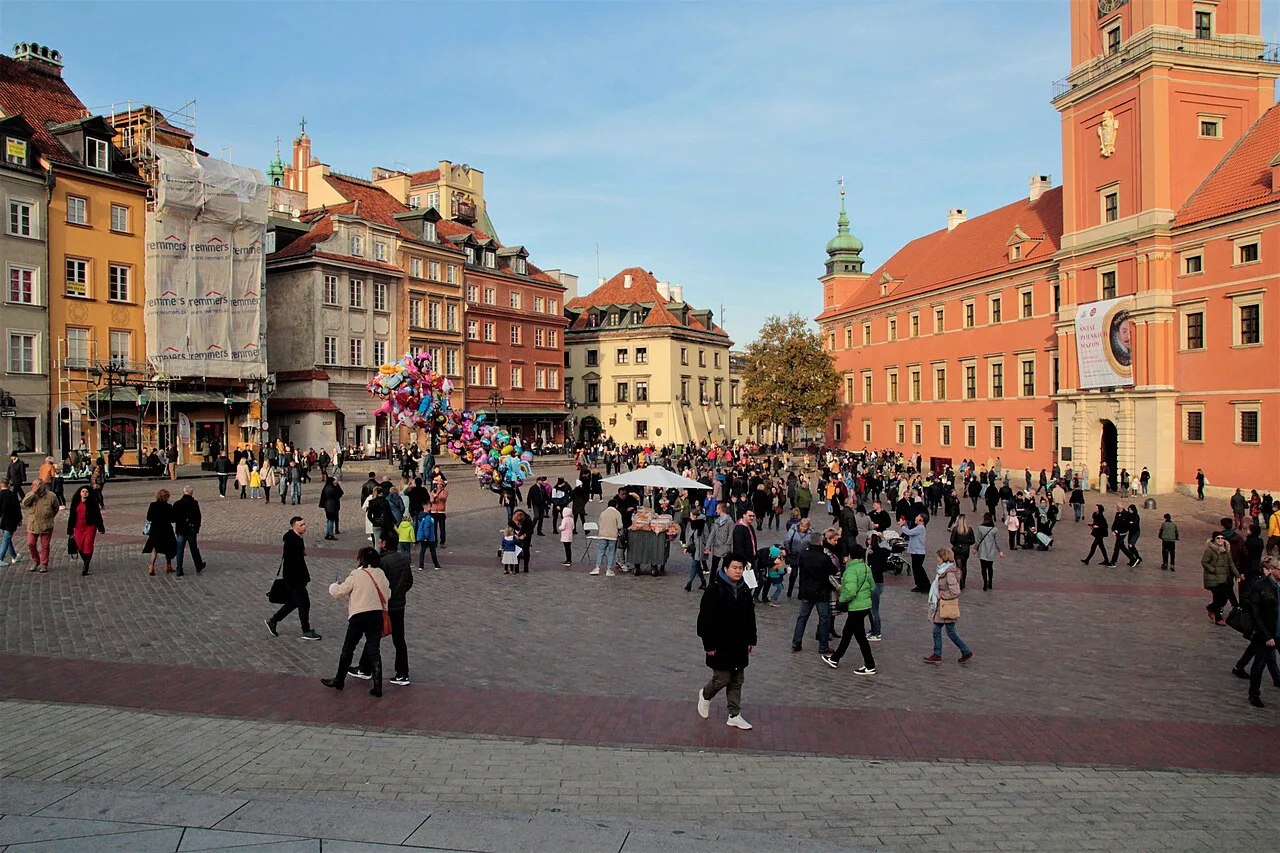
Stop 1: the Old Town Market Square and the Museum of Warsaw
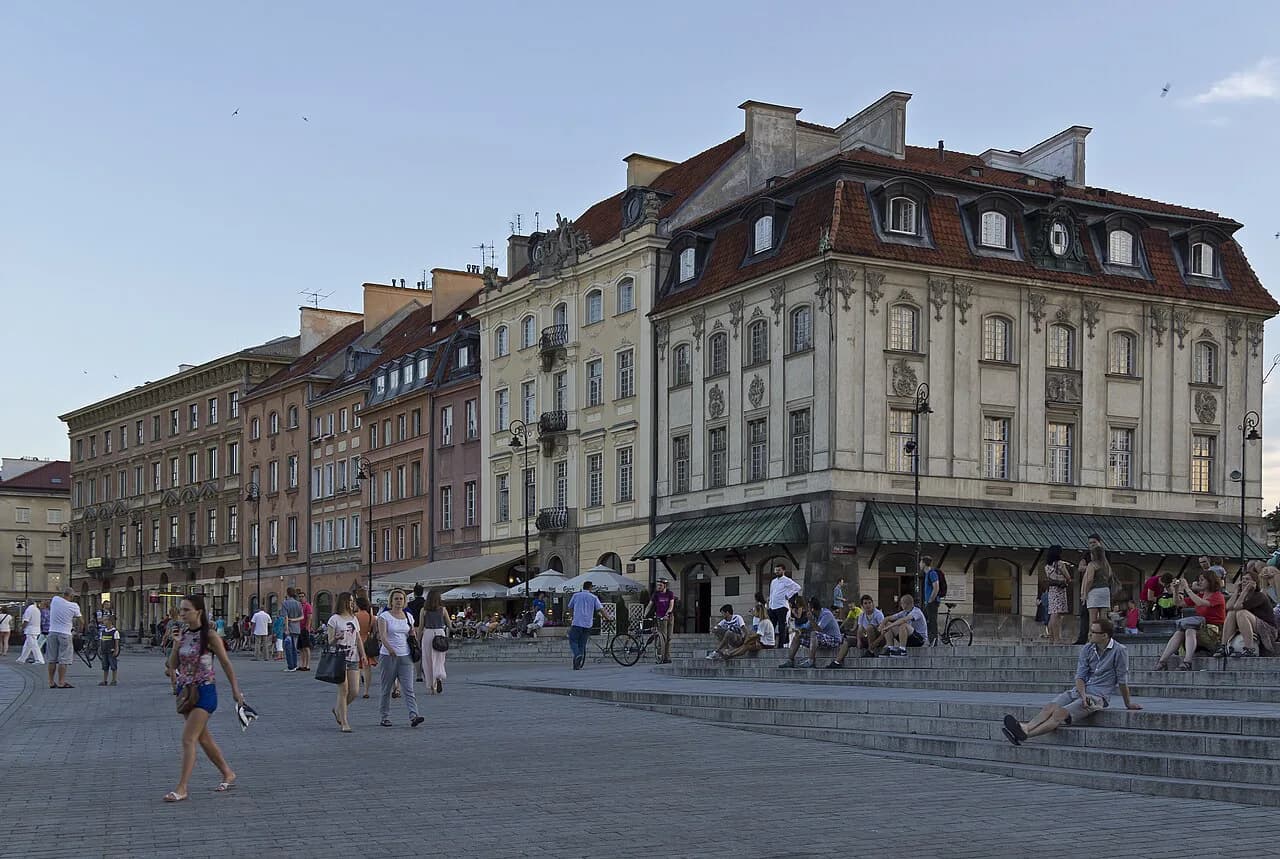
The Market Square is the natural first stop, lined with colourful townhouses and centred on the Warsaw Mermaid, the city's symbol, carrying a sword and shield. In summer the square fills with outdoor café tables, so arrive early if you want photographs without crowds.
Eleven of the tenement buildings around the square house the Museum of Warsaw, whose collections trace the city and its residents across six floors, with a top-floor viewpoint over the square. It is worth giving it a couple of hours rather than a quick pass.
Stop 2: the city walls, Barbican and Castle Square
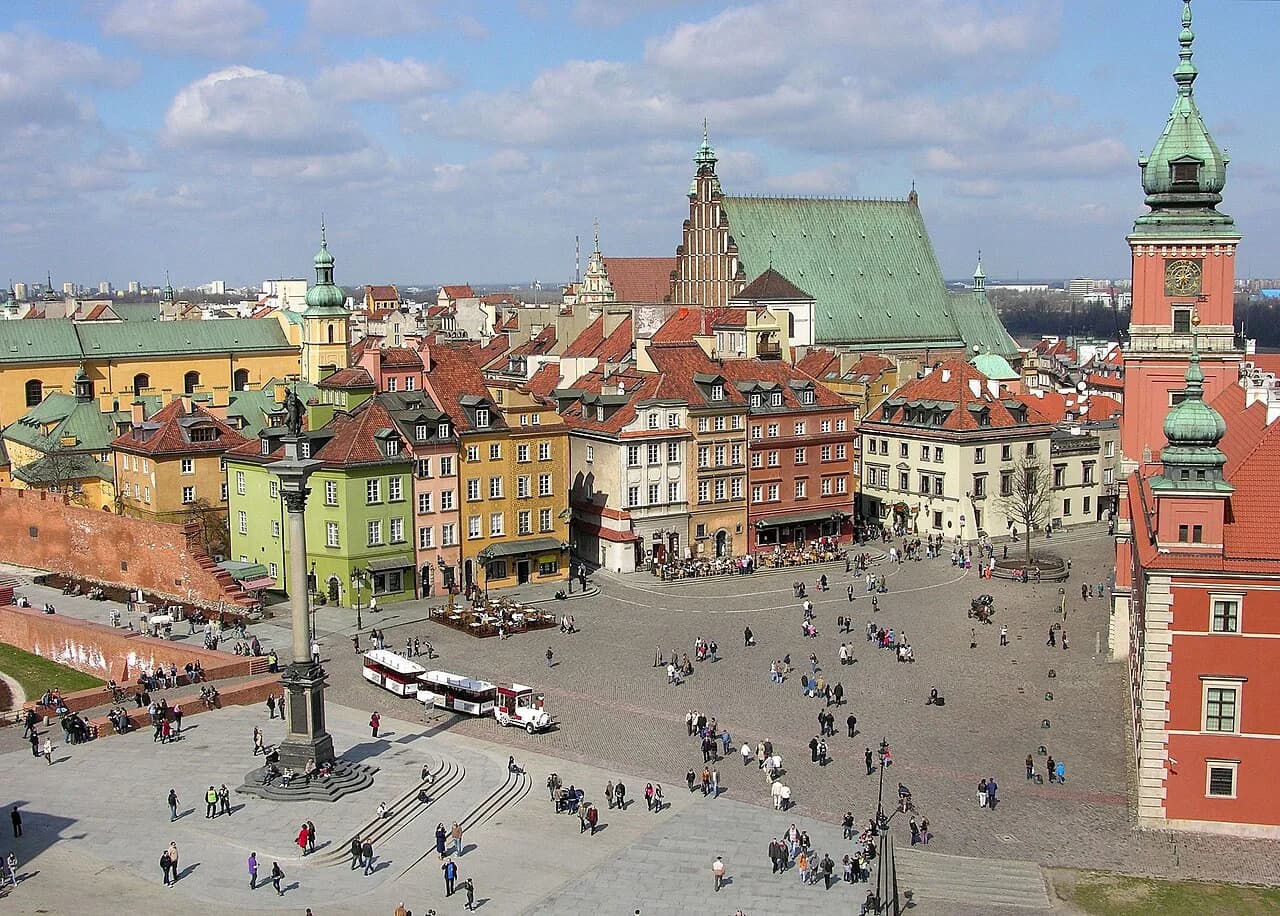
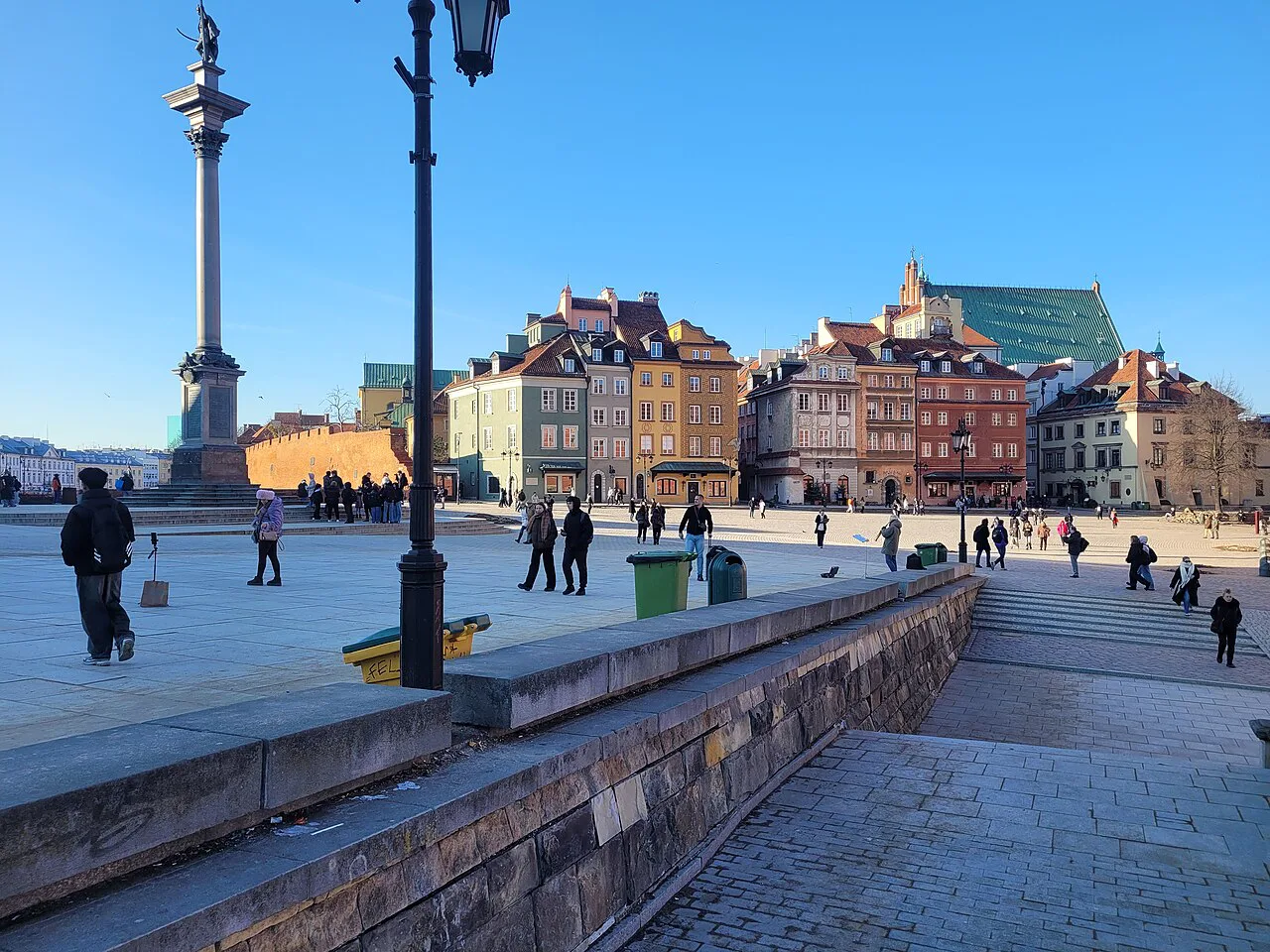
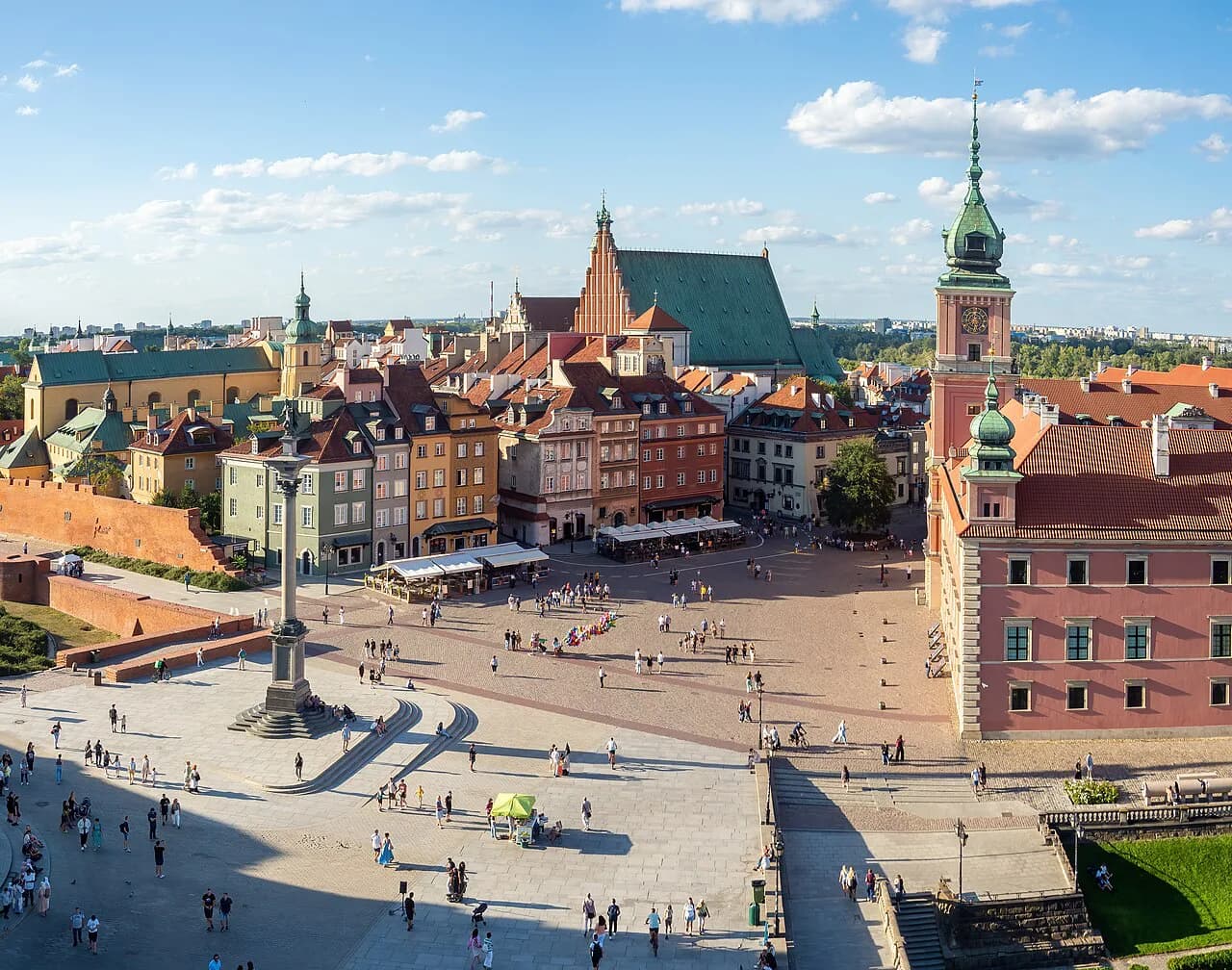
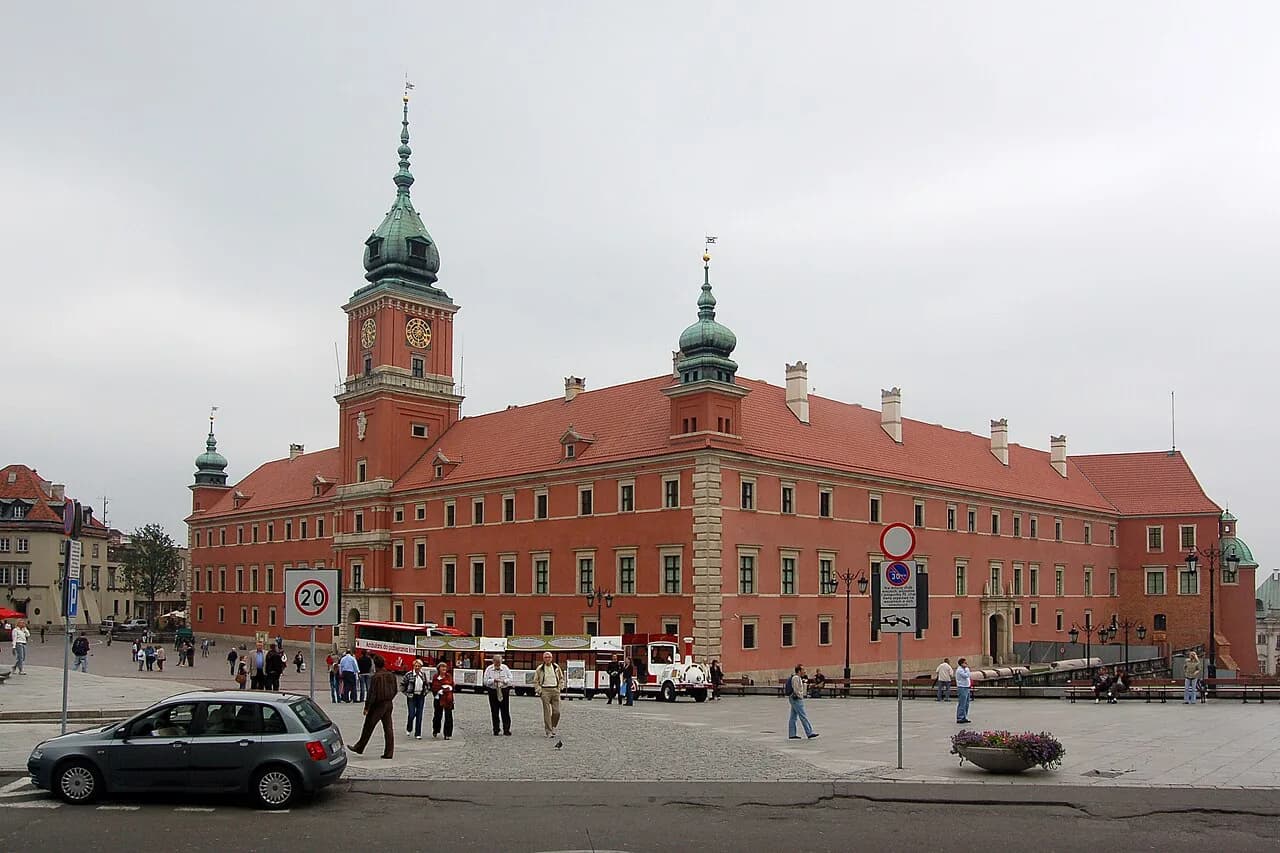
Walk off the square through the surviving stretches of the city walls and past the Barbican, the round fortified gate that once controlled the northern approach to the town. From there it is a short step to Castle Square, where the Royal Castle and the Sigismund Column face each other across the paving.
The Royal Castle was the official residence of Polish kings from the sixteenth century, and its interiors hold royal insignia, thrones and paintings by artists including Rembrandt, Canaletto and Matejko. The Sigismund Column beside it is Poland's best-known monument and a favourite meeting point, so use it to regroup if your group splits up.
Stop 3: St John's Cathedral and the Old Town lanes
The Gothic St John's Cathedral sits just off the square and rewards a short detour: inside are the tombs of the last Dukes of Mazovia, memorial plaques to Polish patriots and the Chapel of Cardinal Stefan Wyszyński. Give it twenty minutes rather than an hour and use the rest of the time on the lanes between the square and the walls.
These narrow streets are the most atmospheric part of the reconstructed centre, and the light is best towards evening when the daytime crowds thin out. If you would rather plan a slower wander here, our guide to the Warsaw old town covers the lanes building by building.
Stop 4: Krakowskie Przedmieście and the Royal Route
From Castle Square, Krakowskie Przedmieście runs south as the first stretch of the Royal Route, passing the Presidential Palace, the University of Warsaw and a string of churches and palaces. This is a straightforward urban walk with plenty to look at, so budget an hour even without going inside anything.
Treat this stretch as a promenade rather than a sightseeing checklist, and stop where something catches your eye. The full spine from the Old Town down to Wilanów, with everything it passes, is set out in our guide to the Warsaw royal route.
Stop 5: Nowy Świat and the Chopin benches
Nowy Świat continues the axis towards Łazienki, and along the way you will pass musical Chopin benches: press the button on each and you hear an excerpt from his compositions while you walk. Chopin spent the first half of his 39-year life in Warsaw, so the benches mark real connections rather than decorative flourishes.
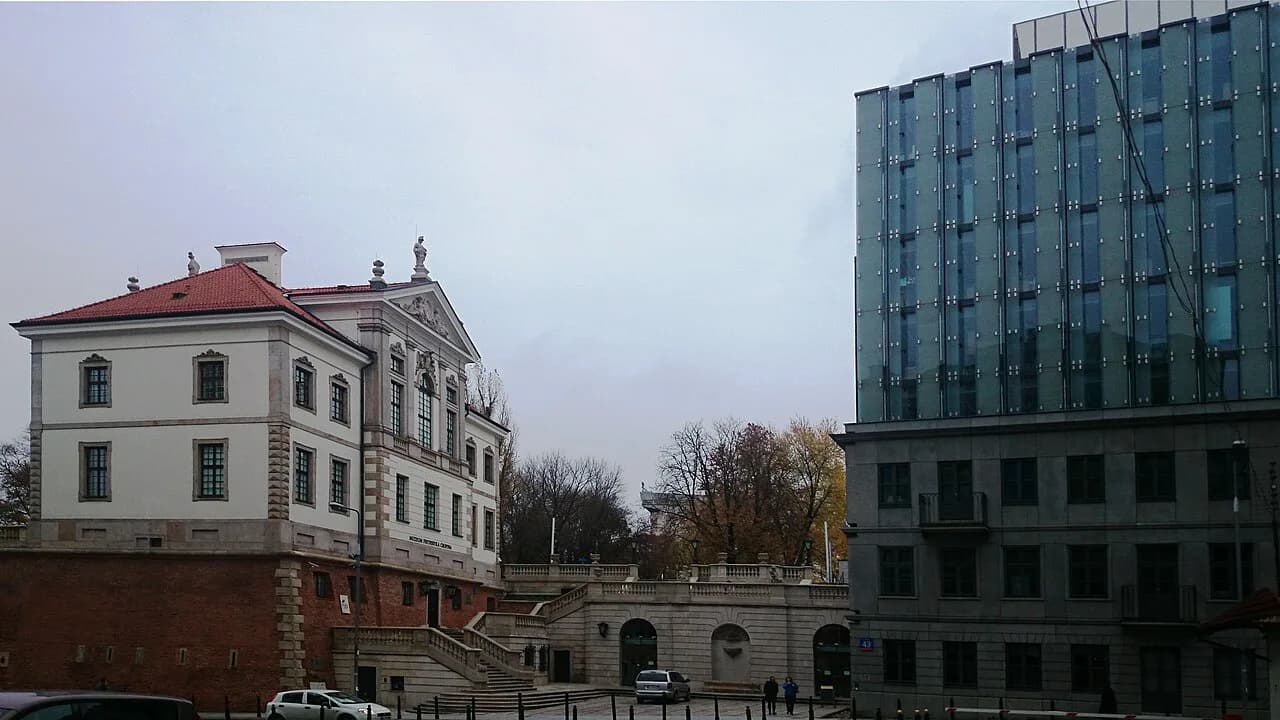
The Fryderyk Chopin Museum is closed for renovation during 2026, so do not build the day around it this year. If you are travelling later, it is worth checking its own site before you set out.
Stop 6: Royal Łazienki Park and the Palace on the Isle
Royal Łazienki Park is the natural end point of the full route, a large historic park of gardens, ponds, sculptures and elegant buildings centred on the Palace on the Isle, the former summer residence of King Stanisław August. Go inside for the interiors and the paintings collected by Poland's last king, or simply stay in the grounds.
In summer, free open-air piano concerts are held beside the Fryderyk Chopin monument in the park every Sunday, a tradition that dates back to 1959. Time your arrival for the afternoon and the concert becomes the finale of the walk rather than a detour.
Optional extension: Wilanów Palace and the Poster Museum
At the southern end of the Royal Route, Wilanów Palace is the former residence of King Jan III Sobieski, a Baroque building with formal gardens and parkland around it. It was one of the very few buildings not damaged during the war, which makes its interiors a useful counterpoint to the reconstructed Old Town.
The Poster Museum in Wilanów holds more than 63,000 posters, including one of the world's largest collections of Polish posters and an introduction to the Polish School of Posters. It is a real walk beyond Łazienki, so plan it as a separate half-day rather than tacking it onto the main route.
The shorter alternative: Vistula Boulevards and the footbridge to Praga
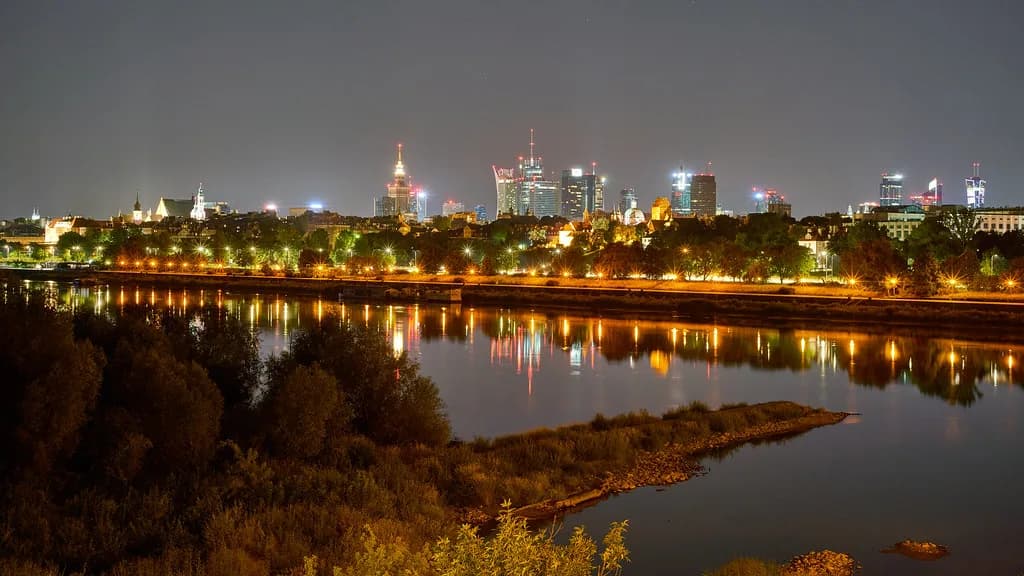
If you have a single day, the riverside version is the better use of it: walk the Vistula Boulevards on the western bank, cross the Magdalena Abakanowicz Footbridge, and follow the paths on the eastern side, where natural vegetation and sandy riverbanks have survived inside the city. It is the easiest way to see a different Warsaw without leaving the centre.
The Magdalena Abakanowicz Footbridge carries pedestrians and cyclists between central Warsaw and Praga, and the crossing takes around six minutes at an unhurried pace. The view back to the skyline from the eastern bank is the reward.
Museum stops on or near the route
The POLIN Museum of the History of Polish Jews stands on the site of the former Warsaw Ghetto and covers a thousand years of Polish Jewish history, from the earliest traces through the Holocaust and the post-war years. Alongside it, the memorial route through the old Jewish district takes in the Umschlagplatz, a fragment of the ghetto wall and pavement plaques marking the former boundary. It is worth a half-day on its own rather than a quick call en route.
The Warsaw Rising Museum documents the 63-day struggle of the city's residents against the occupying forces in 1944, an event that reshaped the capital permanently. It sits away from the Royal Route, so treat it as a separate visit.
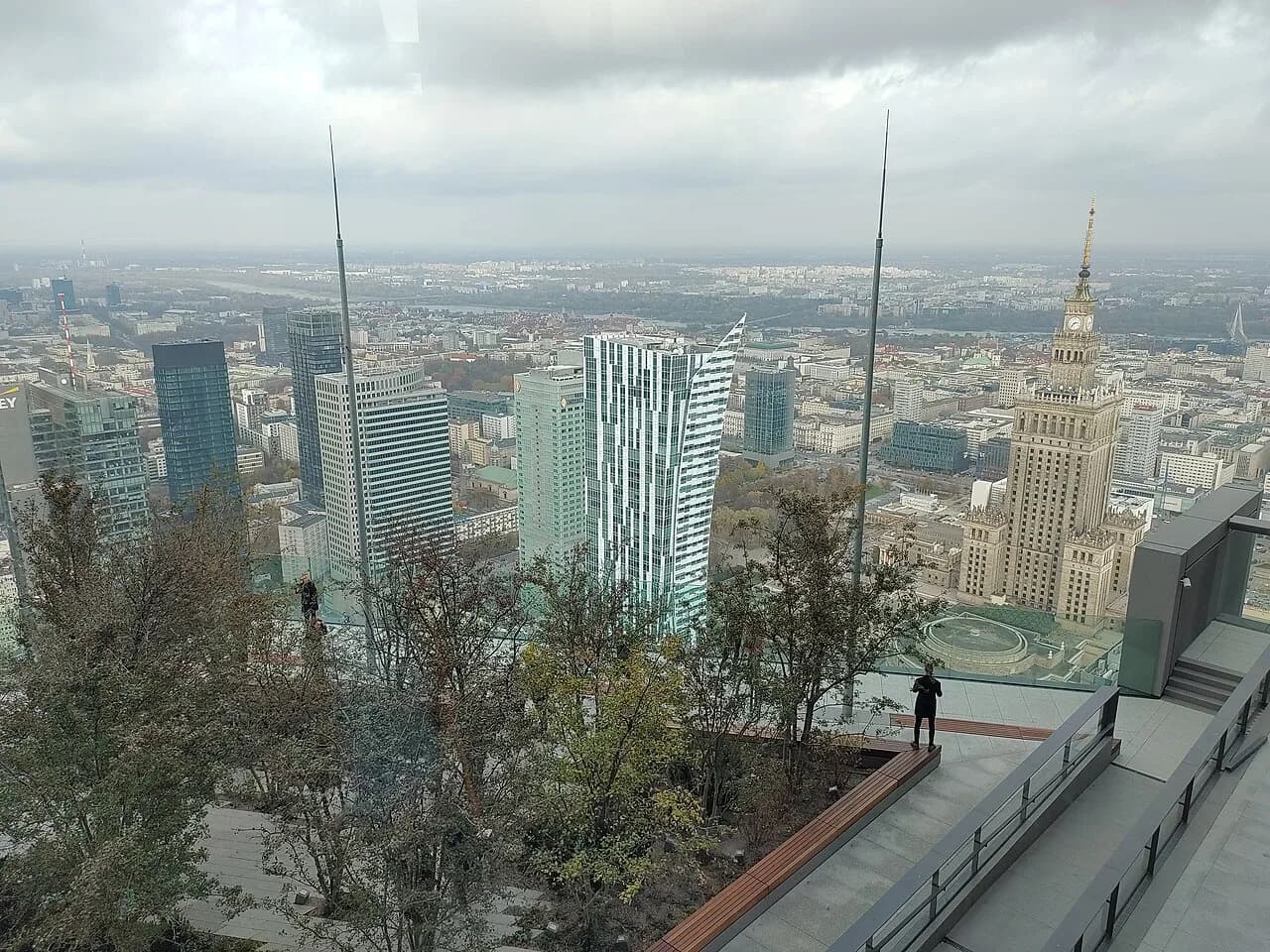
At Plac Defilad, beside the Palace of Culture and Science, the Museum of Modern Art in Warsaw opened in 2024 in a building designed by Thomas Phifer. The Palace itself has an observation deck on the 30th floor, and Varso Tower's Highline Warsaw deck sits around 230 metres above street level, the highest in the European Union.
Practical notes: timing, summer heat and heading indoors
A realistic plan is the Old Town and Castle Square in the morning, Krakowskie Przedmieście and Nowy Świat before lunch, and Łazienki in the afternoon shade. Warsaw in summer pushes life outdoors onto the parks, riverside paths and café tables, which also means the middle of the day is the least comfortable stretch for walking.
Build one indoor stop into the middle of the day, whether a museum or a long lunch, and keep the outdoor walking for morning and late afternoon. If you want to see how the walk fits around the rest of the city, start with our list of things to do in Warsaw.
Self-guided route or a guided Old Town walking tour?
A guided Old Town walking tour makes sense if you want the stories attached to the streets without reading up first, and it covers the compact core well. A self-guided route wins if you want to continue south to Łazienki at your own pace or stop for an hour in a museum without holding anyone up.
Audio and self-guided options also exist for the legends and wartime history of the centre, which suits anyone walking alone or at an odd hour. Prices and availability change by season, so book only once you have settled your dates and compare what each option actually covers.
How much of the Royal Route can you fit into one day?
One day comfortably covers the Old Town, Castle Square, Krakowskie Przedmieście and Łazienki if you keep interiors to a single museum. Add Wilanów or a long museum visit and you need a second day; swap in the Vistula and Praga instead if the river appeals more than the royal palaces.
Either way, the walking is the point: the route is flat, continuous and lined with the city's history, and you can shorten or extend it at almost any stop.
Explore more Warsaw guides
Frequently Asked Questions
Is Warsaw a walkable city?
Yes, for the historic core. The Old Town, Castle Square, Krakowskie Przedmieście, Nowy Świat and Royal Łazienki Park sit on one continuous axis that you can walk without transport. The Vistula Boulevards and the footbridge to Praga add a riverside loop of around six minutes' crossing each way, and the flat terrain keeps the walking easy.
How long does a walking tour of Warsaw's Old Town take?
Plan around half a day for the Old Town alone, including the Market Square, the city walls and Barbican, Castle Square and St John's Cathedral. Allow a full day if you continue down the Royal Route to Royal Łazienki Park, and add another half-day for Wilanów further south.
Is there a hop-on hop-off bus in Warsaw?
This route is designed to be walked in one continuous line, so no bus is needed between stops. Public transport serves the Old Town area and is the practical way to reach the start if you are staying outside the centre.
Sources
Notes for your next Polish city break
Optional updates to our Poland guides.
You might also like
Continue reading
More guides you'll find useful