Wrocław History: The Periods That Shaped the City
A short history of Wrocław for visitors, from Breslau to the Polish city of today, with the squares and streets where each period is still visible.
On this page
Wrocław is a city with a German past and a Polish present: known for centuries as Breslau, it was a majority-German city that became Wrocław and, by the late 1940s, almost entirely Polish in population through the post-war expulsion and resettlement of its German residents. That single shift explains more about the city you walk around today than any other fact, and traces of every period before it are still standing in the centre.
This guide runs through the phases that matter to a short-break visitor — the medieval trading city, the cathedral quarter, the Habsburg and Prussian rebuildings, the war, and the post-war handover — and ties each one to a street, square or church you can reach on foot. It is a history you read by walking, not by reading a timeline in a lobby.
What Wrocław was called before, and why the name changed
For most of its modern history the city was Breslau, the German name it carried while it sat within Prussia and then Germany; the Polish form Wrocław descends from an earlier Slavic name used before German settlement reshaped the city. The city also passed through the Kingdom of Poland, Bohemia, the Austrian Empire, Prussia and Germany at different points, which is why the architecture refuses to settle into one national style.
The practical consequence for visitors is that German-era names appear on old buildings and maps while Polish names label the same places today, so a street can be known by two names depending on the era being discussed. Treat any single-language version of the city's history as partial: the name on the Town Hall and the name on the tram stop belong to the same story.
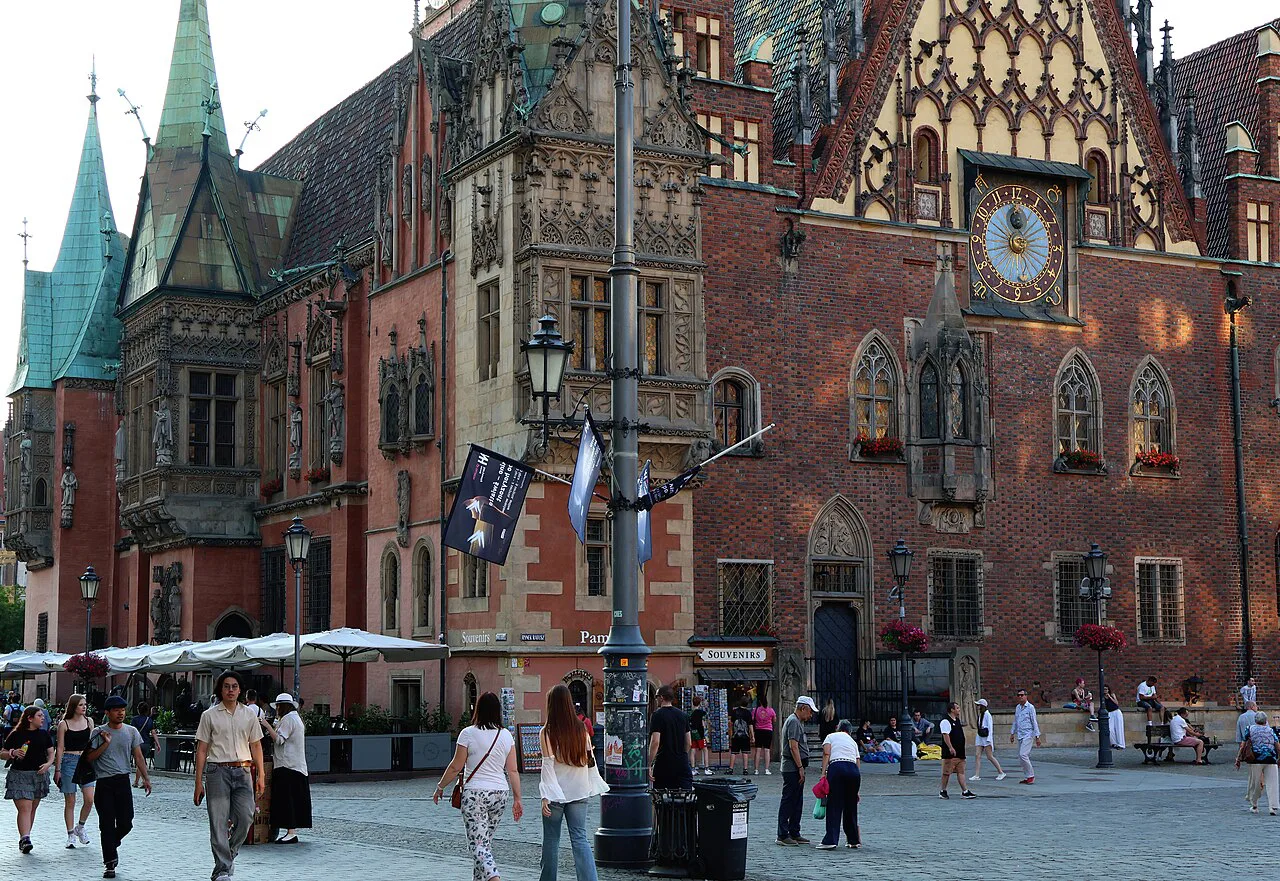
The medieval city: the Market Square and the Town Hall at its centre
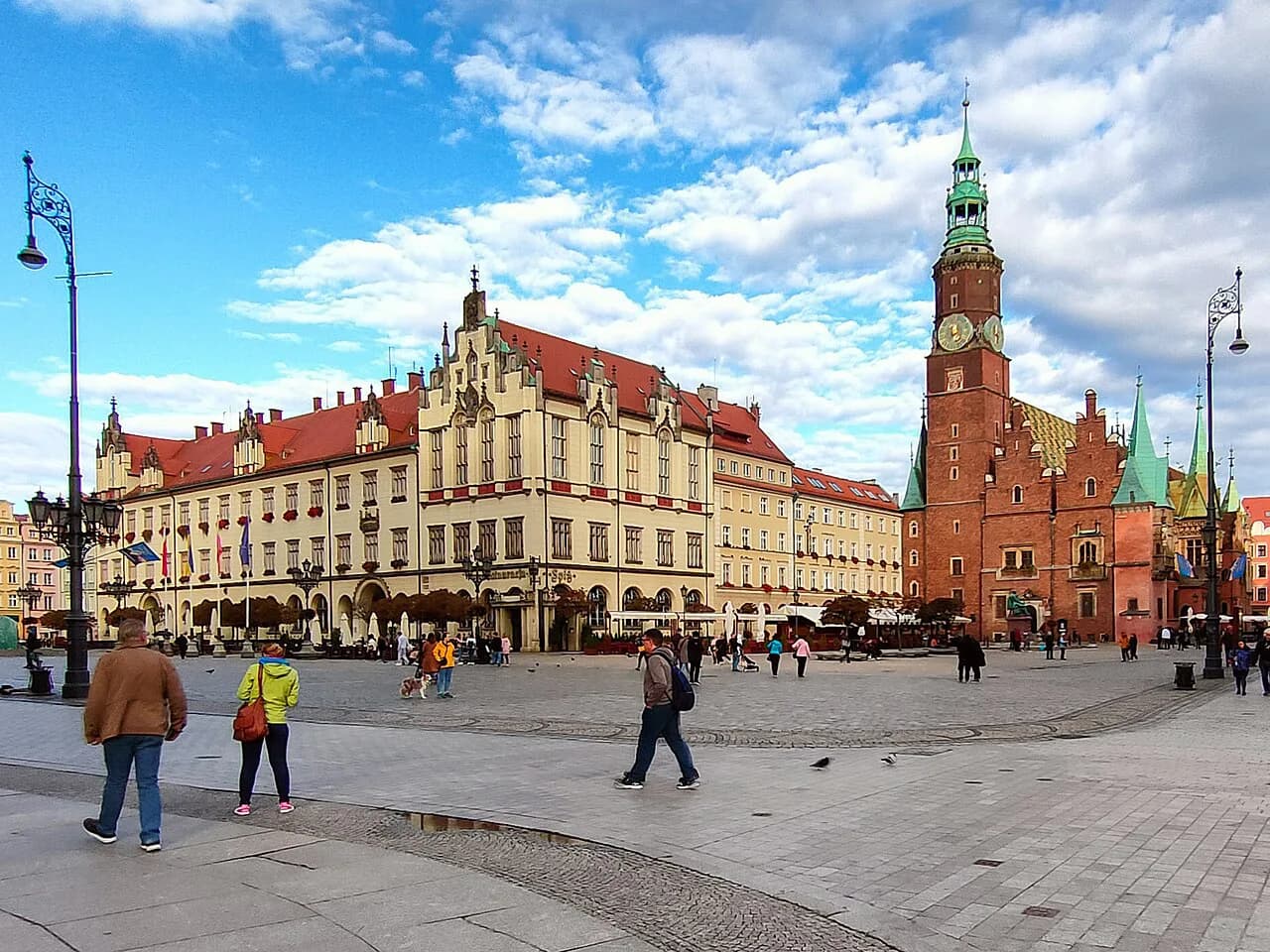
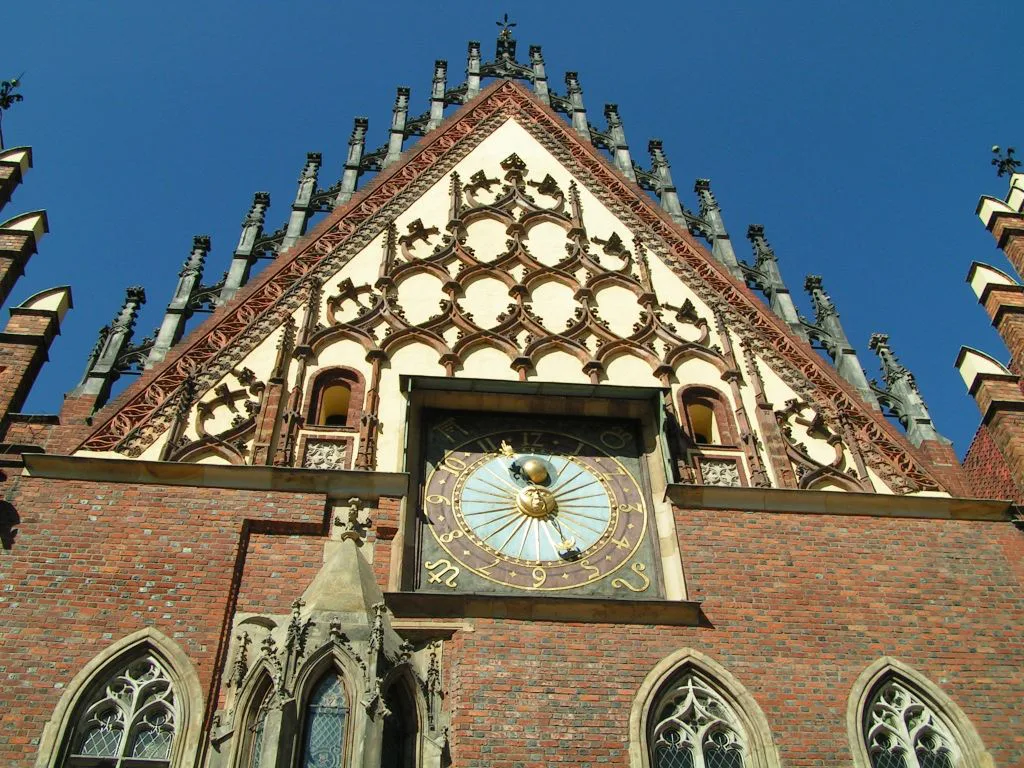
The Market Square, or Rynek, was laid out in the 13th century after the city's incorporation and has served commercial, administrative and social functions ever since. It remains one of the largest market squares in Poland, and the Town Hall stands squarely in its middle rather than at one edge — a reminder that civic government and trade shared the same ground.
Approach the square on foot from the surrounding streets and it reads as the medieval plan it is: open space for commerce, solid brick civic architecture in the centre, and streets funnelling in from the gates of the old town. Give the Rynek a first pass in daylight to see the Town Hall's fabric, then return in the evening when the square fills with people and the lights pick out the gables.
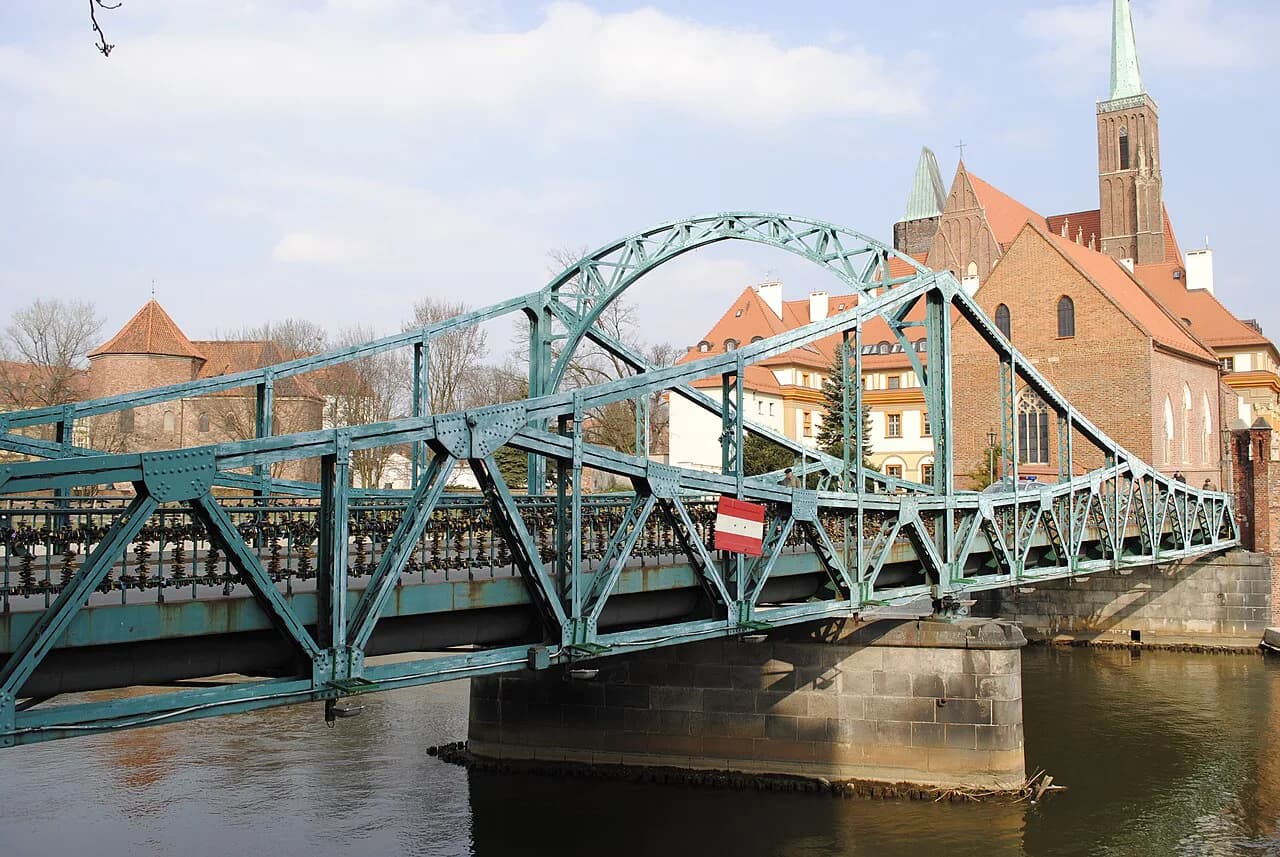
Ostrów Tumski and the cathedral quarter as the city's oldest ground
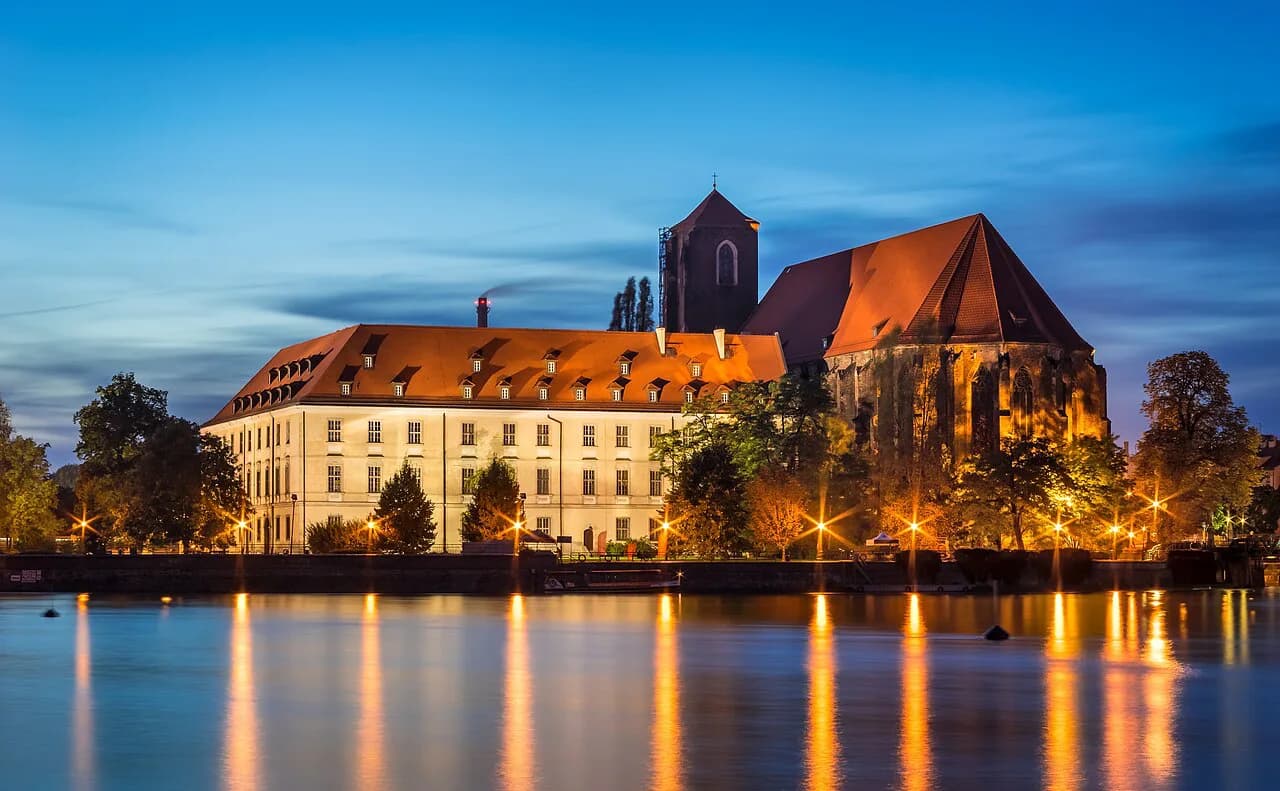
Ostrów Tumski, the cathedral quarter on its island in the Odra, is the part of Wrocław that feels oldest: church ground, cobbles, gas lamps and a slower rhythm than the market side of the river. Walking from the Rynek to the Wrocław Cathedral on Ostrów Tumski takes roughly twenty to twenty-five minutes at an easy pace, and the crossing itself is the point — you move from merchant city to ecclesiastical city in one stroll.
Build the cathedral quarter into the middle of a day rather than tacking it onto the end, because the appeal is atmospheric and fades if you arrive tired. Cross late afternoon, stay for the light on the brickwork, and walk back over the river as the lamps come on.
Habsburg and Prussian Wrocław: what the architecture tells you
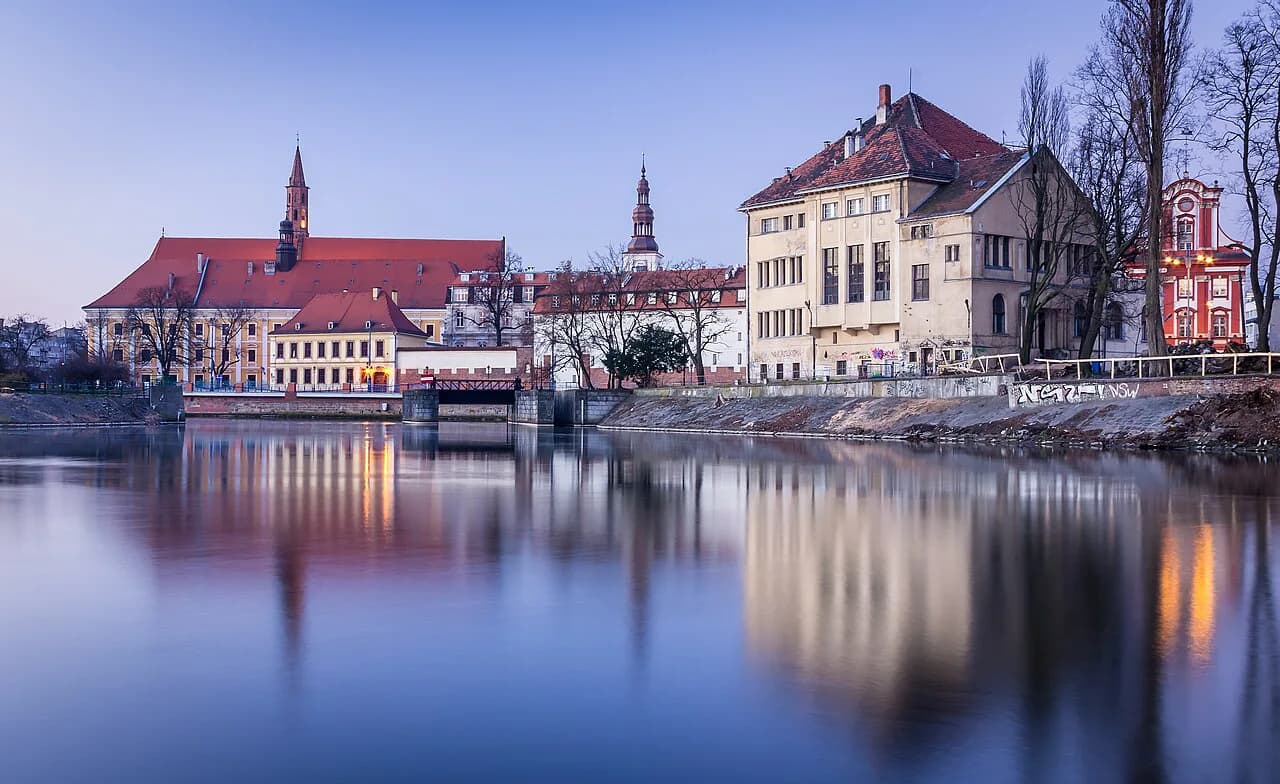
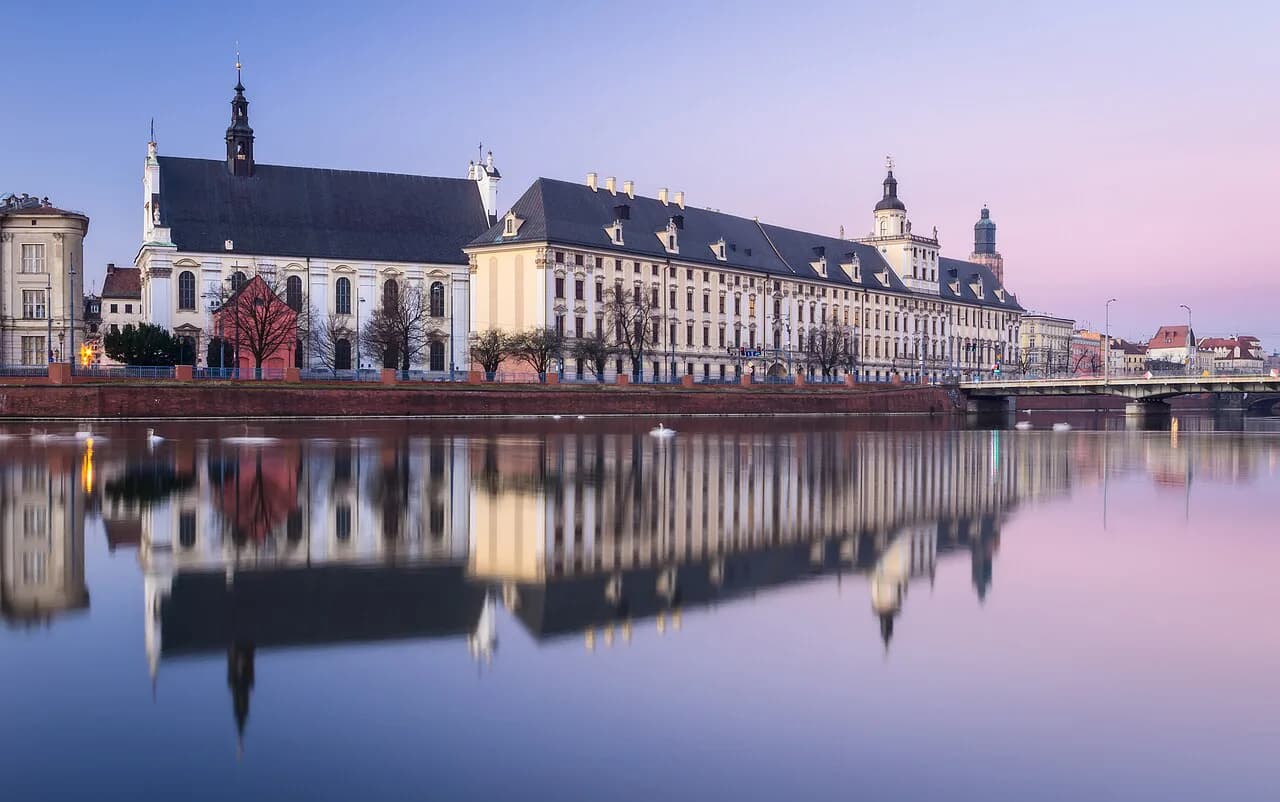
The Habsburg centuries left a Baroque layer, and the Prussian period that followed remade the city as a modern administrative and university centre; together they explain why the centre mixes medieval brick, ornate façades and grand institutional buildings within a few streets of each other. Look at the University of Wrocław's Aula Leopoldina as the clearest single statement of the Baroque city — a ceremonial hall whose decoration was meant to overawe.
The best way to use this period on a short break is to walk a loop between the Rynek, the university quarter and the river, comparing the brick Gothic of the Town Hall with the confident stone of the nineteenth-century city. That contrast, rather than any single building, is what makes Wrocław's centre legible as layers of history.
Wrocław in the Second World War and the German Nazi occupation
The war left the city physically wrecked, and the reconstruction of the centre is itself part of the history you see: what looks medieval is often careful post-war rebuilding of a destroyed street plan. For the occupation, the city's Jewish community and the memorial landscape, follow a dedicated Wrocław WW2 Sites route rather than expecting the main square to explain it, since the evidence sits in specific buildings and sites.
Approach these sites as places of record rather than spectacle, and let the interpretation boards and museum captions set the tone: dates, names and figures belong to the institutions that hold the documentation. The White Stork Synagogue and the surrounding quarter are the places to start if the city's Jewish history is your reason for coming.
The post-1945 shift: from German Breslau to Polish Wrocław
After 1945 the city became Polish, and the population changed almost completely: a city that had been majority German became, by the late 1940s, a place whose residents were almost entirely Polish. That break is why so much of the centre was rebuilt to a plan drawn from old engravings and photographs — the city was repopulated and reassembled at the same time, largely by people arriving from elsewhere.
Once you know this, the Rynek's polished recreations, the fragments of genuine old masonry preserved in newer walls and the way local identity leans on the medieval and Baroque past all make sense together. It also explains why Wrocław tells its story so deliberately: the city has had to decide, in living memory, what to keep and what to present.
Where to see the city's history today: museums and monuments worth your time
The city's museums carry the documented history, and the biggest collections are where to go if you want dates, objects and context rather than street atmosphere. Check the day-by-day picture before you commit a morning, since Polish museums commonly close one day of the week and several run a free-entry day — the pattern varies by venue, so a quick look at each museum's own page is worth the two minutes. For a starting point on the collections, see our guide to Museums in Wrocław.
Beyond the museum walls, the monuments the city has chosen to keep are themselves evidence: the rebuilt Rynek, the cathedral quarter, and the surviving fragments of the German city. Wrocław's dwarfs are the modern city's signature, but treat them as a marker of how Wrocław presents itself now rather than as centuries-old folklore.
If you want a single building that carries the whole sweep, choose the Town Hall: medieval fabric, centuries of civic use and a central place in the square's reconstruction. You can see it for nothing from the square, and the surrounding streets show the German and Polish layers without a ticket.
How to use a city break to read Wrocław's layers in two or three days
On a two-day break, give day one to the Rynek and the surrounding medieval streets, with an hour in a history museum to anchor the dates; give day two to Ostrów Tumski and the river, crossing on foot and taking the cathedral quarter slowly. That sequence gives you the merchant city before the church city, which is the order the place grew in.
With a third day, add the war and post-war story properly — a morning on the memorial and Jewish heritage sites, an afternoon in the museum that holds the material record. Keep the walking realistic: the centre is compact, most sights inside a twenty-minute walk, and the usual mistake is to fill the day with tickets instead of time between them.
Which layer of Wrocław should you chase first?
Start with the Rynek and the Town Hall, then cross to Ostrów Tumski, then add the museums and memorial sites once the shape of the city makes sense. That order gives the medieval plan, the church quarter and the modern rebuilt city in the sequence they happened, and it works in two days without rushing.
If your interest is specific — the war, Jewish heritage, the Baroque interiors — build the whole break around that and treat the square as the orientation point rather than the destination. Either way, Wrocław rewards a visitor who knows what they are looking at, and this city gives you plenty to look at.
Explore more Wrocław guides
Frequently Asked Questions
What did Wrocław used to be called?
Breslau. That was the city's German name for most of its modern history, while it lay within Prussia and then Germany. The Polish name Wrocław descends from an earlier Slavic form used before German settlement reshaped the city, and both names appear in older maps, photographs and building inscriptions.
Do they speak English in Wrocław, Poland?
You can manage a short break in the centre in English: museums, ticket desks and restaurants in the tourist core generally have some English, and exhibition captions are frequently bilingual. Step away from those places and Polish is the working language, so it pays to have addresses written down and to use translation on your phone for anything unusual.
Is Wrocław a cheap city for a British visitor?
The city is generally easier on the wallet than western European capitals for food, drink and museum tickets, though the exchange rate moves and prices vary widely by venue. Check current ticket prices on each museum's own page rather than relying on older guides, and budget in złoty rather than expecting euro prices.
Sources
Notes for your next Polish city break
Optional updates to our Poland guides.
You might also like
Continue reading
More guides you'll find useful