Wrocław Markets: Which Ones Are Worth Your Time
From the Market Hall and Plac Solny flower stalls to Saturday farmers' markets and Sunday flea markets, here is how Wrocław's markets differ and what to buy at each.
On this page
Wrocław's markets fall into three practical groups: the year-round Market Hall near Plac Solny in the Old Town, weekend farmers' markets such as EkoBazar and Bazar Smakoszy, and sprawling flea markets at Młyn Sułkowice and the old Świebodzki station. If you have one free morning, pick EkoBazar on a Saturday for food or Młyn Sułkowice on a Sunday for a rummage, and leave the Old Town cluster for a wander between sights.
Most of the small food markets sit south of the main railway station or on the northern edge, so they need a deliberate trip rather than a detour. The Market Hall and the flower stalls on Plac Solny are the exception: they slot into any morning of sightseeing around the Wrocław market square.
How Wrocław's markets divide up
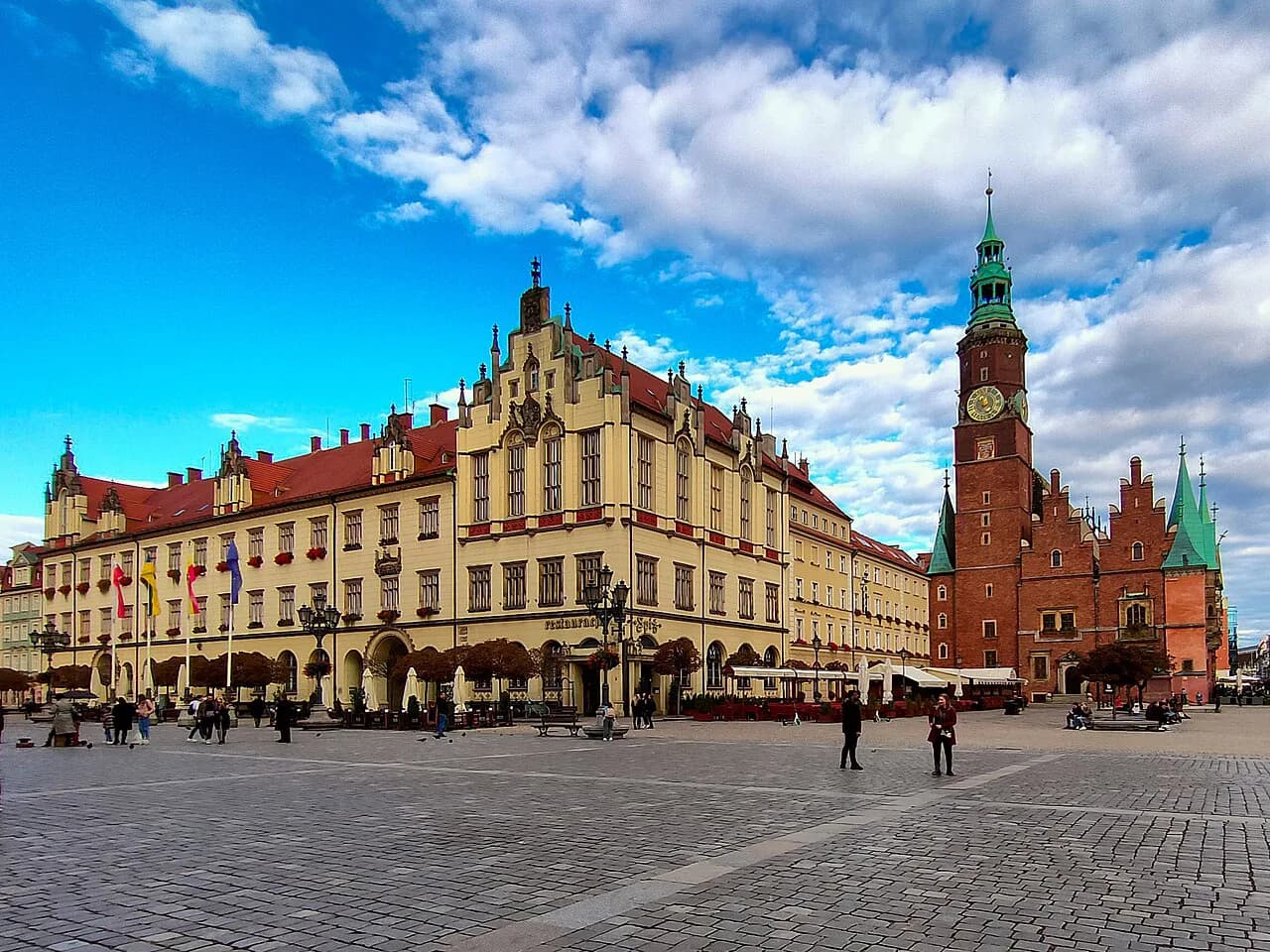
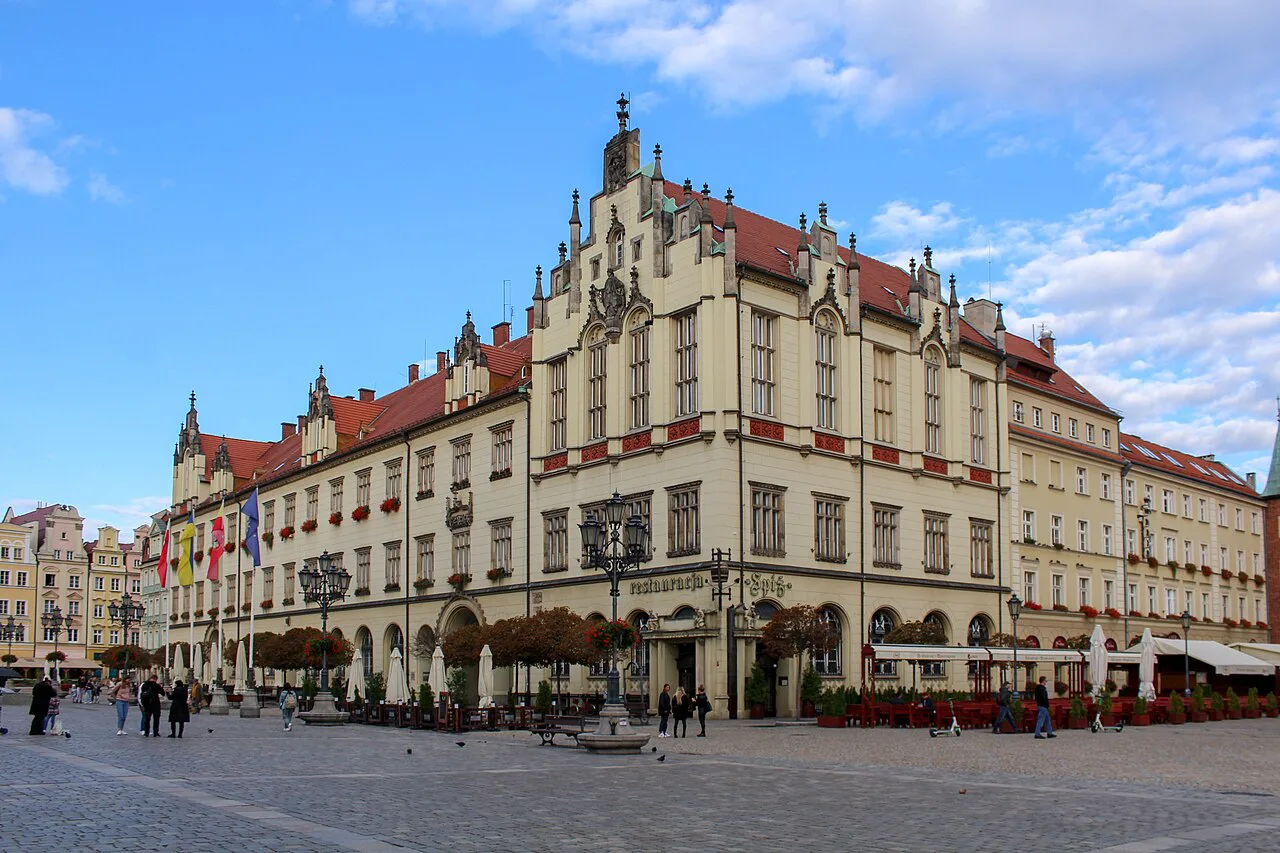
The central Market Square (Rynek) holds the Town Hall and is one of the largest market squares in Poland, which makes it the obvious anchor for a market-focused day. Trams stop right beside it at Rynek, Zamkowa, Świdnicka, Galeria Dominikańska and Oławska, so you can reach the square in minutes from most of the centre.
Beyond the square, the markets split by purpose. The hall and the flower stalls sell everyday goods in the Old Town, while EkoBazar and Wrocławski Bazar Smakoszy are producer-led food markets open at weekends, and Młyn Sułkowice and Świebodzki are large mixed flea markets with clothing, household goods and secondhand finds.
Treat the outlying flea markets as an outing in their own right. They sit well away from the Old Town and reward people who enjoy digging through unsorted stalls rather than shoppers looking for curated crafts.
The Market Hall (Hala Targowa) and Plac Solny: start here
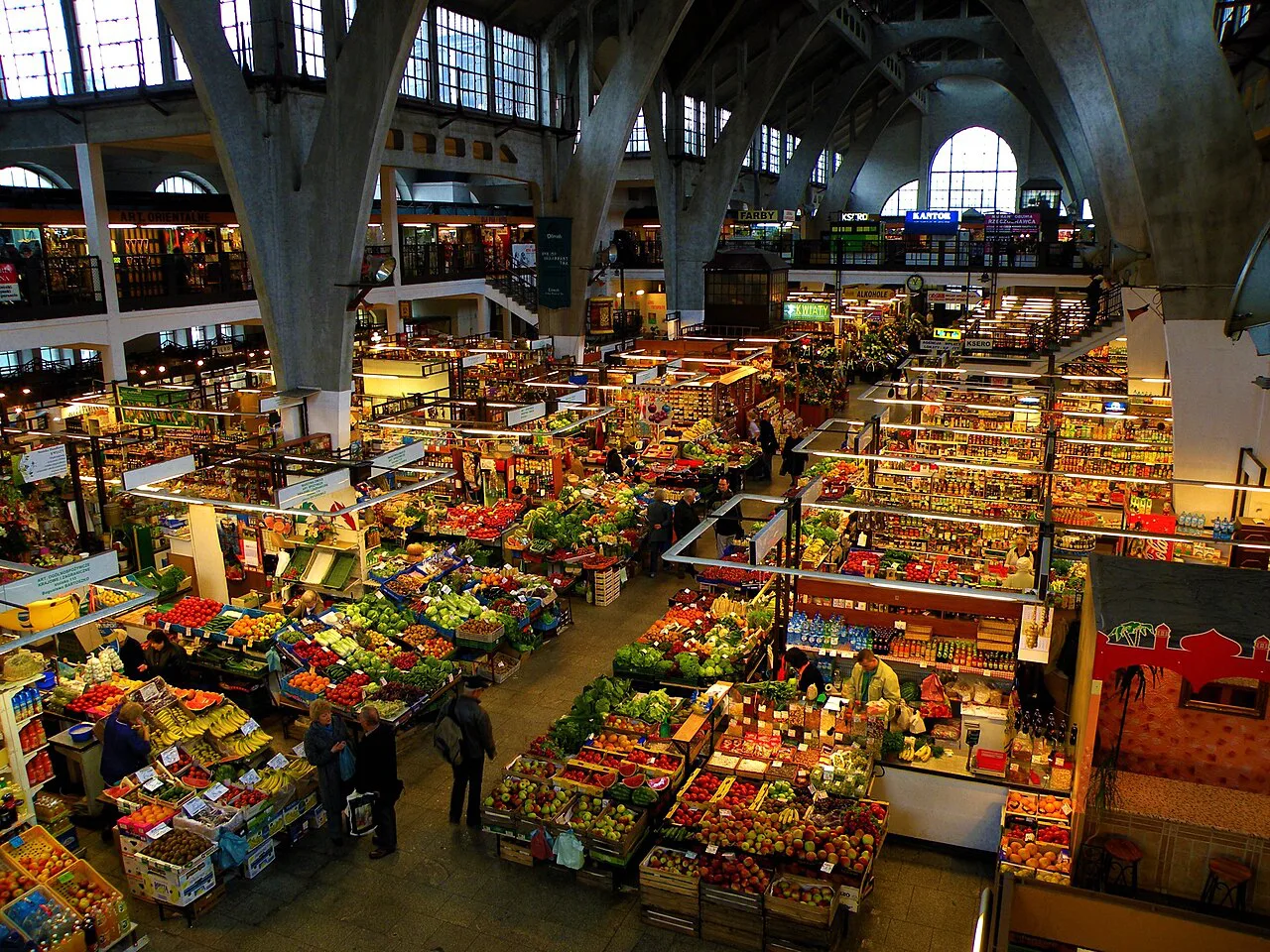
The Market Hall (Hala Targowa) is the most central place to see ordinary Wrocław market shopping, and it pairs naturally with the flower market on nearby Plac Solny. Both sit a short walk from the Rynek, so you can combine them with the Town Hall and the surrounding streets without planning transport.
Swap a museum hour for these two and the rest of the day stays intact. The Market Square area rewards slow wandering, and a stop at the hall keeps you within the Old Town loop rather than sending you across the city.
Pair the hall with the lanes west of the square if you want to keep shopping. That side of the centre has the densest run of small shops, and you can fold in Town Hall sightseeing while you are there.
Allow time to browse rather than planning a fixed purchase. The useful buys at the hall and flower stalls are food and flowers you carry with you, not souvenirs to ship home, and the two together make a natural fifteen-to-thirty-minute stop on an Old Town walk.
EkoBazar at Browar Mieszczański: Saturday morning food
EkoBazar runs every Saturday from 8am to 1pm at Hubska 44, in the buildings of the old Browar Mieszczański brewery just south of the main railway station. Stalls sell bread, vegetables, fruit, honey, herbs, fish, meat, cheese and eggs, and the market also hosts occasional workshops.
It is the best fit for a Saturday morning when you want breakfast and something to take away. Arrive early, because the market shuts at 1pm and the range thins out towards the end.
The brewery setting gives it more character than a car park market, and it stays firmly local rather than tourist-facing. If you would rather spend the morning outdoors, the city's green spaces are an easy substitute.
Wrocławski Bazar Smakoszy: producers on Paczkowska
Wrocławski Bazar Smakoszy at Paczkowska 26 trades on Saturdays from 9am to 1pm and Sundays from 10am to 2pm, so it covers both weekend mornings. Producers sell direct, with goat's cheese and homemade pierogi among the things worth seeking out, and there is a Syrian food stall for a hot snack.
Because it opens on both days, this is the market to choose if your weekend plans are still moving. It suits a late breakfast and a browse rather than a full shopping trip.
The food focus here overlaps with the city's wider eating scene, so it works well as a first stop before a longer lunch elsewhere.
Młyn Sułkowice flea market: the Sunday rummage
Młyn Sułkowice at Aleja Poprzeczna 33 opens every Sunday from 6am to 3pm, making it an early start if you want the full range. Stalls cover the ordinary, from vegetables and herbs to books and antiques, alongside the unexpected, and there is a bike repair stand on site.
It sits north of the city and is easiest by bike or tram. Tourists are rare here, so come for the atmosphere and the hunt rather than for English-language browsing and tidy presentation.
A Sunday here takes most of a morning. Set a budget in złoty before you go and carry cash in small notes, because stallholders are unlikely to take cards for low-value items.
Świebodzki flea market in the old station
The Świebodzki flea market fills the disused Świebodzki railway station and leans heavily towards clothing, but also sells bed linen, pillows, vegetables, fruit and everyday goods. It splits into an organised section and a looser one, so expect a mixed, rummage-style experience rather than a neat row of stalls.
The station setting is the draw as much as the goods. Go if you enjoy secondhand clothing and household bits, and skip it if you want crafts or food to eat on the spot.
Combine it with the surrounding streets rather than treating it as a standalone stop. The walk between the station area and the centre is straightforward and keeps the day moving.
Antique and collectible stalls: what to know
Antique and collectible stalls turn up among the mixed flea markets, notably at Młyn Sułkowice, where books and old objects sit alongside everyday goods. Treat them as a browse rather than a destination in their own right, and confirm any dedicated antique venue locally before making a special trip, as a fixed schedule is not confirmed here.
It suits a relaxed hour rather than a planned purchase. If you are travelling with hand luggage only, most of what you see will be impractical to carry home.
Plac Solny flower market: the quick Old Town stop
The flower market on Plac Solny is one of the easiest stops on this list, and it fits into any Old Town walk. It sits near the Market Hall, so the two take one short visit between them rather than a separate trip.
Use it as a breather between sights rather than a destination. The colour and bustle are the appeal, and you can be in and out within fifteen minutes on your way to the square.
Hala Świebodzki: eating rather than shopping
Hala Świebodzki is a street food hall, so treat it as lunch rather than a shopping stop. It sits in the same old station complex as the flea market, which makes it a sensible pairing if you are already there on a trading day.
This is the only entry here built for sitting down and eating, so it works best when the weather turns or when you need a proper break. Arrive before the lunch peak if you want a seat without a wait.
Fitting two markets into one day
The Old Town cluster around the Wrocław Market Square and Plac Solny is the one part of this list you can do on foot in a single loop. Add the market hall and the flower stalls to a morning, then spend the afternoon on the square and the streets around it.
For a weekend, split the days: a Saturday food market such as EkoBazar or Bazar Smakoszy, then a Sunday at Młyn Sułkowice or Świebodzki. That way you get one producer-led market and one flea market without crossing the city twice on the same day.
If you only want one market and a lot of sightseeing, stay central. The outlying flea markets cost you a tram or bike ride each way and rarely repay a short visit.
Choosing when you have one morning
With a single free morning, decide by day and appetite. On Saturday, EkoBazar at Hubska 44 opens at 8am and is the simplest choice near the station, while Bazar Smakoszy on Paczkowska runs from 9am and is better if you want to eat breakfast on site.
On Sunday, Młyn Sułkowice starts at 6am and needs a tram or bike north, so it suits early risers with time to spare. Anyone on a tight schedule should choose the Market Hall and Plac Solny instead, because both sit minutes from the square.
Skip the flea markets entirely if you are travelling with hand luggage or want gifts with local provenance. They reward rummaging, not efficient shopping.
Which Wrocław market fits your morning?
Choose the Market Hall and Plac Solny if you have an hour and want to stay in the Old Town, EkoBazar or Bazar Smakoszy if your morning is free on a Saturday, and Młyn Sułkowice or Świebodzki if you enjoy a Sunday rummage. Each one trades on the days given above, so match the market to your calendar rather than crossing the city on hope.
If you are building an itinerary around the square, our Wrocław Attractions: 12 Visitor Guides helps you fill the rest of the day once the shopping bags are full. For more ideas beyond the markets, see things to do in Wrocław, where you'll find the city's main sights and neighbourhoods.
Explore more Wrocław guides
Frequently Asked Questions
Does Wrocław have markets open during the week?
The weekend food markets and flea markets listed here trade mainly on Saturdays or Sundays, while the Market Hall and the Plac Solny flower stalls sit in the Old Town and need no weekend planning. Check each market's own page before you travel, because a market that runs one day a week will be empty on the others.
How do I get to Wrocław's outlying markets?
Młyn Sułkowice sits north of the city and is easiest by bike or tram, while EkoBazar at Hubska 44 is just south of the main railway station. The central Market Hall and Plac Solny need no transport planning at all, as both are a short walk from the Market Square, which has tram stops at Rynek, Zamkowa, Świdnicka, Galeria Dominikańska and Oławska.
What is Wrocław famous for?
Wrocław's Market Square and Town Hall are among the city's best-known sights, and the square is one of the largest market squares in Poland. The market traditions here run deep, and the hall and square remain the centre of the Old Town's market life.
Is Wrocław good for shopping?
For market shopping, yes: the Old Town hall and flower stalls cover everyday goods, and the weekend farmers' markets sell produce direct from producers. The flea markets are better for secondhand clothing and household items than for gifts or crafts, so set expectations by the type of market you pick.
Sources
Notes for your next Polish city break
Optional updates to our Poland guides.
You might also like
Continue reading
More guides you'll find useful