Free Things to Do in Wrocław: Sights, Squares and Walks That Cost Nothing
Free things to do in Wrocław: the Market Square and Town Hall, Cathedral Island, riverside walks and park viewpoints, plus what actually costs money.
On this page
The short answer: Wrocław's free pleasures are outdoor and architectural. The Market Square and its Town Hall, the streets running off it, Cathedral Island and the Oder riverside cost nothing to walk, so a full day out needs no ticket at all. This guide separates those genuinely free sights from the towers, exhibitions and opera seats that do cost złoty, and shows where each fits in a one- to three-day trip.
Plan around a single loop rather than a checklist: Market Square first for orientation, then south-west along Świdnicka Street, back through the moat and out east to Cathedral Island for the evening. Everything in that line is public space or open church ground, and the paid stops sit beside it rather than in the way.
What you can see in Wrocław for free: the short answer
The Market Square, the Town Hall seen from outside, the surrounding lanes, Cathedral Island and the riverside walks are all open to anyone without a ticket. The official city tourism portal describes the Market Square as one of the largest markets in Poland and the pulsating centre of the city, ringed by monuments and places of interest. Treat it as the city's orientation point, not a single sight to tick off.
What is not free is anything with a door, a lift or a seat: museum interiors, tower viewing terraces and opera performances. Budget for one paid set piece if you want it and keep the rest of the day on foot. That way a short break stays cheap without feeling like a compromise.
The Market Square (Rynek) and the Town Hall from outside
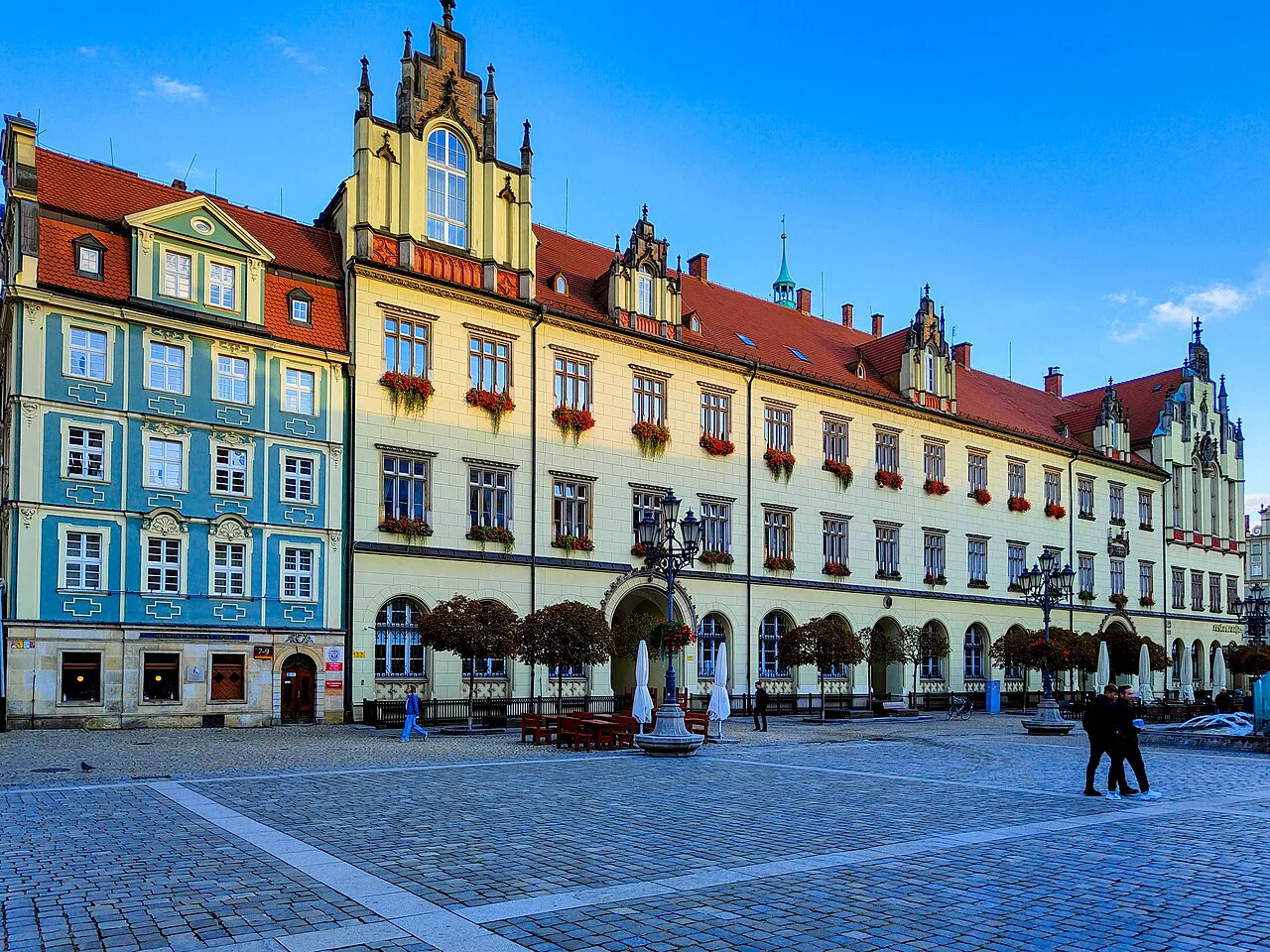
The Town Hall stands in the centre of the Market Square, a Gothic showpiece whose exterior, arcades and surrounding plinth are free to circle at any hour. The square has served commercial, administrative and social functions since the 13th century, and it still works that way: market stalls, café terraces and the constant traffic of people crossing it. Come early for clean light on the brickwork and space to photograph the façade.
Do not drive in hoping to park beside it. The city tourism portal states that the Market Square itself can only be entered by official vehicles, with private cars allowed only in exceptional situations, and that there are no free parking spaces in the inner city. Arriving by tram or on foot is both cheaper and simpler.
Look down as well as up. The bronze dwarfs scattered around the centre are free to hunt and make a history-flavoured game for children, and they are an easy way to keep a walking day moving between the bigger sights.
Świdnicka Street and the walk between the Rynek and the moat
Świdnicka Street runs south-west from the Market Square towards the moat and is one of the city's main pedestrian spines. Walk it slowly: the mix of façades, shopfronts and side passages is the free entertainment, and it links the square to the greener edge of the centre without any diversion.
Where the street meets the old fortifications you reach the moat and the Sakwowy Bastion, a surviving fragment of Wrocław's defences that now works as a walking and sitting place. The city tourism portal notes it is illuminated at night and that from the top you get a view over the City Moat.
Cathedral Island (Ostrów Tumski): churches, lanes and the riverside at dusk
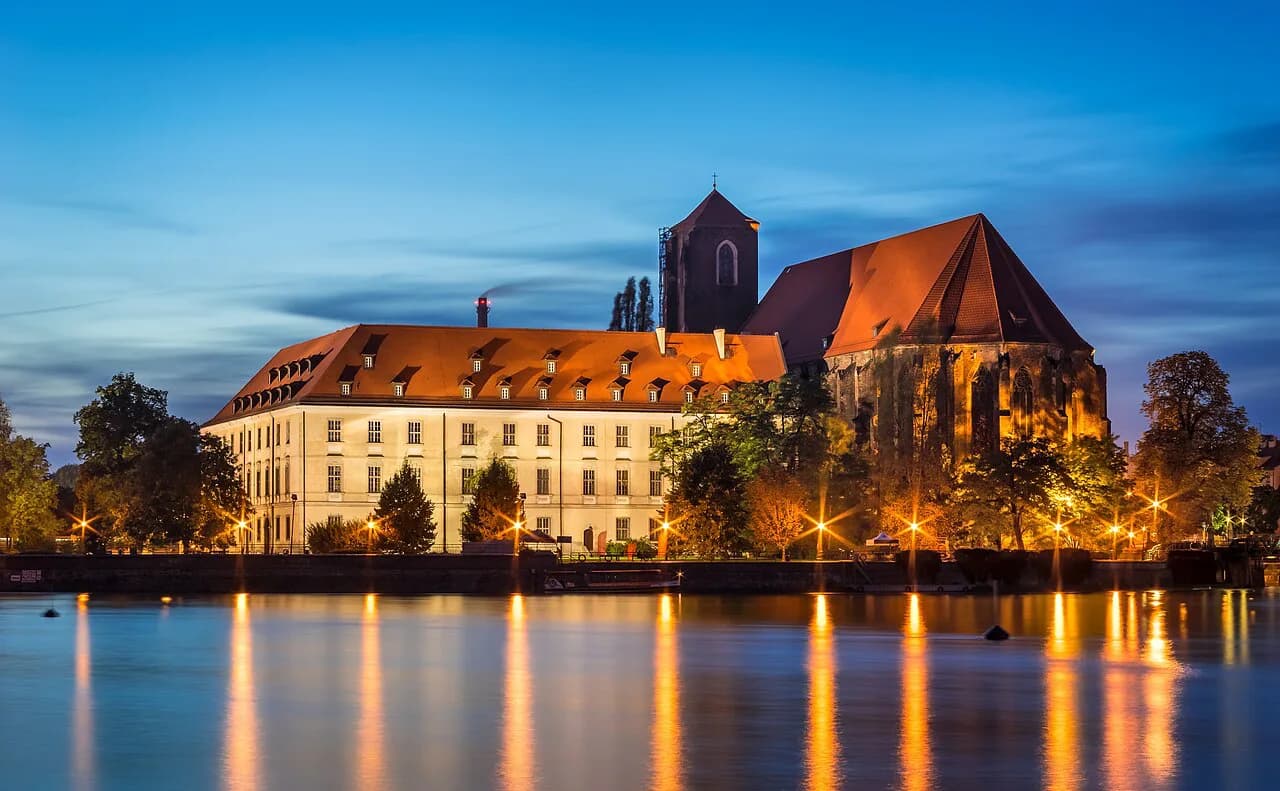
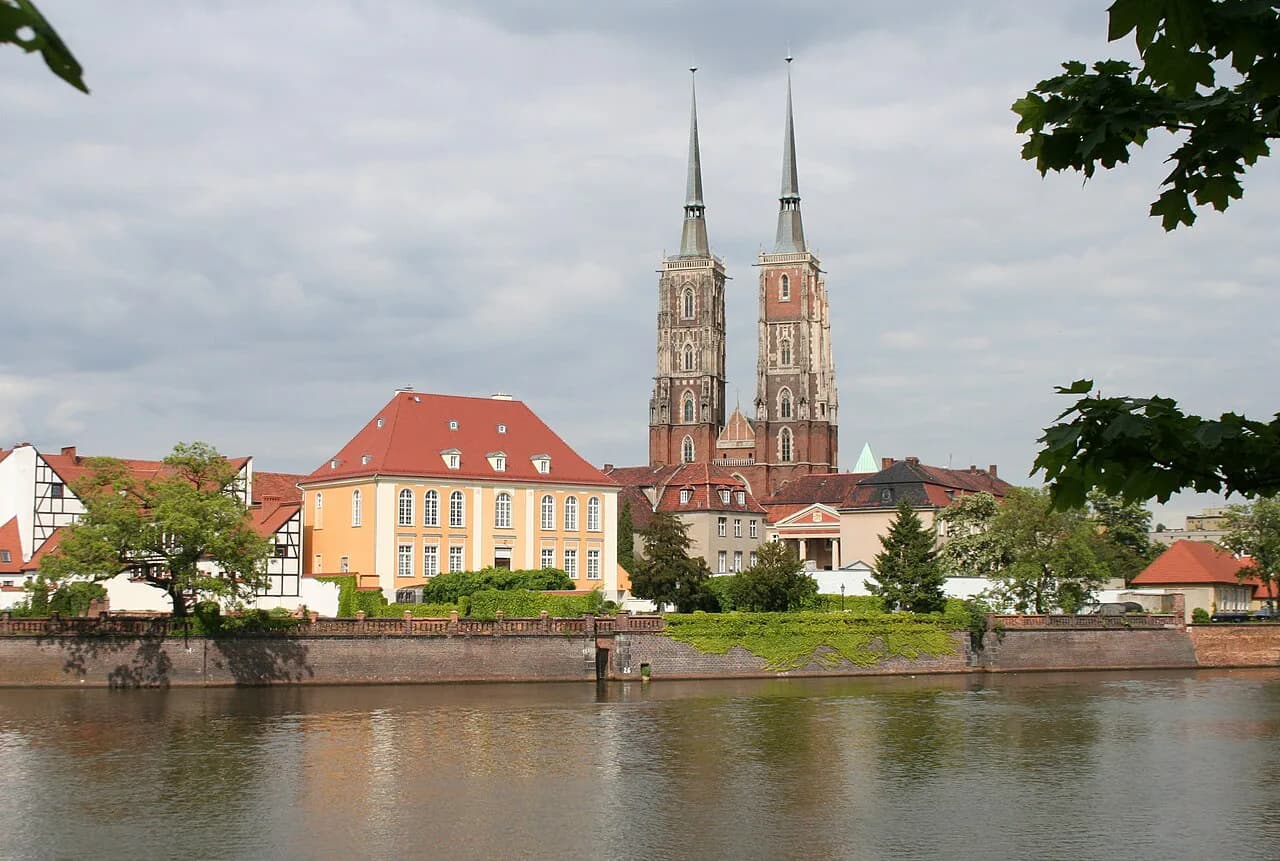
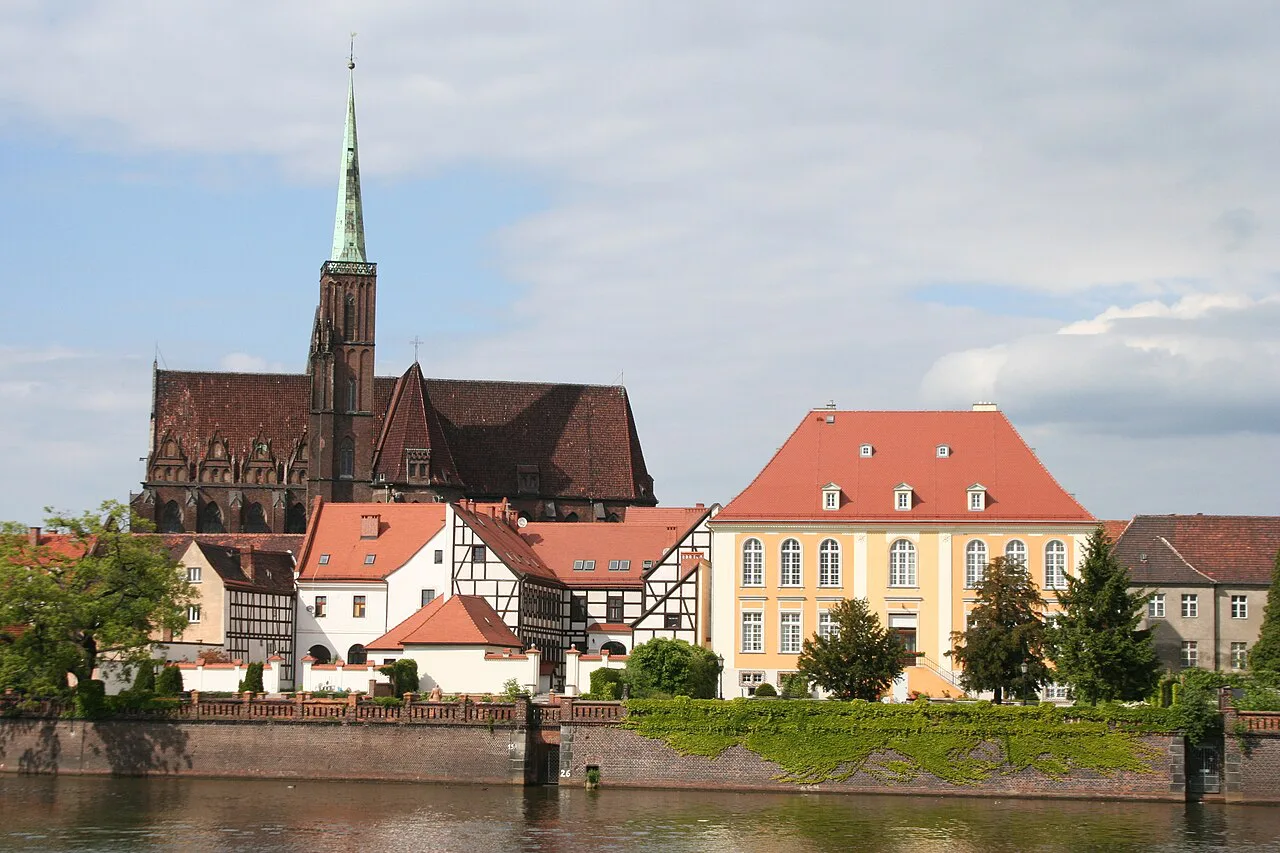
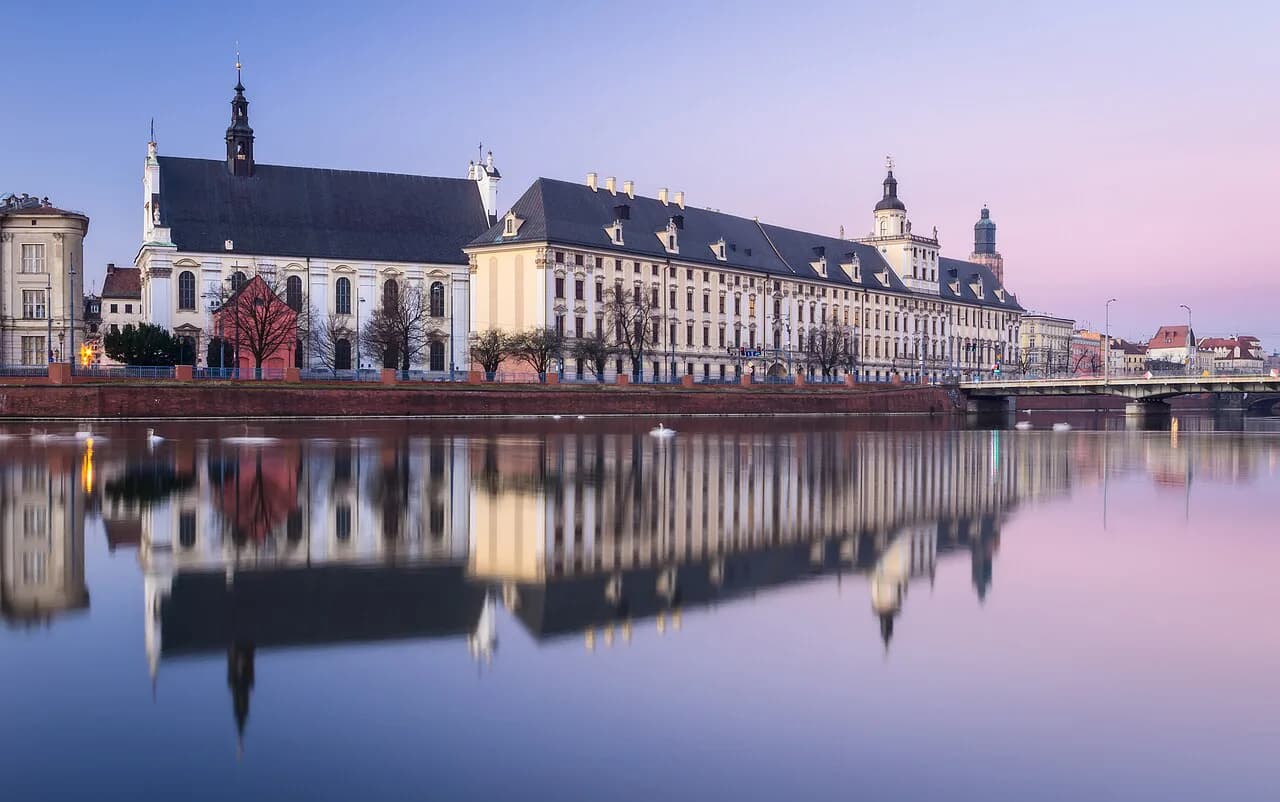
Cathedral Island is the oldest part of Wrocław and a rewarding free half-day on foot: cobbled lanes, brick churches and the bulk of the Cathedral of St. John the Baptist rising above the Oder. Treat the lanes and church grounds as the walking part of the visit; any tower or chapel with its own opening arrangements and ticketing is a separate, priced stop.
Time your walk for late afternoon into evening. The island's character shifts as the light drops, and the riverside calm makes it a natural place to end a walking day on foot; the loop back along the riverbank is part of the pleasure rather than a rush to the Market Square.
The Oder riverside and the walk out towards the Centennial Hall grounds
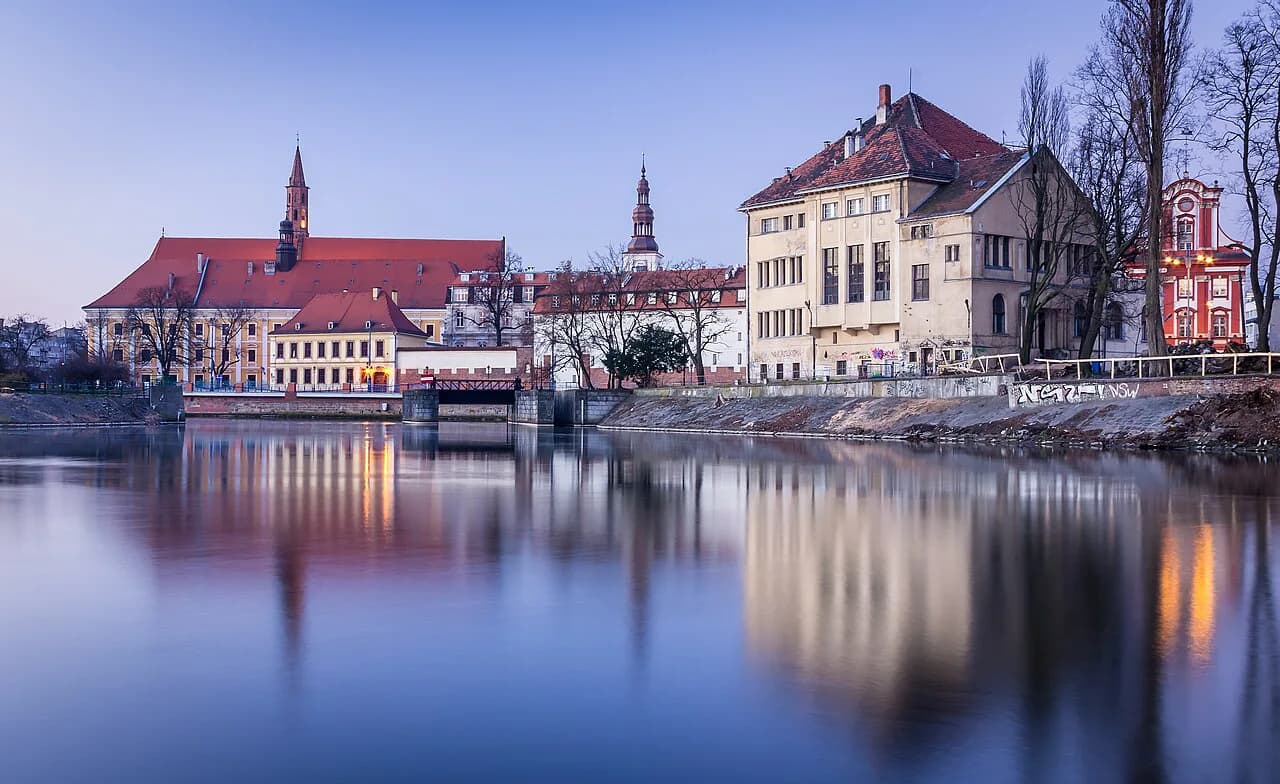
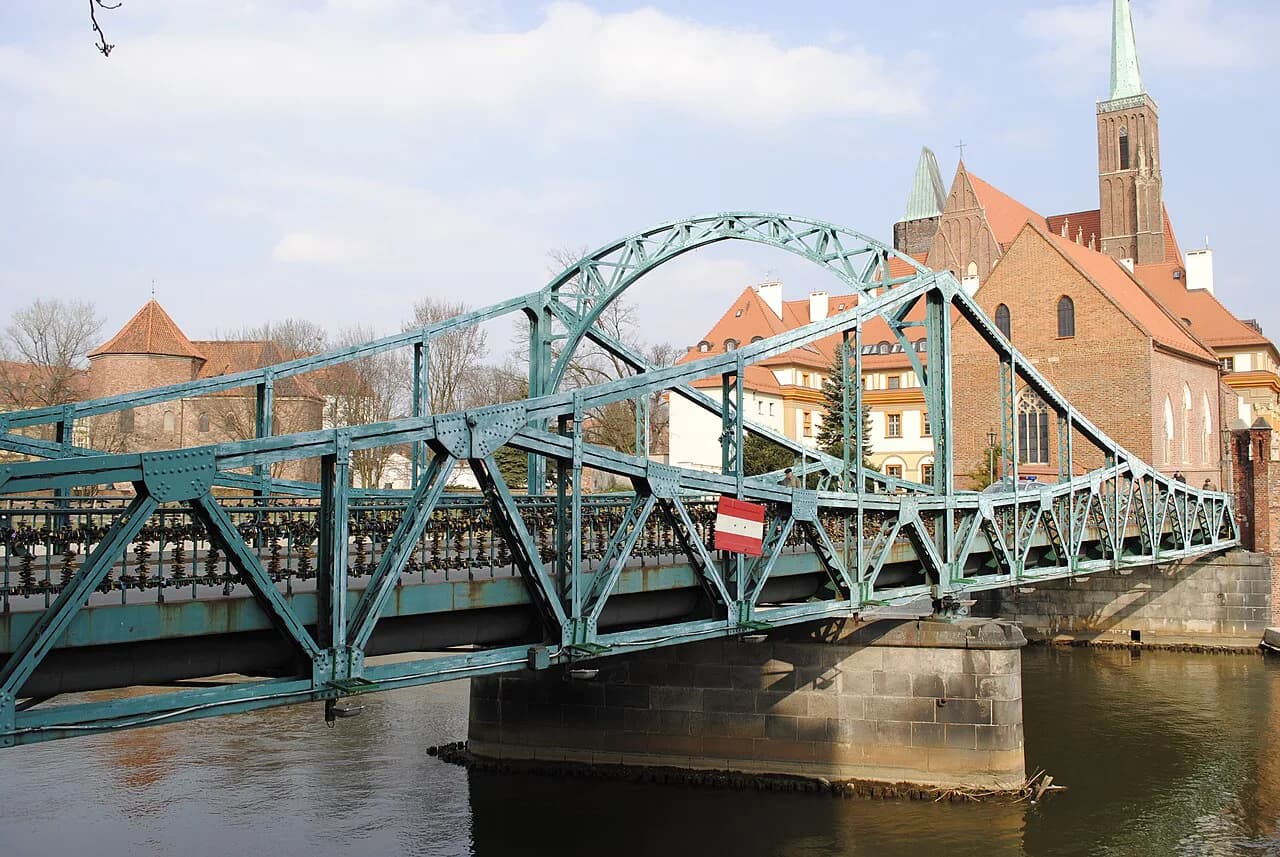
The Oder wraps around the centre and gives you long, flat, free promenades with bridges to cross and islands to wander. Walk east from Cathedral Island towards the Centennial Hall grounds and the scale changes: open parkland, the huge modernist dome and the Multimedia Fountain. If you would rather be on the water than beside it, a boat trip covers the same stretch from a different angle.
Fountain shows and the Centennial Hall interior run to their own timetables, so treat the grounds as the free part and decide on the paid add-ons when you are there. The park itself rewards a blanket and an hour.
Sakwowy Bastion and the City Moat for a free viewpoint and a sit-down
The Bastion is the easiest free viewpoint in the centre: climb the slope, look along the moat, then take a bench. It is a defensive structure from the former city fortifications rather than a purpose-built observation deck, which is exactly why it feels unhurried.
From here the moat path and the parkland alongside it make a natural loop back towards the Market Square. For a longer green stretch, the University of Wrocław Botanical Garden is nearby and worth checking for opening days and any admission charge before you set out.
Which sights cost money even when the square is free
Opera Wrocławska on Świdnicka is the clearest example of a paid set piece beside free sightseeing. The house publishes ticket ranges in złoty: in its 2026 repertoire a Salome performance was listed at 50–250 zł and a chamber concert at 50–70 zł, and a ballet of A Midsummer Night's Dream at 60–300 zł.
The opera also runs guided visits under the name Operowy Labirynt, priced at 40–50 zł for the dates listed in 2026, which suits travellers who want to see the building without committing to a full evening performance. Check the calendar for what falls during your stay rather than assuming a nightly show.
The box office opens Monday to Saturday from 12:00 to 19:00, with Sundays according to the performance, and the audience services desk runs Monday to Friday from 8:00 to 16:00. Those hours decide whether you can buy on the day or need to book ahead online.
Free and low-cost ways to fill an afternoon: self-guided wandering versus paid entries
A self-guided wander beats a stack of tickets if your budget is tight. Take the free loop through the Market Square, Świdnicka and Cathedral Island, then add one paid interior that genuinely interests you rather than three you feel obliged to see. A structured walking tour buys you context and a route, but it is a cost you can replace with a map and the free sights listed here.
If shopping is the temptation, the market halls and the streets off the square let you browse without spending. The same applies to food: a bakery stop costs a fraction of a sit-down lunch, and the city's market buildings are good places to graze cheaply.
How to check museum free-entry days before you go
Polish museums commonly close one day a week and several run a free-entry day, but the pattern differs by institution, so confirm with the museum you plan to visit rather than relying on a rule of thumb. Check the venue's own website for the week you are travelling, and treat any tower or chapel with its own ticketing as a separate, priced stop from the main building.
For a wider shortlist of what is worth paying for, compare the city's headline attractions before you lock the free ones in. That way the paid stops slot around your walking day instead of replacing it.
Where to slot the free sights into one, two or three days
With one day, do the Market Square and Town Hall exterior, walk Świdnicka to the moat and Bastion, then head east to Cathedral Island for dusk. With two days, give the second morning to the Oder riverside and the Centennial Hall grounds, and use the afternoon for one paid interior of your choice.
With three days, spread the free wandering out and add a performance or guided visit at the opera on whichever evening fits the published calendar. Keep the paid items few and deliberate, and the free squares and riverbank will carry the rest of the trip.
Which free sight earns the extra hour?
If you have one spare hour, give it to Cathedral Island rather than adding another museum. It is the oldest and most quietly atmospheric quarter in Wrocław, a free place to slow down and end the day on the riverbank, and it costs nothing beyond the walk.
Sort the rest of the trip by what you would genuinely pay to see, then let the Market Square and the river fill the gaps. That balance keeps a short break cheap without turning it into a queue of tickets.
Explore more Wrocław guides
Sources
Notes for your next Polish city break
Optional updates to our Poland guides.
You might also like
Continue reading
More guides you'll find useful